Rigveda 1.102: To Indra
Introduction
Rigveda 1.102 is a hymn of 11 verses addressed to Indra. It stands in book (maṇḍala) 1, a collection of hymns by many families of poets. The Rigveda is the oldest collection of Sanskrit hymns, composed in the second half of the second millennium BCE and handed down orally for many centuries before it was written down.
The manuscript shown is Penn Ms. Coll. 390 Item 41 (University of Pennsylvania), an undated paper manuscript of the padapāṭha (the word-by-word recitation text, in which every word is written separately and compounds are split) of the whole Ṛgveda in Devanāgarī, 884 leaves in fascicles, 7-9 lines to the page, accents in red; this hymn stands on fol. 71r-71v. Each section below gives the verses that end on one page; the page boundaries were read on the images (the opening words of every page), not counted out. Where the manuscript is a padapāṭha (the word-by-word recitation text), the section shows Aufrecht's continuous (saṃhitā) text first and, as the edition text, the padapāṭha of the same verses, which is the form written on the page.
How was this verified? (Provenance)
Where on the image
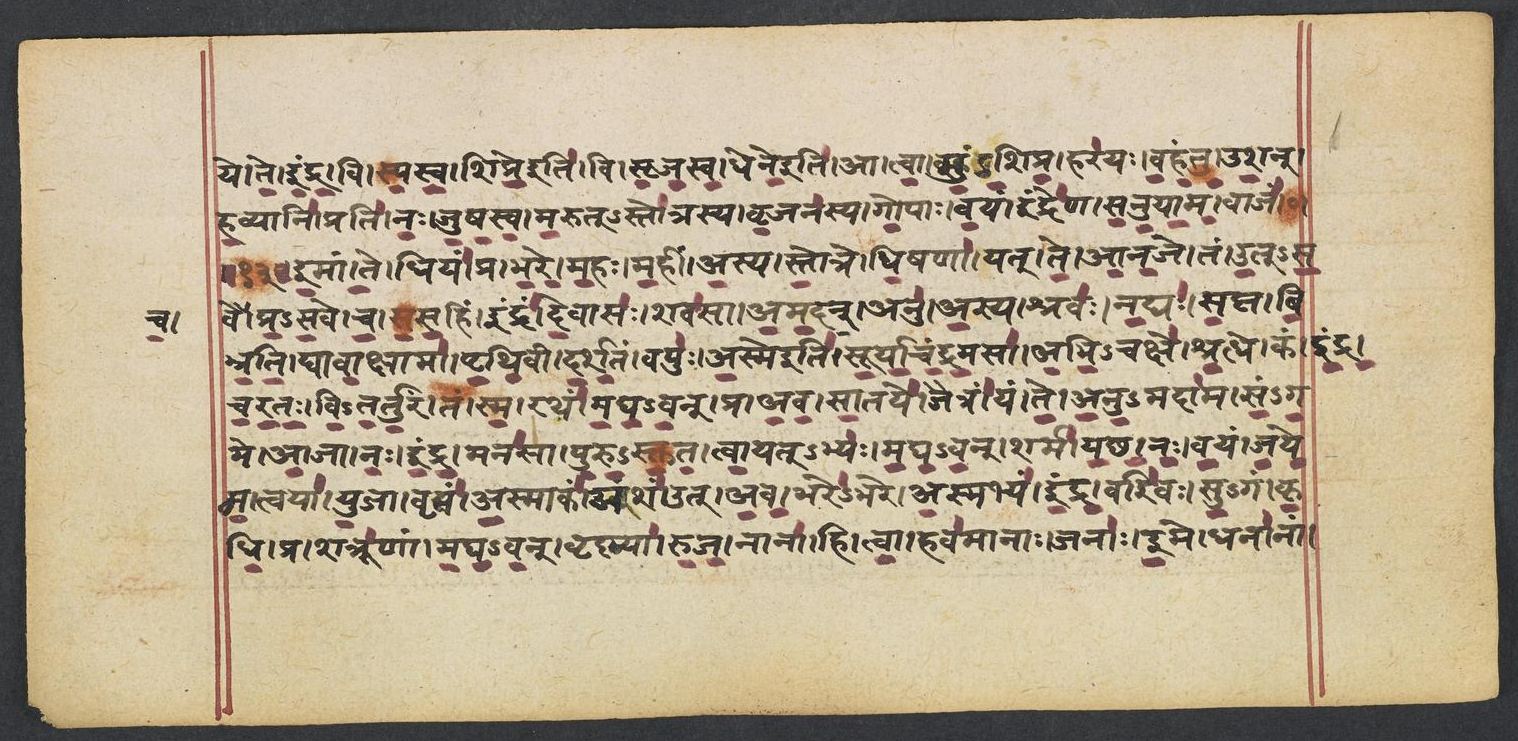
Penn Ms. Coll. 390 Item 41, fol. 71r (OPenn image 72, lower leaf). Checked on the image: the Rigveda text on this page begins in RV 1.101.10 ‹ye te indra vi›. The next page with Rigveda text, fol. 71v, begins in RV 1.102.5 ‹avasā vipanyavaḥ asmākam sma›. Verses 1.102.1-4 end on this page.
1i̱māṁ te̱ dhiya̱m pra bha̍re ma̱ho ma̱hīm a̱sya sto̱tre dhi̱ṣaṇā̱ yat ta̍ āna̱je | tam u̍tsa̱ve ca̍ prasa̱ve ca̍ sāsa̱him indra̍ṁ de̱vāsa̱ḥ śava̍sāmada̱nn anu̍ ||
2a̱sya śravo̍ na̱dya̍ḥ sa̱pta bi̍bhrati̱ dyāvā̱kṣāmā̍ pṛthi̱vī da̍rśa̱taṁ vapu̍ḥ | a̱sme sū̍ryācandra̱masā̍bhi̱cakṣe̍ śra̱ddhe kam i̍ndra carato vitartu̱ram ||
3taṁ smā̱ ratha̍m maghava̱n prāva̍ sā̱taye̱ jaitra̱ṁ yaṁ te̍ anu̱madā̍ma saṁga̱me | ā̱jā na̍ indra̱ mana̍sā puruṣṭuta tvā̱yadbhyo̍ maghava̱ñ charma̍ yaccha naḥ ||
4va̱yaṁ ja̍yema̱ tvayā̍ yu̱jā vṛta̍m a̱smāka̱m aṁśa̱m ud a̍vā̱ bhare̍-bhare | a̱smabhya̍m indra̱ vari̍vaḥ su̱gaṁ kṛ̍dhi̱ pra śatrū̍ṇām maghava̱n vṛṣṇyā̍ ruja ||
Compare: Padapāṭha (word-by-word text written in the manuscript; Sansknet e-text via GRETIL)
1imām | te | dhiyam | pra | bhare | mahaḥ | mahīm | asya | stotre | dhiṣaṇā | yat | te | ānaje | tam | ut-save | ca | pra-save | ca | sasahim | indram | devāsaḥ | śavasā | amadan | anu
2asya | śravaḥ | nadyaḥ | sapta | bibhrati | dyāvākṣāmā | pṛthivī | darśatam | vapuḥ | asme iti | sūryācandramasā | abhi-cakṣe | śraddhe | kam | indra | carataḥ | vi-tarturam
3tam | sma | ratham | magha-van | pra | ava | sātaye | jaitram | yam | te | anu-madāma | sam-game | ājā | naḥ | indra | manasā | puru-stuta | tvāyat-bhyaḥ | magha-van | śamar | yaccha | naḥ
4vayam | jayema | tvayā | yujā | vṛtam | asmākam | aṃśam | ut | ava | bhare--bhare | asmabhyam | indra | varivaḥ | su-gam | kṛdhi | pra | śatrūṇām | magha-van | vṛṣṇyā | ruja
1To thee the Mighty One I bring this mighty hymn, for thy desire hath been gratified by my laud. In Indra, yea in him victorious through his strength, the Gods have joyed at feast and when the Soma flowed.
2The Seven Rivers bear his glory far and wide, and heaven and sky and earth display his comely form. The Sun and Moon in change alternate run their course, that we, O Indra, may behold and may have faith.
3Maghavan, grant us that same car to bring us spoil, thy conquering car in which we joy in shock of fight. Thou, Indra, whom our hearts praise highly in the war, grant shelter, Maghavan, to us who love thee well.
4Encourage thou our side in every fight: may we, with thee for our ally, conquer the foeman's host. Indra, bestow on us joy and felicity break down, O Maghavan, the vigour of our foes.
Where on the image
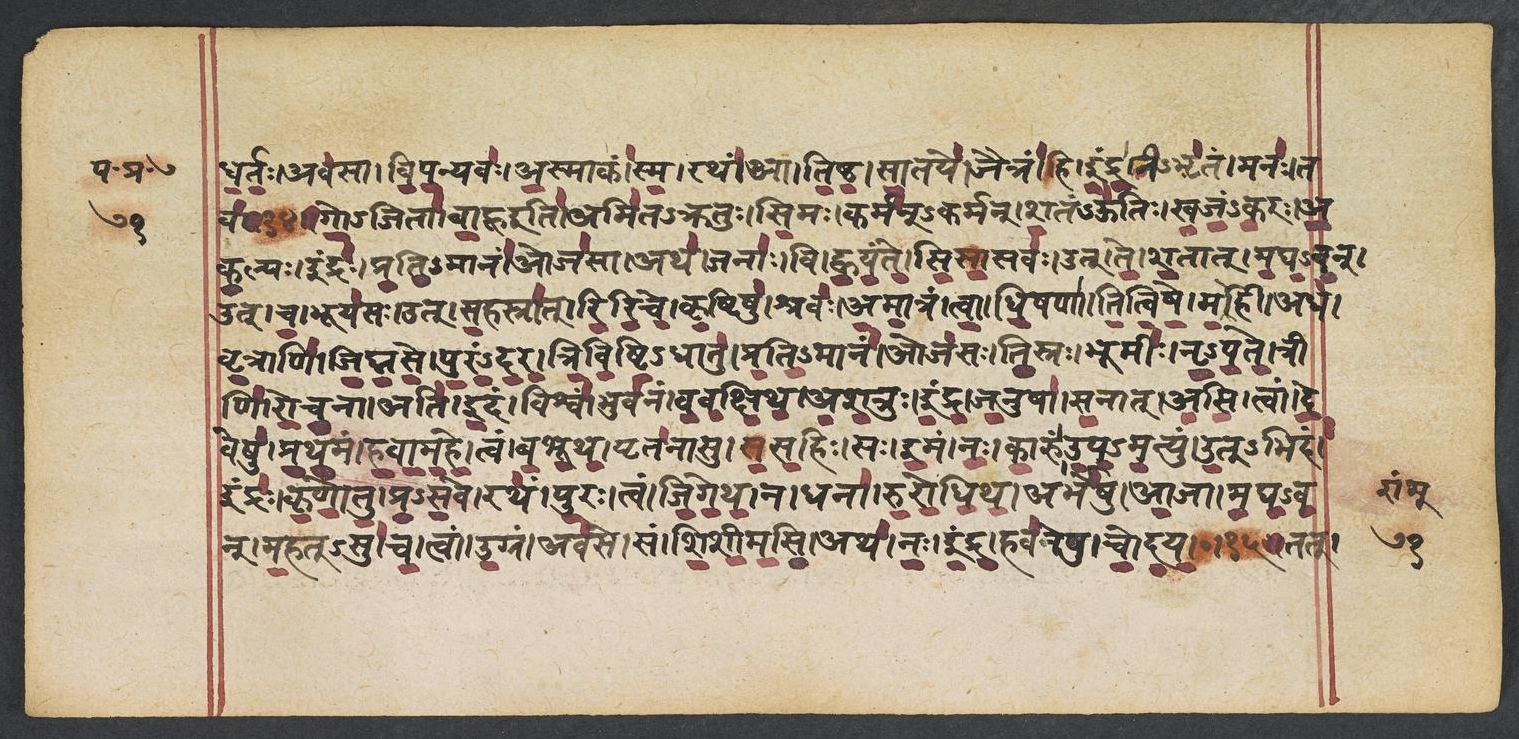
Penn Ms. Coll. 390 Item 41, fol. 71v (OPenn image 73, upper leaf). Checked on the image: the Rigveda text on this page begins in RV 1.102.5 ‹avasā vipanyavaḥ asmākam sma›. The next page with Rigveda text, fol. 72r, begins in RV 1.103.1 ‹tat te indriyam paramam›. Verses 1.102.5-11 end on this page; 1.102.5 begins on fol. 71r.
5nānā̱ hi tvā̱ hava̍mānā̱ janā̍ i̱me dhanā̍nāṁ dharta̱r ava̍sā vipa̱nyava̍ḥ | a̱smāka̍ṁ smā̱ ratha̱m ā ti̍ṣṭha sā̱taye̱ jaitra̱ṁ hī̍ndra̱ nibhṛ̍ta̱m mana̱s tava̍ ||
6go̱jitā̍ bā̱hū ami̍takratuḥ si̱maḥ karma̍n-karmañ cha̱tamū̍tiḥ khajaṁka̱raḥ | a̱ka̱lpa indra̍ḥ prati̱māna̱m oja̱sāthā̱ janā̱ vi hva̍yante siṣā̱sava̍ḥ ||
7ut te̍ śa̱tān ma̍ghava̱nn uc ca̱ bhūya̍sa̱ ut sa̱hasrā̍d ririce kṛ̱ṣṭiṣu̱ śrava̍ḥ | a̱mā̱traṁ tvā̍ dhi̱ṣaṇā̍ titviṣe ma̱hy adhā̍ vṛ̱trāṇi̍ jighnase puraṁdara ||
8tri̱vi̱ṣṭi̱dhātu̍ prati̱māna̱m oja̍sas ti̱sro bhūmī̍r nṛpate̱ trīṇi̍ roca̱nā | atī̱daṁ viśva̱m bhuva̍naṁ vavakṣithāśa̱trur i̍ndra ja̱nuṣā̍ sa̱nād a̍si ||
9tvāṁ de̱veṣu̍ pratha̱maṁ ha̍vāmahe̱ tvam ba̍bhūtha̱ pṛta̍nāsu sāsa̱hiḥ | semaṁ na̍ḥ kā̱rum u̍pama̱nyum u̱dbhida̱m indra̍ḥ kṛṇotu prasa̱ve ratha̍m pu̱raḥ ||
10tvaṁ ji̍getha̱ na dhanā̍ rurodhi̱thārbhe̍ṣv ā̱jā ma̍ghavan ma̱hatsu̍ ca | tvām u̱gram ava̍se̱ saṁ śi̍śīma̱sy athā̍ na indra̱ hava̍neṣu codaya ||
11vi̱śvāhendro̍ adhiva̱ktā no̍ a̱stv apa̍rihvṛtāḥ sanuyāma̱ vāja̍m | tan no̍ mi̱tro varu̍ṇo māmahantā̱m adi̍ti̱ḥ sindhu̍ḥ pṛthi̱vī u̱ta dyauḥ ||
Compare: Padapāṭha (word-by-word text written in the manuscript; Sansknet e-text via GRETIL)
5nānā | hi | tvā | havamānāḥ | janāḥ | ime | dhanānām | dhartaḥ | avasā | vipanyavaḥ | asmākam | sma | ratham | ā | tiṣṭha | sātaye | jaitram | hi | indra | ni-bhṛtam | manaḥ | tava
6go--jitā | bāhū iti | amita-kratuḥ | simaḥ | karman-karman | śata-mūrtiḥ | khajam-karaḥ | akalpaḥ | indraḥ | prati-mānam | ojasā | atha | janāḥ | vi | hvayante | sisāsavaḥ
7ut | te | śatāt | magha-van | ut | cabhūyasaḥ | ut | sahasrāt | ririce | kṛṣṭiṣu | śravaḥ | amātram | tvā | dhiṣaṇā | titviṣe | mahī | adha | vṛtrāṇi | jighnase | puram-dara
8triviṣṭi-dhātu | prati-mānam | ojasaḥ | tisraḥ | bhūmīḥ | nṛ-pate | trīṇi | rocanā | at i | idam | viśvam | bhuvanam | vavakṣitha | aśatruḥ | indra | januṣā | sanāt | asi
9tvām | deveṣu | prathamam | havāmahe | tvam | babhūtha | pṛtanāsu | sasahiḥ | saḥ | imam | naḥ | kārum | upa-manyum | ut-bhidam | indraḥ | kṛṇotu | pra-save | ratham | puraḥ
10tvam | jigetha | na | dhanā | rurodhitha | arbheṣu | ājā | magha-van | mahat-su | ca | tvām | ugram | avase | sam | śiśīmasi | atha | naḥ | indra | havaneṣu | codaya
11viśvāhā | indraḥ | adhi-vaktā | naḥ | astu | apari-hvṛtāḥ | sanuyāma | vājam | tat | naḥ | mitraḥ | varuṇaḥ | mamahantām | aditiḥ | sindhuḥ | pṛthivī | uta | dyauḥ
5For here in divers ways these men invoking thee, holder of treasures, sing hymns to win thine aid. Ascend the car that thou mayest bring spoil to us, for, Indra, thy fixt winneth the victory.
6His arms win kine, his power is boundless in each act best, with a hundred helps waker of battle's din Is Indra: none may rival him in mighty strength. Hence, eager for the spoil the people call on him.
7Thy glory, Maghavan, exceeds a hundred yea, more than a hundred, than a thousand mid the folk, The great bowl hath inspirited thee boundlessly: so mayst thou slay the Vr̥itras breaker-down of forts!
8Of thy great might there is a three counterpart, the three earths, Lord men and the three realms of light. Above this whole world, Indra, thou hast waxen great: without a foe art thou, nature, from of old.
9We invocate thee first among the Deities: thou hast become a mighty Conquer in fight. May Indra fill with spirit this our singer's heart, and make our car impetuous, foremost in attack.
10Thou hast prevailed, and hast not kept the booty back, in trifling battles in those of great account. We make thee keen, the Mighty One, succour us: inspire us, Maghavan, when we defy the foe.
11May Indra evermore be our Protector, and unimperilled may we win the booty. This prayer of ours may Varuṇa grant and Mitra, and Aditi and Sindhu, Earth and Heaven.
Notes
- Sanskrit: Aufrecht's edition (1877) with the Vedic accents, as entered by van Nooten and Holland (GRETIL).
- English: Ralph T. H. Griffith, The Hymns of the Rigveda (1889-1892; 2nd ed. 1896-1897), from the VedaWeb digital text; OCR slips in that text were corrected against the printed 2nd edition (data/sources/rigveda/griffith_errata.json).
- Padapāṭha (edition text): Sansknet e-text via GRETIL (CC BY-NC-SA 4.0).
Cite
Sources
- Source: Penn Ms. Coll. 390 Item 41 (undated (catalogued with Penn's 18th-19th c. Vedic manuscripts)), OPenn, Public Domain Mark + Aufrecht's accented text (GRETIL) + Griffith's English (VedaWeb) (holding institution)
- Critical edition: Aufrecht (1877), accented e-text via GRETIL
← previous · → next · v cycle view · l back to library