Rigveda 1.103: To Indra
Introduction
Rigveda 1.103 is a hymn of 8 verses addressed to Indra. It stands in book (maṇḍala) 1, a collection of hymns by many families of poets. The Rigveda is the oldest collection of Sanskrit hymns, composed in the second half of the second millennium BCE and handed down orally for many centuries before it was written down.
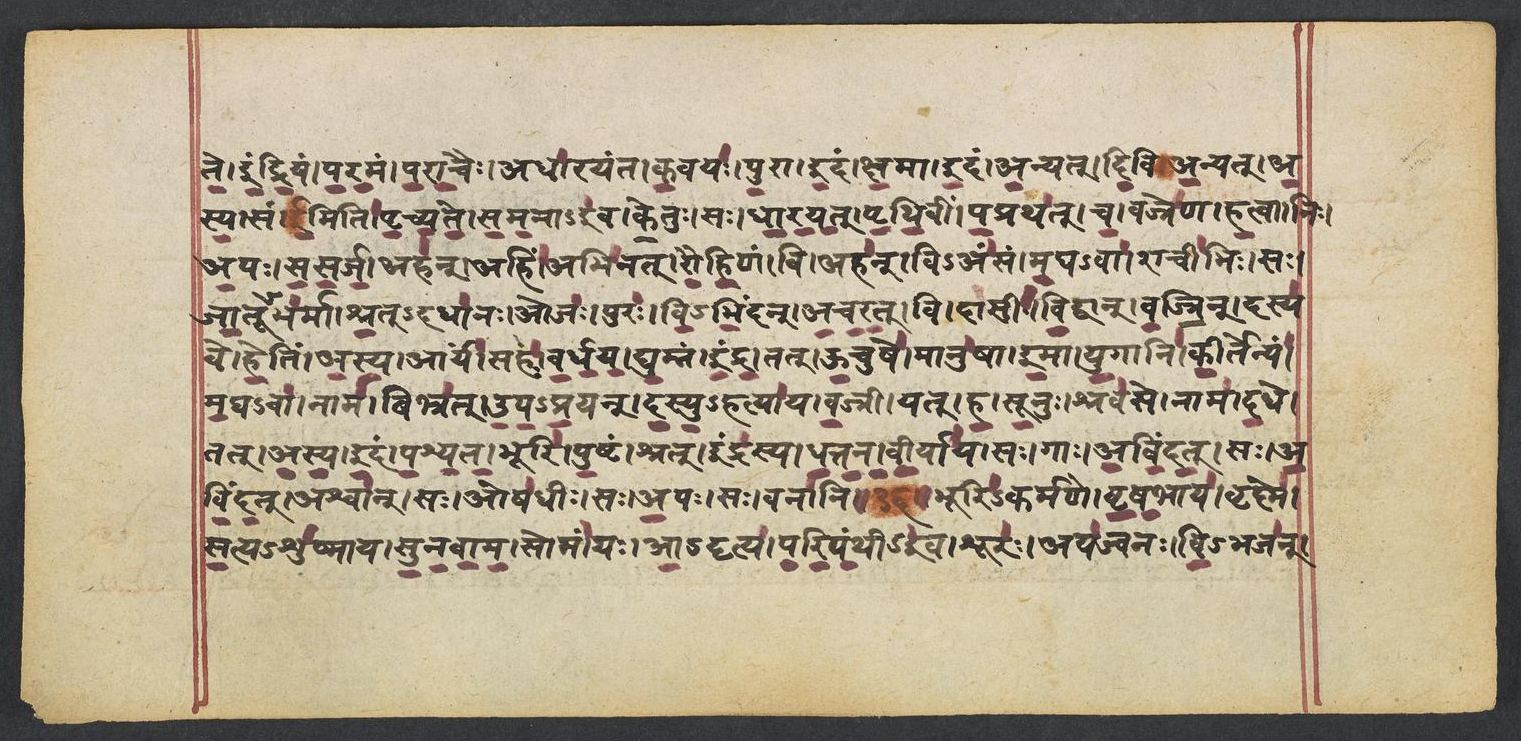
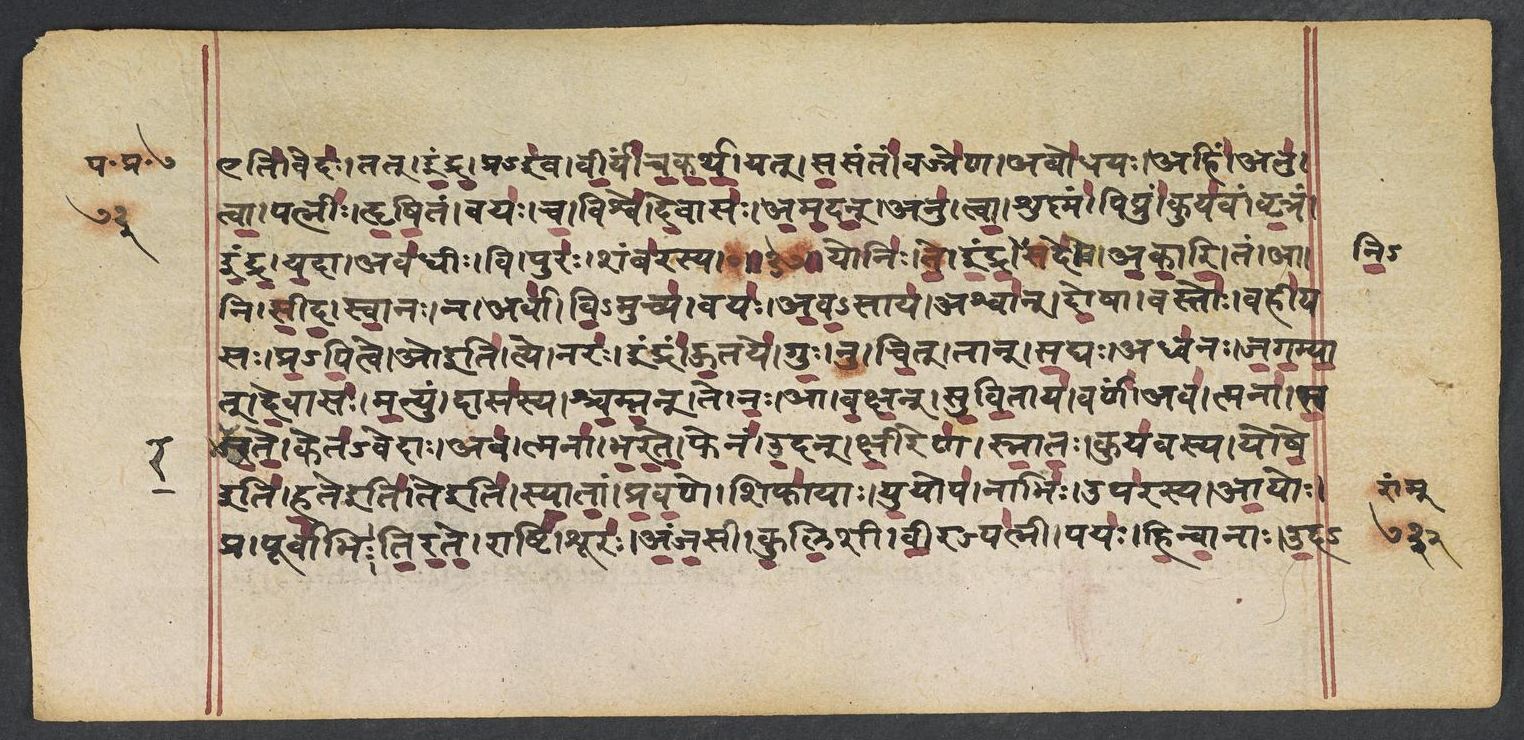
The manuscript shown is Penn Ms. Coll. 390 Item 41 (University of Pennsylvania), an undated paper manuscript of the padapāṭha (the word-by-word recitation text, in which every word is written separately and compounds are split) of the whole Ṛgveda in Devanāgarī, 884 leaves in fascicles, 7-9 lines to the page, accents in red; this hymn stands on fol. 72r-72v. Each section below gives the verses that end on one page; the page boundaries were read on the images (the opening words of every page), not counted out. Where the manuscript is a padapāṭha (the word-by-word recitation text), the section shows Aufrecht's continuous (saṃhitā) text first and, as the edition text, the padapāṭha of the same verses, which is the form written on the page.
How was this verified? (Provenance)
Where on the image
Penn Ms. Coll. 390 Item 41, fol. 72r (OPenn image 73, lower leaf). Checked on the image: the Rigveda text on this page begins in RV 1.103.1 ‹tat te indriyam paramam›. The next page with Rigveda text, fol. 72v, begins in RV 1.103.6 ‹-eti vedaḥ›. Verses 1.103.1-5 end on this page.
1tat ta̍ indri̱yam pa̍ra̱mam pa̍rā̱cair adhā̍rayanta ka̱vaya̍ḥ pu̱redam | kṣa̱medam a̱nyad di̱vy a1̱̍nyad a̍sya̱ sam ī̍ pṛcyate sama̱neva̍ ke̱tuḥ ||
2sa dhā̍rayat pṛthi̱vīm pa̱pratha̍c ca̱ vajre̍ṇa ha̱tvā nir a̱paḥ sa̍sarja | aha̱nn ahi̱m abhi̍nad rauhi̱ṇaṁ vy aha̱n vya̍ṁsam ma̱ghavā̱ śacī̍bhiḥ ||
3sa jā̱tūbha̍rmā śra̱ddadhā̍na̱ oja̱ḥ puro̍ vibhi̱ndann a̍cara̱d vi dāsī̍ḥ | vi̱dvān va̍jri̱n dasya̍ve he̱tim a̱syārya̱ṁ saho̍ vardhayā dyu̱mnam i̍ndra ||
4tad ū̱cuṣe̱ mānu̍ṣe̱mā yu̱gāni̍ kī̱rtenya̍m ma̱ghavā̱ nāma̱ bibhra̍t | u̱pa̱pra̱yan da̍syu̱hatyā̍ya va̱jrī yad dha̍ sū̱nuḥ śrava̍se̱ nāma̍ da̱dhe ||
5tad a̍sye̱dam pa̍śyatā̱ bhūri̍ pu̱ṣṭaṁ śrad indra̍sya dhattana vī̱ryā̍ya | sa gā a̍vinda̱t so a̍vinda̱d aśvā̱n sa oṣa̍dhī̱ḥ so a̱paḥ sa vanā̍ni ||
Compare: Padapāṭha (word-by-word text written in the manuscript; Sansknet e-text via GRETIL)
1tat | te | indriyam | paramam | parācaiḥ | adhārayanta | kavayaḥ | purā | idam | kṣamā | idam | anyat | divi | anyat | asya | sam | īm iti | pṛcyate | samanāiva | ketuḥ
2saḥ | dhārayat | pṛthivīm | paprathat | ca | vajreṇa | hatvā | niḥ | apaḥ | sasarja | ahan | ahim | abhinat | rauhiṇam | vi | ahan | vi-aṃsam | magha-vā | śacībhiḥ
3saḥ | jātū-bharmā | śrat-dadhānaḥ | ojaḥ | puraḥ | vi-bhindan | acarat | vi | dāsīḥ | vi dvān | vajrin | dasyave | hetim | asya | āryam | sahaḥ | vardhaya | dyumnam | indra
4tat | ūcuṣe | mānuṣā | imā | yugāni | kīrtenyam | magha-vā | nāma | bibhrat | upa-prayan | dasyu-hatyāya | vajrī | yat | ha | sūnuḥ | śravase | nāma | dadhe
5tat | asya | idam | paśyata | bhūri | puṣṭam | śrat | indrasya | dhattana | vīryāya | saḥ | gāḥ | avindat | saḥ | avindat | aśvān | saḥ | oṣadhīḥ | saḥ | apaḥ | saḥ | vanāni
1THAT highest Indra-power of thine is distant: that which is here sages possessed aforetime. This one is on the earth, in heaven the other, and both unite as flag with flag in battle.
2He spread the wide earth out and firmly fixed it, smote with his thunderbolt and loosed the waters. Maghavan with his puissance struck down Ahi, rent Rauhiṇa to death and slaughtered Vyansa.
3Armed with his bolt and trusting in his prowess he wandered shattering the forts of Dâsas. Cast thy dart, knowing, Thunderer, at the Dasyu; increase the Arya's might and glory, Indra.
4For him who thus hath taught these human races, Maghavan, bearing a fame-worthy title, Thunderer, drawing nigh to slay the Dasyus, hath given himself the name of Son for glory.
5See this abundant wealth that he possesses, and put your trust in Indra's hero vigour. He found the cattle, and he found the horses, he found the plants, the forests and the waters.
Where on the image
Penn Ms. Coll. 390 Item 41, fol. 72v (OPenn image 74, upper leaf). Checked on the image: the Rigveda text on this page begins in RV 1.103.6 ‹-eti vedaḥ›. The next page with Rigveda text, fol. 73r, begins in RV 1.104.4 ‹-uda-bhiḥ bharante›. Verses 1.103.6-8 end on this page; 1.103.6 begins on fol. 72r.
6bhūri̍karmaṇe vṛṣa̱bhāya̱ vṛṣṇe̍ sa̱tyaśu̍ṣmāya sunavāma̱ soma̍m | ya ā̱dṛtyā̍ paripa̱nthīva̱ śūro 'ya̍jvano vi̱bhaja̱nn eti̱ veda̍ḥ ||
7tad i̍ndra̱ preva̍ vī̱rya̍ṁ cakartha̱ yat sa̱santa̱ṁ vajre̱ṇābo̍dha̱yo 'hi̍m | anu̍ tvā̱ patnī̍r hṛṣi̱taṁ vaya̍ś ca̱ viśve̍ de̱vāso̍ amada̱nn anu̍ tvā ||
8śuṣṇa̱m pipru̱ṁ kuya̍vaṁ vṛ̱tram i̍ndra ya̱dāva̍dhī̱r vi pura̱ḥ śamba̍rasya | tan no̍ mi̱tro varu̍ṇo māmahantā̱m adi̍ti̱ḥ sindhu̍ḥ pṛthi̱vī u̱ta dyauḥ ||
Compare: Padapāṭha (word-by-word text written in the manuscript; Sansknet e-text via GRETIL)
6bhūri-karmaṇe | vṛṣabhāya | vṛśṇe | satya-śuṣmāya | sunavāma | somam | yaḥ | ādṛtya | pari-panthī-iva | śūraḥ | ayajvanaḥ | vi-bhajan | eti | vedaḥ
7tat | indra | pra | ava | vīryam | cakartha | yat | sasantam | vajreṇa | abodhayaḥ | ah im | anu | tvā | patnīḥ | hṛṣitam | vayaḥ | ca | viśve | devāsaḥ | amadan | anu | tvā
8śuṣṇam | piprum | kuyavam | vṛtram | indra | yadā | avadhīḥ | vi | puraḥ | śambarasya | tat | naḥ | mitraḥ | varuṇaḥ | mamahantām | aditiḥ | sindhuḥ | pṛthivī | uta | dyauḥ
6To him the truly strong, whose deeds are many, to him the strong Bull let us pour the Soma. The Hero, watching like a thief in ambush, goes parting the possessions of the godless.
7Well didst thou do that hero deed, O Indra, in waking with thy bolt the slumbering Ahi. in thee, delighted, Dames divine rejoiced them, the flying Maruts and all Gods were joyful.
8As thou hast smitten Ṣushṇa, Pipru, Vr̥itra and Kuyava, and Ṣambara's forts O Indra. This prayer of ours may Varuṇa grant, and Mitra, and Aditi and Sindhu, Earth and Heaven.
Notes
- Sanskrit: Aufrecht's edition (1877) with the Vedic accents, as entered by van Nooten and Holland (GRETIL).
- English: Ralph T. H. Griffith, The Hymns of the Rigveda (1889-1892; 2nd ed. 1896-1897), from the VedaWeb digital text; OCR slips in that text were corrected against the printed 2nd edition (data/sources/rigveda/griffith_errata.json).
- Padapāṭha (edition text): Sansknet e-text via GRETIL (CC BY-NC-SA 4.0).
Cite
Sources
- Source: Penn Ms. Coll. 390 Item 41 (undated (catalogued with Penn's 18th-19th c. Vedic manuscripts)), OPenn, Public Domain Mark + Aufrecht's accented text (GRETIL) + Griffith's English (VedaWeb) (holding institution)
- Critical edition: Aufrecht (1877), accented e-text via GRETIL
← previous · → next · v cycle view · l back to library