Rigveda 1.104: To Indra
Introduction
Rigveda 1.104 is a hymn of 9 verses addressed to Indra. It stands in book (maṇḍala) 1, a collection of hymns by many families of poets. The Rigveda is the oldest collection of Sanskrit hymns, composed in the second half of the second millennium BCE and handed down orally for many centuries before it was written down.
The manuscript shown is Penn Ms. Coll. 390 Item 41 (University of Pennsylvania), an undated paper manuscript of the padapāṭha (the word-by-word recitation text, in which every word is written separately and compounds are split) of the whole Ṛgveda in Devanāgarī, 884 leaves in fascicles, 7-9 lines to the page, accents in red; this hymn stands on fol. 72v-73r. Each section below gives the verses that end on one page; the page boundaries were read on the images (the opening words of every page), not counted out. Where the manuscript is a padapāṭha (the word-by-word recitation text), the section shows Aufrecht's continuous (saṃhitā) text first and, as the edition text, the padapāṭha of the same verses, which is the form written on the page.
How was this verified? (Provenance)
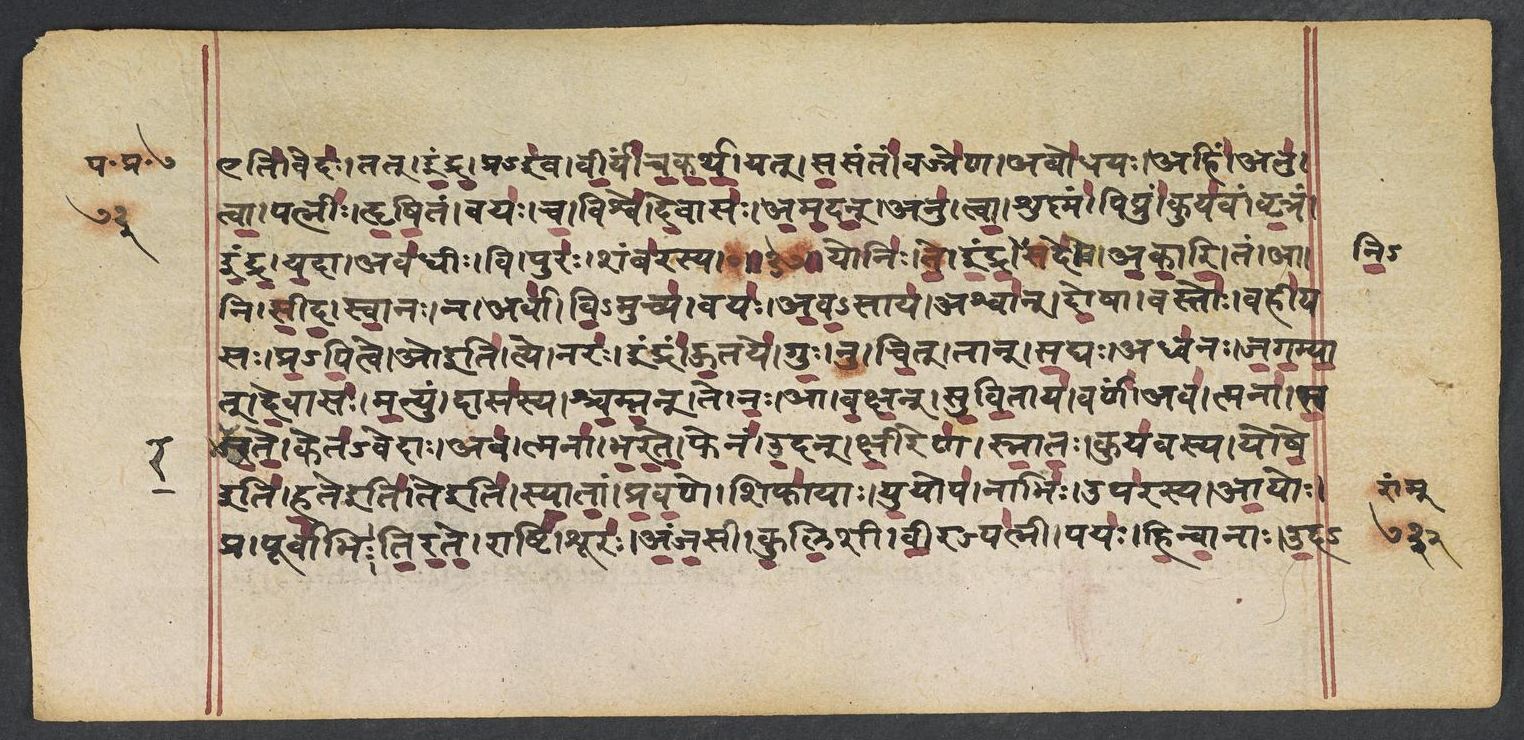
Where on the image
Penn Ms. Coll. 390 Item 41, fol. 72v (OPenn image 74, upper leaf). Checked on the image: the Rigveda text on this page begins in RV 1.103.6 ‹-eti vedaḥ›. The next page with Rigveda text, fol. 73r, begins in RV 1.104.4 ‹-uda-bhiḥ bharante›. Verses 1.104.1-3 end on this page.
1yoni̍ṣ ṭa indra ni̱ṣade̍ akāri̱ tam ā ni ṣī̍da svā̱no nārvā̍ | vi̱mucyā̱ vayo̍ 'va̱sāyāśvā̍n do̱ṣā vasto̱r vahī̍yasaḥ prapi̱tve ||
2o tye nara̱ indra̍m ū̱taye̍ gu̱r nū ci̱t tān sa̱dyo adhva̍no jagamyāt | de̱vāso̍ ma̱nyuṁ dāsa̍sya ścamna̱n te na̱ ā va̍kṣan suvi̱tāya̱ varṇa̍m ||
3ava̱ tmanā̍ bharate̱ keta̍vedā̱ ava̱ tmanā̍ bharate̱ phena̍m u̱dan | kṣī̱reṇa̍ snāta̱ḥ kuya̍vasya̱ yoṣe̍ ha̱te te syā̍tām prava̱ṇe śiphā̍yāḥ ||
Compare: Padapāṭha (word-by-word text written in the manuscript; Sansknet e-text via GRETIL)
1yoniḥ | te | indra | ni-sade | akāri | tam | ā | ni | sīda | svānaḥ | na | arvā | vi-mucya | vayaḥ | ava-sāya | aśvān | doṣā | vastoḥ | vahīyasaḥ | pra-pitve
2o iti | tye | naraḥ | indram | ūtaye | guḥ | nu | cit | tān | sadyaḥ | adhvanaḥ | jagamyāt | devāsaḥ | manyum | dāsasya | ścamnan | te | naḥ | ā | vakṣan | su-vitāya | varṇam
3ava | tmanā | bharate | keta-vedāḥ | ava | tmanā | bharate | phenam | udan | kṣīreṇa | snātaḥ | kuyavasya | yoṣeiti | hate iti | te iti | syātām | pravaṇe | śiphāyāḥ
1THE altar hath been made for thee to rest on: come like a panting courser and be seated. Loosen thy flying Steeds, set free thy Horses who bear thee swiftly nigh at eve and morning.
2These men have come to Indra for assistance: shall he not quickly come upon these pathways? May the Gods quell the fury of the Dâsa, and may they lead our folk to happy fortune.
3He who hath only wish as his possession casts on himself, casts foam amid the waters. Both wives of Kuyava in milk have bathed them: may they be drowned within the depth of Ṣiphâ.
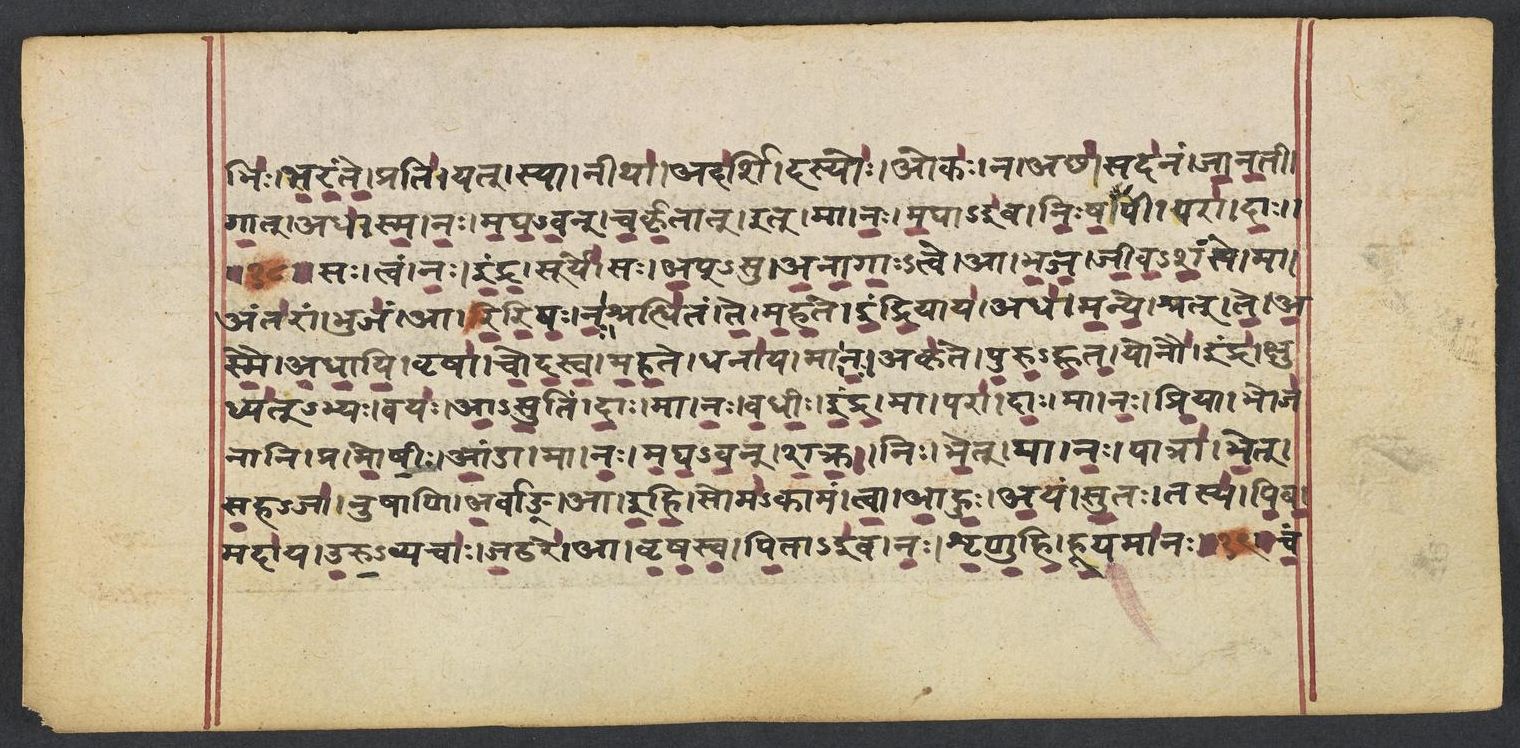
Where on the image
Penn Ms. Coll. 390 Item 41, fol. 73r (OPenn image 74, lower leaf). Checked on the image: the Rigveda text on this page begins in RV 1.104.4 ‹-uda-bhiḥ bharante›. The next page with Rigveda text, fol. 73v, begins in RV 1.105.1 ‹-candramāḥ ap-su antaḥ ā›. Verses 1.104.4-9 end on this page; 1.104.4 begins on fol. 72v.
4yu̱yopa̱ nābhi̱r upa̍rasyā̱yoḥ pra pūrvā̍bhis tirate̱ rāṣṭi̱ śūra̍ḥ | a̱ñja̱sī ku̍li̱śī vī̱rapa̍tnī̱ payo̍ hinvā̱nā u̱dabhi̍r bharante ||
5prati̱ yat syā nīthāda̍rśi̱ dasyo̱r oko̱ nācchā̱ sada̍naṁ jāna̱tī gā̍t | adha̍ smā no maghavañ carkṛ̱tād in mā no̍ ma̱gheva̍ niṣṣa̱pī parā̍ dāḥ ||
6sa tvaṁ na̍ indra̱ sūrye̱ so a̱psv a̍nāgā̱stva ā bha̍ja jīvaśa̱ṁse | mānta̍rā̱m bhuja̱m ā rī̍riṣo na̱ḥ śraddhi̍taṁ te maha̱ta i̍ndri̱yāya̍ ||
7adhā̍ manye̱ śrat te̍ asmā adhāyi̱ vṛṣā̍ codasva maha̱te dhanā̍ya | mā no̱ akṛ̍te puruhūta̱ yonā̱v indra̱ kṣudhya̍dbhyo̱ vaya̍ āsu̱tiṁ dā̍ḥ ||
8mā no̍ vadhīr indra̱ mā parā̍ dā̱ mā na̍ḥ pri̱yā bhoja̍nāni̱ pra mo̍ṣīḥ | ā̱ṇḍā mā no̍ maghavañ chakra̱ nir bhe̱n mā na̱ḥ pātrā̍ bhet sa̱hajā̍nuṣāṇi ||
9a̱rvāṅ ehi̱ soma̍kāmaṁ tvāhur a̱yaṁ su̱tas tasya̍ pibā̱ madā̍ya | u̱ru̱vyacā̍ ja̱ṭhara̱ ā vṛ̍ṣasva pi̱teva̍ naḥ śṛṇuhi hū̱yamā̍naḥ ||
Compare: Padapāṭha (word-by-word text written in the manuscript; Sansknet e-text via GRETIL)
4yuyopa | nābhiḥ | uparasya | āyoḥ | pra | pūrvābhiḥ | tirate | rāṣṭi | śūraḥ | añjasī | kuliśī | vīra-patnī | payaḥ | hinvānāḥ | uda-bhiḥ | bharante
5prati | yat | syā | nīthā | adarśi | dasyoḥ | okaḥ | na | accha | sadanam | jānatī | gāt | adha | sma | naḥ | magha-van | carkṛtāt | it | mā | naḥ | maghāiva | niṣṣapī | parā | dāḥ
6saḥ | tvam | naḥ | indra | sūrye | saḥ | ap-su | anāgāḥ-tve | ā | bhaja | jīva-śaṃse | mā | antarām | bhujam | ā | ririṣaḥ | naḥ | śraddhitam | te | mahate | indriyāya
7adha | manye | śrat | te | asmai | adhāyi | vṛṣā | codasva | mahate | dhanāya | mā | naḥ | akṛte | puru-hūta | yonau | indra | kṣudhyat-bhyaḥ | vayaḥ | āsutim | dāḥ
8mā | naḥ | vadhīḥ | indra | mā | parā | dāḥ | mā | naḥ | priyā | bhojanāni | pra | moṣīḥ | āṇḍā | mā | naḥ | magha-van | śakra | niḥ | bhet | mā | naḥ | pātrā | bhet | saha-jānuṣāṇi
9arvāṅ | ā | ihi | soma-kāmam | tvā | āhuḥ | ayam | sutaḥ | tasya | piba | madāya | uru-vyacāḥ | jaṭhare | ā | vṛṣasva | pitāiva | naḥ | śṛṇuhi | hūyamānaḥ
4This hath his kinship checked who lives beside us: with ancient streams forth speeds and rules the Hero, Anjasî, Kuliṣî, and Vîrapatnî, delighting him, bear milk upon their waters.
5Soon as this Dasyu's traces were discovered, as she who knows her home, he sought the dwelling. Now think thou of us, Maghavan, nor cast us away as doth a profligate his treasure.
6Indra, as such, give us a share of sunlight, of waters, sinlessness, and reputation. Do thou no harm to our yet unborn offspring: our trust is in thy mighty Indra-power.
7Now we, I think, in thee as such have trusted: lead us on, Mighty One, to ample riches. In no unready house give us, O Indra invoked of many, food and drink when hungry.
8Slay us not, Indra; do not thou forsake us: steal not away the joys which we delight in. Rend not our unborn brood, strong Lord of Bounty! our vessels with the life that is within them.
9Come to us; they have called thee Soma-lover: here is the pressed juice. Drink thereof for rapture. Widely-capacious, pour it down within thee, and, invocated, hear us like a Father.
Notes
- Sanskrit: Aufrecht's edition (1877) with the Vedic accents, as entered by van Nooten and Holland (GRETIL).
- English: Ralph T. H. Griffith, The Hymns of the Rigveda (1889-1892; 2nd ed. 1896-1897), from the VedaWeb digital text; OCR slips in that text were corrected against the printed 2nd edition (data/sources/rigveda/griffith_errata.json).
- Padapāṭha (edition text): Sansknet e-text via GRETIL (CC BY-NC-SA 4.0).
Cite
Sources
- Source: Penn Ms. Coll. 390 Item 41 (undated (catalogued with Penn's 18th-19th c. Vedic manuscripts)), OPenn, Public Domain Mark + Aufrecht's accented text (GRETIL) + Griffith's English (VedaWeb) (holding institution)
- Critical edition: Aufrecht (1877), accented e-text via GRETIL
← previous · → next · v cycle view · l back to library