Rigveda 1.110: To the Ribhus
Introduction
Rigveda 1.110 is a hymn of 9 verses addressed to the Ribhus. It stands in book (maṇḍala) 1, a collection of hymns by many families of poets. The Rigveda is the oldest collection of Sanskrit hymns, composed in the second half of the second millennium BCE and handed down orally for many centuries before it was written down.
The manuscript shown is Penn Ms. Coll. 390 Item 41 (University of Pennsylvania), an undated paper manuscript of the padapāṭha (the word-by-word recitation text, in which every word is written separately and compounds are split) of the whole Ṛgveda in Devanāgarī, 884 leaves in fascicles, 7-9 lines to the page, accents in red; this hymn stands on fol. 76v-77v. Each section below gives the verses that end on one page; the page boundaries were read on the images (the opening words of every page), not counted out. Where the manuscript is a padapāṭha (the word-by-word recitation text), the section shows Aufrecht's continuous (saṃhitā) text first and, as the edition text, the padapāṭha of the same verses, which is the form written on the page.
How was this verified? (Provenance)
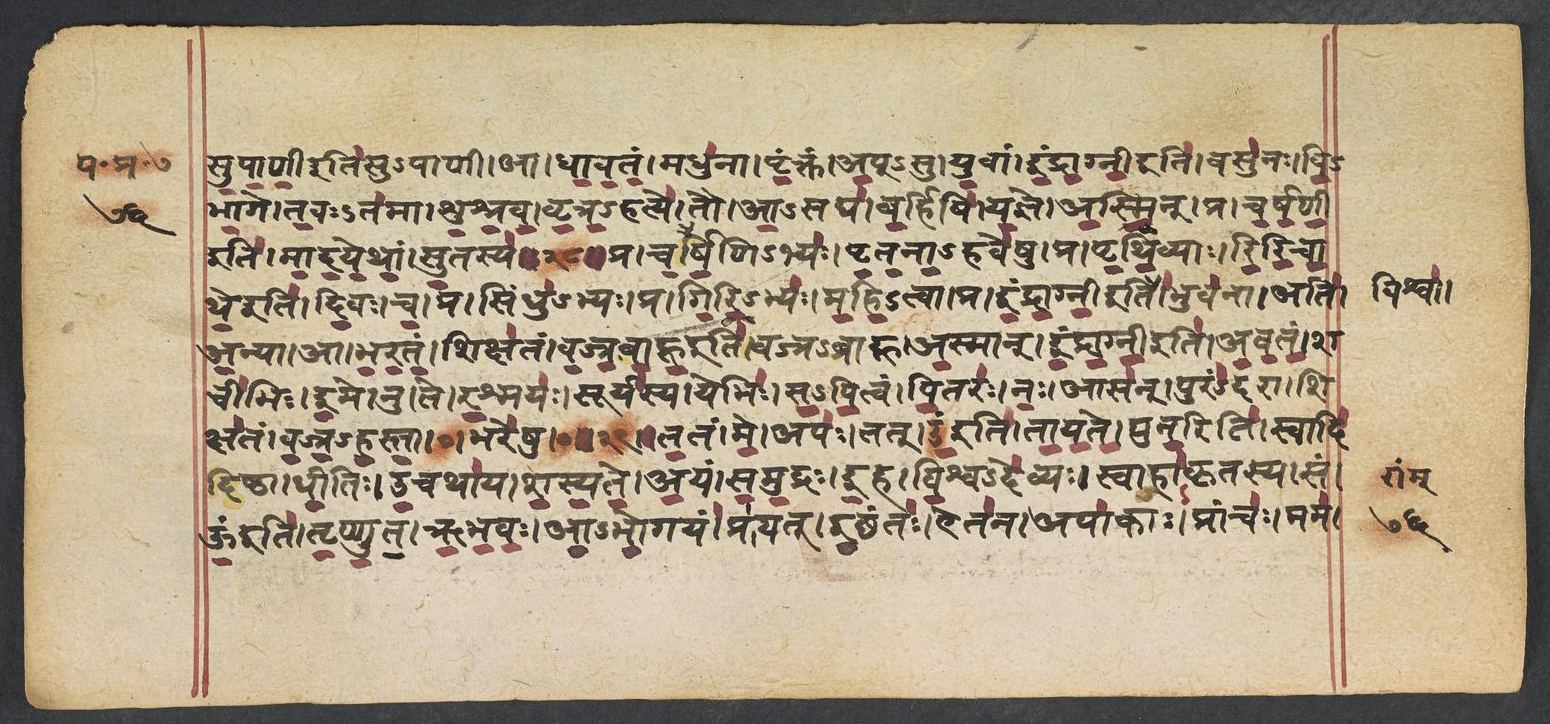
Where on the image
Penn Ms. Coll. 390 Item 41, fol. 76v (OPenn image 78, upper leaf). Checked on the image: the Rigveda text on this page begins in RV 1.109.4 ‹supāṇī itisu-pāṇī ā dhāvatam›. The next page with Rigveda text, fol. 77r, begins in RV 1.110.2 ‹ke cit āpayaḥ saudhanvanāsaḥ›. Verse 1.110.1 ends on this page.
1ta̱tam me̱ apa̱s tad u̍ tāyate̱ puna̱ḥ svādi̍ṣṭhā dhī̱tir u̱cathā̍ya śasyate | a̱yaṁ sa̍mu̱dra i̱ha vi̱śvade̍vya̱ḥ svāhā̍kṛtasya̱ sam u̍ tṛpṇuta ṛbhavaḥ ||
Compare: Padapāṭha (word-by-word text written in the manuscript; Sansknet e-text via GRETIL)
1tatam | me | apaḥ | tat | oṃ iti | tāyate | punariti | svādiṣṭhā | dhītiḥ | ucathāya | śasyate | ayam | samudraḥ | iha | v iśva-devyaḥ | svāhākṛtasya | sam | oṃ iti | tṛpṇuta | ṛbhavaḥ
1THE holy work I wrought before is wrought again: my sweetest hymn is sung to celebrate your praise. Here, O ye R̥ibhus, is this sea for all the Gods: sate you with Soma offered with the hallowing word.
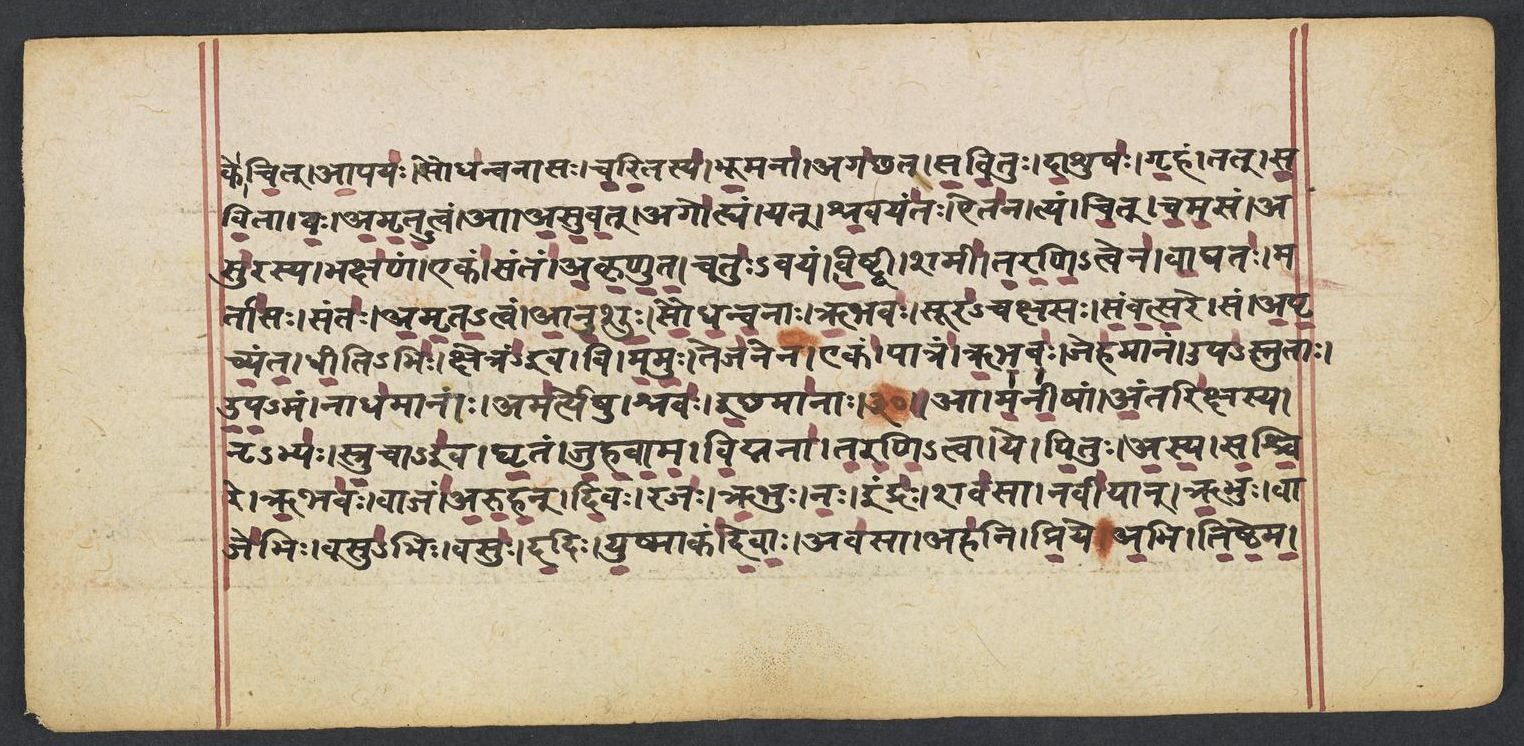
Where on the image
Penn Ms. Coll. 390 Item 41, fol. 77r (OPenn image 78, lower leaf). Checked on the image: the Rigveda text on this page begins in RV 1.110.2 ‹ke cit āpayaḥ saudhanvanāsaḥ›. The next page with Rigveda text, fol. 77v, begins in RV 1.110.7 ‹-pṛtsutīḥ asunvatām›. Verses 1.110.2-6 end on this page; 1.110.2 begins on fol. 76v.
2ā̱bho̱gaya̱m pra yad i̱cchanta̱ aita̱nāpā̍kā̱ḥ prāñco̱ mama̱ ke ci̍d ā̱paya̍ḥ | saudha̍nvanāsaś cari̱tasya̍ bhū̱manāga̍cchata savi̱tur dā̱śuṣo̍ gṛ̱ham ||
3tat sa̍vi̱tā vo̍ 'mṛta̱tvam āsu̍va̱d ago̍hya̱ṁ yac chra̱vaya̍nta̱ aita̍na | tyaṁ ci̍c cama̱sam asu̍rasya̱ bhakṣa̍ṇa̱m eka̱ṁ santa̍m akṛṇutā̱ catu̍rvayam ||
4vi̱ṣṭvī śamī̍ taraṇi̱tvena̍ vā̱ghato̱ martā̍sa̱ḥ santo̍ amṛta̱tvam ā̍naśuḥ | sau̱dha̱nva̱nā ṛ̱bhava̱ḥ sūra̍cakṣasaḥ saṁvatsa̱re sam a̍pṛcyanta dhī̱tibhi̍ḥ ||
5kṣetra̍m iva̱ vi ma̍mu̱s teja̍nena̱m̐ eka̱m pātra̍m ṛ̱bhavo̱ jeha̍mānam | upa̍stutā upa̱maṁ nādha̍mānā̱ ama̍rtyeṣu̱ śrava̍ i̱cchamā̍nāḥ ||
6ā ma̍nī̱ṣām a̱ntari̍kṣasya̱ nṛbhya̍ḥ sru̱ceva̍ ghṛ̱taṁ ju̍havāma vi̱dmanā̍ | ta̱ra̱ṇi̱tvā ye pi̱tur a̍sya saści̱ra ṛ̱bhavo̱ vāja̍m aruhan di̱vo raja̍ḥ ||
Compare: Padapāṭha (word-by-word text written in the manuscript; Sansknet e-text via GRETIL)
2ābhogayam | pra | yat | icchantaḥ | aitana | apākāḥ | prāñcaḥ | mama | ke | cit | āpayaḥ | saudhanvanāsaḥ | caritasya | bhūmanā | agacchata | savituḥ | dāśuṣaḥ | gṛham
3tat | savitā | vaḥ | amṛta-tvam | ā | asuvat | agohyam | yat | śravayantaḥ | aitana | tyam | cit | camasam | asurasya | bhakṣaṇam | ekam | santam | akṛṇuta | catuḥ-vayam
4viṣṭavī | śamī | taraṇi-tvena | vāghataḥ | martāsaḥ | santaḥ | amṛta-tvam | ānaśuḥ | saudhanvanāḥ | ṛbhavaḥ | sūra-cakṣasaḥ | saṃvatsare | sam | apṛcyanta | dhīti-bhiḥ
5kṣetram-iva | vi | mamuḥ | tejanenam | ekam | pātram | ṛbhavaḥ | jehamānam | upa-stutāḥ | upa-mam | nādhamānāḥ | amartyeṣu | śravaḥ | icchamānāḥ
6ā | mānīṣām | antarikṣasya | nṛ-bhyaḥ | srucāiva | ghṛtam | juhavāma | vidmanā | taraṇi-tvā | ye | pituḥ | asya | saścire | ṛbhavaḥ | vājam | aruhan | divaḥ | rajaḥ
2When, seeking your enjoyment onward from afar, ye, certain of my kinsmen, wandered on your way, Sons of Sudhanvan, after your long journeying, ye came unto the home of liberal Savitar.
3Savitar therefore gave you immortality, because ye came proclaiming him whom naught can hide; And this the drinking-chalice of the Asura, which till that time was one, ye made to be fourfold.
4When they had served with zeal at sacrifice as priests, they, mortal as they were, gained immortality. The R̥ibhus, children of Sudhanvan, bright as suns, were in a year's course made associate with prayers.
5The R̥ibhus, with a rod measured, as 'twere a field, the single sacrificial chalice. wide of mouth, Lauded of all who saw, praying for what is best, desiring glorious fame among Immortal Gods.
6As oil in ladles, we through knowledge will present unto the Heroes of the firmament our hymn,– The R̥ibhus who came near with this great Father's speed, and rose to heaven's high sphere to eat the strengthening food.
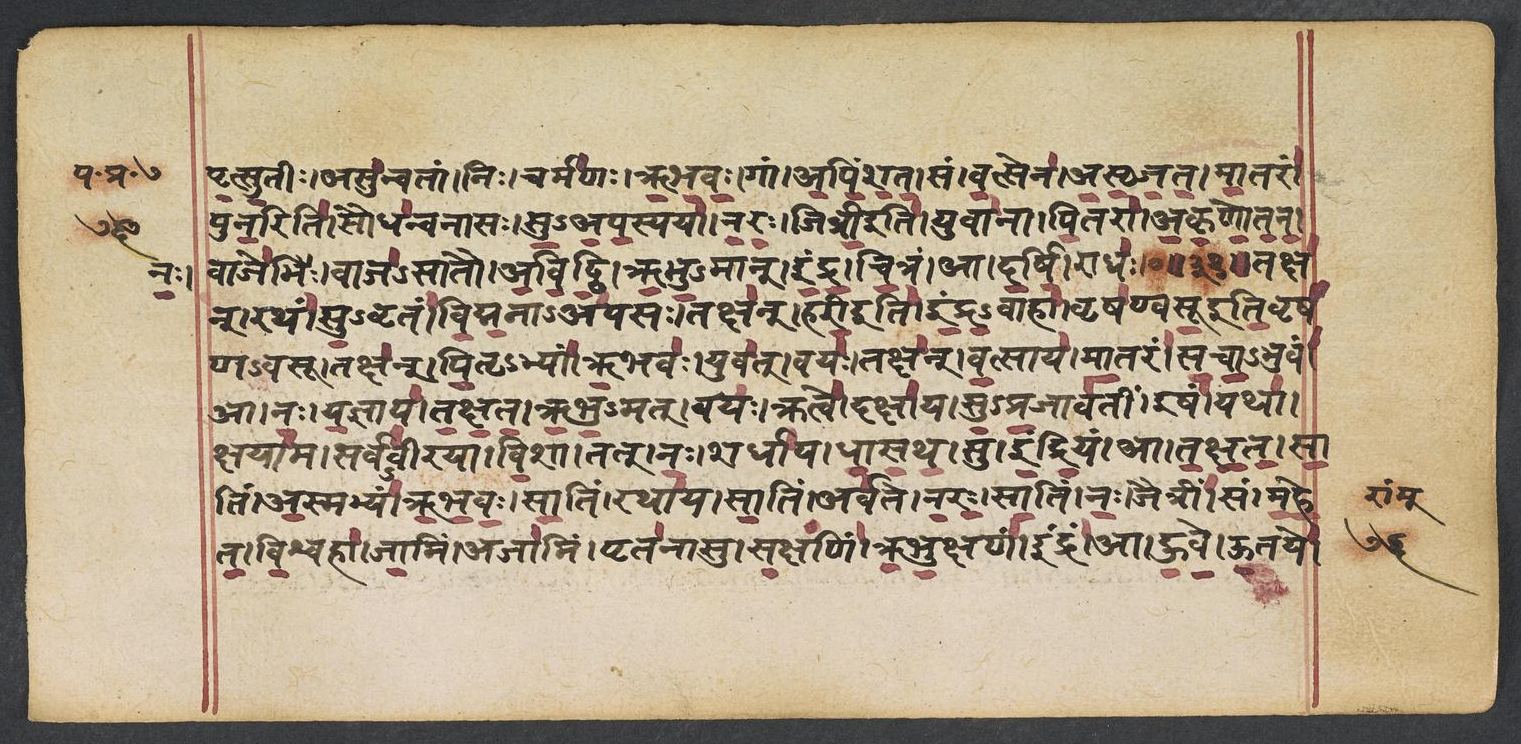
Where on the image
Penn Ms. Coll. 390 Item 41, fol. 77v (OPenn image 79, upper leaf). Checked on the image: the Rigveda text on this page begins in RV 1.110.7 ‹-pṛtsutīḥ asunvatām›. The next page with Rigveda text, fol. 78r, begins in RV 1.111.4 ‹ṛbhūn vājān marutaḥ soma-pītaye›. Verses 1.110.7-9 end on this page; 1.110.7 begins on fol. 77r.
7ṛ̱bhur na̱ indra̱ḥ śava̍sā̱ navī̍yān ṛ̱bhur vāje̍bhi̱r vasu̍bhi̱r vasu̍r da̱diḥ | yu̱ṣmāka̍ṁ devā̱ ava̱sāha̍ni pri̱ye̱3̱̍ 'bhi ti̍ṣṭhema pṛtsu̱tīr asu̍nvatām ||
8niś carma̍ṇa ṛbhavo̱ gām a̍piṁśata̱ saṁ va̱tsenā̍sṛjatā mā̱tara̱m puna̍ḥ | saudha̍nvanāsaḥ svapa̱syayā̍ naro̱ jivrī̱ yuvā̍nā pi̱tarā̍kṛṇotana ||
9vāje̍bhir no̱ vāja̍sātāv aviḍḍhy ṛbhu̱mām̐ i̍ndra ci̱tram ā da̍rṣi̱ rādha̍ḥ | tan no̍ mi̱tro varu̍ṇo māmahantā̱m adi̍ti̱ḥ sindhu̍ḥ pṛthi̱vī u̱ta dyauḥ ||
Compare: Padapāṭha (word-by-word text written in the manuscript; Sansknet e-text via GRETIL)
7ṛbhuḥ | naḥ | indraḥ | śavasā | navīyān | ṛbhuḥ | vājebhiḥ | vasu-bhiḥ | vasuḥ | dadiḥ | yuṣmākam | devāḥ | avasā | ahani | priye | abhi | tiṣṭhema | pṛtsutīḥ | asunvatām
8niḥ | carmaṇaḥ | ṛbhavaḥ | gām | apiṃśata | sam | vatsena | asṛjata | mātaram | punar iti | saudhanvanāsaḥ | su-apasyayā | naraḥ | jivrī iti | yuvānā | pitarā | akṛṇotana
9vājebhiḥ | naḥ | vāja-sātau | aviḍḍhi | ṛbhumān | indra | citram | ā | darṣi | rādhaḥ | tat | naḥ | mitraḥ | varuṇaḥ | mamahantām | aditiḥ | sindhuḥ | pṛthivī | uta | dyauḥ
7R̥ibhu to us is Indra freshest in his might, R̥ibhu with powers and wealth is giver of rich gifts. Gods, through your favour may we on the happy day quell the attacks of those who pour no offerings forth.
8Out of a skin, O R̥ibhus, once ye formed a cow, and brought the mother close unto her calf again. Sons of Sudhanvan, Heroes, with surpassing skill ye made your aged Parents youthful as before.
9Help us with strength where spoil is won, O Indra: joined with the R̥ibhus give us varied bounty. This prayer of ours may Varuṇa grant, and Mitra, and Aditi and Sindhu, Earth and Heaven.
Notes
- Sanskrit: Aufrecht's edition (1877) with the Vedic accents, as entered by van Nooten and Holland (GRETIL).
- English: Ralph T. H. Griffith, The Hymns of the Rigveda (1889-1892; 2nd ed. 1896-1897), from the VedaWeb digital text; OCR slips in that text were corrected against the printed 2nd edition (data/sources/rigveda/griffith_errata.json).
- Padapāṭha (edition text): Sansknet e-text via GRETIL (CC BY-NC-SA 4.0).
Cite
Sources
- Source: Penn Ms. Coll. 390 Item 41 (undated (catalogued with Penn's 18th-19th c. Vedic manuscripts)), OPenn, Public Domain Mark + Aufrecht's accented text (GRETIL) + Griffith's English (VedaWeb) (holding institution)
- Critical edition: Aufrecht (1877), accented e-text via GRETIL
← previous · → next · v cycle view · l back to library