Rigveda 1.11: To Indra
Introduction
Rigveda 1.11 is a hymn of 8 verses addressed to Indra. It stands in book (maṇḍala) 1, a collection of hymns by many families of poets. The Rigveda is the oldest collection of Sanskrit hymns, composed in the second half of the second millennium BCE and handed down orally for many centuries before it was written down.
The manuscript shown is Penn Ms. Coll. 390 Item 41 (University of Pennsylvania), an undated paper manuscript of the padapāṭha (the word-by-word recitation text, in which every word is written separately and compounds are split) of the whole Ṛgveda in Devanāgarī, 884 leaves in fascicles, 7-9 lines to the page, accents in red; this hymn stands on fol. 6r-6v. Each section below gives the verses that end on one page; the page boundaries were read on the images (the opening words of every page), not counted out. Where the manuscript is a padapāṭha (the word-by-word recitation text), the section shows Aufrecht's continuous (saṃhitā) text first and, as the edition text, the padapāṭha of the same verses, which is the form written on the page.
How was this verified? (Provenance)
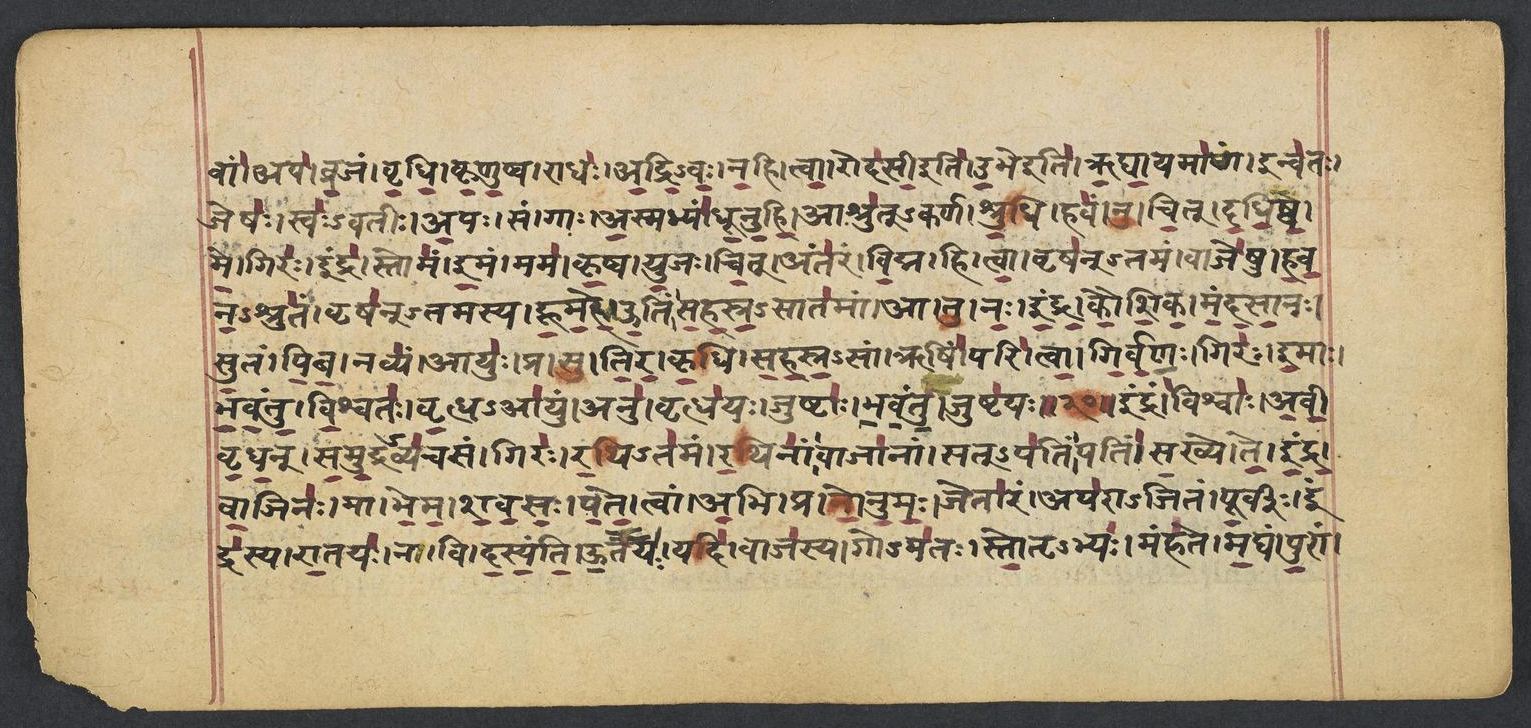
Where on the image
Penn Ms. Coll. 390 Item 41, fol. 6r (OPenn image 7, lower leaf). Checked on the image: the Rigveda text on this page begins in RV 1.10.7 ‹-gavām apa vrajam vṛdhi›. The next page with Rigveda text, fol. 6v, begins in RV 1.11.4 ‹bhinduḥ yuvā kaviḥ amita-ojāḥ›. Verses 1.11.1-3 end on this page.
1indra̱ṁ viśvā̍ avīvṛdhan samu̱dravya̍casa̱ṁ gira̍ḥ | ra̱thīta̍maṁ ra̱thīnā̱ṁ vājā̍nā̱ṁ satpa̍ti̱m pati̍m ||
2sa̱khye ta̍ indra vā̱jino̱ mā bhe̍ma śavasas pate | tvām a̱bhi pra ṇo̍numo̱ jetā̍ra̱m apa̍rājitam ||
3pū̱rvīr indra̍sya rā̱tayo̱ na vi da̍syanty ū̱taya̍ḥ | yadī̱ vāja̍sya̱ goma̍taḥ sto̱tṛbhyo̱ maṁha̍te ma̱gham ||
Compare: Padapāṭha (word-by-word text written in the manuscript; Sansknet e-text via GRETIL)
1indram | viśvāḥ | avīvṛdhan | samudra-vyacasam | giraḥ | rathi-tamam | rathīnām | vājānām | sat-patim | patim
2sakhye | te | indra | vājinaḥ | mā | bhema | śavasaḥ | pate | tvām | abhi | pra | nonumaḥ | jetāram | aparājitam
3pūrvīḥ | indrasya | rātayaḥ | na | vi | dasyanti | ūtayaḥ | yadi | vājasya | go--mataḥ | stotṛ-bhyaḥ | maṃhate | magham
1ALL sacred songs have magnified Indra expansive as the sea, The best of warriors borne on cars, the Lord, the very Lord of strength.
2Strong in thy friendship, Indra, Lord of power and might, we have no fear. We glorify with praises thee, the never-conquered conqueror.
3The gifts of Indra from of' old, his saving succours, never fail, When to the praise-singers he gives the boon of substance rich in kine.
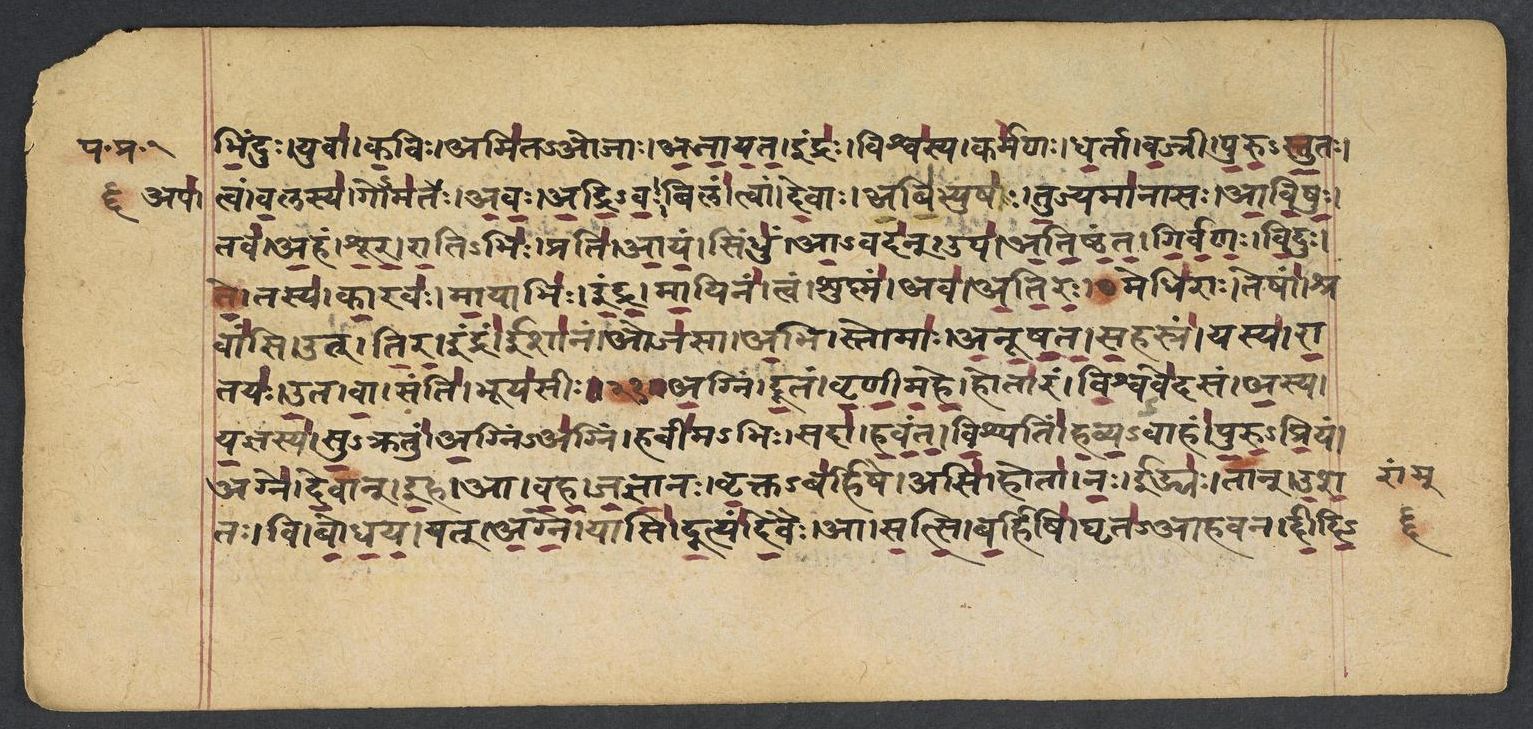
Where on the image
Penn Ms. Coll. 390 Item 41, fol. 6v (OPenn image 8, upper leaf). Checked on the image: the Rigveda text on this page begins in RV 1.11.4 ‹bhinduḥ yuvā kaviḥ amita-ojāḥ›. The next page with Rigveda text, fol. 7r, begins in RV 1.12.5 ‹-dīdi-vaḥ prati sma riṣataḥ›. Verses 1.11.4-8 end on this page; 1.11.4 begins on fol. 6r.
4pu̱rām bhi̱ndur yuvā̍ ka̱vir ami̍taujā ajāyata | indro̱ viśva̍sya̱ karma̍ṇo dha̱rtā va̱jrī pu̍ruṣṭu̱taḥ ||
5tvaṁ va̱lasya̱ goma̱to 'pā̍var adrivo̱ bila̍m | tvāṁ de̱vā abi̍bhyuṣas tu̱jyamā̍nāsa āviṣuḥ ||
6tavā̱haṁ śū̍ra rā̱tibhi̱ḥ praty ā̍ya̱ṁ sindhu̍m ā̱vada̍n | upā̍tiṣṭhanta girvaṇo vi̱duṣ ṭe̱ tasya̍ kā̱rava̍ḥ ||
7mā̱yābhi̍r indra mā̱yina̱ṁ tvaṁ śuṣṇa̱m avā̍tiraḥ | vi̱duṣ ṭe̱ tasya̱ medhi̍rā̱s teṣā̱ṁ śravā̱ṁsy ut ti̍ra ||
8indra̱m īśā̍na̱m oja̍sā̱bhi stomā̍ anūṣata | sa̱hasra̱ṁ yasya̍ rā̱taya̍ u̱ta vā̱ santi̱ bhūya̍sīḥ ||
Compare: Padapāṭha (word-by-word text written in the manuscript; Sansknet e-text via GRETIL)
4purām | bhinduḥ | yuvā | kaviḥ | amita-ojāḥ | ajāyata | indraḥ | viśvasya | kamarṇaḥ | dhartā | vajrī | puru-stutaḥ
5tvam | valasya | go--mataḥ | apa | avaḥ | adri-vaḥ | bilam | tvām | devāḥ | abibhyuṣaḥ | tujyamānāsaḥ | āviṣuḥ
6tava | aham | śūra | rāti-bhiḥ | prati | āyam | sindhum | āvadan | upa | atiṣṭhanta | girvaṇaḥ | viduḥ | te | tasya | kāravaḥ
7māyābhiḥ | indra | māyinam | tvam | śuṣṇam | ava | atiraḥ | viduḥ | te | tasya | medhirāḥ | teṣām | śravāṃsi | ut | tira
8indram | īśānam | ojasā | abhi | stomāḥ | anūṣata | sahasram | yasya | rātayaḥ | uta | vā | santi | bhūyasīḥ
4Crusher of forts, the young, the wise, of strength unmeasured, was he born Sustainer of each sacred rite, Indra, the Thunderer, much-extolled.
5Lord of the thunder, thou didst burst the cave of Vala rich in cows. The Gods came pressing to thy side, and free from terror aided thee,
6I, Hero, through thy bounties am come to the flood addressing thee. Song-lover, here the singers stand and testify to thee thereof.
7The wily Ṣushṇa, Indra! thou o'er-threwest with thy wondrous powers. The wise beheld this deed of thine: now go beyond their eulogies.
8Our songs of praise have glorified Indra who ruleth by his might, Whose precious gifts in thousands come, yea, even more abundantly.
Notes
- Sanskrit: Aufrecht's edition (1877) with the Vedic accents, as entered by van Nooten and Holland (GRETIL).
- English: Ralph T. H. Griffith, The Hymns of the Rigveda (1889-1892; 2nd ed. 1896-1897), from the VedaWeb digital text; OCR slips in that text were corrected against the printed 2nd edition (data/sources/rigveda/griffith_errata.json).
- Padapāṭha (edition text): Sansknet e-text via GRETIL (CC BY-NC-SA 4.0).
Cite
Sources
- Source: Penn Ms. Coll. 390 Item 41 (undated (catalogued with Penn's 18th-19th c. Vedic manuscripts)), OPenn, Public Domain Mark + Aufrecht's accented text (GRETIL) + Griffith's English (VedaWeb) (holding institution)
- Critical edition: Aufrecht (1877), accented e-text via GRETIL
← previous · → next · v cycle view · l back to library