Rigveda 1.111: To the Ribhus
Introduction
Rigveda 1.111 is a hymn of 5 verses addressed to the Ribhus. It stands in book (maṇḍala) 1, a collection of hymns by many families of poets. The Rigveda is the oldest collection of Sanskrit hymns, composed in the second half of the second millennium BCE and handed down orally for many centuries before it was written down.
The manuscript shown is Penn Ms. Coll. 390 Item 41 (University of Pennsylvania), an undated paper manuscript of the padapāṭha (the word-by-word recitation text, in which every word is written separately and compounds are split) of the whole Ṛgveda in Devanāgarī, 884 leaves in fascicles, 7-9 lines to the page, accents in red; this hymn stands on fol. 77v-78r. Each section below gives the verses that end on one page; the page boundaries were read on the images (the opening words of every page), not counted out. Where the manuscript is a padapāṭha (the word-by-word recitation text), the section shows Aufrecht's continuous (saṃhitā) text first and, as the edition text, the padapāṭha of the same verses, which is the form written on the page.
How was this verified? (Provenance)
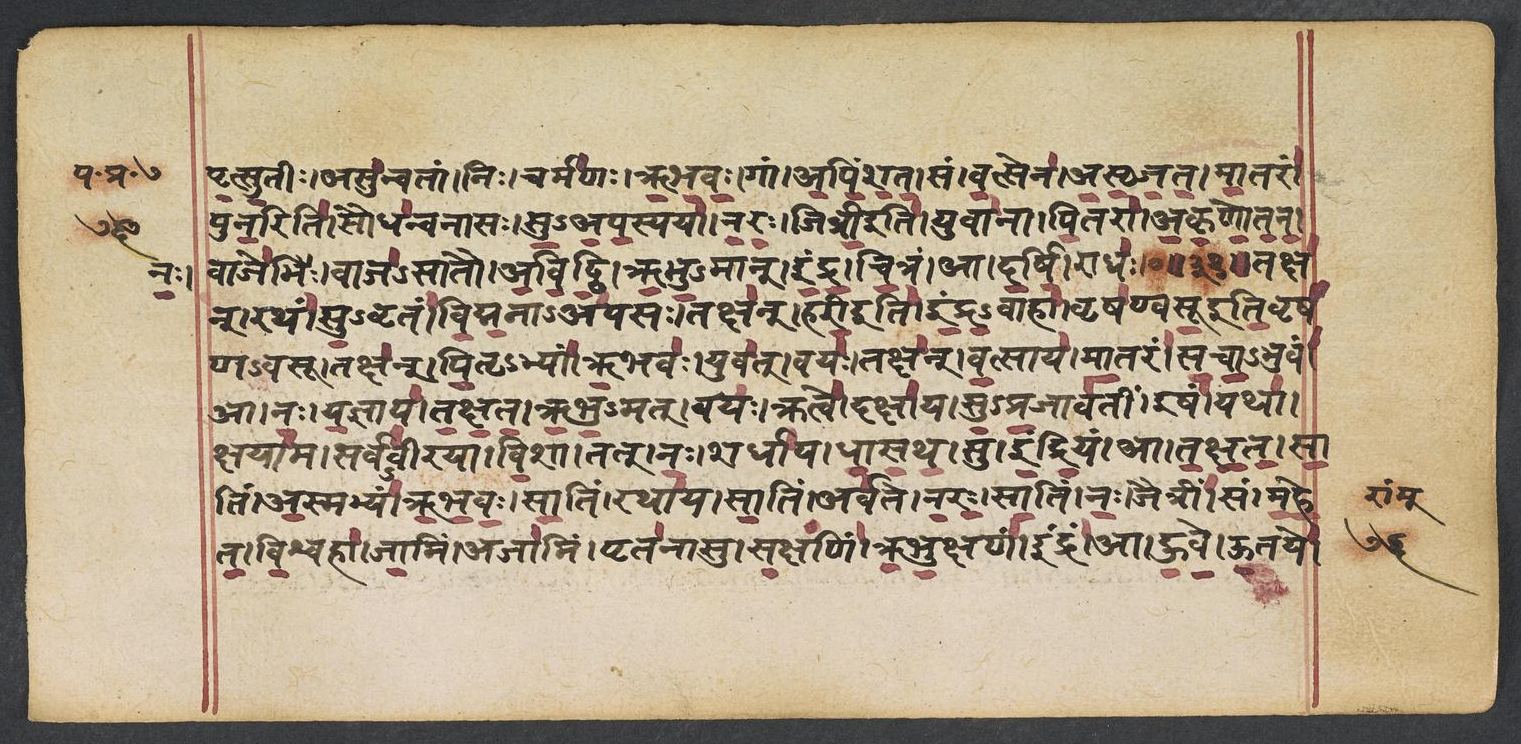
Where on the image
Penn Ms. Coll. 390 Item 41, fol. 77v (OPenn image 79, upper leaf). Checked on the image: the Rigveda text on this page begins in RV 1.110.7 ‹-pṛtsutīḥ asunvatām›. The next page with Rigveda text, fol. 78r, begins in RV 1.111.4 ‹ṛbhūn vājān marutaḥ soma-pītaye›. Verses 1.111.1-3 end on this page.
1takṣa̱n ratha̍ṁ su̱vṛta̍ṁ vidma̱nāpa̍sa̱s takṣa̱n harī̍ indra̱vāhā̱ vṛṣa̍ṇvasū | takṣa̍n pi̱tṛbhyā̍m ṛ̱bhavo̱ yuva̱d vaya̱s takṣa̍n va̱tsāya̍ mā̱tara̍ṁ sacā̱bhuva̍m ||
2ā no̍ ya̱jñāya̍ takṣata ṛbhu̱mad vaya̱ḥ kratve̱ dakṣā̍ya supra̱jāva̍tī̱m iṣa̍m | yathā̱ kṣayā̍ma̱ sarva̍vīrayā vi̱śā tan na̱ḥ śardhā̍ya dhāsathā̱ sv i̍ndri̱yam ||
3ā ta̍kṣata sā̱tim a̱smabhya̍m ṛbhavaḥ sā̱tiṁ rathā̍ya sā̱tim arva̍te naraḥ | sā̱tiṁ no̱ jaitrī̱ṁ sam ma̍heta vi̱śvahā̍ jā̱mim ajā̍mi̱m pṛta̍nāsu sa̱kṣaṇi̍m ||
Compare: Padapāṭha (word-by-word text written in the manuscript; Sansknet e-text via GRETIL)
1takṣan | ratham | su-vṛtam | vidmanāapasaḥ | takṣan | harī iti | indra-vāhā | vṛṣaṇvasūitivṛṣaṇ-vasū | takṣan | pitṛ-bhyām | ṛbhavaḥ | yuvat | vayaḥ | takṣan | vatsāya | mātaram | sacābhuvam
2ā | naḥ | yajñāya | takṣata | ṛbhu-mat | vayaḥ | ṛtve | dakṣāya | su-prajāvatīm | iṣam | yathā | kṣayāma | sarva-vīrayā | viśā | tat | naḥ | śardhāya | dhāsatha | su | indriyam
3ā | takṣata | sātim | asmabhyam | ṛbhavaḥ | sātim | rathāya | sātim | arvate | naraḥ | sāti m | naḥ | jaitrīm | sam | maheta | viśva-hā | jāmim | ajāmim | pṛtanāsu | sakṣaṇim
1WORKING with skill they wrought the lightly rolling car: they wrought the Bays who bear Indra and bring great gifts. The R̥ibhus for their Parents made life young again; and fashioned for the calf a mother by its side.
2For sacrifice make for us active vital power for skill and wisdom food with noble progeny. Grant to our company this power most excellent, that with a family all-heroic we may dwell.
3Do ye, O R̥ibhus, make prosperity for us, prosperity for car, ye Heroes, and for steed. Grant us prosperity victorious evermore, conquering foes in battle, strangers or akin.
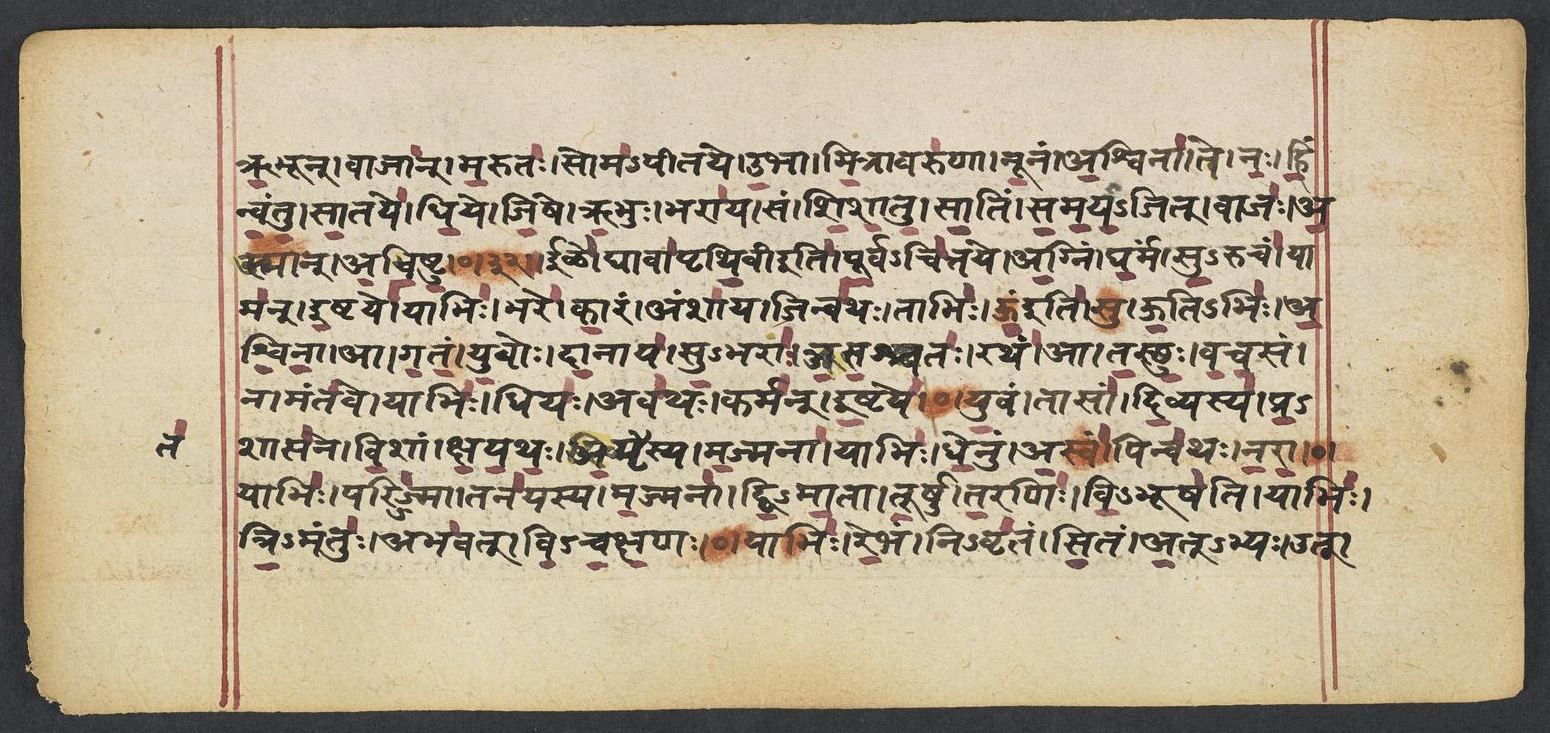
Where on the image
Penn Ms. Coll. 390 Item 41, fol. 78r (OPenn image 79, lower leaf). Checked on the image: the Rigveda text on this page begins in RV 1.111.4 ‹ṛbhūn vājān marutaḥ soma-pītaye›. The next page with Rigveda text, fol. 78v, begins in RV 1.112.5 ‹vandanam airayatam svaḥ dṛśe›. Verses 1.111.4-5 end on this page; 1.111.4 begins on fol. 77v.
4ṛ̱bhu̱kṣaṇa̱m indra̱m ā hu̍va ū̱taya̍ ṛ̱bhūn vājā̍n ma̱ruta̱ḥ soma̍pītaye | u̱bhā mi̱trāvaru̍ṇā nū̱nam a̱śvinā̱ te no̍ hinvantu sā̱taye̍ dhi̱ye ji̱ṣe ||
5ṛ̱bhur bharā̍ya̱ saṁ śi̍śātu sā̱tiṁ sa̍marya̱jid vājo̍ a̱smām̐ a̍viṣṭu | tan no̍ mi̱tro varu̍ṇo māmahantā̱m adi̍ti̱ḥ sindhu̍ḥ pṛthi̱vī u̱ta dyauḥ ||
Compare: Padapāṭha (word-by-word text written in the manuscript; Sansknet e-text via GRETIL)
4ṛbhukṣaṇam | indram | ā | huve | ūtaye | ṛbhūn | vājān | marutaḥ | soma-pītaye | ubhā | mitrāvarūṇā | nūnam | aśvinā | te | naḥ | hinvantu | sātaye | dhiye | jiṣe
5ṛbhuḥ | bharāya | sam | śiśātu | sātim | samarya-jit | vājaḥ | asmān | aviṣṭu | tat | naḥ | mi traḥ | varuṇaḥ | mamahantām | aditiḥ | sindhuḥ | pṛthivī | uta | dyauḥ
4Indra, the R̥ibhus' Lord, I invocate for aid, the R̥ibhus, Vâjas, Maruts to the Soma draught. Varuṇa, Mitra, both, yea, and the Aṣvins Twain: let them speed us to wealth, wisdom, and victory.
5May R̥ibhu send prosperity for battle, may Vâja conquering in the fight protect us. This prayer of ours may Varuṇa grant, and Mitra, and Aditi and Sindhu, Earth and Heaven.
Notes
- Sanskrit: Aufrecht's edition (1877) with the Vedic accents, as entered by van Nooten and Holland (GRETIL).
- English: Ralph T. H. Griffith, The Hymns of the Rigveda (1889-1892; 2nd ed. 1896-1897), from the VedaWeb digital text; OCR slips in that text were corrected against the printed 2nd edition (data/sources/rigveda/griffith_errata.json).
- Padapāṭha (edition text): Sansknet e-text via GRETIL (CC BY-NC-SA 4.0).
Cite
Sources
- Source: Penn Ms. Coll. 390 Item 41 (undated (catalogued with Penn's 18th-19th c. Vedic manuscripts)), OPenn, Public Domain Mark + Aufrecht's accented text (GRETIL) + Griffith's English (VedaWeb) (holding institution)
- Critical edition: Aufrecht (1877), accented e-text via GRETIL
← previous · → next · v cycle view · l back to library