Rigveda 1.112: To Asvins
Introduction
Rigveda 1.112 is a hymn of 25 verses addressed to Asvins. It stands in book (maṇḍala) 1, a collection of hymns by many families of poets. The Rigveda is the oldest collection of Sanskrit hymns, composed in the second half of the second millennium BCE and handed down orally for many centuries before it was written down.
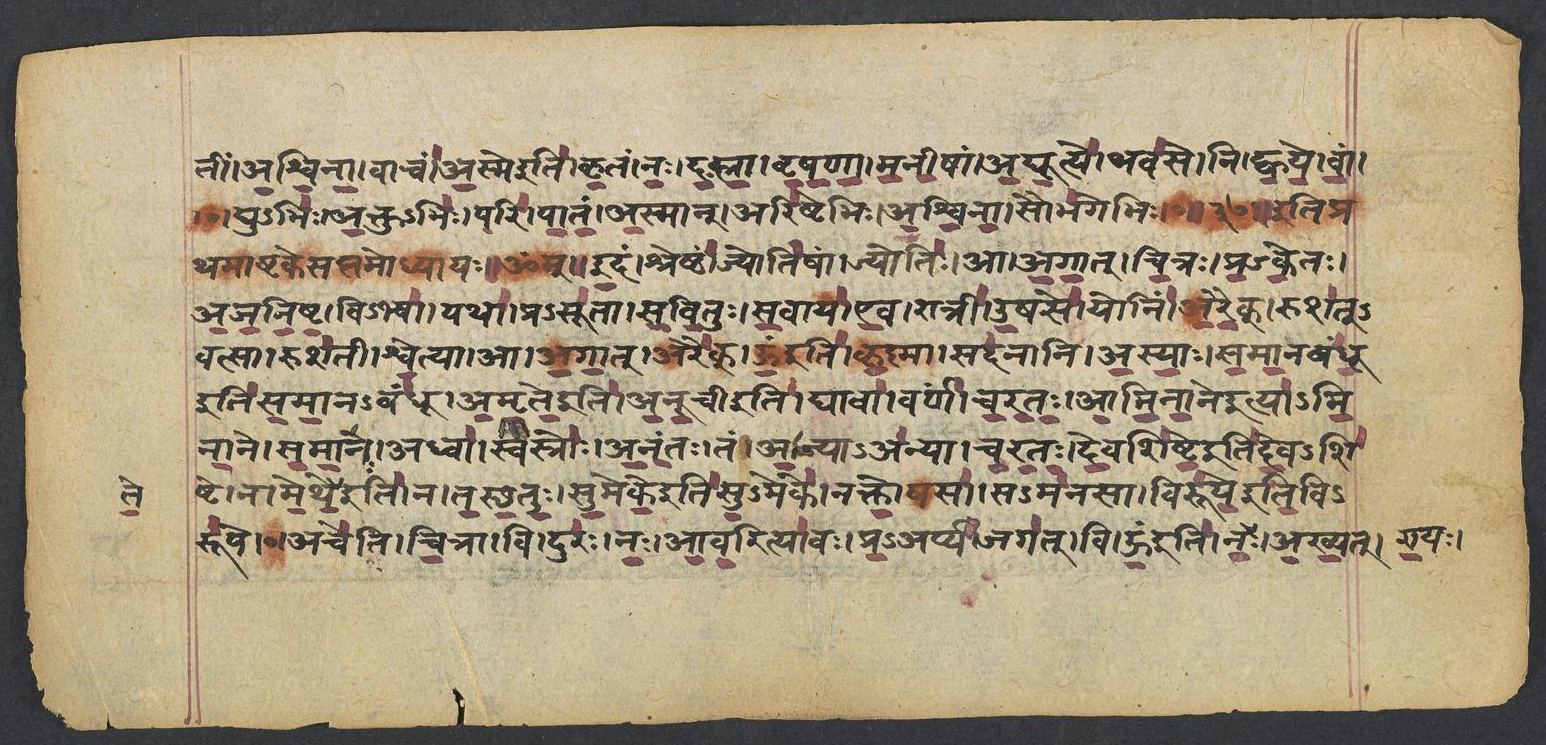
The manuscript shown is Penn Ms. Coll. 390 Item 41 (University of Pennsylvania), an undated paper manuscript of the padapāṭha (the word-by-word recitation text, in which every word is written separately and compounds are split) of the whole Ṛgveda in Devanāgarī, 884 leaves in fascicles, 7-9 lines to the page, accents in red; this hymn stands on fol. 78r-80r. Each section below gives the verses that end on one page; the page boundaries were read on the images (the opening words of every page), not counted out. Where the manuscript is a padapāṭha (the word-by-word recitation text), the section shows Aufrecht's continuous (saṃhitā) text first and, as the edition text, the padapāṭha of the same verses, which is the form written on the page.
How was this verified? (Provenance)
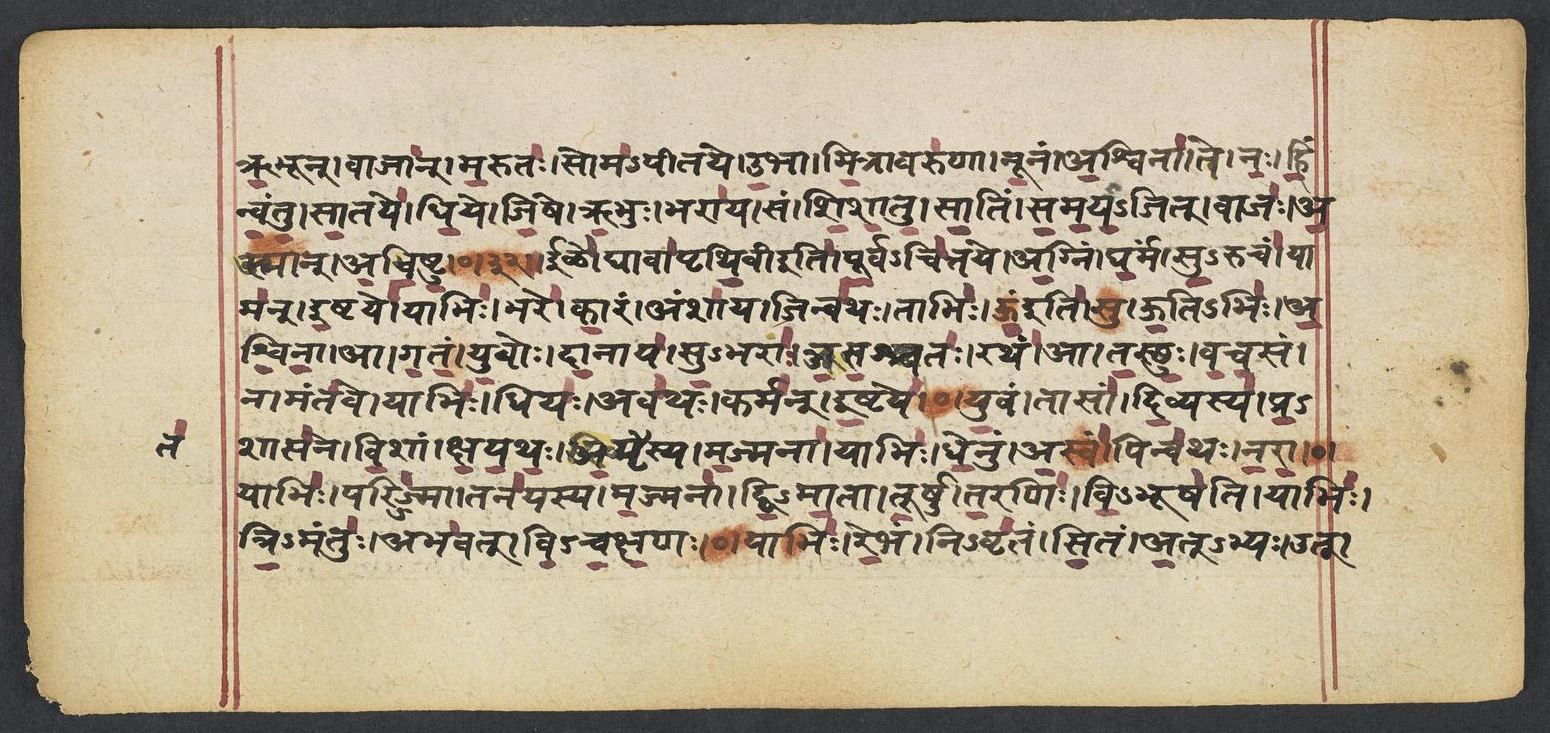
Where on the image
Penn Ms. Coll. 390 Item 41, fol. 78r (OPenn image 79, lower leaf). Checked on the image: the Rigveda text on this page begins in RV 1.111.4 ‹ṛbhūn vājān marutaḥ soma-pītaye›. The next page with Rigveda text, fol. 78v, begins in RV 1.112.5 ‹vandanam airayatam svaḥ dṛśe›. Verses 1.112.1-4 end on this page.
1īḻe̱ dyāvā̍pṛthi̱vī pū̱rvaci̍ttaye̱ 'gniṁ gha̱rmaṁ su̱ruca̱ṁ yāma̍nn i̱ṣṭaye̍ | yābhi̱r bhare̍ kā̱ram aṁśā̍ya̱ jinva̍tha̱s tābhi̍r ū̱ ṣu ū̱tibhi̍r aśvi̱nā ga̍tam ||
2yu̱vor dā̱nāya̍ su̱bharā̍ asa̱ścato̱ ratha̱m ā ta̍sthur vaca̱saṁ na manta̍ve | yābhi̱r dhiyo 'va̍tha̱ḥ karma̍nn i̱ṣṭaye̱ tābhi̍r ū̱ ṣu ū̱tibhi̍r aśvi̱nā ga̍tam ||
3yu̱vaṁ tāsā̍ṁ di̱vyasya̍ pra̱śāsa̍ne vi̱śāṁ kṣa̍yatho a̱mṛta̍sya ma̱jmanā̍ | yābhi̍r dhe̱num a̱sva1̱̍m pinva̍tho narā̱ tābhi̍r ū̱ ṣu ū̱tibhi̍r aśvi̱nā ga̍tam ||
4yābhi̱ḥ pari̍jmā̱ tana̍yasya ma̱jmanā̍ dvimā̱tā tū̱rṣu ta̱raṇi̍r vi̱bhūṣa̍ti | yābhi̍s tri̱mantu̱r abha̍vad vicakṣa̱ṇas tābhi̍r ū̱ ṣu ū̱tibhi̍r aśvi̱nā ga̍tam ||
Compare: Padapāṭha (word-by-word text written in the manuscript; Sansknet e-text via GRETIL)
1īḷe | dyāvāpṛthivī iti | pūrva-cittaye | agnim | gharmam | su-rucam | yāman | iṣṭaye | yābhiḥ | bhare | kāram | aṃśāya | jinvathaḥ | tābhiḥ | oṃ iti | su | ūti-bhiḥ | aśvinā | ā | gatam
2yuvoḥ | dānāya | su-bharāḥ | asaścataḥ | ratham | ā | tasthuḥ | vacasam | na | mantave | yābhiḥ | dhiyaḥ | avathaḥ | karman | iṣṭaye | tābhiḥ | oṃ iti | su | ūti-bhiḥ | aśvinā | ā | gatam
3yuvam | tāsām | divyasya | pra-śāsane | viśām | kṣayathaḥ | amṛtasya | majmanā | yābh iḥ | dhenum | asvam | pinvathaḥ | narā | tābhiḥ | oṃ iti | su | ūti-bhiḥ | aśvinā | ā | gatam
4yābhiḥ | pari-jmā | tanayasya | majmanā | dviimātā | tūrṣu | taraṇiḥ | vi-bhūṣati | yābhiḥ | tri-mantuḥ | abhavat | vi-cakṣaṇaḥ | tābhiḥ | oṃ iti | su | ūti-bhiḥ | aśvinā | ā | gatam
1To give first thought to them, I worship Heaven and Earth, and Agni, fair bright glow, to hasten their approach. Come hither unto us, O Aṣvins, with those aids wherewith in fight ye speed the war-cry to the spoil.
2Ample, unfailing, they have mounted as it were an eloquent car that ye may think of us and give. Come hither unto us, O Aṣvins, with those aids wherewith ye help our thoughts to further holy acts.
3Ye by the might which heavenly nectar giveth you are in supreme dominion Lords of all these folk. Come hither unto us, O Aṣvins, with those aids wherewith ye, Heroes, made the barren cow give milk.
4The aids wherewith the Wanderer through his offspring's might, or the Two-Mothered Son shows swiftest mid the swift; Wherewith the sapient one acquired his triple lore,– Come hither unto us, O Aṣvins, with those aids.
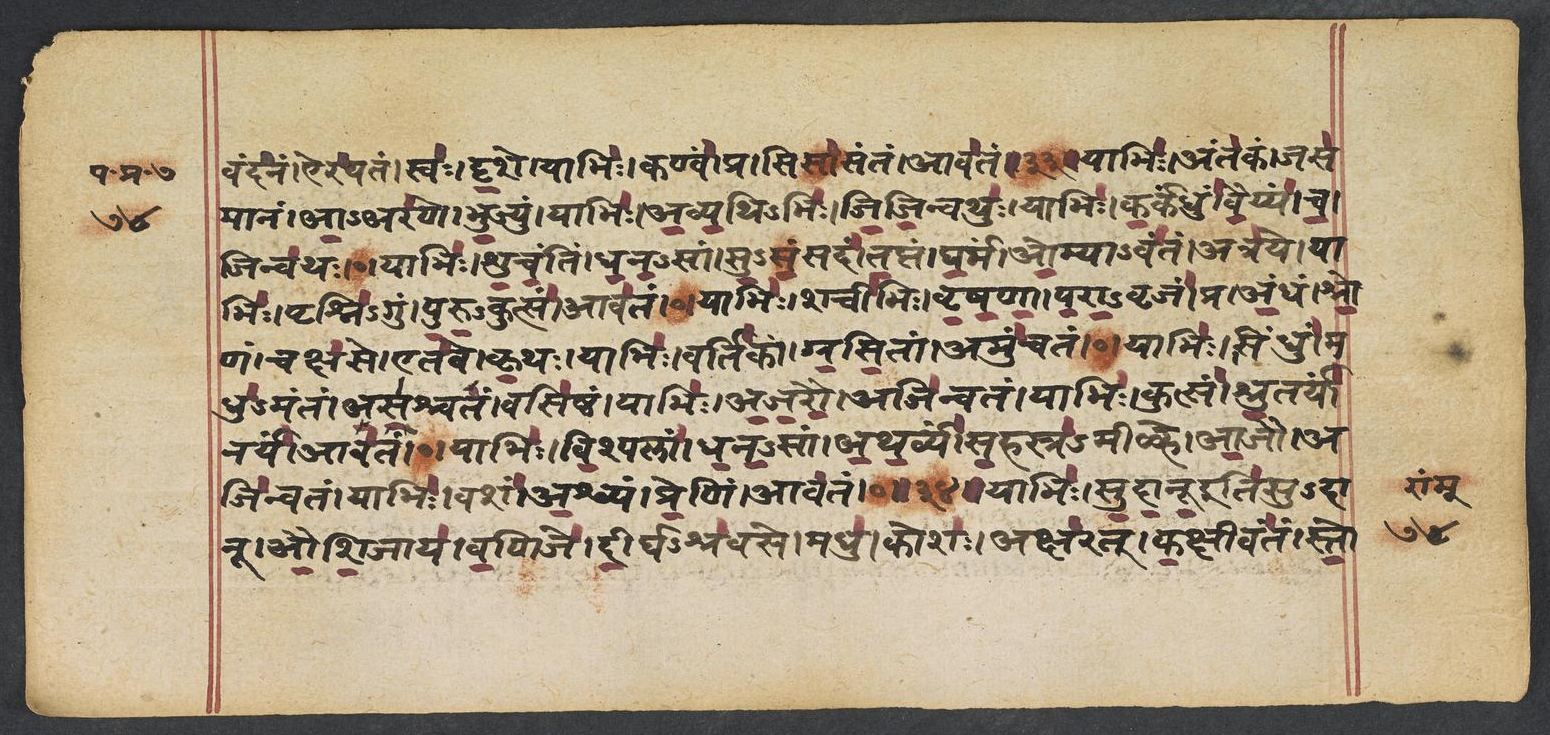
Where on the image
Penn Ms. Coll. 390 Item 41, fol. 78v (OPenn image 80, upper leaf). Checked on the image: the Rigveda text on this page begins in RV 1.112.5 ‹vandanam airayatam svaḥ dṛśe›. The next page with Rigveda text, fol. 79r, begins in RV 1.112.11 ‹-stotāram yābhiḥ āvatam tābhiḥ›. Verses 1.112.5-10 end on this page; 1.112.5 begins on fol. 78r.
5yābhī̍ re̱bhaṁ nivṛ̍taṁ si̱tam a̱dbhya ud vanda̍na̱m aira̍yata̱ṁ sva̍r dṛ̱śe | yābhi̱ḥ kaṇva̱m pra siṣā̍santa̱m āva̍ta̱ṁ tābhi̍r ū̱ ṣu ū̱tibhi̍r aśvi̱nā ga̍tam ||
6yābhi̱r anta̍ka̱ṁ jasa̍māna̱m āra̍ṇe bhu̱jyuṁ yābhi̍r avya̱thibhi̍r jiji̱nvathu̍ḥ | yābhi̍ḥ ka̱rkandhu̍ṁ va̱yya̍ṁ ca̱ jinva̍tha̱s tābhi̍r ū̱ ṣu ū̱tibhi̍r aśvi̱nā ga̍tam ||
7yābhi̍ḥ śuca̱ntiṁ dha̍na̱sāṁ su̍ṣa̱ṁsada̍ṁ ta̱ptaṁ gha̱rmam o̱myāva̍nta̱m atra̍ye | yābhi̱ḥ pṛśni̍gum puru̱kutsa̱m āva̍ta̱ṁ tābhi̍r ū̱ ṣu ū̱tibhi̍r aśvi̱nā ga̍tam ||
8yābhi̱ḥ śacī̍bhir vṛṣaṇā parā̱vṛja̱m prāndhaṁ śro̱ṇaṁ cakṣa̍sa̱ eta̍ve kṛ̱thaḥ | yābhi̱r varti̍kāṁ grasi̱tām amu̍ñcata̱ṁ tābhi̍r ū̱ ṣu ū̱tibhi̍r aśvi̱nā ga̍tam ||
9yābhi̱ḥ sindhu̱m madhu̍manta̱m asa̍ścata̱ṁ vasi̍ṣṭha̱ṁ yābhi̍r ajarā̱v aji̍nvatam | yābhi̱ḥ kutsa̍ṁ śru̱tarya̱ṁ narya̱m āva̍ta̱ṁ tābhi̍r ū̱ ṣu ū̱tibhi̍r aśvi̱nā ga̍tam ||
10yābhi̍r vi̱śpalā̍ṁ dhana̱sām a̍tha̱rvya̍ṁ sa̱hasra̍mīḻha ā̱jāv aji̍nvatam | yābhi̱r vaśa̍m a̱śvyam pre̱ṇim āva̍ta̱ṁ tābhi̍r ū̱ ṣu ū̱tibhi̍r aśvi̱nā ga̍tam ||
Compare: Padapāṭha (word-by-word text written in the manuscript; Sansknet e-text via GRETIL)
5yābhiḥ | rebham | ni-vṛtam | sitam | at-bhyaḥ | ut | vandanam | airayatam | svaḥ | dṛśe | yābhiḥ | kaṇvam | pra | sisāsantam | āvatam | tābhiḥ | oṃ iti | su | ūti-bhiḥ | aśvinā | ā | gatam
6yābhiḥ | antakam | jasamānam | āaraṇe | bhujyum | yābhiḥ | avyathi-bhiḥ | jijinvathuḥ | yābh iḥ | karkandhum | vayyam | ca | jinvathaḥ | tābhiḥ | oṃ iti | su | ūti-bhiḥ | aśvinā | ā | gatam
7yābhiḥ | śucanti | dhanasām | su-saṃsadam | taptam | gharmam | omyāvantam | atraye | yābhiḥ | pṛṣni-gum | puru-kutsam | āvatam | tābhiḥ | oṃ iti | su | ūti-bhiḥ | aśvinā | ā | gatam
8yābhiḥ | śacībhiḥ | vṛṣaṇā | parāvṛjam | pra | andham | śroṇam | cakṣase | etave | kṛthaḥ | yābhiḥ | vartikām | grasitām | amuñcatam | tābhiḥ | oṃ iti | su | ūti-bhiḥ | aśvinā | ā | gatam
9yābhiḥ | sindhum | madhu-mantam | asaścatam | vasiṣṭham | yābhiḥ | ajarau | ajinvatam | yābhiḥ | kutsam | śrutaryam | naryam | āvatam | tābhiḥ | oṃ iti | su | ūti-bhiḥ | aśvinā | ā | gatam
10yābhiḥ | viśpalām | dhana-sām | atharvyam | sahasra-mīḷhe | ājau | ajinvatam | yābhiḥ | vaśam | aśvyam | preṇim | āvatam | tābhiḥ | oṃ iti | su | ūti-bhiḥ | aśvinā | ā | gatam
5Wherewith ye raised from waters, prisoned and fast bound, Rebha, and Vandana to look upon the light; Wherewith ye succoured Kaṇva as he strove to win,– Come hither unto us, O Aṣvins, with those aids.
6Wherewith ye rescued Antaka when languishing deep in the pit, and Bhujyu with unfailing help. And comforted Karkandhu, Vayya, in their woe,– Come hither unto us, O Aṣvins, with those aids.
7Wherewith ye gave Ṣuchanti wealth and happy home, and made the fiery pit friendly for Atri's sake; Wherewith ye guarded Purukutsa, Pr̥iṣnigu, -Come hither unto us, O Aṣvins, with those aids.
8Mighty Ones, with what powers ye gave Paravrj aid what time ye made the blind and lame to see and walk; Wherewith ye set at liberty the swallowed quail,– Come hither unto us, O Aṣvins, with those aids.
9Wherewith ye quickened the most sweet exhaustless flood, and comforted Vasishṭha, ye who ne'er decay; And to Ṣrutarya, Kutsa, Narya gave your help,– Come hither unto us, O Aṣvins, with those aids.
10Wherewith ye helped, in battle of a thousand spoils, Vispala seeking booty, powerless to move. Wherewith ye guarded friendly Vaga, Aṣva's son,– Come hither unto us, O Aṣvins, with those aids.
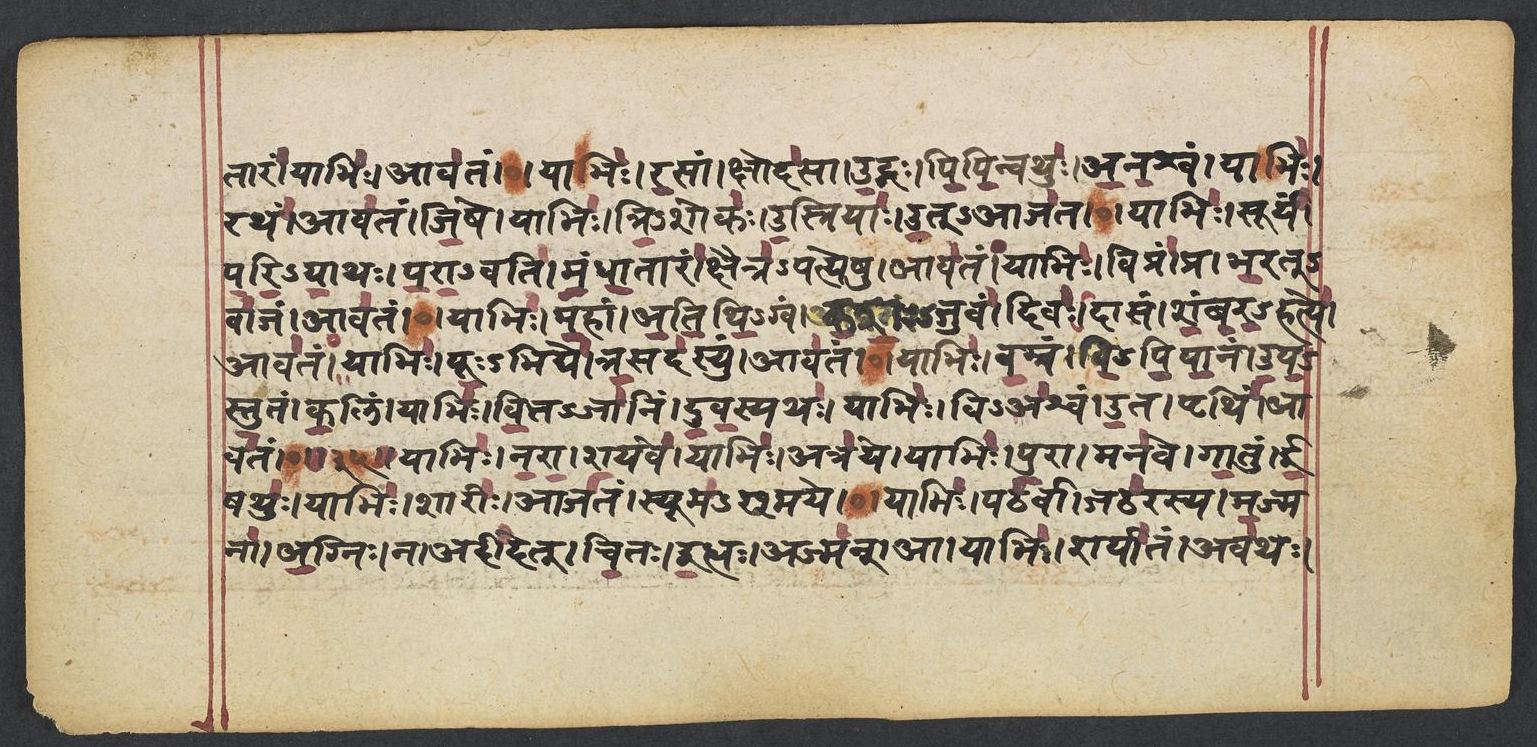
Where on the image
Penn Ms. Coll. 390 Item 41, fol. 79r (OPenn image 80, lower leaf). Checked on the image: the Rigveda text on this page begins in RV 1.112.11 ‹-stotāram yābhiḥ āvatam tābhiḥ›. The next page with Rigveda text, fol. 79v, begins in RV 1.112.17 ‹mahādhane tābhiḥ oṃ iti›. Verses 1.112.11-16 end on this page; 1.112.11 begins on fol. 78v.
11yābhi̍ḥ sudānū auśi̱jāya̍ va̱ṇije̍ dī̱rghaśra̍vase̱ madhu̱ kośo̱ akṣa̍rat | ka̱kṣīva̍ntaṁ sto̱tāra̱ṁ yābhi̱r āva̍ta̱ṁ tābhi̍r ū̱ ṣu ū̱tibhi̍r aśvi̱nā ga̍tam ||
12yābhī̍ ra̱sāṁ kṣoda̍so̱dnaḥ pi̍pi̱nvathu̍r ana̱śvaṁ yābhī̱ ratha̱m āva̍taṁ ji̱ṣe | yābhi̍s tri̱śoka̍ u̱sriyā̍ u̱dāja̍ta̱ tābhi̍r ū̱ ṣu ū̱tibhi̍r aśvi̱nā ga̍tam ||
13yābhi̱ḥ sūrya̍m pariyā̱thaḥ pa̍rā̱vati̍ mandhā̱tāra̱ṁ kṣaitra̍patye̱ṣv āva̍tam | yābhi̱r vipra̱m pra bha̱radvā̍ja̱m āva̍ta̱ṁ tābhi̍r ū̱ ṣu ū̱tibhi̍r aśvi̱nā ga̍tam ||
14yābhi̍r ma̱hām a̍tithi̱gvaṁ ka̍śo̱juva̱ṁ divo̍dāsaṁ śambara̱hatya̱ āva̍tam | yābhi̍ḥ pū̱rbhidye̍ tra̱sada̍syu̱m āva̍ta̱ṁ tābhi̍r ū̱ ṣu ū̱tibhi̍r aśvi̱nā ga̍tam ||
15yābhi̍r va̱mraṁ vi̍pipā̱nam u̍pastu̱taṁ ka̱liṁ yābhi̍r vi̱ttajā̍niṁ duva̱syatha̍ḥ | yābhi̱r vya̍śvam u̱ta pṛthi̱m āva̍ta̱ṁ tābhi̍r ū̱ ṣu ū̱tibhi̍r aśvi̱nā ga̍tam ||
16yābhi̍r narā śa̱yave̱ yābhi̱r atra̍ye̱ yābhi̍ḥ pu̱rā mana̍ve gā̱tum ī̱ṣathu̍ḥ | yābhi̱ḥ śārī̱r āja̍ta̱ṁ syūma̍raśmaye̱ tābhi̍r ū̱ ṣu ū̱tibhi̍r aśvi̱nā ga̍tam ||
Compare: Padapāṭha (word-by-word text written in the manuscript; Sansknet e-text via GRETIL)
11yābhiḥ | sudānūitisu-dānū | auśijāya | vaṇije | dīrgha-śravase | madhu | kośaḥ | akṣarat | kakṣī-vantam | stotāram | yābhiḥ | āvatam | tābhiḥ | oṃ iti | su | ūti-bhiḥ | aśvinā | ā | gatam
12yābhiḥ | rasām | kṣodasā | udgaḥ | pipinvathuḥ | anaśvam | yābhiḥ | ratham | āvatam | jiṣe | yābhiḥ | tri-śokaḥ | usriyāḥ | ut-ājata | tābhiḥ | oṃ iti | su | ūti-bhiḥ | aśvinā | ā | gatam
13yābhiḥ | sūryam | pari-yāthaḥ | parāvati | mandhātāram | kṣaitra-patyeṣu | āvatam | yābhiḥ | vipram | pra | bharat-vājam | āvatam | tābhiḥ | oṃ iti | su | ūti-bhiḥ | aśvinā | ā | gatam
14yābhiḥ | mahām | atithi-gvam | kaśaḥ-juvam | divaḥ-dāsam | śambara-hatye | āvatam | yābhiḥ | pūḥ-bhidye | trasadasyum | āvatam | tābhiḥ | oṃ iti | su | ūti-bhiḥ | aśvinā | ā | gatam
15yābhiḥ | vamram | vi-pipānam | upa-stutam | kalim | yābhiḥ | vitta-jānim | duvasyathaḥ | yābhiḥ | vi-aśvam | uta | pṛthim | āvatam | tābhiḥ | oṃ iti | su | ūti-bhiḥ | aśvinā | ā | gatam
16yābhiḥ | narā | śayave | yābhiḥ | atraye | yābhiḥ | purā | manave | gātum | īṣathuḥ | yābhiḥ | śārīḥ | ājatam | syūma-raśmaye | tābhiḥ | oṃ iti | su | ūti-bhiḥ | aśvinā | ā | gatam
11Whereby the cloud, ye Bounteous Givers, shed sweet rain for Dîrghaṣravas, for the merchant Auṣija, Wherewith ye helped Kakshîvân, singer of your praise,– Come hither unto us, O Aṣvins, with those aids.
12Wherewith ye made Rasâ swell full with water-floods, and urged to victory the car without a horse; Wherewith Triṣoka drove forth his recovered cows,– Come hither unto us, O Aṣvins, with those aids.
13Wherewith ye, compass round the Sun when far away, strengthened Mandhâtar in his tasks as lord of lands, And to sage Bharadvâja gave protecting help,– Come hither unto us, O Aṣvins, with those aids.
14Wherewith, when Ṣambara was slain, ye guarded well great Âtithigva, Divodâsa, Kaṣoju, And Trasadasyu when the forts were shattered down,– Come hither unto us, O Aṣvins, with those aids.
15Wherewith ye honoured the great drinker Vamra, and Upastuta and Kali when he gained his wife, And lent to Vyaṣva and to Pr̥ithi favouring help,– Come hither unto us, O Aṣvins, with those aids.
16Wherewith, O Heroes, ye vouchsafed deliverance to Ṣayu, Atri, and to Manu long ago; Wherewith ye shot your shafts in Syûmaraṣmi's cause.-Come hither unto us, O Aṣvins, with those aids.
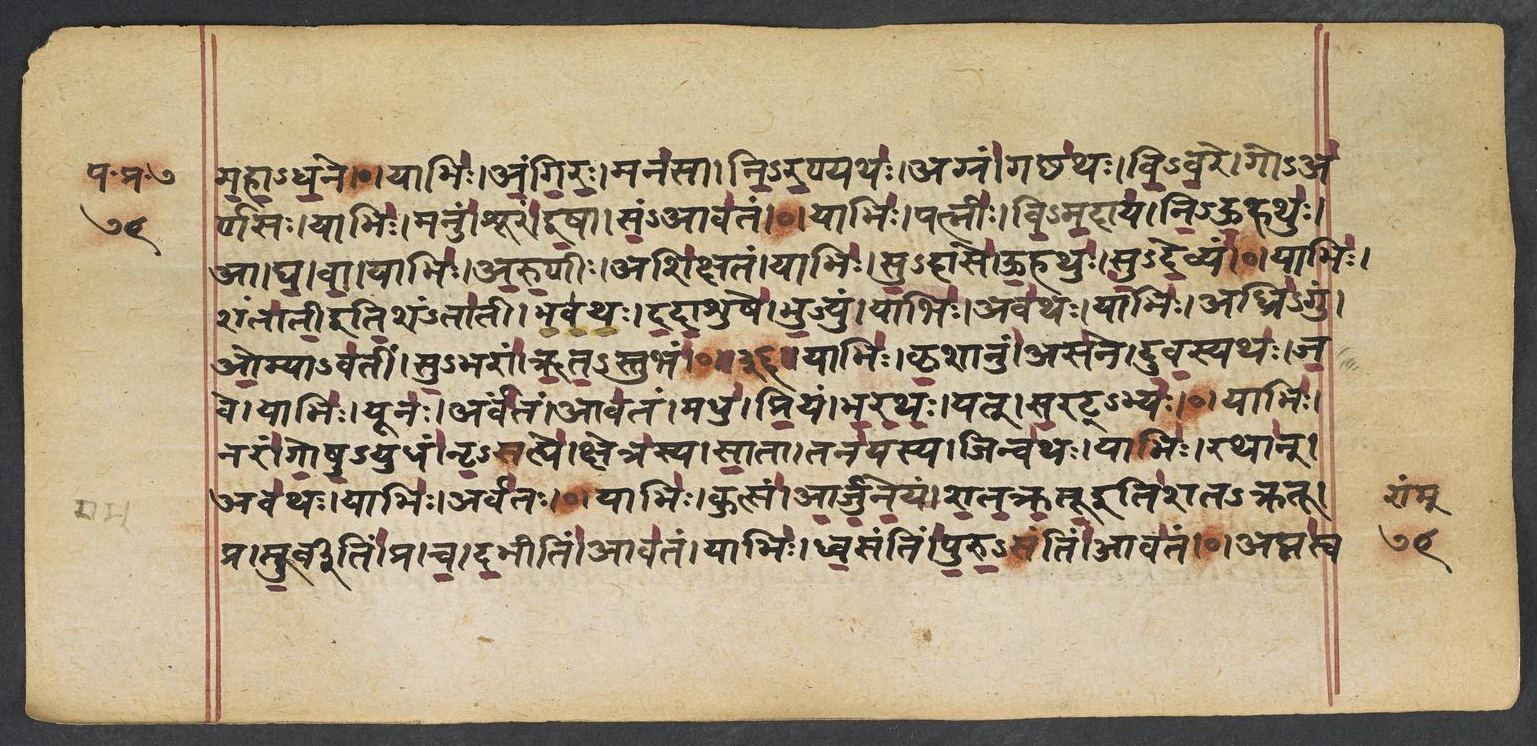
Where on the image
Penn Ms. Coll. 390 Item 41, fol. 79v (OPenn image 81, upper leaf). Checked on the image: the Rigveda text on this page begins in RV 1.112.17 ‹mahādhane tābhiḥ oṃ iti›. The next page with Rigveda text, fol. 80r, begins in RV 1.112.24 ‹-apnasvatīm aśvinā vācam asme›. Verses 1.112.17-23 end on this page; 1.112.17 begins on fol. 79r.
17yābhi̱ḥ paṭha̍rvā̱ jaṭha̍rasya ma̱jmanā̱gnir nādī̍dec ci̱ta i̱ddho ajma̱nn ā | yābhi̱ḥ śaryā̍ta̱m ava̍tho mahādha̱ne tābhi̍r ū̱ ṣu ū̱tibhi̍r aśvi̱nā ga̍tam ||
18yābhi̍r aṅgiro̱ mana̍sā nira̱ṇyatho 'gra̱ṁ gaccha̍tho viva̱re goa̍rṇasaḥ | yābhi̱r manu̱ṁ śūra̍m i̱ṣā sa̱māva̍ta̱ṁ tābhi̍r ū̱ ṣu ū̱tibhi̍r aśvi̱nā ga̍tam ||
19yābhi̱ḥ patnī̍r vima̱dāya̍ nyū̱hathu̱r ā gha̍ vā̱ yābhi̍r aru̱ṇīr aśi̍kṣatam | yābhi̍ḥ su̱dāsa̍ ū̱hathu̍ḥ sude̱vya1̱̍ṁ tābhi̍r ū̱ ṣu ū̱tibhi̍r aśvi̱nā ga̍tam ||
20yābhi̱ḥ śaṁtā̍tī̱ bhava̍tho dadā̱śuṣe̍ bhu̱jyuṁ yābhi̱r ava̍tho̱ yābhi̱r adhri̍gum | o̱myāva̍tīṁ su̱bharā̍m ṛta̱stubha̱ṁ tābhi̍r ū̱ ṣu ū̱tibhi̍r aśvi̱nā ga̍tam ||
21yābhi̍ḥ kṛ̱śānu̱m asa̍ne duva̱syatho̍ ja̱ve yābhi̱r yūno̱ arva̍nta̱m āva̍tam | madhu̍ pri̱yam bha̍ratho̱ yat sa̱raḍbhya̱s tābhi̍r ū̱ ṣu ū̱tibhi̍r aśvi̱nā ga̍tam ||
22yābhi̱r nara̍ṁ goṣu̱yudha̍ṁ nṛ̱ṣāhye̱ kṣetra̍sya sā̱tā tana̍yasya̱ jinva̍thaḥ | yābhī̱ rathā̱m̐ ava̍tho̱ yābhi̱r arva̍ta̱s tābhi̍r ū̱ ṣu ū̱tibhi̍r aśvi̱nā ga̍tam ||
23yābhi̱ḥ kutsa̍m ārjune̱yaṁ śa̍takratū̱ pra tu̱rvīti̱m pra ca̍ da̱bhīti̱m āva̍tam | yābhi̍r dhva̱santi̍m puru̱ṣanti̱m āva̍ta̱ṁ tābhi̍r ū̱ ṣu ū̱tibhi̍r aśvi̱nā ga̍tam ||
Compare: Padapāṭha (word-by-word text written in the manuscript; Sansknet e-text via GRETIL)
17yābhiḥ | paṭharvā | jaṭharasya | majmanā | agniḥ | na | adīdet | citaḥ | iddhaḥ | ajman | ā | yābhiḥ | śaryātam | avathaḥ | mahādhane | tābhiḥ | oṃ iti | su | ūti-bhiḥ | aśvinā | ā | gatam
18yābhiḥ | aṅgiraḥ | manasā | ni-raṇyathaḥ | agram | gacchathaḥ | vi-vare | go--arṇasaḥ | yābhiḥ | manum | śūram | iṣā | sam-āvatam | tābhiḥ | oṃ iti | su | ūti-bhiḥ | aśvinā | ā | gatam
19yābhiḥ | patnīḥ | vi-madāya | ni-ūhathuḥ | ā | gha | vā | yābhiḥ | aruṇīḥ | aśikṣatam | yābhiḥ | su-dāse | ūhathuḥ | su-devyam | tābhiḥ | oṃ iti | su | ūti-bhiḥ | aśvinā | ā | gatam
20yābhiḥ | śantātī itiśam-tātī | bhavathaḥ | dadāśuṣe | bhujyum | yābhiḥ | avathaḥ | yābhiḥ | adhri-gum | omyāvatīm | su-bharām | ṛta-stubham | tābhiḥ | oṃ iti | su | ūti-bhiḥ | aśvinā | ā | gatam
21yābhiḥ | kṛśānum | asane | duvasyathaḥ | jave | yābhiḥ | yūnaḥ | arvantam | āvatam | madhu | priyam | bharathaḥ | yat | saraṭ-bhyaḥ | tābhiḥ | oṃ iti | su | ūti-bhiḥ | aśvinā | ā | gatam
22yābhiḥ | naram | goṣu-yudham | nṛ-sahye | kṣetrasya | sātā | tanayasya | jinvathaḥ | yābhiḥ | rathān | avathaḥ | yābhiḥ | arvataḥ | tābhiḥ | oṃ iti | su | ūti-bhiḥ | aśvinā | ā | gatam
23yābhiḥ | kutsam | ārjuneyam | śatakratūitiśata-kratū | pra | turvītim | pra | ca | dabhītim | āvatam | yābhiḥ | dhvasantim | puru-santim | āvatam | tābhiḥ | oṃ iti | su | ūti-bhiḥ | aśvinā | ā | gatam
17Wherewith Paṭharvâ, in his majesty of form, shone in his course like to a gathered kindled fire; Wherewith ye helped Ṣaryâta in the mighty fray,– Come hither unto us, O Aṣvins, with those aids.
18Wherewith, Angirases! ye triumphed in your heart, and onward went to liberate the flood of milk; Wherewith ye helped the hero Manu with new strength,– Come hither unto us, O Aṣvins, with those aids.
19Wherewith ye brought awife for Vimada to wed, wherewith ye freely gave the ruddy cows away; Wherewith ye brought the host of kind Gods to Sudâs-Come hither unto us, O Aṣvins, with those aids.
20Wherewith ye bring great bliss to him who offers gifts, wherewith ye have protected Bhujyu, Adhrigu, And good and gracious Subhara and R̥itastup,– Come hither unto us, O Aṣvins, with those aids.
21Wherewith ye served Kr̥iṣânu where the shafts were shot, and helped the young man's horse to swiftness in the race; Wherewith ye bring delicious honey to the bees,– Come hither unto us, O Aṣvins, with those aids.
22Wherewith ye speed the hero as he fights for kine in hero battle, in the strife for land and sons, Wherewith ye safely guard his horses and his car,– Come hither unto us, O Aṣvins with those aids.
23Wherewith ye, Lords of Hundred Powers, helped Kutsa, son of Aduni, gave Turvîti and Dabhîti strength, Favoured Dhvasanti and lent Purushanti help,– Come hither unto us, O Aṣvins, with those aids.
Where on the image
Penn Ms. Coll. 390 Item 41, fol. 80r (OPenn image 81, lower leaf). Checked on the image: the Rigveda text on this page begins in RV 1.112.24 ‹-apnasvatīm aśvinā vācam asme›. The next page with Rigveda text, fol. 80v, begins in RV 1.113.4 ‹uṣāḥ ajīgaḥ bhuvanāni viśvā›. Verses 1.112.24-25 end on this page; 1.112.24 begins on fol. 79v.
24apna̍svatīm aśvinā̱ vāca̍m a̱sme kṛ̱taṁ no̍ dasrā vṛṣaṇā manī̱ṣām | a̱dyū̱tye 'va̍se̱ ni hva̍ye vāṁ vṛ̱dhe ca̍ no bhavata̱ṁ vāja̍sātau ||
25dyubhi̍r a̱ktubhi̱ḥ pari̍ pātam a̱smān ari̍ṣṭebhir aśvinā̱ saubha̍gebhiḥ | tan no̍ mi̱tro varu̍ṇo māmahantā̱m adi̍ti̱ḥ sindhu̍ḥ pṛthi̱vī u̱ta dyauḥ ||
Compare: Padapāṭha (word-by-word text written in the manuscript; Sansknet e-text via GRETIL)
24apnasvatīm | aśvinā | vācam | asme iti | kṛtam | naḥ | dasrā | vṛṣaṇā | manīṣām | adyūtye | avase | ni | hvaye | vām | vṛdhe | ca | naḥ | bhavatam | vāja-sātau
25dyu-bhiḥ | aktu-bhiḥ | pari | pātam | asmān | ariṣṭebhiḥ | aśvinā | saubhagebhiḥ | tat | naḥ | mitraḥ | varuṇaḥ | mamahantām | aditiḥ | sindhuḥ | pṛthivī | uta | dyauḥ
24Make ye our speech effectual, O ye Aṣvins, and this our hymn, ye mighty Wonder-Workers. In luckless game I call on you for succour . strengthen us also on the field of battle.
25With, undiminished blessings, O ye Aṣvins, for evermore both night and day protect us. This prayer of ours may Varuṇa grant, and Mitra, and Aditi and Sindhu, Earth and Heaven.
Notes
- Sanskrit: Aufrecht's edition (1877) with the Vedic accents, as entered by van Nooten and Holland (GRETIL).
- English: Ralph T. H. Griffith, The Hymns of the Rigveda (1889-1892; 2nd ed. 1896-1897), from the VedaWeb digital text; OCR slips in that text were corrected against the printed 2nd edition (data/sources/rigveda/griffith_errata.json).
- Padapāṭha (edition text): Sansknet e-text via GRETIL (CC BY-NC-SA 4.0).
Cite
Sources
- Source: Penn Ms. Coll. 390 Item 41 (undated (catalogued with Penn's 18th-19th c. Vedic manuscripts)), OPenn, Public Domain Mark + Aufrecht's accented text (GRETIL) + Griffith's English (VedaWeb) (holding institution)
- Critical edition: Aufrecht (1877), accented e-text via GRETIL
← previous · → next · v cycle view · l back to library