Rigveda 1.113: To Ushas, the Dawn
Introduction
Rigveda 1.113 is a hymn of 20 verses addressed to Usas. It stands in book (maṇḍala) 1, a collection of hymns by many families of poets. The Rigveda is the oldest collection of Sanskrit hymns, composed in the second half of the second millennium BCE and handed down orally for many centuries before it was written down.
The manuscript shown is Penn Ms. Coll. 390 Item 41 (University of Pennsylvania), an undated paper manuscript of the padapāṭha (the word-by-word recitation text, in which every word is written separately and compounds are split) of the whole Ṛgveda in Devanāgarī, 884 leaves in fascicles, 7-9 lines to the page, accents in red; this hymn stands on fol. 80r-81v. Each section below gives the verses that end on one page; the page boundaries were read on the images (the opening words of every page), not counted out. Where the manuscript is a padapāṭha (the word-by-word recitation text), the section shows Aufrecht's continuous (saṃhitā) text first and, as the edition text, the padapāṭha of the same verses, which is the form written on the page.
How was this verified? (Provenance)
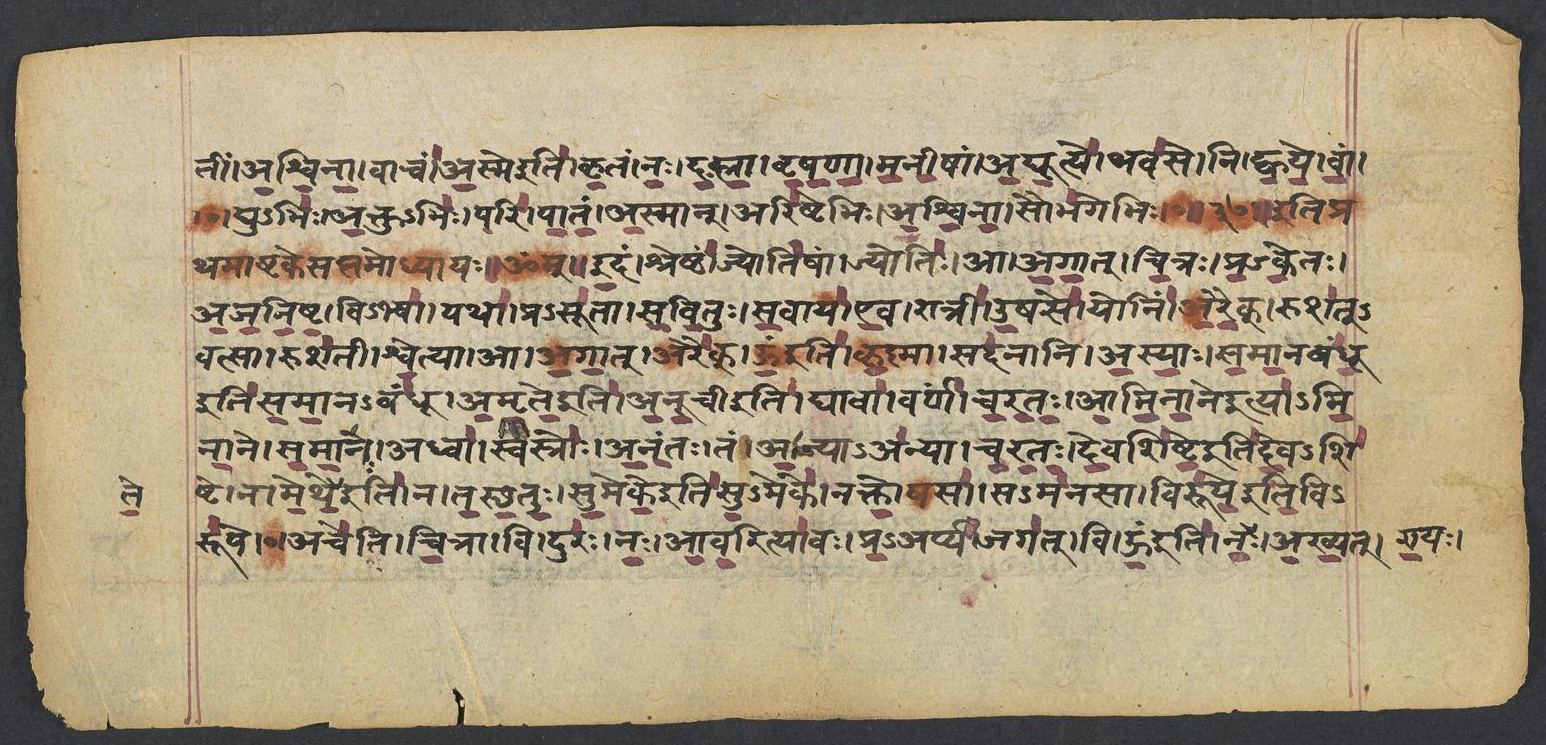
Where on the image
Penn Ms. Coll. 390 Item 41, fol. 80r (OPenn image 81, lower leaf). Checked on the image: the Rigveda text on this page begins in RV 1.112.24 ‹-apnasvatīm aśvinā vācam asme›. The next page with Rigveda text, fol. 80v, begins in RV 1.113.4 ‹uṣāḥ ajīgaḥ bhuvanāni viśvā›. Verses 1.113.1-3 end on this page.
1i̱daṁ śreṣṭha̱ṁ jyoti̍ṣā̱ṁ jyoti̱r āgā̍c ci̱traḥ pra̍ke̱to a̍janiṣṭa̱ vibhvā̍ | yathā̱ prasū̍tā savi̱tuḥ sa̱vāya̍m̐ e̱vā rātry u̱ṣase̱ yoni̍m āraik ||
2ruśa̍dvatsā̱ ruśa̍tī śve̱tyāgā̱d ārai̍g u kṛ̱ṣṇā sada̍nāny asyāḥ | sa̱mā̱naba̍ndhū a̱mṛte̍ anū̱cī dyāvā̱ varṇa̍ṁ carata āminā̱ne ||
3sa̱mā̱no adhvā̱ svasro̍r ana̱ntas tam a̱nyānyā̍ carato de̱vaśi̍ṣṭe | na me̍thete̱ na ta̍sthatuḥ su̱meke̱ nakto̱ṣāsā̱ sama̍nasā̱ virū̍pe ||
Compare: Padapāṭha (word-by-word text written in the manuscript; Sansknet e-text via GRETIL)
1idam | śreṣṭham | jyotiṣām | jyotiḥ | ā | agāt | citraḥ | pra-ketaḥ | ajaniṣṭa | vi-bhvā | yathā | pra-sūtā | savituḥ | savāya | eva | rātrī | uṣase | yonim | araik
2ruśat-vatsā | ruśatī | śvetyā | ā | agāt | araik | oṃ iti | kṛṣṇā | sadanāni | asyāḥ | samānabandhūitisamāna-bandhū | amṛteiti | anūcī iti | dyāvā | varṇam | carataḥ | āmināne ity āmināne
3samānaḥ | adhvā | svasroḥ | anantaḥ | tam | anyāanyā | carataḥ | devaśiṣṭeitideva-śiṣṭe | na | metheteiti | na | tasthatuḥ | sumeke itisu-meke | naktoṣāsā | sa-manasā | virūpeitivi-rūpe
1This light is come, amid all lights the fairest; born is the brilliant, far-extending brightness. Night, sent away for Savitar's uprising, hath yielded up a birth-place for the Morning.
2The Fair, the Bright is come with her white offspring; to her the Dark One hath resigned her dwelling. Akin, immortal, following each other, changing their colours both the heavens move onward.
3Common, unending is the Sisters' pathway; taught by the Gods, alternately they travel. Fair-formed, of different hues and yet one-minded, Night and Dawn clash not, neither do they travel.
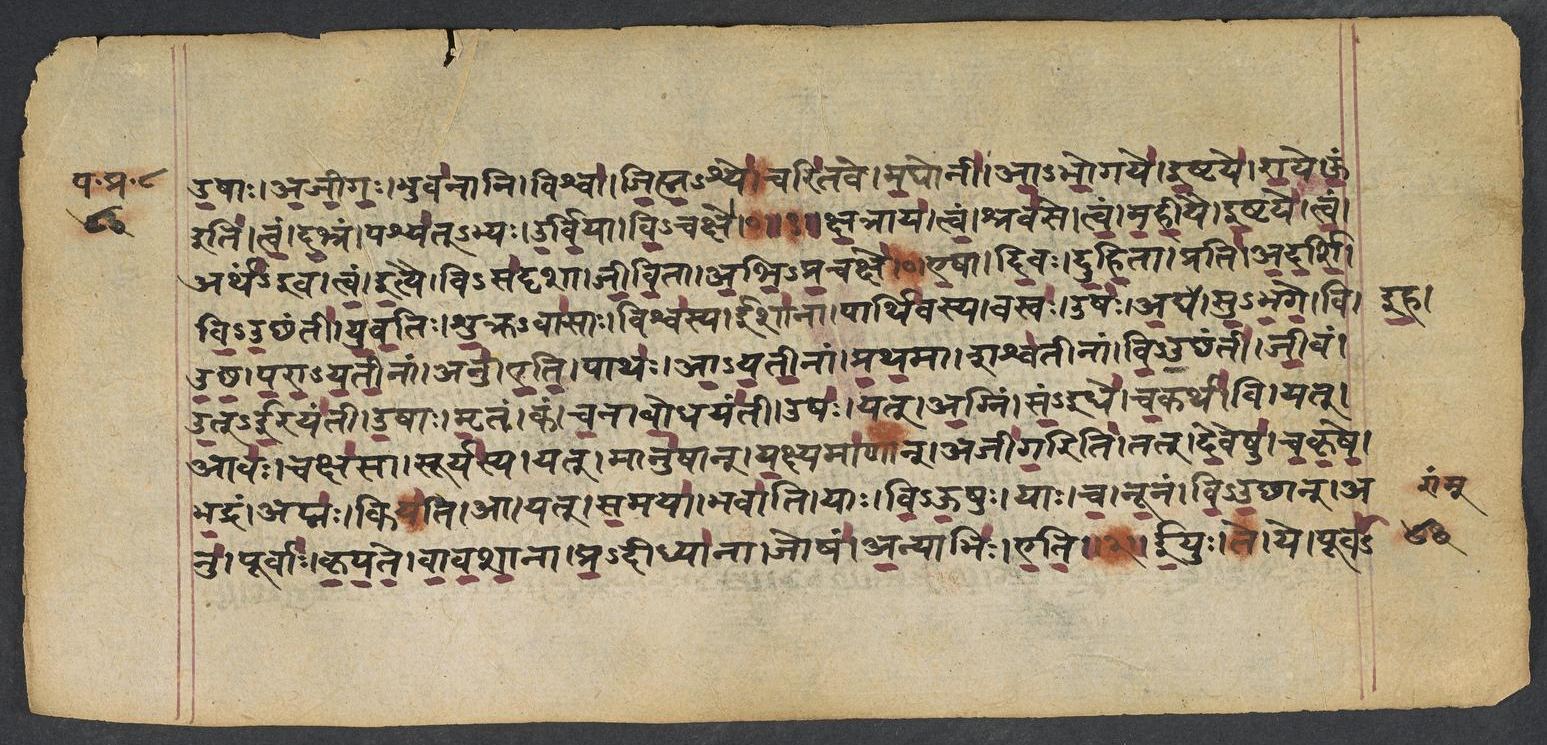
Where on the image
Penn Ms. Coll. 390 Item 41, fol. 80v (OPenn image 82, upper leaf). Checked on the image: the Rigveda text on this page begins in RV 1.113.4 ‹uṣāḥ ajīgaḥ bhuvanāni viśvā›. The next page with Rigveda text, fol. 81r, begins in RV 1.113.11 ‹-pūrva-tarām apaśyan vi-ucchantīm uṣasam›. Verses 1.113.4-10 end on this page; 1.113.4 begins on fol. 80r.
4bhāsva̍tī ne̱trī sū̱nṛtā̍nā̱m ace̍ti ci̱trā vi duro̍ na āvaḥ | prārpyā̱ jaga̱d vy u̍ no rā̱yo a̍khyad u̱ṣā a̍jīga̱r bhuva̍nāni̱ viśvā̍ ||
5ji̱hma̱śye̱3̱̍ cari̍tave ma̱ghony ā̍bho̱gaya̍ i̱ṣṭaye̍ rā̱ya u̍ tvam | da̱bhram paśya̍dbhya urvi̱yā vi̱cakṣa̍ u̱ṣā a̍jīga̱r bhuva̍nāni̱ viśvā̍ ||
6kṣa̱trāya̍ tva̱ṁ śrava̍se tvam mahī̱yā i̱ṣṭaye̍ tva̱m artha̍m iva tvam i̱tyai | visa̍dṛśā jīvi̱tābhi̍pra̱cakṣa̍ u̱ṣā a̍jīga̱r bhuva̍nāni̱ viśvā̍ ||
7e̱ṣā di̱vo du̍hi̱tā praty a̍darśi vyu̱cchantī̍ yuva̱tiḥ śu̱kravā̍sāḥ | viśva̱syeśā̍nā̱ pārthi̍vasya̱ vasva̱ uṣo̍ a̱dyeha su̍bhage̱ vy u̍ccha ||
8pa̱rā̱ya̱tī̱nām anv e̍ti̱ pātha̍ āyatī̱nām pra̍tha̱mā śaśva̍tīnām | vyu̱cchantī̍ jī̱vam u̍dī̱raya̍nty u̱ṣā mṛ̱taṁ kaṁ ca̱na bo̱dhaya̍ntī ||
9uṣo̱ yad a̱gniṁ sa̱midhe̍ ca̱kartha̱ vi yad āva̱ś cakṣa̍sā̱ sūrya̍sya | yan mānu̍ṣān ya̱kṣyamā̍ṇā̱m̐ ajī̍ga̱s tad de̱veṣu̍ cakṛṣe bha̱dram apna̍ḥ ||
10kiyā̱ty ā yat sa̱mayā̱ bhavā̍ti̱ yā vyū̱ṣur yāś ca̍ nū̱naṁ vyu̱cchān | anu̱ pūrvā̍ḥ kṛpate vāvaśā̱nā pra̱dīdhyā̍nā̱ joṣa̍m a̱nyābhi̍r eti ||
Compare: Padapāṭha (word-by-word text written in the manuscript; Sansknet e-text via GRETIL)
4bhāsvatī | netrī | sūnṛtānām | aceti | citrā | vi | duraḥ | naḥ | āvar ity āvaḥ | prar-pya | jagat | vi | oṃ iti | naḥ | rāyaḥ | akhyat | uṣāḥ | ajīgaḥ | bhuvanāni | viśvā
5jihma-śye | caritave | maghonī | ābhogaye | iṣṭaye | rāye | oṃ iti | tvam | dabhram | paśyat-bhyaḥ | urviyā | vi-cakṣe | uṣāḥ | ajīgaḥ | bhuvanān i | viśvā
6kṣatrāya | tvam | śravase | tvam | mahīyai | iṣṭaye | tvam | artham-iva | tvam | ityai | vi-sadṛśā | jīvitā | abhi-pracakṣe | uṣāḥ | ajīgaḥ | bhuvanāni | viśvā
7eṣā | divaḥ | duhitā prati | adarśi | vi-ucchantī | yuvatiḥ | śukra-vāsāḥ | viśvasya | īśānā | pārthivasya | vasvaḥ | uṣaḥ | adya | iha | su-bhage | vi | uccha
8parāyatīnām | anu | eti | pāthaḥ | āyatīnām | prathamā | śaśvatīnām | vi-ucchantī | jīvam | ut-īrayantī | uṣāḥ | mṛtam | kam | cana | bodhayantī
9uṣaḥ | yat | agnim | sam-idhe | cakartha | vi | yat | āvaḥ | cakṣasā | sūryasya | yat | mānuṣān | yakṣyamāṇān | ajīgariti | tat | deveṣu | cakṛṣe | bhadram | apnaḥ
10kiyati | ā | yat | samayā | bhavāti | yāḥ | vi-ūṣuḥ | yāḥ | ca | nūnam | vi-ucchān | anu | pūrvāḥ | kṛpate | vāvaśānā | pra-dīdhyānā | joṣam | anyābhiḥ | eti
4Bright leader of glad sounds, our eyes behold her; splendid in hue she hath unclosed the portals. She, stirring up the world, hath shown us riches: Dawn hath awakened every living creature.
5Rich Dawn, she sets afoot the coiled-up sleeper, one for enjoyment, one for wealth or worship, Those who saw little for extended vision. All living creatures hath the Dawn awakened.
6One to high sway, one to exalted glory, one to pursue his gain, and one his labour: All to regard their different vocations, all moving creatures hath the Dawn awakened.
7We see her there, the Child of Heaven apparent, the young Maid, flushing in her shining raiment. Thou sovran Lady of all earthly treasure, flush on us here, auspicious Dawn, this morning.
8She first of endless morns to come hereafter, follows the path of morns that have departed. Dawn, at her rising, urges forth the living him who is dead she wakes not from his slumber.
9As thou, Dawn, hast caused Agni to be kindled, and with the Sun's eye hast revealed creation. And hast awakened men to offer worship, thou hast performed, for Gods, a noble service.
10How long a time, and they shall be together,– Dawns that have shone and Dawns to shine hereafter? She yearns for former Dawns with eager longing, and goes forth gladly shining with the others.
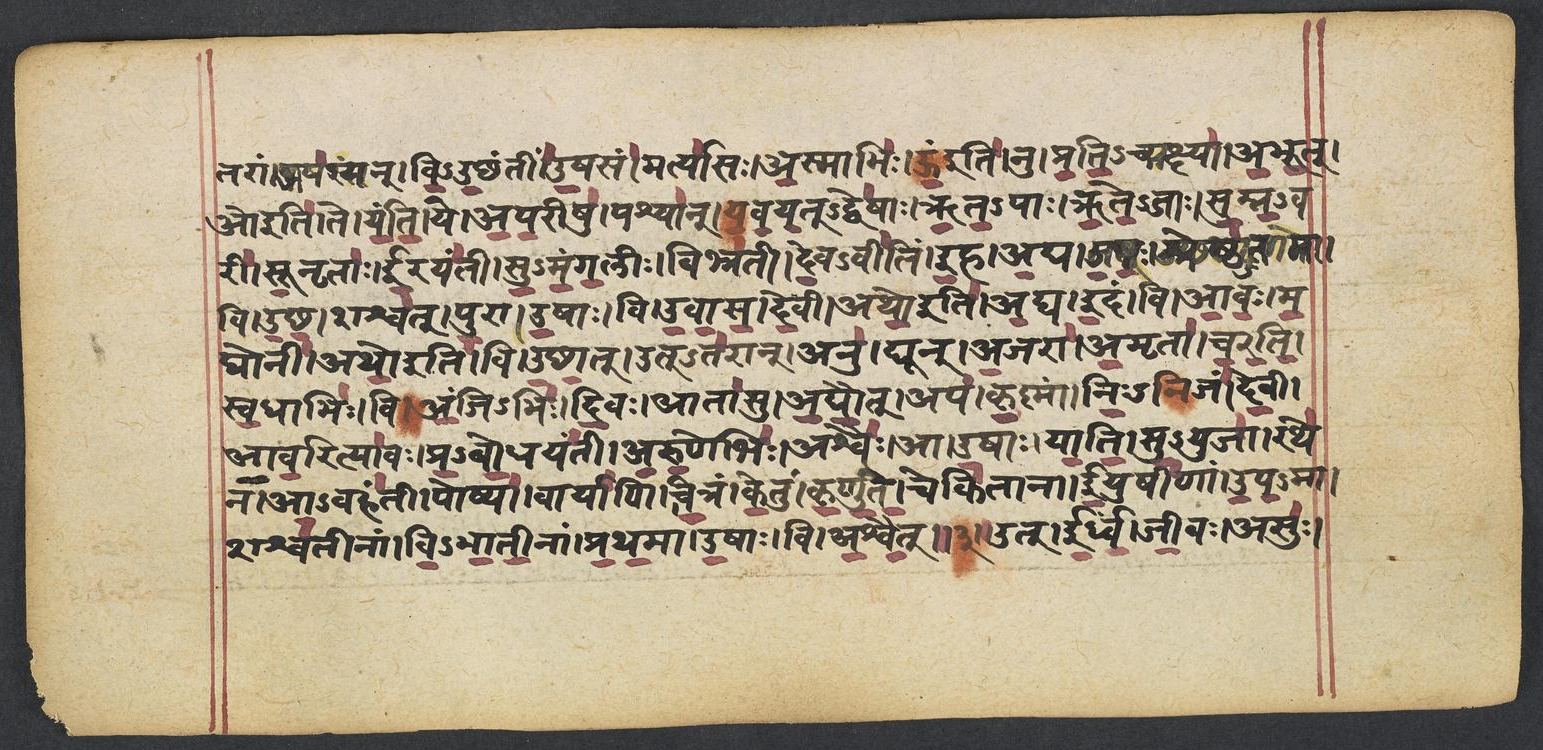
Where on the image
Penn Ms. Coll. 390 Item 41, fol. 81r (OPenn image 82, lower leaf). Checked on the image: the Rigveda text on this page begins in RV 1.113.11 ‹-pūrva-tarām apaśyan vi-ucchantīm uṣasam›. The next page with Rigveda text, fol. 81v, begins in RV 1.113.16 ‹naḥ ā agāt apa›. Verses 1.113.11-15 end on this page; 1.113.11 begins on fol. 80v.
11ī̱yuṣ ṭe ye pūrva̍tarā̱m apa̍śyan vyu̱cchantī̍m u̱ṣasa̱m martyā̍saḥ | a̱smābhi̍r ū̱ nu pra̍ti̱cakṣyā̍bhū̱d o te ya̍nti̱ ye a̍pa̱rīṣu̱ paśyā̍n ||
12yā̱va̱yaddve̍ṣā ṛta̱pā ṛ̍te̱jāḥ su̍mnā̱varī̍ sū̱nṛtā̍ ī̱raya̍ntī | su̱ma̱ṅga̱līr bibhra̍tī de̱vavī̍tim i̱hādyoṣa̱ḥ śreṣṭha̍tamā̱ vy u̍ccha ||
13śaśva̍t pu̱roṣā vy u̍vāsa de̱vy atho̍ a̱dyedaṁ vy ā̍vo ma̱ghonī̍ | atho̱ vy u̍cchā̱d utta̍rā̱m̐ anu̱ dyūn a̱jarā̱mṛtā̍ carati sva̱dhābhi̍ḥ ||
14vy a1̱̍ñjibhi̍r di̱va ātā̍sv adyau̱d apa̍ kṛ̱ṣṇāṁ ni̱rṇija̍ṁ de̱vy ā̍vaḥ | pra̱bo̱dhaya̍nty aru̱ṇebhi̱r aśvai̱r oṣā yā̍ti su̱yujā̱ rathe̍na ||
15ā̱vaha̍ntī̱ poṣyā̱ vāryā̍ṇi ci̱traṁ ke̱tuṁ kṛ̍ṇute̱ ceki̍tānā | ī̱yuṣī̍ṇām upa̱mā śaśva̍tīnāṁ vibhātī̱nām pra̍tha̱moṣā vy a̍śvait ||
Compare: Padapāṭha (word-by-word text written in the manuscript; Sansknet e-text via GRETIL)
11īyuḥ | te | ye | pūrva-tarām | apaśyan | vi-ucchantīm | uṣasam | martyāsaḥ | asmābhiḥ | oṃ iti | nu | prati-cakṣyā | abhūt | o iti | te | yanti | ye | aparīṣu | paśyān
12yāvayat-dveṣāḥ | ṛta-pāḥ | ṛte--jāḥ | sumna-varī | sūnṛtāḥ | īrayantī | su-maṅgalīḥ | bibhratī | deva-vītim | iha | adya | uṣaḥ | śreṣṭha-tamā | vi | uccha
13śaśvat | purā | uṣāḥ | vi | uvāsa | devī | atho iti | adya | idam | vi | āvaḥ | maghonī | atho iti | vi | ucchāt | ut-tarān | anu | dyūn | ajarā | amṛtā | carati | svadhābhiḥ
14vi | añji-bhiḥ | divaḥ | ātāsu | adyaut | apa | kṛṣṇām | niḥ-nijam | devī | āvar ity āvaḥ | pra-bodhayantī | aruṇebhiḥ | aśvaiḥ | ā | uṣāḥ | yāti | su-yujā | rathena
15āvahantī | poṣyā | vāryāṇi | citram | ketum | kṛṇute | cekitānā | īyuṣīṇām | upa-mā | śaśvatīnām | vi-bhātīnām | prathamā | uṣāḥ | vi | aśvait
11Gone are the men who in the days before us looked on the rising of the earlier Morning. We, we the living, now behold her brightness and they come nigh who shall hereafter see her.
12Foe-chaser, born of Law, the Law's protectress, joy-giver waker of all pleasant voices, Auspicious, bringing food for Gods' enjoyment, shine on us here, most bright, O Dawn, this morning.
13From days eternal hath Dawn shone, the Goddess, and shows this light to-day, endowed with riches. So will she shine on days to come immortal she moves on in her own strength, undecaying.
14In the sky's borders hath she shone in splendour: the Goddess hath thrown off the veil of darkness. Awakening the world with purple horses, on her well-harnessed chariot Dawn approaches.
15Bringing all life-sustaining blessings with her, showing herself she sends forth brilliant lustre. Last of the countless mornings that have vanished, first of bright morns to come hath Dawn arisen.
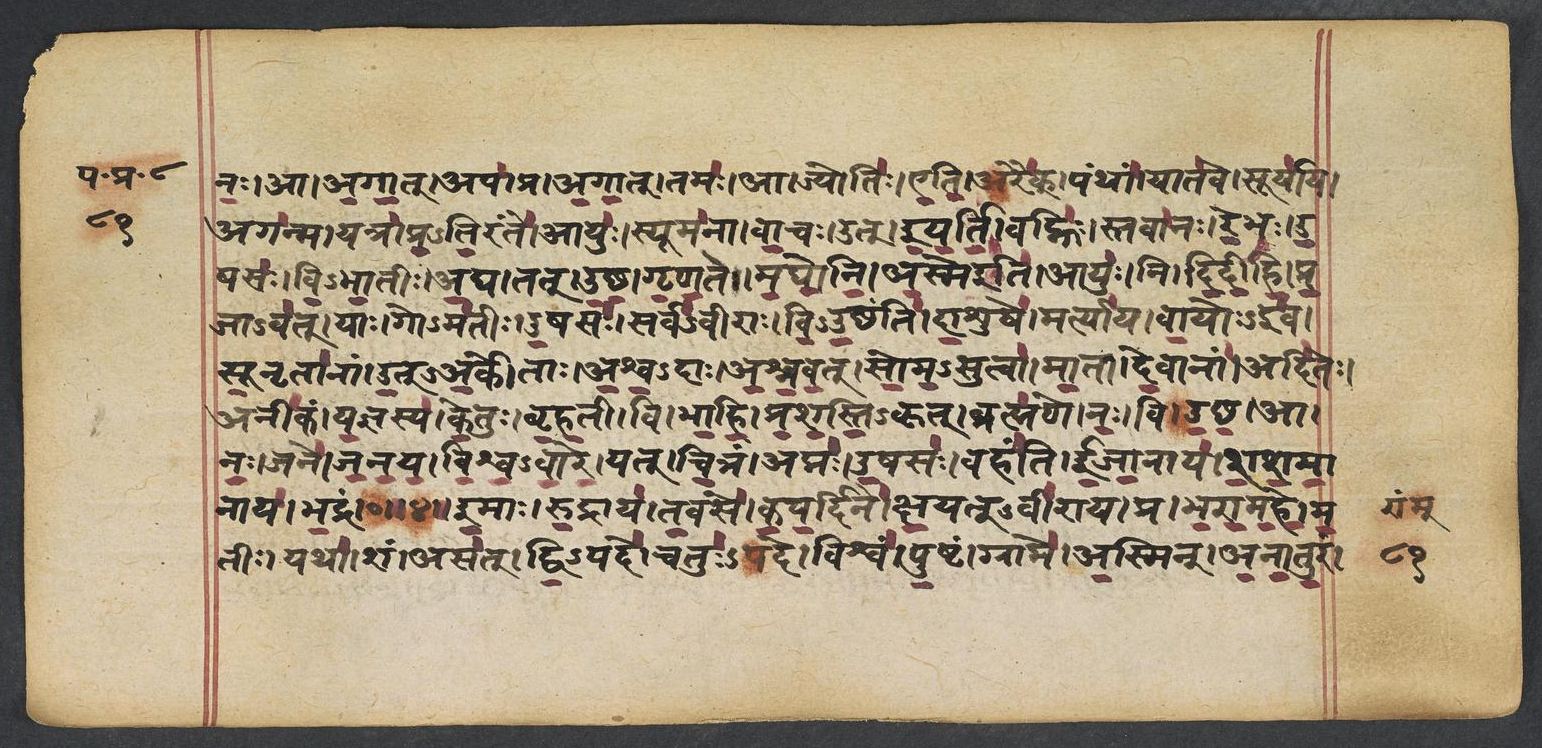
Where on the image
Penn Ms. Coll. 390 Item 41, fol. 81v (OPenn image 83, upper leaf). Checked on the image: the Rigveda text on this page begins in RV 1.113.16 ‹naḥ ā agāt apa›. The next page with Rigveda text, fol. 82r, begins in RV 1.114.2 ‹mṛḷa naḥ rudra uta›. Verses 1.113.16-20 end on this page; 1.113.16 begins on fol. 81r.
16ud ī̍rdhvaṁ jī̱vo asu̍r na̱ āgā̱d apa̱ prāgā̱t tama̱ ā jyoti̍r eti | ārai̱k panthā̱ṁ yāta̍ve̱ sūryā̱yāga̍nma̱ yatra̍ prati̱ranta̱ āyu̍ḥ ||
17syūma̍nā vā̱ca ud i̍yarti̱ vahni̱ḥ stavā̍no re̱bha u̱ṣaso̍ vibhā̱tīḥ | a̱dyā tad u̍ccha gṛṇa̱te ma̍ghony a̱sme āyu̱r ni di̍dīhi pra̱jāva̍t ||
18yā goma̍tīr u̱ṣasa̱ḥ sarva̍vīrā vyu̱cchanti̍ dā̱śuṣe̱ martyā̍ya | vā̱yor i̍va sū̱nṛtā̍nām uda̱rke tā a̍śva̱dā a̍śnavat soma̱sutvā̍ ||
19mā̱tā de̱vānā̱m adi̍te̱r anī̍kaṁ ya̱jñasya̍ ke̱tur bṛ̍ha̱tī vi bhā̍hi | pra̱śa̱sti̱kṛd brahma̍ṇe no̱ vy u1̱̍cchā no̱ jane̍ janaya viśvavāre ||
20yac ci̱tram apna̍ u̱ṣaso̱ vaha̍ntījā̱nāya̍ śaśamā̱nāya̍ bha̱dram | tan no̍ mi̱tro varu̍ṇo māmahantā̱m adi̍ti̱ḥ sindhu̍ḥ pṛthi̱vī u̱ta dyauḥ ||
Compare: Padapāṭha (word-by-word text written in the manuscript; Sansknet e-text via GRETIL)
16ut | īrdhvam | jīvaḥ | asuḥ | naḥ | ā | agāt | apa | pra | agāt | tamaḥ | ā | jyotiḥ | et i | araik | panthām | yātave | sūryāya | aganma | yatra | pra-tirante | āyuḥ
17syūmanā | vācaḥ | ut | iyarti | vahniḥ | stavānaḥ | rebhaḥ | uṣasaḥ | vi-bhātīḥ | adya | tat | uccha | gṛṇate | maghoni | asme iti | āyuḥ | ni | didīhi | prajāvat
18yāḥ | go--matīḥ | uṣasaḥ | sarva-vīrāḥ | vi-ucchanti | dāśuṣe | martyāya | vāyoḥ-iva | sūnṛtānām | ut-arke | tāḥ | aśva-dāḥ | aśnavat | soma-sutvā
19mātā | devānām | aditeḥ | anīkam | yajñasya | ketuḥ | bṛhatī | vi | bhāhi | praśasti-kṛt | brahmaṇe | naḥ | vi | uccha | naḥ | jane | janaya | viśva-vāre
20yat | citram | apnaḥ | uṣasaḥ | vahanti | ījānāya | śaśamānāya | bhadram | tat | naḥ | mitraḥ | varuṇaḥ | mamahantām | aditiḥ | sindhuḥ | pṛthivī | uta | dyauḥ
16Arise! the breath, the life, again hath reached us: darkness hath passed away and light approacheth. She for the Sun hath left a path to travel we have arrived where men prolong existence.
17Singing the praises of refulgent Mornings with his hymn's web the priest, the poet rises. Shine then to-day, rich Maid, on him who lauds thee, shine down on us the gift of life and offspring.
18Dawns giving sons all heroes, kine and horses, shining upon the man who brings oblations,– These let the Soma-presser gain when ending his glad songs louder than the voice of Vâyu.
19Mother of Gods, Aditi's forui of glory, ensign of sacrifice, shine forth exalted. Rise up, bestowing praise on our devotion all-bounteous, make us chief among the people.
20Whatever splendid wealth the Dawns bring with them to bless the man who offers praise and worship, Even that may Mitra, Varuṇa vouchsafe us, and Aditi and Sindhu, Earth and Heaven.
Notes
- Sanskrit: Aufrecht's edition (1877) with the Vedic accents, as entered by van Nooten and Holland (GRETIL).
- English: Ralph T. H. Griffith, The Hymns of the Rigveda (1889-1892; 2nd ed. 1896-1897), from the VedaWeb digital text; OCR slips in that text were corrected against the printed 2nd edition (data/sources/rigveda/griffith_errata.json).
- Padapāṭha (edition text): Sansknet e-text via GRETIL (CC BY-NC-SA 4.0).
Cite
Sources
- Source: Penn Ms. Coll. 390 Item 41 (undated (catalogued with Penn's 18th-19th c. Vedic manuscripts)), OPenn, Public Domain Mark + Aufrecht's accented text (GRETIL) + Griffith's English (VedaWeb) (holding institution)
- Critical edition: Aufrecht (1877), accented e-text via GRETIL
← previous · → next · v cycle view · l back to library