Rigveda 1.114: To Rudra
Introduction
Rigveda 1.114 is a hymn of 11 verses addressed to Rudra. It stands in book (maṇḍala) 1, a collection of hymns by many families of poets. The Rigveda is the oldest collection of Sanskrit hymns, composed in the second half of the second millennium BCE and handed down orally for many centuries before it was written down.
The manuscript shown is Penn Ms. Coll. 390 Item 41 (University of Pennsylvania), an undated paper manuscript of the padapāṭha (the word-by-word recitation text, in which every word is written separately and compounds are split) of the whole Ṛgveda in Devanāgarī, 884 leaves in fascicles, 7-9 lines to the page, accents in red; this hymn stands on fol. 81v-82v. Each section below gives the verses that end on one page; the page boundaries were read on the images (the opening words of every page), not counted out. Where the manuscript is a padapāṭha (the word-by-word recitation text), the section shows Aufrecht's continuous (saṃhitā) text first and, as the edition text, the padapāṭha of the same verses, which is the form written on the page.
How was this verified? (Provenance)
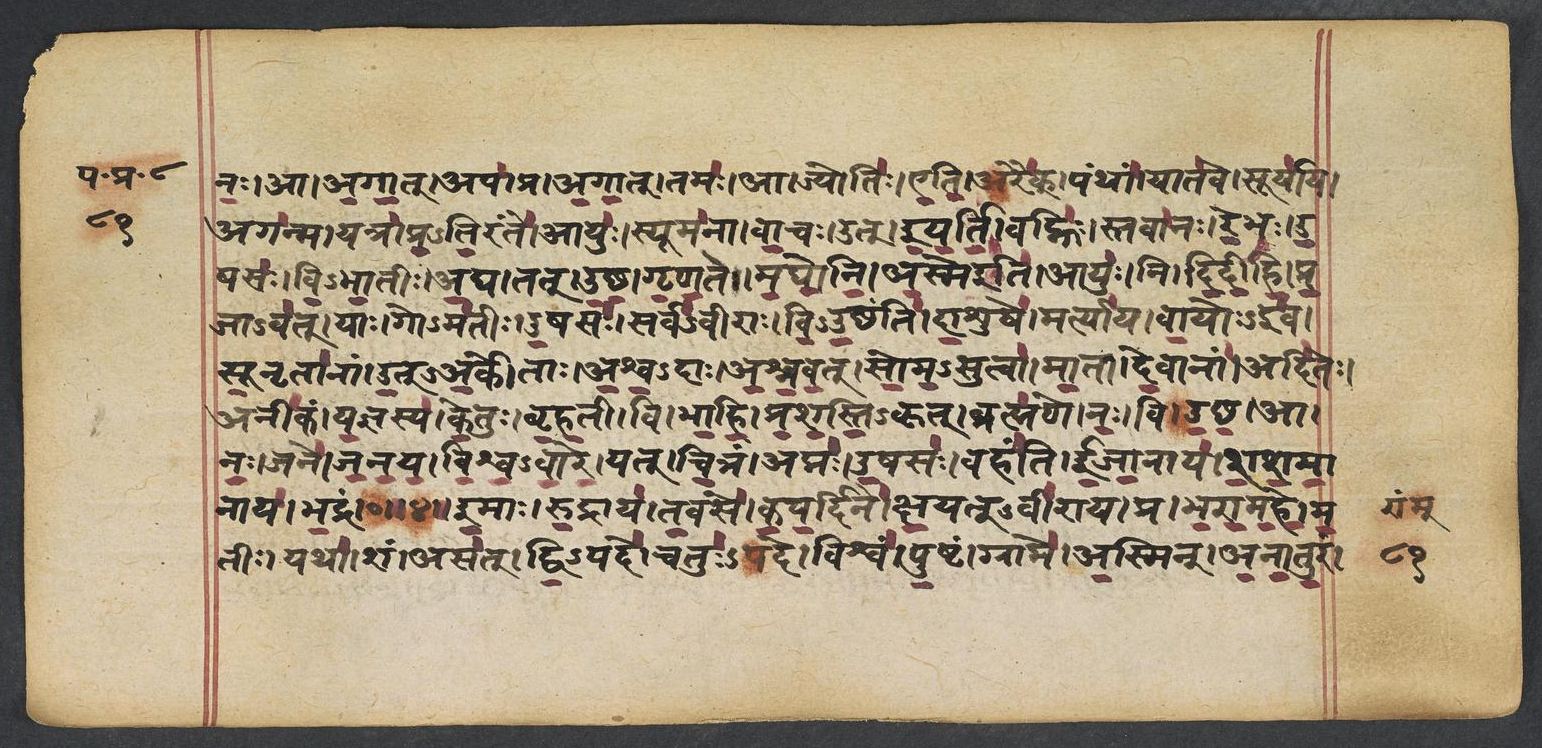
Where on the image
Penn Ms. Coll. 390 Item 41, fol. 81v (OPenn image 83, upper leaf). Checked on the image: the Rigveda text on this page begins in RV 1.113.16 ‹naḥ ā agāt apa›. The next page with Rigveda text, fol. 82r, begins in RV 1.114.2 ‹mṛḷa naḥ rudra uta›. Verse 1.114.1 ends on this page.
1i̱mā ru̱drāya̍ ta̱vase̍ kapa̱rdine̍ kṣa̱yadvī̍rāya̱ pra bha̍rāmahe ma̱tīḥ | yathā̱ śam asa̍d dvi̱pade̱ catu̍ṣpade̱ viśva̍m pu̱ṣṭaṁ grāme̍ a̱sminn a̍nātu̱ram ||
Compare: Padapāṭha (word-by-word text written in the manuscript; Sansknet e-text via GRETIL)
1imāḥ | rudrāya | tavase | kapardine | kṣayat-vīrāya | pra | bharāmahe | matīḥ | yathā | śam | asat | dvi-pade | catuḥ-pade | viśvam | puṣṭam | grāme | asmin | anāturam
1To the strong Rudra bring we these our songs of praise, to him the Lord of Heros with the braided hair, That it be well with all our cattle and our men, that in this village all he healthy and well-fed.
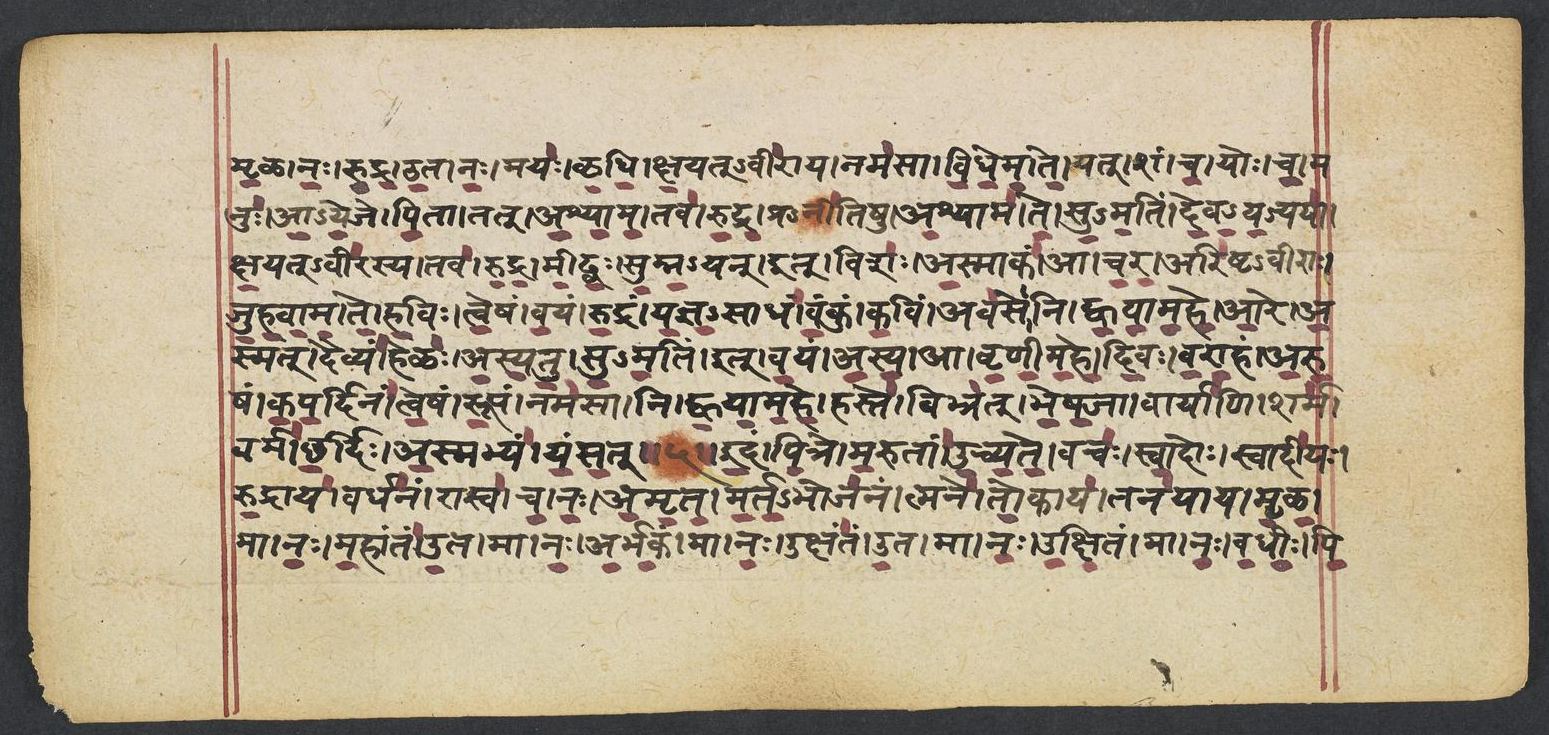
Where on the image
Penn Ms. Coll. 390 Item 41, fol. 82r (OPenn image 83, lower leaf). Checked on the image: the Rigveda text on this page begins in RV 1.114.2 ‹mṛḷa naḥ rudra uta›. The next page with Rigveda text, fol. 82v, begins in RV 1.114.7 ‹-pitaram mā uta mātaram›. Verses 1.114.2-6 end on this page.
2mṛ̱ḻā no̍ rudro̱ta no̱ maya̍s kṛdhi kṣa̱yadvī̍rāya̱ nama̍sā vidhema te | yac chaṁ ca̱ yoś ca̱ manu̍r āye̱je pi̱tā tad a̍śyāma̱ tava̍ rudra̱ praṇī̍tiṣu ||
3a̱śyāma̍ te suma̱tiṁ de̍vaya̱jyayā̍ kṣa̱yadvī̍rasya̱ tava̍ rudra mīḍhvaḥ | su̱mnā̱yann id viśo̍ a̱smāka̱m ā ca̱rāri̍ṣṭavīrā juhavāma te ha̱viḥ ||
4tve̱ṣaṁ va̱yaṁ ru̱draṁ ya̍jña̱sādha̍ṁ va̱ṅkuṁ ka̱vim ava̍se̱ ni hva̍yāmahe | ā̱re a̱smad daivya̱ṁ heḻo̍ asyatu suma̱tim id va̱yam a̱syā vṛ̍ṇīmahe ||
5di̱vo va̍rā̱ham a̍ru̱ṣaṁ ka̍pa̱rdina̍ṁ tve̱ṣaṁ rū̱paṁ nama̍sā̱ ni hva̍yāmahe | haste̱ bibhra̍d bheṣa̱jā vāryā̍ṇi̱ śarma̱ varma̍ ccha̱rdir a̱smabhya̍ṁ yaṁsat ||
6i̱dam pi̱tre ma̱rutā̍m ucyate̱ vaca̍ḥ svā̱doḥ svādī̍yo ru̱drāya̱ vardha̍nam | rāsvā̍ ca no amṛta marta̱bhoja̍na̱ṁ tmane̍ to̱kāya̱ tana̍yāya mṛḻa ||
Compare: Padapāṭha (word-by-word text written in the manuscript; Sansknet e-text via GRETIL)
2mṛḷa | naḥ | rudra | uta | naḥ | mayaḥ | kṛdhi | kṣayat-vīrāya | namasā | vidhema | te | yat | śam | ca | yoḥ | ca | manuḥ | āyeje | pitā | tat | aśyāma | tava | rudra | pra-nītiṣu
3aśyāma | te | su-matim | deva-yajyayā | kṣayat-vīrasya | tava | rudra | mīḍhavaḥ | sumna-yan | it | viśaḥ | asmākam | ā | cara | ariṣṭa-vīrāḥ | juhavāma | te | haviḥ
4tveṣam | vayam | rudram | yajña-sādham | vaṅkum | kavim | avase | ni | hvayāmahe | āre | asmat | daivyam | heḷaḥ | asyatu | su-matim | it | vayam | asya | ā | vṛṇīmahe
5divaḥ | varāham | aruṣam | kapardinam | tveṣam | rūpam | namasā | ni | hvayāmahe | haste | bibhrat | bheṣajā | vāryāṇi | śarma | varma | chardiḥ | asmabhyam | yaṃsat
6idam | pitre | marutām | ucyate | vacaḥ | svādoḥ | svādīyaḥ | rudrāya | vardhanam | rāsva | ca | naḥ | amṛta | marta-bhojanam | tmane | tokāya | tanayāya | mṛḷa
2Be gracious unto us, O Rudra, bring us joy: thee, Lord of Heroes, thee with reverence will we serve. Whatever health and strength our father Manu won by sacrifice may we, under thy guidance, gain.
3By worship of the Gods may we, O Bounteous One, O Rudra, gain thy grace, Ruler of valiant men. Come to our families, bringing them bliss: may we, whose heroes are uninjured, bring thee sacred gifts,
4Hither we call for aid the wise, the wanderer, impetuous Rudra, perfecter of sacri fice. May he repel from us the anger of the Gods: verily we desire his favourable grace.
5Him with the braided hair we call with reverence down, the wild-boar of the sky, the red, the dazzling shape. May he, his hand filled full of sovran medicines, grant us protection, shelter, and a home secure.
6To him the Maruts' Father is this hymn addressed, to strengthen Rudra's might, a song more sweet than sweet. Grant us, Immortal One, the food which mortals eat: be gracious unto me, my seed, my progeny.
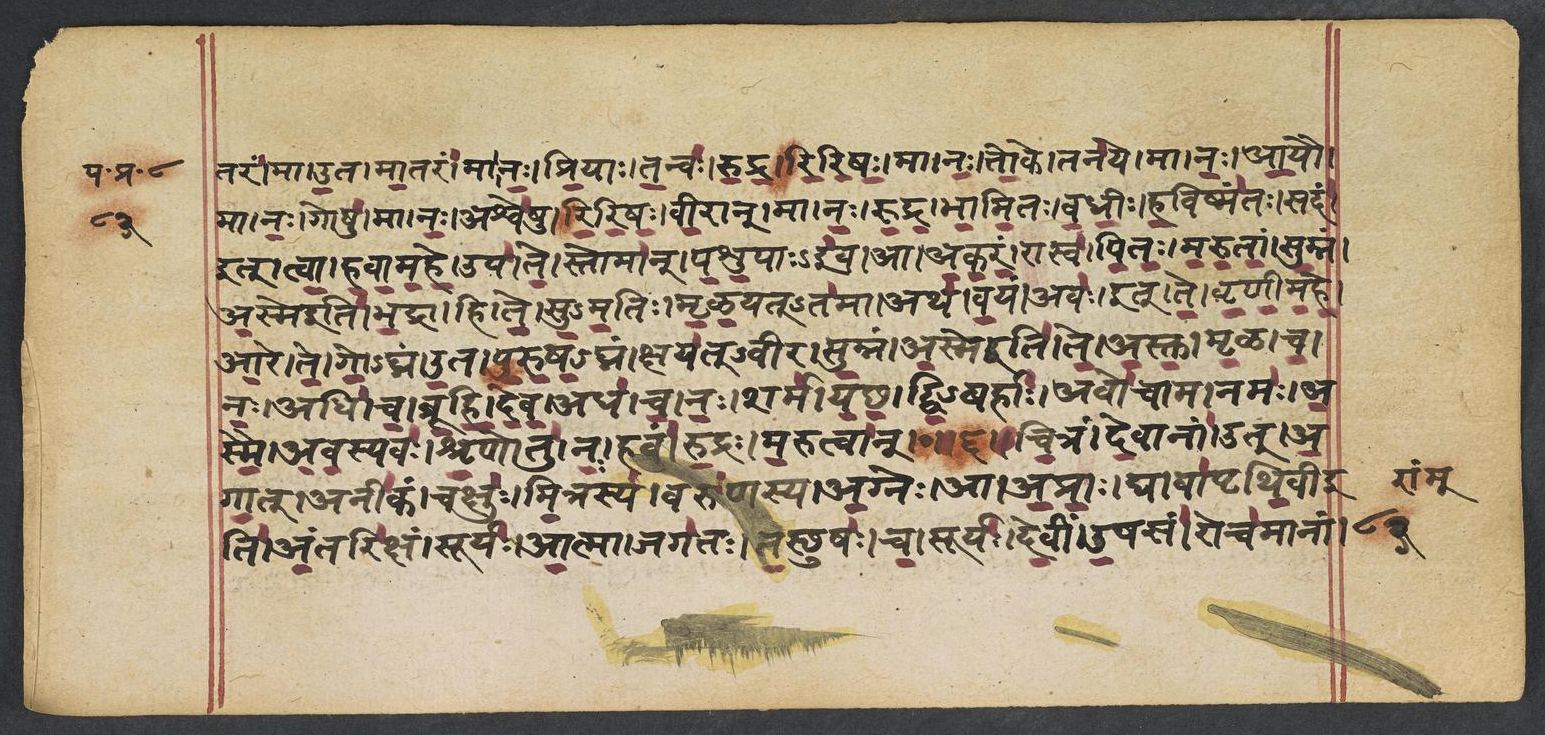
Where on the image
Penn Ms. Coll. 390 Item 41, fol. 82v (OPenn image 84, upper leaf). Checked on the image: the Rigveda text on this page begins in RV 1.114.7 ‹-pitaram mā uta mātaram›. The next page with Rigveda text, fol. 83r, begins in RV 1.115.2 ‹maryaḥ na yoṣām abhi›. Verses 1.114.7-11 end on this page; 1.114.7 begins on fol. 82r.
7mā no̍ ma̱hānta̍m u̱ta mā no̍ arbha̱kam mā na̱ ukṣa̍ntam u̱ta mā na̍ ukṣi̱tam | mā no̍ vadhīḥ pi̱tara̱m mota mā̱tara̱m mā na̍ḥ pri̱yās ta̱nvo̍ rudra rīriṣaḥ ||
8mā na̍s to̱ke tana̍ye̱ mā na̍ ā̱yau mā no̱ goṣu̱ mā no̱ aśve̍ṣu rīriṣaḥ | vī̱rān mā no̍ rudra bhāmi̱to va̍dhīr ha̱viṣma̍nta̱ḥ sada̱m it tvā̍ havāmahe ||
9upa̍ te̱ stomā̍n paśu̱pā i̱vāka̍ra̱ṁ rāsvā̍ pitar marutāṁ su̱mnam a̱sme | bha̱drā hi te̍ suma̱tir mṛ̍ḻa̱yatta̱māthā̍ va̱yam ava̱ it te̍ vṛṇīmahe ||
10ā̱re te̍ go̱ghnam u̱ta pū̍ruṣa̱ghnaṁ kṣaya̍dvīra su̱mnam a̱sme te̍ astu | mṛ̱ḻā ca̍ no̱ adhi̍ ca brūhi de̱vādhā̍ ca na̱ḥ śarma̍ yaccha dvi̱barhā̍ḥ ||
11avo̍cāma̱ namo̍ asmā ava̱syava̍ḥ śṛ̱ṇotu̍ no̱ hava̍ṁ ru̱dro ma̱rutvā̍n | tan no̍ mi̱tro varu̍ṇo māmahantā̱m adi̍ti̱ḥ sindhu̍ḥ pṛthi̱vī u̱ta dyauḥ ||
Compare: Padapāṭha (word-by-word text written in the manuscript; Sansknet e-text via GRETIL)
7mā | naḥ | mahāntam | uta | mā | naḥ | arbhakam | mā | naḥ | ukṣantam | uta | mā | naḥ | ukṣitam | mā | naḥ | vadhīḥ | pitaram | mā | uta | mātaram | mā | naḥ | priyāḥ | tanvaḥ | rudra | ririṣaḥ
8mā | naḥ | toke | tanaye | mā | naḥ | āyau | mā | naḥ | goṣu | mā | naḥ | aśveṣu | ririṣaḥ | vīrān | mā | naḥ | rudra | bhāmitaḥ | vadhīḥ | haviṣmantaḥ | sadam | it | tvā | havāmahe
9upa | te | stomān | paśupāḥ-iva | ā | akaram | rāsva | pitaḥ | marutām | sumnam | asme iti | bhadrā | hi | te | su-matiḥ | mṛḷayat-tamā | atha | vayam | ava | it | te | vṛṇīmahe
10āre | te | go--ghnam | uta | puruṣa-ghnam | kṣayat-vīra | sumnam | asme iti | te | astu | mṛḷa | ca | naḥ | adhi | ca | brūhi | deva | adha | ca | naḥ | śarma | yaccha | dvi-barhāḥ
11avocāma | namaḥ | asmai | avasyavaḥ | śṛṇotu | naḥ | havam | rudraḥ | marutvān | tat | naḥ | mitraḥ | varuṇaḥ | mamahantām | aditiḥ | sindhuḥ | pṛthivī | uta | dyauḥ
7O Rudra, harm not either great or small of us, harm not the growing boy, harm not the full-grown man. Slay not a sire among us, slay no mother here, and to our own dear bodies, Rudra, do not harm.
8Harm us not, Rudra, in our seed and progeny, harm us not in the living, nor in cows or steeds, Slay not our heroes in the fury of thy wrath. Bringing oblations evermore we call to thee.
9Even as a herdsman I have brought thee hymns of praise: O Father of the Maruts, give us happiness, Blessed is thy most favouring benevolence, so, verily, do we desire thy saving help.
10Far be thy dart that killeth men or cattle: thy bliss be with us, O thou Lord of Heroes. Be gracious unto us, O God, and bless us, and then vouchsafe us doubly-strong protection.
11We, seeking help, have spoken and adored him: may Rudra, girt by Maruts, hear our calling. This prayer of ours may Varuṇa grant, and Mitra, and Aditi and Sindhu, Earth and Heaven.
Notes
- Sanskrit: Aufrecht's edition (1877) with the Vedic accents, as entered by van Nooten and Holland (GRETIL).
- English: Ralph T. H. Griffith, The Hymns of the Rigveda (1889-1892; 2nd ed. 1896-1897), from the VedaWeb digital text; OCR slips in that text were corrected against the printed 2nd edition (data/sources/rigveda/griffith_errata.json).
- Padapāṭha (edition text): Sansknet e-text via GRETIL (CC BY-NC-SA 4.0).
Cite
Sources
- Source: Penn Ms. Coll. 390 Item 41 (undated (catalogued with Penn's 18th-19th c. Vedic manuscripts)), OPenn, Public Domain Mark + Aufrecht's accented text (GRETIL) + Griffith's English (VedaWeb) (holding institution)
- Critical edition: Aufrecht (1877), accented e-text via GRETIL
← previous · → next · v cycle view · l back to library