Rigveda 1.115: To Surya the sun-god
Introduction
Rigveda 1.115 is a hymn of 6 verses addressed to Surya the sun-god. It stands in book (maṇḍala) 1, a collection of hymns by many families of poets. The Rigveda is the oldest collection of Sanskrit hymns, composed in the second half of the second millennium BCE and handed down orally for many centuries before it was written down.
The manuscript shown is Penn Ms. Coll. 390 Item 41 (University of Pennsylvania), an undated paper manuscript of the padapāṭha (the word-by-word recitation text, in which every word is written separately and compounds are split) of the whole Ṛgveda in Devanāgarī, 884 leaves in fascicles, 7-9 lines to the page, accents in red; this hymn stands on fol. 82v-83r. Each section below gives the verses that end on one page; the page boundaries were read on the images (the opening words of every page), not counted out. Where the manuscript is a padapāṭha (the word-by-word recitation text), the section shows Aufrecht's continuous (saṃhitā) text first and, as the edition text, the padapāṭha of the same verses, which is the form written on the page.
How was this verified? (Provenance)
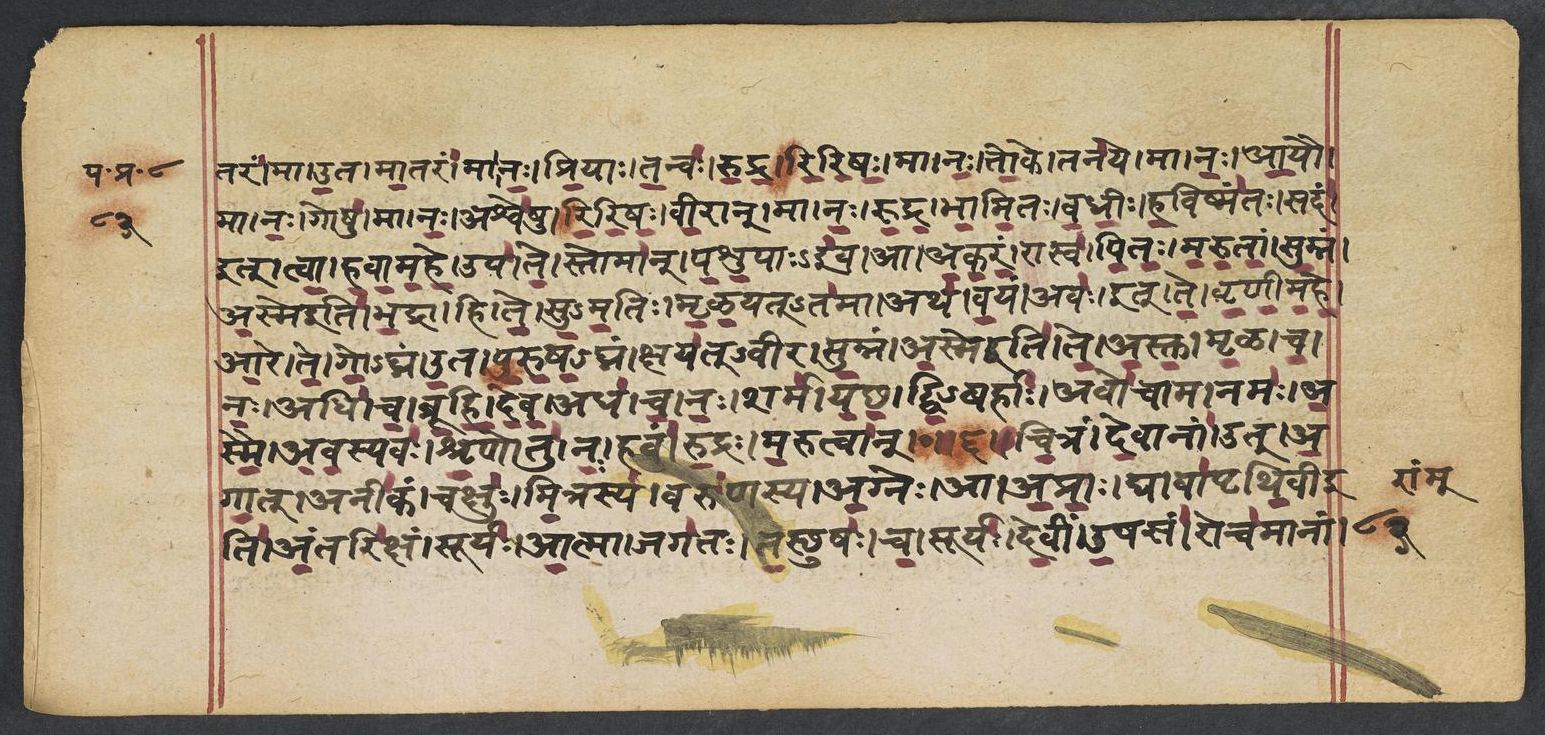
Where on the image
Penn Ms. Coll. 390 Item 41, fol. 82v (OPenn image 84, upper leaf). Checked on the image: the Rigveda text on this page begins in RV 1.114.7 ‹-pitaram mā uta mātaram›. The next page with Rigveda text, fol. 83r, begins in RV 1.115.2 ‹maryaḥ na yoṣām abhi›. Verse 1.115.1 ends on this page.
1ci̱traṁ de̱vānā̱m ud a̍gā̱d anī̍ka̱ṁ cakṣu̍r mi̱trasya̱ varu̍ṇasyā̱gneḥ | āprā̱ dyāvā̍pṛthi̱vī a̱ntari̍kṣa̱ṁ sūrya̍ ā̱tmā jaga̍tas ta̱sthuṣa̍ś ca ||
Compare: Padapāṭha (word-by-word text written in the manuscript; Sansknet e-text via GRETIL)
1citram | devānām | ut | agāt | anīkam | cakṣuḥ | mitrasya | varuṇasya | agneḥ | ā | aprāḥ | dyāvāpṛthivī iti | antarikṣam | sūryaḥ | ātmā | jagataḥ | tasthuṣaḥ | ca
1THE brilliant presence of the Gods hath risen, the eye of Mitra, Varuṇa and Agni. The soul of all that moveth not or moveth, the Sun hath filled the air and earth and heaven.
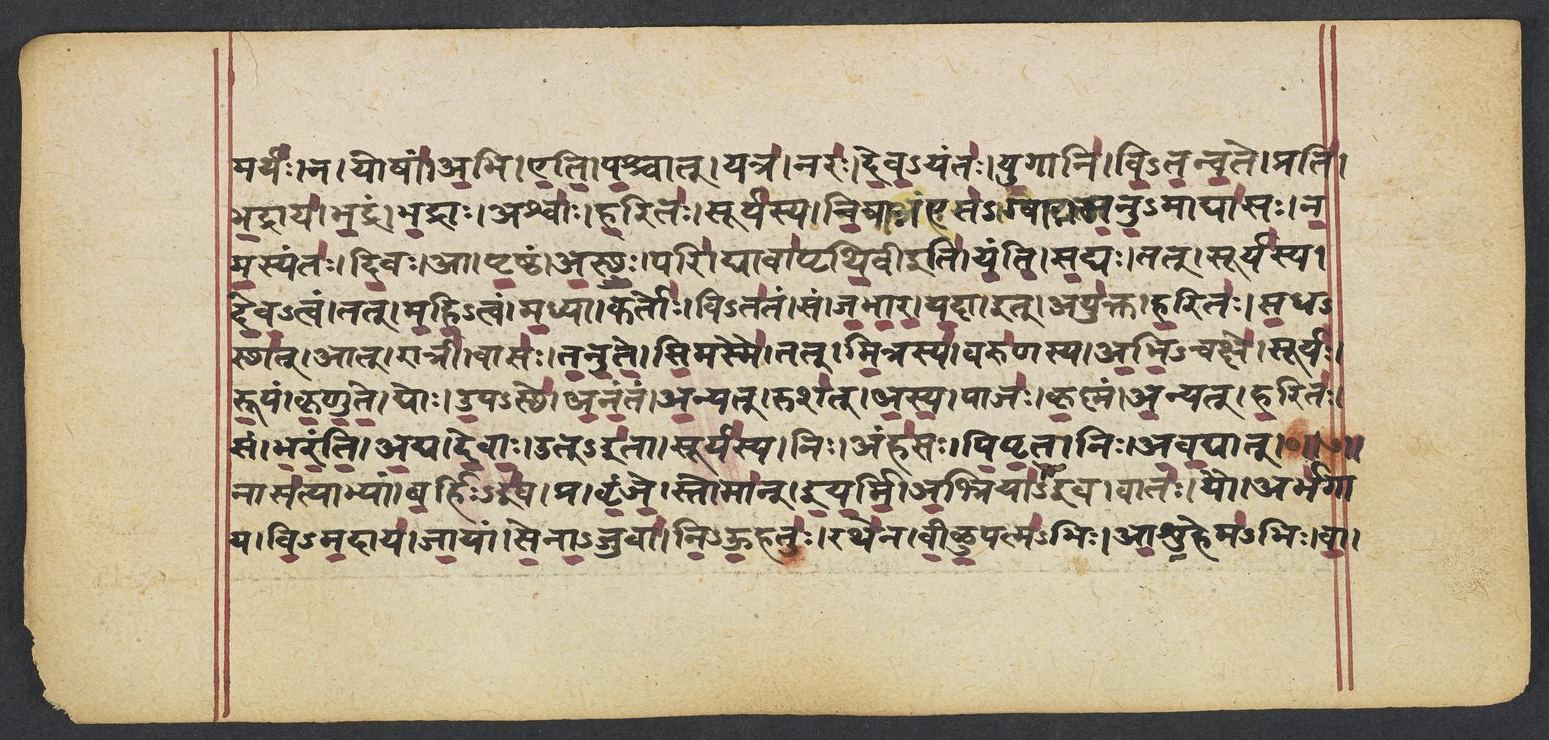
Where on the image
Penn Ms. Coll. 390 Item 41, fol. 83r (OPenn image 84, lower leaf). Checked on the image: the Rigveda text on this page begins in RV 1.115.2 ‹maryaḥ na yoṣām abhi›. The next page with Rigveda text, fol. 83v, begins in RV 1.116.2 ‹devānām vā jūti-bhiḥ śāśadānā›. Verses 1.115.2-6 end on this page; 1.115.2 begins on fol. 82v.
2sūryo̍ de̱vīm u̱ṣasa̱ṁ roca̍mānā̱m maryo̱ na yoṣā̍m a̱bhy e̍ti pa̱ścāt | yatrā̱ naro̍ deva̱yanto̍ yu̱gāni̍ vitanva̱te prati̍ bha̱drāya̍ bha̱dram ||
3bha̱drā aśvā̍ ha̱rita̱ḥ sūrya̍sya ci̱trā eta̍gvā anu̱mādyā̍saḥ | na̱ma̱syanto̍ di̱va ā pṛ̱ṣṭham a̍sthu̱ḥ pari̱ dyāvā̍pṛthi̱vī ya̍nti sa̱dyaḥ ||
4tat sūrya̍sya deva̱tvaṁ tan ma̍hi̱tvam ma̱dhyā karto̱r vita̍ta̱ṁ saṁ ja̍bhāra | ya̱ded ayu̍kta ha̱rita̍ḥ sa̱dhasthā̱d ād rātrī̱ vāsa̍s tanute si̱masmai̍ ||
5tan mi̱trasya̱ varu̍ṇasyābhi̱cakṣe̱ sūryo̍ rū̱paṁ kṛ̍ṇute̱ dyor u̱pasthe̍ | a̱na̱ntam a̱nyad ruśa̍d asya̱ pāja̍ḥ kṛ̱ṣṇam a̱nyad dha̱rita̱ḥ sam bha̍ranti ||
6a̱dyā de̍vā̱ udi̍tā̱ sūrya̍sya̱ nir aṁha̍saḥ pipṛ̱tā nir a̍va̱dyāt | tan no̍ mi̱tro varu̍ṇo māmahantā̱m adi̍ti̱ḥ sindhu̍ḥ pṛthi̱vī u̱ta dyauḥ ||
Compare: Padapāṭha (word-by-word text written in the manuscript; Sansknet e-text via GRETIL)
2sūryaḥ | devīm | uṣasam | rocamānām | maryaḥ | na | yoṣām | abhi | eti | paścāt | yatra | naraḥ | deva-yantaḥ | yugāni | vi-tanvate | prati | bhadrāya | bhadram
3bhadrāḥ | aśvāḥ | haritaḥ | sūryasya | citrāḥ | eta-gvāḥ | anu-mādyāsaḥ | namasyantaḥ | divaḥ | ā | pṛṣṭham | asthuḥ | pari | dyāvāpṛthivī | yanti | sadyaḥ
4tat | sūryasya | deva-tvam | tat | mahi-tvam | madhyā | kartoḥ | vi-tatam | sam | jabhāra | yadā | it | ayukta | haritaḥ | sadha-sthāy | āt | rātrī | vāsaḥ | tanute | simasmai
5tat | mitrasya | varuṇasya | abhi-cakṣe | sūryaḥ | rūpam | kṛṇute | dyoḥ | upa-sthe | anantam | anyat | ruśat | asya | pājaḥ | kṛṣṇam | anyat | haritaḥ | sam | bharanti
6adya | devāḥ | ut-itā | sūryasya | niḥ | aṃhasaḥ | pipṛta | niḥ | avadyāt | tat | naḥ | mitraḥ | varuṇaḥ | mamahantām | aditiḥ | sindhuḥ | pṛthivī | uta | dyauḥ
2Like as a young man followeth a maiden, so doth the Sun the Dawn, refulgent Goddess: Where pious men extend their generations, before the Auspicious One for happy fortune.
3Auspicious are the Sun's Bay-coloured Horses, bright, changing hues, meet for our shouts of triumph. Bearing our prayers, die sky's ridge have they mounted, and in a moment speed round earth and heaven.
4This is the Godhead, this might of Sûrya: he hath withdrawn what spread o'er work unfinished. When he hath loosed his Horses from their station, straight over all Night spreadeth out her garment.
5In the sky's lap the Sun this form assumeth that Varuṇa and Mitra may behold it. His Bay Steeds well maintain his power eternal, at one time bright and darksome at another.
6This day, O Gods, while Sûrya is ascending, deliver us from trouble and dishonour. This prayer of ours may Varuṇa grant, and Mitra, and Aditi and Sindhu, Earth and Heaven.
Notes
- Sanskrit: Aufrecht's edition (1877) with the Vedic accents, as entered by van Nooten and Holland (GRETIL).
- English: Ralph T. H. Griffith, The Hymns of the Rigveda (1889-1892; 2nd ed. 1896-1897), from the VedaWeb digital text; OCR slips in that text were corrected against the printed 2nd edition (data/sources/rigveda/griffith_errata.json).
- Padapāṭha (edition text): Sansknet e-text via GRETIL (CC BY-NC-SA 4.0).
Cite
Sources
- Source: Penn Ms. Coll. 390 Item 41 (undated (catalogued with Penn's 18th-19th c. Vedic manuscripts)), OPenn, Public Domain Mark + Aufrecht's accented text (GRETIL) + Griffith's English (VedaWeb) (holding institution)
- Critical edition: Aufrecht (1877), accented e-text via GRETIL
← previous · → next · v cycle view · l back to library