Rigveda 1.116: To Asvins
Introduction
Rigveda 1.116 is a hymn of 25 verses addressed to Asvins. It stands in book (maṇḍala) 1, a collection of hymns by many families of poets. The Rigveda is the oldest collection of Sanskrit hymns, composed in the second half of the second millennium BCE and handed down orally for many centuries before it was written down.
The manuscript shown is Penn Ms. Coll. 390 Item 41 (University of Pennsylvania), an undated paper manuscript of the padapāṭha (the word-by-word recitation text, in which every word is written separately and compounds are split) of the whole Ṛgveda in Devanāgarī, 884 leaves in fascicles, 7-9 lines to the page, accents in red; this hymn stands on fol. 83r-85r. Each section below gives the verses that end on one page; the page boundaries were read on the images (the opening words of every page), not counted out. Where the manuscript is a padapāṭha (the word-by-word recitation text), the section shows Aufrecht's continuous (saṃhitā) text first and, as the edition text, the padapāṭha of the same verses, which is the form written on the page.
How was this verified? (Provenance)
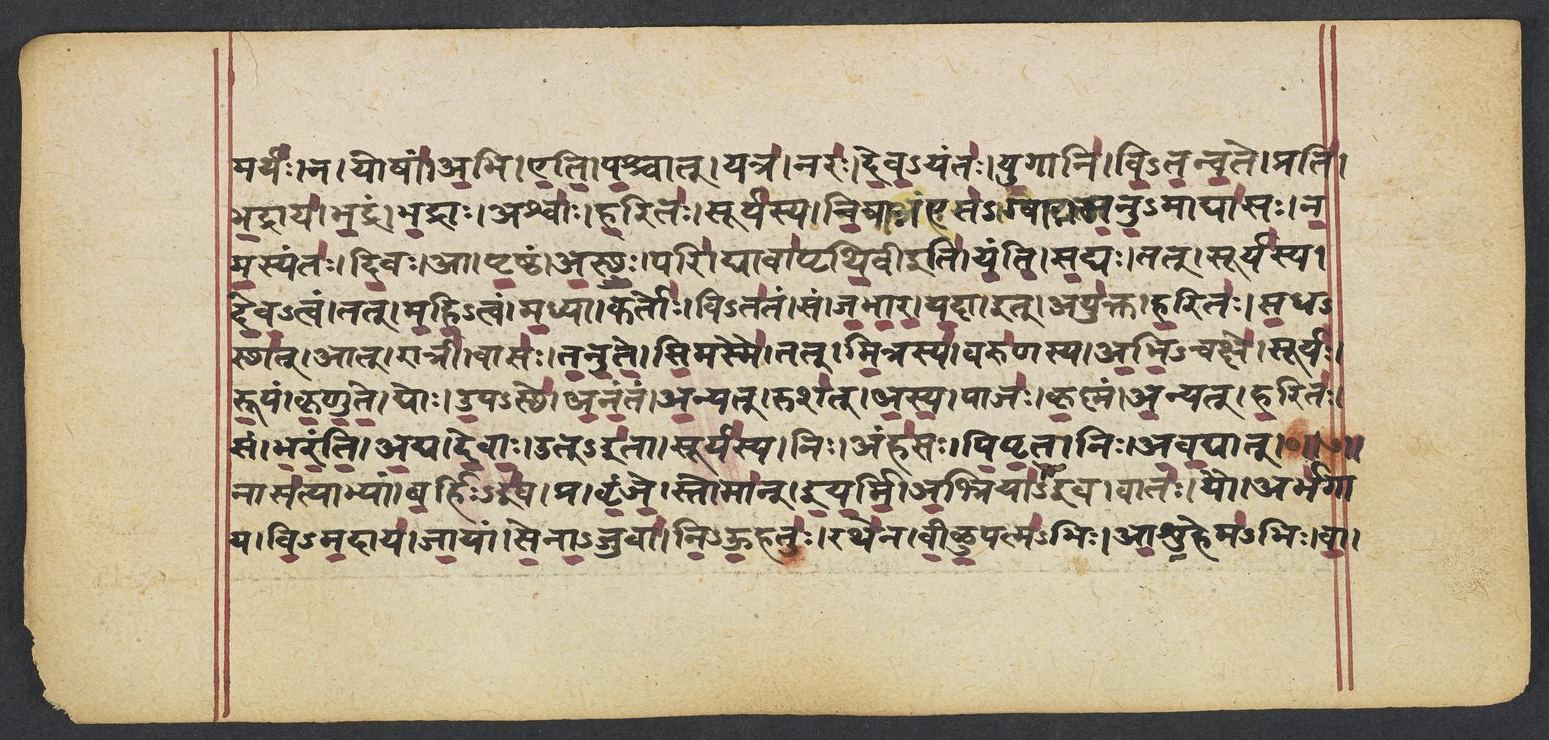
Where on the image
Penn Ms. Coll. 390 Item 41, fol. 83r (OPenn image 84, lower leaf). Checked on the image: the Rigveda text on this page begins in RV 1.115.2 ‹maryaḥ na yoṣām abhi›. The next page with Rigveda text, fol. 83v, begins in RV 1.116.2 ‹devānām vā jūti-bhiḥ śāśadānā›. Verse 1.116.1 ends on this page.
1nāsa̍tyābhyām ba̱rhir i̍va̱ pra vṛ̍ñje̱ stomā̍m̐ iyarmy a̱bhriye̍va̱ vāta̍ḥ | yāv arbha̍gāya vima̱dāya̍ jā̱yāṁ se̍nā̱juvā̍ nyū̱hatū̱ rathe̍na ||
Compare: Padapāṭha (word-by-word text written in the manuscript; Sansknet e-text via GRETIL)
1nāsatyābhyām | barhiḥ-iva | pra | vṛñje | stomān | iyarmi | abhriyāiva | vātaḥ | yau | arbhagāya | vi-madāya | jāyām | senājuvā | ni-ūhatuḥ | rathena
1I TRIM like grass my song for the Nâsatyas and send their lauds forth as the wind drives rainclouds, Who, in a chariot rapid as an arrow, brought to the youthful Vimada a consort.
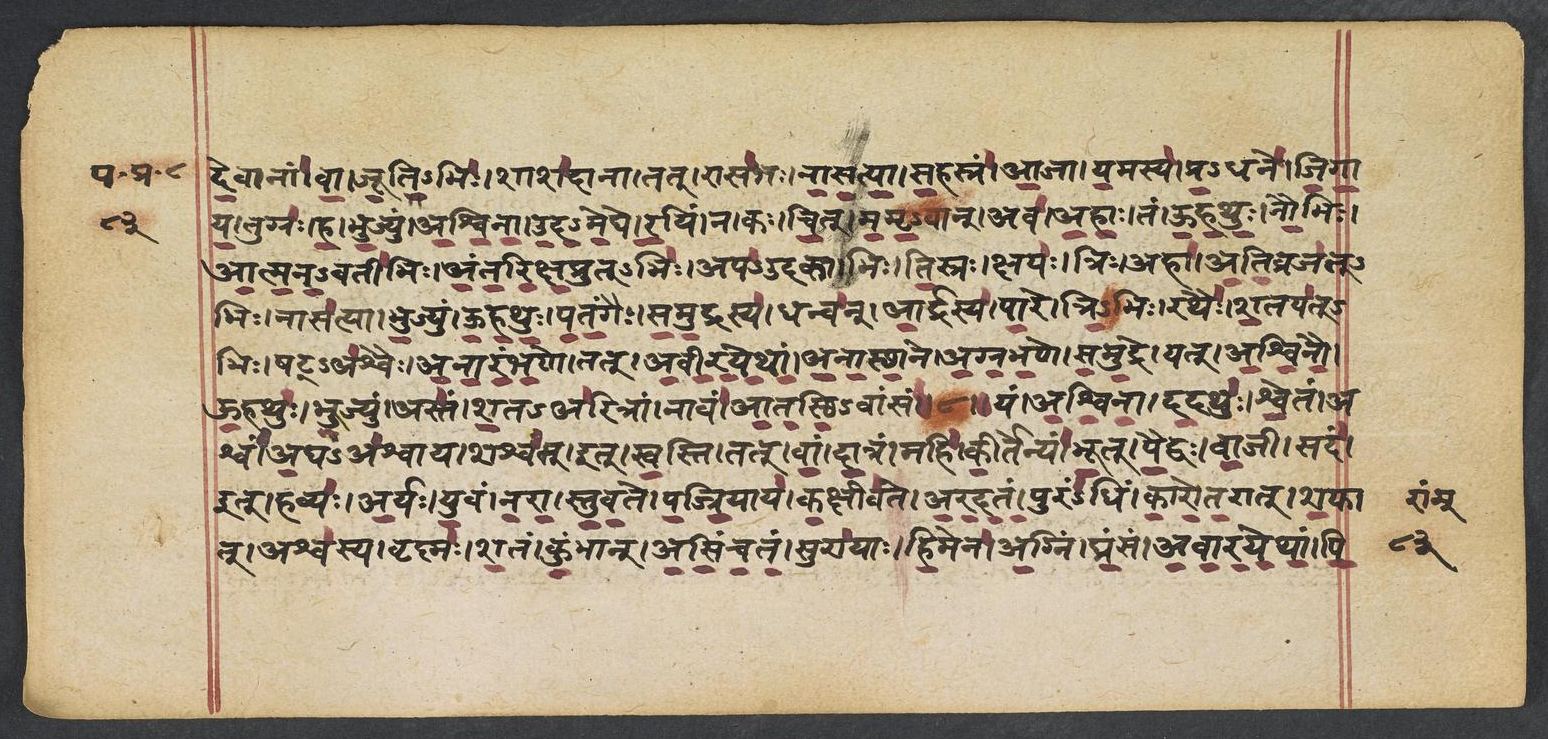
Where on the image
Penn Ms. Coll. 390 Item 41, fol. 83v (OPenn image 85, upper leaf). Checked on the image: the Rigveda text on this page begins in RV 1.116.2 ‹devānām vā jūti-bhiḥ śāśadānā›. The next page with Rigveda text, fol. 84r, begins in RV 1.116.8 ‹-pitu-matīm ūrjam asmai adhattam›. Verses 1.116.2-7 end on this page; 1.116.2 begins on fol. 83r.
2vī̱ḻu̱patma̍bhir āśu̱hema̍bhir vā de̱vānā̍ṁ vā jū̱tibhi̱ḥ śāśa̍dānā | tad rāsa̍bho nāsatyā sa̱hasra̍m ā̱jā ya̱masya̍ pra̱dhane̍ jigāya ||
3tugro̍ ha bhu̱jyum a̍śvinodame̱ghe ra̱yiṁ na kaś ci̍n mamṛ̱vām̐ avā̍hāḥ | tam ū̍hathur nau̱bhir ā̍tma̱nvatī̍bhir antarikṣa̱prudbhi̱r apo̍dakābhiḥ ||
4ti̱sraḥ kṣapa̱s trir ahā̍ti̱vraja̍dbhi̱r nāsa̍tyā bhu̱jyum ū̍hathuḥ pata̱ṁgaiḥ | sa̱mu̱drasya̱ dhanva̍nn ā̱rdrasya̍ pā̱re tri̱bhī rathai̍ḥ śa̱tapa̍dbhi̱ḥ ṣaḻa̍śvaiḥ ||
5a̱nā̱ra̱mbha̱ṇe tad a̍vīrayethām anāsthā̱ne a̍grabha̱ṇe sa̍mu̱dre | yad a̍śvinā ū̱hathu̍r bhu̱jyum asta̍ṁ śa̱tāri̍trā̱ṁ nāva̍m ātasthi̱vāṁsa̍m ||
6yam a̍śvinā da̱dathu̍ḥ śve̱tam aśva̍m a̱ghāśvā̍ya̱ śaśva̱d it sva̱sti | tad vā̍ṁ dā̱tram mahi̍ kī̱rtenya̍m bhūt pai̱dvo vā̱jī sada̱m id dhavyo̍ a̱ryaḥ ||
7yu̱vaṁ na̍rā stuva̱te pa̍jri̱yāya̍ ka̱kṣīva̍te aradata̱m pura̍ṁdhim | kā̱ro̱ta̱rāc cha̱phād aśva̍sya̱ vṛṣṇa̍ḥ śa̱taṁ ku̱mbhām̐ a̍siñcata̱ṁ surā̍yāḥ ||
Compare: Padapāṭha (word-by-word text written in the manuscript; Sansknet e-text via GRETIL)
2vīḷupatma-bhiḥ | āśuhema-bhiḥ | vā | devānām | vā | jūti-bhiḥ | śāśadānā | tat | rāsabhaḥ | nāsatyā | sahasram | ājā | yamasya | pra-dhane | jigāya
3tugraḥ | ha | bhujyum | aśvinā | uda-meghe | rayim | na | kaḥ | cit | mamṛ-vām | ava | ahāḥ | tam | ūhathuḥ | naubhiḥ | ātman-vatībhiḥ | antarikṣaprut-bhiḥ | apa-udakābh iḥ
4tisraḥ | kṣapaḥ | triḥ | ahā | ativrajat-bhiḥ | nāsatyā | bhujyum | ūhathuḥ | pataṅgaiḥ | samudrasya | dhanvan | ārdrasya | pāre | tri-bhiḥ | rathaiḥ | śatapat-bhiḥ | ṣaṭ-aśvaiḥ
5anārambhaṇe | tat | avīrayethām | anāsthāne | agrabhaṇe | samudre | yat | aśvinā | ūhathuḥ | bhujyum | astam | śata-aritrān | nāvam | ātasthivāṃsam
6yam | aśvinā | dadathuḥ | śvetam | aśvam | agha-aśvāya | śaśvat | it | svasti | tat | vām | dātram | mahi | kīrtenyam | bhūt | paidvaḥ | vājī | sadam | it | havyaḥ | aryaḥ
7yuvam | narā | stuvate | pajriyāya | kakṣīvate | aradatam | puram-dhim | kārotarāt | śaphāt | aśvasya | vṛṣṇaḥ | śatam | kumbhān | asiñcatam | surāyāḥ
2Borne on by rapid steeds of mighty pinion, or proudly trusting in the Gods' incitements. That stallion ass of yours won, O Nâsatyas, that thousand in the race, in Yama's contest.
3Yea, Aṣvins, as a dead man leaves his riches, Tugra left Bhujyu in the cloud of waters. Ye brought him back in animated vessels, traversing air, unwetted by the billows.
4Bhujyu ye bore with winged things, Nâsatyas, which for three nights, three days full swiftly travelled, To the sea's farther shore, the strand of ocean, in three cars, hundred-footed, with six horses.
5Ye wrought that hero exploit in the ocean which giveth no support, or hold or station, What time ye carried Bhujyu to his dwelling, borne in a ship with hundred oars, O Aṣvins.
6The white horse which of old ye gave Aghasva, Aṣvins, a gift to be his wealth for ever,– Still to be praised is that your glorious present, still to be famed is the brave horse of Pedu.
7O Heroes, ye gave wisdom to Kakshîvân who sprang from Pajra's line, who sang your praises. Ye poured forth from the hoof of your strong charger a hundred jars of wine as from a strainer.
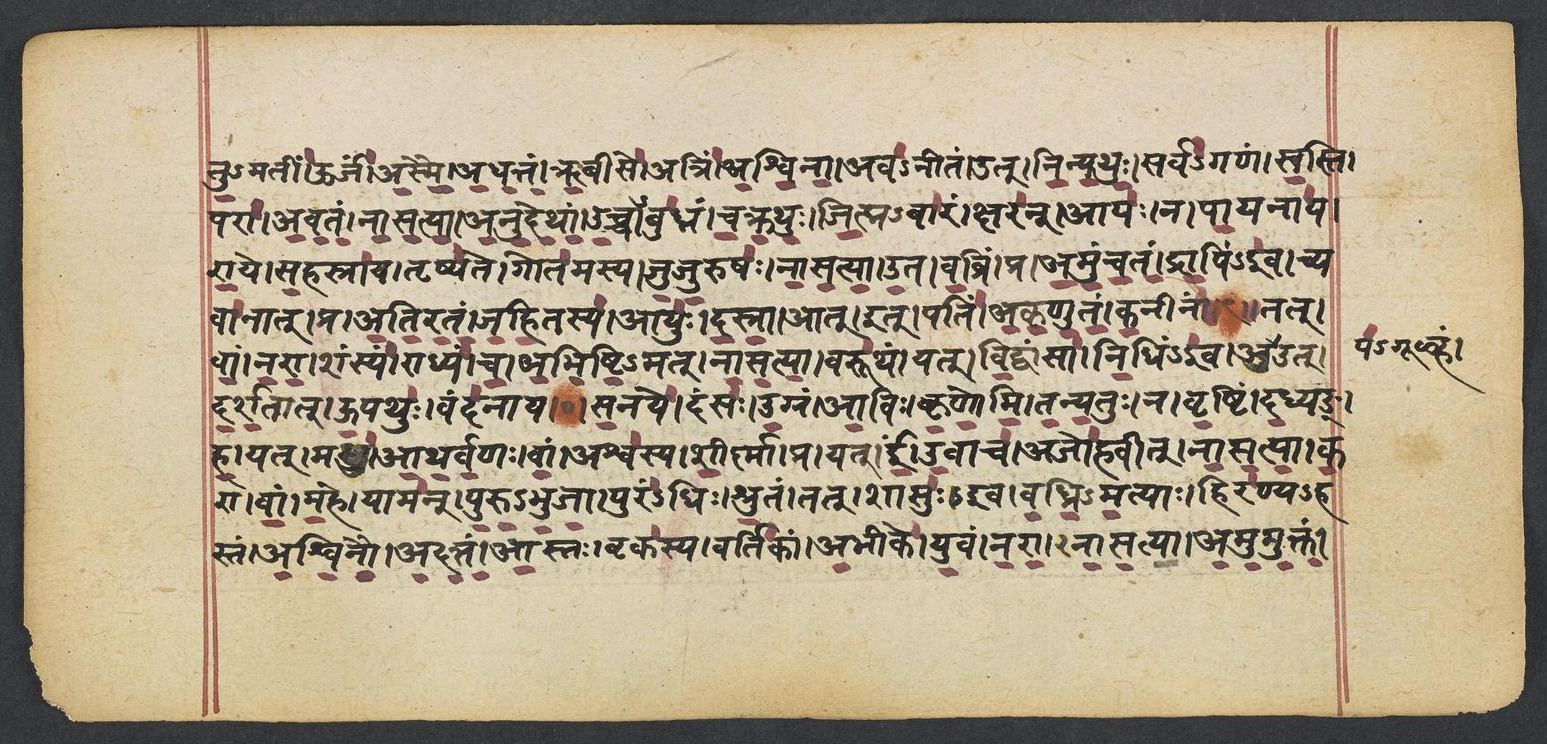
Where on the image
Penn Ms. Coll. 390 Item 41, fol. 84r (OPenn image 85, lower leaf). Checked on the image: the Rigveda text on this page begins in RV 1.116.8 ‹-pitu-matīm ūrjam asmai adhattam›. The next page with Rigveda text, fol. 84v, begins in RV 1.116.14 ‹uto iti kavim puru-bhujā›. Verses 1.116.8-13 end on this page; 1.116.8 begins on fol. 83v.
8hi̱menā̱gniṁ ghra̱ṁsam a̍vārayethām pitu̱matī̱m ūrja̍m asmā adhattam | ṛ̱bīse̱ atri̍m aśvi̱nāva̍nīta̱m un ni̍nyathu̱ḥ sarva̍gaṇaṁ sva̱sti ||
9parā̍va̱taṁ nā̍satyānudethām u̱ccābu̍dhnaṁ cakrathur ji̱hmabā̍ram | kṣara̱nn āpo̱ na pā̱yanā̍ya rā̱ye sa̱hasrā̍ya̱ tṛṣya̍te̱ gota̍masya ||
10ju̱ju̱ruṣo̍ nāsatyo̱ta va̱vrim prāmu̍ñcataṁ drā̱pim i̍va̱ cyavā̍nāt | prāti̍rataṁ jahi̱tasyāyu̍r da̱srād it pati̍m akṛṇutaṁ ka̱nīnā̍m ||
11tad vā̍ṁ narā̱ śaṁsya̱ṁ rādhya̍ṁ cābhiṣṭi̱man nā̍satyā̱ varū̍tham | yad vi̱dvāṁsā̍ ni̱dhim i̱vāpa̍gūḻha̱m ud da̍rśa̱tād ū̱pathu̱r vanda̍nāya ||
12tad vā̍ṁ narā sa̱naye̱ daṁsa̍ u̱gram ā̱viṣ kṛ̍ṇomi tanya̱tur na vṛ̱ṣṭim | da̱dhyaṅ ha̱ yan madhv ā̍tharva̱ṇo vā̱m aśva̍sya śī̱rṣṇā pra yad ī̍m u̱vāca̍ ||
13ajo̍havīn nāsatyā ka̱rā vā̍m ma̱he yāma̍n purubhujā̱ pura̍ṁdhiḥ | śru̱taṁ tac chāsu̍r iva vadhrima̱tyā hira̍ṇyahastam aśvināv adattam ||
Compare: Padapāṭha (word-by-word text written in the manuscript; Sansknet e-text via GRETIL)
8himena | agnim | ghraṃsam | avārayethām | pitu-matīm | ūrjam | asmai | adhattam | ṛbīse | atrim | aśvinā | ava-nītam | ut | ninyathuḥ | sarva-gaṇam | svasti
9parā | avatam | nāsatyā | anudethām | uccābudhnam | cakrathuḥ | jihma-bāram | kṣaran | āpaḥ | na | pāyanāya | rāye | sahasrāya | tṛṣyate | gotamasya
10jujuruṣaḥ | nāsatyā | uta | vavrim | pra | amuñcatam | drāpim-iva | cyavānāt | pra | atiratam | jahitasya | āyuḥ | dasrā | āt | it | patim | akṛṇutam | kanīnām
11tat | vām | narā | śaṃsyam | rādhyam | ca | abhiṣṭi-mat | nāsatyā | varūtham | yat | v idvāṃsā | nidhim-iva | apa-gūḷham | ut | darśatāt | ūpathuḥ | vandanāya
12tat | vām | narā | sanaye | daṃsaḥ | ugram | āviḥ | kṛṇomi | tanyatuḥ | na | vṛṣṭim | dadhyaṅ | ha | yat | madhu | ātharvaṇaḥ | vām | aśvasya | sīrṣṇā | pra | yat | īm | uvāca
13ajohavīt | nāsatyā | karā | vām | mahe | yāman | puru-bhujā | puram-dhiḥ | śrutam | tat | śāsuḥ-iva | vadhri-matyāḥ | hiraṇya-hastam | aśvinau | adattam
8Ye warded off with cold the fire's fierce burning; food very rich in nourishment ye furnished. Atri, cast downward in the cavern, Aṣvins ye brought, with all his people, forth to comfort.
9Ye lifted up the well, O ye Nâsatyas, and set the base on high to open downward. Streams flowed for folk of Gotama who thirsted, like rain to bring forth thousandfold abundance.
10Ye from the old Chyavâna, O Nâsatyas, stripped, as 'twere mail, the skin upon his body, Lengthened his life when all had left him helpless, Dasras! and made him lord of youthful maidens.
11Worthy of praise and worth the winning, Heroes, is that your favouring succour O Nâsatyas, What time ye, knowing well his case, delivered Vandana from the pit like hidden treasure.
12That mighty deed of yours, for gain, O Heroes, as thunder heraldeth the rain, I publish, When, by the horse's head, Atharvan's offspring Dadhyac made known to you the Soma's sweetness.
13In the great rite the wise dame called, Nâsatyas, you, Lords of many treasures, to assist her. Ye heard the weakling's wife, as 'twere an order, and gave to her a son Hiraṇyahasta.
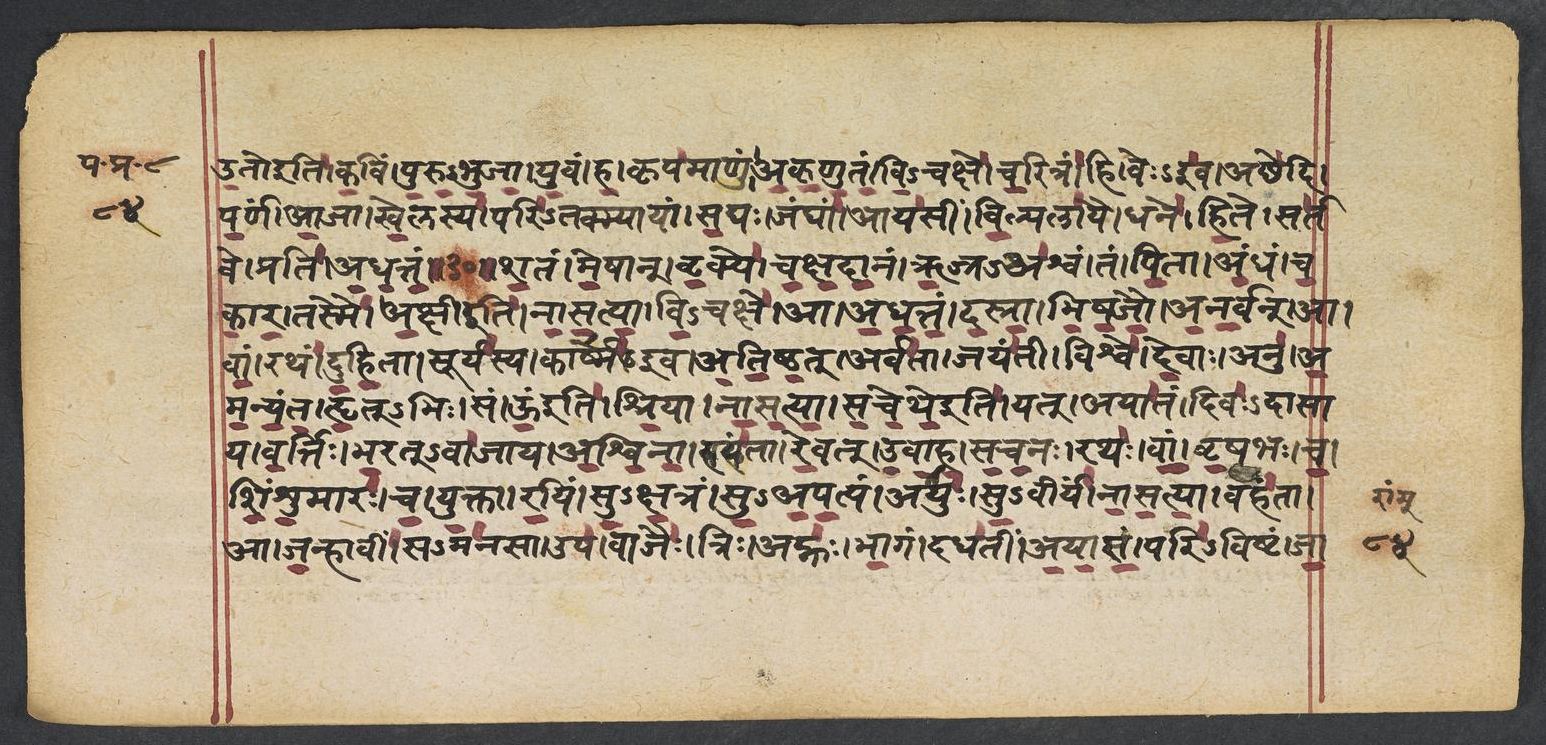
Where on the image
Penn Ms. Coll. 390 Item 41, fol. 84v (OPenn image 86, upper leaf). Checked on the image: the Rigveda text on this page begins in RV 1.116.14 ‹uto iti kavim puru-bhujā›. The next page with Rigveda text, fol. 85r, begins in RV 1.116.20 ‹-jāhuṣam viśvataḥ sīm su-gebhiḥ›. Verses 1.116.14-19 end on this page; 1.116.14 begins on fol. 84r.
14ā̱sno vṛka̍sya̱ varti̍kām a̱bhīke̍ yu̱vaṁ na̍rā nāsatyāmumuktam | u̱to ka̱vim pu̍rubhujā yu̱vaṁ ha̱ kṛpa̍māṇam akṛṇutaṁ vi̱cakṣe̍ ||
15ca̱ritra̱ṁ hi ver i̱vācche̍di pa̱rṇam ā̱jā khe̱lasya̱ pari̍takmyāyām | sa̱dyo jaṅghā̱m āya̍sīṁ vi̱śpalā̍yai̱ dhane̍ hi̱te sarta̍ve̱ praty a̍dhattam ||
16śa̱tam me̱ṣān vṛ̱kye̍ cakṣadā̱nam ṛ̱jrāśva̱ṁ tam pi̱tāndhaṁ ca̍kāra | tasmā̍ a̱kṣī nā̍satyā vi̱cakṣa̱ ādha̍ttaṁ dasrā bhiṣajāv ana̱rvan ||
17ā vā̱ṁ ratha̍ṁ duhi̱tā sūrya̍sya̱ kārṣme̍vātiṣṭha̱d arva̍tā̱ jaya̍ntī | viśve̍ de̱vā anv a̍manyanta hṛ̱dbhiḥ sam u̍ śri̱yā nā̍satyā sacethe ||
18yad ayā̍ta̱ṁ divo̍dāsāya va̱rtir bha̱radvā̍jāyāśvinā̱ haya̍ntā | re̱vad u̍vāha saca̱no ratho̍ vāṁ vṛṣa̱bhaś ca̍ śiṁśu̱māra̍ś ca yu̱ktā ||
19ra̱yiṁ su̍kṣa̱traṁ sva̍pa̱tyam āyu̍ḥ su̱vīrya̍ṁ nāsatyā̱ vaha̍ntā | ā ja̱hnāvī̱ṁ sama̍na̱sopa̱ vājai̱s trir ahno̍ bhā̱gaṁ dadha̍tīm ayātam ||
Compare: Padapāṭha (word-by-word text written in the manuscript; Sansknet e-text via GRETIL)
14āsnaḥ | vṛkasya | vartikām | abhīke | yuvam | narā | nāsatyā | amumuktam | uto iti | kavim | puru-bhujā | yuvam | ha | kṛpamāṇam | akṛṇutam | vi-cakṣe
15caritram | hi | veḥ-iva | acchedi | parṇam | ājā | khelasya | pari-takmyāyām | sadyaḥ | jaṅghām | āyasīm | viśpalāyai | dhane | hite | sartave | prati | adhattam
16śatam | meṣān | vṛkye | cakṣadānam | ṛjra-aśvam | tam | pitā | andham | cakāra | tasmai | akṣī iti | nāsatyā | vi-cakṣe | ā | adhattam | dasrā | bhiṣajau | anarvan
17ā | vām | ratham | duhitā | sūryasya | kārṣma-iva | atiṣṭhat | arvatā | jayantī | viśve | devāḥ | anu | amanyanta | hṛt-bhiḥ | sam | oṃ iti | śriyā | nāsatyā | sacetheiti
18yat | ayātam | divaḥ-dāsāya | vartiḥ | bharat-vājāya | aśvinā | hayantā | revat | uvāha | sacanaḥ | rathaḥ | vām | vṛṣabhaḥ | ca | śiṃśumāraḥ | ca | yuktā
19rayim | su-kṣatram | su-apatyam | āyuḥ | su-vīryam | nāsatyā | vahantā | ā | jahnāvīm | sa-manasā | upa | vājaiḥ | triḥ | ahnaḥ | bhāgam | dadhatīm | ayātam
14Ye from the wolf's jaws, as ye stood together, set free the quail, O Heroes, O Nâsatyas. Ye, Lords of many treasures, gave the poet his perfect vision as he mourned his trouble.
15When in the time of night, in Khela's battle, a leg was severed like a wild bird's pinion, Straight ye gave Vispali a leg of iron that she might move what time the conflict opened.
16His father robbed R̥ijrâṣva of his eyesight who for the she-wolf slew a hundred wethers. Ye gave him eyes, Nâsatyas, Wonder-Workers, Physicians, that he saw with sight uninjured.
17The Daughter of the Sun your car ascended, first reaching as it were the goal with coursers. All Deities within their hearts assented, and ye, Nâsatyas, are close linked with glory.
18When to his house ye came, to Divodâsa, hasting to Bharadvâja, O ye Aṣvins, The car that came with you brought splendid riches: a porpoise and a bull were yoked together.
19Ye, bringing wealth with rule, and life with offspring, life rich in noble heroes; O Nâsatyas, Accordant came with strength to Jahnu's children who offered you thrice every day your portion.
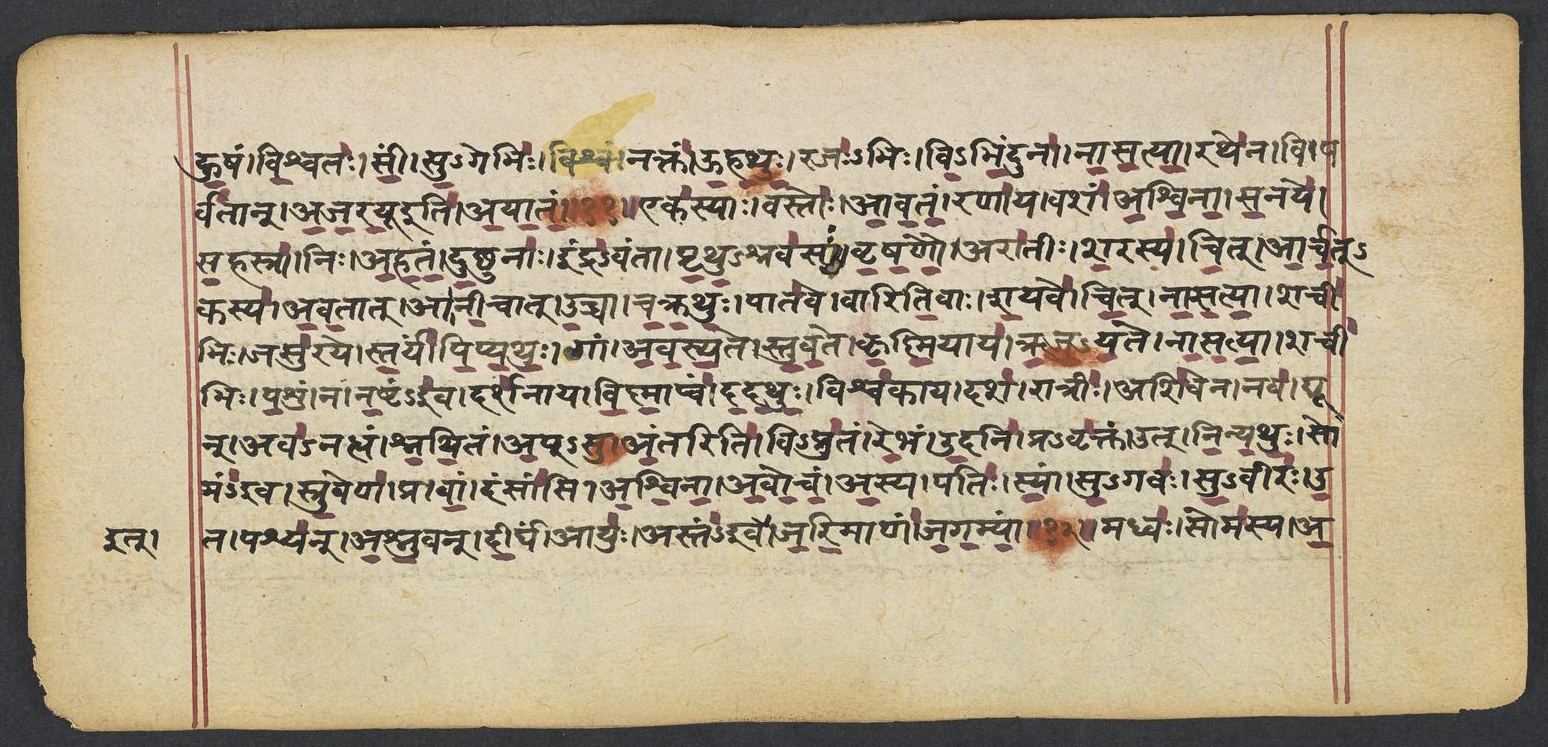
Where on the image
Penn Ms. Coll. 390 Item 41, fol. 85r (OPenn image 86, lower leaf). Checked on the image: the Rigveda text on this page begins in RV 1.116.20 ‹-jāhuṣam viśvataḥ sīm su-gebhiḥ›. The next page with Rigveda text, fol. 85v, begins in RV 1.117.1 ‹-aśvinā madāya pratnaḥ hotā›. Verses 1.116.20-25 end on this page; 1.116.20 begins on fol. 84v.
20pari̍viṣṭaṁ jāhu̱ṣaṁ vi̱śvata̍ḥ sīṁ su̱gebhi̱r nakta̍m ūhathū̱ rajo̍bhiḥ | vi̱bhi̱ndunā̍ nāsatyā̱ rathe̍na̱ vi parva̍tām̐ ajara̱yū a̍yātam ||
21eka̍syā̱ vasto̍r āvata̱ṁ raṇā̍ya̱ vaśa̍m aśvinā sa̱naye̍ sa̱hasrā̍ | nir a̍hataṁ du̱cchunā̱ indra̍vantā pṛthu̱śrava̍so vṛṣaṇā̱v arā̍tīḥ ||
22śa̱rasya̍ cid ārca̱tkasyā̍va̱tād ā nī̱cād u̱ccā ca̍krathu̱ḥ pāta̍ve̱ vāḥ | śa̱yave̍ cin nāsatyā̱ śacī̍bhi̱r jasu̍raye sta̱rya̍m pipyathu̱r gām ||
23a̱va̱sya̱te stu̍va̱te kṛ̍ṣṇi̱yāya̍ ṛjūya̱te nā̍satyā̱ śacī̍bhiḥ | pa̱śuṁ na na̱ṣṭam i̍va̱ darśa̍nāya viṣṇā̱pva̍ṁ dadathu̱r viśva̍kāya ||
24daśa̱ rātrī̱r aśi̍venā̱ nava̱ dyūn ava̍naddhaṁ śnathi̱tam a̱psv a1̱̍ntaḥ | vipru̍taṁ re̱bham u̱dani̱ pravṛ̍kta̱m un ni̍nyathu̱ḥ soma̍m iva sru̱veṇa̍ ||
25pra vā̱ṁ daṁsā̍ṁsy aśvināv avocam a̱sya pati̍ḥ syāṁ su̱gava̍ḥ su̱vīra̍ḥ | u̱ta paśya̍nn aśnu̱van dī̱rgham āyu̱r asta̍m i̱vej ja̍ri̱māṇa̍ṁ jagamyām ||
Compare: Padapāṭha (word-by-word text written in the manuscript; Sansknet e-text via GRETIL)
20pari-viṣṭam | jāhuṣam | viśvataḥ | sīm | su-gebhiḥ | naktam | ūhathuḥ | rajaḥ-bhiḥ | vi-bhindunā | nāsatyā | rathena | vi | parvatān | ajarayū iti | ayātam
21ekasyāḥ | vastoḥ | āvatam | raṇāya | vaśam | aśvinā | sanaye | sahasrā | niḥ | ahatam | ducchunāḥ | indra-vantā | pṛthu-śravasaḥ | vṛṣaṇau | arātīḥ
22śarasya | cit | ārcat-kasya | avatāt | ā | nīcāt | uccā | cakrathuḥ | pātave | vāḥ | śayave | cit | nāsatyā | śacībhiḥ | jasuraye | staryam | pipyathuḥ | gām
23avasyate | stuvate | kṛṣṇiyāya | ṛju-yate | nāsatyā | śacībhiḥ | paśum | na | naṣṭam-iva | darśanāya | viṣṇāpvam | dadathuḥ | viśvakāya
24daśa | rātrīḥ | aśivena | nava | dyūn | ava-naddham | śnathitam ap-su | antariti | vi-prutam | rebham | udani | pra-vṛktam | ut | ninyathuḥ | somam-iva sruveṇa
25pra | vām | daṃsāṃsi | asvinau | avocam | asya | patiḥ | syām | su-gavaḥ | su-vīraḥ | uta | paśyan | aśnuvan | dīrgham | āyuḥ | astam-iva | it | jarimāṇam | jagamyām
20Ye bore away at night by easy pathways Jâhusha compassed round on every quarter, And, with your car that cleaves the foe asunder, Nâsatyas never decaying! rent the mountains.
21One morn ye strengthened Vaṣa for the battle, to gather spoils that might be told in thousands. With Indra joined ye drove away misfortunes, yea foes of Pr̥ithuṣravas, O ye mighty.
22From the deep well ye raised on high the water, so that R̥ichatka's son, Ṣara, should drink it; And with your might, to help the weary Ṣayu, ye made the barren cow yield milk, Nâsatyas.
23To Viṣvaka, Nâsatyas! son of Kr̥ishṇa, the righteous man who sought your aid and praised you, Ye with your powers restored, like some lost creature, his son Vishṇâpû for his eyes to look on.
24Aṣvins, ye raised, like Soma in a ladle Rebha, who for ten days and ten nights, fettered. Had lain in cruel bonds, immersed and wounded, suffering sore affliction, in the waters.
25I have declared your wondrous deeds, O Aṣvins: may this be mine, and many kine and heroes. May I, enjoying lengthened life, still seeing, enter old age as 'twere the house I live in.
Notes
- Sanskrit: Aufrecht's edition (1877) with the Vedic accents, as entered by van Nooten and Holland (GRETIL).
- English: Ralph T. H. Griffith, The Hymns of the Rigveda (1889-1892; 2nd ed. 1896-1897), from the VedaWeb digital text; OCR slips in that text were corrected against the printed 2nd edition (data/sources/rigveda/griffith_errata.json).
- Padapāṭha (edition text): Sansknet e-text via GRETIL (CC BY-NC-SA 4.0).
Cite
Sources
- Source: Penn Ms. Coll. 390 Item 41 (undated (catalogued with Penn's 18th-19th c. Vedic manuscripts)), OPenn, Public Domain Mark + Aufrecht's accented text (GRETIL) + Griffith's English (VedaWeb) (holding institution)
- Critical edition: Aufrecht (1877), accented e-text via GRETIL
← previous · → next · v cycle view · l back to library