Rigveda 1.117: To Asvins
Introduction
Rigveda 1.117 is a hymn of 25 verses addressed to Asvins. It stands in book (maṇḍala) 1, a collection of hymns by many families of poets. The Rigveda is the oldest collection of Sanskrit hymns, composed in the second half of the second millennium BCE and handed down orally for many centuries before it was written down.
The manuscript shown is Penn Ms. Coll. 390 Item 41 (University of Pennsylvania), an undated paper manuscript of the padapāṭha (the word-by-word recitation text, in which every word is written separately and compounds are split) of the whole Ṛgveda in Devanāgarī, 884 leaves in fascicles, 7-9 lines to the page, accents in red; this hymn stands on fol. 85r-87v. Each section below gives the verses that end on one page; the page boundaries were read on the images (the opening words of every page), not counted out. Where the manuscript is a padapāṭha (the word-by-word recitation text), the section shows Aufrecht's continuous (saṃhitā) text first and, as the edition text, the padapāṭha of the same verses, which is the form written on the page.
How was this verified? (Provenance)
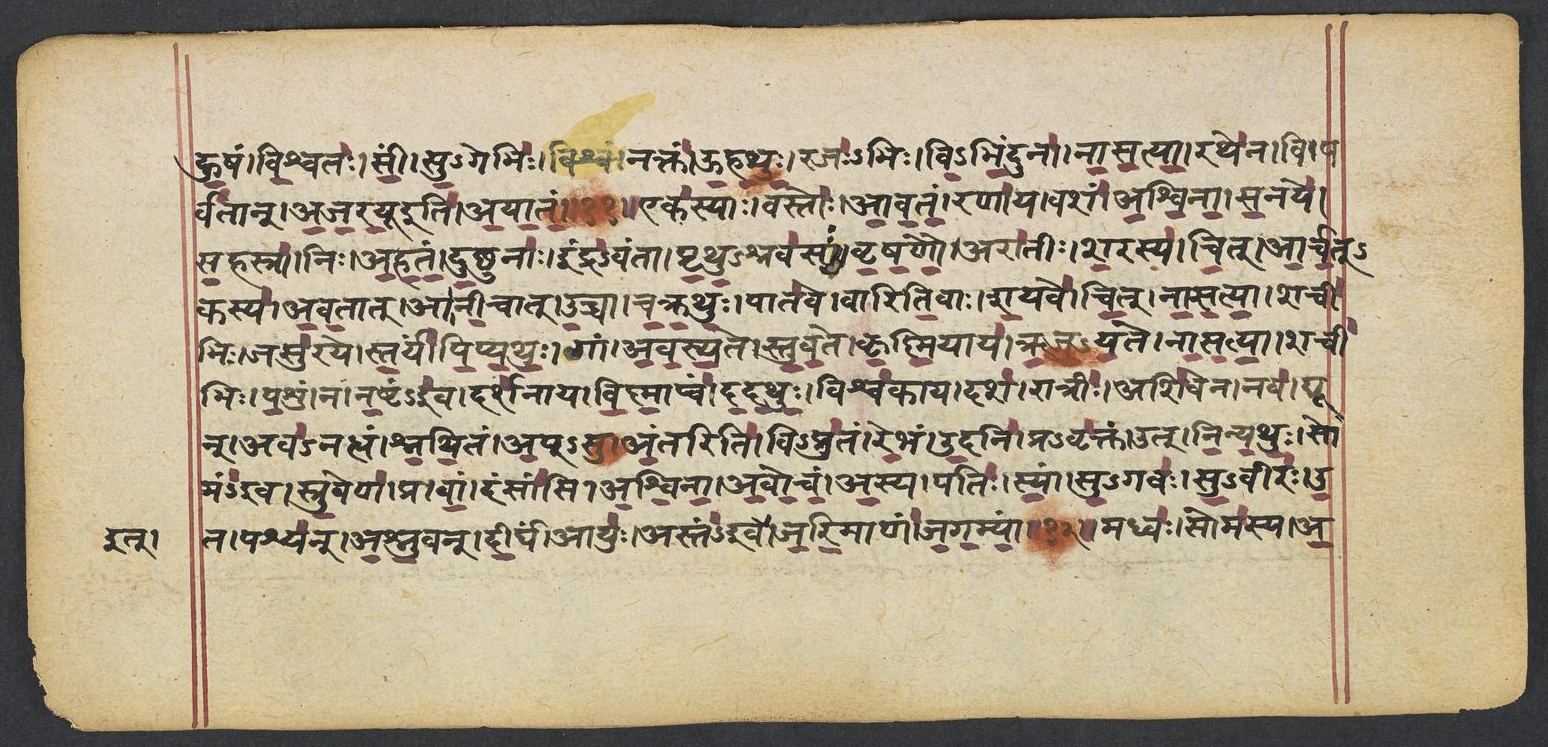
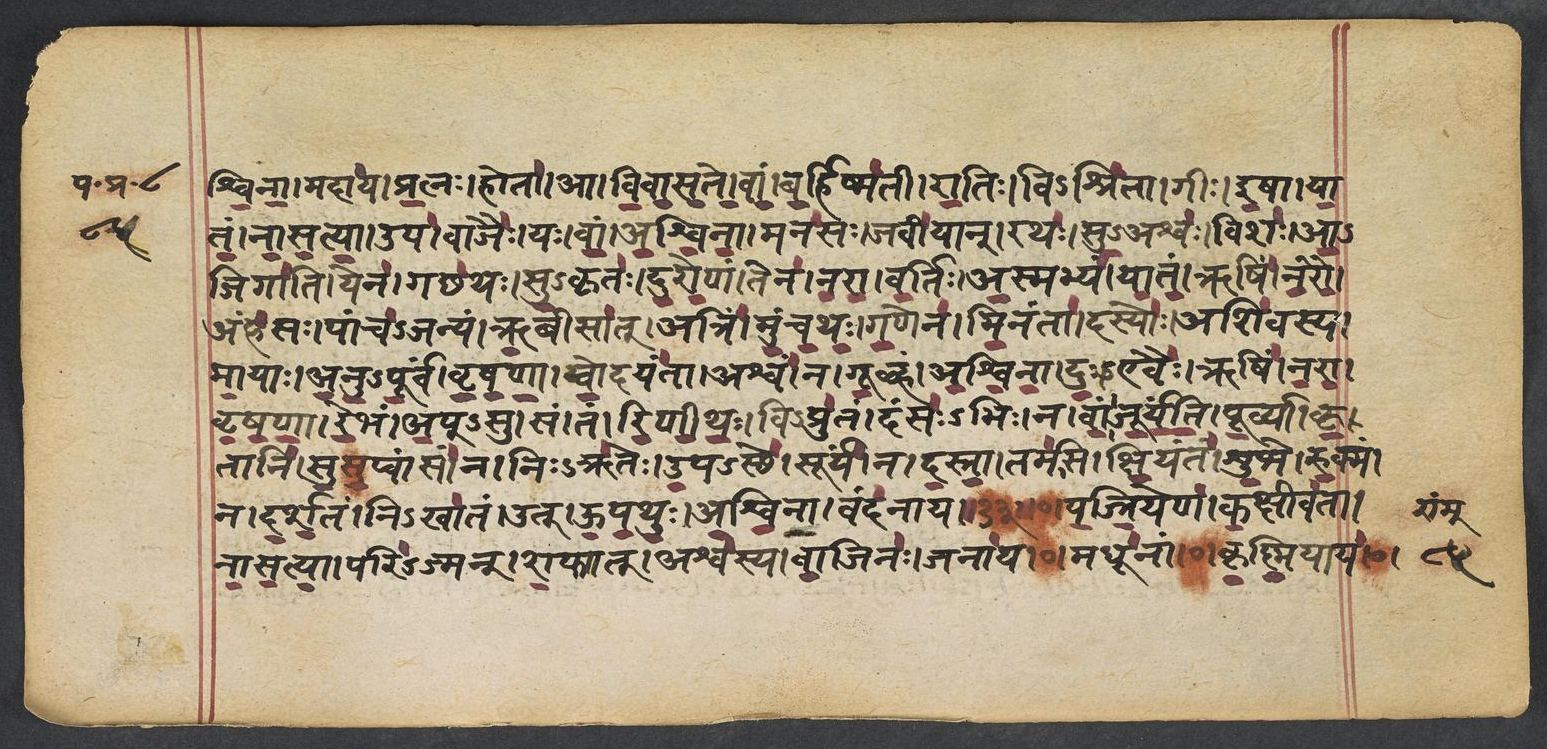
Where on the image
Penn Ms. Coll. 390 Item 41, fol. 85v (OPenn image 87, upper leaf). Checked on the image: the Rigveda text on this page begins in RV 1.117.1 ‹-aśvinā madāya pratnaḥ hotā›. The next page with Rigveda text, fol. 86r, begins in RV 1.117.7 ‹ghoṣāyai cit pitṛ-sade duroṇe›. Verses 1.117.1-6 end on this page; 1.117.1 begins on fol. 85r.
1madhva̱ḥ soma̍syāśvinā̱ madā̍ya pra̱tno hotā vi̍vāsate vām | ba̱rhiṣma̍tī rā̱tir viśri̍tā̱ gīr i̱ṣā yā̍taṁ nāsa̱tyopa̱ vājai̍ḥ ||
2yo vā̍m aśvinā̱ mana̍so̱ javī̍yā̱n ratha̱ḥ svaśvo̱ viśa̍ ā̱jigā̍ti | yena̱ gaccha̍thaḥ su̱kṛto̍ duro̱ṇaṁ tena̍ narā va̱rtir a̱smabhya̍ṁ yātam ||
3ṛṣi̍ṁ narā̱v aṁha̍sa̱ḥ pāñca̍janyam ṛ̱bīsā̱d atri̍m muñcatho ga̱ṇena̍ | mi̱nantā̱ dasyo̱r aśi̍vasya mā̱yā a̍nupū̱rvaṁ vṛ̍ṣaṇā co̱daya̍ntā ||
4aśva̱ṁ na gū̱ḻham a̍śvinā du̱revai̱r ṛṣi̍ṁ narā vṛṣaṇā re̱bham a̱psu | saṁ taṁ ri̍ṇītho̱ vipru̍ta̱ṁ daṁso̍bhi̱r na vā̍ṁ jūryanti pū̱rvyā kṛ̱tāni̍ ||
5su̱ṣu̱pvāṁsa̱ṁ na nirṛ̍ter u̱pasthe̱ sūrya̱ṁ na da̍srā̱ tama̍si kṣi̱yanta̍m | śu̱bhe ru̱kmaṁ na da̍rśa̱taṁ nikhā̍ta̱m ud ū̍pathur aśvinā̱ vanda̍nāya ||
6tad vā̍ṁ narā̱ śaṁsya̍m pajri̱yeṇa̍ ka̱kṣīva̍tā nāsatyā̱ pari̍jman | śa̱phād aśva̍sya vā̱jino̱ janā̍ya śa̱taṁ ku̱mbhām̐ a̍siñcata̱m madhū̍nām ||
Compare: Padapāṭha (word-by-word text written in the manuscript; Sansknet e-text via GRETIL)
1madhvaḥ | somasya | aśvinā | madāya | pratnaḥ | hotā | ā | vivāsate | vām | barh iṣmatī | rātiḥ | vi-śritā | gīḥ | iṣā | yātam | nāsatyā | upa | vājaiḥ
2yaḥ | vām | aśvinā | manasaḥ | javīyān | rathaḥ | su-aśvaḥ | viśaḥ | ājigāti | yena | gacchathaḥ | su-kṛtaḥ | duroṇam | tena | narā | vartiḥ | asmabhyam | yātam
3ṛṣim | narau | aṃhasaḥ | pāñca-janyam | ṛbīsāt | atrim | muñcathaḥ | gaṇena | minantā | dasyoḥ | aśivasya | māyāḥ | anu-pūrvam | vṛṣaṇā | codayantā
4aśvam | na | gūḷham | aśvinā | duḥ-evaiḥ | ṛṣim | narā | vṛṣaṇā | rebham | ap-su | sam | tam | riṇīthaḥ | vi-prutam | daṃsaḥ-bhiḥ | na | vām | jūryanti | pūrvyā | kṛtāni
5suṣupvāṃsam | na | niḥ-ṛteḥ | upa-sthe | sūryam | na | dasrā | tamasi | kṣiyantam | śubhe | rukmam | na | darśatam | ni-khātam | ut | ūpathuḥ | aśvinā | vandanāya
6tat | vām | narā | śaṃsyam | pajriyeṇa | kakṣīvatā | nāsatyā | parijman | śaphāt | aśvasya | vājinaḥ | janāya | śatam | kumbhān | asiñcatam | madhūnām
1ASVINS, your ancient priest invites you hither to gladden you with draughts of meath of Soma. Our gift is on the grass, our song apportioned: with food and strength come hither, O Nâsatyas.
2That car of yours, swifter than thought, O Aṣvins, which drawn by brave steeds cometh to the people, Whereon ye seek the dwelling of the pious,– come ye thereon to our abode, O Heroes.
3Ye freed sage Atri, whom the Five Tribes honoured, from the strait pit, ye Heroes with his people, Baffling the guiles of the malignant Dasyu, repelling them, ye Mighty in succession.
4Rebha the sage, ye mighty Heroes, Aṣvins! whom, like a horse, vile men had sunk in water,– Him, wounded, with your wondrous power ye rescued: your exploits of old time endure for ever.
5Ye brought forth Vandana, ye Wonder-Workers, for triumph, like fair gold that hath been buried, Like one who slumbered in destruction's bosom, or like the Sun when dwelling in the darkness.
6Kakshîvân, Pajra's son, must laud that exploit of yours, Nâsatyas, Heroes, ye who wander! When from the hoof of your strong horse ye showered a hundred jars of honey for the people.
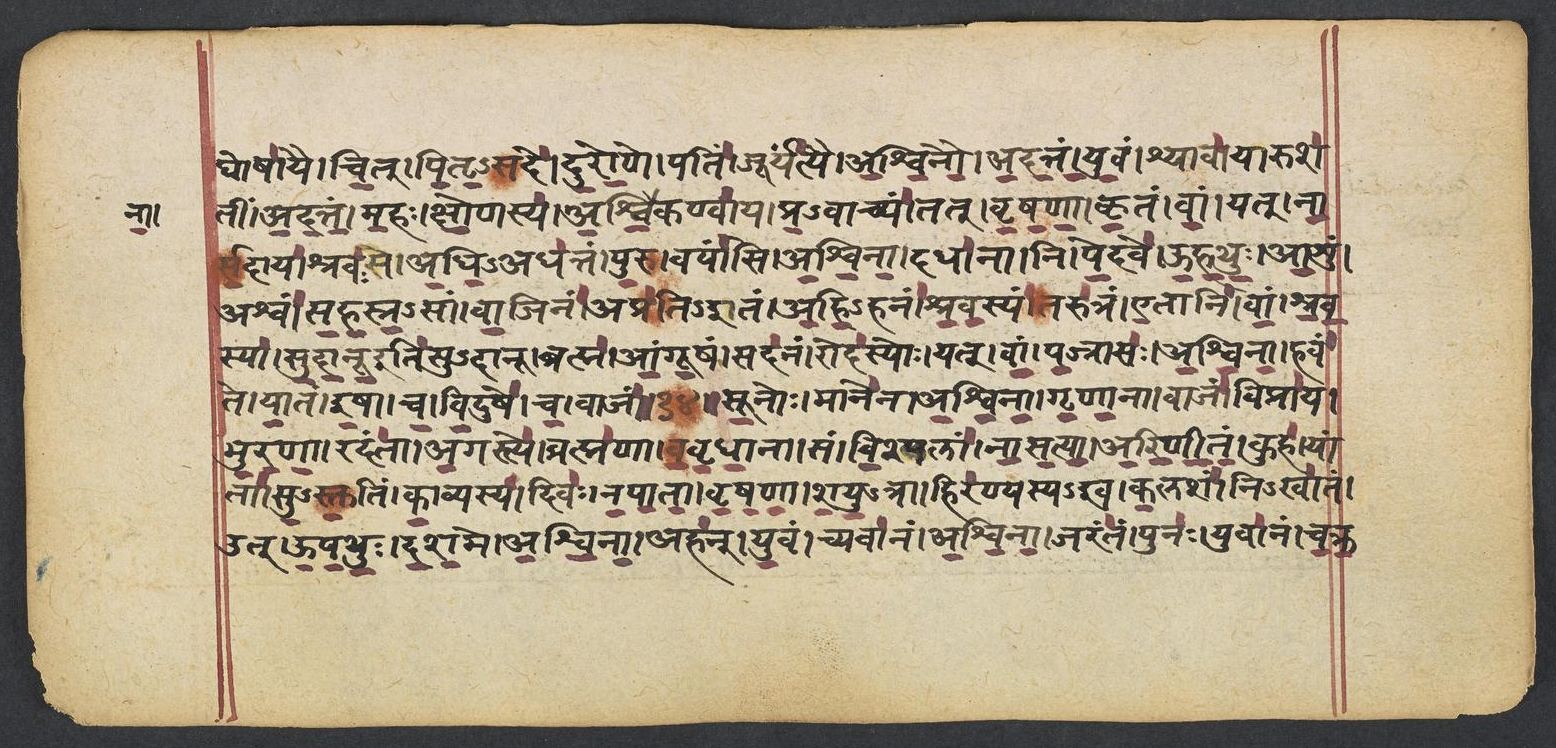
Where on the image
Penn Ms. Coll. 390 Item 41, fol. 86r (OPenn image 87, lower leaf). Checked on the image: the Rigveda text on this page begins in RV 1.117.7 ‹ghoṣāyai cit pitṛ-sade duroṇe›. The next page with Rigveda text, fol. 86v, begins in RV 1.117.13 ‹-cakrathuḥ śacībhiḥ yuvoḥ ratham›. Verses 1.117.7-12 end on this page; 1.117.7 begins on fol. 85v.
7yu̱vaṁ na̍rā stuva̱te kṛ̍ṣṇi̱yāya̍ viṣṇā̱pva̍ṁ dadathu̱r viśva̍kāya | ghoṣā̍yai cit pitṛ̱ṣade̍ duro̱ṇe pati̱ṁ jūrya̍ntyā aśvināv adattam ||
8yu̱vaṁ śyāvā̍ya̱ ruśa̍tīm adattam ma̱haḥ kṣo̱ṇasyā̍śvinā̱ kaṇvā̍ya | pra̱vācya̱ṁ tad vṛ̍ṣaṇā kṛ̱taṁ vā̱ṁ yan nā̍rṣa̱dāya̱ śravo̍ a̱dhyadha̍ttam ||
9pu̱rū varpā̍ṁsy aśvinā̱ dadhā̍nā̱ ni pe̱dava̍ ūhathur ā̱śum aśva̍m | sa̱ha̱sra̱sāṁ vā̱jina̱m apra̍tītam ahi̱hana̍ṁ śrava̱sya1̱̍ṁ taru̍tram ||
10e̱tāni̍ vāṁ śrava̱syā̍ sudānū̱ brahmā̍ṅgū̱ṣaṁ sada̍na̱ṁ roda̍syoḥ | yad vā̍m pa̱jrāso̍ aśvinā̱ hava̍nte yā̱tam i̱ṣā ca̍ vi̱duṣe̍ ca̱ vāja̍m ||
11sū̱nor māne̍nāśvinā gṛṇā̱nā vāja̱ṁ viprā̍ya bhuraṇā̱ rada̍ntā | a̱gastye̱ brahma̍ṇā vāvṛdhā̱nā saṁ vi̱śpalā̍ṁ nāsatyāriṇītam ||
12kuha̱ yāntā̍ suṣṭu̱tiṁ kā̱vyasya̱ divo̍ napātā vṛṣaṇā śayu̱trā | hira̍ṇyasyeva ka̱laśa̱ṁ nikhā̍ta̱m ud ū̍pathur daśa̱me a̍śvi̱nāha̍n ||
Compare: Padapāṭha (word-by-word text written in the manuscript; Sansknet e-text via GRETIL)
7yuvam | narā | stuvate | kṛṣṇiyāya | viṣṇāpvam | dadathuḥ | viśvakāya | ghoṣāyai | cit | pitṛ-sade | duroṇe | patim | jūryantyai | aśvinau | adattam
8yuvam | śyāvāya | ruśatīm | adattam | mahaḥ | kṣoṇasya | aśvinā | kaṇvāya | pra-vācyam | tat | vṛṣaṇā | kṛtam | vām | yat | nārsadāya | śravaḥ | adhi-adhattam
9puru | varpāṃsi | aśvinā | dadhānā | ni | pedave | ūhathuḥ | āśum | aśvam | sahasra-sām | vājinam | aprati-itam | ahi-hanam | śravasyam | tarutram
10etāni | vām | śravasyā | sudānūitisu-dānū | brahma | āṅgūṣam | sadanam | rodasyoḥ | yat | vām | pajrāsaḥ | aśvinā | havante | yatam | iṣā | ca | viduṣe | ca | vājam
11sūnoḥ | mānena | aśvinā | gṛṇānā | vājam | viprāya | bhuraṇā | radantā | agastye | brahmaṇā | vavṛdhānā | sam | viśpalām | nāsatyā | arṇtm
12kuha | yāntā | su-stutim | kāvyasya | divaḥ | napātā | vṛṣaṇā | śayu-trā | hiraṇyasya-iva | kalaśam | ni-khātam | ut | ūpathuḥ | daśame | aśvinā | ahan
7To Kr̥ishṇa's son, to Viṣvaka who praised you, O Heroes, ye restored his son Vishṇâpû. To Ghoshâ, living in her father's dwelling, stricken in years, ye gave a husband, Aṣvins.
8Rusati, of the mighty people, Aṣvins, ye gave to Ṣyâva of the line of Kaṇva. This deed of yours, ye Strong Ones should be published, that ye gave glory to the son of Nr̥ishad.
9O Aṣvins, wearing many forms at pleasure, on Pedu ye bestowed a fleet-foot courser, Strong, winner of a thousand spoils, resistless the serpent slayer, glorious, triumphant.
10These glorious things are yours, ye Bounteous Givers; prayer, praise in both worlds are your habitation. O Aṣvins, when the sons of Pajra call you, send strength with nourishment to him who knoweth.
11Hymned with the reverence of a son, O Aṣvins ye Swift Ones giving booty to the singer, Glorified by Agastya with devotion, established Vispala again, Nâsatyas.
12Ye Sons of Heaven, ye Mighty, whither went ye, sought ye, for his fair praise the home of Kâvya, When, like a pitcher full of gold, O Aṣvins, on the tenth day ye lifted up the buried?
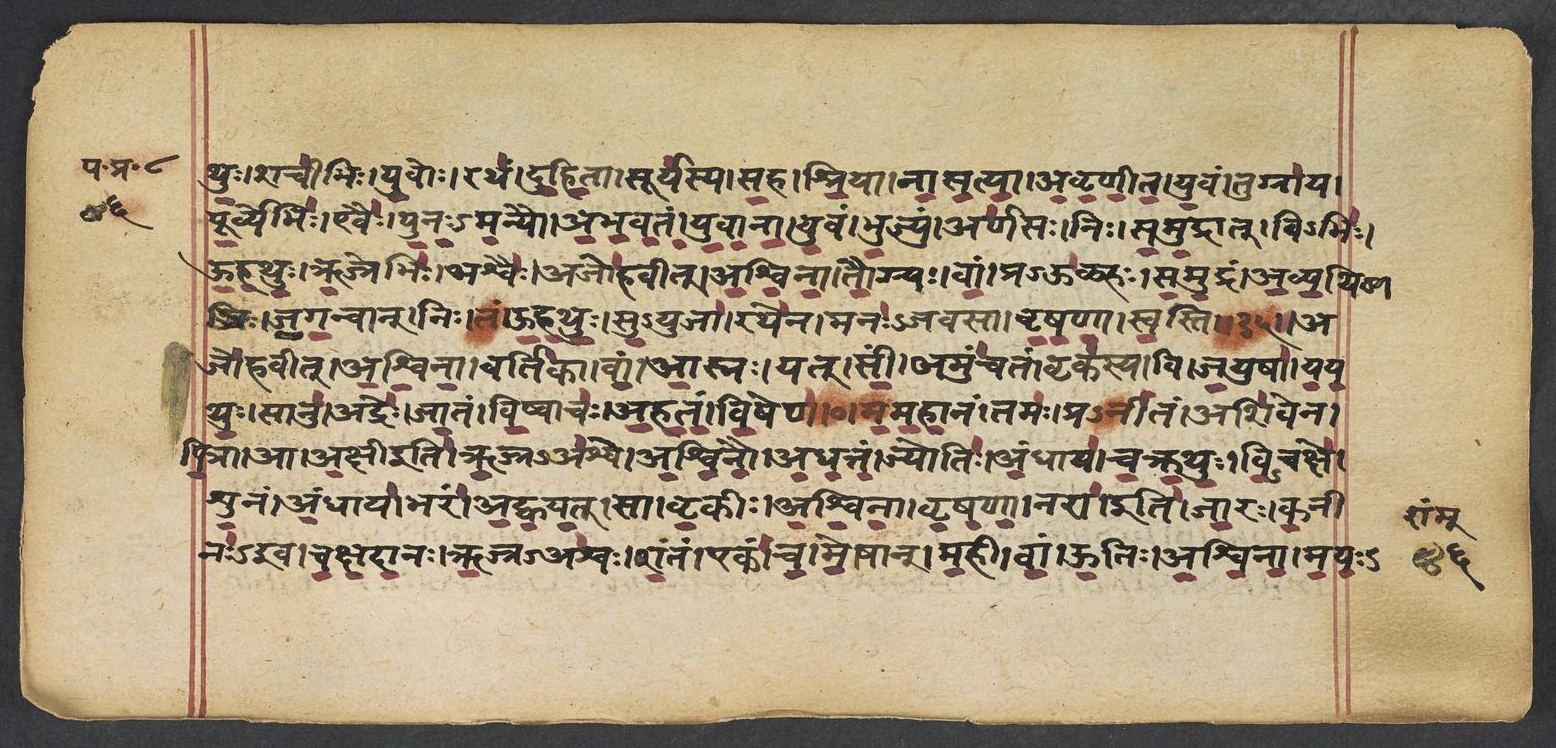
Where on the image
Penn Ms. Coll. 390 Item 41, fol. 86v (OPenn image 88, upper leaf). Checked on the image: the Rigveda text on this page begins in RV 1.117.13 ‹-cakrathuḥ śacībhiḥ yuvoḥ ratham›. The next page with Rigveda text, fol. 87r, begins in RV 1.117.19 ‹-mayaḥ-bhūḥ uta srāmam dhiṣṇyā›. Verses 1.117.13-18 end on this page; 1.117.13 begins on fol. 86r.
13yu̱vaṁ cyavā̍nam aśvinā̱ jara̍nta̱m puna̱r yuvā̍naṁ cakrathu̱ḥ śacī̍bhiḥ | yu̱vo ratha̍ṁ duhi̱tā sūrya̍sya sa̱ha śri̱yā nā̍satyāvṛṇīta ||
14yu̱vaṁ tugrā̍ya pū̱rvyebhi̱r evai̍ḥ punarma̱nyāv a̍bhavataṁ yuvānā | yu̱vam bhu̱jyum arṇa̍so̱ niḥ sa̍mu̱drād vibhi̍r ūhathur ṛ̱jrebhi̱r aśvai̍ḥ ||
15ajo̍havīd aśvinā tau̱gryo vā̱m proḻha̍ḥ samu̱dram a̍vya̱thir ja̍ga̱nvān | niṣ ṭam ū̍hathuḥ su̱yujā̱ rathe̍na̱ mano̍javasā vṛṣaṇā sva̱sti ||
16ajo̍havīd aśvinā̱ varti̍kā vām ā̱sno yat sī̱m amu̍ñcata̱ṁ vṛka̍sya | vi ja̱yuṣā̍ yayathu̱ḥ sānv adre̍r jā̱taṁ vi̱ṣvāco̍ ahataṁ vi̱ṣeṇa̍ ||
17śa̱tam me̱ṣān vṛ̱kye̍ māmahā̱naṁ tama̱ḥ praṇī̍ta̱m aśi̍vena pi̱trā | ākṣī ṛ̱jrāśve̍ aśvināv adhatta̱ṁ jyoti̍r a̱ndhāya̍ cakrathur vi̱cakṣe̍ ||
18śu̱nam a̱ndhāya̱ bhara̍m ahvaya̱t sā vṛ̱kīr a̍śvinā vṛṣaṇā̱ nareti̍ | jā̱raḥ ka̱nīna̍ iva cakṣadā̱na ṛ̱jrāśva̍ḥ śa̱tam eka̍ṁ ca me̱ṣān ||
Compare: Padapāṭha (word-by-word text written in the manuscript; Sansknet e-text via GRETIL)
13yuvam | cyavānam | aśvinā | jarantam | punaḥ | yuvānam | cakrathuḥ | śacībhiḥ | yuvoḥ | ratham | duhitā | sūryasya | saha | śriyā | nāsatyā | avṛṇīta
14yuvam | tugrāya | pūrvyebhiḥ | evaiḥ | punaḥ-manyau | abhavatam | yuvānā | yuvam bhujyum | arṇasaḥ | niḥ | samudrāt | vi-bhiḥ | ūhathuḥ | ṛjrebhiḥ | aśvaiḥ
15ajohavīt | aśvinā | taugryaḥ | vām | pra-ūḷhaḥ | samudram | avyathiḥ | jaganvān | niḥ | tam | ūhathuḥ | su-yujā | rathena | manaḥ-javasā | vṛṣaṇā | svasti
16ajohavīt | aśvinā | vartikā | vām | āsnaḥ | yat | sīm | amuñcatam | vṛkasya | vi jayuṣā | yayathuḥ | sānu | adre | jātam | viṣvācaḥ | ahatam | viṣeṇa
17śatam | meṣān | vṛkye | mamahānam | tamaḥ | pra-ṇītam | aśivena | pitrā | ā | akṣī iti | ṛjra-aśve | aśvinau | adhattam | jyotiḥ | andhāya | cakrathuḥ | vi-cakṣe
18śunam | andhāya | bharam | ahvayat | sā | vṛkīḥ | aśvinā | vṛṣaṇā | narā | iti | jāraḥ | kanīnaḥ-iva | cakṣadānaḥ | ṛjra-aśvaḥ | śatam | ekam | ca | meṣān
13Ye with the aid of your great powers, O Aṣvins, restored to youth the ancient man Chyavâna. The Daughter of the Sun with all her glory, O ye Nâsatyas, chose your car to bear her.
14Ye, ever-youthful Ones, again remembered Tugra, according to your ancient manner: With horses brown of hue that flew with swift wings ye brought back Bhujyu from the sea of billows.
15The son of Tugra had invoked you, Aṣvins; borne on he went uninjured through the ocean. Ye with your chariot swift as thought, well-harnessed, carried him off, O Mighty Ones, to safety.
16The quail had invocated you, O Aṣvins, when from the wolf's devouring jaws ye freed her. With conquering car ye cleft the mountain's ridges: the offspring of Viṣvâch ye killed with poison.
17He whom for furnishing a hundred wethers to the she-wolf, his wicked father blinded, To him, R̥ijrâṣva, gave ye eyes, O Aṣvins; light to the blind ye sent for perfect vision.
18To bring the blind man joy thus cried the she-wolf: O Aṣvins, O ye Mighty Ones, O Heroes, For me R̥ijrâṣva, like a youthful lover, hath. cut piecemeal one and a hundred wethers.
Where on the image
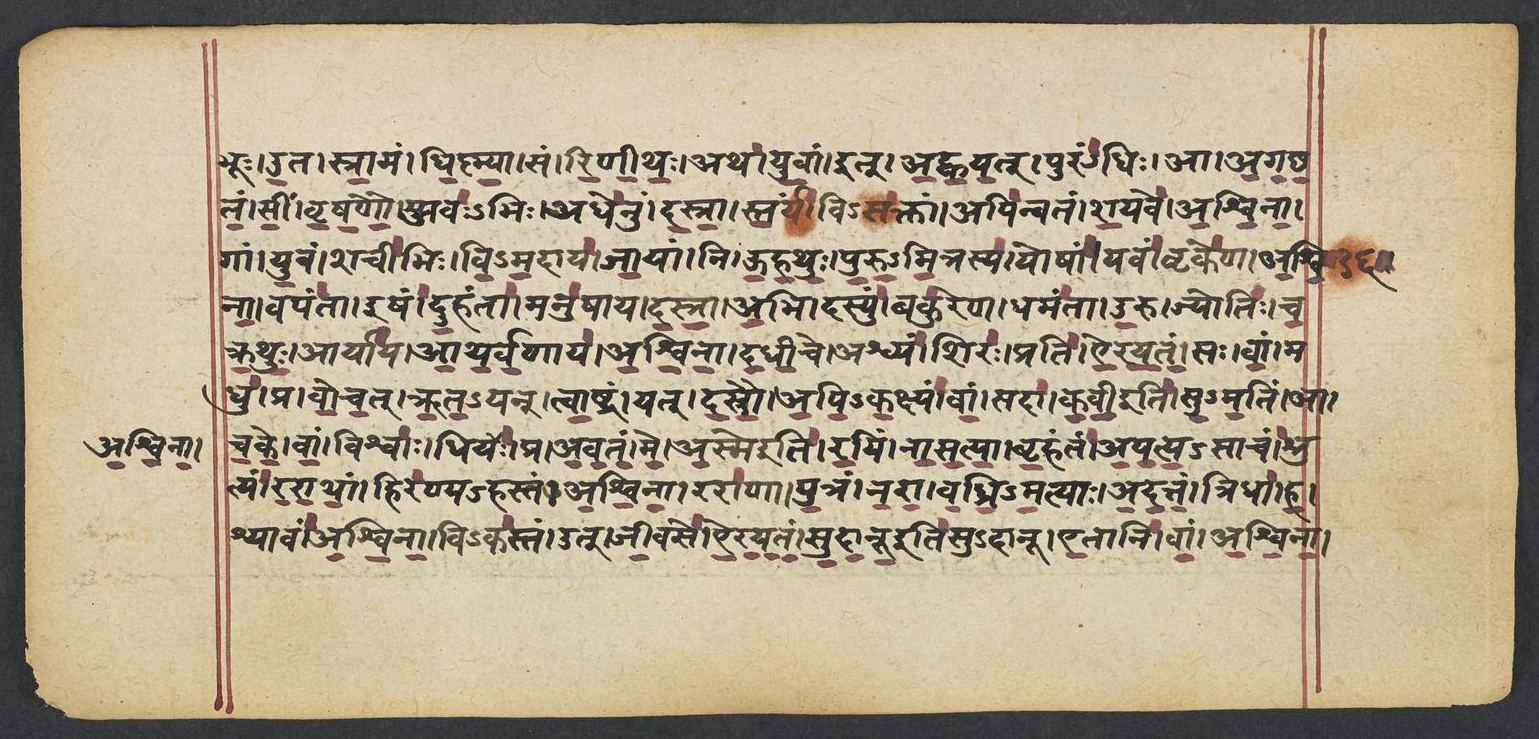
Penn Ms. Coll. 390 Item 41, fol. 87r (OPenn image 88, lower leaf). Checked on the image: the Rigveda text on this page begins in RV 1.117.19 ‹-mayaḥ-bhūḥ uta srāmam dhiṣṇyā›. The next page with Rigveda text, fol. 87v, begins in RV 1.117.25 ‹vīryāṇi pra pūrvyāṇi āyavaḥ›. Verses 1.117.19-24 end on this page; 1.117.19 begins on fol. 86v.
19ma̱hī vā̍m ū̱tir a̍śvinā mayo̱bhūr u̱ta srā̱maṁ dhi̍ṣṇyā̱ saṁ ri̍ṇīthaḥ | athā̍ yu̱vām id a̍hvaya̱t pura̍ṁdhi̱r āga̍cchataṁ sīṁ vṛṣaṇā̱v avo̍bhiḥ ||
20adhe̍nuṁ dasrā sta̱rya1̱̍ṁ viṣa̍ktā̱m api̍nvataṁ śa̱yave̍ aśvinā̱ gām | yu̱vaṁ śacī̍bhir vima̱dāya̍ jā̱yāṁ ny ū̍hathuḥ purumi̱trasya̱ yoṣā̍m ||
21yava̱ṁ vṛke̍ṇāśvinā̱ vapa̱nteṣa̍ṁ du̱hantā̱ manu̍ṣāya dasrā | a̱bhi dasyu̱m baku̍reṇā̱ dhama̍nto̱ru jyoti̍ś cakrathu̱r āryā̍ya ||
22ā̱tha̱rva̱ṇāyā̍śvinā dadhī̱ce 'śvya̱ṁ śira̱ḥ praty ai̍rayatam | sa vā̱m madhu̱ pra vo̍cad ṛtā̱yan tvā̱ṣṭraṁ yad da̍srāv apika̱kṣya̍ṁ vām ||
23sadā̍ kavī suma̱tim ā ca̍ke vā̱ṁ viśvā̱ dhiyo̍ aśvinā̱ prāva̍tam me | a̱sme ra̱yiṁ nā̍satyā bṛ̱hanta̍m apatya̱sāca̱ṁ śrutya̍ṁ rarāthām ||
24hira̍ṇyahastam aśvinā̱ rarā̍ṇā pu̱traṁ na̍rā vadhrima̱tyā a̍dattam | tridhā̍ ha̱ śyāva̍m aśvinā̱ vika̍sta̱m uj jī̱vasa̍ airayataṁ sudānū ||
Compare: Padapāṭha (word-by-word text written in the manuscript; Sansknet e-text via GRETIL)
19mahī | vām | ūtiḥ | aśvinā | mayaḥ-bhūḥ | uta | srāmam | dhiṣṇyā | sam | riṇīthaḥ | atha | yuvām | it | ahvayat | puram-dhiḥ | ā | agacchatam | sīm | vṛṣaṇau | avaḥ-bhiḥ
20adhenum | dasrā | staryam | vi-saktām | apinvatam | śayave | aśvinā | gām | yuvam | śacībhiḥ | vi-madāya | jāyām | ni | ūhathuḥ | puru-mitrasya | yoṣām
21yavam | vṛkeṇa | aśvina | vapantā | iṣam | duhantā | manuṣāya | dasrā | abhi | dasyum | bakureṇa | dhamantā | uru | jyotiḥ | cakrathuḥ | āryāya
22ātharvaṇāya | aśvinā | dadhīce | aśvyam | śiraḥ | prati | airayatam | saḥ | vām | madhu | pra | vocat | ṛta-yan | tvāṣṭram | yat | dasrau | api-kakṣyam | vām
23sadā | kavī iti | su-matim | ā | cake | vām | viśvāḥ | dhiyaḥ | aśvinā | pra | avatam | me | asme iti | rayim | nāsatyā bṛhantam | apatya-sācam | śrutyam | rarāthām
24hiraṇya-hastam | caśvinā | rarāṇā | putram | narā | vadhri-matyāḥ | adattam | tridhā | ha | śyāvam | aśvinā | vi-kastam | ut | jīvase | airayatam | sudānūitisu-dānū
19Great and weal-giving is your aid, O Aṣvins, ye, objects of all thought, made whole the cripple. Purandhi also for this cause invoked you, and ye, O mighty, came to her with succours.
20Ye, Wonder-Workers, filled with milk for Ṣayu the milkless cow, emaciated, barren; And by your powers the child of Purumitra ye brought to Vimada to be his consort.
21Ploughing and sowing barley, O ye Aṣvins, milking out food for men, ye Wonder-Workers, Blasting away the Dasyu with your trumpet, ye gave far-spreading light unto the Ârya.
22Ye brought the horse's head, Aṣvins, and gave it unto Dadhyac the offspring of Atharvan. True, he revealed to you, O WonderWorkers, sweet Soma, Tvashṭar's secret, as your girdle.
23O Sages, evermore I crave your favour: be gracious unto all my prayers, O Aṣvins. Grant me, Nâsatyas, riches in abundance, wealth famous and accompanied with children.
24With liberal bounty to the weakling's consorts ye, Heroes, gave a son Hiraṇyahasta; And Ṣyâva, cut into three several pieces, ye brought to life again, O bounteous Aṣvins.
Where on the image
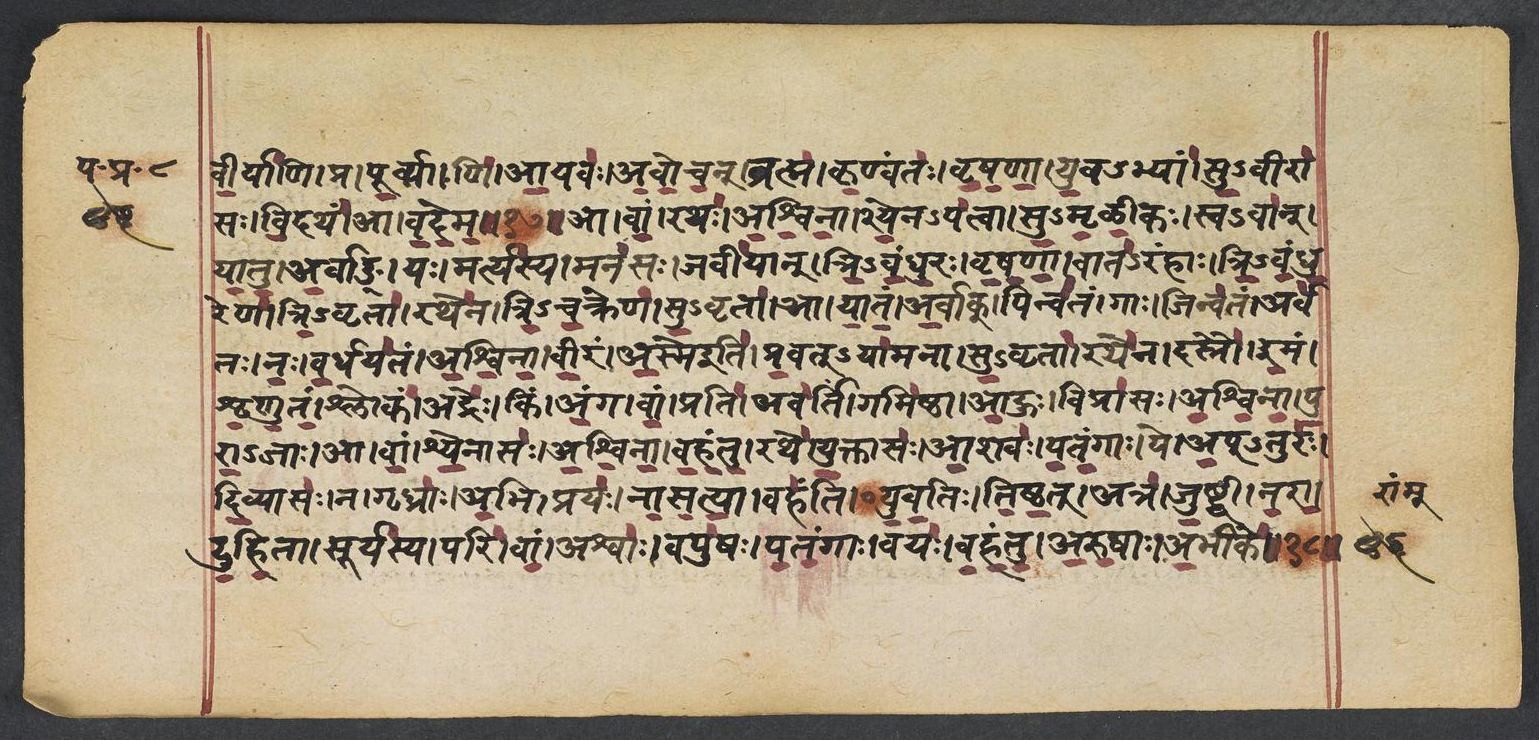
Penn Ms. Coll. 390 Item 41, fol. 87v (OPenn image 89, upper leaf). Checked on the image: the Rigveda text on this page begins in RV 1.117.25 ‹vīryāṇi pra pūrvyāṇi āyavaḥ›. The next page with Rigveda text, fol. 88r, begins in RV 1.118.6 ‹ut vandanam airatam daṃsanābhiḥ›. Verse 1.117.25 ends on this page; 1.117.25 begins on fol. 87r.
25e̱tāni̍ vām aśvinā vī̱ryā̍ṇi̱ pra pū̱rvyāṇy ā̱yavo̍ 'vocan | brahma̍ kṛ̱ṇvanto̍ vṛṣaṇā yu̱vabhyā̍ṁ su̱vīrā̍so vi̱datha̱m ā va̍dema ||
Compare: Padapāṭha (word-by-word text written in the manuscript; Sansknet e-text via GRETIL)
25etāni | vām | aśvinā | vīryāṇi | pra | pūrvyāṇi | āyavaḥ | avocan | brahma | kṛṇvantaḥ | vṛṣaṇā | yuva-bhyām | su-vīrāsaḥ | vidatham | ā | vadema
25These your heroic exploits, O ye Aṣvins, done in the days. of old, have men related. May we, addressing prayer to you, ye Mighty, speak with brave sons about us to. the synod.
Notes
- Sanskrit: Aufrecht's edition (1877) with the Vedic accents, as entered by van Nooten and Holland (GRETIL).
- English: Ralph T. H. Griffith, The Hymns of the Rigveda (1889-1892; 2nd ed. 1896-1897), from the VedaWeb digital text; OCR slips in that text were corrected against the printed 2nd edition (data/sources/rigveda/griffith_errata.json).
- Padapāṭha (edition text): Sansknet e-text via GRETIL (CC BY-NC-SA 4.0).
Cite
Sources
- Source: Penn Ms. Coll. 390 Item 41 (undated (catalogued with Penn's 18th-19th c. Vedic manuscripts)), OPenn, Public Domain Mark + Aufrecht's accented text (GRETIL) + Griffith's English (VedaWeb) (holding institution)
- Critical edition: Aufrecht (1877), accented e-text via GRETIL
← previous · → next · v cycle view · l back to library