Rigveda 1.118: To Asvins
Introduction
Rigveda 1.118 is a hymn of 11 verses addressed to Asvins. It stands in book (maṇḍala) 1, a collection of hymns by many families of poets. The Rigveda is the oldest collection of Sanskrit hymns, composed in the second half of the second millennium BCE and handed down orally for many centuries before it was written down.
The manuscript shown is Penn Ms. Coll. 390 Item 41 (University of Pennsylvania), an undated paper manuscript of the padapāṭha (the word-by-word recitation text, in which every word is written separately and compounds are split) of the whole Ṛgveda in Devanāgarī, 884 leaves in fascicles, 7-9 lines to the page, accents in red; this hymn stands on fol. 87v-88r. Each section below gives the verses that end on one page; the page boundaries were read on the images (the opening words of every page), not counted out. Where the manuscript is a padapāṭha (the word-by-word recitation text), the section shows Aufrecht's continuous (saṃhitā) text first and, as the edition text, the padapāṭha of the same verses, which is the form written on the page.
How was this verified? (Provenance)
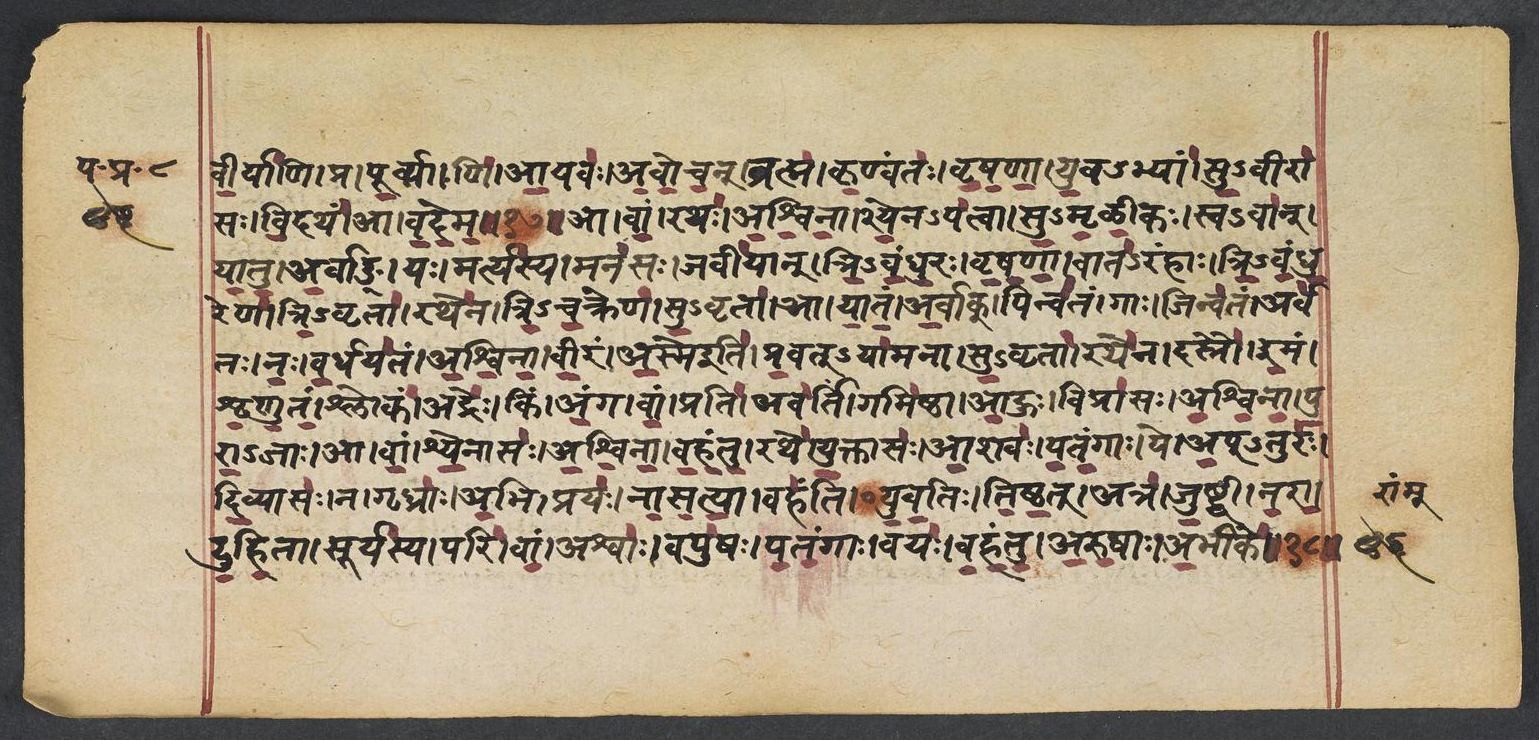
Where on the image
Penn Ms. Coll. 390 Item 41, fol. 87v (OPenn image 89, upper leaf). Checked on the image: the Rigveda text on this page begins in RV 1.117.25 ‹vīryāṇi pra pūrvyāṇi āyavaḥ›. The next page with Rigveda text, fol. 88r, begins in RV 1.118.6 ‹ut vandanam airatam daṃsanābhiḥ›. Verses 1.118.1-5 end on this page.
1ā vā̱ṁ ratho̍ aśvinā śye̱napa̍tvā sumṛḻī̱kaḥ svavā̍m̐ yātv a̱rvāṅ | yo martya̍sya̱ mana̍so̱ javī̍yān trivandhu̱ro vṛ̍ṣaṇā̱ vāta̍raṁhāḥ ||
2tri̱va̱ndhu̱reṇa̍ tri̱vṛtā̱ rathe̍na trica̱kreṇa̍ su̱vṛtā yā̍tam a̱rvāk | pinva̍ta̱ṁ gā jinva̍ta̱m arva̍to no va̱rdhaya̍tam aśvinā vī̱ram a̱sme ||
3pra̱vadyā̍manā su̱vṛtā̱ rathe̍na̱ dasrā̍v i̱maṁ śṛ̍ṇuta̱ṁ śloka̱m adre̍ḥ | kim a̱ṅga vā̱m praty ava̍rti̱ṁ gami̍ṣṭhā̱hur viprā̍so aśvinā purā̱jāḥ ||
4ā vā̍ṁ śye̱nāso̍ aśvinā vahantu̱ rathe̍ yu̱ktāsa̍ ā̱śava̍ḥ pata̱ṁgāḥ | ye a̱pturo̍ di̱vyāso̱ na gṛdhrā̍ a̱bhi prayo̍ nāsatyā̱ vaha̍nti ||
5ā vā̱ṁ ratha̍ṁ yuva̱tis ti̍ṣṭha̱d atra̍ ju̱ṣṭvī na̍rā duhi̱tā sūrya̍sya | pari̍ vā̱m aśvā̱ vapu̍ṣaḥ pata̱ṁgā vayo̍ vahantv aru̱ṣā a̱bhīke̍ ||
Compare: Padapāṭha (word-by-word text written in the manuscript; Sansknet e-text via GRETIL)
1ā | vām | rathaḥ | aśvinā | śyena-patvā | su-mṛḷīkaḥ | sva-vān | yātu | arvāṅ | yaḥ | martyasya | manasaḥ | javīyān | tri-vandhuraḥ | vṛṣaṇā | vāta-raṃhāḥ
2tri-vandhureṇa | tri-vṛta | rathena | tri-cakreṇa | su-vṛtā | ā | yātam | arvāk | pinvatam | gāḥ | jinvatam | arvataḥ | naḥ | vardhayatam | aśvinā | vīram | asme iti
3pravat-yāmanā | su-vṛtā | rathena | dasrau | imam | śṛṇutam | ślokam | adreḥ | kim | aṅga | vām | prati | avartim | gamiṣṭhā | āhuḥ | viprāsaḥ | aśvinā | purājāḥ
4ā | vām | śyenāsaḥ | aśvinā | vahantu | rathe | yuktāsaḥ | āśavaḥ | pataṅgāḥ | ye | ap-turaḥ | divyāsaḥ | na | gṛdhrāḥ | abhi | prayaḥ | nāsatyā | vahanti
5ā | vām | ratham | yuvatiḥ | tiṣṭhat | atra | juṣṭavī | narā | duhitā | sūryasya | pari | vām | aśvāḥ | vapuṣaḥ | pataṅgāḥ | vayaḥ | vahantu | aruṣāḥ | abhīke
1FLYING, with falcons, may your chariot, Aṣvins, most gracious, bringing friendly help, come hither,– Your chariot, swifter than the mind of mortal, fleet as the wind, three-seated O ye Mighty.
2Come to us with your chariot triple seated, three-wheeled, of triple form, that rolleth lightly. Fill full our cows, give mettle to our horses, and make each hero son grow strong, O Aṣvins.
3With your well-rolling car, descending swiftly, hear this the press-stone's song, ye Wonder- Workers. How then have ancient sages said, O Aṣvins, that ye most swiftly come to stay affliction?
4O Aṣvins, let your falcons bear you hither, yoked to your chariot, swift, with flying pinions, Which, ever active, like the airy eagles, carry you, O Nâsatyas, to the banquet.
5The youthful Daughter of the Sun, delighting in you, ascended there your chariot, Heroes. Borne on their swift wings let your beauteous horses, your birds of ruddy hue, convey you near us.
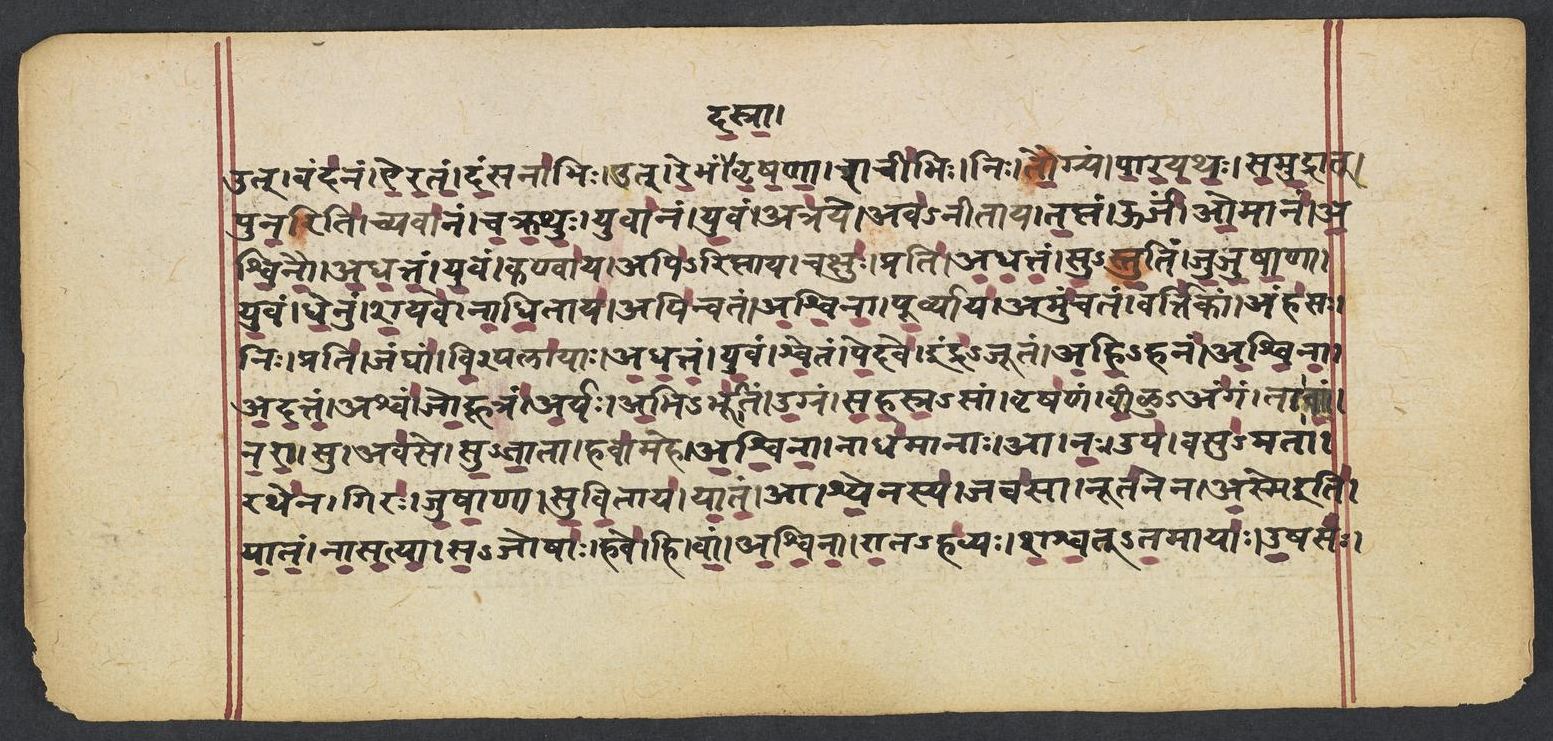
Where on the image
Penn Ms. Coll. 390 Item 41, fol. 88r (OPenn image 89, lower leaf). Checked on the image: the Rigveda text on this page begins in RV 1.118.6 ‹ut vandanam airatam daṃsanābhiḥ›. The next page with Rigveda text, fol. 88v, begins in RV 1.119.1 ‹-ratham puru-māyam manaḥ-juvam jīra-aśvam›. Verses 1.118.6-11 end on this page.
6ud vanda̍nam airataṁ da̱ṁsanā̍bhi̱r ud re̱bhaṁ da̍srā vṛṣaṇā̱ śacī̍bhiḥ | niṣ ṭau̱gryam pā̍rayathaḥ samu̱drāt puna̱ś cyavā̍naṁ cakrathu̱r yuvā̍nam ||
7yu̱vam atra̱ye 'va̍nītāya ta̱ptam ūrja̍m o̱māna̍m aśvināv adhattam | yu̱vaṁ kaṇvā̱yāpi̍riptāya̱ cakṣu̱ḥ praty a̍dhattaṁ suṣṭu̱tiṁ ju̍juṣā̱ṇā ||
8yu̱vaṁ dhe̱nuṁ śa̱yave̍ nādhi̱tāyāpi̍nvatam aśvinā pū̱rvyāya̍ | amu̍ñcata̱ṁ varti̍kā̱m aṁha̍so̱ niḥ prati̱ jaṅghā̍ṁ vi̱śpalā̍yā adhattam ||
9yu̱vaṁ śve̱tam pe̱dava̱ indra̍jūtam ahi̱hana̍m aśvinādatta̱m aśva̍m | jo̱hūtra̍m a̱ryo a̱bhibhū̍tim u̱graṁ sa̍hasra̱sāṁ vṛṣa̍ṇaṁ vī̱ḍva̍ṅgam ||
10tā vā̍ṁ narā̱ sv ava̍se sujā̱tā havā̍mahe aśvinā̱ nādha̍mānāḥ | ā na̱ upa̱ vasu̍matā̱ rathe̍na̱ giro̍ juṣā̱ṇā su̍vi̱tāya̍ yātam ||
11ā śye̱nasya̱ java̍sā̱ nūta̍nenā̱sme yā̍taṁ nāsatyā sa̱joṣā̍ḥ | have̱ hi vā̍m aśvinā rā̱taha̍vyaḥ śaśvatta̱māyā̍ u̱ṣaso̱ vyu̍ṣṭau ||
Compare: Padapāṭha (word-by-word text written in the manuscript; Sansknet e-text via GRETIL)
6ut | vandanam | airatam | daṃsanābhiḥ | ut | rebham | dasrā | vṛṣaṇā | śacībhiḥ | niḥ | taugryam | pārayathaḥ | samudrāt | punariti | cyavānam | cakrathuḥ | yuvānam
7yuvam | atraye | ava-nītāya | taptam | ūrjam | omānam | aśvinau | adhattam | yuvam | kaṇvāya | api-riptāya | cakṣuḥ | prati | adhattam | su-ṣṭutim | jujuṣāṇā
8yuvam | dhenum | śayave | nādhitāya | apinvatam | aśvinā | pūrvyāya | amuñcatam | vartikām | aṃhasaḥ | niḥ | prati | jaṅghām | viśpalāyāḥ | adhattam
9yuvam | śvetam | pedave | indra-jūtam | ahi-hanam | aśvinā | adattam | aśvam | johūtram | aryaḥ | abhi-bhūtim | ugram | sahasra-sām | vṛṣaṇam | vīḷu-aṅgam
10tā | vām | narā | su | avase | su-jātā | havāmahe | aśvinā | nādhamānāḥ | ā | naḥ | upa | vasu-matā | rathena | giraḥ | juṣāṇā | suvitāya | yātam
11ā | śyenasya | javasā | nūtanena | asme iti | yatam | nāsatyā | sajoṣāḥ | have | hi | vām | aśvinā | rāta-havyaḥ | śaśvat-tamāyāḥ | uṣasaḥ | vi-uṣṭau
6Ye raised up Vandana, strong WonderWorkers! with great might, and with power ye rescued Rebha. From out the sea ye saved the son of Tugra, and gave his youth again unto Chyavâna.
7To Atri, cast down to the fire that scorched him, ye gave, O Aṣvins, strengthening food and favour. Accepting his fair praises with approval, ye gave his eyes again to blinded Kaṇva.
8For ancient Ṣayu in his sore affliction ye caused his cow to swell with milk, O Aṣvins. The quail from her great misery ye delivered, and a new leg for Vispala provided.
9A white horse, Aṣvins, ye bestowed on Pedu, a serpent-slaying steed sent down by Indra, Loud-neighing, conquering the foe, highmettled, firm-limbed and vigorous, winning thousand treasures.
10Such as ye are, O nobly born, O Heroes, we in our trouble call on you for succour. Accepting these our songs, for our wellbeing come to us on your chariot treasure-laden.
11Come unto us combined in love, Nâsatyas come with the fresh swift vigour of the falcon. Bearing oblations I invoke you, Aṣvins, at the first break of everlasting morning.
Notes
- Sanskrit: Aufrecht's edition (1877) with the Vedic accents, as entered by van Nooten and Holland (GRETIL).
- English: Ralph T. H. Griffith, The Hymns of the Rigveda (1889-1892; 2nd ed. 1896-1897), from the VedaWeb digital text; OCR slips in that text were corrected against the printed 2nd edition (data/sources/rigveda/griffith_errata.json).
- Padapāṭha (edition text): Sansknet e-text via GRETIL (CC BY-NC-SA 4.0).
Cite
Sources
- Source: Penn Ms. Coll. 390 Item 41 (undated (catalogued with Penn's 18th-19th c. Vedic manuscripts)), OPenn, Public Domain Mark + Aufrecht's accented text (GRETIL) + Griffith's English (VedaWeb) (holding institution)
- Critical edition: Aufrecht (1877), accented e-text via GRETIL
← previous · → next · v cycle view · l back to library