Rigveda 1.119: To Asvins
Introduction
Rigveda 1.119 is a hymn of 10 verses addressed to Asvins. It stands in book (maṇḍala) 1, a collection of hymns by many families of poets. The Rigveda is the oldest collection of Sanskrit hymns, composed in the second half of the second millennium BCE and handed down orally for many centuries before it was written down.
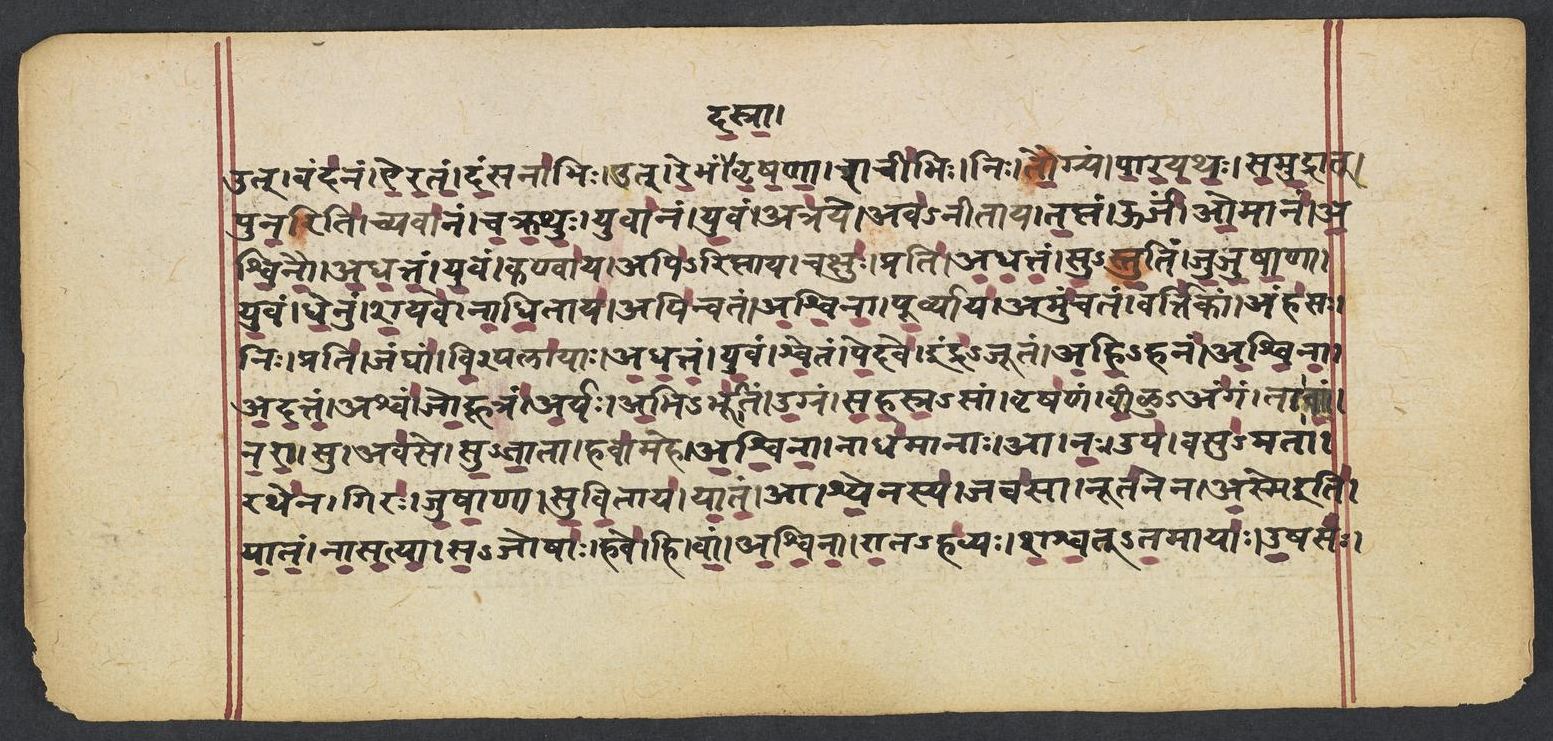
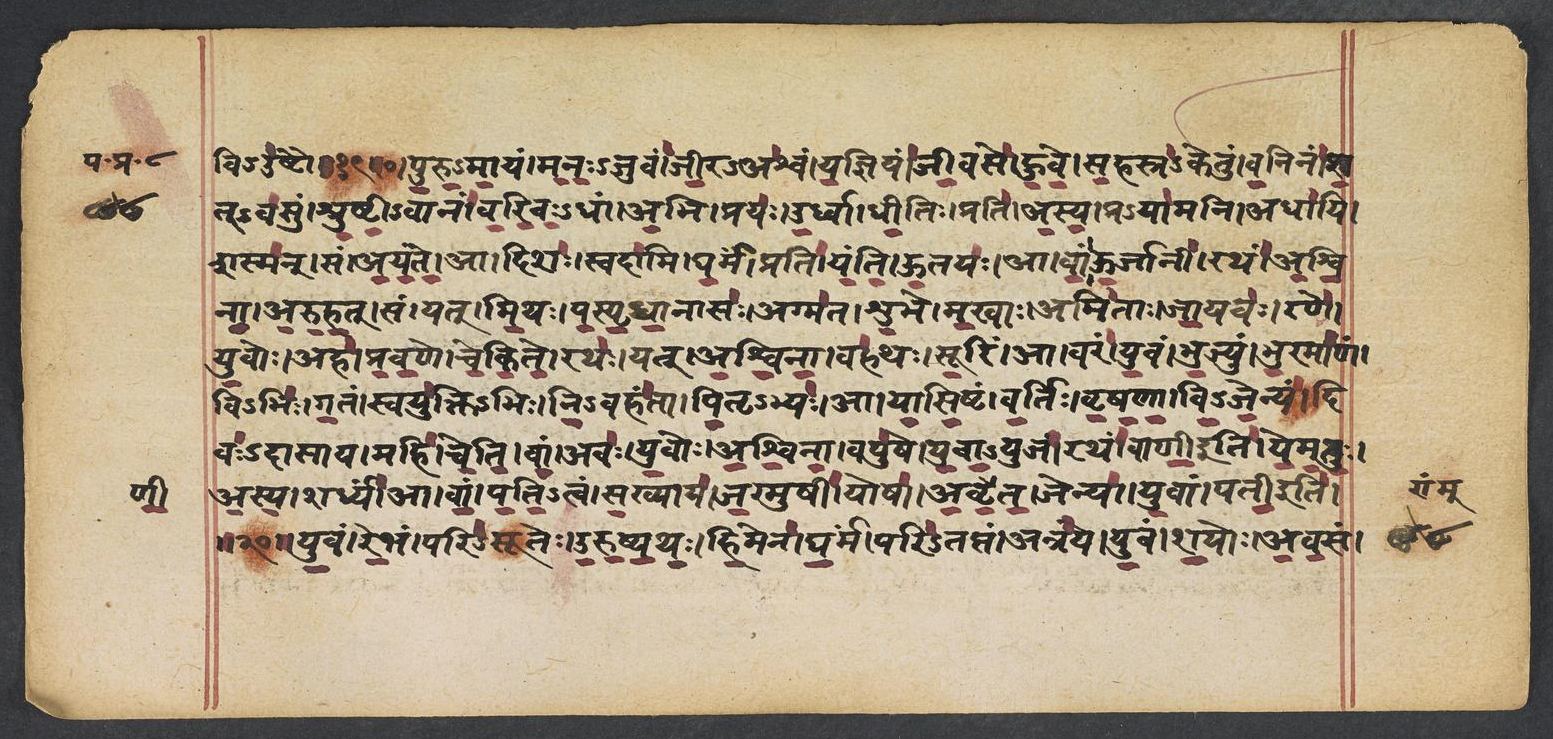
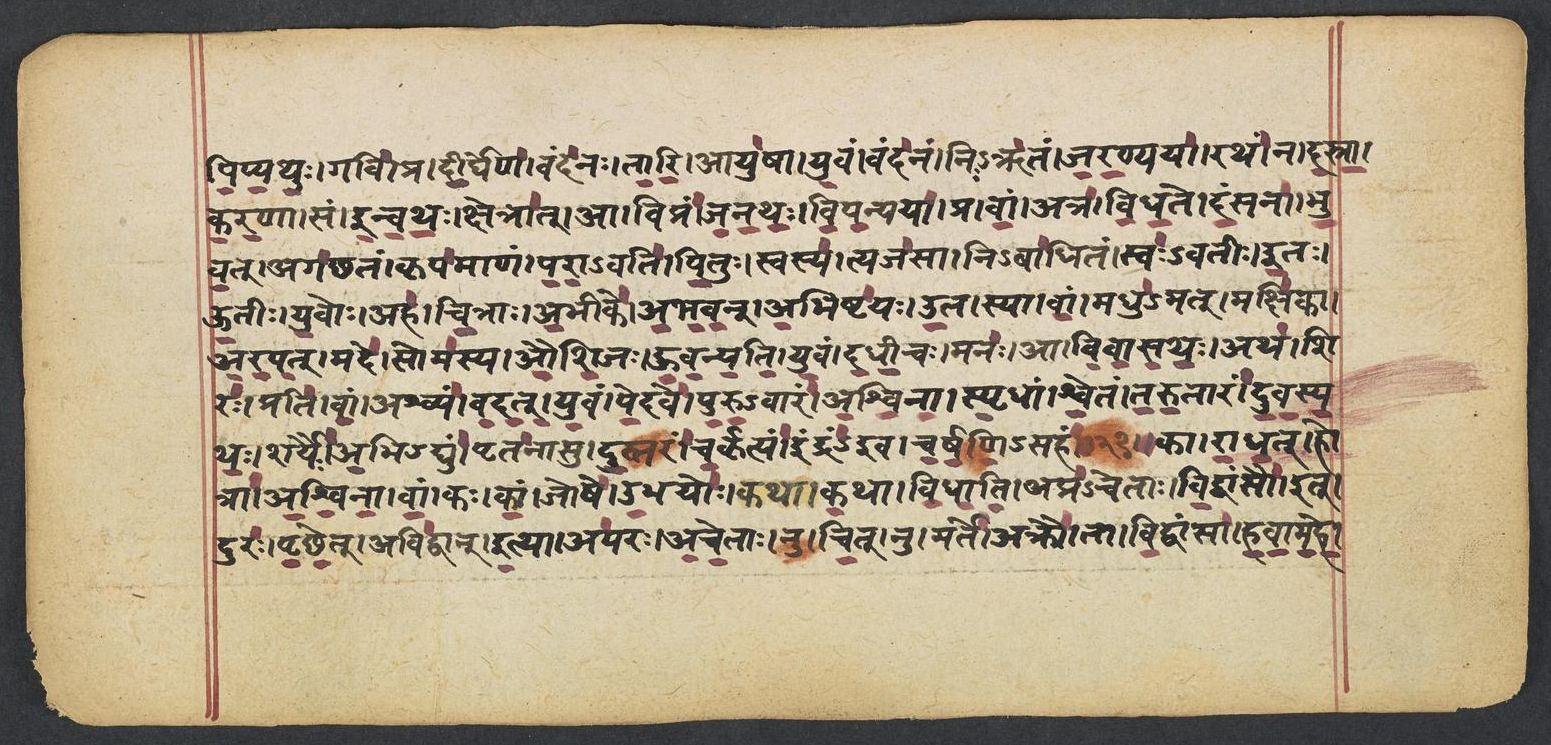
The manuscript shown is Penn Ms. Coll. 390 Item 41 (University of Pennsylvania), an undated paper manuscript of the padapāṭha (the word-by-word recitation text, in which every word is written separately and compounds are split) of the whole Ṛgveda in Devanāgarī, 884 leaves in fascicles, 7-9 lines to the page, accents in red; this hymn stands on fol. 88r-89r. Each section below gives the verses that end on one page; the page boundaries were read on the images (the opening words of every page), not counted out. Where the manuscript is a padapāṭha (the word-by-word recitation text), the section shows Aufrecht's continuous (saṃhitā) text first and, as the edition text, the padapāṭha of the same verses, which is the form written on the page.
How was this verified? (Provenance)
Where on the image
Penn Ms. Coll. 390 Item 41, fol. 88v (OPenn image 90, upper leaf). Checked on the image: the Rigveda text on this page begins in RV 1.119.1 ‹-ratham puru-māyam manaḥ-juvam jīra-aśvam›. The next page with Rigveda text, fol. 89r, begins in RV 1.119.6 ‹pipyathuḥ gavi pra dīrgheṇa›. Verses 1.119.1-5 end on this page; 1.119.1 begins on fol. 88r.
1ā vā̱ṁ ratha̍m purumā̱yam ma̍no̱juva̍ṁ jī̱rāśva̍ṁ ya̱jñiya̍ṁ jī̱vase̍ huve | sa̱hasra̍ketuṁ va̱nina̍ṁ śa̱tadva̍suṁ śruṣṭī̱vāna̍ṁ varivo̱dhām a̱bhi praya̍ḥ ||
2ū̱rdhvā dhī̱tiḥ praty a̍sya̱ prayā̍ma̱ny adhā̍yi̱ śasma̱n sam a̍yanta̱ ā diśa̍ḥ | svadā̍mi gha̱rmam prati̍ yanty ū̱taya̱ ā vā̍m ū̱rjānī̱ ratha̍m aśvināruhat ||
3saṁ yan mi̱thaḥ pa̍spṛdhā̱nāso̱ agma̍ta śu̱bhe ma̱khā ami̍tā jā̱yavo̱ raṇe̍ | yu̱vor aha̍ prava̱ṇe ce̍kite̱ ratho̱ yad a̍śvinā̱ vaha̍thaḥ sū̱rim ā vara̍m ||
4yu̱vam bhu̱jyum bhu̱ramā̍ṇa̱ṁ vibhi̍r ga̱taṁ svayu̍ktibhir ni̱vaha̍ntā pi̱tṛbhya̱ ā | yā̱si̱ṣṭaṁ va̱rtir vṛ̍ṣaṇā vije̱nya1̱̍ṁ divo̍dāsāya̱ mahi̍ ceti vā̱m ava̍ḥ ||
5yu̱vor a̍śvinā̱ vapu̍ṣe yuvā̱yuja̱ṁ ratha̱ṁ vāṇī̍ yematur asya̱ śardhya̍m | ā vā̍m pati̱tvaṁ sa̱khyāya̍ ja̱gmuṣī̱ yoṣā̍vṛṇīta̱ jenyā̍ yu̱vām patī̍ ||
Compare: Padapāṭha (word-by-word text written in the manuscript; Sansknet e-text via GRETIL)
1ā | vām | ratham | puru-māyam | manaḥ-juvam | jīra-aśvam | yajñiyam | jīvase | huve | sahasra-ketum | vaninam | śatat-vasum | śruṣṭī-vānam | varivaḥ-dhām | abhi | prayaḥ
2ūrdhvā | dhītiḥ | prati | asya | pra-yāmani | adhāyi | śasman | sam | ayante | ā | diśaḥ | svadāmi | gharmam | prati | yanti | ūtayaḥ | ā | vām | ūrjānī | ratham | aśvinā | aruhat
3sam | yat | mithaḥ | paspṛdhānāsaḥ | agmata | śubhe | makhāḥ | amitāḥ | jāyavaḥ | raṇe | yuvoḥ | aha | pravaṇe | cekite | rathaḥ | yat | aśvinā | vahathaḥ | sūrim | ā | varam
4yuvam | bhujyum | bhuramāṇam | vi-bhiḥ | gatam | svayukti-bhiḥ | ni-vahantā | pitṛ-bhyaḥ | ā | yāsiṣṭam | vartiḥ | vṛṣaṇā | vi-jenyam | divaḥ-dāsāya | mahi | ceti | vām | avaḥ
5yuvoḥ | aśvinā | vapuṣe | yuvāyujam | ratham | vānī iti | yematuḥ | asya | śardhyam | ā | vām | pati-tvam | sakhyāya | jagmuṣī | yoṣā | avṛṇīta | jenyā | yuvām | patī iti
1HITHER, that I may live, I call unto the feast your wondrous car, thought-swift, borne on by rapid steeds. With thousand banners, hundred treasures, pouring gifts, promptly obedient, bestowing ample room.
2Even as it moveth near my hymn is lifted up, and all the regions come together to sing praise. I sweeten the oblations; now the helpers come. Urjânî hath, O Aṣvins, mounted on your car.
3When striving man with man for glory they have met, brisk, measureless, eager for victory in fight, Then verily your car is seen upon the slope when ye, O Aṣvins, bring some choice boon to the prince.
4Ye came to Bhujyu while he struggled in the flood, with flying birds, self-yoked, ye bore him to his sires. Ye went to the far-distant home, O Mighty Ones; and famed is your great aid to Divodâsa given.
5Aṣvins, the car which you had yoked for glorious show your own two voices urged directed to its goal. Then she who came for friendship, Maid of noble birth, elected you as Husbands, you to be her Lords.
Where on the image
Penn Ms. Coll. 390 Item 41, fol. 89r (OPenn image 90, lower leaf). Checked on the image: the Rigveda text on this page begins in RV 1.119.6 ‹pipyathuḥ gavi pra dīrgheṇa›. The next page with Rigveda text, fol. 89v, begins in RV 1.120.3 ‹vām tā naḥ vidvāṃsā›. Verses 1.119.6-10 end on this page; 1.119.6 begins on fol. 88v.
6yu̱vaṁ re̱bham pari̍ṣūter uruṣyatho hi̱mena̍ gha̱rmam pari̍tapta̱m atra̍ye | yu̱vaṁ śa̱yor a̍va̱sam pi̍pyathu̱r gavi̱ pra dī̱rgheṇa̱ vanda̍nas tā̱ry āyu̍ṣā ||
7yu̱vaṁ vanda̍na̱ṁ nirṛ̍taṁ jara̱ṇyayā̱ ratha̱ṁ na da̍srā kara̱ṇā sam i̍nvathaḥ | kṣetrā̱d ā vipra̍ṁ janatho vipa̱nyayā̱ pra vā̱m atra̍ vidha̱te da̱ṁsanā̍ bhuvat ||
8aga̍cchata̱ṁ kṛpa̍māṇam parā̱vati̍ pi̱tuḥ svasya̱ tyaja̍sā̱ nibā̍dhitam | sva̍rvatīr i̱ta ū̱tīr yu̱vor aha̍ ci̱trā a̱bhīke̍ abhavann a̱bhiṣṭa̍yaḥ ||
9u̱ta syā vā̱m madhu̍ma̱n makṣi̍kārapa̱n made̱ soma̍syauśi̱jo hu̍vanyati | yu̱vaṁ da̍dhī̱co mana̱ ā vi̍vāsa̱tho 'thā̱ śira̱ḥ prati̍ vā̱m aśvya̍ṁ vadat ||
10yu̱vam pe̱dave̍ puru̱vāra̍m aśvinā spṛ̱dhāṁ śve̱taṁ ta̍ru̱tāra̍ṁ duvasyathaḥ | śaryai̍r a̱bhidyu̱m pṛta̍nāsu du̱ṣṭara̍ṁ ca̱rkṛtya̱m indra̍m iva carṣaṇī̱saha̍m ||
Compare: Padapāṭha (word-by-word text written in the manuscript; Sansknet e-text via GRETIL)
6yuvam | rebham | pari-sūteḥ | uruṣyathaḥ | himena | gharmam | pari-taptam | atraye | yuvam | śayoḥ | avasam | pipyathuḥ | gavi | pra | dīrgheṇa | vandanaḥ | tāri | āyuṣā
7yuvam | vandanam | niḥ-ṛtam | jaraṇyayā | ratham | na | dasrā | karaṇā | sam | invathaḥ | kṣetrāt | ā | vipram | janathaḥ | vipanyayā | pra | vām | atra | vidhate | daṃsanā | bhuvat
8agacchatam | kṛpamāṇam | parāvati | pituḥ | svasya | tyajasā | ni-bādhitam | svaḥ-vatīḥ | itaḥ | ūtīḥ | yuvoḥ | aha | citrāḥ | abhīke | abhavan | abhiṣṭayaḥ
9uta | syā | vām | madhu-mat | makṣikā | arapat | made | somasya | auśijaḥ | huvanyati | yuvam | dadhīcaḥ | manaḥ | ā | vivāsathaḥ | atha | śiraḥ | prati | vām | aśvyam | vadat
10yuvam | pedave | puru-vāram | aśvinā | spṛdhām | śvetam | tarutāram | duvasyathaḥ | śaryaiḥ | abhi-dyum | pṛtanāsu | dustaram | carkṛtyam | indram-iva | carṣaṇ i-saham
6Rebha ye saved from tyranny; for Atri's sake ye quenched with cold the fiery pit that compassed him. Ye made the cow of Ṣayu stream refreshing milk, and Vandana was holpen to extended life.
7Doers of marvels, skilful workers, ye restored Vandana, like a car, worn out with length of days. From earth ye brought the sage to life in wondrous mode; be your great deeds done here for him who honours you.
8Ye went to him who mourned in a far distant place, him who was left forlorn by treachery of his sire. Rich with the light ofheaven was then the help ye gave, and marvellous your succour when ye stood by him.
9To you in praise of sweetness sang the honey-bee: Auṣija calleth you in Soma's rapturous joy. Ye drew unto yourselves the spirit of Dadhyac, and then the horse's head uttered his words to you.
10A horse did ye provide for Pedu, excellent, white, O ye Aṣvins, conqueror of combatants, Invincible in war by arrows, seeking heaven worthy of fame, like Indra, vanquisher of men.
Notes
- Sanskrit: Aufrecht's edition (1877) with the Vedic accents, as entered by van Nooten and Holland (GRETIL).
- English: Ralph T. H. Griffith, The Hymns of the Rigveda (1889-1892; 2nd ed. 1896-1897), from the VedaWeb digital text; OCR slips in that text were corrected against the printed 2nd edition (data/sources/rigveda/griffith_errata.json).
- Padapāṭha (edition text): Sansknet e-text via GRETIL (CC BY-NC-SA 4.0).
Cite
Sources
- Source: Penn Ms. Coll. 390 Item 41 (undated (catalogued with Penn's 18th-19th c. Vedic manuscripts)), OPenn, Public Domain Mark + Aufrecht's accented text (GRETIL) + Griffith's English (VedaWeb) (holding institution)
- Critical edition: Aufrecht (1877), accented e-text via GRETIL
← previous · → next · v cycle view · l back to library