Rigveda 1.120: To Asvins
Introduction
Rigveda 1.120 is a hymn of 12 verses addressed to Asvins. It stands in book (maṇḍala) 1, a collection of hymns by many families of poets. The Rigveda is the oldest collection of Sanskrit hymns, composed in the second half of the second millennium BCE and handed down orally for many centuries before it was written down.
The manuscript shown is Penn Ms. Coll. 390 Item 41 (University of Pennsylvania), an undated paper manuscript of the padapāṭha (the word-by-word recitation text, in which every word is written separately and compounds are split) of the whole Ṛgveda in Devanāgarī, 884 leaves in fascicles, 7-9 lines to the page, accents in red; this hymn stands on fol. 89r-90r. Each section below gives the verses that end on one page; the page boundaries were read on the images (the opening words of every page), not counted out. Where the manuscript is a padapāṭha (the word-by-word recitation text), the section shows Aufrecht's continuous (saṃhitā) text first and, as the edition text, the padapāṭha of the same verses, which is the form written on the page.
How was this verified? (Provenance)
Where on the image
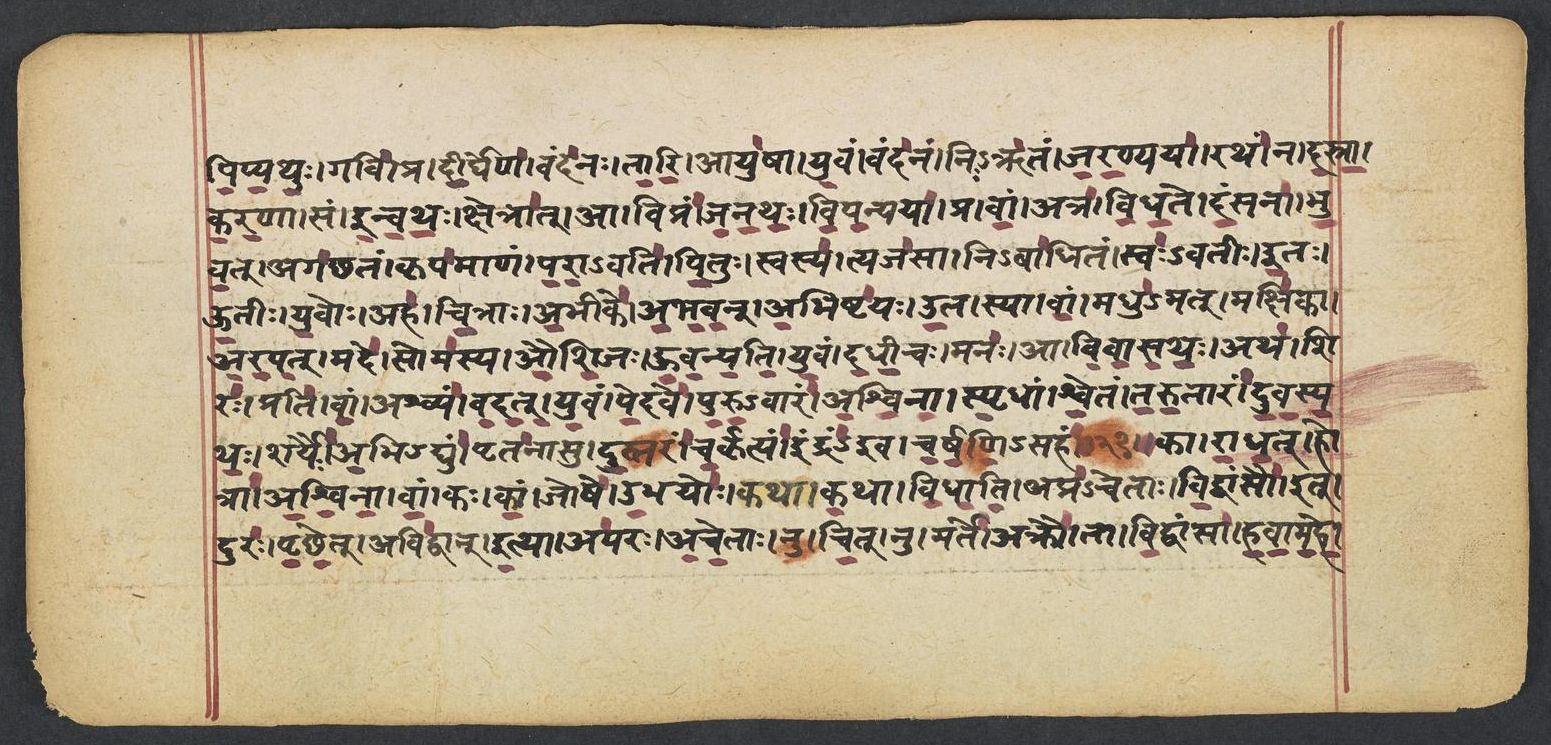
Penn Ms. Coll. 390 Item 41, fol. 89r (OPenn image 90, lower leaf). Checked on the image: the Rigveda text on this page begins in RV 1.119.6 ‹pipyathuḥ gavi pra dīrgheṇa›. The next page with Rigveda text, fol. 89v, begins in RV 1.120.3 ‹vām tā naḥ vidvāṃsā›. Verses 1.120.1-2 end on this page.
1kā rā̍dha̱d dhotrā̍śvinā vā̱ṁ ko vā̱ṁ joṣa̍ u̱bhayo̍ḥ | ka̱thā vi̍dhā̱ty apra̍cetāḥ ||
2vi̱dvāṁsā̱v id dura̍ḥ pṛcche̱d avi̍dvān i̱tthāpa̍ro ace̱tāḥ | nū ci̱n nu marte̱ akrau̍ ||
Compare: Padapāṭha (word-by-word text written in the manuscript; Sansknet e-text via GRETIL)
1kā | rādhat | hotrā | aśvinā | vām | kaḥ | vām | joṣe | ubhayoḥ | kathā | vidhāti | apra-cetāḥ
2vidvāṃsau | it | duraḥ | pṛcchet | avidvān | itthā | aparaḥ | acetāḥ | nu | cit | nu | marte | akrau
1ASVINS, what praise may win your grace? Who may be pleasing to you both? How shall the ignorant worship you?
2Here let the ignorant ask the means of you who know-for none beside you knoweth aught – Not of a spiritless mortal man.
Where on the image
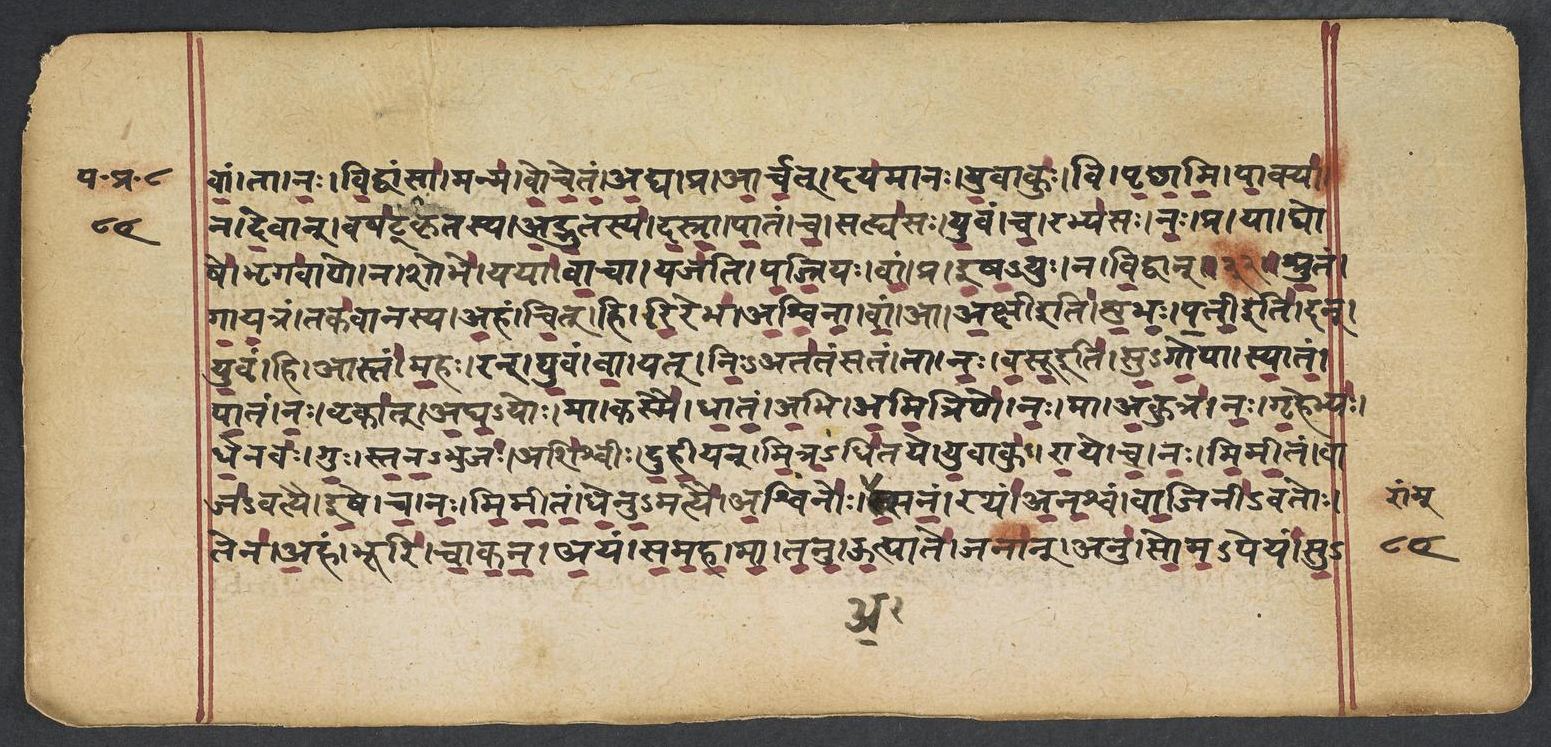
Penn Ms. Coll. 390 Item 41, fol. 89v (OPenn image 91, upper leaf). Checked on the image: the Rigveda text on this page begins in RV 1.120.3 ‹vām tā naḥ vidvāṃsā›. The next page with Rigveda text, fol. 90r, begins in RV 1.120.11 ‹-su-khaḥ rathaḥ›. Verses 1.120.3-10 end on this page; 1.120.3 begins on fol. 89r.
3tā vi̱dvāṁsā̍ havāmahe vā̱ṁ tā no̍ vi̱dvāṁsā̱ manma̍ vocetam a̱dya | prārca̱d daya̍māno yu̱vāku̍ḥ ||
4vi pṛ̍cchāmi pā̱kyā̱3̱̍ na de̱vān vaṣa̍ṭkṛtasyādbhu̱tasya̍ dasrā | pā̱taṁ ca̱ sahya̍so yu̱vaṁ ca̱ rabhya̍so naḥ ||
5pra yā ghoṣe̱ bhṛga̍vāṇe̱ na śobhe̱ yayā̍ vā̱cā yaja̍ti pajri̱yo vā̍m | praiṣa̱yur na vi̱dvān ||
6śru̱taṁ gā̍ya̱traṁ taka̍vānasyā̱haṁ ci̱d dhi ri̱rebhā̍śvinā vām | ākṣī śu̍bhas patī̱ dan ||
7yu̱vaṁ hy āsta̍m ma̱ho ran yu̱vaṁ vā̱ yan ni̱rata̍taṁsatam | tā no̍ vasū sugo̱pā syā̍tam pā̱taṁ no̱ vṛkā̍d aghā̱yoḥ ||
8mā kasmai̍ dhātam a̱bhy a̍mi̱triṇe̍ no̱ mākutrā̍ no gṛ̱hebhyo̍ dhe̱navo̍ guḥ | sta̱nā̱bhujo̱ aśi̍śvīḥ ||
9du̱hī̱yan mi̱tradhi̍taye yu̱vāku̍ rā̱ye ca̍ no mimī̱taṁ vāja̍vatyai | i̱ṣe ca̍ no mimītaṁ dhenu̱matyai̍ ||
10a̱śvino̍r asana̱ṁ ratha̍m ana̱śvaṁ vā̱jinī̍vatoḥ | tenā̱ham bhūri̍ cākana ||
Compare: Padapāṭha (word-by-word text written in the manuscript; Sansknet e-text via GRETIL)
3tā | vidvāṃsā | havāmahe | vām | tā | naḥ | vidvāṃsā | manma | vocetam | adya | pra | ārcat | dayamānaḥ | yuvākuḥ
4vi | pṛcchāmi | pākyā | na | devān | vaṣaṭ-kṛtasya | adbhutasya | dasrā | pātam | ca | sahyasaḥ | yuvam | ca | rabhyasaḥ | naḥ
5pra | yā | ghoṣe | bhṛgavāṇe | na | śobhe | yayā | vācā | yajati | pajriyaḥ | vām | pra | iṣa-yuḥ | na | vidvān
6śrutam | gāyatram | takavānasya | ahan | cit | hi | rirebha | aśvinā | vām | ā | akṣī iti | śubhaḥ | patī iti | dan
7yuvam | hi | āstam | mahaḥ | ran | yuvam | vā | yat | niḥ-atataṃsatam | tā | naḥ | vasūiti | su-gopā | syātam | pātam | naḥ | vṛkāt | agha-yoḥ
8mā | kasmai | dhātam | abhi | amitriṇe | naḥ | mā | akutra | naḥ | gṛhebhyaḥ | dhenavaḥ | guḥ | stana-bhujaḥ | aśiśvīḥ
9duhīyan | mitra-dhitaye | yuvāku | rāye | ca | naḥ | mimītam | vāja-vatyai | iṣe | ca | naḥ | mimītam | dhenu-matyai
10aśvinoḥ | asanam | ratham | anaśvam | vājinī-vatoḥ | tena | aham | bhūri | cākana
3Such as ye: are, all-wise, we call you. Ye wise, declare to us this day accepted prayer. Loving you well your servant lauds you.
4Simply, ye Mighty Ones, I ask the Gods of that wondrous oblation hallowed by the mystic word. Save us from what is stronger, fiercer than ourselves.
5Forth go the hymn that shone in Ghosha Bhr̥igu's like, the song wherewith the son of Pajra worships you, Like some wise minister.
6Hear ye the song of him who hastens speedily. O Aṣvins, I am he who sang your praise. Hither, ye Lords of Splendour, hither turn your eyes.
7For ye were ever nigh to deal forth ample wealth, to give the wealth that ye had gathered up. As such, ye Vasus, guard us well, and keep us safely from the wicked wolf.
8Give us not up to any man who hateth us, nor let our milch-cows stray, whose udders give us food, Far from our homes without their calves.
9May they who love you gain you for their Friends. Prepare ye us for opulence with strengthening food, Prepare us for the food that floweth from our cows
10I have obtained the horseless car of Aṣvins rich in sacrifice, And I am well content therewith.
Where on the image
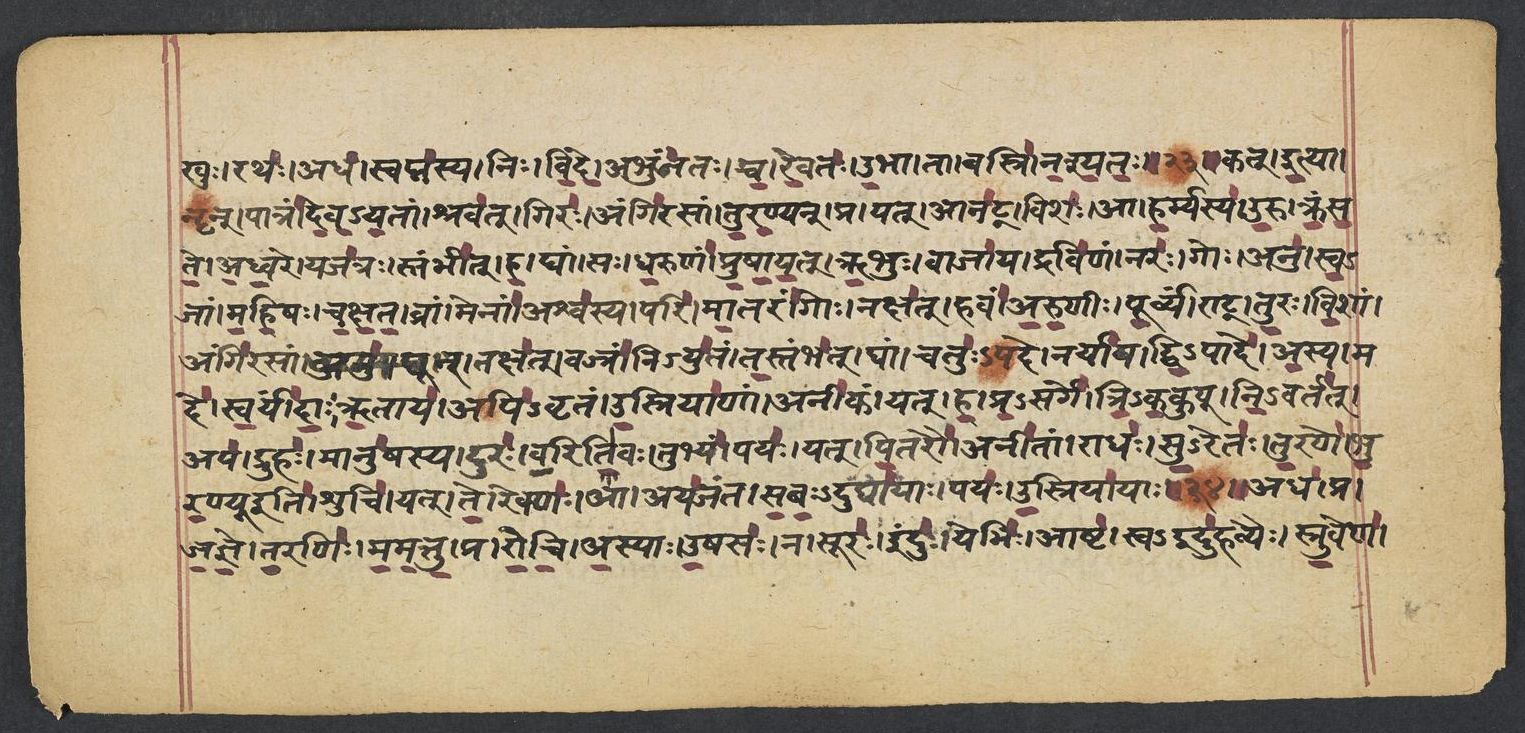
Penn Ms. Coll. 390 Item 41, fol. 90r (OPenn image 91, lower leaf). Checked on the image: the Rigveda text on this page begins in RV 1.120.11 ‹-su-khaḥ rathaḥ›. The next page with Rigveda text, fol. 90v, begins in RV 1.121.6 ‹siñcan jaraṇā abhi dhāma›. Verses 1.120.11-12 end on this page; 1.120.11 begins on fol. 89v.
11a̱yaṁ sa̍maha mā tanū̱hyāte̱ janā̱m̐ anu̍ | so̱ma̱peya̍ṁ su̱kho ratha̍ḥ ||
12adha̱ svapna̍sya̱ nir vi̱de 'bhu̍ñjataś ca re̱vata̍ḥ | u̱bhā tā basri̍ naśyataḥ ||
Compare: Padapāṭha (word-by-word text written in the manuscript; Sansknet e-text via GRETIL)
11ayam | samaha | mā | tanu | ūhyāte | janān | anu | soma-peyam | su-khaḥ | rathaḥ
12adha | svapnasya | niḥ | vide | abhuñjataḥ | ca | revataḥ | ubhā | tā | basri | naśyataḥ
11May it convey me evermore: may the light chariot pass from men To men unto the Soma draught.
12It holdeth slumber in contempt. and the rich who enjoyeth not: Both vanish quickly and are lost.
Notes
- Sanskrit: Aufrecht's edition (1877) with the Vedic accents, as entered by van Nooten and Holland (GRETIL).
- English: Ralph T. H. Griffith, The Hymns of the Rigveda (1889-1892; 2nd ed. 1896-1897), from the VedaWeb digital text; OCR slips in that text were corrected against the printed 2nd edition (data/sources/rigveda/griffith_errata.json).
- Padapāṭha (edition text): Sansknet e-text via GRETIL (CC BY-NC-SA 4.0).
Cite
Sources
- Source: Penn Ms. Coll. 390 Item 41 (undated (catalogued with Penn's 18th-19th c. Vedic manuscripts)), OPenn, Public Domain Mark + Aufrecht's accented text (GRETIL) + Griffith's English (VedaWeb) (holding institution)
- Critical edition: Aufrecht (1877), accented e-text via GRETIL
← previous · → next · v cycle view · l back to library