Rigveda 1.121: To Indra
Introduction
Rigveda 1.121 is a hymn of 15 verses addressed to Indra. It stands in book (maṇḍala) 1, a collection of hymns by many families of poets. The Rigveda is the oldest collection of Sanskrit hymns, composed in the second half of the second millennium BCE and handed down orally for many centuries before it was written down.
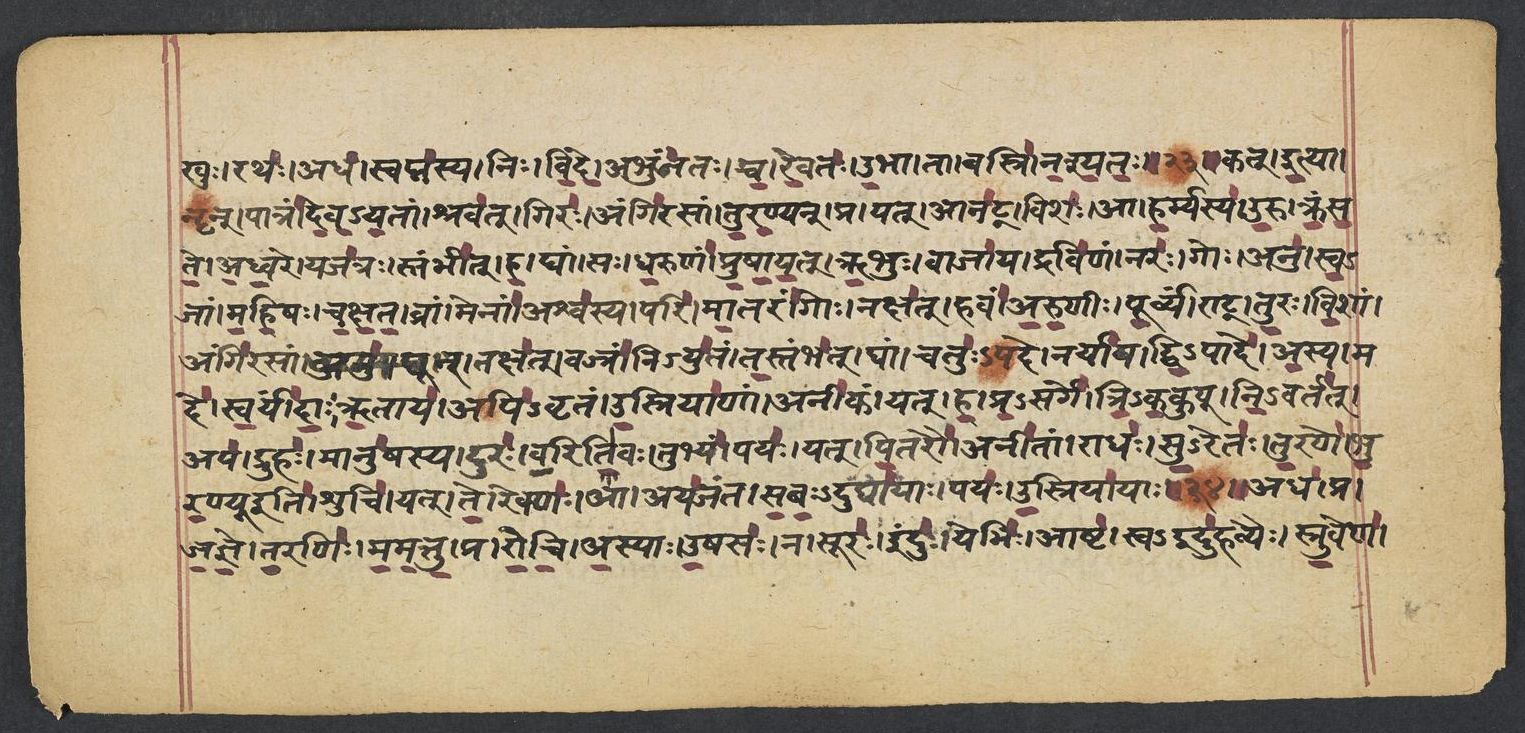
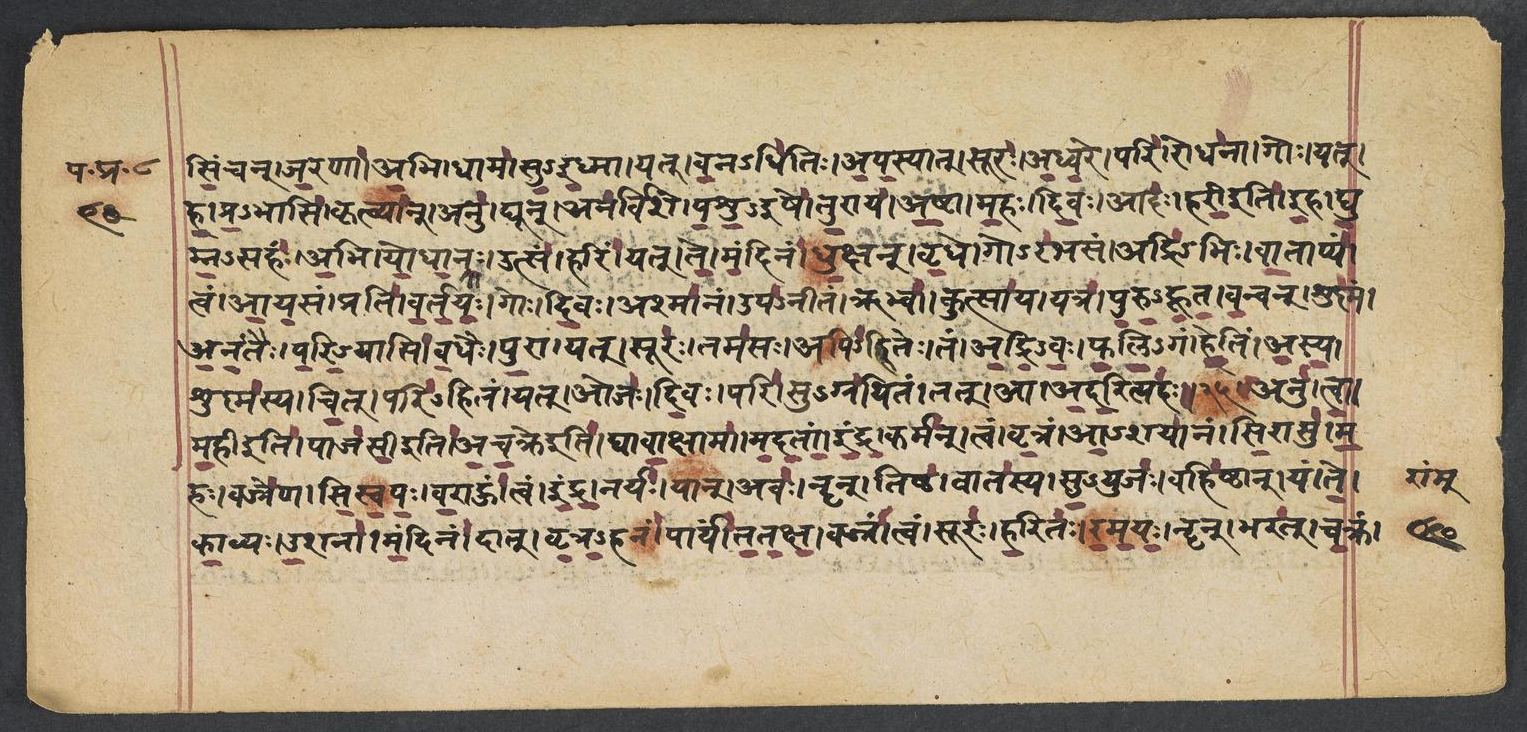
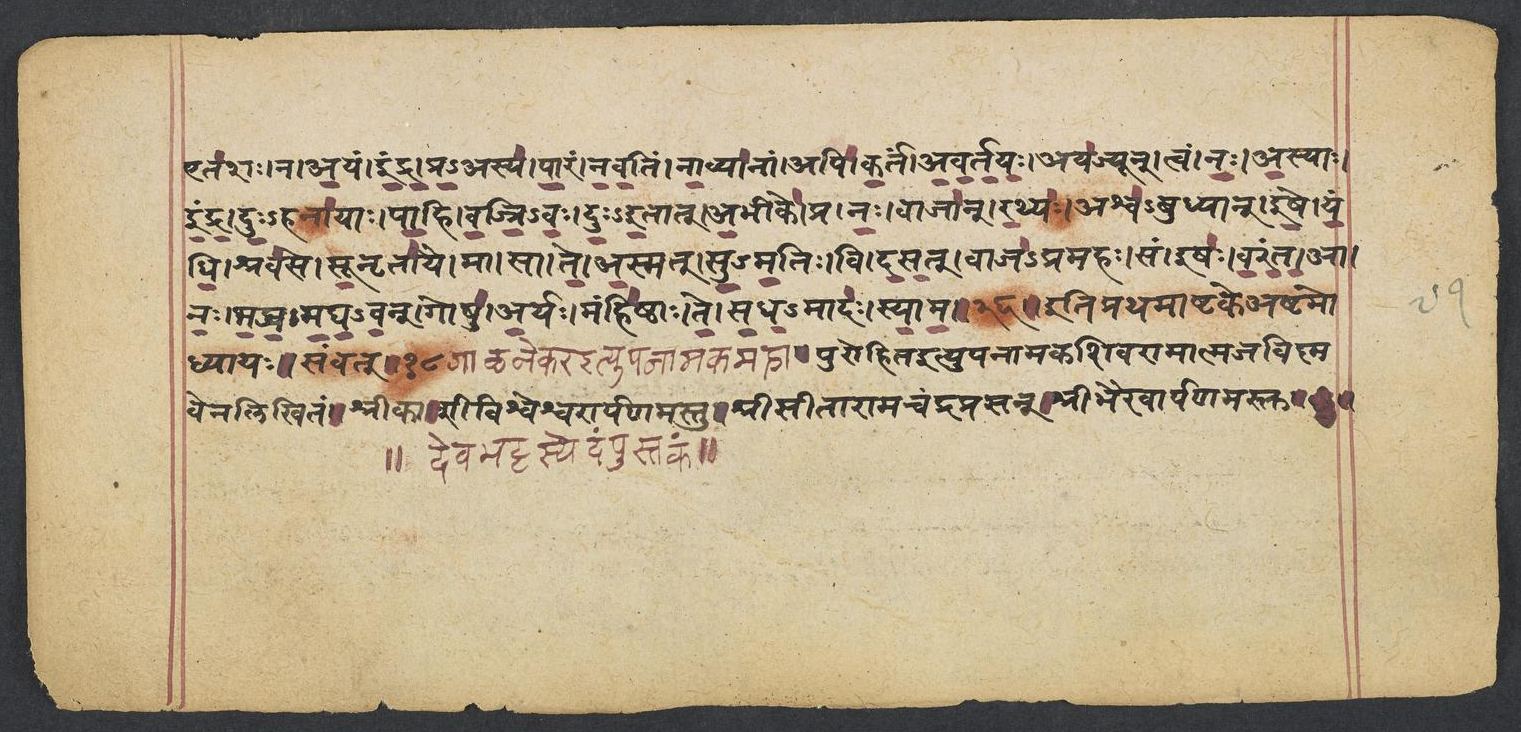
The manuscript shown is Penn Ms. Coll. 390 Item 41 (University of Pennsylvania), an undated paper manuscript of the padapāṭha (the word-by-word recitation text, in which every word is written separately and compounds are split) of the whole Ṛgveda in Devanāgarī, 884 leaves in fascicles, 7-9 lines to the page, accents in red; this hymn stands on fol. 90r-91r. Each section below gives the verses that end on one page; the page boundaries were read on the images (the opening words of every page), not counted out. Where the manuscript is a padapāṭha (the word-by-word recitation text), the section shows Aufrecht's continuous (saṃhitā) text first and, as the edition text, the padapāṭha of the same verses, which is the form written on the page.
How was this verified? (Provenance)
Where on the image
Penn Ms. Coll. 390 Item 41, fol. 90r (OPenn image 91, lower leaf). Checked on the image: the Rigveda text on this page begins in RV 1.120.11 ‹-su-khaḥ rathaḥ›. The next page with Rigveda text, fol. 90v, begins in RV 1.121.6 ‹siñcan jaraṇā abhi dhāma›. Verses 1.121.1-5 end on this page.
1kad i̱tthā nṝm̐ḥ pātra̍ṁ devaya̱tāṁ śrava̱d giro̱ aṅgi̍rasāṁ tura̱ṇyan | pra yad āna̱ḍ viśa̱ ā ha̱rmyasyo̱ru kra̍ṁsate adhva̱re yaja̍traḥ ||
2stambhī̍d dha̱ dyāṁ sa dha̱ruṇa̍m pruṣāyad ṛ̱bhur vājā̍ya̱ dravi̍ṇa̱ṁ naro̱ goḥ | anu̍ sva̱jām ma̍hi̱ṣaś ca̍kṣata̱ vrām menā̱m aśva̍sya̱ pari̍ mā̱tara̱ṁ goḥ ||
3nakṣa̱d dhava̍m aru̱ṇīḥ pū̱rvyaṁ rāṭ tu̱ro vi̱śām aṅgi̍rasā̱m anu̱ dyūn | takṣa̱d vajra̱ṁ niyu̍taṁ ta̱stambha̱d dyāṁ catu̍ṣpade̱ naryā̍ya dvi̱pāde̍ ||
4a̱sya made̍ sva̱rya̍ṁ dā ṛ̱tāyāpī̍vṛtam u̱sriyā̍ṇā̱m anī̍kam | yad dha̍ pra̱sarge̍ trika̱kum ni̱varta̱d apa̱ druho̱ mānu̍ṣasya̱ duro̍ vaḥ ||
5tubhya̱m payo̱ yat pi̱tarā̱v anī̍tā̱ṁ rādha̍ḥ su̱reta̍s tu̱raṇe̍ bhura̱ṇyū | śuci̱ yat te̱ rekṇa̱ āya̍janta saba̱rdughā̍yā̱ḥ paya̍ u̱sriyā̍yāḥ ||
Compare: Padapāṭha (word-by-word text written in the manuscript; Sansknet e-text via GRETIL)
1kat | itthā | nṝn | pātram | deva-yatām | śravat | giraḥ | aṅgirasām | turaṇyan | pra | yat | ānaṭ | viśaḥ | ā | harmyasa | uru | kraṃsate | adhvare | yajatraḥ
2stambhīt | ha | dyām | saḥ | dharuṇam | pruṣāyat | ṛbhuḥ | vājāya | draviṇan | naraḥ | goḥ | anu | sva-jām | mahiṣaḥ | cakṣata | vrām | menām | aśvasya | pari | mātaram | goḥ
3nakṣat | havam | aruṇīḥ | pūrvyam | rāṭ | turaḥ | viśām | aṅgirasām | anu | dyūn | takṣat | vajram | ni-yutam | tastambhat | dyām | catuḥ-pade | naryāya | dvi-pāde
4asya | made | svaryam | dāḥ | ṛtāya | api-vṛtam | usriyāṇām | anīkam | yat | ha | pra-sarge | tri-kakup | ni-vartat | apa | druhaḥ | mānuṣasya | duraḥ | varit i
5tubhyam | payaḥ | yat | pitarau | anītām | rādhaḥ | su-retaḥ | turaṇe | bhuraṇyū iti | śuci | yat | te | rekṇaḥ | ayajanta | sabaḥ-dughāyāḥ | payaḥ | usriyāyāḥ
1WHEN Will men's guardians hasting hear with favour the song of Angiras's pious childern? When to the people of the home he cometh he strideth to the sacrifice, the Holy.
2He stablished heaven; he poured forth, skilful worker, the wealth of kine, for strength, that nurtures heroes. The Mighty One his self-born host regarded, the horse's mate, the mother of the heifer.
3Lord of red dawns, he came victorious, daily to the Angirases' former invocation. His bolt and team hath he prepared, and stablished the heaven for quadrupeds and men two-footed.
4In joy of this thou didst restore, for worship, the lowing company of hidden cattle. When the three-pointed one descends with onslaught he opens wide the doors that cause man trouble.
5Thine is that milk which thy swift-moving Parents brought down, a strengthening genial gift for conquest; When the pure treasure unto thee they offered, the milk shed from the cow who streameth nectar.
Where on the image
Penn Ms. Coll. 390 Item 41, fol. 90v (OPenn image 92, upper leaf). Checked on the image: the Rigveda text on this page begins in RV 1.121.6 ‹siñcan jaraṇā abhi dhāma›. The next page with Rigveda text, fol. 91r, begins in RV 1.121.13 ‹etaśaḥ na ayam indra›. Verses 1.121.6-12 end on this page; 1.121.6 begins on fol. 90r.
6adha̱ pra ja̍jñe ta̱raṇi̍r mamattu̱ pra ro̍cy a̱syā u̱ṣaso̱ na sūra̍ḥ | indu̱r yebhi̱r āṣṭa̱ svedu̍havyaiḥ sru̱veṇa̍ si̱ñcañ ja̱raṇā̱bhi dhāma̍ ||
7svi̱dhmā yad va̱nadhi̍tir apa̱syāt sūro̍ adhva̱re pari̱ rodha̍nā̱ goḥ | yad dha̍ pra̱bhāsi̱ kṛtvyā̱m̐ anu̱ dyūn ana̍rviśe pa̱śviṣe̍ tu̱rāya̍ ||
8a̱ṣṭā ma̱ho di̱va ādo̱ harī̍ i̱ha dyu̍mnā̱sāha̍m a̱bhi yo̍dhā̱na utsa̍m | hari̱ṁ yat te̍ ma̱ndina̍ṁ du̱kṣan vṛ̱dhe gora̍bhasa̱m adri̍bhir vā̱tāpya̍m ||
9tvam ā̍ya̱sam prati̍ vartayo̱ gor di̱vo aśmā̍na̱m upa̍nīta̱m ṛbhvā̍ | kutsā̍ya̱ yatra̍ puruhūta va̱nvañ chuṣṇa̍m ana̱ntaiḥ pa̍ri̱yāsi̍ va̱dhaiḥ ||
10pu̱rā yat sūra̱s tama̍so̱ apī̍te̱s tam a̍drivaḥ phali̱gaṁ he̱tim a̍sya | śuṣṇa̍sya ci̱t pari̍hita̱ṁ yad ojo̍ di̱vas pari̱ sugra̍thita̱ṁ tad āda̍ḥ ||
11anu̍ tvā ma̱hī pāja̍sī aca̱kre dyāvā̱kṣāmā̍ madatām indra̱ karma̍n | tvaṁ vṛ̱tram ā̱śayā̍naṁ si̱rāsu̍ ma̱ho vajre̍ṇa siṣvapo va̱rāhu̍m ||
12tvam i̍ndra̱ naryo̱ yām̐ avo̱ nṝn tiṣṭhā̱ vāta̍sya su̱yujo̱ vahi̍ṣṭhān | yaṁ te̍ kā̱vya u̱śanā̍ ma̱ndina̱ṁ dād vṛ̍tra̱haṇa̱m pārya̍ṁ tatakṣa̱ vajra̍m ||
Compare: Padapāṭha (word-by-word text written in the manuscript; Sansknet e-text via GRETIL)
6adha | pra | jajñe | taraṇiḥ | mamattu | pra | roci | asyāḥ | uṣasaḥ | na | sūraḥ | induḥ | yebhiḥ | āṣṭa | sva-iduhavyaiḥ | sruveṇa | siñcan | jaraṇā | abhi | dhāma
7su-idhmā | yat | vana-dhitiḥ | apasyāt | sūraḥ | adhvare | pari | rodhanā | goḥ | yat | ha | pra-bhāsi | kṛtvyān | anu | dyūn | anarviśe | paśu-iṣe | turāya
8aṣṭā | mahaḥ | divaḥ | ādaḥ | harī iti | iha | dyumna-saham | abhi | yodhānaḥ | utsam | harim | yat | te | mandinam | dhukṣan | vṛdhe | go--rabhasam | adri-bhiḥ | vātāpyam
9tvam | āyasam | prati | vartayaḥ | goḥ | divaḥ | aśmānam | upa-nītam | ṛbhvā | kutsāya | yatra | puru-hūta | vanvan | śuṣṇam | anantaiḥ | pari-yāsi | vadhaiḥ
10purā | yat | sūraḥ | tamasaḥ | api-iteḥ | tam | adri-vaḥ | phali-gam | hetim | asya | śuṣṇasya | cit | pari-hitam | yat | ojaḥ | divaḥ | pari | su-grathitam | tat | ā | adar ity adaḥ
11anu | tvā | mahī iti | pājasī iti | acakre iti | dyāvākṣāmā | madatām | indra | karman | tvam | vṛtram | āśayānam | sirāsu | mahaḥ | vajreṇa | sisvapaḥ | varāhum
12tvam | indra | naryaḥ | yān | avaḥ | nṝn | tiṣṭha | vātasya | su-yutaḥ | vahiṣṭhān | yam | te | kāvyaḥ | uśanā | mandinam | dāt | vṛtra-hanam | pāryam | tatakṣa | vajram
6There is he born. May the Swift give us rapture, and like the Sun shine forth from yonder dawning, Indu, even us who drank, whose toils are offerings, poured from the spoon, with praise, upon the altar.
7When the wood-pile, made of good logs, is ready, at the Sun's worship to bind fast the Bullock, Then when thou shinest forth through days of action for the Car-borne, the Swift, tile Cattle-seeker.
8Eight steeds thou broughtest down from mighty heaven, when fighting for the well that giveth splendour, That men might press with stones the gladdening yellow, strengthened with milk, fermenting, to exalt thee.
9Thou hurledst forth from heaven the iron missile, brought by the Skilful, from the sling of leather, When thou, O Much-invoked, assisting Kutsa with endless deadly darts didst compass Ṣushṇa.
10Bolt-armed, ere darkness overtook the sunlight, thou castest at the veiling cloud thy weapon, Thou rentest, out of heaven, though firmly knotted, the might of Ṣushṇa that was thrown around him.
11The mighty Heaven and Earth, those bright expanses that have no wheels, joyed, Indra, at thine exploit. Vr̥itra, the boar who lay amid the waters, to sleep thou sentest with thy mighty thunder.
12Mount Indra, lover of the men thou guardest, the well-yoked horses of the wind, best bearers. The bolt which Kâvya Uṣanâ erst gave thee, strong, gladdening, Vr̥itra-slaying, hath he fashioned.
Where on the image
Penn Ms. Coll. 390 Item 41, fol. 91r (OPenn image 92, lower leaf). Checked on the image: the Rigveda text on this page begins in RV 1.121.13 ‹etaśaḥ na ayam indra›. The next page with Rigveda text, fol. 92v (numbered 1v by the scribe), begins in RV 1.122.1 ‹pra vaḥ pāntam raghu-manyavaḥ›. Verses 1.121.13-15 end on this page; 1.121.13 begins on fol. 90v.
13tvaṁ sūro̍ ha̱rito̍ rāmayo̱ nṝn bhara̍c ca̱kram eta̍śo̱ nāyam i̍ndra | prāsya̍ pā̱raṁ na̍va̱tiṁ nā̱vyā̍nā̱m api̍ ka̱rtam a̍varta̱yo 'ya̍jyūn ||
14tvaṁ no̍ a̱syā i̍ndra du̱rhaṇā̍yāḥ pā̱hi va̍jrivo duri̱tād a̱bhīke̍ | pra no̱ vājā̍n ra̱thyo̱3̱̍ aśva̍budhyān i̱ṣe ya̍ndhi̱ śrava̍se sū̱nṛtā̍yai ||
15mā sā te̍ a̱smat su̍ma̱tir vi da̍sa̱d vāja̍pramaha̱ḥ sam iṣo̍ varanta | ā no̍ bhaja maghava̱n goṣv a̱ryo maṁhi̍ṣṭhās te sadha̱māda̍ḥ syāma ||
Compare: Padapāṭha (word-by-word text written in the manuscript; Sansknet e-text via GRETIL)
13tvam | sūraḥ | haritaḥ | ramayaḥ | nṝn | bharat | cakram | etaśaḥ | na | ayam | indra | pra-asya | pāram | navatim | nāvyānām | api | kartam | / ayajyūn
14tvam | naḥ | asyāḥ | indra | duḥ-hanāyāḥ | pāhi | vajri-vaḥ | duḥ-itāt | abhīke | pra | naḥ | vājān | rathyaḥ | aśva-budhyān | iṣe | yandhi | śravase | sūnṛtāyai
15mā | sā | te | asmat | su-matiḥ | vi | dasat | vāja-pramahaḥ | sam | iṣaḥ | varanta | ā | naḥ | bhaja | magha-van | goṣu | aryaḥ | maṃhiṣṭhāḥ | te | sadha-mādaḥ | syāma
13The strong Bay Horses of the Sun thou stayedst: this Etaṣa drew not the wheel, O Indra. Casting them forth beyond the ninety rivers thou dravest down into the pit the godless.
14Indra, preserve thou us from this affliction Thunder-armed, save us from the misery near us. Vouchsafe us affluence in chariots, founded on horses, for our food and fame and gladness.
15Never may this thy loving-kindness fail us; mighty in strength, may plenteous food surround us. Maghavan, make us share the foeman's cattle: may we be thy most liberal feast companions.
Notes
- Sanskrit: Aufrecht's edition (1877) with the Vedic accents, as entered by van Nooten and Holland (GRETIL).
- English: Ralph T. H. Griffith, The Hymns of the Rigveda (1889-1892; 2nd ed. 1896-1897), from the VedaWeb digital text; OCR slips in that text were corrected against the printed 2nd edition (data/sources/rigveda/griffith_errata.json).
- Padapāṭha (edition text): Sansknet e-text via GRETIL (CC BY-NC-SA 4.0).
Cite
Sources
- Source: Penn Ms. Coll. 390 Item 41 (undated (catalogued with Penn's 18th-19th c. Vedic manuscripts)), OPenn, Public Domain Mark + Aufrecht's accented text (GRETIL) + Griffith's English (VedaWeb) (holding institution)
- Critical edition: Aufrecht (1877), accented e-text via GRETIL
← previous · → next · v cycle view · l back to library