Rigveda 1.122: To all the gods
Introduction
Rigveda 1.122 is a hymn of 15 verses addressed to all the gods. It stands in book (maṇḍala) 1, a collection of hymns by many families of poets. The Rigveda is the oldest collection of Sanskrit hymns, composed in the second half of the second millennium BCE and handed down orally for many centuries before it was written down.
The manuscript shown is Penn Ms. Coll. 390 Item 41 (University of Pennsylvania), an undated paper manuscript of the padapāṭha (the word-by-word recitation text, in which every word is written separately and compounds are split) of the whole Ṛgveda in Devanāgarī, 884 leaves in fascicles, 7-9 lines to the page, accents in red; this hymn stands on fol. 92v-93v. Each section below gives the verses that end on one page; the page boundaries were read on the images (the opening words of every page), not counted out. Where the manuscript is a padapāṭha (the word-by-word recitation text), the section shows Aufrecht's continuous (saṃhitā) text first and, as the edition text, the padapāṭha of the same verses, which is the form written on the page.
How was this verified? (Provenance)
Where on the image
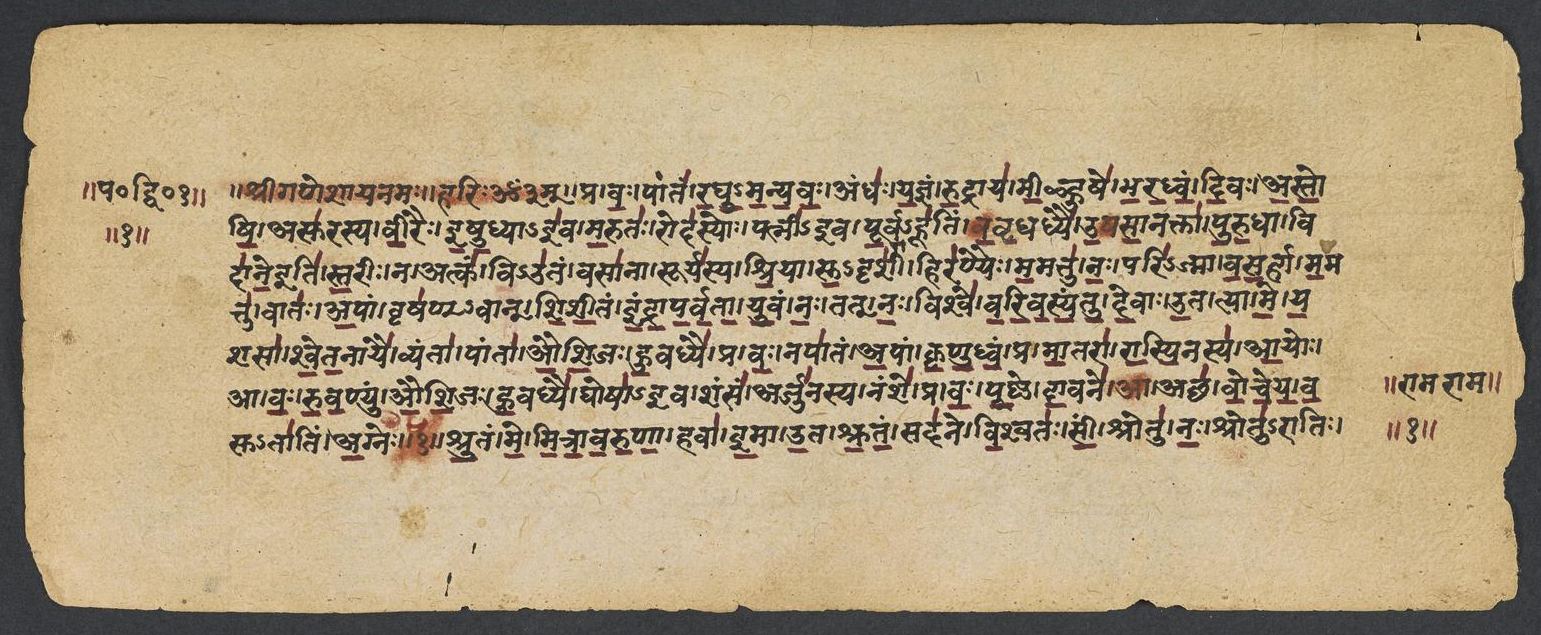
Penn Ms. Coll. 390 Item 41, fol. 92v (numbered 1v by the scribe) (OPenn image 94, upper leaf). Checked on the image: the Rigveda text on this page begins in RV 1.122.1 ‹pra vaḥ pāntam raghu-manyavaḥ›. Line 1 opens with the invocation śrīgaṇeśāya namaḥ hariḥ oṃ, then 1.122.1 (pra vaḥ pāntam raghumanyavaḥ andhaḥ). The next page with Rigveda text, fol. 93r (numbered 2r by the scribe), begins in RV 1.122.6 ‹su-śrotuḥ su-kṣetrā sindhuḥ at-bhiḥ›. Verses 1.122.1-5 end on this page.
1pra va̱ḥ pānta̍ṁ raghumanya̱vo 'ndho̍ ya̱jñaṁ ru̱drāya̍ mī̱ḻhuṣe̍ bharadhvam | di̱vo a̍sto̱ṣy asu̍rasya vī̱rair i̍ṣu̱dhyeva̍ ma̱ruto̱ roda̍syoḥ ||
2patnī̍va pū̱rvahū̍tiṁ vāvṛ̱dhadhyā̍ u̱ṣāsā̱naktā̍ puru̱dhā vidā̍ne | sta̱rīr nātka̱ṁ vyu̍ta̱ṁ vasā̍nā̱ sūrya̍sya śri̱yā su̱dṛśī̱ hira̍ṇyaiḥ ||
3ma̱mattu̍ na̱ḥ pari̍jmā vasa̱rhā ma̱mattu̱ vāto̍ a̱pāṁ vṛṣa̍ṇvān | śi̱śī̱tam i̍ndrāparvatā yu̱vaṁ na̱s tan no̱ viśve̍ varivasyantu de̱vāḥ ||
4u̱ta tyā me̍ ya̱śasā̍ śveta̱nāyai̱ vyantā̱ pāntau̍śi̱jo hu̱vadhyai̍ | pra vo̱ napā̍tam a̱pāṁ kṛ̍ṇudhva̱m pra mā̱tarā̍ rāspi̱nasyā̱yoḥ ||
5ā vo̍ ruva̱ṇyum au̍śi̱jo hu̱vadhyai̱ ghoṣe̍va̱ śaṁsa̱m arju̍nasya̱ naṁśe̍ | pra va̍ḥ pū̱ṣṇe dā̱vana̱ ām̐ acchā̍ voceya va̱sutā̍tim a̱gneḥ ||
Compare: Padapāṭha (word-by-word text written in the manuscript; Sansknet e-text via GRETIL)
1pra | vaḥ | pāntam | raghu-manyavaḥ | andhaḥ | yajñam | rudrāya | mīḷhuṣe | bharadhvam | divaḥ | astoṣi | asurasya | vīraiḥ | iṣudhyāiva | marutaḥ | rodasyoḥ
2patnī-iva | pūrva-hūtim | vavṛdhadhyai | uṣasānaktā | purudhā | vidāneiti | starīḥ | na | atkam | vi-utam | vasānā | sūryasya | śriyā | su-dṛśī | hiraṇyaiḥ
3mamattu | naḥ | pari-jmā | vasarhā | mamattu | vātaḥ | apām | vṛṣaṇ-vān | śiśītam | indrāparvatā | yuvam | naḥ | tat | naḥ | viśve | varivasyantu | devāḥ
4uta | tyā | me | yaśasā | śvetanāyai | vyantā | pāntā | auśijaḥ | huvadhyai | pra | vaḥ | napātam | apām | kṛṇudhvam | pra | mātarā | rāspinasya | āyoḥ
5ā | vaḥ | ruvaṇyum | auśijaḥ | huvadhyai | ghoṣāiva | śaṃsam | arjunasya | naṃśe | pra | vaḥ | pūṣṇe | dāvane | ā | accha | voceya | vasu-tātim | agneḥ
1SAY, bringing sacrifice to bounteous Rudra, This juice for drink to you whose wrath is fleeting! With Dyaus the Asura's Heroes I have lauded the Maruts as with prayer to Earth and Heaven.
2Strong to exalt the early invocation are Night and Dawn who show with varied aspect. The Barren clothes her in wide-woven raiment, and fair Morn shines with Sûrya's golden splendour.
3Cheer us the Roamer round, who strikes at morning, the Wind delight us, pourer forth of waters! Sharpen our wits, O Parvata and Indra. May all the Gods vouchsafe to us this favour.
4And Auṣija shall call for me that famous Pair who enjoy and drink, who come to brighten. Set ye the Offspring of the Floods before you; both Mothers of the Living One who beameth.
5For you shall Auṣija call him who thunders, as, to win Arjuna's assent, cried Ghosha. I will invoke, that Pûshan may be bounteous to you, the rich munificence of Agni.
Where on the image
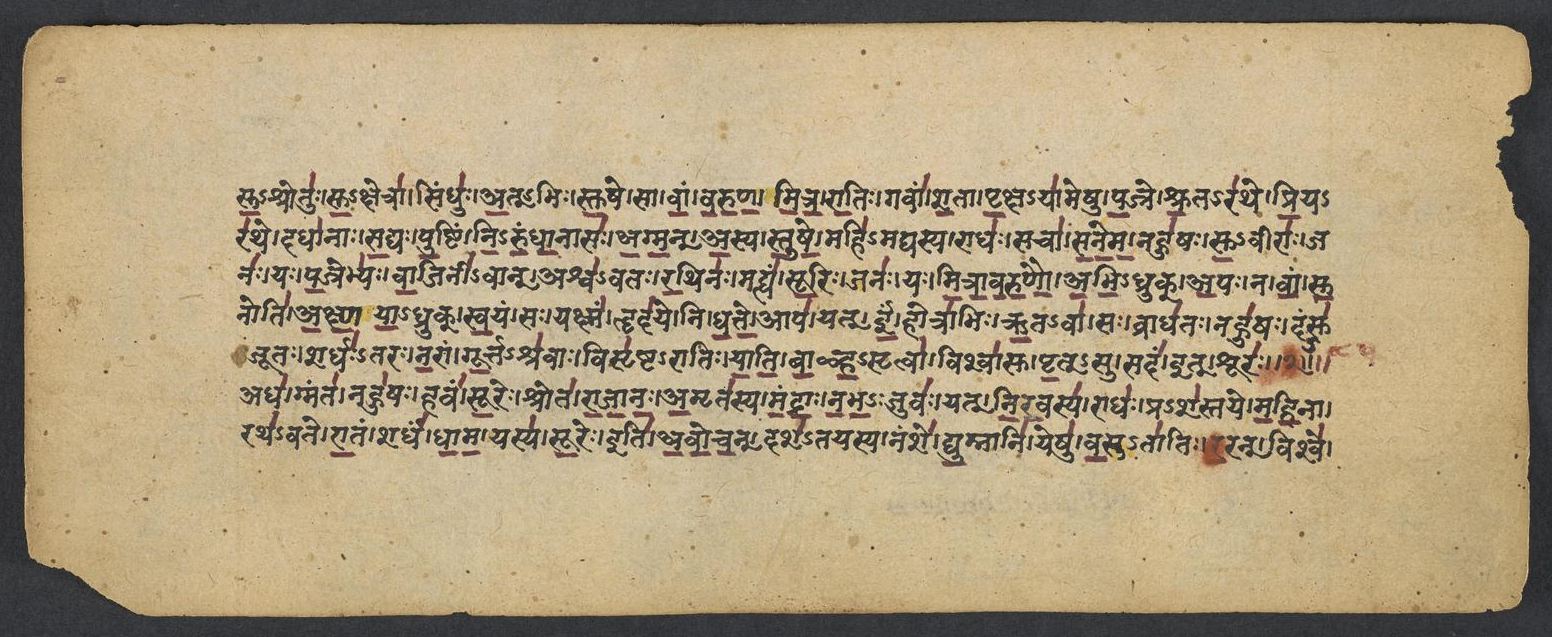
Penn Ms. Coll. 390 Item 41, fol. 93r (numbered 2r by the scribe) (OPenn image 94, lower leaf). Checked on the image: the Rigveda text on this page begins in RV 1.122.6 ‹su-śrotuḥ su-kṣetrā sindhuḥ at-bhiḥ›. The next page with Rigveda text, fol. 93v (numbered 2v by the scribe), begins in RV 1.122.12 ‹sanvantu pra-bhṛtheṣu vājam›. Verses 1.122.6-11 end on this page; 1.122.6 begins on fol. 92v (numbered 1v by the scribe).
6śru̱tam me̍ mitrāvaruṇā̱ have̱mota śru̍ta̱ṁ sada̍ne vi̱śvata̍ḥ sīm | śrotu̍ na̱ḥ śrotu̍rātiḥ su̱śrotu̍ḥ su̱kṣetrā̱ sindhu̍r a̱dbhiḥ ||
7stu̱ṣe sā vā̍ṁ varuṇa mitra rā̱tir gavā̍ṁ śa̱tā pṛ̱kṣayā̍meṣu pa̱jre | śru̱tara̍the pri̱yara̍the̱ dadhā̍nāḥ sa̱dyaḥ pu̱ṣṭiṁ ni̍rundhā̱nāso̍ agman ||
8a̱sya stu̍ṣe̱ mahi̍maghasya̱ rādha̱ḥ sacā̍ sanema̱ nahu̍ṣaḥ su̱vīrā̍ḥ | jano̱ yaḥ pa̱jrebhyo̍ vā̱jinī̍vā̱n aśvā̍vato ra̱thino̱ mahya̍ṁ sū̱riḥ ||
9jano̱ yo mi̍trāvaruṇāv abhi̱dhrug a̱po na vā̍ṁ su̱noty a̍kṣṇayā̱dhruk | sva̱yaṁ sa yakṣma̱ṁ hṛda̍ye̱ ni dha̍tta̱ āpa̱ yad ī̱ṁ hotrā̍bhir ṛ̱tāvā̍ ||
10sa vrādha̍to̱ nahu̍ṣo̱ daṁsu̍jūta̱ḥ śardha̍staro na̱rāṁ gū̱rtaśra̍vāḥ | visṛ̍ṣṭarātir yāti bāḻha̱sṛtvā̱ viśvā̍su pṛ̱tsu sada̱m ic chūra̍ḥ ||
11adha̱ gmantā̱ nahu̍ṣo̱ hava̍ṁ sū̱reḥ śrotā̍ rājāno a̱mṛta̍sya mandrāḥ | na̱bho̱juvo̱ yan ni̍ra̱vasya̱ rādha̱ḥ praśa̍staye mahi̱nā ratha̍vate ||
Compare: Padapāṭha (word-by-word text written in the manuscript; Sansknet e-text via GRETIL)
6śrutam | me | mitrāvaruṇā | havā | imā | uta | śrutam | sadane | viśvataḥ | sīm | śrotu | naḥ | śrotu-rātiḥ | su-śrotuḥ | su-kṣetrā | sindhuḥ | at-bhiḥ
7stuṣe | sā | vām | varuṇa | mitra | rātiḥ | gavām | śatā | pṛkṣa-yāmeṣu | pajre | śruta-rathe | priya-rathe | dadhānāḥ | sadyaḥ | puṣṭim | ni-rundhānāsaḥ | agman
8asya | stuṣe | mahi-maghasya | rādhaḥ | sacā | sanema | nahuṣaḥ | su-vīrāḥ | janaḥ | yaḥ | pajrebhyaḥ | vājinī-vān | aśva-vataḥ | rathinaḥ | mahyam | sūr iḥ
9janaḥ | yaḥ | mitrāvaruṇau | abhi-dhruk | apaḥ | na | vām | sunoti | akṣṇayādhruk | svayam | saḥ | yakṣmam | hṛdaye | ni | dhatta | āpa | yat | īm | hotrābhiḥ | ṛta-vā
10saḥ | vrādhataḥ | nahuṣaḥ | dam-sujūtaḥ | śardhaḥ-taraḥ | narām | gūrta-śravāḥ | visṛṣṭa-rātiḥ | yāti | bāḷha-sṛtvā | viśvāsu | pṛt-su | sadam | it | śūraḥ
11adha | gmanta | nahuṣaḥ | havam | sūreḥ | śrota | rājānaḥ | amṛtasya | mandrāḥ | nabhaḥ-juvaḥ | yat | niravasya | rādhaḥ | pra-śastaye | mahinā | ratha-vate
6Hear, Mitra-Varuṇa, these mine invocations, hear them from all men in the hall of worship. Giver of famous gifts, kind hearer, Sindhu who gives fair fields, listen with all his waters!
7Praised, Mitra, Varuṇa! is your gift, a hundred cows to the Pr̥ikshayâmas and the Pajra. Presented by car-famous Priyaratha, supplying nourishment, they came directly.
8Praised is the gift of him the very wealthy: may we enjoy it, men with hero children: His who hath many gifts to give the Pajras, a chief who makes me rich in cars and horses.
9The folk, O Mitra-Varuṇa, who hate you, who sinfully hating pour you no libations, Lay in their hearts, themselves, a wasting sickness, whereas the righteous gaineth all by worship.
10That man, most puissant, wondrously urged onward, famed among heroes, liberal in giving, Moveth a warrior, evermore undaunted in all encounters even with the mighty.
11Come to the man's, the sacrificer's calling: hear, Kings of Immortality, joy-givers! While ye who speed through clouds decree your bounty largely, for fame, to him the chariot rider.
Where on the image
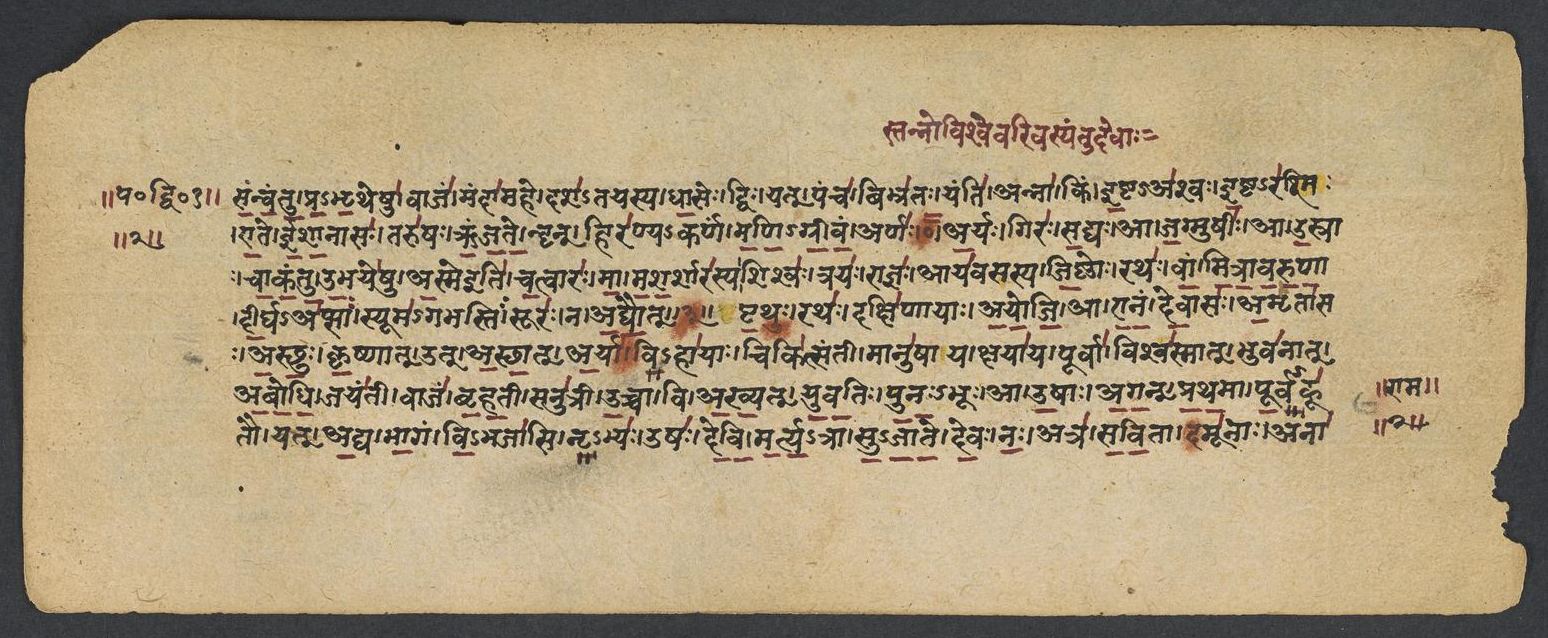
Penn Ms. Coll. 390 Item 41, fol. 93v (numbered 2v by the scribe) (OPenn image 95, upper leaf). Checked on the image: the Rigveda text on this page begins in RV 1.122.12 ‹sanvantu pra-bhṛtheṣu vājam›. The next page with Rigveda text, fol. 94r (numbered 3r by the scribe), begins in RV 1.123.3 ‹-anāgasaḥ vocati sūryāya›. Verses 1.122.12-15 end on this page; 1.122.12 begins on fol. 93r (numbered 2r by the scribe).
12e̱taṁ śardha̍ṁ dhāma̱ yasya̍ sū̱rer ity a̍voca̱n daśa̍tayasya̱ naṁśe̍ | dyu̱mnāni̱ yeṣu̍ va̱sutā̍tī rā̱ran viśve̍ sanvantu prabhṛ̱theṣu̱ vāja̍m ||
13mandā̍mahe̱ daśa̍tayasya dhā̱ser dvir yat pañca̱ bibhra̍to̱ yanty annā̍ | kim i̱ṣṭāśva̍ i̱ṣṭara̍śmir e̱ta ī̍śā̱nāsa̱s taru̍ṣa ṛñjate̱ nṝn ||
14hira̍ṇyakarṇam maṇigrīva̱m arṇa̱s tan no̱ viśve̍ varivasyantu de̱vāḥ | a̱ryo gira̍ḥ sa̱dya ā ja̱gmuṣī̱r osrāś cā̍kantū̱bhaye̍ṣv a̱sme ||
15ca̱tvāro̍ mā maśa̱rśāra̍sya̱ śiśva̱s trayo̱ rājña̱ āya̍vasasya ji̱ṣṇoḥ | ratho̍ vām mitrāvaruṇā dī̱rghāpsā̱ḥ syūma̍gabhasti̱ḥ sūro̱ nādyau̍t ||
Compare: Padapāṭha (word-by-word text written in the manuscript; Sansknet e-text via GRETIL)
12etam | śardham | dhāma | yasya | sūreḥ | iti | avocan | daśa-tayasya | naṃśe | dyumnāni | yeṣu | vasu-tātiḥ | raran | viśve | sanvantu | pra-bhṛtheṣu | vājam
13mandāmahe | daśa-tayasya | dhāseḥ | dviḥ | yat | pañca | bibhrataḥ | yanti | annā | kim | iṣṭa-aśvaḥ | iṣṭa-raśmiḥ | ete | īśānāsaḥ | taruṣaḥ | ṛñjate | nṝn
14hiraṇya-karṇam | maṇi-grīvam | arṇaḥ | tam | naḥ | viśve | varivasyantu | devāḥ | aryaḥ | giraḥ | sadyaḥ | ā | jagmuṣīḥ | ā | usrāḥ | cākantu | ubhayeṣu | asme iti
15catvāraḥ | mā | maśarśārasya | śiśvaḥ | trayaḥ | rājñaḥ | āyavasasya | jiṣṇoḥ | rathaḥ | vām | mitrāvaruṇā | dīrgha-apsāḥ | syūma-gabhastiḥ | sūraḥ | na | adyaut
12Vigour will we bestow on that adorer whose tenfold draught we come to taste, so spake they. May all in whom rest splendour and great riches obtain refreshment in these sacrifices.
13We will rejoice to drink the tenfold present when the twicefive come bearing sacred viands. What can he do whose steeds and reins are choicest? These, the all-potent, urge brave men to conquest.
14The sea and all the Deities shall give us him with the golden ear and neck bejewelled. Dawns, hasting to the praises otthe pious, be pleased with us. both offerers and singers.
15Four youthful sons of Maṣarṣâra vex me, three, of the king, the conquering Âyavasa. Now like the Sun, O Varuṇa and Mitra, your car hath shone, long-shaped and reined with splendour.
Notes
- Sanskrit: Aufrecht's edition (1877) with the Vedic accents, as entered by van Nooten and Holland (GRETIL).
- English: Ralph T. H. Griffith, The Hymns of the Rigveda (1889-1892; 2nd ed. 1896-1897), from the VedaWeb digital text; OCR slips in that text were corrected against the printed 2nd edition (data/sources/rigveda/griffith_errata.json).
- Padapāṭha (edition text): Sansknet e-text via GRETIL (CC BY-NC-SA 4.0).
Cite
Sources
- Source: Penn Ms. Coll. 390 Item 41 (undated (catalogued with Penn's 18th-19th c. Vedic manuscripts)), OPenn, Public Domain Mark + Aufrecht's accented text (GRETIL) + Griffith's English (VedaWeb) (holding institution)
- Critical edition: Aufrecht (1877), accented e-text via GRETIL
← previous · → next · v cycle view · l back to library