Rigveda 1.123: To Usas
Introduction
Rigveda 1.123 is a hymn of 13 verses addressed to Usas. It stands in book (maṇḍala) 1, a collection of hymns by many families of poets. The Rigveda is the oldest collection of Sanskrit hymns, composed in the second half of the second millennium BCE and handed down orally for many centuries before it was written down.
The manuscript shown is Penn Ms. Coll. 390 Item 41 (University of Pennsylvania), an undated paper manuscript of the padapāṭha (the word-by-word recitation text, in which every word is written separately and compounds are split) of the whole Ṛgveda in Devanāgarī, 884 leaves in fascicles, 7-9 lines to the page, accents in red; this hymn stands on fol. 93v-94v. Each section below gives the verses that end on one page; the page boundaries were read on the images (the opening words of every page), not counted out. Where the manuscript is a padapāṭha (the word-by-word recitation text), the section shows Aufrecht's continuous (saṃhitā) text first and, as the edition text, the padapāṭha of the same verses, which is the form written on the page.
How was this verified? (Provenance)
Where on the image
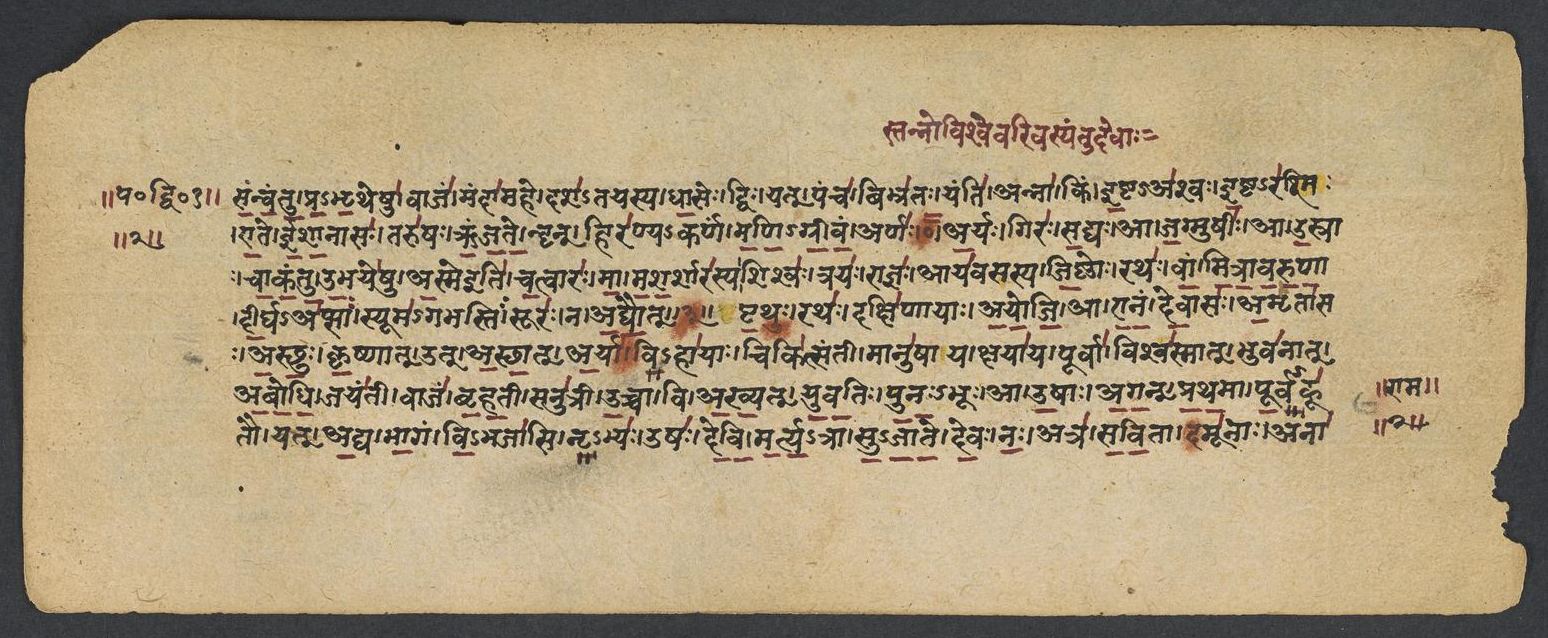
Penn Ms. Coll. 390 Item 41, fol. 93v (numbered 2v by the scribe) (OPenn image 95, upper leaf). Checked on the image: the Rigveda text on this page begins in RV 1.122.12 ‹sanvantu pra-bhṛtheṣu vājam›. The next page with Rigveda text, fol. 94r (numbered 3r by the scribe), begins in RV 1.123.3 ‹-anāgasaḥ vocati sūryāya›. Verses 1.123.1-2 end on this page.
1pṛ̱thū ratho̱ dakṣi̍ṇāyā ayo̱jy aina̍ṁ de̱vāso̍ a̱mṛtā̍so asthuḥ | kṛ̱ṣṇād ud a̍sthād a̱ryā̱3̱̍ vihā̍yā̱ś ciki̍tsantī̱ mānu̍ṣāya̱ kṣayā̍ya ||
2pūrvā̱ viśva̍smā̱d bhuva̍nād abodhi̱ jaya̍ntī̱ vāja̍m bṛha̱tī sanu̍trī | u̱ccā vy a̍khyad yuva̱tiḥ pu̍na̱rbhūr oṣā a̍gan pratha̱mā pū̱rvahū̍tau ||
Compare: Padapāṭha (word-by-word text written in the manuscript; Sansknet e-text via GRETIL)
1pṛthuḥ | rathaḥ | dakṣiṇāyāḥ | ayoji | ā | enam | devāsaḥ | amṛtāsaḥ | asthuḥ | kṛṣṇāt | ut | asthāt | aryā | vi-hāyāḥ | cikitsantī | mānuṣāya | kṣayāya
2pūrvā | viśvasmāt | bhuvanāt | abodhi | jayantī | vājam | bṛhatī | sanutrī | uccā | vi | akhyat | yuvatiḥ | punaḥ-bhūḥ | ā | uṣāḥ | agan | prathamā | pūrva-hūtau
1THE Dakshina's broad chariot hath been harnessed: this car the Gods Immortal have ascended. Fain to bring light to homes of men the noble and active Goddess hath emerged from darkness.
2She before all the living world hath wakened, the Lofty One who wins and gathers treasure. Revived and ever young on high she glances. Dawn hath come first unto our morning worship.
Where on the image
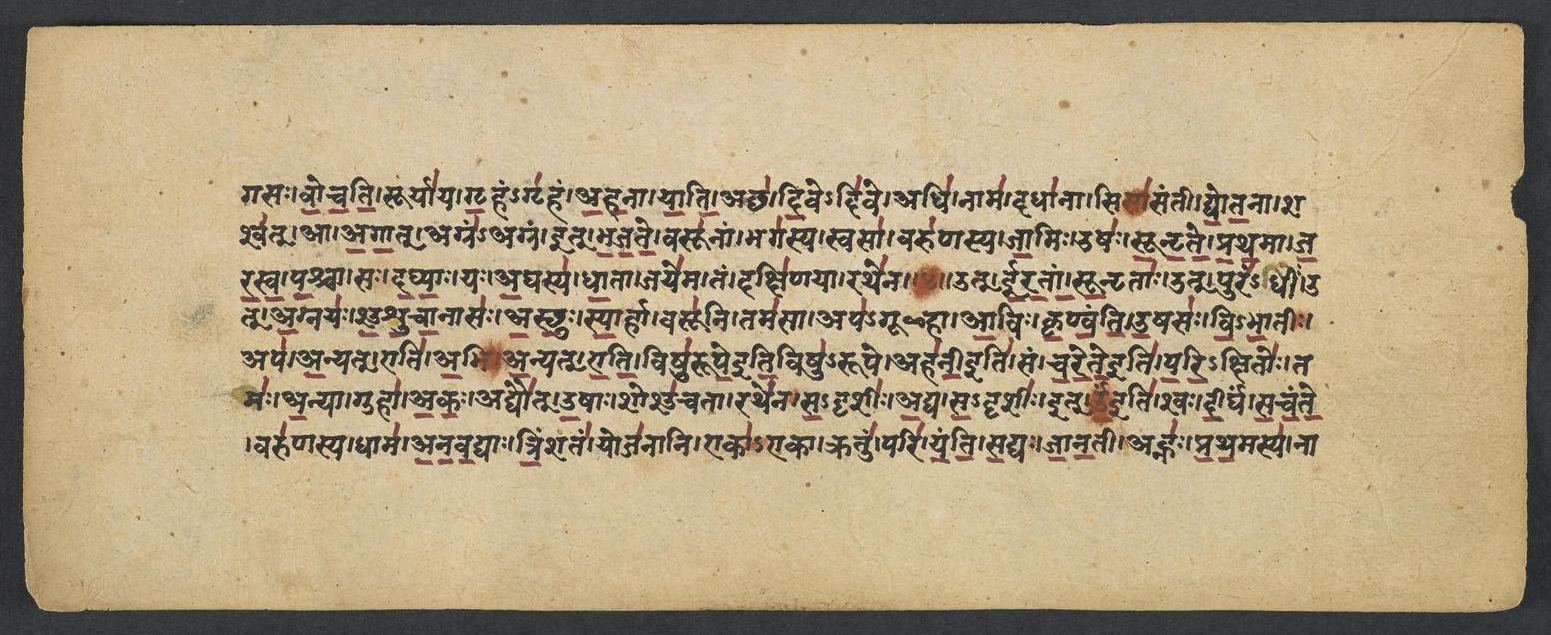
Penn Ms. Coll. 390 Item 41, fol. 94r (numbered 3r by the scribe) (OPenn image 95, lower leaf). Checked on the image: the Rigveda text on this page begins in RV 1.123.3 ‹-anāgasaḥ vocati sūryāya›. The next page with Rigveda text, fol. 94v (numbered 3v by the scribe), begins in RV 1.123.9 ‹-nāma śukrā kṛṣṇāt ajaniṣṭa›. Verses 1.123.3-8 end on this page; 1.123.3 begins on fol. 93v (numbered 2v by the scribe).
3yad a̱dya bhā̱gaṁ vi̱bhajā̍si̱ nṛbhya̱ uṣo̍ devi martya̱trā su̍jāte | de̱vo no̱ atra̍ savi̱tā damū̍nā̱ anā̍gaso vocati̱ sūryā̍ya ||
4gṛ̱haṁ-gṛ̍ham aha̱nā yā̱ty acchā̍ di̱ve-di̍ve̱ adhi̱ nāmā̱ dadhā̍nā | siṣā̍santī dyota̱nā śaśva̱d āgā̱d agra̍m-agra̱m id bha̍jate̱ vasū̍nām ||
5bhaga̍sya̱ svasā̱ varu̍ṇasya jā̱mir uṣa̍ḥ sūnṛte pratha̱mā ja̍rasva | pa̱ścā sa da̍ghyā̱ yo a̱ghasya̍ dhā̱tā jaye̍ma̱ taṁ dakṣi̍ṇayā̱ rathe̍na ||
6ud ī̍ratāṁ sū̱nṛtā̱ ut pura̍ṁdhī̱r ud a̱gnaya̍ḥ śuśucā̱nāso̍ asthuḥ | spā̱rhā vasū̍ni̱ tama̱sāpa̍gūḻhā̱viṣ kṛ̍ṇvanty u̱ṣaso̍ vibhā̱tīḥ ||
7apā̱nyad ety a̱bhy a1̱̍nyad e̍ti̱ viṣu̍rūpe̱ aha̍nī̱ saṁ ca̍rete | pa̱ri̱kṣito̱s tamo̍ a̱nyā guhā̍ka̱r adyau̍d u̱ṣāḥ śośu̍catā̱ rathe̍na ||
8sa̱dṛśī̍r a̱dya sa̱dṛśī̱r id u̱ śvo dī̱rghaṁ sa̍cante̱ varu̍ṇasya̱ dhāma̍ | a̱na̱va̱dyās tri̱ṁśata̱ṁ yoja̍nā̱ny ekai̍kā̱ kratu̱m pari̍ yanti sa̱dyaḥ ||
Compare: Padapāṭha (word-by-word text written in the manuscript; Sansknet e-text via GRETIL)
3yat | adya | bhāgam | vi-bhajāsi | nṛ-bhyaḥ | uṣaḥ | devi | martya-trā | su-jāte | devaḥ | naḥ | atra | savitā | damūnāḥ | anāgasaḥ | vocati | sūryāya
4gṛham-gṛham | ahanā | yāti | accha | dive--dive | adhi | nāma | dadhānā | sisāsantī | dyotanā | śaśvat | ā | agāt | agram-agram | it | bhajate | vasūnām
5bhagasya | svasā | varuṇasya | jāmiḥ | uṣaḥ | sūnṛte | prathamā | jarasva | paścā | saḥ | dadhyāḥ | yaḥ | aghasya | dhātā | jayema | tam | dakṣiṇayā | rathena
6ut | īratām | sūnṛtāḥ | ut | puram-dhīḥ | ut | agnayaḥ | śuśucānāsaḥ | asthuḥ | spārhā | vasūni | tamasā | apa-gūḷhā | āviḥ | kṛṇvanti | uṣasaḥ | vi-bhātīḥ
7apa | anyat | eti | abhi | anyat | eti | viṣurūpeitiviṣu-rūpe | ahanī iti | sam | careteiti | pari-kṣitoḥ | tamaḥ | anyā | guhā | akaḥ | adyaut | uṣāḥ | śośucatā | rathena
8sa-dṛśīḥ | adya | sa-dṛśīḥ | it | oṃ iti | śvaḥ | dīrgham | sacante | varuṇasya | dhāma | anavadyāḥ | triṃśatam | yojanāni | ekāekā | kratum | pari | yanti | sadyaḥ
3If, Dawn, thou Goddess nobly born, thou dealest fortune this day to all the race of mortals, May Savitar the God, Friend of the homestead, declare before the Sun that we are sinless.
4Showing her wonted form each day that passeth, spreading the light she visiteth each dwelling. Eager for conquest, with bright sheen she cometh. Her portion is the best of goodly treasures.
5Sister of Varuṇa, sister of Bhaga, first among all sing forth, O joyous Morning. Weak be the strength of him who worketh evil – may we subdue him with our car the guerdon.
6Let our glad hymns and holy thoughts rise upward, for the flames brightly burning have ascended. The far-refulgent Mornings make apparent the lovely treasures which the darkness covered.
7The one departeth and the other cometh: unlike in hue day's, halves march on successive. One hides the gloom of the surrounding Parents. Dawn on her shining chariot is resplendent.
8The same in form to-day, the same tomorrow, they still keep Varuṇa's eternal statute. Blameless, in turn they traverse thirty regions, and dart across the spirit in a moment.
Where on the image
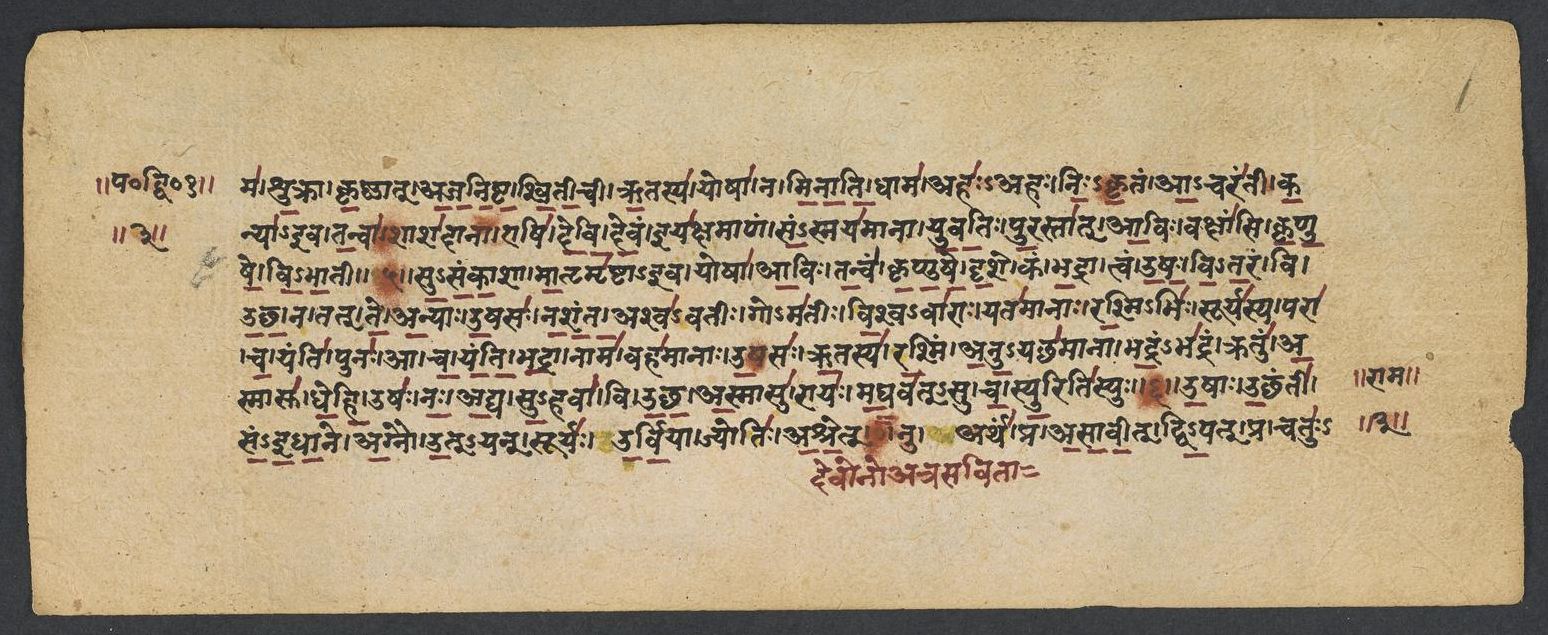
Penn Ms. Coll. 390 Item 41, fol. 94v (numbered 3v by the scribe) (OPenn image 96, upper leaf). Checked on the image: the Rigveda text on this page begins in RV 1.123.9 ‹-nāma śukrā kṛṣṇāt ajaniṣṭa›. The next page with Rigveda text, fol. 95r (numbered 4r by the scribe), begins in RV 1.124.2 ‹śaśvatīnām āyatīnām prathamā uṣāḥ›. Verses 1.123.9-13 end on this page; 1.123.9 begins on fol. 94r (numbered 3r by the scribe).
9jā̱na̱ty ahna̍ḥ pratha̱masya̱ nāma̍ śu̱krā kṛ̱ṣṇād a̍janiṣṭa śvitī̱cī | ṛ̱tasya̱ yoṣā̱ na mi̍nāti̱ dhāmāha̍r-ahar niṣkṛ̱tam ā̱cara̍ntī ||
10ka̱nye̍va ta̱nvā̱3̱̍ śāśa̍dānā̱m̐ eṣi̍ devi de̱vam iya̍kṣamāṇam | sa̱ṁsmaya̍mānā yuva̱tiḥ pu̱rastā̍d ā̱vir vakṣā̍ṁsi kṛṇuṣe vibhā̱tī ||
11su̱sa̱ṁkā̱śā mā̱tṛmṛ̍ṣṭeva̱ yoṣā̱vis ta̱nva̍ṁ kṛṇuṣe dṛ̱śe kam | bha̱drā tvam u̍ṣo vita̱raṁ vy u̍ccha̱ na tat te̍ a̱nyā u̱ṣaso̍ naśanta ||
12aśvā̍vatī̱r goma̍tīr vi̱śvavā̍rā̱ yata̍mānā ra̱śmibhi̱ḥ sūrya̍sya | parā̍ ca̱ yanti̱ puna̱r ā ca̍ yanti bha̱drā nāma̱ vaha̍mānā u̱ṣāsa̍ḥ ||
13ṛ̱tasya̍ ra̱śmim a̍nu̱yaccha̍mānā bha̱dram-bha̍dra̱ṁ kratu̍m a̱smāsu̍ dhehi | uṣo̍ no a̱dya su̱havā̱ vy u̍cchā̱smāsu̱ rāyo̍ ma̱ghava̍tsu ca syuḥ ||
Compare: Padapāṭha (word-by-word text written in the manuscript; Sansknet e-text via GRETIL)
9jānatī | ahnaḥ | prathamasya | nāma | śukrā | kṛṣṇāt | ajaniṣṭa | śvitīcī | ṛtasya | yoṣā | na | mināti | dhāma | ahaḥ-ahaḥ | niḥ-kṛtam | ācarantī
10kanyāiva | tanvā | śāśadānā | eṣi | devi | devam | iyakṣamāṇam | sam-smayamānā | yuvatiḥ | purastāt | āviḥ | vakṣāṃsi | kṛṇuṣe | vi-bhātī
11su-saṅkāśā | mātṛmṛṣṭāiva | yoṣā | āviḥ | tanvam | kṛṇuṣe | dṛśe | kam | bhadrā | tvam | uṣaḥ | vi-taram | vi | uccha | na | tat | te | anyāḥ | uṣasaḥ | naśanta
12aśva-vatīḥ | go--matīḥ | viśva-vārāḥ | yatamānāḥ | raśmi-bhiḥ | sūryasya | parā | ca | yanti | punaḥ | ā | ca | yanti | bhadrā | nāma | vahamānāḥ | uṣasaḥ
13ṛtasya | raśmim | anu-yacchamānā | bhadram-bhadram | kratum | asmāsu | dhehi | uṣaḥ | naḥ | adya | su-havā | vi | uccha | asmāsu | rāyaḥ | maghavat-su | ca | syuriti syuḥ
9She who hath knowledge Of the first day's nature is born refulgent white from out the darkness. The Maiden breaketh not the law of Order, day by day coming to the place appointed.
10In pride of beauty like a maid thou goest, O Goddess, to the God who longs to win thee, And smiling youthful, as thou shinest brightly, before him thou discoverest thy bosom.
11Fair as a bride embellished by her mother thou showest forth thy form that all may see it. Blessed art thou O Dawn. Shine yet more widely. No other Dawns have reached what thou attainest.
12Rich in kine, horses, and all goodly treasures, in constant operation with the sunbeams, The Dawns depart and come again again assuming their wonted forms that promise happy fortune.
13Obedient to the rein of Law Eternal give us each thought that more and more shall bless us. Shine thou on us to-day, Dawn, swift to listen. With us be riches and with chiefs who worship.
Notes
- Sanskrit: Aufrecht's edition (1877) with the Vedic accents, as entered by van Nooten and Holland (GRETIL).
- English: Ralph T. H. Griffith, The Hymns of the Rigveda (1889-1892; 2nd ed. 1896-1897), from the VedaWeb digital text; OCR slips in that text were corrected against the printed 2nd edition (data/sources/rigveda/griffith_errata.json).
- Padapāṭha (edition text): Sansknet e-text via GRETIL (CC BY-NC-SA 4.0).
Cite
Sources
- Source: Penn Ms. Coll. 390 Item 41 (undated (catalogued with Penn's 18th-19th c. Vedic manuscripts)), OPenn, Public Domain Mark + Aufrecht's accented text (GRETIL) + Griffith's English (VedaWeb) (holding institution)
- Critical edition: Aufrecht (1877), accented e-text via GRETIL
← previous · → next · v cycle view · l back to library