Rigveda 1.124: To Usas
Introduction
Rigveda 1.124 is a hymn of 13 verses addressed to Usas. It stands in book (maṇḍala) 1, a collection of hymns by many families of poets. The Rigveda is the oldest collection of Sanskrit hymns, composed in the second half of the second millennium BCE and handed down orally for many centuries before it was written down.
The manuscript shown is Penn Ms. Coll. 390 Item 41 (University of Pennsylvania), an undated paper manuscript of the padapāṭha (the word-by-word recitation text, in which every word is written separately and compounds are split) of the whole Ṛgveda in Devanāgarī, 884 leaves in fascicles, 7-9 lines to the page, accents in red; this hymn stands on fol. 94v-95v. Each section below gives the verses that end on one page; the page boundaries were read on the images (the opening words of every page), not counted out. Where the manuscript is a padapāṭha (the word-by-word recitation text), the section shows Aufrecht's continuous (saṃhitā) text first and, as the edition text, the padapāṭha of the same verses, which is the form written on the page.
How was this verified? (Provenance)
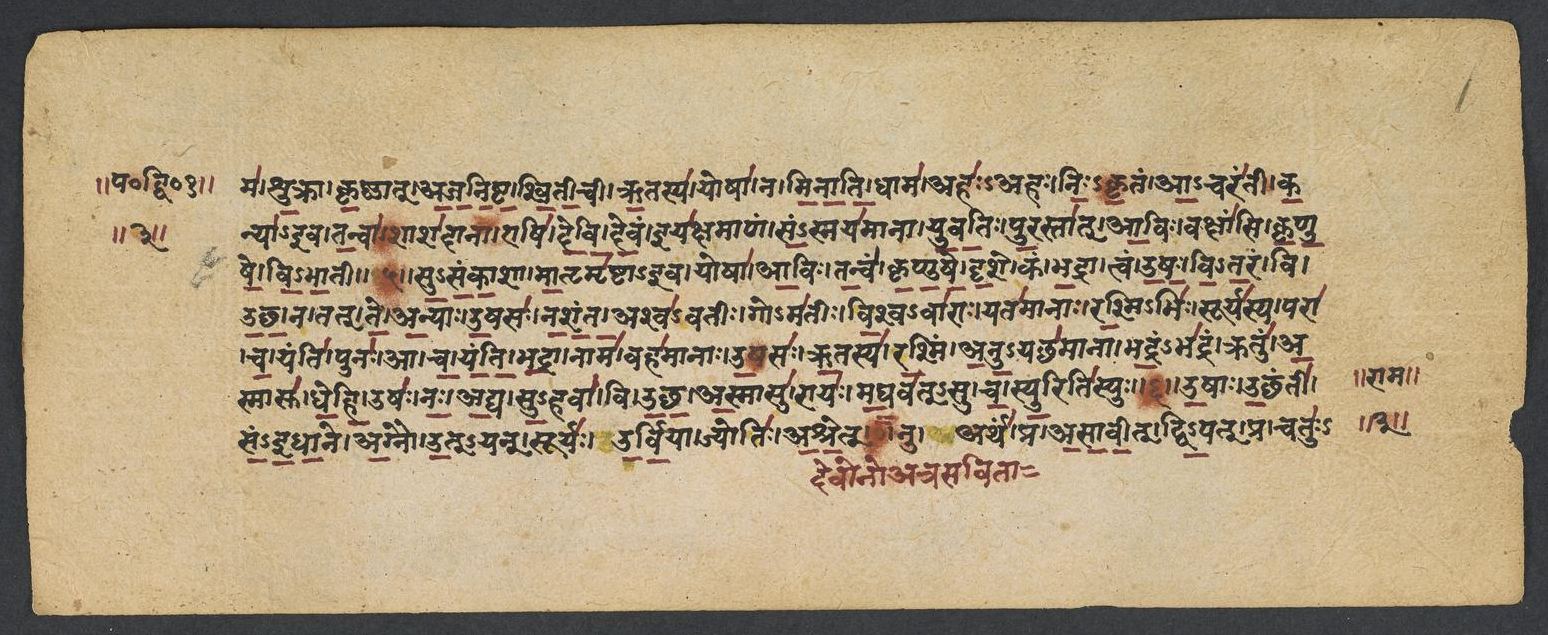
Where on the image
Penn Ms. Coll. 390 Item 41, fol. 94v (numbered 3v by the scribe) (OPenn image 96, upper leaf). Checked on the image: the Rigveda text on this page begins in RV 1.123.9 ‹-nāma śukrā kṛṣṇāt ajaniṣṭa›. The next page with Rigveda text, fol. 95r (numbered 4r by the scribe), begins in RV 1.124.2 ‹śaśvatīnām āyatīnām prathamā uṣāḥ›. Verse 1.124.1 ends on this page.
1u̱ṣā u̱cchantī̍ samidhā̱ne a̱gnā u̱dyan sūrya̍ urvi̱yā jyoti̍r aśret | de̱vo no̱ atra̍ savi̱tā nv artha̱m prāsā̍vīd dvi̱pat pra catu̍ṣpad i̱tyai ||
Compare: Padapāṭha (word-by-word text written in the manuscript; Sansknet e-text via GRETIL)
1uṣāḥ | ucchantī | sam-idhāne | agnau | ut-yan | sūryaḥ | urviyā | jyotiḥ | aśret | devaḥ | naḥ | atra | savitā | nu | artham | pra | asāvīt | dvi-pat | pra | catuḥ-pat | ityai
1THE Dawn refulgent when the fire is kindled, and the Sun rising, far diffuse their brightness. Savitar, God, hath sentus forth to labour, each quadruped, each biped, to be active.
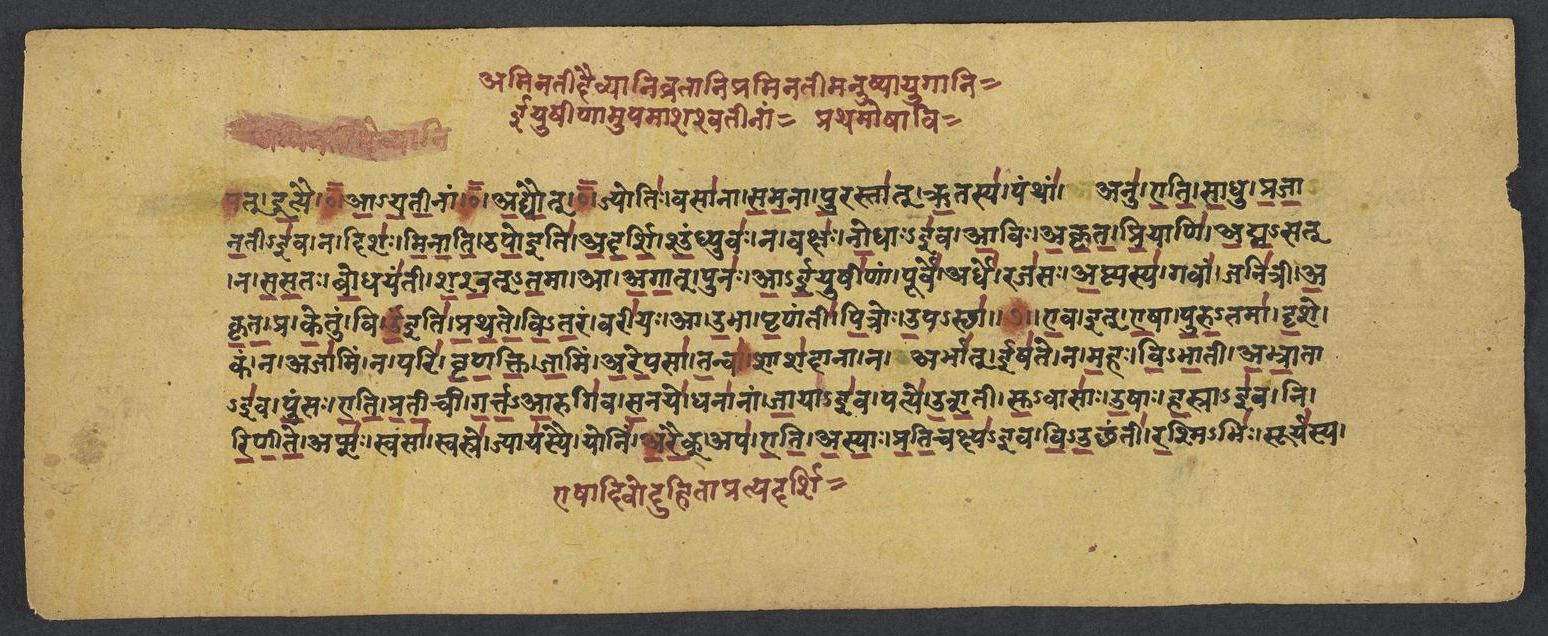
Where on the image
Penn Ms. Coll. 390 Item 41, fol. 95r (numbered 4r by the scribe) (OPenn image 96, lower leaf). Checked on the image: the Rigveda text on this page begins in RV 1.124.2 ‹śaśvatīnām āyatīnām prathamā uṣāḥ›. The next page with Rigveda text, fol. 95v (numbered 4v by the scribe), begins in RV 1.124.8 ‹añji aṅkte samanagāḥ-iva vrāḥ›. Verses 1.124.2-7 end on this page; 1.124.2 begins on fol. 94v (numbered 3v by the scribe).
2ami̍natī̱ daivyā̍ni vra̱tāni̍ pramina̱tī ma̍nu̱ṣyā̍ yu̱gāni̍ | ī̱yuṣī̍ṇām upa̱mā śaśva̍tīnām āyatī̱nām pra̍tha̱moṣā vy a̍dyaut ||
3e̱ṣā di̱vo du̍hi̱tā praty a̍darśi̱ jyoti̱r vasā̍nā sama̱nā pu̱rastā̍t | ṛ̱tasya̱ panthā̱m anv e̍ti sā̱dhu pra̍jāna̱tīva̱ na diśo̍ mināti ||
4upo̍ adarśi śu̱ndhyuvo̱ na vakṣo̍ no̱dhā i̍vā̱vir a̍kṛta pri̱yāṇi̍ | a̱dma̱san na sa̍sa̱to bo̱dhaya̍ntī śaśvatta̱māgā̱t puna̍r e̱yuṣī̍ṇām ||
5pūrve̱ ardhe̱ raja̍so a̱ptyasya̱ gavā̱ṁ jani̍try akṛta̱ pra ke̱tum | vy u̍ prathate vita̱raṁ varī̍ya̱ obhā pṛ̱ṇantī̍ pi̱tror u̱pasthā̍ ||
6e̱ved e̱ṣā pu̍ru̱tamā̍ dṛ̱śe kaṁ nājā̍mi̱ṁ na pari̍ vṛṇakti jā̱mim | a̱re̱pasā̍ ta̱nvā̱3̱̍ śāśa̍dānā̱ nārbhā̱d īṣa̍te̱ na ma̱ho vi̍bhā̱tī ||
7a̱bhrā̱teva̍ pu̱ṁsa e̍ti pratī̱cī ga̍rtā̱rug i̍va sa̱naye̱ dhanā̍nām | jā̱yeva̱ patya̍ uśa̱tī su̱vāsā̍ u̱ṣā ha̱sreva̱ ni ri̍ṇīte̱ apsa̍ḥ ||
Compare: Padapāṭha (word-by-word text written in the manuscript; Sansknet e-text via GRETIL)
2aminatī | daivyāni | vratāni | pra-minatī | manuṣyā | yugāni | īyuṣīṇām | upa-mā | śaśvatīnām | āyatīnām | prathamā | uṣāḥ | vi | adyaut
3eṣā | divaḥ | duhitā | prati | adarśi | jyotiḥ | vasānā | samanā | purastāt | ṛtasya | panthām | anu | eti | sādhu | prajānatī-iva | na | diśaḥ | mināti
4upo iti | adarśi | śundhyuvaḥ | na | vakṣaḥ | nodhāḥ-iva | āviḥ | akṛta | priyāṇi | adma-sat | na | sasataḥ | bodhayantī | śaśvat-tamā | ā | agāt | punaḥ | āīyuṣīṇām
5pūrve | ardhe | rajasaḥ | aptyasya | gavām | janitrī | akṛta | pra | ketum | vi | oṃ iti | prathate | vi-taram | varīyaḥ | ā | ubhā | pṛṇantī | pitroḥ | upa-sthā
6eva | it | eṣā | puru-tamā | dṛśe | kam | na | ajāmim | na | pari | vṛṇakti | jāmim | arepasā | tanvā | śāśadānā | na | arbhāt | īṣate | na | mahaḥ | vi-bhātī
7abhrātāiva | puṃsaḥ | eti | pratīcī | garta-āruk-iva | sanaye | dhanānām | jāyāiva | patye | uśatī | su-vāsāḥ | uṣāḥ | hasrāiva | ni | riṇīte | apsaḥ
2Not interrupting heavenly ordinances, although she minisheth human generations. The last of endless morns that have departed, the first of those that come, Dawn brightly shineth.
3There in the eastern region she, Heaven's Daughter, arrayed in garments all of light, appeareth. Truly she followeth the path of Order, nor faileth, knowing well, the heavenly quarters.
4Near is she seen, as 'twere the Bright One's bosom: she showeth sweet things like a new songsinger. She cometh like a fly awaking sleepers, of all. returning dames most true and constant.
5There in the east half of the watery region the Mother of the Cows hath shown her ensign. Wider and wider still she spreadeth onward, and filleth full the laps of both heir Parents.
6She, verily, exceeding vast to look on debarreth from her light nor kin nor stranger. Proud of her spotless form she, brightly shining, turneth not from the high nor froom the humble.
7She seeketh men, as she who hath no brother, mounting her car, as 'twere to gather riches. Dawn, like a loving matron for her husband, smiling and well attired, unmasks her beauty.
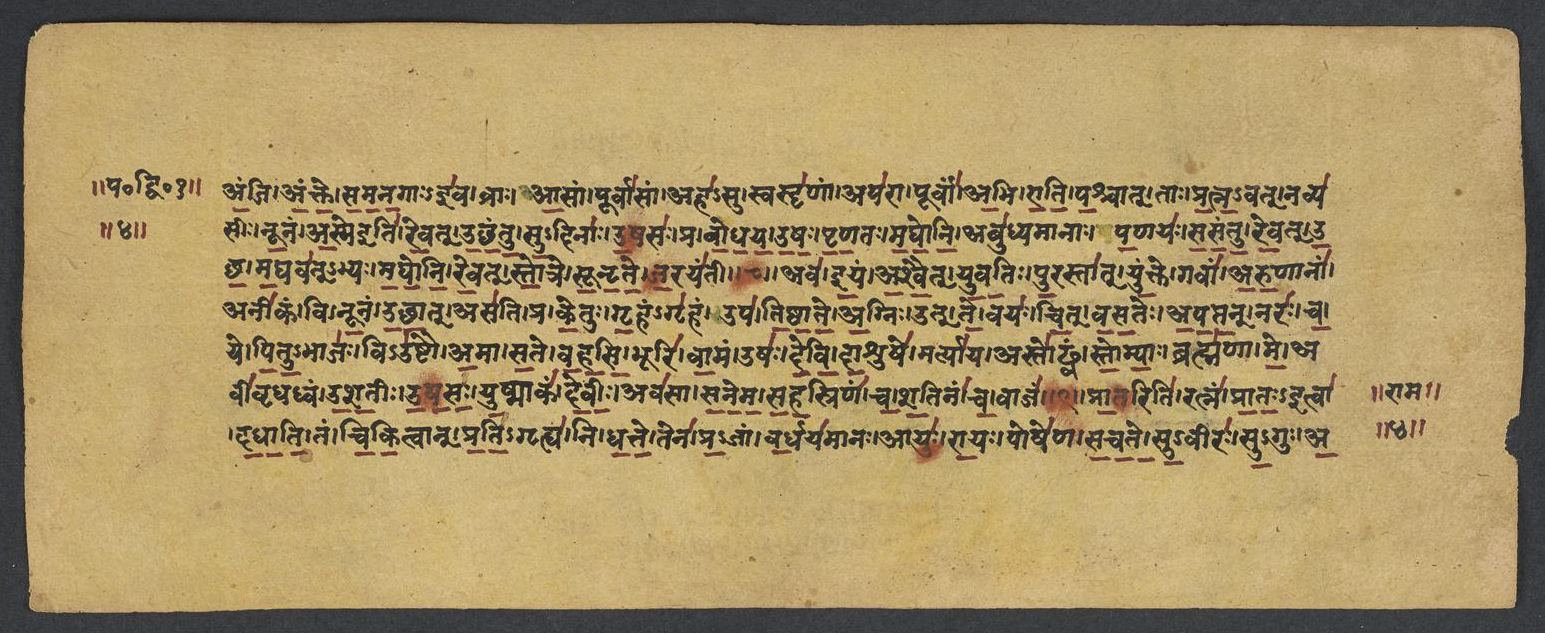
Where on the image
Penn Ms. Coll. 390 Item 41, fol. 95v (numbered 4v by the scribe) (OPenn image 97, upper leaf). Checked on the image: the Rigveda text on this page begins in RV 1.124.8 ‹añji aṅkte samanagāḥ-iva vrāḥ›. The next page with Rigveda text, fol. 96r (numbered 5r by the scribe), begins in RV 1.125.2 ‹-asat su-hiraṇyaḥ su-aśvaḥ bṛhat›. Verses 1.124.8-13 end on this page; 1.124.8 begins on fol. 95r (numbered 4r by the scribe).
8svasā̱ svasre̱ jyāya̍syai̱ yoni̍m ārai̱g apai̍ty asyāḥ prati̱cakṣye̍va | vyu̱cchantī̍ ra̱śmibhi̱ḥ sūrya̍syā̱ñjy a̍ṅkte samana̱gā i̍va̱ vrāḥ ||
9ā̱sām pūrvā̍sā̱m aha̍su̱ svasṝ̍ṇā̱m apa̍rā̱ pūrvā̍m a̱bhy e̍ti pa̱ścāt | tāḥ pra̍tna̱van navya̍sīr nū̱nam a̱sme re̱vad u̍cchantu su̱dinā̍ u̱ṣāsa̍ḥ ||
10pra bo̍dhayoṣaḥ pṛṇa̱to ma̍gho̱ny abu̍dhyamānāḥ pa̱ṇaya̍ḥ sasantu | re̱vad u̍ccha ma̱ghava̍dbhyo maghoni re̱vat sto̱tre sū̍nṛte jā̱raya̍ntī ||
11ave̱yam a̍śvaid yuva̱tiḥ pu̱rastā̍d yu̱ṅkte gavā̍m aru̱ṇānā̱m anī̍kam | vi nū̱nam u̍cchā̱d asa̍ti̱ pra ke̱tur gṛ̱haṁ-gṛ̍ha̱m upa̍ tiṣṭhāte a̱gniḥ ||
12ut te̱ vaya̍ś cid vasa̱ter a̍papta̱n nara̍ś ca̱ ye pi̍tu̱bhājo̱ vyu̍ṣṭau | a̱mā sa̱te va̍hasi̱ bhūri̍ vā̱mam uṣo̍ devi dā̱śuṣe̱ martyā̍ya ||
13asto̍ḍhvaṁ stomyā̱ brahma̍ṇā̱ me 'vī̍vṛdhadhvam uśa̱tīr u̍ṣāsaḥ | yu̱ṣmāka̍ṁ devī̱r ava̍sā sanema saha̱sriṇa̍ṁ ca śa̱tina̍ṁ ca̱ vāja̍m ||
Compare: Padapāṭha (word-by-word text written in the manuscript; Sansknet e-text via GRETIL)
8khasā | svasre | jyāyasyai | yonim | araik | apa | eti | asyāḥ | prati-cakṣya-iva | vi-ucchantī | raśmi-bhiḥ | sūryasya | añji | aṅkte | samanagāḥ-iva | vrāḥ
9āsām | pūrvāsām | aha-su | svasṛṝṇām | aparā | pūrvām | abhi | eti | paścāt | tāḥ | pratna-vat | navyasīḥ | nūnam | asme iti | revat | ucchantu | su-dināḥ | uṣasaḥ
10pra | bodhaya | uṣaḥ | pṛṇataḥ | maghoni | abudhyamānāḥ | paṇayaḥ | sasantu | revat | uccha | maghavat-bhyaḥ | maghoni | revat | stotre | sūnṛte | jārayantī
11ava | iyam | aśvait | yuvatiḥ | purastāt | yuṅkte | gavām | aruṇānām | anīkam | vi | nūnam | ucchāt | asati | pra | ketuḥ | gṛham-gṛham | upa | tiṣṭhāte | agniḥ
12ut | te | vayaḥ | cit | vasateḥ | apaptan | naraḥ | ca | ye | pitu-bhājaḥ | vi-uṣṭau | amā | sate | vahasi | bhūri | vāmam | uṣaḥ | devi | dāśuṣe | martyāya
13astoḍhavam | stomyāḥ | brahmaṇā | me | avīvṛdhadhvam | uśatīḥ | uṣasaḥ | yuṣmākam | devīḥ | avasā | sanema | sahasriṇam | ca | śatinam | ca | vājam
8The Sister quitteth, for the elder Sister, her place, and having looked on her departeth. She decks her beauty, shining forth with sunbeams, like women trooping to the festal meeting.
9To all these Sisters who ere now have vanished a later one each day in course succeedeth. So, like the past, with days of happy fortune, may the new Dawns shine forth on us with riches.
10Rouse up, O Wealthy One, the liberal givers; let niggard traffickers sleep on unwakened: Shine richly, Wealthy One, on those who worship, richly, glad. Dawn while wasting, on the singer.
11This young Maid from the east hath shone upon us; she harnesseth her team of bright red oxen. She will beam forth, the light will hasten hither, and Agni will be present in each dwelling.
12As the birds fly forth from their resting places, so men with store of food rise at thy dawning. Yea, to the liberal mortal who remaineth at home, O Goddess Dawn, much good thou bringest.
13Praised through my prayer be ye who should be lauded. Ye have increased our wealth, ye Dawns who love us. Goddesses, may we win by your good favour wealth to be told by hundreds and by thousands.
Notes
- Sanskrit: Aufrecht's edition (1877) with the Vedic accents, as entered by van Nooten and Holland (GRETIL).
- English: Ralph T. H. Griffith, The Hymns of the Rigveda (1889-1892; 2nd ed. 1896-1897), from the VedaWeb digital text; OCR slips in that text were corrected against the printed 2nd edition (data/sources/rigveda/griffith_errata.json).
- Padapāṭha (edition text): Sansknet e-text via GRETIL (CC BY-NC-SA 4.0).
Cite
Sources
- Source: Penn Ms. Coll. 390 Item 41 (undated (catalogued with Penn's 18th-19th c. Vedic manuscripts)), OPenn, Public Domain Mark + Aufrecht's accented text (GRETIL) + Griffith's English (VedaWeb) (holding institution)
- Critical edition: Aufrecht (1877), accented e-text via GRETIL
← previous · → next · v cycle view · l back to library