Rigveda 1.126: Thanks for a present
Introduction
Rigveda 1.126 is a hymn of 7 verses addressed to thanks for a present. It stands in book (maṇḍala) 1, a collection of hymns by many families of poets. The Rigveda is the oldest collection of Sanskrit hymns, composed in the second half of the second millennium BCE and handed down orally for many centuries before it was written down.
The manuscript shown is Penn Ms. Coll. 390 Item 41 (University of Pennsylvania), an undated paper manuscript of the padapāṭha (the word-by-word recitation text, in which every word is written separately and compounds are split) of the whole Ṛgveda in Devanāgarī, 884 leaves in fascicles, 7-9 lines to the page, accents in red; this hymn stands on fol. 96v-97r. Each section below gives the verses that end on one page; the page boundaries were read on the images (the opening words of every page), not counted out. Where the manuscript is a padapāṭha (the word-by-word recitation text), the section shows Aufrecht's continuous (saṃhitā) text first and, as the edition text, the padapāṭha of the same verses, which is the form written on the page.
How was this verified? (Provenance)
Where on the image
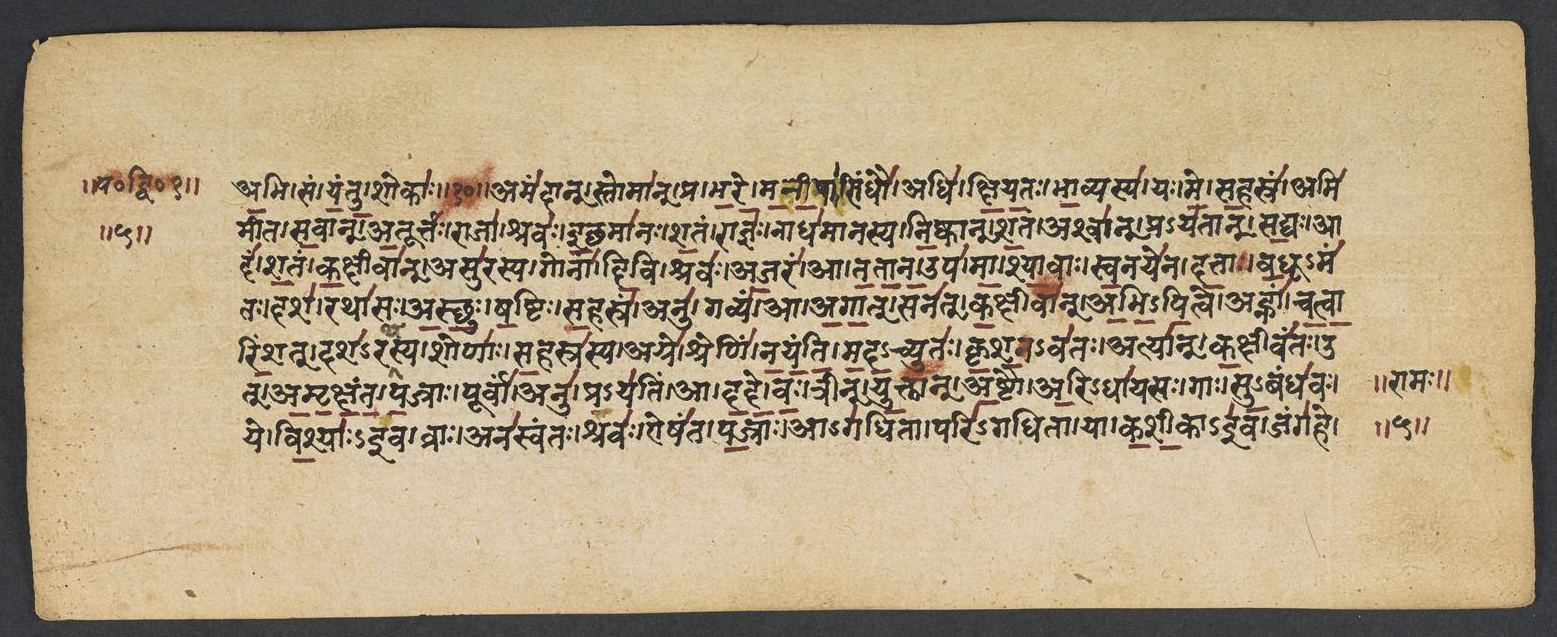
Penn Ms. Coll. 390 Item 41, fol. 96v (numbered 5v by the scribe) (OPenn image 98, upper leaf). Checked on the image: the Rigveda text on this page begins in RV 1.125.7 ‹abhi sam yantu śokāḥ›. The next page with Rigveda text, fol. 97r (numbered 6r by the scribe), begins in RV 1.126.6 ‹dadāti mahyam yādurī yāśūnām›. Verses 1.126.1-5 end on this page.
1ama̍ndā̱n stomā̱n pra bha̍re manī̱ṣā sindhā̱v adhi̍ kṣiya̱to bhā̱vyasya̍ | yo me̍ sa̱hasra̱m ami̍mīta sa̱vān a̱tūrto̱ rājā̱ śrava̍ i̱cchamā̍naḥ ||
2śa̱taṁ rājño̱ nādha̍mānasya ni̱ṣkāñ cha̱tam aśvā̱n praya̍tān sa̱dya āda̍m | śa̱taṁ ka̱kṣīvā̱m̐ asu̍rasya̱ gonā̍ṁ di̱vi śravo̱ 'jara̱m ā ta̍tāna ||
3upa̍ mā śyā̱vāḥ sva̱naye̍na da̱ttā va̱dhūma̍nto̱ daśa̱ rathā̍so asthuḥ | ṣa̱ṣṭiḥ sa̱hasra̱m anu̱ gavya̱m āgā̱t sana̍t ka̱kṣīvā̍m̐ abhipi̱tve ahnā̍m ||
4ca̱tvā̱ri̱ṁśad daśa̍rathasya̱ śoṇā̍ḥ sa̱hasra̱syāgre̱ śreṇi̍ṁ nayanti | ma̱da̱cyuta̍ḥ kṛśa̱nāva̍to̱ atyā̍n ka̱kṣīva̍nta̱ ud a̍mṛkṣanta pa̱jrāḥ ||
5pūrvā̱m anu̱ praya̍ti̱m ā da̍de va̱s trīn yu̱ktām̐ a̱ṣṭāv a̱ridhā̍yaso̱ gāḥ | su̱bandha̍vo̱ ye vi̱śyā̍ iva̱ vrā ana̍svanta̱ḥ śrava̱ aiṣa̍nta pa̱jrāḥ ||
Compare: Padapāṭha (word-by-word text written in the manuscript; Sansknet e-text via GRETIL)
1amandān | somān | pra | bhare | manīṣā sindhau | adhi | kṣiyataḥ | bhāvyasya | yaḥ | me | sahasram | amimīta | savān | atūrtaḥ | rājā | śravaḥ | icchamānaḥ
2śatam | rājñaḥ | nādhamānasya | niṣkān | śatam | aśvān | pra-yatān | sadyaḥ | ādam | śatam | kakṣīvān | asurasya | gonām | divi | śravaḥ | ajaram | ā | tatāna
3upa | mā | śyāvāḥ | svanayena | dattāḥ | vadhū-mantaḥ | daśa | rathāsaḥ | asthuḥ | ṣaṣṭiḥ | sahasram | anu | gavyam | ā | agāt | sanat | kakṣīvān | abhi-pitve | ahnām
4catvāriṃśat | daśa-rathasya | śoṇāḥ | sahasrasya | agre | śreṇim | nayanti | mada-cyutaḥ | kṛśana-vataḥ | atyān | kakṣīvantaḥ | ut | amṛkṣanta | pajrāḥ
5pūrvām | anu | pra-yatim | ā | dade | vaḥ | trīn | yuktān | aṣṭau | ari-dhāyasaḥ | gāḥ | su-bandhavaḥ | ye | viśyāḥ-iva | vrāḥ | anasvantaḥ | śravaḥ | aiṣanta | pajrāḥ
1WITH wisdom I present these lively praises of Bhâvya dweller on the bank of Sindhu; For he, unconquered King, desiring glory, hath furnished me a thousand sacrifices.
2A hundred necklets from the King, beseeching, a hundred gift-steeds I at once accepted; Of the lord's cows a thousand, I Kakshîvân. His deathless glory hath he spread to heaven.
3Horses of dusky colour stood beside me, ten chariots, Svanaya's gift, with mares to draw them. Kine numbering sixty thousand followed after. Kakshîvân gained them when the days were closing.
4Forty bay horses of the ten cars' master before a thousand lead the long procession. Reeling in joy Kakshîvân's sons and Pajra's have grounded the coursers decked with pearly trappings.
5An earlier gift for you have I accepted eight cows, good milkers, and tree harnessed horses, Pajras, who with your wains with your great kinsman, like troops of subjects, have been fain for glory.
Where on the image
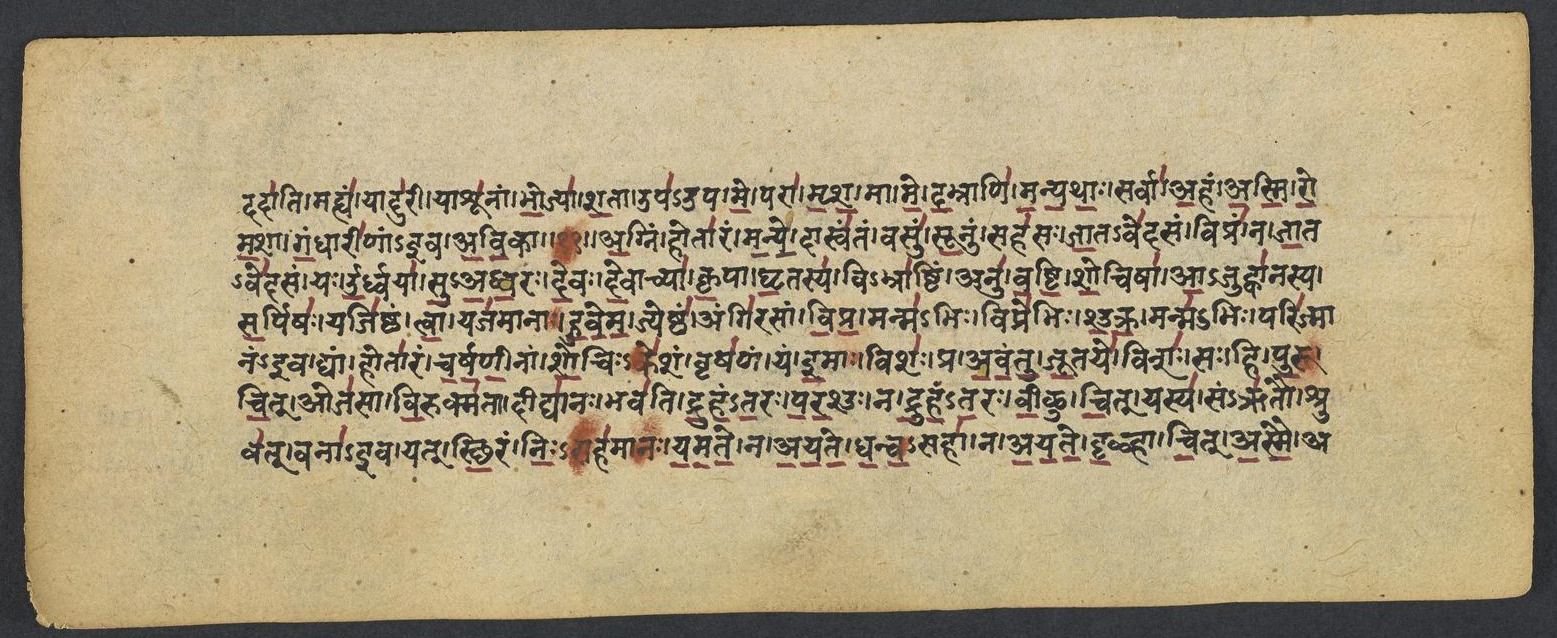
Penn Ms. Coll. 390 Item 41, fol. 97r (numbered 6r by the scribe) (OPenn image 98, lower leaf). Checked on the image: the Rigveda text on this page begins in RV 1.126.6 ‹dadāti mahyam yādurī yāśūnām›. The next page with Rigveda text, fol. 97v (numbered 6v by the scribe), begins in RV 1.127.4 ‹-anu duḥ yathā vide›. Verses 1.126.6-7 end on this page; 1.126.6 begins on fol. 96v (numbered 5v by the scribe).
6āga̍dhitā̱ pari̍gadhitā̱ yā ka̍śī̱keva̱ jaṅga̍he | dadā̍ti̱ mahya̱ṁ yādu̍rī̱ yāśū̍nām bho̱jyā̍ śa̱tā ||
7upo̍pa me̱ parā̍ mṛśa̱ mā me̍ da̱bhrāṇi̍ manyathāḥ | sarvā̱ham a̍smi roma̱śā ga̱ndhārī̍ṇām ivāvi̱kā ||
Compare: Padapāṭha (word-by-word text written in the manuscript; Sansknet e-text via GRETIL)
6āgadhitā | pari-gadhitā | yā | kaśīkāiva | jaṅgahe | dadāti | mahyam | yādurī | yāśūnām | bhojyā | śatā
7upa-upa | me | parā | mṛśa | mā | me | dabhrāṇi | manyathāḥ | sarvā | aham | asmi | romaśā | gandhārīṇām-iva | avikā
6[Ille loquitur]. Adhaerens, arcte adhaerens, illa quac mustelae similis se abdidit, multum humorem effundens, dat mihi complexuum centum gaudia.
7[Illa loquitur]. Prope, prope accede; molliter me tange. Ne putes pilos corporis mei-paucos esse: tota sum villosa sicut Gandharidum ovis.
Notes
- Sanskrit: Aufrecht's edition (1877) with the Vedic accents, as entered by van Nooten and Holland (GRETIL).
- English: Ralph T. H. Griffith, The Hymns of the Rigveda (1889-1892; 2nd ed. 1896-1897), from the VedaWeb digital text; OCR slips in that text were corrected against the printed 2nd edition (data/sources/rigveda/griffith_errata.json).
- Padapāṭha (edition text): Sansknet e-text via GRETIL (CC BY-NC-SA 4.0).
Cite
Sources
- Source: Penn Ms. Coll. 390 Item 41 (undated (catalogued with Penn's 18th-19th c. Vedic manuscripts)), OPenn, Public Domain Mark + Aufrecht's accented text (GRETIL) + Griffith's English (VedaWeb) (holding institution)
- Critical edition: Aufrecht (1877), accented e-text via GRETIL
← previous · → next · v cycle view · l back to library