Rigveda 1.127: To Agni
Introduction
Rigveda 1.127 is a hymn of 11 verses addressed to Agni. It stands in book (maṇḍala) 1, a collection of hymns by many families of poets. The Rigveda is the oldest collection of Sanskrit hymns, composed in the second half of the second millennium BCE and handed down orally for many centuries before it was written down.
The manuscript shown is Penn Ms. Coll. 390 Item 41 (University of Pennsylvania), an undated paper manuscript of the padapāṭha (the word-by-word recitation text, in which every word is written separately and compounds are split) of the whole Ṛgveda in Devanāgarī, 884 leaves in fascicles, 7-9 lines to the page, accents in red; this hymn stands on fol. 97r-98v. Each section below gives the verses that end on one page; the page boundaries were read on the images (the opening words of every page), not counted out. Where the manuscript is a padapāṭha (the word-by-word recitation text), the section shows Aufrecht's continuous (saṃhitā) text first and, as the edition text, the padapāṭha of the same verses, which is the form written on the page.
How was this verified? (Provenance)
Where on the image
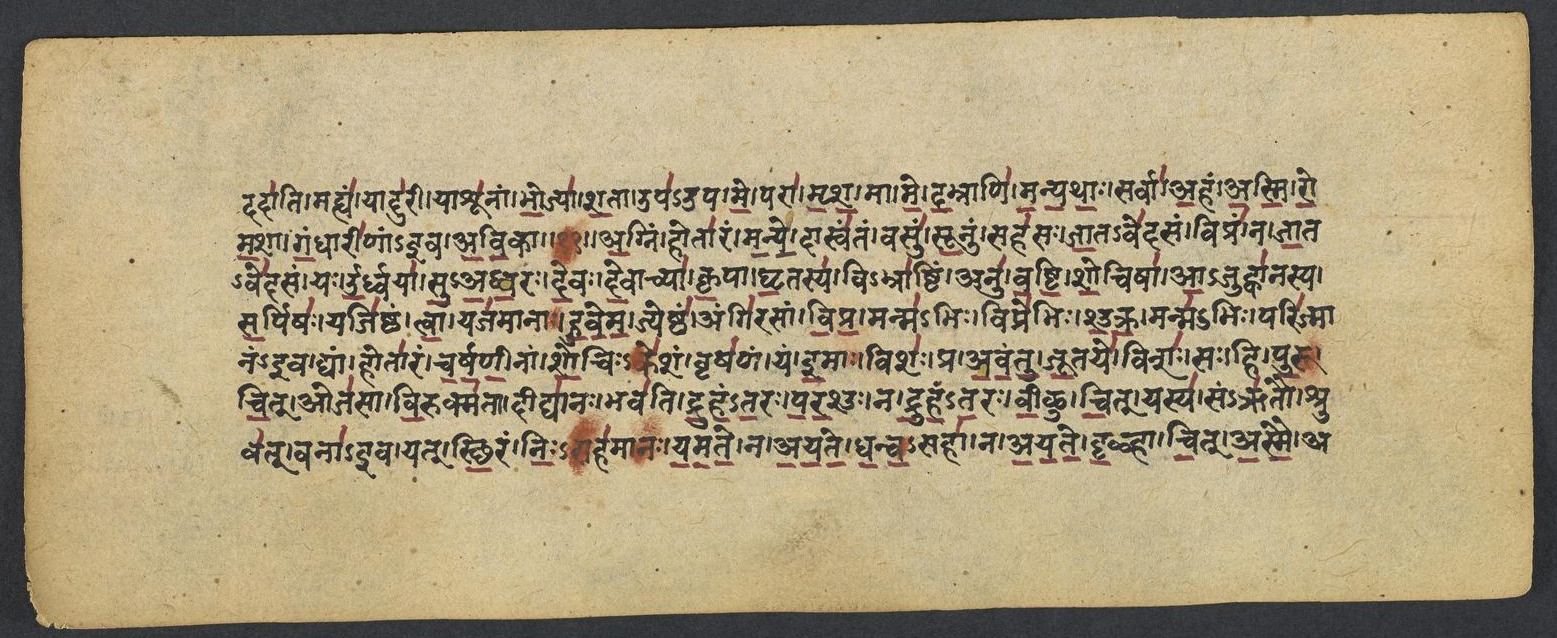
Penn Ms. Coll. 390 Item 41, fol. 97r (numbered 6r by the scribe) (OPenn image 98, lower leaf). Checked on the image: the Rigveda text on this page begins in RV 1.126.6 ‹dadāti mahyam yādurī yāśūnām›. The next page with Rigveda text, fol. 97v (numbered 6v by the scribe), begins in RV 1.127.4 ‹-anu duḥ yathā vide›. Verses 1.127.1-3 end on this page.
1a̱gniṁ hotā̍ram manye̱ dāsva̍nta̱ṁ vasu̍ṁ sū̱nuṁ saha̍so jā̱tave̍dasa̱ṁ vipra̱ṁ na jā̱tave̍dasam | ya ū̱rdhvayā̍ svadhva̱ro de̱vo de̱vācyā̍ kṛ̱pā | ghṛ̱tasya̱ vibhrā̍ṣṭi̱m anu̍ vaṣṭi śo̱ciṣā̱juhvā̍nasya sa̱rpiṣa̍ḥ ||
2yaji̍ṣṭhaṁ tvā̱ yaja̍mānā huvema̱ jyeṣṭha̱m aṅgi̍rasāṁ vipra̱ manma̍bhi̱r vipre̍bhiḥ śukra̱ manma̍bhiḥ | pari̍jmānam iva̱ dyāṁ hotā̍raṁ carṣaṇī̱nām | śo̱ciṣke̍śa̱ṁ vṛṣa̍ṇa̱ṁ yam i̱mā viśa̱ḥ prāva̍ntu jū̱taye̱ viśa̍ḥ ||
3sa hi pu̱rū ci̱d oja̍sā vi̱rukma̍tā̱ dīdyā̍no̱ bhava̍ti druhaṁta̱raḥ pa̍ra̱śur na dru̍haṁta̱raḥ | vī̱ḻu ci̱d yasya̱ samṛ̍tau̱ śruva̱d vane̍va̱ yat sthi̱ram | ni̱ḥṣaha̍māṇo yamate̱ nāya̍te dhanvā̱sahā̱ nāya̍te ||
Compare: Padapāṭha (word-by-word text written in the manuscript; Sansknet e-text via GRETIL)
1agnim | hotāram | manye | dāsvantam | vasum | sūnum | sahasaḥ | jāta-vedasam | vipram | na | jāta-vedasam | yaḥ | ūrdhvayā | su-adhvaraḥ | devaḥ | devācyā | kṛpā | ghṛtasya | vi-bhrāṣṭim | anu | vaṣṭi | śociṣā | ājuhvānasya | sarpiṣaḥa
2yajiṣṭham | tvā | yajamānāḥ | huvema | jyeṣṭham | aṅgirasām | vipra | manma-bhiḥ | viprebhiḥ | śukra | manma-bhiḥ | parijmānam-iva | dyām | hotāram | carṣaṇīnām | śociḥ-keśam | vṛṣaṇam | yam | imāḥ | viśaḥ | pra | avantu | jūtaye | viśaḥ
3saḥ | hi | puru | cit | ojasā | virukmatā | dīdyānaḥ | bhavati | druham-taraḥ | paraśuḥ | na | druhantaraḥ | vīḷu | cit | yasya | sam-ṛtau | śruvat | vanāiva | yat | sthiram | niḥ-sahamāṇaḥ | yamate | na | ayate | dhanva-sahā | na | ayate
1AGNI I hold as herald, the munificent, the gracious, Son of Strength, who knoweth all that live, as holy Singer, knowing all, Lord of fair rites, a God with form erected turning to the Gods, He, when the flame hath sprung forth from the holy oil, the offered fatness, longeth for it with his glow.
2We, sacrificing, call on thee best worshipper, the eldest of Angirases, Singer, with hymns, thee, brilliant One! with singers' hymns; Thee, wandering round as 't were the sky, who art the invoking Priest of men, Whom, Bull with hair of flame the people must observe, the people that he speed them on.
3He with his shining glory blazing far and wide, he verily it is who slayeth demon foes, slayeth the demons like an axe: At whose close touch things solid shake, and what is stable yields like trees. Subduing all, he keeps his ground and flinches not, from the skilled archer flinches not.
Where on the image
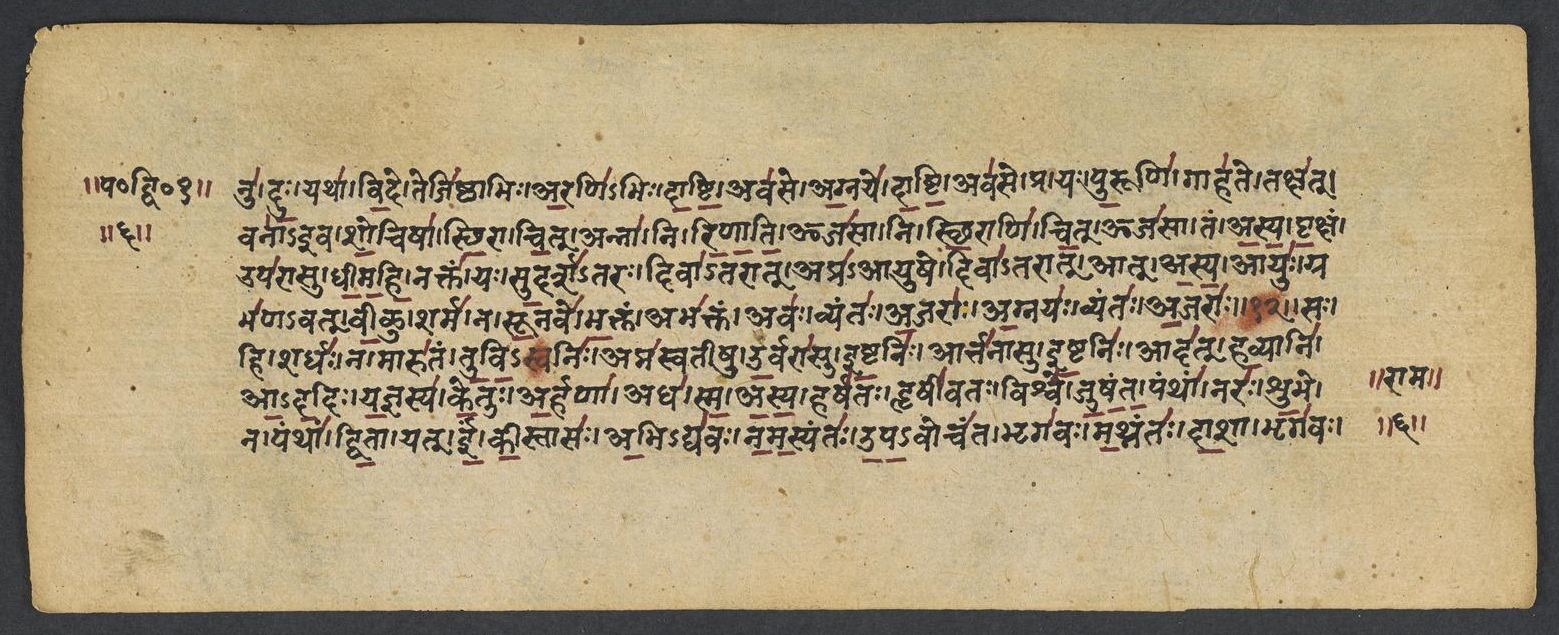
Penn Ms. Coll. 390 Item 41, fol. 97v (numbered 6v by the scribe) (OPenn image 99, upper leaf). Checked on the image: the Rigveda text on this page begins in RV 1.127.4 ‹-anu duḥ yathā vide›. The next page with Rigveda text, fol. 98r (numbered 7r by the scribe), begins in RV 1.127.7 ‹agniḥ īśe vasūnām śuciḥ›. Verses 1.127.4-6 end on this page; 1.127.4 begins on fol. 97r (numbered 6r by the scribe).
4dṛ̱ḻhā ci̍d asmā̱ anu̍ du̱r yathā̍ vi̱de teji̍ṣṭhābhir a̱raṇi̍bhir dā̱ṣṭy ava̍se̱ 'gnaye̍ dā̱ṣṭy ava̍se | pra yaḥ pu̱rūṇi̱ gāha̍te̱ takṣa̱d vane̍va śo̱ciṣā̍ | sthi̱rā ci̱d annā̱ ni ri̍ṇā̱ty oja̍sā̱ ni sthi̱rāṇi̍ ci̱d oja̍sā ||
5tam a̍sya pṛ̱kṣam upa̍rāsu dhīmahi̱ nakta̱ṁ yaḥ su̱darśa̍taro̱ divā̍tarā̱d aprā̍yuṣe̱ divā̍tarāt | ād a̱syāyu̱r grabha̍ṇavad vī̱ḻu śarma̱ na sū̱nave̍ | bha̱ktam abha̍kta̱m avo̱ vyanto̍ a̱jarā̍ a̱gnayo̱ vyanto̍ a̱jarā̍ḥ ||
6sa hi śardho̱ na māru̍taṁ tuvi̱ṣvaṇi̱r apna̍svatīṣū̱rvarā̍sv i̱ṣṭani̱r ārta̍nāsv i̱ṣṭani̍ḥ | āda̍d dha̱vyāny ā̍da̱dir ya̱jñasya̍ ke̱tur a̱rhaṇā̍ | adha̍ smāsya̱ harṣa̍to̱ hṛṣī̍vato̱ viśve̍ juṣanta̱ panthā̱ṁ nara̍ḥ śu̱bhe na panthā̍m ||
Compare: Padapāṭha (word-by-word text written in the manuscript; Sansknet e-text via GRETIL)
4dṛḷhā | cit | asmai | anu | duḥ | yathā | vide | tejiṣṭhābhiḥ | araṇi-bhiḥ | dāṣṭi | avase | agnaye | dāśṭi | avase | pra | yaḥ | purūṇi | gāhate | takṣat | vanāiva | śociṣā | sthirā | cit | annā | ni | riṇāti | ojasā | ni | sthirāṇi | cit | ojsā
5tam | asya | pṛkṣam | uparāsu | dhīmahi | naktam | yaḥ | sudarśa-taraḥ | divātarāt | apra-āyuṣe | divātarāt | āt | asya | āyuḥ | grabhaṇa-vat | vīḷu | śarma | na | sūnave | bhaktam | abhaktam | avaḥ | vyantaḥ | ajarāḥ | agnayaḥ | vyantaḥ | ajarāḥ
6saḥ | hi | śardhaḥ | na | mārutam | tuvi-svaṇiḥ | apnasvatīṣu | urvarāsu iṣṭaniḥ | ārtanāsu | iṣṭaniḥ | ādat | havyāni | ādadiḥ | yajñasya | ketuḥ | aharṇā | adha | sma | asya | harṣataḥ | hṛṣīvataḥ | viśve | juṣanta | panthām | naraḥ | śubhe | na | panthām
4To him, as one who knows, even things solid yield: unrough fire-sticks heated hot he gives his gifts to aid. Men offer Agni gifts for aid. He deeply piercing many a thing hews it like wood with fervent glow. Even hard and solid food he crunches with his might, yea, hard and solid food with might.
5Here near we place the sacrificial food for him who shines forth fairer in the night than in the day, with life then stronger than by day. His life gives sure and firm defence as that one giveth to a son. The during fires enjoy things given and things not given, the during fires enjoy as food.
6He, roaring very loudly like the Maruts' host, in fertile cultivated fields adorable, in desert spots adorable, Accepts and eats our offered gifts, ensign of sacrifice by desert; So let all, joying, love his path when he is glad, as men pursue a path for bliss.
Where on the image
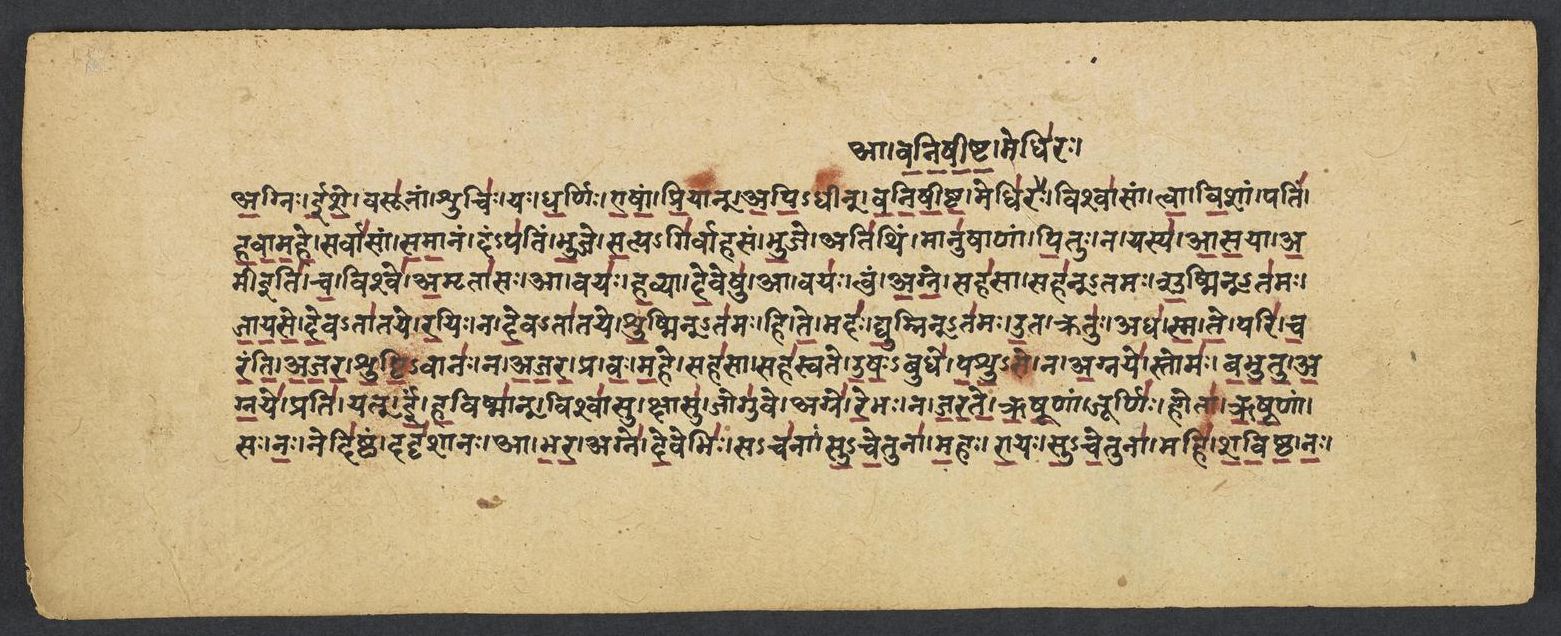
Penn Ms. Coll. 390 Item 41, fol. 98r (numbered 7r by the scribe) (OPenn image 99, lower leaf). Checked on the image: the Rigveda text on this page begins in RV 1.127.7 ‹agniḥ īśe vasūnām śuciḥ›. The next page with Rigveda text, fol. 98v (numbered 7v by the scribe), begins in RV 1.127.11 ‹kṛdhi sam-cakṣe bhuje asyai›. Verses 1.127.7-10 end on this page; 1.127.7 begins on fol. 97v (numbered 6v by the scribe).
7dvi̱tā yad ī̍ṁ kī̱stāso̍ a̱bhidya̍vo nama̱syanta̍ upa̱voca̍nta̱ bhṛga̍vo ma̱thnanto̍ dā̱śā bhṛga̍vaḥ | a̱gnir ī̍śe̱ vasū̍nā̱ṁ śuci̱r yo dha̱rṇir e̍ṣām | pri̱yām̐ a̍pi̱dhīm̐r va̍niṣīṣṭa̱ medhi̍ra̱ ā va̍niṣīṣṭa̱ medhi̍raḥ ||
8viśvā̍sāṁ tvā vi̱śām pati̍ṁ havāmahe̱ sarvā̍sāṁ samā̱naṁ dampa̍tim bhu̱je sa̱tyagi̍rvāhasam bhu̱je | ati̍thi̱m mānu̍ṣāṇām pi̱tur na yasyā̍sa̱yā | a̱mī ca̱ viśve̍ a̱mṛtā̍sa̱ ā vayo̍ ha̱vyā de̱veṣv ā vaya̍ḥ ||
9tvam a̍gne̱ saha̍sā̱ saha̍ntamaḥ śu̱ṣminta̍mo jāyase de̱vatā̍taye ra̱yir na de̱vatā̍taye | śu̱ṣminta̍mo̱ hi te̱ mado̍ dyu̱mninta̍ma u̱ta kratu̍ḥ | adha̍ smā te̱ pari̍ caranty ajara śruṣṭī̱vāno̱ nāja̍ra ||
10pra vo̍ ma̱he saha̍sā̱ saha̍svata uṣa̱rbudhe̍ paśu̱ṣe nāgnaye̱ stomo̍ babhūtv a̱gnaye̍ | prati̱ yad ī̍ṁ ha̱viṣmā̱n viśvā̍su̱ kṣāsu̱ jogu̍ve | agre̍ re̱bho na ja̍rata ṛṣū̱ṇāṁ jūrṇi̱r hota̍ ṛṣū̱ṇām ||
Compare: Padapāṭha (word-by-word text written in the manuscript; Sansknet e-text via GRETIL)
7dvitā | yat | īm | kīstāsaḥ | abhi-dyavaḥ | namasyantaḥ | upa-vocanta | bhṛgavaḥ | maśnantaḥ | dāśā | bhṛgavaḥ | agniḥ | īśe | vasūnām | śuciḥ | yaḥ | dharṇiḥ | eṣām | priyān | api-dhīn | vaniṣīṣṭa | medhiraḥ | ā | vaniṣīśṭa | medhiraḥ
8viśvāsām | tvā | viśām | patim | havāmahe | sarvāsām | samānam | dam-patim | bhuje | satya-girvāhasam | bhuje | atithim | mānuṣāṇām | pituḥ | na | yasya | āsayā | amī iti | ca | viśve | amṛtāsaḥ | ā | vayaḥ | havyā | deveṣu | ā | vayaḥ
9tvam | agne | sahasā | sahan-tamaḥ | śuṣmin-tamaḥ | jāyase | deva-tātaye | rayiḥ | na | deva-tātaye | śuṣmin-tamaḥ | hi | te | madaḥ | dyumnin-tamaḥ | uta | kratuḥ | adha | sma | te | pari | caranti | ajara | śruṣṭīvānaḥ | na | ajara
10pra | vaḥ | mahe | sahasā | sahasvate | uṣaḥ-budhe | paśu-se | na | agnaye | stomaḥ | babhūtu | agnaye | prati | yat | īm | haviṣmān | viśvāsu | kṣāsu | joguve | agre | rebhaḥ | na | jarate | ṛṣūṇām | jūrṇiḥ | hotā | ṛṣūṇām
7Even as they who sang forth hymns, addressed to heaven, the Bhr̥igus with their prayer and praise invited him, the Bhr̥igus rubbing, offering gifts. For radiant Agni, Lord of all these treasures, is exceeding strong. May he, the wise, accept the grateful coverings, the wise accept the coverings.
8Thee we invoke, the Lord of all our settled homes, common to all, the household's guardian, to enjoy, bearer of true hymns, to enjoy. Thee we invoke, the guest of men, by whose mouth, even as a sire's, All these Immortals come to gain their food of life, oblations come to Gods as food.
9Thou, Agni, most victorious with thy conquering strength, most Mighty One, art born for service of the Gods, like wealth for service of the Gods. Most mighty is thine ecstasy, most splendid is thy mental power. Therefore men wait upon thee, undecaying One, like vassals, undecaying One.
10To him the mighty, conquering with victorious strength, to Agni walking with the dawn, who sendeth kine, be sung your laud, to Agni sung; As he who with oblation comes calls him aloud in every place. Before the brands of fire he shouteth singerlike, the herald, kindler of the brands.
Where on the image
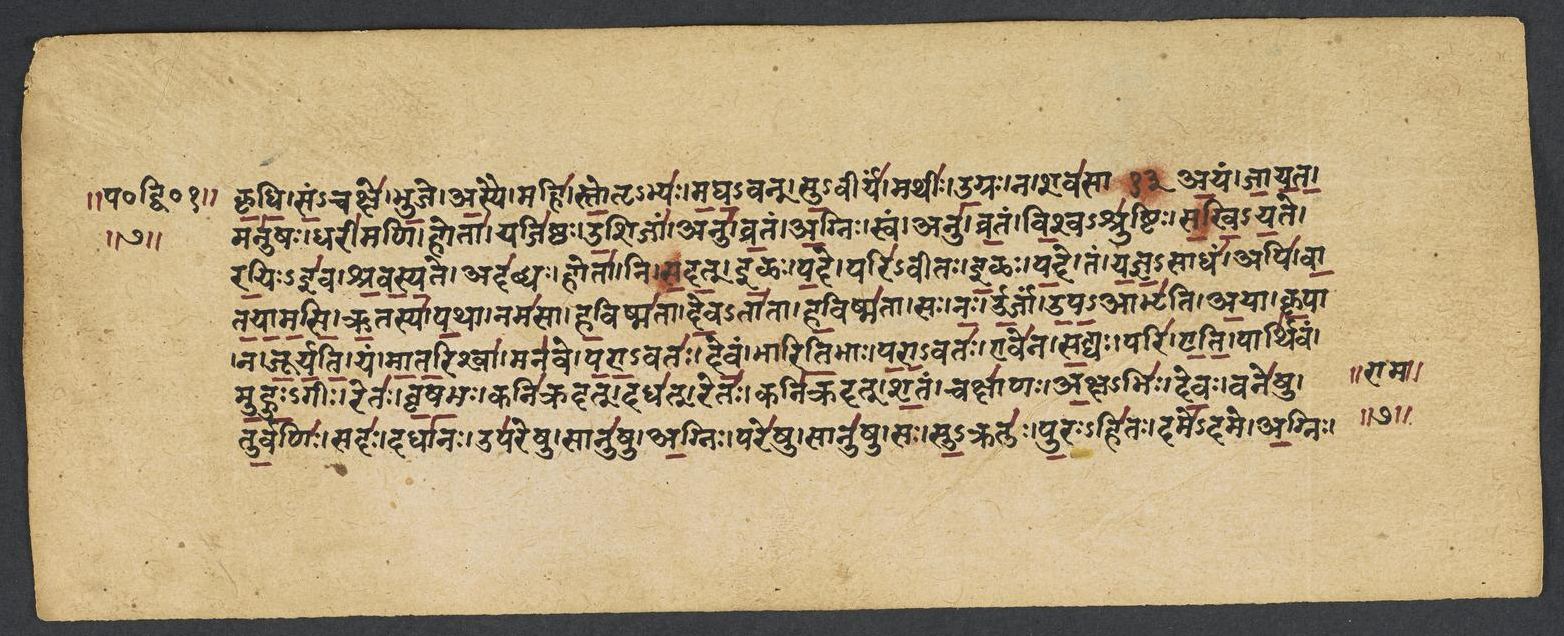
Penn Ms. Coll. 390 Item 41, fol. 98v (numbered 7v by the scribe) (OPenn image 100, upper leaf). Checked on the image: the Rigveda text on this page begins in RV 1.127.11 ‹kṛdhi sam-cakṣe bhuje asyai›. The next page with Rigveda text, fol. 99r (numbered 8r by the scribe), begins in RV 1.128.4 ‹yajñasya adhvarasya cetati kratvā›. Verse 1.127.11 ends on this page; 1.127.11 begins on fol. 98r (numbered 7r by the scribe).
11sa no̱ nedi̍ṣṭha̱ṁ dadṛ̍śāna̱ ā bha̱rāgne̍ de̱vebhi̱ḥ saca̍nāḥ suce̱tunā̍ ma̱ho rā̱yaḥ su̍ce̱tunā̍ | mahi̍ śaviṣṭha nas kṛdhi sa̱ṁcakṣe̍ bhu̱je a̱syai | mahi̍ sto̱tṛbhyo̍ maghavan su̱vīrya̱m mathī̍r u̱gro na śava̍sā ||
Compare: Padapāṭha (word-by-word text written in the manuscript; Sansknet e-text via GRETIL)
11saḥ | naḥ | nediṣṭham | dadṛśānaḥ | ā | bhara | agne | devebhiḥ | sa-canāḥ | su-cetunā | mahaḥ | rayaḥ | su-cetunā | mahi | śaviṣṭha | naḥ | kṛdhi | sam-cakṣe | bhuje | asyai | mahi | stotṛ-bhyaḥ | magha-van | su-vīryam | mathīḥ | ugraḥ | na | śavasā
11Agni, beheld by us in nearest neighbourhood, accordant with the Gods, bring us, with gracious love, great riches with thy gracious love. Give us O Mightiest, what is great, to see and to enjoy the earth. As one of awful power, stir up heroic might for those who praise thee, Bounteous Lord!
Notes
- Sanskrit: Aufrecht's edition (1877) with the Vedic accents, as entered by van Nooten and Holland (GRETIL).
- English: Ralph T. H. Griffith, The Hymns of the Rigveda (1889-1892; 2nd ed. 1896-1897), from the VedaWeb digital text; OCR slips in that text were corrected against the printed 2nd edition (data/sources/rigveda/griffith_errata.json).
- Padapāṭha (edition text): Sansknet e-text via GRETIL (CC BY-NC-SA 4.0).
Cite
Sources
- Source: Penn Ms. Coll. 390 Item 41 (undated (catalogued with Penn's 18th-19th c. Vedic manuscripts)), OPenn, Public Domain Mark + Aufrecht's accented text (GRETIL) + Griffith's English (VedaWeb) (holding institution)
- Critical edition: Aufrecht (1877), accented e-text via GRETIL
← previous · → next · v cycle view · l back to library