Rigveda 1.128: To Agni
Introduction
Rigveda 1.128 is a hymn of 8 verses addressed to Agni. It stands in book (maṇḍala) 1, a collection of hymns by many families of poets. The Rigveda is the oldest collection of Sanskrit hymns, composed in the second half of the second millennium BCE and handed down orally for many centuries before it was written down.
The manuscript shown is Penn Ms. Coll. 390 Item 41 (University of Pennsylvania), an undated paper manuscript of the padapāṭha (the word-by-word recitation text, in which every word is written separately and compounds are split) of the whole Ṛgveda in Devanāgarī, 884 leaves in fascicles, 7-9 lines to the page, accents in red; this hymn stands on fol. 98v-99v. Each section below gives the verses that end on one page; the page boundaries were read on the images (the opening words of every page), not counted out. Where the manuscript is a padapāṭha (the word-by-word recitation text), the section shows Aufrecht's continuous (saṃhitā) text first and, as the edition text, the padapāṭha of the same verses, which is the form written on the page.
How was this verified? (Provenance)
Where on the image
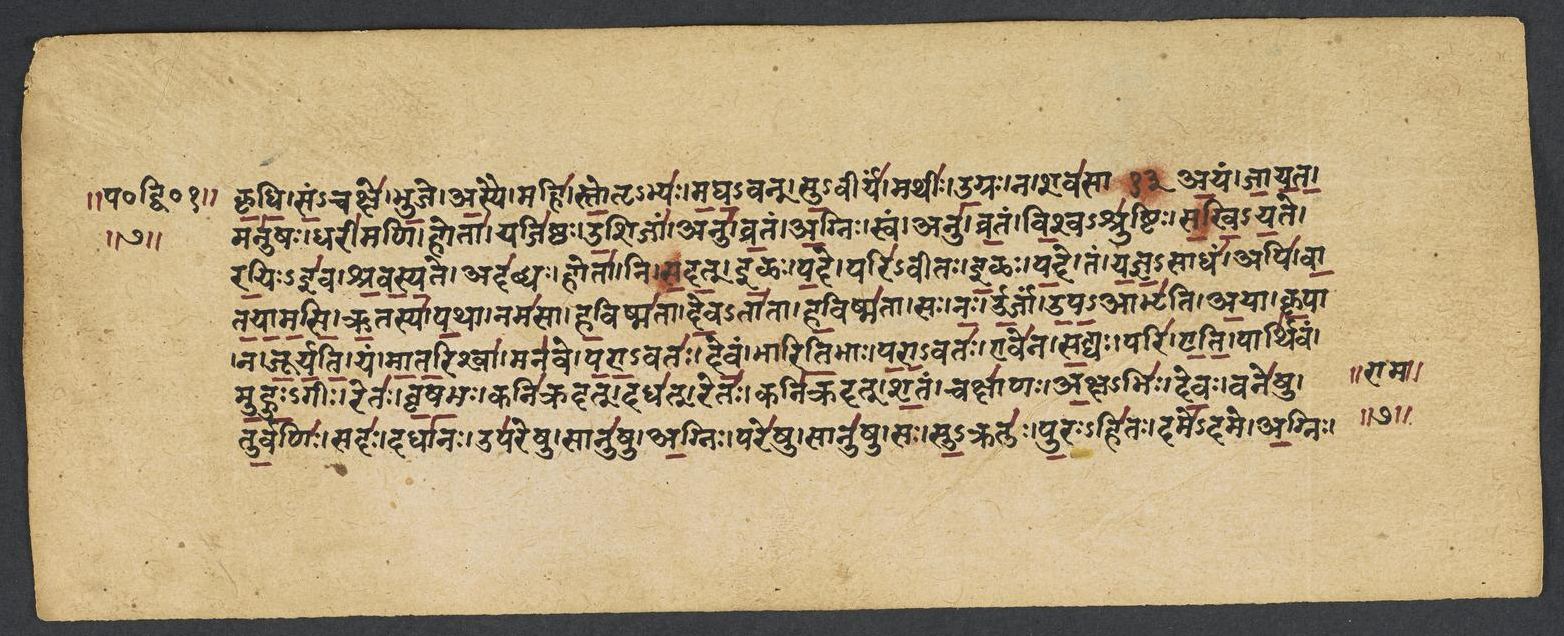
Penn Ms. Coll. 390 Item 41, fol. 98v (numbered 7v by the scribe) (OPenn image 100, upper leaf). Checked on the image: the Rigveda text on this page begins in RV 1.127.11 ‹kṛdhi sam-cakṣe bhuje asyai›. The next page with Rigveda text, fol. 99r (numbered 8r by the scribe), begins in RV 1.128.4 ‹yajñasya adhvarasya cetati kratvā›. Verses 1.128.1-3 end on this page.
1a̱yaṁ jā̍yata̱ manu̍ṣo̱ dharī̍maṇi̱ hotā̱ yaji̍ṣṭha u̱śijā̱m anu̍ vra̱tam a̱gniḥ svam anu̍ vra̱tam | vi̱śvaśru̍ṣṭiḥ sakhīya̱te ra̱yir i̍va śravasya̱te | ada̍bdho̱ hotā̱ ni ṣa̍dad i̱ḻas pa̱de pari̍vīta i̱ḻas pa̱de ||
2taṁ ya̍jña̱sādha̱m api̍ vātayāmasy ṛ̱tasya̍ pa̱thā nama̍sā ha̱viṣma̍tā de̱vatā̍tā ha̱viṣma̍tā | sa na̍ ū̱rjām u̱pābhṛ̍ty a̱yā kṛ̱pā na jū̍ryati | yam mā̍ta̱riśvā̱ mana̍ve parā̱vato̍ de̱vam bhāḥ pa̍rā̱vata̍ḥ ||
3eve̍na sa̱dyaḥ pary e̍ti̱ pārthi̍vam muhu̱rgī reto̍ vṛṣa̱bhaḥ kani̍krada̱d dadha̱d reta̱ḥ kani̍kradat | śa̱taṁ cakṣā̍ṇo a̱kṣabhi̍r de̱vo vane̍ṣu tu̱rvaṇi̍ḥ | sado̱ dadhā̍na̱ upa̍reṣu̱ sānu̍ṣv a̱gniḥ pare̍ṣu̱ sānu̍ṣu ||
Compare: Padapāṭha (word-by-word text written in the manuscript; Sansknet e-text via GRETIL)
1ayam | jāyata | manuṣaḥ | dharīmaṇi | hotā | yajiṣṭhaḥ | uśijām | anu | vratam | agniḥ | svam | anu | vratam | viśva-śruṣṭiḥ | sakhi-yate | rayiḥ-iva | śravasyate | adabdhaḥ | hotā | ni | sadat | iḷaḥ | pade | pari-vītaḥ | iḷaḥ | pade
2tam | yajña-sādham | api | vātayāmasi | ṛtasya | pathā | namasā | haviṣmatā | deva-tātā | haviṣmatā | saḥ | naḥ | ūrjām | upa-ābhṛti | ayā | kṛpā | na | jūryati | yam | mātariśvā | manave | parāvataḥ | devam | bhāritibhāḥ | parāvataḥ
3evena | sadyaḥ | pari | eti | pārthivam | muhuḥ-gīḥ | retaḥ | vṛṣabhaḥ | kanikradat | dadhat | retaḥ | kanikradat | śatam | cakṣāṇaḥ | akṣa-bhiḥ | devaḥ | vaneṣu | turvaṇiḥ | sadaḥ | dadhānaḥ | upareṣu | sānuṣu | agniḥ | pareṣu | sānuṣu
1By Manu's law was born this Agni, Priest most skilled, born for the holy work of those who yearn therefore, yea, born for his own holy work. All ear to him who seeks his love and wealth to him who strives for fame, Priest ne'er deceived, he sits in Iḷâ's holy place, girt round in Iḷâ's holy place.
2We call that perfecter of worship by the path or sacrifice; with reverence rich in offerings, with worship rich in offerings. Through presentation of our food he grows not old in this his from; The God whom Mâtariṣvan brought from far away, for Manu brought from far away.
3In ordered course forthwith he traverses the earth, swift-swallowing, bellowing Steer, bearing the genial seed, bearing the seed and bellowing. Observant with a hundred eyes the God is conqueror in the wood: Agni, who hath his seat in broad plains here below, and in the high lands far away.
Where on the image
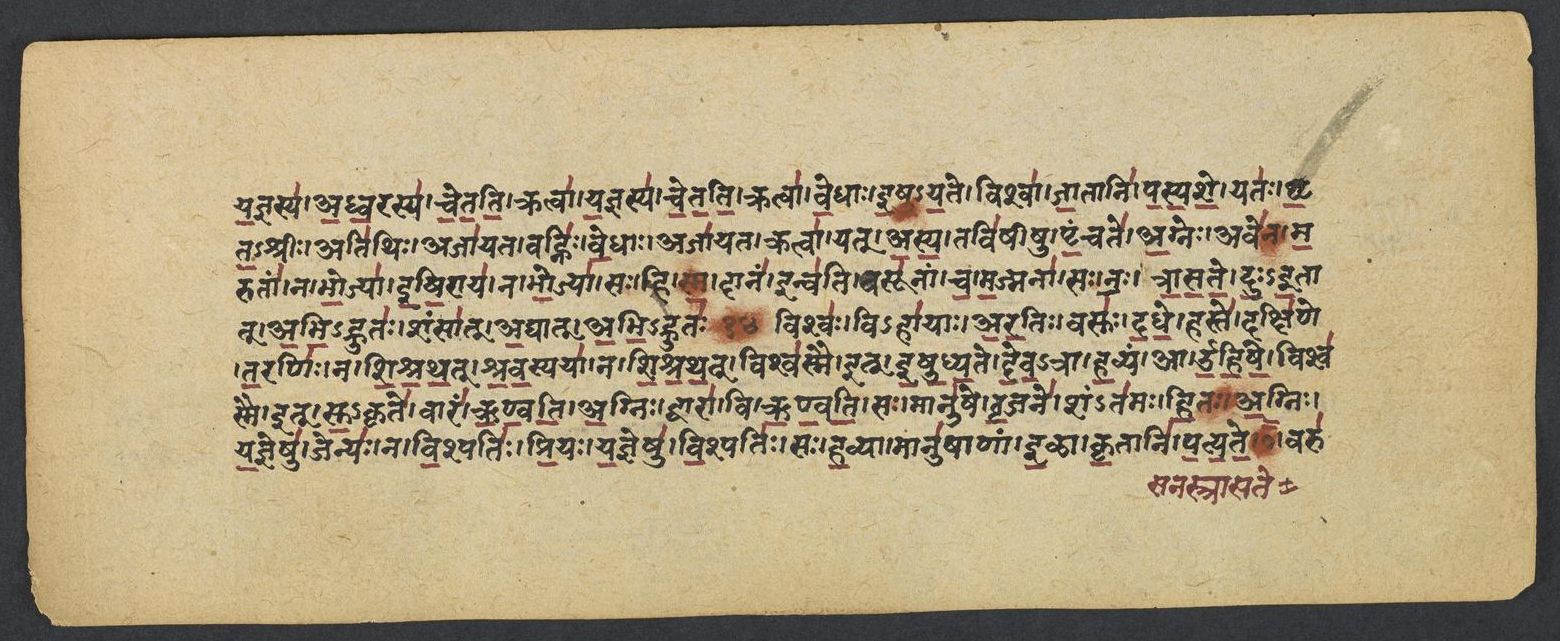
Penn Ms. Coll. 390 Item 41, fol. 99r (numbered 8r by the scribe) (OPenn image 100, lower leaf). Checked on the image: the Rigveda text on this page begins in RV 1.128.4 ‹yajñasya adhvarasya cetati kratvā›. The next page with Rigveda text, fol. 99v (numbered 8v by the scribe), begins in RV 1.128.7 ‹-varuṇasya dhūrteḥ mahaḥ devasya›. Verses 1.128.4-6 end on this page; 1.128.4 begins on fol. 98v (numbered 7v by the scribe).
4sa su̱kratu̍ḥ pu̱rohi̍to̱ dame̍-dame̱ 'gnir ya̱jñasyā̍dhva̱rasya̍ cetati̱ kratvā̍ ya̱jñasya̍ cetati | kratvā̍ ve̱dhā i̍ṣūya̱te viśvā̍ jā̱tāni̍ paspaśe | yato̍ ghṛta̱śrīr ati̍thi̱r ajā̍yata̱ vahni̍r ve̱dhā ajā̍yata ||
5kratvā̱ yad a̍sya̱ tavi̍ṣīṣu pṛ̱ñcate̱ 'gner ave̍ṇa ma̱rutā̱ṁ na bho̱jye̍ṣi̱rāya̱ na bho̱jyā̍ | sa hi ṣmā̱ dāna̱m inva̍ti̱ vasū̍nāṁ ca ma̱jmanā̍ | sa na̍s trāsate duri̱tād a̍bhi̱hruta̱ḥ śaṁsā̍d a̱ghād a̍bhi̱hruta̍ḥ ||
6viśvo̱ vihā̍yā ara̱tir vasu̍r dadhe̱ haste̱ dakṣi̍ṇe ta̱raṇi̱r na śi̍śrathac chrava̱syayā̱ na śi̍śrathat | viśva̍smā̱ id i̍ṣudhya̱te de̍va̱trā ha̱vyam ohi̍ṣe | viśva̍smā̱ it su̱kṛte̱ vāra̍m ṛṇvaty a̱gnir dvārā̱ vy ṛ̍ṇvati ||
Compare: Padapāṭha (word-by-word text written in the manuscript; Sansknet e-text via GRETIL)
4saḥ | su-kratuḥ | puraḥ-hitaḥ | dame--dame | agniḥ | yajñasya | adhvarasya | cetati | kratvā | yajñasya | cetati | kratvā | vedhāḥ | iṣu-yate | viśvā | jātāni | paspaśe | yataḥ | ghṛta-śrīḥ | atithiḥ | ajāyata | vahniḥ | vedhāḥ | ajāyata
5kratvā | yat | asya | taviṣīṣu | pṛñcate | agneḥ | avena | marutām | na | bhojyā | iṣirāya | na | bhojyā | saḥ | hi | sma | dānam | invati | vasūnām | ca | majmanā | saḥ | naḥ | trāsate | duḥ-itāt | abhi-hnutaḥ | śaṃsāt | aghāt | abhi-hnutaḥ
6viśvaḥ | vi-hāyāḥ | aratiḥ | vasuḥ | dadhe | haste | dakṣiṇe | taraṇiḥ | na | śiśrathat | śravasyayā | na | śiśrathat | viśvasmai | it | iṣudhyate | deva-trā | havyam | ā | ūhiṣe | viśvasmai | it | su-kṛte | vāram | ṛṇvati | agniḥ | dvārā | vi | ṛṇvati
4That Agni, wise High-Priest, in every house takes thought for sacrifice and holy service, yea, takes thought, with mental power, for sacrifice. Disposer, he with mental power shows all things unto him who strives; Whence he was born a guest enriched with holy oil, born as Ordainer and as Priest.
5When through his power and in his strong prevailing flames the Maruts' gladdening boons mingle with Agni's roar, boons gladdening for the active One, Then he accelerates the gift, and by the greatness of his wealth, Shall rescue us from overwhelming misery, from curse and overwhelming woe.
6Vast, universal, good he was made messenger; the speeder with his right hand hath not loosed his hold, through love of fame not loosed his hold. He bears oblations to the Gods for whosoever supplicates. Agni bestows a blessing on each pious man, and opens wide the doors for him.
Where on the image
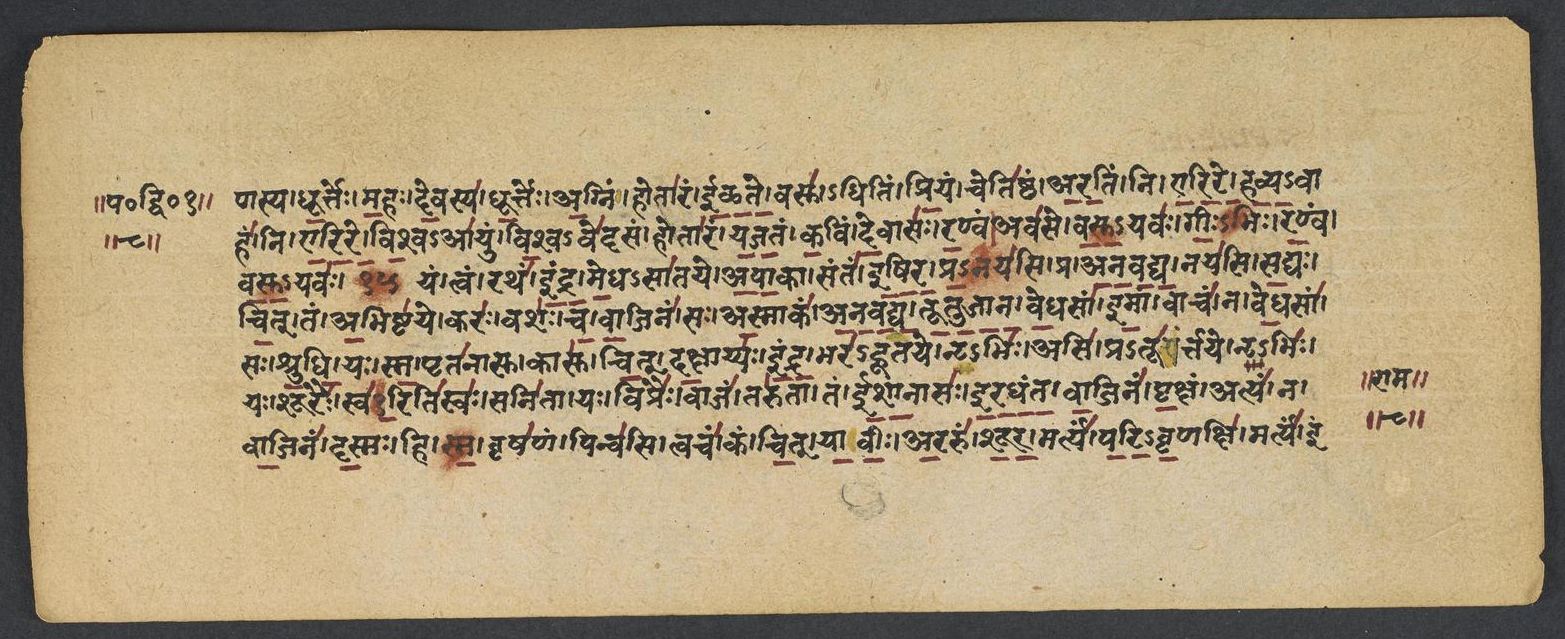
Penn Ms. Coll. 390 Item 41, fol. 99v (numbered 8v by the scribe) (OPenn image 101, upper leaf). Checked on the image: the Rigveda text on this page begins in RV 1.128.7 ‹-varuṇasya dhūrteḥ mahaḥ devasya›. The next page with Rigveda text, fol. 100r (numbered 9r by the scribe), begins in RV 1.129.3 ‹-indra uta tubhyam tat›. Verses 1.128.7-8 end on this page; 1.128.7 begins on fol. 99r (numbered 8r by the scribe).
7sa mānu̍ṣe vṛ̱jane̱ śaṁta̍mo hi̱to̱3̱̍ 'gnir ya̱jñeṣu̱ jenyo̱ na vi̱śpati̍ḥ pri̱yo ya̱jñeṣu̍ vi̱śpati̍ḥ | sa ha̱vyā mānu̍ṣāṇām i̱ḻā kṛ̱tāni̍ patyate | sa na̍s trāsate̱ varu̍ṇasya dhū̱rter ma̱ho de̱vasya̍ dhū̱rteḥ ||
8a̱gniṁ hotā̍ram īḻate̱ vasu̍dhitim pri̱yaṁ ceti̍ṣṭham ara̱tiṁ ny e̍rire havya̱vāha̱ṁ ny e̍rire | vi̱śvāyu̍ṁ vi̱śvave̍dasa̱ṁ hotā̍raṁ yaja̱taṁ ka̱vim | de̱vāso̍ ra̱ṇvam ava̍se vasū̱yavo̍ gī̱rbhī ra̱ṇvaṁ va̍sū̱yava̍ḥ ||
Compare: Padapāṭha (word-by-word text written in the manuscript; Sansknet e-text via GRETIL)
7saḥ | mānuṣe | vṛjane | śam-tamaḥ | hitaḥ | agniḥ | yajñeṣu | jenyaḥ | na | viśpatiḥ | priyaḥ | yajñeṣu | viśpatih | saḥ | havyā | mānuṣāṇām | iḷā | kṛtāni | patyate | saḥ | naḥ | trāsate | varuṇasya | dhūrteḥ | mahaḥ | devasya | dhūrteḥ
8agnim | hotāram | īḷate | vasu-dhitim | priyam | cetiṣṭham | aratim | ni | erire | havya-vāham | ni | erire | viśva-āyum | viśva-vedasam | hotāram | yajatam | kavi m | devāsaḥ | raṇvam | avase | vasu-yavaḥ | gīḥ-bhiḥ | raṇvam | vasu-yavaḥ
7That Agni hath been set most kind in camp of men, in sacrifice like a Lord victorious, like a dear Lord in sacred rites. His are the oblations of mankind when offered up at Ili's place. He shall preserve us from Varuṇa's chastisement, yea, from the great God's chastisement.
8Agni the Priest they supplicate to grant them wealth: him, dear, most thoughtful, have they made their messenger, him, offering-bearer have they made, Beloved of all, who knoweth all, the Priest, the Holy one, the Sage- Him, Friend, for help, the Gods when they are fain for wealth, him, Friend, with hymns, when fain for wealth.
Notes
- Sanskrit: Aufrecht's edition (1877) with the Vedic accents, as entered by van Nooten and Holland (GRETIL).
- English: Ralph T. H. Griffith, The Hymns of the Rigveda (1889-1892; 2nd ed. 1896-1897), from the VedaWeb digital text; OCR slips in that text were corrected against the printed 2nd edition (data/sources/rigveda/griffith_errata.json).
- Padapāṭha (edition text): Sansknet e-text via GRETIL (CC BY-NC-SA 4.0).
Cite
Sources
- Source: Penn Ms. Coll. 390 Item 41 (undated (catalogued with Penn's 18th-19th c. Vedic manuscripts)), OPenn, Public Domain Mark + Aufrecht's accented text (GRETIL) + Griffith's English (VedaWeb) (holding institution)
- Critical edition: Aufrecht (1877), accented e-text via GRETIL
← previous · → next · v cycle view · l back to library