Rigveda 1.129: To Indra
Introduction
Rigveda 1.129 is a hymn of 11 verses addressed to Indra. It stands in book (maṇḍala) 1, a collection of hymns by many families of poets. The Rigveda is the oldest collection of Sanskrit hymns, composed in the second half of the second millennium BCE and handed down orally for many centuries before it was written down.
The manuscript shown is Penn Ms. Coll. 390 Item 41 (University of Pennsylvania), an undated paper manuscript of the padapāṭha (the word-by-word recitation text, in which every word is written separately and compounds are split) of the whole Ṛgveda in Devanāgarī, 884 leaves in fascicles, 7-9 lines to the page, accents in red; this hymn stands on fol. 99v-101r. Each section below gives the verses that end on one page; the page boundaries were read on the images (the opening words of every page), not counted out. Where the manuscript is a padapāṭha (the word-by-word recitation text), the section shows Aufrecht's continuous (saṃhitā) text first and, as the edition text, the padapāṭha of the same verses, which is the form written on the page.
How was this verified? (Provenance)
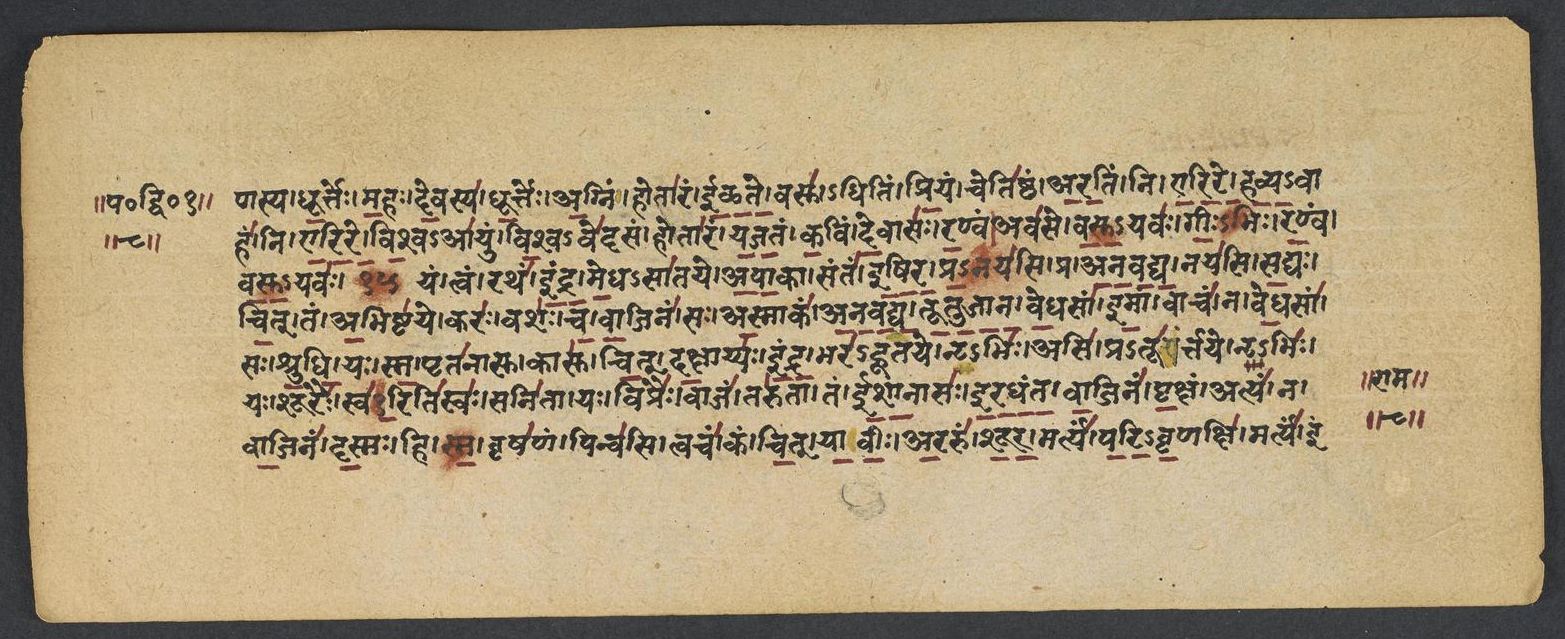
Where on the image
Penn Ms. Coll. 390 Item 41, fol. 99v (numbered 8v by the scribe) (OPenn image 101, upper leaf). Checked on the image: the Rigveda text on this page begins in RV 1.128.7 ‹-varuṇasya dhūrteḥ mahaḥ devasya›. The next page with Rigveda text, fol. 100r (numbered 9r by the scribe), begins in RV 1.129.3 ‹-indra uta tubhyam tat›. Verses 1.129.1-2 end on this page.
1yaṁ tvaṁ ratha̍m indra me̱dhasā̍taye 'pā̱kā santa̍m iṣira pra̱ṇaya̍si̱ prāna̍vadya̱ naya̍si | sa̱dyaś ci̱t tam a̱bhiṣṭa̍ye̱ karo̱ vaśa̍ś ca vā̱jina̍m | sāsmāka̍m anavadya tūtujāna ve̱dhasā̍m i̱māṁ vāca̱ṁ na ve̱dhasā̍m ||
2sa śru̍dhi̱ yaḥ smā̱ pṛta̍nāsu̱ kāsu̍ cid da̱kṣāyya̍ indra̱ bhara̍hūtaye̱ nṛbhi̱r asi̱ pratū̍rtaye̱ nṛbhi̍ḥ | yaḥ śūrai̱ḥ sva1̱̍ḥ sani̍tā̱ yo viprai̱r vāja̱ṁ taru̍tā | tam ī̍śā̱nāsa̍ iradhanta vā̱jina̍m pṛ̱kṣam atya̱ṁ na vā̱jina̍m ||
Compare: Padapāṭha (word-by-word text written in the manuscript; Sansknet e-text via GRETIL)
1yam | tvam | ratham | indra | medha-sātaye | apakā | santam | iṣira | pra-nayasi | pra | anavadya | nayasi | sadyaḥ | cit | tam | abhiṣṭaye | karaḥ | vaśaḥ | ca | vājinam | saḥ | asmākam | anavadya | tūtujāna | vedhasām | imām | vācam | na | vedhasām
2saḥ | śrudhi | yaḥ | sma | pṛtanāsu | kāsu | cit | dakṣāyyaḥ | indra | bhara-hūtaye | nṛ-bhiḥ | asi | pra-tāūrtaye | nṛ-bhiḥ | yaḥ | śūraiḥ | [svar iti] svaḥ | sanitā | yaḥ | vipraiḥ | vājam | tarutā | tam | īśānāsaḥ | iradhanta | vājinam | pṛkṣam | atyam | na | vājinam
1THE car which Indra, thou, for service of the Gods though it be far away, O swift One, bringest near, which, Blameless One, thou bringest near, Place swiftly nigh us for our help: be it thy will that it be strong. Blameless and active, hear this speech of orderers, this speech of us like orderers.
2Hear, Indra, thou whom men in every fight must call to show thy strength, for cry of battle with the men, with men of war for victory. He who with heroes wins the light, who with the singers gains the prize, Him the rich seek to gain even as a swift strong steed, even as a courser fleet and strong.
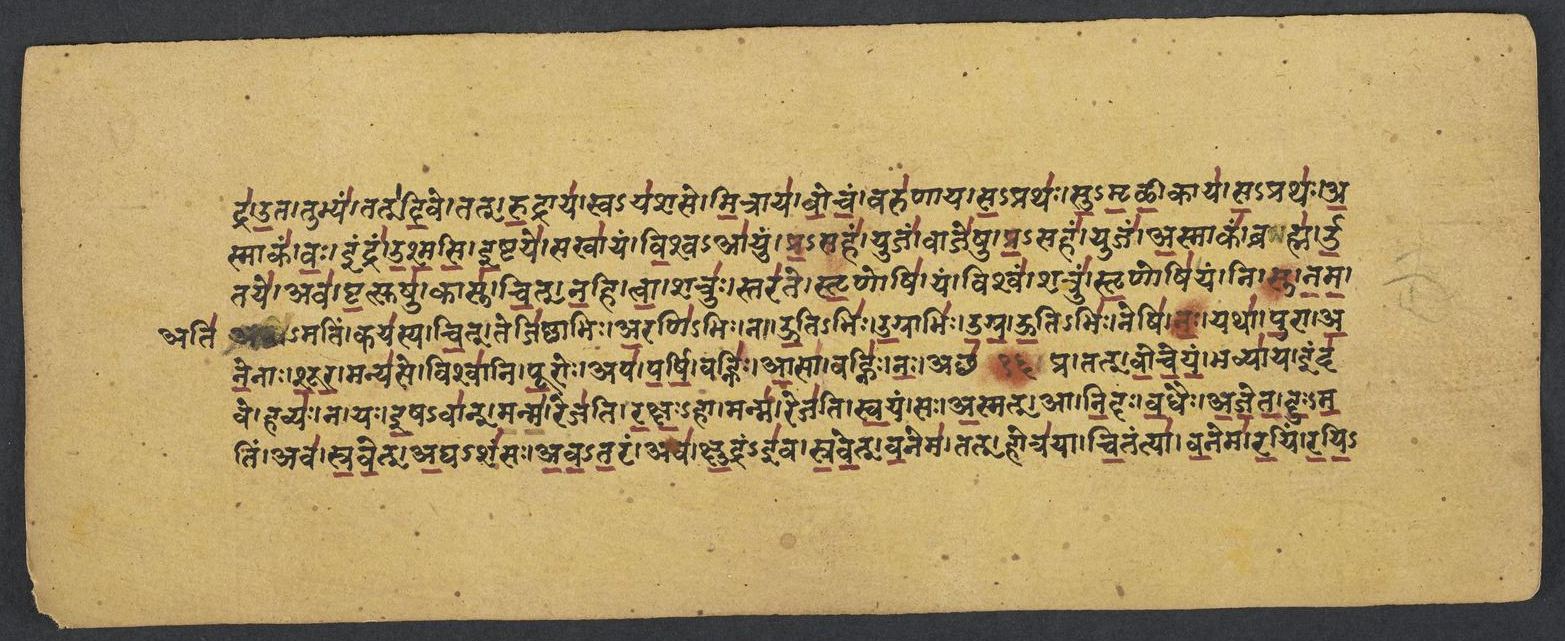
Where on the image
Penn Ms. Coll. 390 Item 41, fol. 100r (numbered 9r by the scribe) (OPenn image 101, lower leaf). Checked on the image: the Rigveda text on this page begins in RV 1.129.3 ‹-indra uta tubhyam tat›. The next page with Rigveda text, fol. 100v (numbered 9v by the scribe), begins in RV 1.129.7 ‹-rayi-vaḥ su-vīryam raṇvam santam›. Verses 1.129.3-6 end on this page; 1.129.3 begins on fol. 99v (numbered 8v by the scribe).
3da̱smo hi ṣmā̱ vṛṣa̍ṇa̱m pinva̍si̱ tvaca̱ṁ kaṁ ci̍d yāvīr a̱raru̍ṁ śūra̱ martya̍m parivṛ̱ṇakṣi̱ martya̍m | indro̱ta tubhya̱ṁ tad di̱ve tad ru̱drāya̱ svaya̍śase | mi̱trāya̍ voca̱ṁ varu̍ṇāya sa̱pratha̍ḥ sumṛḻī̱kāya̍ sa̱pratha̍ḥ ||
4a̱smāka̍ṁ va̱ indra̍m uśmasī̱ṣṭaye̱ sakhā̍yaṁ vi̱śvāyu̍m prā̱saha̱ṁ yuja̱ṁ vāje̍ṣu prā̱saha̱ṁ yuja̍m | a̱smāka̱m brahmo̱taye 'vā̍ pṛ̱tsuṣu̱ kāsu̍ cit | na̱hi tvā̱ śatru̱ḥ stara̍te stṛ̱ṇoṣi̱ yaṁ viśva̱ṁ śatru̍ṁ stṛ̱ṇoṣi̱ yam ||
5ni ṣū na̱māti̍mati̱ṁ kaya̍sya ci̱t teji̍ṣṭhābhir a̱raṇi̍bhi̱r notibhi̍r u̱grābhi̍r ugro̱tibhi̍ḥ | neṣi̍ ṇo̱ yathā̍ pu̱rāne̱nāḥ śū̍ra̱ manya̍se | viśvā̍ni pū̱ror apa̍ parṣi̱ vahni̍r ā̱sā vahni̍r no̱ accha̍ ||
6pra tad vo̍ceya̱m bhavyā̱yenda̍ve̱ havyo̱ na ya i̱ṣavā̱n manma̱ reja̍ti rakṣo̱hā manma̱ reja̍ti | sva̱yaṁ so a̱smad ā ni̱do va̱dhair a̍jeta durma̱tim | ava̍ sraved a̱ghaśa̍ṁso 'vata̱ram ava̍ kṣu̱dram i̍va sravet ||
Compare: Padapāṭha (word-by-word text written in the manuscript; Sansknet e-text via GRETIL)
3dasmaḥ | hi | ṣma | vṛṣaṇam | pinvasi | tvacam | kam | cit | yāvīḥ | ararum | śūra | martyam | pari-vṛṇakṣi | martyam | indra | uta | tubhyam | tat | dive | tat | rudrāya | sva-yaśase | mitrāya | vocam | varuṇāya | sa-prathaḥ | su-mṛḷīkāya | s-prathaḥ
4asmākam | vaḥ | indram | uśmasi | iṣṭaye | sakhāya | viśva-āyum | pra-saham | yujam | vājeṣu | pra-saham | yujam | asmākam | brahma | ūtaye | ava | pṛtsuṣu | kāsu | cit | nahi | tvā | śatruḥ | starate | stṛṇoṣi | yam | viśvam | śatrum | stṛṇoṣi | yam
5ni | su | nama | ati-matim | kayasya | cit | tejiṣṭhābhiḥ | araṇi-bhiḥ | na | ūti-bhiḥ | ugrābhiḥ | ugra | ūti-bhiḥ | neṣi | ṇaḥ | yathā | purā | anenāḥ | śūra | manyase | viśvāni | pūroḥ | apa | parṣi | vahniḥ | āsā | vahniḥ | naḥ | accha
6pra | tat | voceyam | bhavyāya | indave | havyaḥ | na | yaḥ | iṣa-vān | manma | rejati | rakṣaḥ-hā | manma | rejati | svayam | saḥ | asmat | ā | nidaḥ | vadhaiḥ | ajeta | duḥ-matim | ava | sravet | agha-śaṃsaḥ | ava-taram | ava | kṣudram-iva | sravet
3Thou, Mighty, pourest forth the hide that holds the rain, thou keepest far away, Hero, the wicked man, thou shuttest out the wicked man. Indra, to thee I sing, to Dyaus, to Rudra glorious in himself, To Mitra, Varuṇa I sing a far-famed hymn to the kind God a far-famed hymn.
4We. wish our Indra here that he may further you, the Friend, beloved of all, the very strong ally, in wars the very strong ally In all encounters strengthen thou our prayer to be a help to us. No enemy-whom thou smitest downsubdueth thee, no enemy, whom thou smitest down.
5Bow down the overweening pride of every foe with succour like to kindling-wood in fiercest flame, with mighty succour, Mighty One. Guide us, thou Hero, as of old, so art thou counted blameless still. Thou drivest, as a Priest, all sins of man away, as Priest, in person, seeking us.
6This may I utter to the present Soma-drop, which, meet to be invoked, with power, awakes the prayer, awakes the demon-slaying prayer. May he himself with darts of death drive far from us the scorner's hate. Far let him flee away who speaketh wickedness and vanish like a mote of dust.
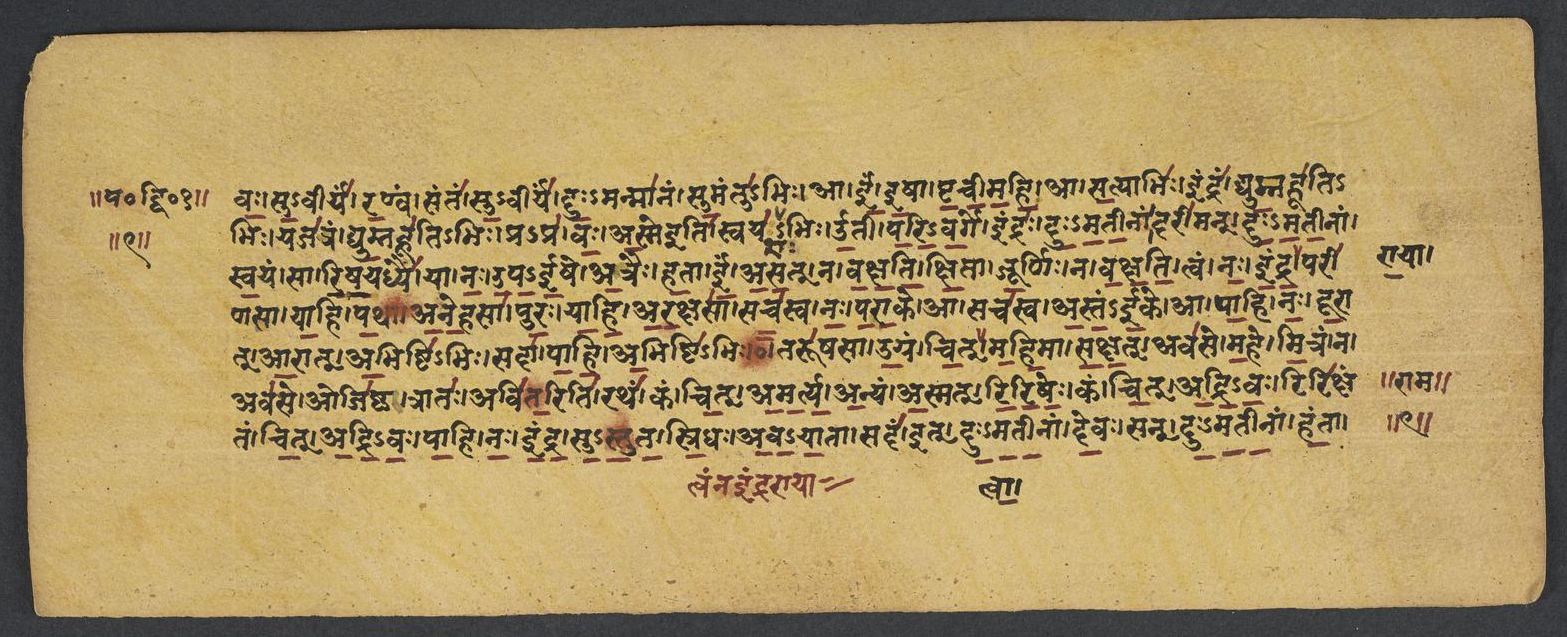
Where on the image
Penn Ms. Coll. 390 Item 41, fol. 100v (numbered 9v by the scribe) (OPenn image 102, upper leaf). Checked on the image: the Rigveda text on this page begins in RV 1.129.7 ‹-rayi-vaḥ su-vīryam raṇvam santam›. The next page with Rigveda text, fol. 101r (numbered 10r by the scribe), begins in RV 1.129.11 ‹pāpasya rakṣasaḥ trātā viprasya›. Verses 1.129.7-10 end on this page; 1.129.7 begins on fol. 100r (numbered 9r by the scribe).
7va̱nema̱ tad dhotra̍yā ci̱tantyā̍ va̱nema̍ ra̱yiṁ ra̍yivaḥ su̱vīrya̍ṁ ra̱ṇvaṁ santa̍ṁ su̱vīrya̍m | du̱rmanmā̍naṁ su̱mantu̍bhi̱r em i̱ṣā pṛ̍cīmahi | ā sa̱tyābhi̱r indra̍ṁ dyu̱mnahū̍tibhi̱r yaja̍traṁ dyu̱mnahū̍tibhiḥ ||
8pra-prā̍ vo a̱sme svaya̍śobhir ū̱tī pa̍riva̱rga indro̍ durmatī̱nāṁ darī̍man durmatī̱nām | sva̱yaṁ sā ri̍ṣa̱yadhyai̱ yā na̍ upe̱ṣe a̱traiḥ | ha̱tem a̍sa̱n na va̍kṣati kṣi̱ptā jū̱rṇir na va̍kṣati ||
9tvaṁ na̍ indra rā̱yā parī̍ṇasā yā̱hi pa̱thām̐ a̍ne̱hasā̍ pu̱ro yā̍hy ara̱kṣasā̍ | saca̍sva naḥ parā̱ka ā saca̍svāstamī̱ka ā | pā̱hi no̍ dū̱rād ā̱rād a̱bhiṣṭi̍bhi̱ḥ sadā̍ pāhy a̱bhiṣṭi̍bhiḥ ||
10tvaṁ na̍ indra rā̱yā tarū̍ṣaso̱graṁ ci̍t tvā mahi̱mā sa̍kṣa̱d ava̍se ma̱he mi̱traṁ nāva̍se | oji̍ṣṭha̱ trāta̱r avi̍tā̱ ratha̱ṁ kaṁ ci̍d amartya | a̱nyam a̱smad ri̍riṣe̱ḥ kaṁ ci̍d adrivo̱ riri̍kṣantaṁ cid adrivaḥ ||
Compare: Padapāṭha (word-by-word text written in the manuscript; Sansknet e-text via GRETIL)
7vanema | tat | hotrayā | citantyā | vanema | rayim | rayi-vaḥ | su-vīryam | raṇvam | santam | su-vīryam | duḥ-manmānam | sumantu-bhiḥ | ā | īm | iṣā | pṛcīmahi | ā | satyābhiḥ | indram | dyumnahūti-bhiḥ | yajatram | dyumnahūti-bhiḥ
8pra-pra | vaḥ | asme iti | svayaśaḥ-bhiḥ | ūtī | pari-varge | indraḥ | duḥ-matīnām | darīman | duḥ-matīnām | svayam | sā | riṣayadhyai | yā | naḥ | upa-īṣe | atraiḥ | hatā | īm | asat | na | vakṣati | kṣiptā | jūrṇiḥ | na | vakṣati
9tvam | naḥ | indra | rāyā | parīṇasā | yāhi | pathā | anehasā | puraḥ | yāhi | arakṣasā | sacasva | naḥ | parāke | ā | sacasva | astam-īke | ā | pāhi | naḥ | dūrāt | ārāt | abhiṣṭi-bhiḥ | sadā | pāhi | abhiṣṭibhiḥ
10tvam | naḥ | indra | rāyā | tarūṣasā | ugram | cit | tvā | mahimā | sakṣat | avase | mahe | mitram | na | avase | ojiṣṭha | trātaḥ | avittariti | ratham | kam | cit | amatyar | anyam | asmat | ririṣeḥ | kam | cit | adri-vaḥ | ririkṣantam | cit | adri-vaḥ
7By thoughtful invocation this may we obtain, obtain great wealth, O Wealthy One, with Hero sons, wealth that is sweet with hero sons. Him who is wroth we pacify with sacred food and eulogies, Indra the Holy with our calls inspired and true, the Holy One with calls inspired.
8On, for your good and ours, come Indra with the aid of his own lordliness to drive the wicked hence, to rend the evilhearted ones! The weapon which devouring fiends cast at us shall destroy themselves. Struck down, it shall not reach the mark; hurled forth, the fire-brand shall not strike.
9With riches in abundance, Indra, come to us, come by an unobstructed path, come by a path from demons free. Be with us when we stray afar, be with us when our home is nigh. Protect us with thy help both near and far away: protect us ever with thy help.
10Thou art our own, O Indra, with victorious wealth: let might accompany thee, the Strong, to give us aid, like Mitra, to give mighty aid. O strongest saviour, helper thou, Immortal! of each warrior's car. Hurt thou another and not us, O Thunderarmed, one who would hurt, O Thunder-armed!
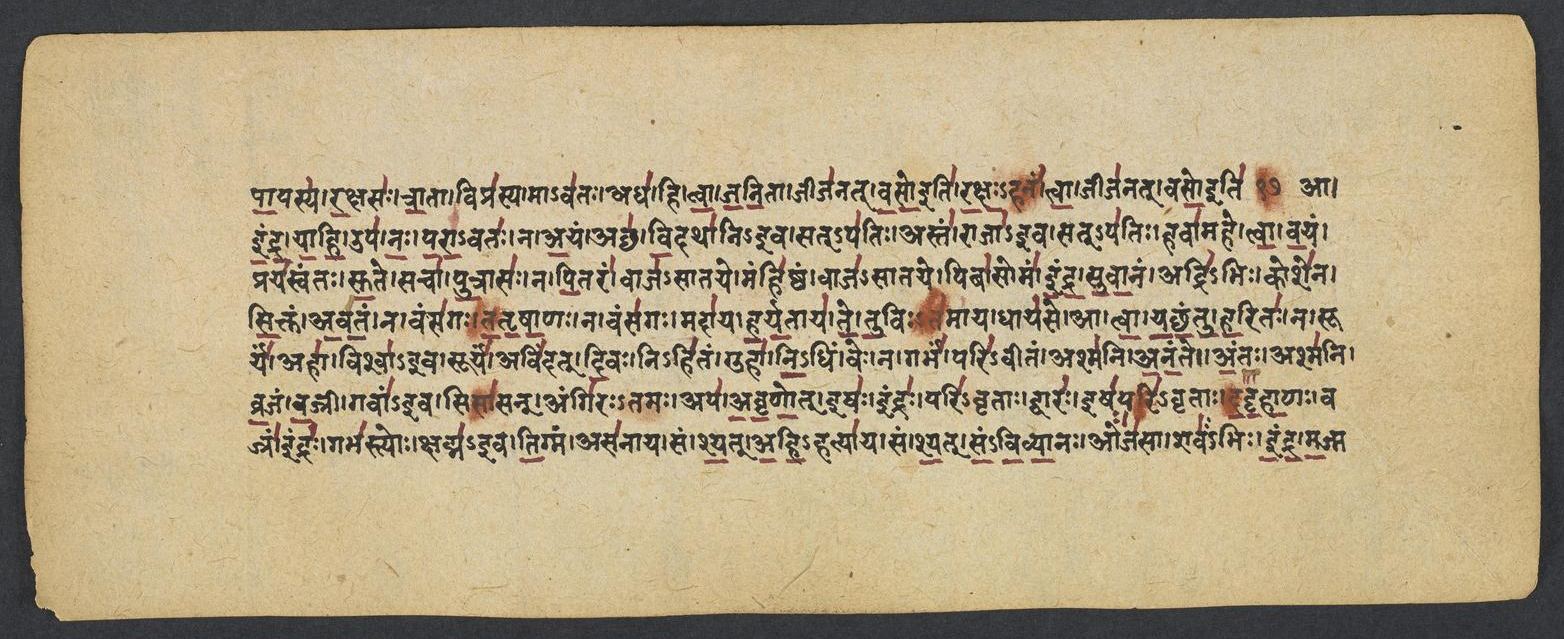
Where on the image
Penn Ms. Coll. 390 Item 41, fol. 101r (numbered 10r by the scribe) (OPenn image 102, lower leaf). Checked on the image: the Rigveda text on this page begins in RV 1.129.11 ‹pāpasya rakṣasaḥ trātā viprasya›. The next page with Rigveda text, fol. 101v (numbered 10v by the scribe), begins in RV 1.130.4 ‹-majmanā taṣṭāiva vṛkṣam vaninaḥ›. Verse 1.129.11 ends on this page; 1.129.11 begins on fol. 100v (numbered 9v by the scribe).
11pā̱hi na̍ indra suṣṭuta sri̱dho̍ 'vayā̱tā sada̱m id du̍rmatī̱nāṁ de̱vaḥ san du̍rmatī̱nām | ha̱ntā pā̱pasya̍ ra̱kṣasa̍s trā̱tā vipra̍sya̱ māva̍taḥ | adhā̱ hi tvā̍ jani̱tā jīja̍nad vaso rakṣo̱haṇa̍ṁ tvā̱ jīja̍nad vaso ||
Compare: Padapāṭha (word-by-word text written in the manuscript; Sansknet e-text via GRETIL)
11pāhi | naḥ | indra | su-stuta | sridhaḥ | ava-yātā | sadam | it | duḥ-matīnām | devaḥ | san | duḥ-matīnām | hantā | pāpasya | rakṣasaḥ | trātā | viprasya | māvataḥ | adha | hi | tvā | janitā | jījanat | vaso iti | rakṣaḥ-hanam | tvā | jījanat | vaso iti
11Save us from injury, thou who art well extolled: ever the warder-off art thou of wicked ones, even as a God, of wicked ones; Thou slayer of the evil fiend, saviour of singer such as I. Good Lord, the Father made thee slayer of the fiends, made thee, good Lord, to slay the fiends.
Notes
- Sanskrit: Aufrecht's edition (1877) with the Vedic accents, as entered by van Nooten and Holland (GRETIL).
- English: Ralph T. H. Griffith, The Hymns of the Rigveda (1889-1892; 2nd ed. 1896-1897), from the VedaWeb digital text; OCR slips in that text were corrected against the printed 2nd edition (data/sources/rigveda/griffith_errata.json).
- Padapāṭha (edition text): Sansknet e-text via GRETIL (CC BY-NC-SA 4.0).
Cite
Sources
- Source: Penn Ms. Coll. 390 Item 41 (undated (catalogued with Penn's 18th-19th c. Vedic manuscripts)), OPenn, Public Domain Mark + Aufrecht's accented text (GRETIL) + Griffith's English (VedaWeb) (holding institution)
- Critical edition: Aufrecht (1877), accented e-text via GRETIL
← previous · → next · v cycle view · l back to library