Rigveda 1.130: To Indra
Introduction
Rigveda 1.130 is a hymn of 10 verses addressed to Indra. It stands in book (maṇḍala) 1, a collection of hymns by many families of poets. The Rigveda is the oldest collection of Sanskrit hymns, composed in the second half of the second millennium BCE and handed down orally for many centuries before it was written down.
The manuscript shown is Penn Ms. Coll. 390 Item 41 (University of Pennsylvania), an undated paper manuscript of the padapāṭha (the word-by-word recitation text, in which every word is written separately and compounds are split) of the whole Ṛgveda in Devanāgarī, 884 leaves in fascicles, 7-9 lines to the page, accents in red; this hymn stands on fol. 101r-102r. Each section below gives the verses that end on one page; the page boundaries were read on the images (the opening words of every page), not counted out. Where the manuscript is a padapāṭha (the word-by-word recitation text), the section shows Aufrecht's continuous (saṃhitā) text first and, as the edition text, the padapāṭha of the same verses, which is the form written on the page.
How was this verified? (Provenance)
Where on the image
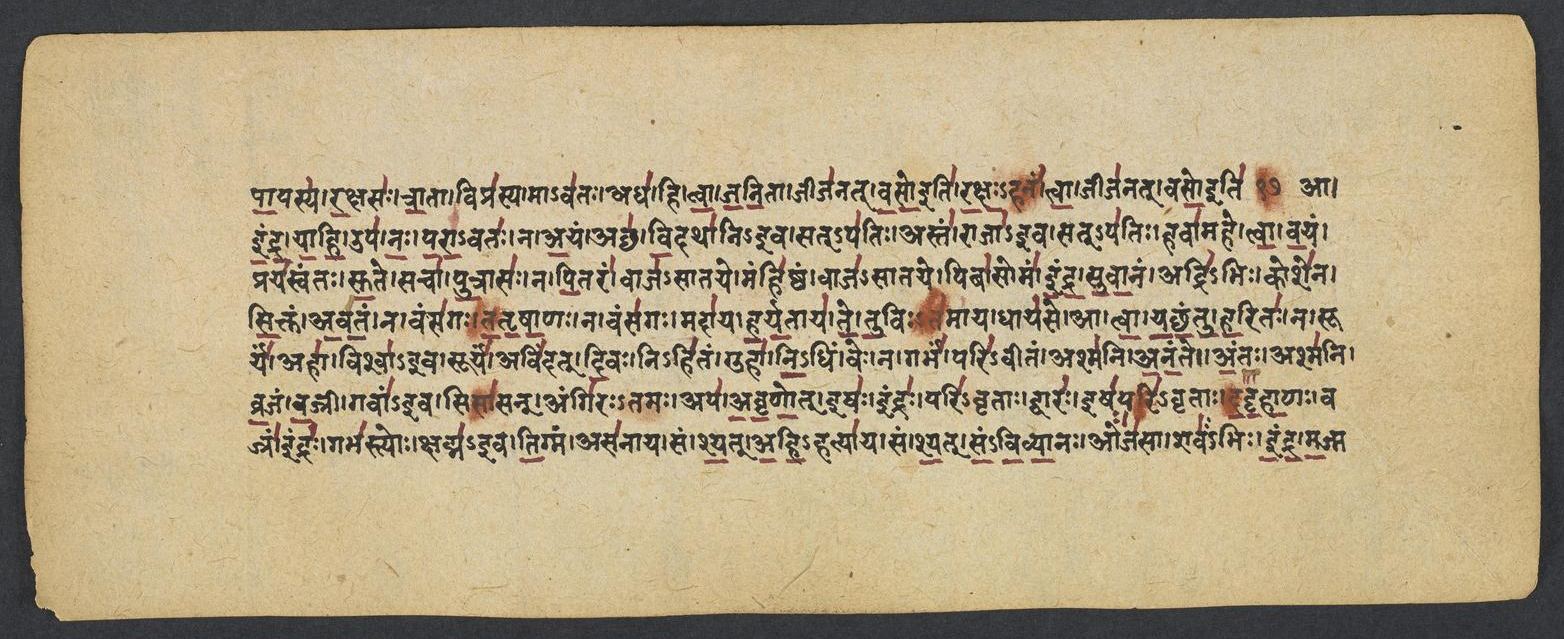
Penn Ms. Coll. 390 Item 41, fol. 101r (numbered 10r by the scribe) (OPenn image 102, lower leaf). Checked on the image: the Rigveda text on this page begins in RV 1.129.11 ‹pāpasya rakṣasaḥ trātā viprasya›. The next page with Rigveda text, fol. 101v (numbered 10v by the scribe), begins in RV 1.130.4 ‹-majmanā taṣṭāiva vṛkṣam vaninaḥ›. Verses 1.130.1-3 end on this page.
1endra̍ yā̱hy upa̍ naḥ parā̱vato̱ nāyam acchā̍ vi̱dathā̍nīva̱ satpa̍ti̱r asta̱ṁ rāje̍va̱ satpa̍tiḥ | havā̍mahe tvā va̱yam praya̍svantaḥ su̱te sacā̍ | pu̱trāso̱ na pi̱tara̱ṁ vāja̍sātaye̱ maṁhi̍ṣṭha̱ṁ vāja̍sātaye ||
2pibā̱ soma̍m indra suvā̱nam adri̍bhi̱ḥ kośe̍na si̱ktam a̍va̱taṁ na vaṁsa̍gas tātṛṣā̱ṇo na vaṁsa̍gaḥ | madā̍ya harya̱tāya̍ te tu̱viṣṭa̍māya̱ dhāya̍se | ā tvā̍ yacchantu ha̱rito̱ na sūrya̱m ahā̱ viśve̍va̱ sūrya̍m ||
3avi̍ndad di̱vo nihi̍ta̱ṁ guhā̍ ni̱dhiṁ ver na garbha̱m pari̍vīta̱m aśma̍ny ana̱nte a̱ntar aśma̍ni | vra̱jaṁ va̱jrī gavā̍m iva̱ siṣā̍sa̱nn aṅgi̍rastamaḥ | apā̍vṛṇo̱d iṣa̱ indra̱ḥ parī̍vṛtā̱ dvāra̱ iṣa̱ḥ parī̍vṛtāḥ ||
Compare: Padapāṭha (word-by-word text written in the manuscript; Sansknet e-text via GRETIL)
1ā | indra | / yāhi | upa | naḥ | parāvataḥ | na | ayam | accha | vidathāni-iva | sat-patiḥ | astam | rājāiva | sat-patiḥ | havāmahe | tvā | vayam | prayasvantaḥ | sute | sacā | putrāsaḥ | na | pitaram | vāja-sātaye | maṃhiṣṭham | vāja-sātaye
2piba | somam | indra | suvānam | adri-bhiḥ | kośena | siktam | avatam | na | vaṃsagaḥ | tatṛṣāṇaḥ | na | vaṃsagaḥ | madāya | haryatāya | te | tuviḥ-tamāya | dhāyase | ā | tvā | yacchantu | haritaḥ | na | sūryam | ahā | viśvāiva | sūryam
3avindat | divaḥ | ni-hitam | guhā | nidhim | veḥ | na | garbham | pari-vītam | aśmani | anante | antaḥ | aśmani | vrajam | vajrī | gavām-iva | sisāsan | aṅgiraḥ-tamaḥ | apa | avṛṇot | iṣaḥ | indraḥ | pari-vṛtāḥ | dvāraḥ | iṣaḥ | pari-vṛtāḥ
1Come to us, Indra, from afar, conducting us even as a lord of heroes to the gatherings, home, like a King, his heroes' lord. We come with gifts of pleasant food, with juice poured forth, invoking thee, As sons invite a sire, that thou mayst get thee strength thee, bounteousest, to get thee strength.
2O Indra, drink the Soma juice pressed out with stones. poured from the reservoir, as an ox drinks the spring, a very thirsty bull the spring. For the sweet draught that gladdens thee, for mightiest freshening of thy strength. Let thy Bay Horses bring thee hither as the Sun, as every day they bring the Sun.
3He found the treasure brought from heaven that lay concealed, close-hidden, like the nestling of a bird, in rock, enclosed in never-enffing rock. Best Angiras, bolt-armed, he strove to win, as 'twere, the stall of kine; So Indra hath disclosed the food concealed, disclosed the doors, the food that lay concealed.
Where on the image
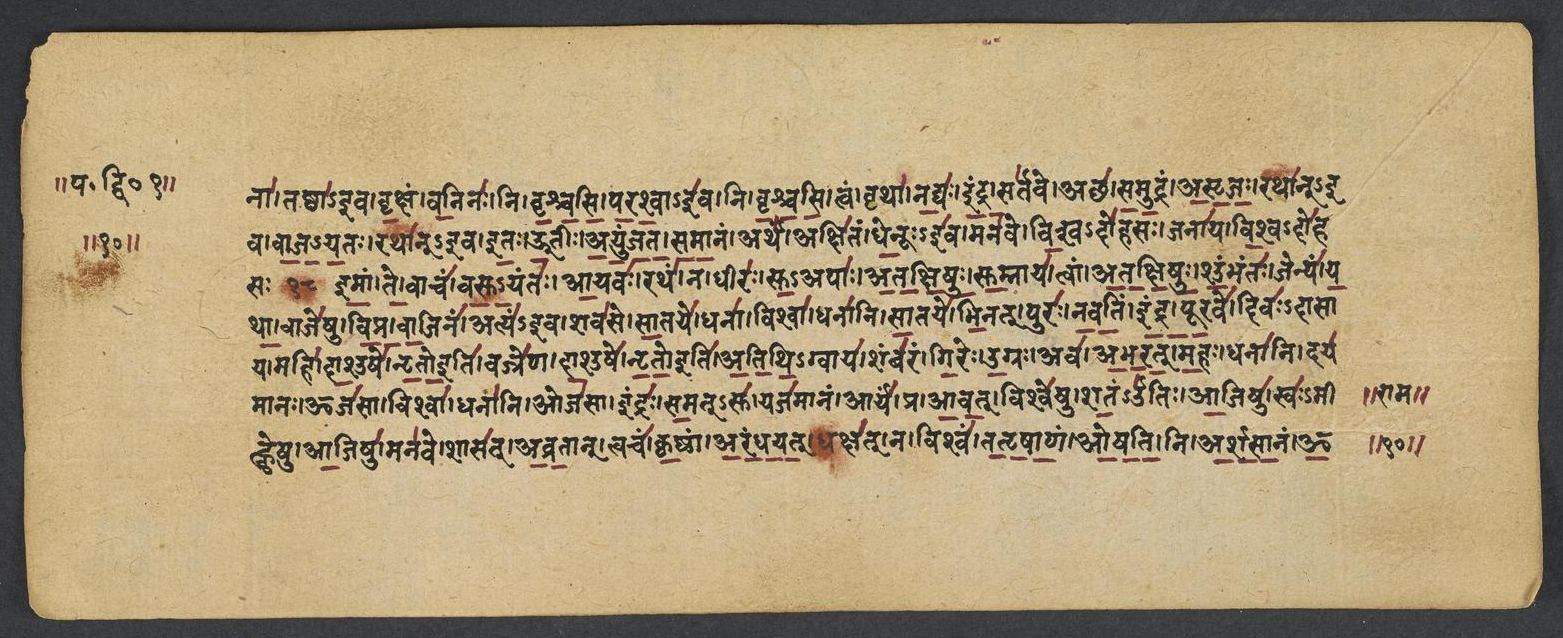
Penn Ms. Coll. 390 Item 41, fol. 101v (numbered 10v by the scribe) (OPenn image 103, upper leaf). Checked on the image: the Rigveda text on this page begins in RV 1.130.4 ‹-majmanā taṣṭāiva vṛkṣam vaninaḥ›. The next page with Rigveda text, fol. 102r (numbered 11r by the scribe), begins in RV 1.130.8 ‹-oṣcati›. Verses 1.130.4-7 end on this page; 1.130.4 begins on fol. 101r (numbered 10r by the scribe).
4dā̱dṛ̱hā̱ṇo vajra̱m indro̱ gabha̍styo̱ḥ kṣadme̍va ti̱gmam asa̍nāya̱ saṁ śya̍d ahi̱hatyā̍ya̱ saṁ śya̍t | sa̱ṁvi̱vyā̱na oja̍sā̱ śavo̍bhir indra ma̱jmanā̍ | taṣṭe̍va vṛ̱kṣaṁ va̱nino̱ ni vṛ̍ścasi para̱śveva̱ ni vṛ̍ścasi ||
5tvaṁ vṛthā̍ na̱dya̍ indra̱ sarta̱ve 'cchā̍ samu̱dram a̍sṛjo̱ rathā̍m̐ iva vājaya̱to rathā̍m̐ iva | i̱ta ū̱tīr a̍yuñjata samā̱nam artha̱m akṣi̍tam | dhe̱nūr i̍va̱ mana̍ve vi̱śvado̍haso̱ janā̍ya vi̱śvado̍hasaḥ ||
6i̱māṁ te̱ vāca̍ṁ vasū̱yanta̍ ā̱yavo̱ ratha̱ṁ na dhīra̱ḥ svapā̍ atakṣiṣuḥ su̱mnāya̱ tvām a̍takṣiṣuḥ | śu̱mbhanto̱ jenya̍ṁ yathā̱ vāje̍ṣu vipra vā̱jina̍m | atya̍m iva̱ śava̍se sā̱taye̱ dhanā̱ viśvā̱ dhanā̍ni sā̱taye̍ ||
7bhi̱nat puro̍ nava̱tim i̍ndra pū̱rave̱ divo̍dāsāya̱ mahi̍ dā̱śuṣe̍ nṛto̱ vajre̍ṇa dā̱śuṣe̍ nṛto | a̱ti̱thi̱gvāya̱ śamba̍raṁ gi̱rer u̱gro avā̍bharat | ma̱ho dhanā̍ni̱ daya̍māna̱ oja̍sā̱ viśvā̱ dhanā̱ny oja̍sā ||
Compare: Padapāṭha (word-by-word text written in the manuscript; Sansknet e-text via GRETIL)
4dādṛhāṇaḥ | vajram | indraḥ | gabhastyoḥ | kṣadma-iva | tigmam | asanāya | sam | śyat | ahi-hatyāya | sam | śyat | sam-vivyānaḥ | ojasā | śavaḥ-bhiḥ | indra | majmanā | taṣṭāiva | vṛkṣam | vaninaḥ | ni | vṛścasi | paraśvāiva | ni | vṛścasi
5tvam | vṛthā | nadyaḥ | indra | sartave | accha | samudram | asṛjaḥ | rathān-iva | vājayataḥ | rathān-iva | itaḥ | ūtīḥ | ayuñjata | samānam | artham | akṣitam | dhenūḥ-iva | manave | viśva-dohasaḥ | janāya | viśva-dohasaḥ
6imām | te | vācam | vasu-yantaḥ | āyavaḥ | ratham | na | dhīraḥ | su-apāḥ | atakṣ iṣuḥ | sumnāya | tvām | atakṣiṣuḥ | śumbhantaḥ | jenyam | yathā | vājeṣu | vipra | vājinam | atyam-iva | śavase | sātaye | dhanā | viśvā | dhanāni | sātaye
7bhinat | puraḥ | navatim | indra | pūrave | divaḥ-dāsāya | mahi | dāśuṣe | nṛto iti | vajreṇa | dāśuṣe | nṛto iti | atithi-gvāya | śambaram | gireḥ | ugraḥ | ava | abharat | mahaḥ | dhanāni | dayamānaḥ | ojasā | viśvā | dhanāni | ojasā
4Grasping his thunderbolt with both hands, Indra made its edge most keen, for hurling, like a carving-knife for Ahi's slaughter made it keen. Endued with majesty and strength, O Indra, and with lordly might, Thou crashest down the trees, as when a craftsman fells, crashest them down as with an axe.
5Thou, Indra, without effort hast let loose the floods to run their free course down, like chariots, to the sea, like chariots showing forth their strength. They, reaching hence away, have joined their strength for one eternal end, Even as the cows who poured forth every thing for man, Yea, poured forth all thing- for mankind.
6Eager for riches, men have formed for thee this song, like as a skilful craftsman fashioneth a car, so have they wrought thee to their bliss; Adorning thee, O Singer, like a generous steed for deeds of might, Yea, like a steed to show his strength and win the prize, that he may bear each prize away.
7For Pûru thou hast shattered, Indra ninety forts, for Divodâsa thy boon servant with thy bolt, O Dancer, for thy worshipper. For Âtithigva he, the Strong, brought Ṣambara. from the mountain down, Distributing the mighty treasures with his strength, parting all treasures with his strength.
Where on the image
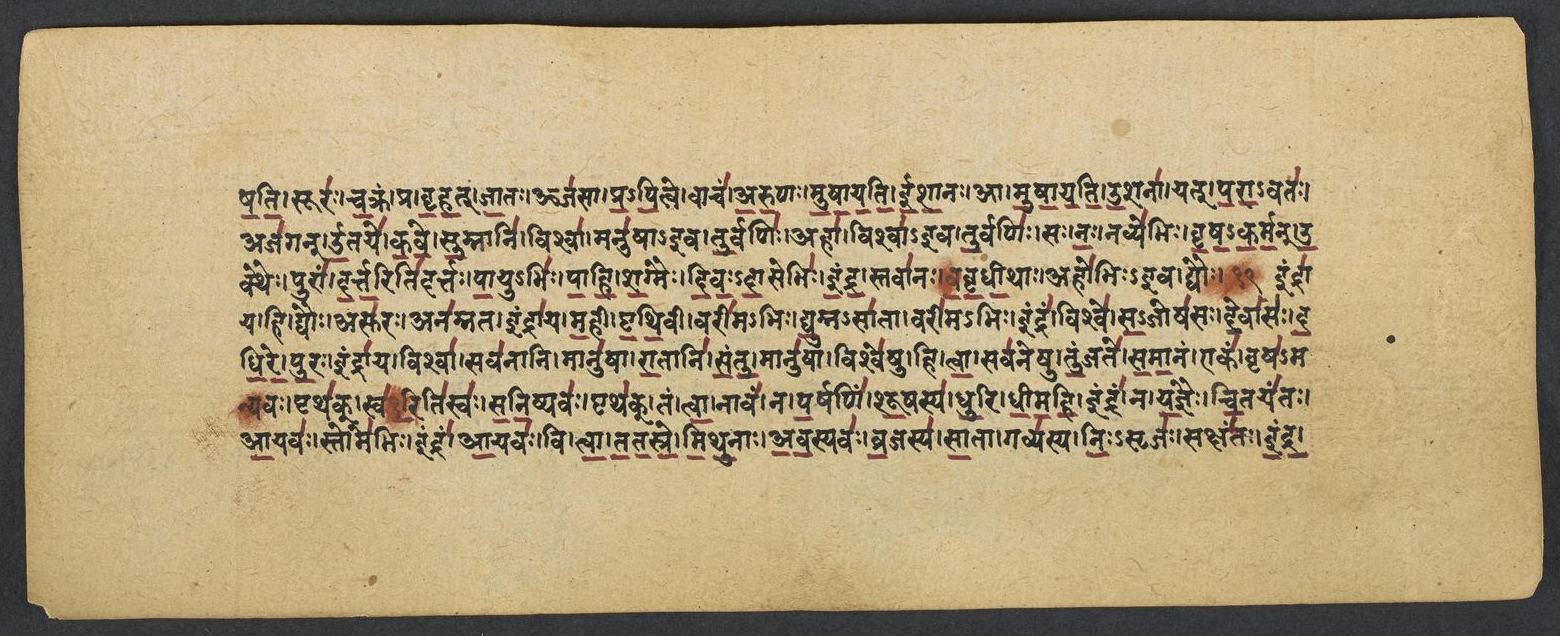
Penn Ms. Coll. 390 Item 41, fol. 102r (numbered 11r by the scribe) (OPenn image 103, lower leaf). Checked on the image: the Rigveda text on this page begins in RV 1.130.8 ‹-oṣcati›. The next page with Rigveda text, fol. 102v (numbered 11v by the scribe), begins in RV 1.131.3 ‹niḥ-sṛjaḥ yat gavyantā dvā›. Verses 1.130.8-10 end on this page; 1.130.8 begins on fol. 101v (numbered 10v by the scribe).
8indra̍ḥ sa̱matsu̱ yaja̍māna̱m ārya̱m prāva̱d viśve̍ṣu śa̱tamū̍tir ā̱jiṣu̱ sva̍rmīḻheṣv ā̱jiṣu̍ | mana̍ve̱ śāsa̍d avra̱tān tvaca̍ṁ kṛ̱ṣṇām a̍randhayat | dakṣa̱n na viśva̍ṁ tatṛṣā̱ṇam o̍ṣati̱ ny a̍rśasā̱nam o̍ṣati ||
9sūra̍ś ca̱kram pra vṛ̍haj jā̱ta oja̍sā prapi̱tve vāca̍m aru̱ṇo mu̍ṣāyatīśā̱na ā mu̍ṣāyati | u̱śanā̱ yat pa̍rā̱vato 'ja̍gann ū̱taye̍ kave | su̱mnāni̱ viśvā̱ manu̍ṣeva tu̱rvaṇi̱r ahā̱ viśve̍va tu̱rvaṇi̍ḥ ||
10sa no̱ navye̍bhir vṛṣakarmann u̱kthaiḥ purā̍ṁ dartaḥ pā̱yubhi̍ḥ pāhi śa̱gmaiḥ | di̱vo̱dā̱sebhi̍r indra̱ stavā̍no vāvṛdhī̱thā aho̍bhir iva̱ dyauḥ ||
Compare: Padapāṭha (word-by-word text written in the manuscript; Sansknet e-text via GRETIL)
8indraḥ | samat-su | yajamānam | āryam | pra | āvat | viśveṣu | śatam-ūtiḥ | ājiṣu | svaḥ-mīḷheṣu | ājiṣu | manave | śāsat | avratān | tvacam | kṛṣṇām | arandhayat | dakṣam | na | viśvam | tatṛṣāṇam | oṣati | ni | arśasānam | oṣcati
9sūraḥ | cakram | pra | vṛhat | jātaḥ | ojasā | pra | pitve | vācam | aruṇaḥ | muṣāyati | īśānaḥ | ā | muṣāyati | uśanā | yat | parāvataḥ | ajagan | ūtaye | kave | sumnāni | viśvā | manuṣāiva | turvaṇiḥ | ahā | viśvāiva | turvaṇiḥ
10saḥ | naḥ | navyebhiḥ | vṛṣa-karman | ukthaiḥ | purām | dartaritidartaḥ | pāyu-bhiḥ | pāhi | śagmaiḥ | divaḥ-dāsebhiḥ | indra | stavānaḥ | vavṛdhīthāḥ | ahobhiḥ-iva | dyauḥ
8Indra in battles help his Aryan worshipper, he who hath hundred helps at hand in every fray, in frays that win the light of heaven. Plaguing the lawless he gave up to Manu's seed the dusky skin; Blazing, 'twere, he burns each covetous man away, he burns, the tyrannous away.
9Waxed strong in might at dawn he tore the Sun's wheel off. Bright red, he steals away their speech, the Lord of Power, their speech he steals away from them, As thou with eager speed, O Sage, hast come from far away to help, As winning for thine own all happiness of men, winning all happiness each day.
10Lauded with our new hymns, O vigorous in deed, save us with strengthening help, thou Shatterer of the Forts! Thou, Indra, praised by Divodâsa's clansmen, as heaven grows great with days, shalt wax in glory.
Notes
- Sanskrit: Aufrecht's edition (1877) with the Vedic accents, as entered by van Nooten and Holland (GRETIL).
- English: Ralph T. H. Griffith, The Hymns of the Rigveda (1889-1892; 2nd ed. 1896-1897), from the VedaWeb digital text; OCR slips in that text were corrected against the printed 2nd edition (data/sources/rigveda/griffith_errata.json).
- Padapāṭha (edition text): Sansknet e-text via GRETIL (CC BY-NC-SA 4.0).
Cite
Sources
- Source: Penn Ms. Coll. 390 Item 41 (undated (catalogued with Penn's 18th-19th c. Vedic manuscripts)), OPenn, Public Domain Mark + Aufrecht's accented text (GRETIL) + Griffith's English (VedaWeb) (holding institution)
- Critical edition: Aufrecht (1877), accented e-text via GRETIL
← previous · → next · v cycle view · l back to library