Rigveda 1.131: To Indra
Introduction
Rigveda 1.131 is a hymn of 7 verses addressed to Indra. It stands in book (maṇḍala) 1, a collection of hymns by many families of poets. The Rigveda is the oldest collection of Sanskrit hymns, composed in the second half of the second millennium BCE and handed down orally for many centuries before it was written down.
The manuscript shown is Penn Ms. Coll. 390 Item 41 (University of Pennsylvania), an undated paper manuscript of the padapāṭha (the word-by-word recitation text, in which every word is written separately and compounds are split) of the whole Ṛgveda in Devanāgarī, 884 leaves in fascicles, 7-9 lines to the page, accents in red; this hymn stands on fol. 102r-103r. Each section below gives the verses that end on one page; the page boundaries were read on the images (the opening words of every page), not counted out. Where the manuscript is a padapāṭha (the word-by-word recitation text), the section shows Aufrecht's continuous (saṃhitā) text first and, as the edition text, the padapāṭha of the same verses, which is the form written on the page.
How was this verified? (Provenance)
Where on the image
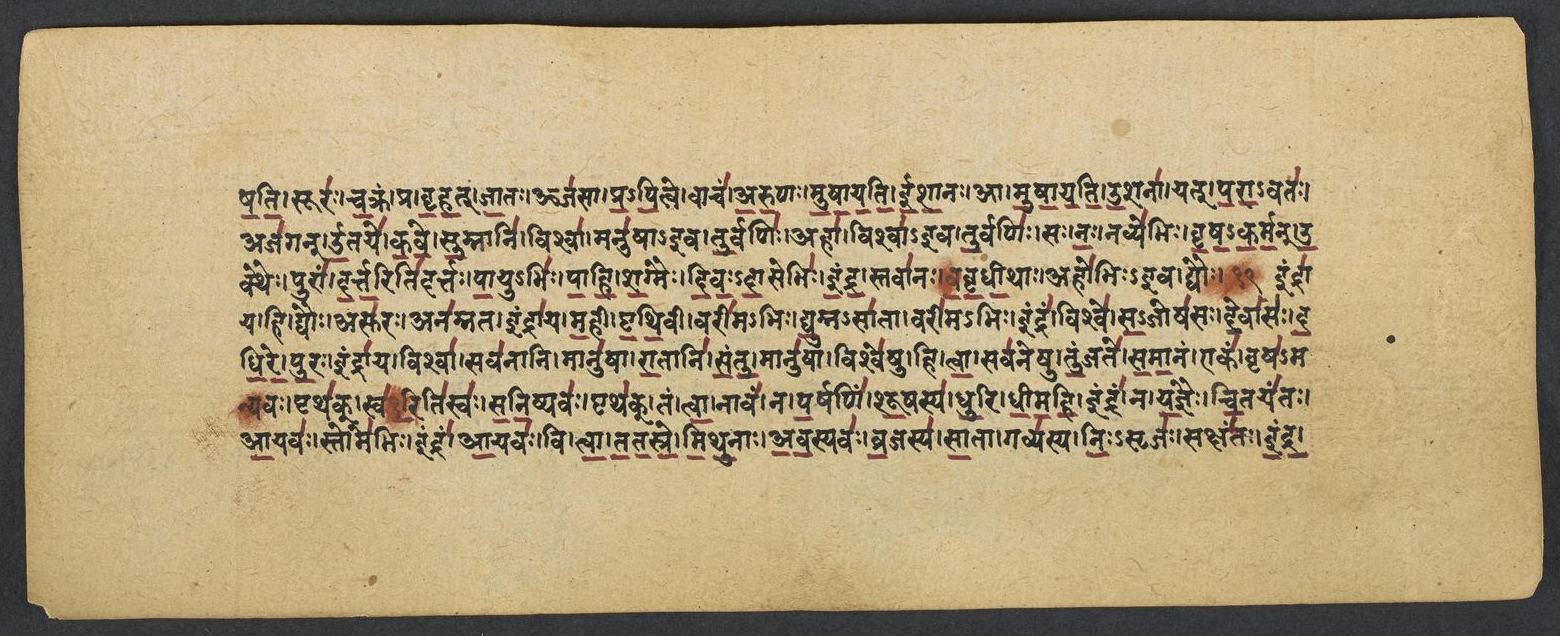
Penn Ms. Coll. 390 Item 41, fol. 102r (numbered 11r by the scribe) (OPenn image 103, lower leaf). Checked on the image: the Rigveda text on this page begins in RV 1.130.8 ‹-oṣcati›. The next page with Rigveda text, fol. 102v (numbered 11v by the scribe), begins in RV 1.131.3 ‹niḥ-sṛjaḥ yat gavyantā dvā›. Verses 1.131.1-2 end on this page.
1indrā̍ya̱ hi dyaur asu̍ro̱ ana̍mna̱tendrā̍ya ma̱hī pṛ̍thi̱vī varī̍mabhir dyu̱mnasā̍tā̱ varī̍mabhiḥ | indra̱ṁ viśve̍ sa̱joṣa̍so de̱vāso̍ dadhire pu̱raḥ | indrā̍ya̱ viśvā̱ sava̍nāni̱ mānu̍ṣā rā̱tāni̍ santu̱ mānu̍ṣā ||
2viśve̍ṣu̱ hi tvā̱ sava̍neṣu tu̱ñjate̍ samā̱nam eka̱ṁ vṛṣa̍maṇyava̱ḥ pṛtha̱k sva̍ḥ sani̱ṣyava̱ḥ pṛtha̍k | taṁ tvā̱ nāva̱ṁ na pa̱rṣaṇi̍ṁ śū̱ṣasya̍ dhu̱ri dhī̍mahi | indra̱ṁ na ya̱jñaiś ci̱taya̍nta ā̱yava̱ḥ stome̍bhi̱r indra̍m ā̱yava̍ḥ ||
Compare: Padapāṭha (word-by-word text written in the manuscript; Sansknet e-text via GRETIL)
1indrāya | hi | dyauḥ | asuraḥ | anamnata | indrāya | mahī | pṛthivī | varīma-bhiḥ | dyumna-sātā | varīma-bhiḥ | indram | viśve | sa-joṣasaḥ | devāsaḥ | dadhire | puraḥ | indrāya | viśvā | savanāni | mānuṣā | rātāni | santu | mānuṣā
2viśveṣu | hi | tvā | savaneṣu | tuñjate | samānam | ekam | vṛṣa-manyavaḥ | pṛthak | svaāṛḥritisvaḥ | saniṣyavaḥ | pṛthak | tam | tvā | nāvam | na | parṣaṇi m | śūṣasya | dhuri | dhīmahi | indram | na | yajñaiḥ | citayantaḥ | āyavaḥ | stomebhiḥ | indram | āyavaḥ
1To Indra Dyaus the Asura hath bowed him down, to Indra mighty Earth with wide-extending tracts, to win the light, with wide-spread tracts. All Gods of one accord have set Indra in front preeminent. For Indra all libations must be set apart, all man's libations set apart.
2In all libations men with hero spirit urge the Universal One, each seeking several light, each fain to win the light apart. Thee, furthering like a ship, will we set to the chariot-pole of strength, As men who win with sacrifices Indra's thought, men who win Indra with their lauds.
Where on the image
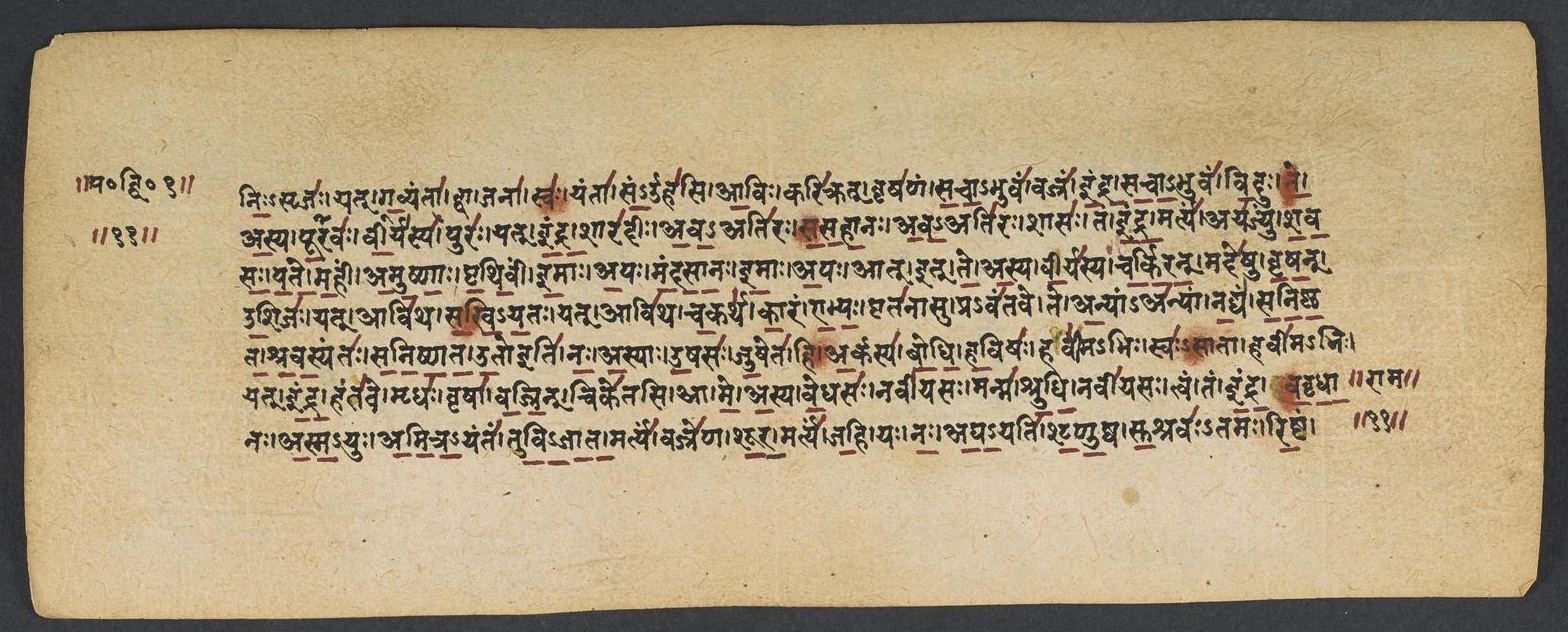
Penn Ms. Coll. 390 Item 41, fol. 102v (numbered 11v by the scribe) (OPenn image 104, upper leaf). Checked on the image: the Rigveda text on this page begins in RV 1.131.3 ‹niḥ-sṛjaḥ yat gavyantā dvā›. The next page with Rigveda text, fol. 103r (numbered 12r by the scribe), begins in RV 1.131.7 ‹na yāman apa bhūtu›. Verses 1.131.3-6 end on this page; 1.131.3 begins on fol. 102r (numbered 11r by the scribe).
3vi tvā̍ tatasre mithu̱nā a̍va̱syavo̍ vra̱jasya̍ sā̱tā gavya̍sya ni̱ḥsṛja̱ḥ sakṣa̍nta indra ni̱ḥsṛja̍ḥ | yad ga̱vyantā̱ dvā janā̱ sva1̱̍r yantā̍ sa̱mūha̍si | ā̱viṣ kari̍kra̱d vṛṣa̍ṇaṁ sacā̱bhuva̱ṁ vajra̍m indra sacā̱bhuva̍m ||
4vi̱duṣ ṭe̍ a̱sya vī̱rya̍sya pū̱rava̱ḥ puro̱ yad i̍ndra̱ śāra̍dīr a̱vāti̍raḥ sāsahā̱no a̱vāti̍raḥ | śāsa̱s tam i̍ndra̱ martya̱m aya̍jyuṁ śavasas pate | ma̱hīm a̍muṣṇāḥ pṛthi̱vīm i̱mā a̱po ma̍ndasā̱na i̱mā a̱paḥ ||
5ād it te̍ a̱sya vī̱rya̍sya carkira̱n made̍ṣu vṛṣann u̱śijo̱ yad āvi̍tha sakhīya̱to yad āvi̍tha | ca̱kartha̍ kā̱ram e̍bhya̱ḥ pṛta̍nāsu̱ prava̍ntave | te a̱nyām-a̍nyāṁ na̱dya̍ṁ saniṣṇata śrava̱syanta̍ḥ saniṣṇata ||
6u̱to no̍ a̱syā u̱ṣaso̍ ju̱ṣeta̱ hy a1̱̍rkasya̍ bodhi ha̱viṣo̱ havī̍mabhi̱ḥ sva̍rṣātā̱ havī̍mabhiḥ | yad i̍ndra̱ hanta̍ve̱ mṛdho̱ vṛṣā̍ vajri̱ñ cike̍tasi | ā me̍ a̱sya ve̱dhaso̱ navī̍yaso̱ manma̍ śrudhi̱ navī̍yasaḥ ||
Compare: Padapāṭha (word-by-word text written in the manuscript; Sansknet e-text via GRETIL)
3vi | tvā | tatasre | mithunāḥ | avasyavaḥ | vrajasya | sātā | gavyasya | niḥ-sṛjaḥ | sakṣantaḥ | indra | niḥ-sṛjaḥ | yat | gavyantā | dvā | janā | svaḥ | yantā | sam-ūhasi | āviḥ | karikrat | vṛṣaṇam | sacābhuvam | vajram | indra | sacābhuvam
4viduḥ | te | asya | vīryasya | pūravaḥ | puraḥ | yat | indra | śāradīḥ | ava-at iraḥ | sasahānaḥ | ava-atiraḥ | śāsaḥ | tam | indra | martyam | ayajyum | śavasaḥ | pate | mahīm | amuṣṇāḥ | pṛthivīm | imāḥ | apaḥ | mandasānaḥ | imāḥ | apaḥ
5āt | it | te | asya | vīryasya | carkiran | madeṣu | vṛṣan | uśijaḥ | yat | āvitha | sakhi-yataḥ | yat | āvitha | cakartha | kāram | ebhyaḥ | pṛtanāsu | pra-vantave | te | anyām-anyām | nadyam | saniṣṇata | śravasyantaḥ | saniṣṇata
6uto iti | naḥ | asyāḥ | uṣasaḥ | juṣeta | hi | arkasya | bodhi | haviṣaḥ | havīma-bh iḥ | svaḥ-sātā | havīma-bhiḥ | yat | indra | hantave | mṛdhaḥ | vṛṣā | vajrin | ciketasi | ā | me | asya | vedhasaḥ | navīyasaḥ | manma | śrudhi | navīyasaḥ
3Couples desirous of thine aid are storming thee, pouring their presents forth to win a stall of kine, pouring gifts, Indra, seeking thee. When two men seeking spoil or heaven thou bringest face to face in war, Thou showest, Indra, -then the bolt thy constant friend, the Bull that ever waits on thee.
4This thine heroic power men of old time have known, wherewith thou breakest down, Indra, autumnal forts, breakest them down with conquering might. Thou hast chastised, O Indra, Lord of Strength, the man who worships not, And made thine own this great earth and these water-floods; with joyous heart these waterfloods.
5And they have bruited far this hero-might when thou, O Strong One, in thy joy helpest thy suppliants, who sought to win thee for their Friend. Their battle-cry thou madest sound victorious in the shocks of war. One stream after another have they gained from thee, eager for glory have they gained.
6Also this morn may he be well inclined to us, mark at our call our offerings and our song of praise, our call that we may win the light. As thou, O Indra Thunder-armed, wilt, as the Strong One, slay the foe, Listen thou to the prayer of me a later sage, hear thou a later sage's prayer.
Where on the image
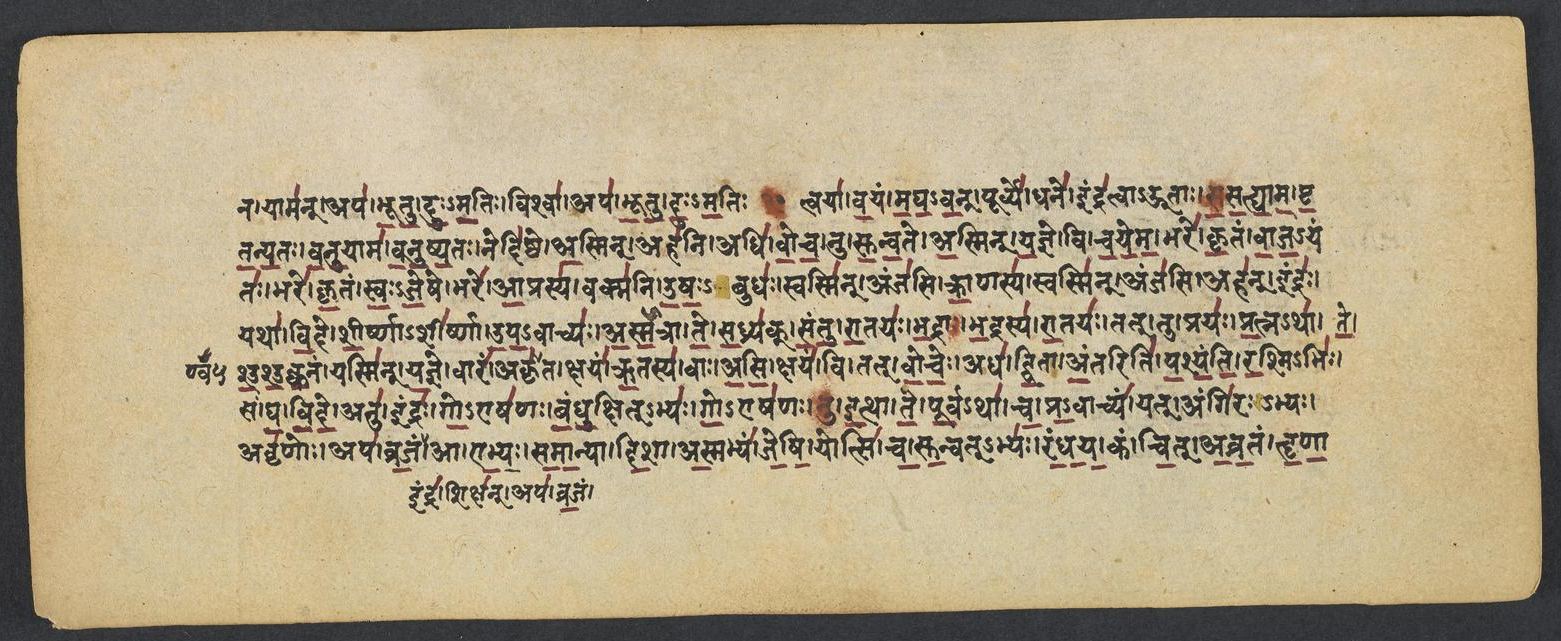
Penn Ms. Coll. 390 Item 41, fol. 103r (numbered 12r by the scribe) (OPenn image 104, lower leaf). Checked on the image: the Rigveda text on this page begins in RV 1.131.7 ‹na yāman apa bhūtu›. The next page with Rigveda text, fol. 103v (numbered 12v by the scribe), begins in RV 1.132.4 ‹-hṛṇāyantam cit avratam›. Verse 1.131.7 ends on this page; 1.131.7 begins on fol. 102v (numbered 11v by the scribe).
7tvaṁ tam i̍ndra vāvṛdhā̱no a̍sma̱yur a̍mitra̱yanta̍ṁ tuvijāta̱ martya̱ṁ vajre̍ṇa śūra̱ martya̍m | ja̱hi yo no̍ aghā̱yati̍ śṛṇu̱ṣva su̱śrava̍stamaḥ | ri̱ṣṭaṁ na yāma̱nn apa̍ bhūtu durma̱tir viśvāpa̍ bhūtu durma̱tiḥ ||
Compare: Padapāṭha (word-by-word text written in the manuscript; Sansknet e-text via GRETIL)
7tvam | tam | indra | vavṛdhānaḥ | asma-yuḥ | amitra-yantam | tuvi-jāta | martyam | vajreṇa | śūra | martyam | jahi | yaḥ | naḥ | agha-yati | śṛṇuṣva | suśravaḥ-tamaḥ | riṣṭam | na | yāman | apa | bhūtu | duḥ-matiḥ | viśvā | apa | bhūtu | duḥ-matiḥ
7O Indra, waxen strong and well-inclined to us, thou very mighty, slay the man that is our foe, slay the man, Hero! with thy bolt. Slay thou the man who injures us: hear thou, as readiest, to hear. Far be malignity, like mischief on the march, afar be all malignity.
Notes
- Sanskrit: Aufrecht's edition (1877) with the Vedic accents, as entered by van Nooten and Holland (GRETIL).
- English: Ralph T. H. Griffith, The Hymns of the Rigveda (1889-1892; 2nd ed. 1896-1897), from the VedaWeb digital text; OCR slips in that text were corrected against the printed 2nd edition (data/sources/rigveda/griffith_errata.json).
- Padapāṭha (edition text): Sansknet e-text via GRETIL (CC BY-NC-SA 4.0).
Cite
Sources
- Source: Penn Ms. Coll. 390 Item 41 (undated (catalogued with Penn's 18th-19th c. Vedic manuscripts)), OPenn, Public Domain Mark + Aufrecht's accented text (GRETIL) + Griffith's English (VedaWeb) (holding institution)
- Critical edition: Aufrecht (1877), accented e-text via GRETIL
← previous · → next · v cycle view · l back to library