Rigveda 1.133: To Indra
Introduction
Rigveda 1.133 is a hymn of 7 verses addressed to Indra. It stands in book (maṇḍala) 1, a collection of hymns by many families of poets. The Rigveda is the oldest collection of Sanskrit hymns, composed in the second half of the second millennium BCE and handed down orally for many centuries before it was written down.
The manuscript shown is Penn Ms. Coll. 390 Item 41 (University of Pennsylvania), an undated paper manuscript of the padapāṭha (the word-by-word recitation text, in which every word is written separately and compounds are split) of the whole Ṛgveda in Devanāgarī, 884 leaves in fascicles, 7-9 lines to the page, accents in red; this hymn stands on fol. 103v-104r. Each section below gives the verses that end on one page; the page boundaries were read on the images (the opening words of every page), not counted out. Where the manuscript is a padapāṭha (the word-by-word recitation text), the section shows Aufrecht's continuous (saṃhitā) text first and, as the edition text, the padapāṭha of the same verses, which is the form written on the page.
How was this verified? (Provenance)
Where on the image
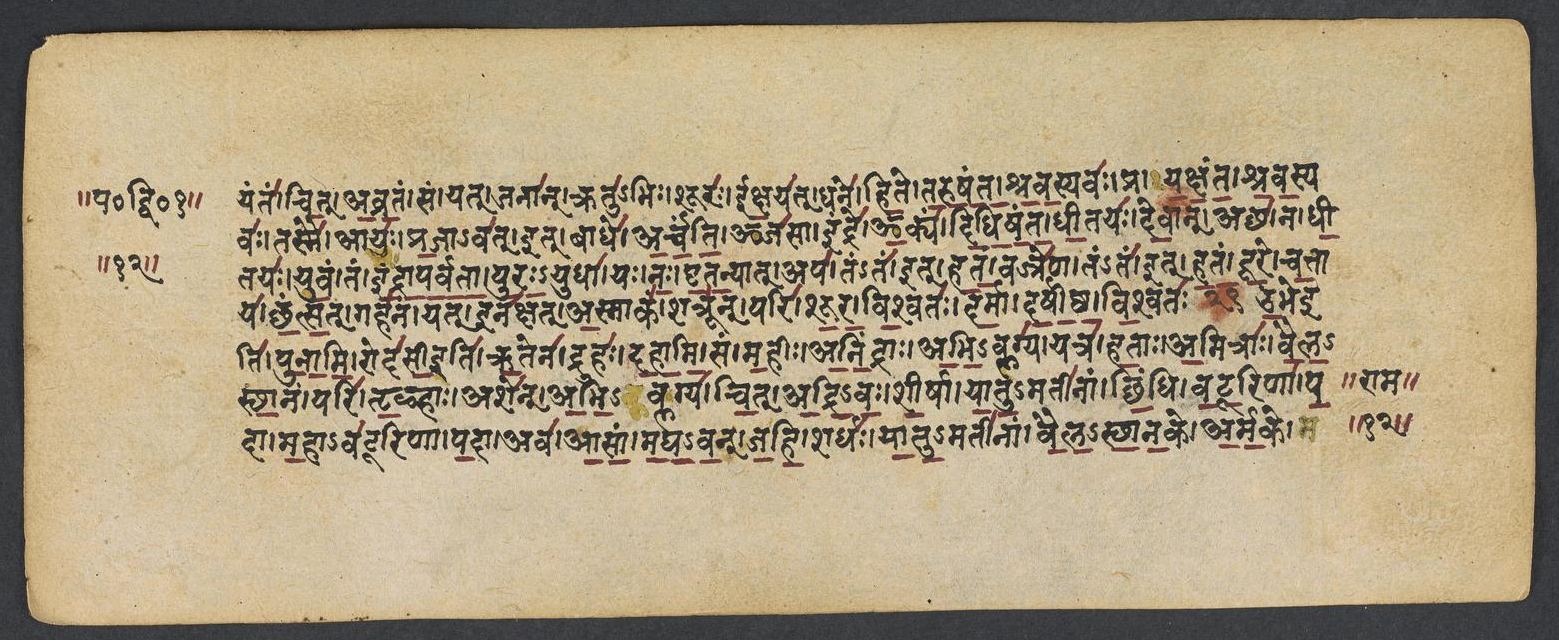
Penn Ms. Coll. 390 Item 41, fol. 103v (numbered 12v by the scribe) (OPenn image 105, upper leaf). Checked on the image: the Rigveda text on this page begins in RV 1.132.4 ‹-hṛṇāyantam cit avratam›. The next page with Rigveda text, fol. 104r (numbered 13r by the scribe), begins in RV 1.133.3 ‹mahāvailasthe arbhake›. Verses 1.133.1-2 end on this page.
1u̱bhe pu̍nāmi̱ roda̍sī ṛ̱tena̱ druho̍ dahāmi̱ sam ma̱hīr a̍ni̱ndrāḥ | a̱bhi̱vlagya̱ yatra̍ ha̱tā a̱mitrā̍ vailasthā̱nam pari̍ tṛ̱ḻhā aśe̍ran ||
2a̱bhi̱vlagyā̍ cid adrivaḥ śī̱rṣā yā̍tu̱matī̍nām | chi̱ndhi va̍ṭū̱riṇā̍ pa̱dā ma̱hāva̍ṭūriṇā pa̱dā ||
Compare: Padapāṭha (word-by-word text written in the manuscript; Sansknet e-text via GRETIL)
1ubhe | punāmi | rodasī iti | ṛtena | druhaḥ | dahāmi | sam | mahīḥ | anindrāḥ | abhi-vlagya | yatra | hatāḥ | amitrāḥ | vaila-sthānam | pari | tṛḷhāḥ | aśeran
2abhivlagya | cit | adri-vaḥ | śīrṣā | yātu-matīnām | chindhi | vaṭūriṇā | padā | mahāvaṭūriṇā | padā
1WITH sacrifice I purge both earth and heaven: I burn up great she-fiends who serve not Indra, Where throttled by thy hand the foes were slaughtered, and in the pit of death lay pierced and mangled.
2O thou who castest forth the stones crushing the sorceresses' heads, Break them with thy wide-spreading foot, with thy wide-spreading mighty foot.
Where on the image
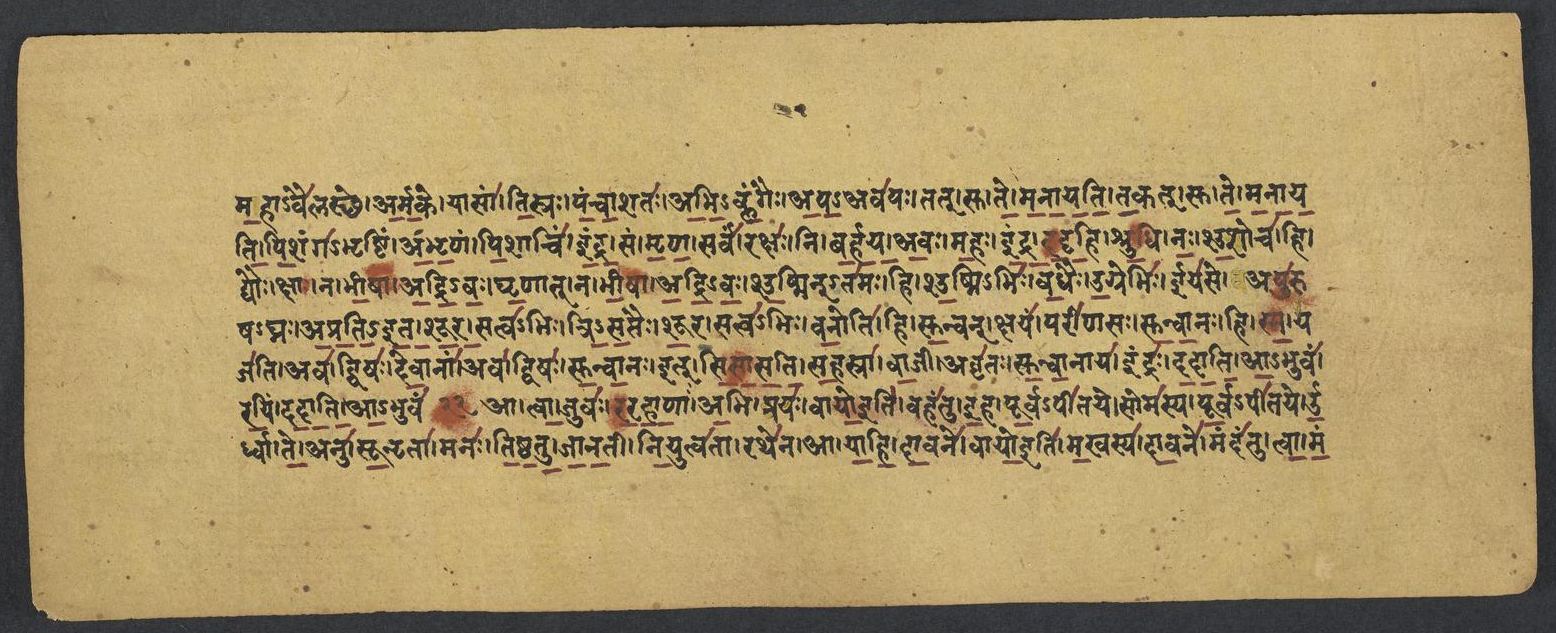
Penn Ms. Coll. 390 Item 41, fol. 104r (numbered 13r by the scribe) (OPenn image 105, lower leaf). Checked on the image: the Rigveda text on this page begins in RV 1.133.3 ‹mahāvailasthe arbhake›. The next page with Rigveda text, fol. 104v (numbered 13v by the scribe), begins in RV 1.134.2 ‹-mandinaḥ vāyo iti indavaḥ›. Verses 1.133.3-7 end on this page; 1.133.3 begins on fol. 103v (numbered 12v by the scribe).
3avā̍sām maghavañ jahi̱ śardho̍ yātu̱matī̍nām | vai̱la̱sthā̱na̱ke a̍rma̱ke ma̱hāvai̍lasthe arma̱ke ||
4yāsā̍ṁ ti̱sraḥ pa̍ñcā̱śato̍ 'bhivla̱ṅgair a̱pāva̍paḥ | tat su te̍ manāyati ta̱kat su te̍ manāyati ||
5pi̱śaṅga̍bhṛṣṭim ambhṛ̱ṇam pi̱śāci̍m indra̱ sam mṛ̍ṇa | sarva̱ṁ rakṣo̱ ni ba̍rhaya ||
6a̱var ma̱ha i̍ndra dādṛ̱hi śru̱dhī na̍ḥ śu̱śoca̱ hi dyauḥ kṣā na bhī̱ṣām̐ a̍drivo ghṛ̱ṇān na bhī̱ṣām̐ a̍drivaḥ | śu̱ṣminta̍mo̱ hi śu̱ṣmibhi̍r va̱dhair u̱grebhi̱r īya̍se | apū̍ruṣaghno apratīta śūra̱ satva̍bhis trisa̱ptaiḥ śū̍ra̱ satva̍bhiḥ ||
7va̱noti̱ hi su̱nvan kṣaya̱m parī̍ṇasaḥ sunvā̱no hi ṣmā̱ yaja̱ty ava̱ dviṣo̍ de̱vānā̱m ava̱ dviṣa̍ḥ | su̱nvā̱na it si̍ṣāsati sa̱hasrā̍ vā̱jy avṛ̍taḥ | su̱nvā̱nāyendro̍ dadāty ā̱bhuva̍ṁ ra̱yiṁ da̍dāty ā̱bhuva̍m ||
Compare: Padapāṭha (word-by-word text written in the manuscript; Sansknet e-text via GRETIL)
3ava | āsām | magha-van | jahi | śardhaḥ | yātu-matīnām | vaila-sthānake | arbhake | mahāvailasthe | arbhake
4yāsām | tisraḥ | pañcāśataḥ | abhi-vlaṅgaiḥ | apa-avapaḥ | tat | su | te | manāyati | takat | su | te | manāyati
5piśaṅga-bhṛṣṭim | ambhṛṇam | piśācim | indra | sam | mṛṇa | sarvam | rakṣaḥ | ni | barhaya
6avaḥ | mahaḥ | indra | dadṛhi | śrudhi | naḥ | śuśoca | hi | dyauḥ | kṣāḥ | na | bhīṣā | adri-vaḥ | ghṛṇāt | na | bhīṣā | adri-vaḥ | śuṣmin-tamaḥ | hi | śuṣmi-bhiḥ | vadhaiḥ | ugrebhiḥ | īyase | apuruṣa-ghnaḥ | aprati-ita | śūra | satva-bhiḥ | tri-saptaiḥ | śūra | satva-bhiḥ
7vanoti | hi | sunvan | kṣayam | parīṇasaḥ | sunvānaḥ | hi | sma | yajati | ava | dviṣaḥ | devānām | ava | dviṣaḥ | sunvānaḥ | it | sisāsati | sahasrā | vājī | avṛtaḥ | sunvānāya | indraḥ | dadāti | ābhuvam | rayim | dadāti | ābhuvam
3Do thou, O Maghavan, beat off these sorceresses' daring strength. Cast them within the narrow pit. within the deep and narrow pit.
4Of whom thou hast ere now destroyed thrice-fifty with thy fierce attacks. That deed they count a glorious deed, though small to thee, a glorious deed.
5O Indra, crush and bray to bits the fearful fiery-weaponed fiend: Strike every demon to the ground.
6Tear down the mighty ones. O Indra, hear thou us. For heaven hath glowed like earth in fear, O Thunder-armed, as dreading fierce heat, Thunder-armed! Most Mighty mid the Mighty Ones thou speedest with strong bolts of death, Not slaying men, unconquered Hero with the brave, O Hero, with the thrice-seven brave.
7The pourer of libations gains the home of wealth, pouring his gift conciliates hostilities, yea, the hostilities of Gods. Pouring, he strives, unchecked and strong, to win him riches thousandfold. Indra gives lasting wealth to him who pours forth gifts, yea, wealth he gives that long shall last.
Notes
- Sanskrit: Aufrecht's edition (1877) with the Vedic accents, as entered by van Nooten and Holland (GRETIL).
- English: Ralph T. H. Griffith, The Hymns of the Rigveda (1889-1892; 2nd ed. 1896-1897), from the VedaWeb digital text; OCR slips in that text were corrected against the printed 2nd edition (data/sources/rigveda/griffith_errata.json).
- Padapāṭha (edition text): Sansknet e-text via GRETIL (CC BY-NC-SA 4.0).
Cite
Sources
- Source: Penn Ms. Coll. 390 Item 41 (undated (catalogued with Penn's 18th-19th c. Vedic manuscripts)), OPenn, Public Domain Mark + Aufrecht's accented text (GRETIL) + Griffith's English (VedaWeb) (holding institution)
- Critical edition: Aufrecht (1877), accented e-text via GRETIL
← previous · → next · v cycle view · l back to library