Rigveda 1.134: To Vayu
Introduction
Rigveda 1.134 is a hymn of 6 verses addressed to Vayu. It stands in book (maṇḍala) 1, a collection of hymns by many families of poets. The Rigveda is the oldest collection of Sanskrit hymns, composed in the second half of the second millennium BCE and handed down orally for many centuries before it was written down.
The manuscript shown is Penn Ms. Coll. 390 Item 41 (University of Pennsylvania), an undated paper manuscript of the padapāṭha (the word-by-word recitation text, in which every word is written separately and compounds are split) of the whole Ṛgveda in Devanāgarī, 884 leaves in fascicles, 7-9 lines to the page, accents in red; this hymn stands on fol. 104r-105r. Each section below gives the verses that end on one page; the page boundaries were read on the images (the opening words of every page), not counted out. Where the manuscript is a padapāṭha (the word-by-word recitation text), the section shows Aufrecht's continuous (saṃhitā) text first and, as the edition text, the padapāṭha of the same verses, which is the form written on the page.
How was this verified? (Provenance)
Where on the image
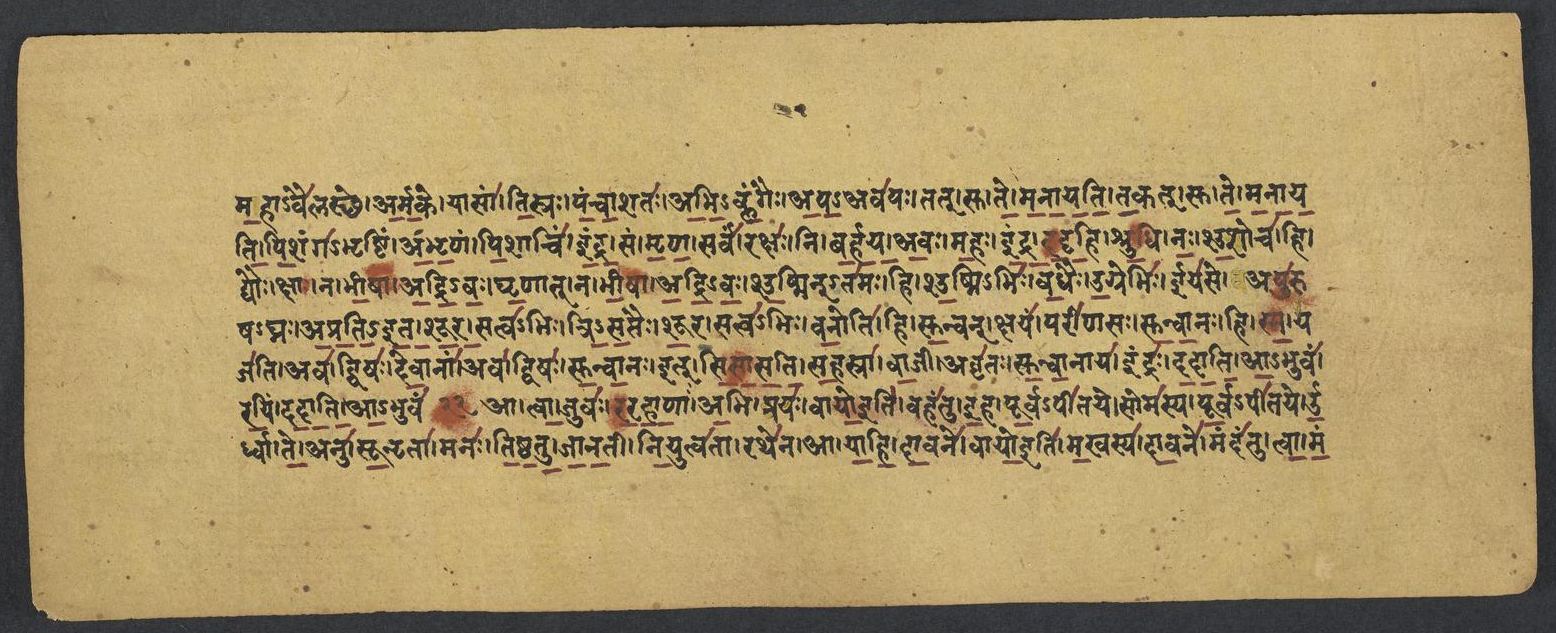
Penn Ms. Coll. 390 Item 41, fol. 104r (numbered 13r by the scribe) (OPenn image 105, lower leaf). Checked on the image: the Rigveda text on this page begins in RV 1.133.3 ‹mahāvailasthe arbhake›. The next page with Rigveda text, fol. 104v (numbered 13v by the scribe), begins in RV 1.134.2 ‹-mandinaḥ vāyo iti indavaḥ›. Verse 1.134.1 ends on this page.
1ā tvā̱ juvo̍ rārahā̱ṇā a̱bhi prayo̱ vāyo̱ vaha̍ntv i̱ha pū̱rvapī̍taye̱ soma̍sya pū̱rvapī̍taye | ū̱rdhvā te̱ anu̍ sū̱nṛtā̱ mana̍s tiṣṭhatu jāna̱tī | ni̱yutva̍tā̱ rathe̱nā yā̍hi dā̱vane̱ vāyo̍ ma̱khasya̍ dā̱vane̍ ||
Compare: Padapāṭha (word-by-word text written in the manuscript; Sansknet e-text via GRETIL)
1ā | tvā | juvaḥ | rarahāṇāḥ | abhi | prayaḥ | vāyo iti | vahantu | iha | pūrva-pītaye | somasya | ūrdhvā | te | anu | sūnṛtā | manaḥ | tiṣṭhatu | jānatī | niyutvatā | rathena | ā | yāhi | dāvane | vāyoiti | makhasya | dāvane
1Vâyu, let fleet-foot coursers bring thee speedily to this our feast, to drink first of the juice we pour, to the first draught of Soma juice. May our glad hymn, discerning well, uplifted, gratify thy mind. Come with thy team-drawn car, O Vâyu, to the gift, come to the sacrificer's gift.
Where on the image
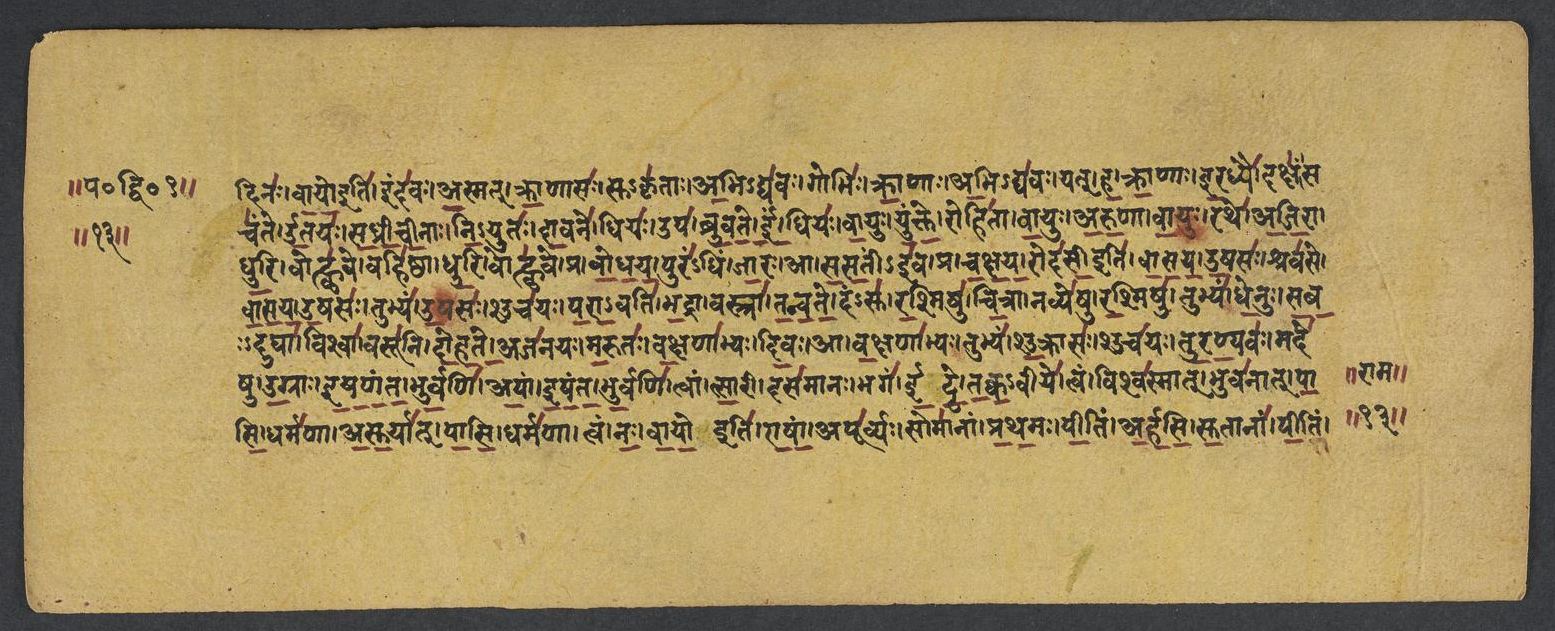
Penn Ms. Coll. 390 Item 41, fol. 104v (numbered 13v by the scribe) (OPenn image 106, upper leaf). Checked on the image: the Rigveda text on this page begins in RV 1.134.2 ‹-mandinaḥ vāyo iti indavaḥ›. The next page with Rigveda text, fol. 105r (numbered 14r by the scribe), begins in RV 1.134.6 ‹arhasi uto iti vihutmatīnām›. Verses 1.134.2-5 end on this page; 1.134.2 begins on fol. 104r (numbered 13r by the scribe).
2manda̍ntu tvā ma̱ndino̍ vāya̱v inda̍vo̱ 'smat krā̱ṇāsa̱ḥ sukṛ̍tā a̱bhidya̍vo̱ gobhi̍ḥ krā̱ṇā a̱bhidya̍vaḥ | yad dha̍ krā̱ṇā i̱radhyai̱ dakṣa̱ṁ saca̍nta ū̱taya̍ḥ | sa̱dhrī̱cī̱nā ni̱yuto̍ dā̱vane̱ dhiya̱ upa̍ bruvata ī̱ṁ dhiya̍ḥ ||
3vā̱yur yu̍ṅkte̱ rohi̍tā vā̱yur a̍ru̱ṇā vā̱yū rathe̍ aji̱rā dhu̱ri voḻha̍ve̱ vahi̍ṣṭhā dhu̱ri voḻha̍ve | pra bo̍dhayā̱ pura̍ṁdhiṁ jā̱ra ā sa̍sa̱tīm i̍va | pra ca̍kṣaya̱ roda̍sī vāsayo̱ṣasa̱ḥ śrava̍se vāsayo̱ṣasa̍ḥ ||
4tubhya̍m u̱ṣāsa̱ḥ śuca̍yaḥ parā̱vati̍ bha̱drā vastrā̍ tanvate̱ daṁsu̍ ra̱śmiṣu̍ ci̱trā navye̍ṣu ra̱śmiṣu̍ | tubhya̍ṁ dhe̱nuḥ sa̍ba̱rdughā̱ viśvā̱ vasū̍ni dohate | aja̍nayo ma̱ruto̍ va̱kṣaṇā̍bhyo di̱va ā va̱kṣaṇā̍bhyaḥ ||
5tubhya̍ṁ śu̱krāsa̱ḥ śuca̍yas tura̱ṇyavo̱ made̍ṣū̱grā i̍ṣaṇanta bhu̱rvaṇy a̱pām i̍ṣanta bhu̱rvaṇi̍ | tvāṁ tsā̱rī dasa̍māno̱ bhaga̍m īṭṭe takva̱vīye̍ | tvaṁ viśva̍smā̱d bhuva̍nāt pāsi̱ dharma̍ṇāsu̱ryā̍t pāsi̱ dharma̍ṇā ||
Compare: Padapāṭha (word-by-word text written in the manuscript; Sansknet e-text via GRETIL)
2mandantu | tvā | mandinaḥ | vāyo iti | indavaḥ | asmat | krāṇāsaḥ | su-kṛtāḥ | abhi-dyavaḥ | go--bhiḥ | krāṇāḥ | abhi-dyavaḥ | yat | ha | krāṇāḥ | iradhyai | dakṣam | sacante | ūtayaḥ | sadhrīcīnāḥ | n i-yutaḥ | dāvane | dhiyaḥ | upa | bruvate | īm | dhiyaḥ
3vāyuḥ | yuṅkte | rohitā | vāyuḥ | aruṇā | vāyuḥ | rathe | ajirā | dhuri | voḷhave | vahiṣṭhā | dhuri | voḷhave | pra | bodhaya | puram-dhim | jāraḥ | ā | sasatīm-iva | pra | cakṣaya | rodasī iti | vāsaya | uṣasaḥ | śravase | vāsaya | uṣasaḥ
4tubhyam | uṣasaḥ | śucayaḥ | parāvati | bhadrā | vastrā | tanvate | dam-su | raśmi ṣu | citrā | navyeṣu | raśmiṣu | tubhyam | dhenuḥ | sabaḥ-dughā | viśvā | vasūni | dohate | ajanayaḥ | marutaḥ | vakṣaṇābhyaḥ | divaḥ | ā | vakṣaṇābhyaḥ
5tubhyam | śukrāsa | śucayaḥ | turaṇyavaḥ | madeṣu | ugrāḥ | iṣaṇanta | bhurvaṇi | apām | iṣanta | bhurvaṇi | tvām | tsārī | dasamānaḥ | bhagam | īṭe | takva-vīye | tvam | viśvasmāt | bhuvanāt | pāsi | dharmaṇā | asuryāt | pāsi | dharmaṇā
2May the joy-giving drops, O Vâyu gladden thee, effectual, well prepared, directed to the heavens, strong, blent with milk and seeking heaven; That aids, effectual to fulfil, may wait upon our skilful power. Associate teams come hitherward to grant our prayers . they shall address the hymns we sing.
3Two red steeds Vâyu yokes, Vâyu two purple steeds, swift-footed, to the chariot, to the pole to draw, most able, at the pole, to draw. Wake up intelligence, as when a lover wakes his sleeping love. Illumine heaven and earth, make thou the Dawns to shine, for glory make the Dawns to shine.
4For thee the radiant Dawns in the fardistant sky broaden their lovely garments forth in wondrous beams, bright-coloured in their new-born beams. For thee the nectar-yielding Cow pours all rich treasures forth as milk. The Marut host hast thou engendered from the womb, the Maruts from the womb of heaven.
5For thee the pure bright quickly-flowing Soma-drops, strong in their heightening power, hasten to mixthemselves, hasten to the water to be mixed. To thee the weary coward prays for luck that he may speed away. Thou by thy law protectest us from every world, yea, from the world of highest Gods.
Where on the image
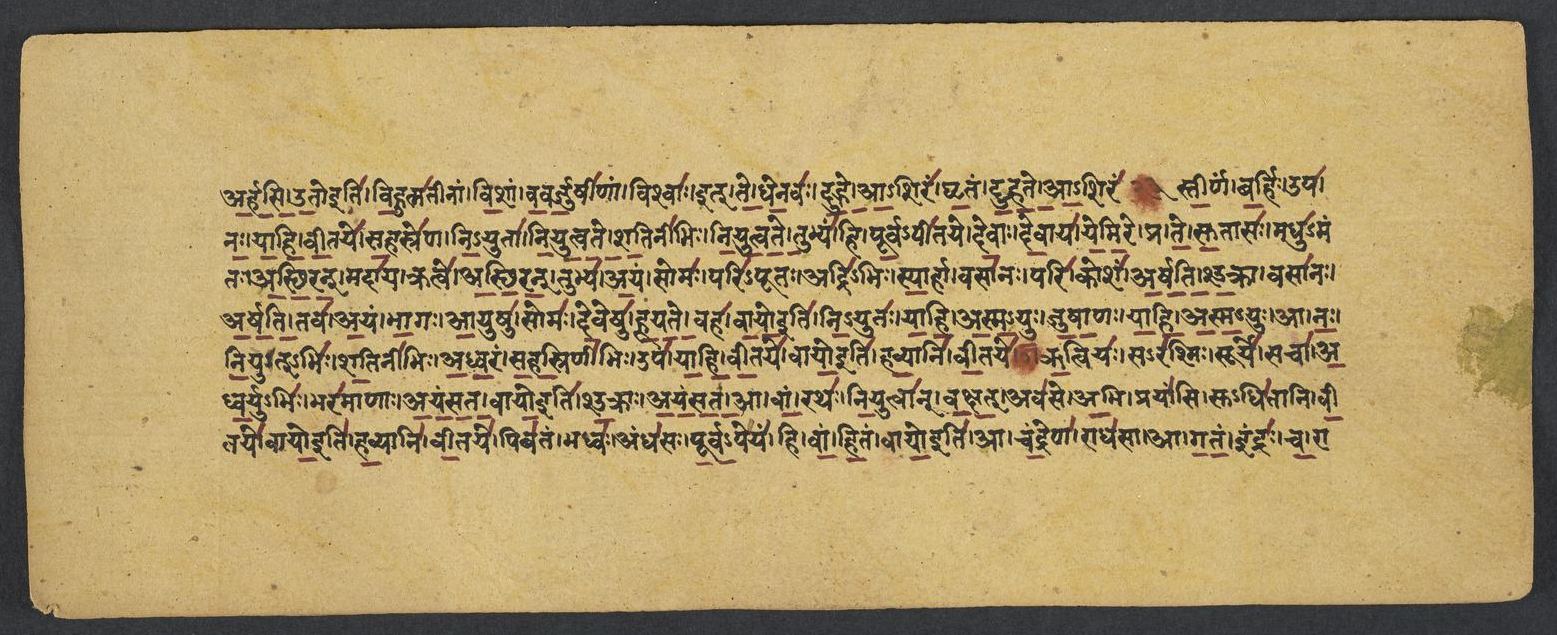
Penn Ms. Coll. 390 Item 41, fol. 105r (numbered 14r by the scribe) (OPenn image 106, lower leaf). Checked on the image: the Rigveda text on this page begins in RV 1.134.6 ‹arhasi uto iti vihutmatīnām›. The next page with Rigveda text, fol. 105v (numbered 14v by the scribe), begins in RV 1.135.4 ‹-rādhasā ā gatam›. Verse 1.134.6 ends on this page; 1.134.6 begins on fol. 104v (numbered 13v by the scribe).
6tvaṁ no̍ vāyav eṣā̱m apū̍rvya̱ḥ somā̍nām pratha̱maḥ pī̱tim a̍rhasi su̱tānā̍m pī̱tim a̍rhasi | u̱to vi̱hutma̍tīnāṁ vi̱śāṁ va̍va̱rjuṣī̍ṇām | viśvā̱ it te̍ dhe̱navo̍ duhra ā̱śira̍ṁ ghṛ̱taṁ du̍hrata ā̱śira̍m ||
Compare: Padapāṭha (word-by-word text written in the manuscript; Sansknet e-text via GRETIL)
6tvam | naḥ | vāyo iti | eṣām | apūrvyaḥ | somānām | prathamaḥ | pītim | arhasi | sutānām | pītim | arhasi | uto iti | vihutmatīnām | viśām | vavarjuṣīṇām | viśvāḥ | it | te | dhenavaḥ | duhre | āśiram | ghṛtam | duhrcate | āśiram
6Thou, Vâyu, who hast none before thee, first of all hast right to drink these offerings of Soma juice, hast right to drink the juice out-poured, Yea, poured by all invoking tribes who free themselves from taint of sin, For thee all cows are milked to yield the Soma-milk, to yield the butter and the milk.
Notes
- Sanskrit: Aufrecht's edition (1877) with the Vedic accents, as entered by van Nooten and Holland (GRETIL).
- English: Ralph T. H. Griffith, The Hymns of the Rigveda (1889-1892; 2nd ed. 1896-1897), from the VedaWeb digital text; OCR slips in that text were corrected against the printed 2nd edition (data/sources/rigveda/griffith_errata.json).
- Padapāṭha (edition text): Sansknet e-text via GRETIL (CC BY-NC-SA 4.0).
Cite
Sources
- Source: Penn Ms. Coll. 390 Item 41 (undated (catalogued with Penn's 18th-19th c. Vedic manuscripts)), OPenn, Public Domain Mark + Aufrecht's accented text (GRETIL) + Griffith's English (VedaWeb) (holding institution)
- Critical edition: Aufrecht (1877), accented e-text via GRETIL
← previous · → next · v cycle view · l back to library