Rigveda 1.139: To all the gods
Introduction
Rigveda 1.139 is a hymn of 11 verses addressed to all the gods. It stands in book (maṇḍala) 1, a collection of hymns by many families of poets. The Rigveda is the oldest collection of Sanskrit hymns, composed in the second half of the second millennium BCE and handed down orally for many centuries before it was written down.
The manuscript shown is Penn Ms. Coll. 390 Item 41 (University of Pennsylvania), an undated paper manuscript of the padapāṭha (the word-by-word recitation text, in which every word is written separately and compounds are split) of the whole Ṛgveda in Devanāgarī, 884 leaves in fascicles, 7-9 lines to the page, accents in red; this hymn stands on fol. 107v-109r. Each section below gives the verses that end on one page; the page boundaries were read on the images (the opening words of every page), not counted out. Where the manuscript is a padapāṭha (the word-by-word recitation text), the section shows Aufrecht's continuous (saṃhitā) text first and, as the edition text, the padapāṭha of the same verses, which is the form written on the page.
How was this verified? (Provenance)
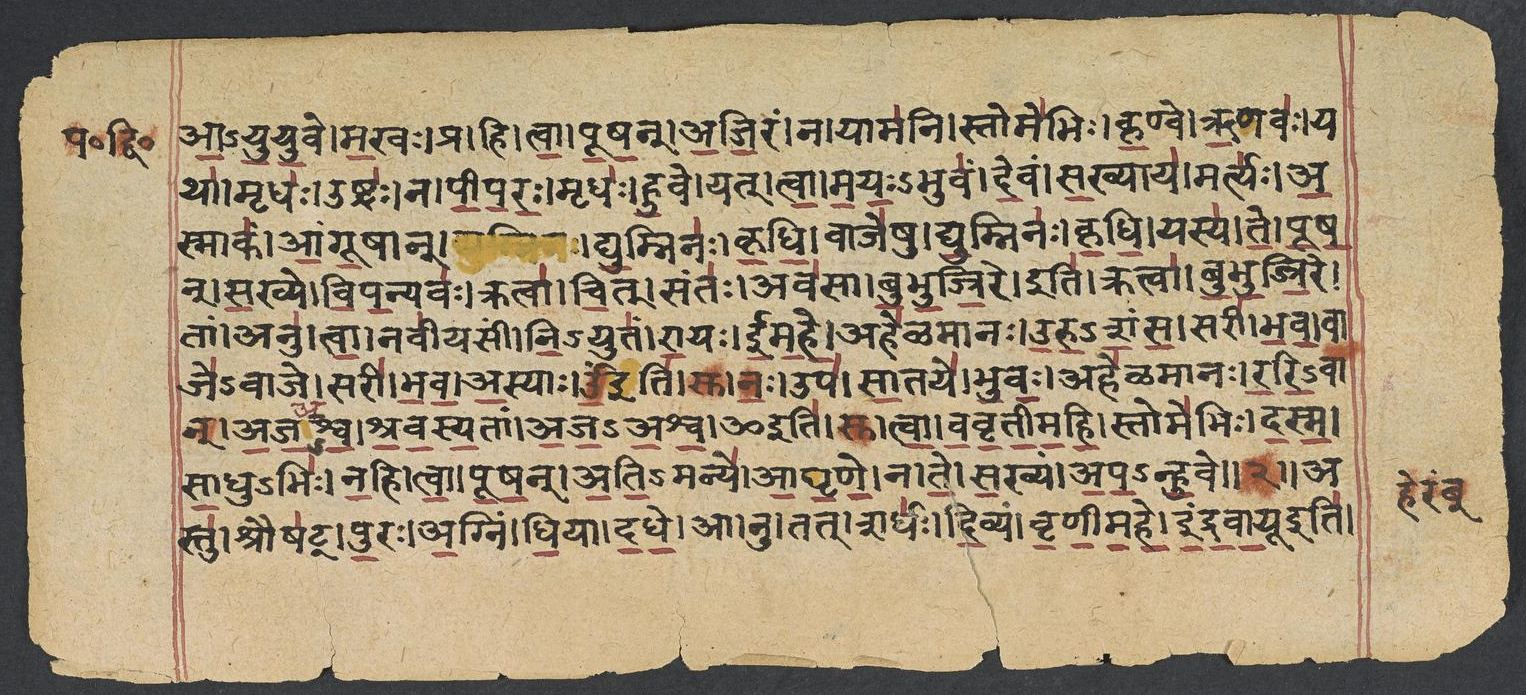
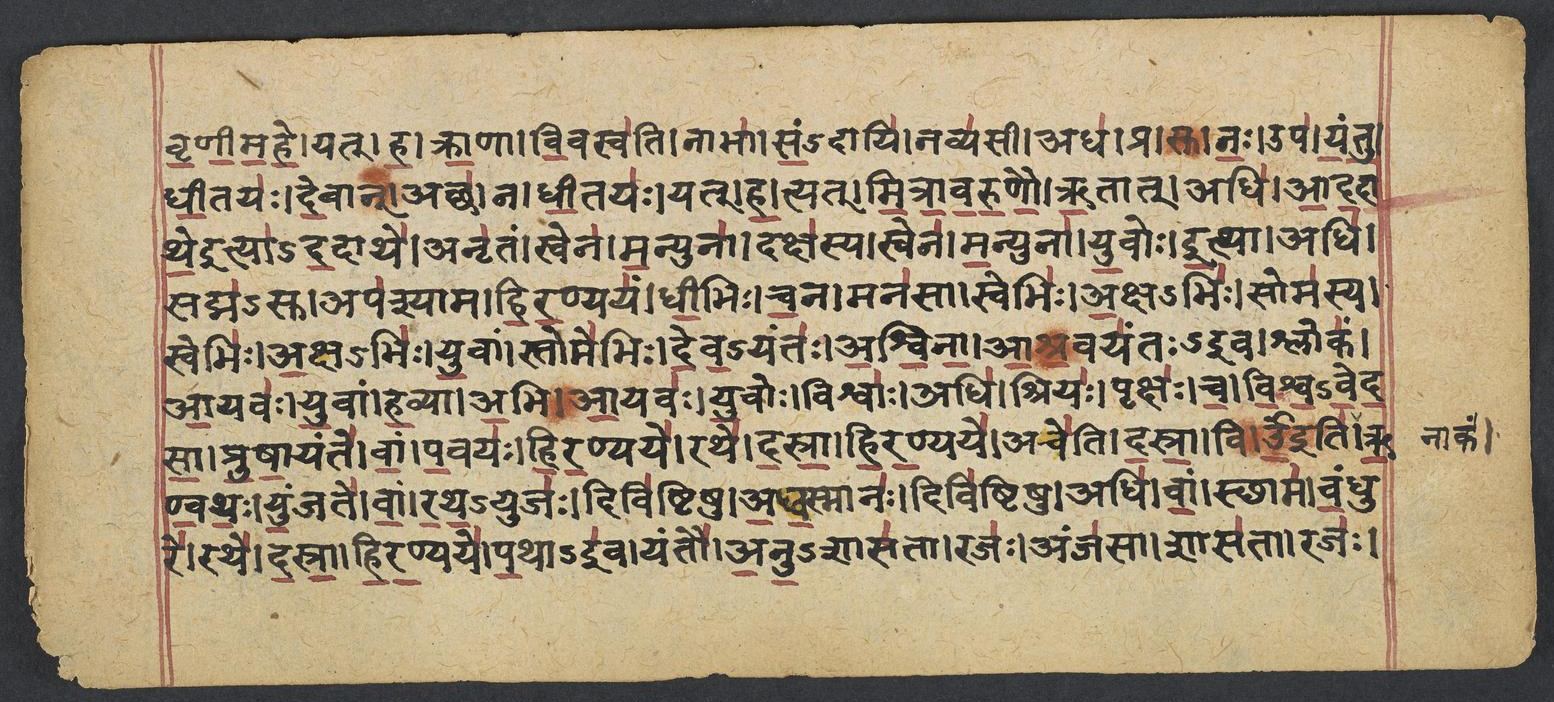
Where on the image
Penn Ms. Coll. 390 Item 41, fol. 108r (numbered 2r by the scribe) (OPenn image 109, lower leaf). Checked on the image: the Rigveda text on this page begins in RV 1.139.1 ‹vṛṇīmahe yat ha krāṇā›. The next page with Rigveda text, fol. 108v (numbered 2v by the scribe), begins in RV 1.139.5 ‹śacībhiḥ naḥ śacīvasūitiśacī-vasū divā›. Verses 1.139.1-4 end on this page; 1.139.1 begins on fol. 107v (numbered 1v by the scribe).
1astu̱ śrauṣa̍ṭ pu̱ro a̱gniṁ dhi̱yā da̍dha̱ ā nu tac chardho̍ di̱vyaṁ vṛ̍ṇīmaha indravā̱yū vṛ̍ṇīmahe | yad dha̍ krā̱ṇā vi̱vasva̍ti̱ nābhā̍ sa̱ṁdāyi̱ navya̍sī | adha̱ pra sū na̱ upa̍ yantu dhī̱tayo̍ de̱vām̐ acchā̱ na dhī̱taya̍ḥ ||
2yad dha̱ tyan mi̍trāvaruṇāv ṛ̱tād adhy ā̍da̱dāthe̱ anṛ̍ta̱ṁ svena̍ ma̱nyunā̱ dakṣa̍sya̱ svena̍ ma̱nyunā̍ | yu̱vor i̱tthādhi̱ sadma̱sv apa̍śyāma hira̱ṇyaya̍m | dhī̱bhiś ca̱na mana̍sā̱ svebhi̍r a̱kṣabhi̱ḥ soma̍sya̱ svebhi̍r a̱kṣabhi̍ḥ ||
3yu̱vāṁ stome̍bhir deva̱yanto̍ aśvināśrā̱vaya̍nta iva̱ śloka̍m ā̱yavo̍ yu̱vāṁ ha̱vyābhy ā̱3̱̍yava̍ḥ | yu̱vor viśvā̱ adhi̱ śriya̱ḥ pṛkṣa̍ś ca viśvavedasā | pru̱ṣā̱yante̍ vām pa̱vayo̍ hira̱ṇyaye̱ rathe̍ dasrā hira̱ṇyaye̍ ||
4ace̍ti dasrā̱ vy u1̱̍ nāka̍m ṛṇvatho yu̱ñjate̍ vāṁ ratha̱yujo̱ divi̍ṣṭiṣv adhva̱smāno̱ divi̍ṣṭiṣu | adhi̍ vā̱ṁ sthāma̍ va̱ndhure̱ rathe̍ dasrā hira̱ṇyaye̍ | pa̱theva̱ yantā̍v anu̱śāsa̍tā̱ rajo 'ñja̍sā̱ śāsa̍tā̱ raja̍ḥ ||
Compare: Padapāṭha (word-by-word text written in the manuscript; Sansknet e-text via GRETIL)
1astu | śrauṣaṭ | puraḥ | agnim | dhiyā | dadhe | ā | nu | tat | śardhaḥ | divyam | vṛṇīmahe | indravāyū iti | vṛṇīmahe | yat | ha | krāṇā | vivasyati | nābhā | sam-dāyi | navyasī | agha | pra | su | naḥ | upa | yantu | dhītayaḥ | devān | accha | na | dhītayaḥ
2yat | ha | tyat | mitrāvaruṇau | ṛtāt | adhi | ādadātheity ādadāthe | anṛtam | svena | manyunā | dakṣasya | svena | manyunā | yuvoḥ | itthā | adhi | sadma-su | apaśyāma | hiraṇyayam | dhībhiḥ | cana | manasā | svebhiḥ | akṣa-bhiḥ | somasya | svebhiḥ | akṣa-bhiḥ
3yuvām | somebhiḥ | deva-yantaḥ | aśvinā | āśrāvayantaḥ-iva | ślokam | āyavaḥ | yuvām | havyā | abhi | āyavaḥ | yuvoḥ | viśvāḥ | adhi | śriyaḥ | pṛkṣaḥ | ca | viśva-vedasā | pruṣāyante | vām | pavayaḥ | hiraṇyaye | rathe | dasr | hiraṇyaye
4aceti | dasrā | vi | oṃ iti | nākam | ṛṇvathaḥ | yuñjate | vām | ratha-yujaḥ | diviṣṭiśu | adhvasmānaḥ | divi ṣṭiṣu | adhi | vām | sthāma | vandhure | rathe | dasrā | hiraṇyaye | pathāiva | yantau | anu-śāsatā | rajaḥ | añjasā | sāsatā | rajaḥ
1HEARD be our prayer! In thought I honour Agni first: now straightway we elect this heavenly company, Indra and Vâyu we elect. For when our latest thought is raised and on Vivasvan centred well, Then may our holy songs go forward on their way, our songs as 'twere unto the Gods.
2As there ye, Mitra, Varuṇa, above the true have taken to yourselves the untrue with your mind, with wisdom's mental energy, So in the seats wherein ye dwell have we beheld the Golden One, Not with our thoughts or spirit, but with these our eyes, yea, with the eyes that Soma gives.
3Aṣvins, the pious call you with their hymns of praise, sounding their loud song forth to you, these living men, to their oblations, living men. All glories and all nourishment, Lords of all wealth! depend on you. The fellies of your golden chariot scatter drops, Mighty Ones! of your golden car.
4Well is it known, O Mighty Ones: ye open heaven; for you the chariotsteeds are yoked for morning rites, unswerving steeds for morning rites, We set you on the chariot-seat, ye Mighty, on the golden car. Ye seek mid-air as by a path that leads aright, as by a path that leads direct.
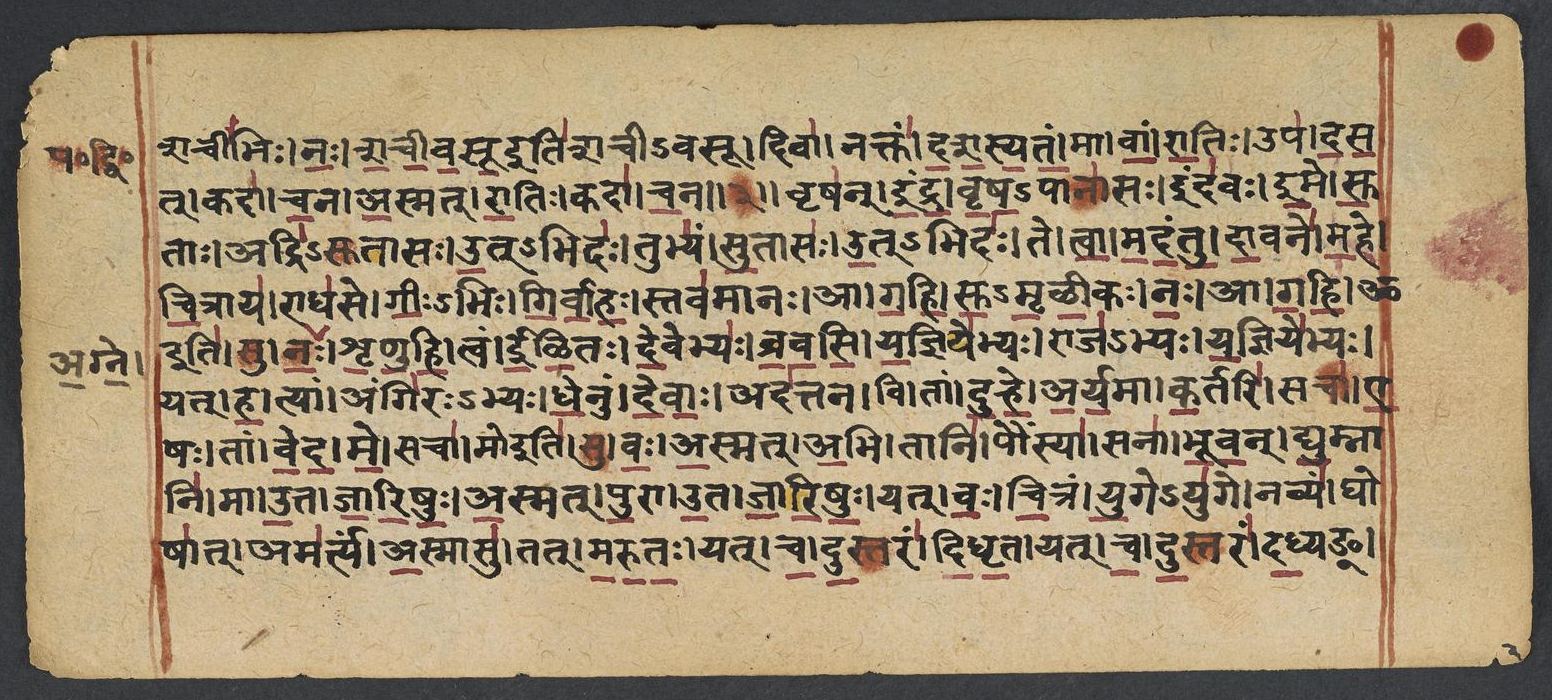
Where on the image
Penn Ms. Coll. 390 Item 41, fol. 108v (numbered 2v by the scribe) (OPenn image 110, upper leaf). Checked on the image: the Rigveda text on this page begins in RV 1.139.5 ‹śacībhiḥ naḥ śacīvasūitiśacī-vasū divā›. The next page with Rigveda text, fol. 109r (numbered 3r by the scribe), begins in RV 1.139.9 ‹ha me januṣam pūrvaḥ›. Verses 1.139.5-8 end on this page.
5śacī̍bhir naḥ śacīvasū̱ divā̱ nakta̍ṁ daśasyatam | mā vā̍ṁ rā̱tir upa̍ dasa̱t kadā̍ ca̱nāsmad rā̱tiḥ kadā̍ ca̱na ||
6vṛṣa̍nn indra vṛṣa̱pāṇā̍sa̱ inda̍va i̱me su̱tā adri̍ṣutāsa u̱dbhida̱s tubhya̍ṁ su̱tāsa̍ u̱dbhida̍ḥ | te tvā̍ mandantu dā̱vane̍ ma̱he ci̱trāya̱ rādha̍se | gī̱rbhir gi̍rvāha̱ḥ stava̍māna̱ ā ga̍hi sumṛḻī̱ko na̱ ā ga̍hi ||
7o ṣū ṇo̍ agne śṛṇuhi̱ tvam ī̍ḻi̱to de̱vebhyo̍ bravasi ya̱jñiye̍bhyo̱ rāja̍bhyo ya̱jñiye̍bhyaḥ | yad dha̱ tyām aṅgi̍robhyo dhe̱nuṁ de̍vā̱ ada̍ttana | vi tāṁ du̍hre arya̱mā ka̱rtarī̱ sacā̍m̐ e̱ṣa tāṁ ve̍da me̱ sacā̍ ||
8mo ṣu vo̍ a̱smad a̱bhi tāni̱ pauṁsyā̱ sanā̍ bhūvan dyu̱mnāni̱ mota jā̍riṣur a̱smat pu̱rota jā̍riṣuḥ | yad va̍ś ci̱traṁ yu̱ge-yu̍ge̱ navya̱ṁ ghoṣā̱d ama̍rtyam | a̱smāsu̱ tan ma̍ruto̱ yac ca̍ du̱ṣṭara̍ṁ didhṛ̱tā yac ca̍ du̱ṣṭara̍m ||
Compare: Padapāṭha (word-by-word text written in the manuscript; Sansknet e-text via GRETIL)
5śacībhiḥ | naḥ | śacīvasūitiśacī-vasū | divā | naktam | daśasyatam | mā | vām | rātiḥ | upa | dasat | kadā | cana | asmat | rātiḥ | kadā | cana
6vṛṣan | indra | vṛṣa-pānāsaḥ | indavaḥ | ime | sutāḥ | adri-sutāsaḥ | ut-bhi daḥ | tubhyam | sutāsaḥ | ut-bhidaḥ | te | tvā | mandantu | dāvane | mahe | citrāya | rādhase | gīḥ-bhiḥ | girvāhaḥ | stavamānaḥ | ā | gahi | su-mṛḷīkaḥ | naḥ | ā | gahi
7o iti | su | ṇaḥ | agne | śṛṇuhi | tvam | īḷitaḥ | devebhyaḥ | bravasi | yajñiyebhyaḥ | rāja-bhyaḥ | yajñiyebhyaḥ | yat | ha | tyām | aṅgiras-bhyaḥ | dhenum | devāḥ | adattana | vi | tām | duhre | aryamā | kartari | sacā | eṣaḥ | tām | veda | meca | sacā
8mo iti | su | vaḥ | asmat | abhi | tāni | paiṃsyā | sanā | bhūvan | dyumnāni | mā | uta | jāri ṣuḥ | asmat | purā | uta | jāriṣuḥ | yat | vaḥ | citram | yuge--yuge | navyam | ghoṣāt | amartyam | asmāsu | tat | marutaḥ | yat | ca | duḥ-taram | dcidhṛta | yat | ca | duḥ-taram
5O Rich in Strength, through your great power vouchsafe us blessings day and night. The offerings which we bring to you shall never fail, gifts brought by us shall never fail.
6These Soma-drops, strong Indra! drink for heroes, poured, pressed out by pressing-stones, are welling forth for thee, for thee the drops are welling forth. They shall make glad thy heart to give, to give wealth great and wonderful. Thou who acceptest praise come glorified by hymns, come thou to us benevolent.
7Quickly, O Agni, hear us: magnified by us thou shalt speak for us to the Gods adorable yea, to the Kings adorable: When, O ye Deities, ye gave that Milch-cow to the Angirases, They milked her: Aryaman, joined with them, did the work: he knoweth her as well as I.
8Ne'er may these manly deeds of yours for us grow old, never may your bright glories fall into decay, never before our time decay. What deed of yours, new every age, wondrous, surpassing man, rings forth, Whatever, Maruts! may be difficult to gain, grant us, whate'er is hard to gain.
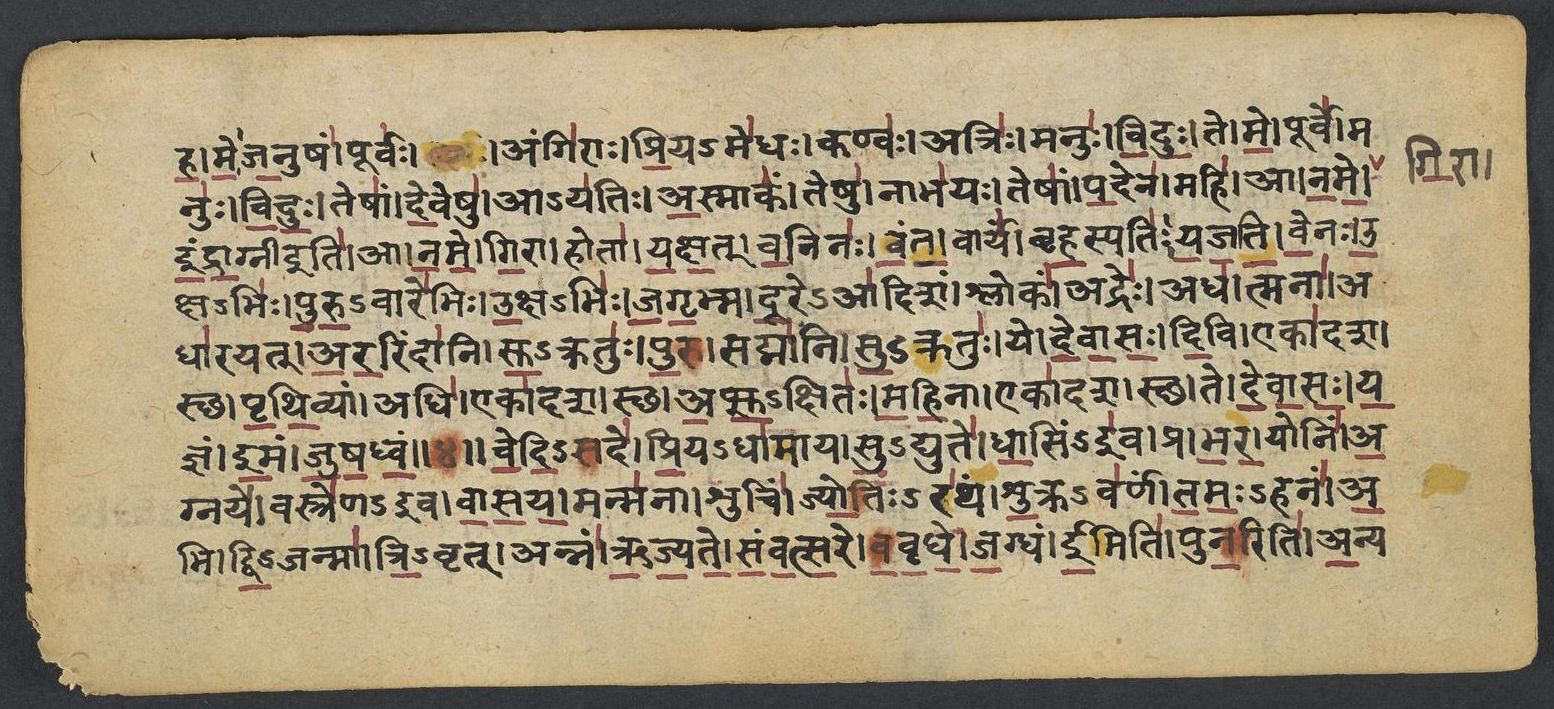
Where on the image
Penn Ms. Coll. 390 Item 41, fol. 109r (numbered 3r by the scribe) (OPenn image 110, lower leaf). Checked on the image: the Rigveda text on this page begins in RV 1.139.9 ‹ha me januṣam pūrvaḥ›. The next page with Rigveda text, fol. 109v (numbered 3v by the scribe), begins in RV 1.140.2 ‹-anyasya āsā jihvayā jenyaḥ›. Verses 1.139.9-11 end on this page; 1.139.9 begins on fol. 108v (numbered 2v by the scribe).
9da̱dhyaṅ ha̍ me ja̱nuṣa̱m pūrvo̱ aṅgi̍rāḥ pri̱yame̍dha̱ḥ kaṇvo̱ atri̱r manu̍r vidu̱s te me̱ pūrve̱ manu̍r viduḥ | teṣā̍ṁ de̱veṣv āya̍tir a̱smāka̱ṁ teṣu̱ nābha̍yaḥ | teṣā̍m pa̱dena̱ mahy ā na̍me gi̱rendrā̱gnī ā na̍me gi̱rā ||
10hotā̍ yakṣad va̱nino̍ vanta̱ vārya̱m bṛha̱spati̍r yajati ve̱na u̱kṣabhi̍ḥ puru̱vāre̍bhir u̱kṣabhi̍ḥ | ja̱gṛ̱bhmā dū̱raā̍diśa̱ṁ śloka̱m adre̱r adha̱ tmanā̍ | adhā̍rayad ara̱rindā̍ni su̱kratu̍ḥ pu̱rū sadmā̍ni su̱kratu̍ḥ ||
11ye de̍vāso di̱vy ekā̍daśa̱ stha pṛ̍thi̱vyām adhy ekā̍daśa̱ stha | a̱psu̱kṣito̍ mahi̱naikā̍daśa̱ stha te de̍vāso ya̱jñam i̱maṁ ju̍ṣadhvam ||
Compare: Padapāṭha (word-by-word text written in the manuscript; Sansknet e-text via GRETIL)
9dadhyaṅ | ha | me | januṣam | pūrvaḥ | aṅgirāḥ | priya-medhaḥ | kaṇvaḥ | atriḥ | manuḥ | viduḥ | te | me | pūrve | manuḥ | viduḥ | teṣām | deveṣu | āyatiḥ | asmākam | teṣu | nābhayaḥ | teṣām | padena | mahi | ā | name | girā | indrāgnī itgi | ā | name | girā
10hotā | yakṣat | vaninaḥ | vanta | vāryam | bṛhaspatiḥ | yajati | venaḥ | ukṣa-bhiḥ | puru-vārebhiḥ | ukṣa-bhiḥ | jagṛmbha | dūre--ādiśam | ślokam | adreḥ | adha | tmanā | adhārayat | aririndāni | su-kratuḥ | puru | sadmāni | su-kratuḥ
11ye | devāsaḥ | divi | ekādaśa | stha | pṛthivyām | adhi | ekādaśa | stha | apsu-kṣitaḥ | mahinā | ekādaśa | stha | te | devāsaḥ | yajñam | imam | juṣadhvam
9Dadhyac of old, Angiras, Priyamedha these, and Kaṇva, Atri, Manu knew my birth, yea, these of ancient days and Manu knew. Their long line stretcheth to the Gods, our birth-connexions are with them. To these, for their high station, I bow down with song, to Indra, Agni, bow with song.
10Let the Invoker bless: let offerers bring choice gifts; Br̥ihaspati the Friend doth sacrifice with Steers, Steers that have many an excellence. Now with our ears we catch the sound of the press-stone that rings afar. The very Strong hath gained the waters by himself, the strong gained many a resting-place.
11O ye Eleven Gods whose home is heaven, O ye Eleven who make earth your dwelling, Ye who with might, Eleven, live in waters, accept this sacrifice, O Gods, with pleasure.
Notes
- Sanskrit: Aufrecht's edition (1877) with the Vedic accents, as entered by van Nooten and Holland (GRETIL).
- English: Ralph T. H. Griffith, The Hymns of the Rigveda (1889-1892; 2nd ed. 1896-1897), from the VedaWeb digital text; OCR slips in that text were corrected against the printed 2nd edition (data/sources/rigveda/griffith_errata.json).
- Padapāṭha (edition text): Sansknet e-text via GRETIL (CC BY-NC-SA 4.0).
Cite
Sources
- Source: Penn Ms. Coll. 390 Item 41 (undated (catalogued with Penn's 18th-19th c. Vedic manuscripts)), OPenn, Public Domain Mark + Aufrecht's accented text (GRETIL) + Griffith's English (VedaWeb) (holding institution)
- Critical edition: Aufrecht (1877), accented e-text via GRETIL
← previous · → next · v cycle view · l back to library