Rigveda 1.140: To Agni
Introduction
Rigveda 1.140 is a hymn of 13 verses addressed to Agni. It stands in book (maṇḍala) 1, a collection of hymns by many families of poets. The Rigveda is the oldest collection of Sanskrit hymns, composed in the second half of the second millennium BCE and handed down orally for many centuries before it was written down.
The manuscript shown is Penn Ms. Coll. 390 Item 41 (University of Pennsylvania), an undated paper manuscript of the padapāṭha (the word-by-word recitation text, in which every word is written separately and compounds are split) of the whole Ṛgveda in Devanāgarī, 884 leaves in fascicles, 7-9 lines to the page, accents in red; this hymn stands on fol. 109r-110v. Each section below gives the verses that end on one page; the page boundaries were read on the images (the opening words of every page), not counted out. Where the manuscript is a padapāṭha (the word-by-word recitation text), the section shows Aufrecht's continuous (saṃhitā) text first and, as the edition text, the padapāṭha of the same verses, which is the form written on the page.
How was this verified? (Provenance)
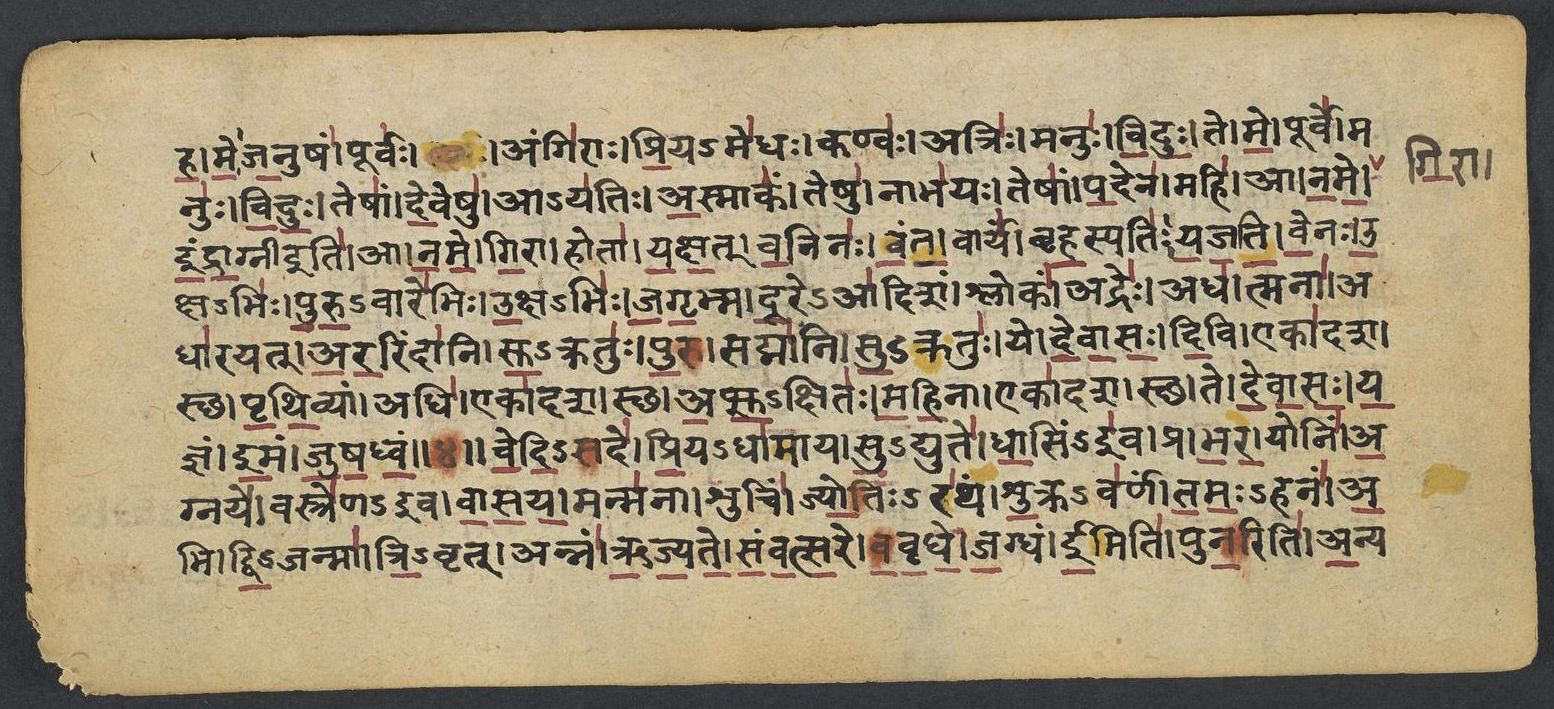
Where on the image
Penn Ms. Coll. 390 Item 41, fol. 109r (numbered 3r by the scribe) (OPenn image 110, lower leaf). Checked on the image: the Rigveda text on this page begins in RV 1.139.9 ‹ha me januṣam pūrvaḥ›. The next page with Rigveda text, fol. 109v (numbered 3v by the scribe), begins in RV 1.140.2 ‹-anyasya āsā jihvayā jenyaḥ›. Verse 1.140.1 ends on this page.
1ve̱di̱ṣade̍ pri̱yadhā̍māya su̱dyute̍ dhā̱sim i̍va̱ pra bha̍rā̱ yoni̍m a̱gnaye̍ | vastre̍ṇeva vāsayā̱ manma̍nā̱ śuci̍ṁ jyo̱tīra̍thaṁ śu̱krava̍rṇaṁ tamo̱hana̍m ||
Compare: Padapāṭha (word-by-word text written in the manuscript; Sansknet e-text via GRETIL)
1vedi-sade | priya-dhāmāya | su-dyute | dhāsim-iva | pra | bhara | yonim | agnaye | vastreṇa-iva | vāsaya | manmanā | śucim | jyotiḥ-ratham | śukra-varṇam | tamaḥ-hanam
1To splendid Agni seated by the altar, loving well his home, I bring the food as 'twere his place of birth. I clothe the bright One with my hymn as with a robe, him with the car of light, bright-hued, dispelling gloom.
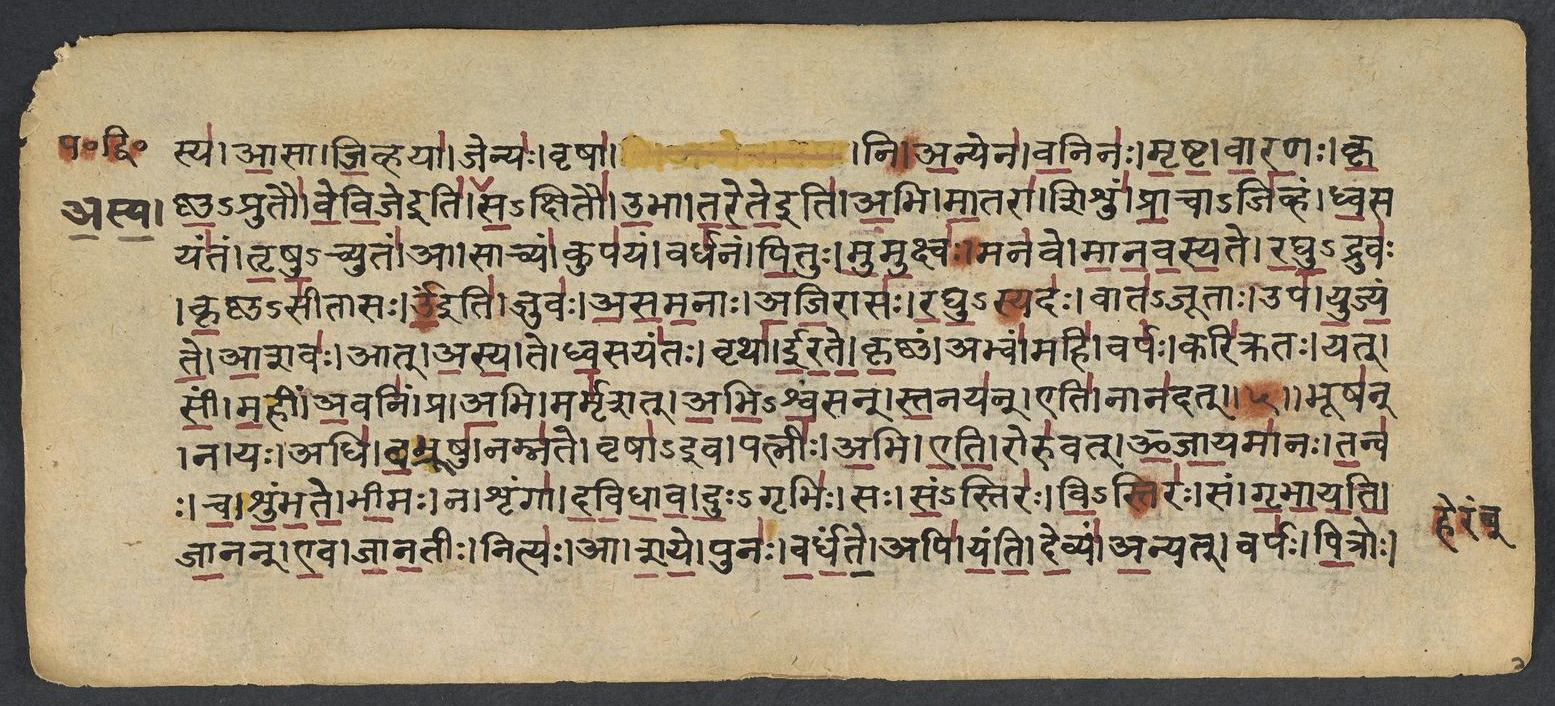
Where on the image
Penn Ms. Coll. 390 Item 41, fol. 109v (numbered 3v by the scribe) (OPenn image 111, upper leaf). Checked on the image: the Rigveda text on this page begins in RV 1.140.2 ‹-anyasya āsā jihvayā jenyaḥ›. The next page with Rigveda text, fol. 110r (numbered 4r by the scribe), begins in RV 1.140.7 ‹kṛṇvate sacā›. Verses 1.140.2-6 end on this page; 1.140.2 begins on fol. 109r (numbered 3r by the scribe).
2a̱bhi dvi̱janmā̍ tri̱vṛd anna̍m ṛjyate saṁvatsa̱re vā̍vṛdhe ja̱gdham ī̱ puna̍ḥ | a̱nyasyā̱sā ji̱hvayā̱ jenyo̱ vṛṣā̱ ny a1̱̍nyena̍ va̱nino̍ mṛṣṭa vāra̱ṇaḥ ||
3kṛ̱ṣṇa̱prutau̍ vevi̱je a̍sya sa̱kṣitā̍ u̱bhā ta̍rete a̱bhi mā̱tarā̱ śiśu̍m | prā̱cāji̍hvaṁ dhva̱saya̍ntaṁ tṛṣu̱cyuta̱m ā sācya̱ṁ kupa̍ya̱ṁ vardha̍nam pi̱tuḥ ||
4mu̱mu̱kṣvo̱3̱̍ mana̍ve mānavasya̱te ra̍ghu̱druva̍ḥ kṛ̱ṣṇasī̍tāsa ū̱ juva̍ḥ | a̱sa̱ma̱nā a̍ji̱rāso̍ raghu̱ṣyado̱ vāta̍jūtā̱ upa̍ yujyanta ā̱śava̍ḥ ||
5ād a̍sya̱ te dhva̱saya̍nto̱ vṛthe̍rate kṛ̱ṣṇam abhva̱m mahi̱ varpa̱ḥ kari̍krataḥ | yat sī̍m ma̱hīm a̱vani̱m prābhi marmṛ̍śad abhiśva̱san sta̱naya̱nn eti̱ nāna̍dat ||
6bhūṣa̱n na yo 'dhi̍ ba̱bhrūṣu̱ namna̍te̱ vṛṣe̍va̱ patnī̍r a̱bhy e̍ti̱ roru̍vat | o̱jā̱yamā̍nas ta̱nva̍ś ca śumbhate bhī̱mo na śṛṅgā̍ davidhāva du̱rgṛbhi̍ḥ ||
Compare: Padapāṭha (word-by-word text written in the manuscript; Sansknet e-text via GRETIL)
2abhi | dvi-janmā | tri-vṛt | annam | ṛjyate | saṃvatsare | vavṛdhe | jagdham | īm iti | punariti | / anyasya | āsā | jihvayā | jenyaḥ | vṛṣā | ni | anyena | vaninaḥ | mṛṣṭa | vāraṇaḥ
3kṛṣṇa-prutau | vevije iti | asya | sa-kṣitau | ubhā | tarete iti | abhi | mātarā | śiśum | prācājihvam | dhvasayantam | tṛṣu-cyutam | ā | sācyam | kupayam | vardhanam | pituḥ
4mumukṣvaḥ | manave | mānavasyate | raghu-druvaḥ | kṛṣṇa-sītāsaḥ | oṃ iti | juvaḥ | asamanāḥ | ajirāsaḥ | raghu-syadaḥ | vāta-jūtāḥ | upa | yujyante | āśavaḥ
5āt | asya | te | dhvasayantaḥ | vṛthā | īrate | kṛṣṇam | abhvam | mahi | varpaḥ | karikrataḥ | yat | sīm | mahīm | avanim | pra | abhi | marmṛśat | abhi-śvasan | stanayan | eti | nānadat
6bhūṣan | na | yaḥ | adhi | babhrūṣu | namnate | vṛṣāiva | patnīḥ | abhi | eti | roruvat | ojāyamānaḥ | tanvaḥ | ca | śumbhate | bhīmaḥ | na | śṛṅgā | davidhāva | duḥ-gṝbh iḥ
2Child of a double birth he grasps at triple food; in the year's course what he hath swallowed grows anew. He, by another's mouth and tongue a noble Bull, with other, as an elephant, consumes the trees.
3The pair who dwell together, moving in the dark bestir themselves: both parents hasten to the babe, Impetuous-tongued, destroying, springing swiftly forth, one to be watched and cherished, strengthener of his sire.
4For man, thou Friend of men, these steeds of thine are yoked, impatient, lightly running, ploughing blackened lines, Discordant-minded, fleet, gliding with easy speed, urged onward by the wind and rapid in their course.
5Dispelling on their way the horror of black gloom , making a glorious show these flames Of his fly forth, When o'er the spacious tract he spreads himself abroad, and rushes panting on with thunder and with roar.
6Amid brown plants he stoops as if adorning them, and rushes bellowing like a bull upon his wives. Proving his might, he decks the glory of his form, and shakes his horns like one terrific, hard to stay.
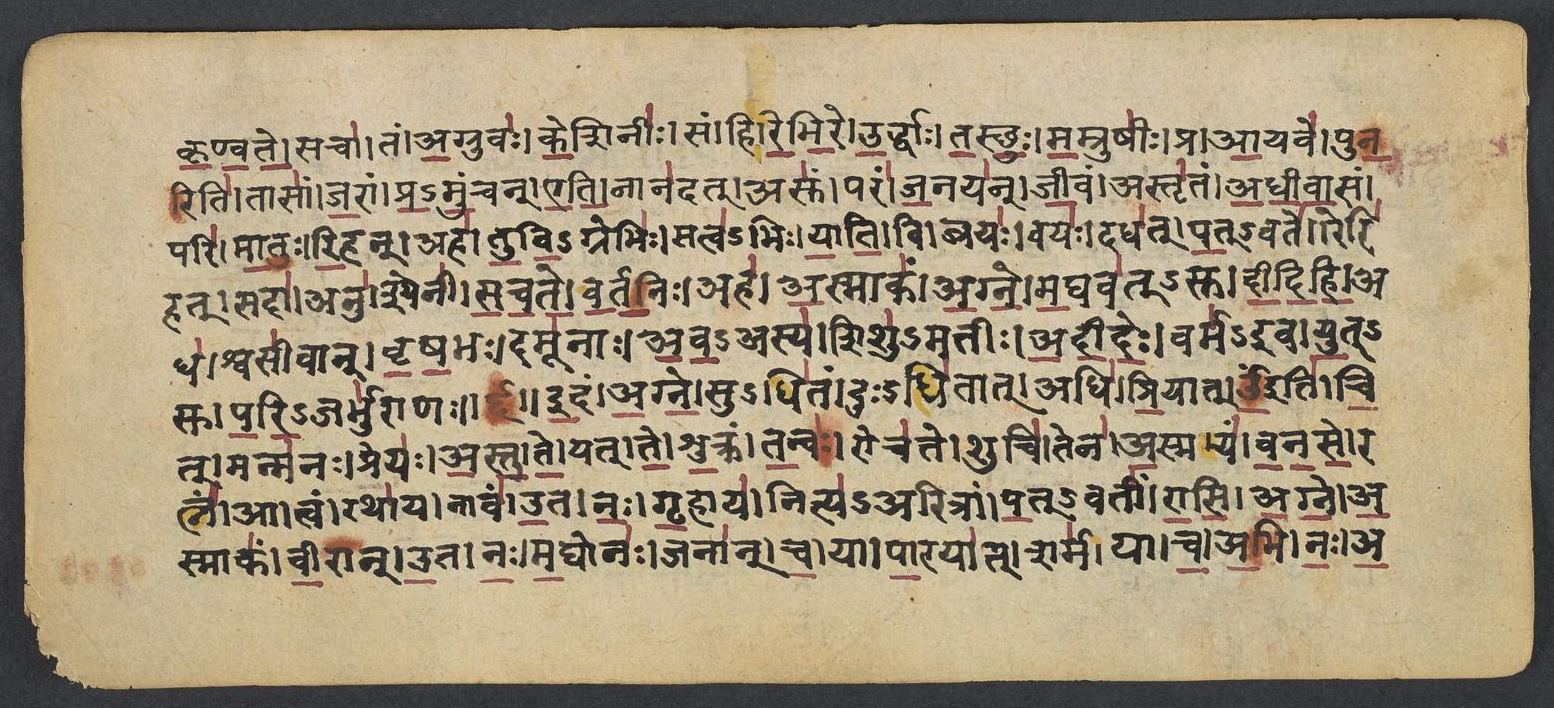
Where on the image
Penn Ms. Coll. 390 Item 41, fol. 110r (numbered 4r by the scribe) (OPenn image 111, lower leaf). Checked on the image: the Rigveda text on this page begins in RV 1.140.7 ‹kṛṇvate sacā›. The next page with Rigveda text, fol. 110v (numbered 4v by the scribe), begins in RV 1.140.13 ‹-agne uktham it juguryāḥ›. Verses 1.140.7-12 end on this page; 1.140.7 begins on fol. 109v (numbered 3v by the scribe).
7sa sa̱ṁstiro̍ vi̱ṣṭira̱ḥ saṁ gṛ̍bhāyati jā̱nann e̱va jā̍na̱tīr nitya̱ ā śa̍ye | puna̍r vardhante̱ api̍ yanti de̱vya̍m a̱nyad varpa̍ḥ pi̱troḥ kṛ̍ṇvate̱ sacā̍ ||
8tam a̱gruva̍ḥ ke̱śinī̱ḥ saṁ hi re̍bhi̱ra ū̱rdhvās ta̍sthur ma̱mruṣī̱ḥ prāyave̱ puna̍ḥ | tāsā̍ṁ ja̱rām pra̍mu̱ñcann e̍ti̱ nāna̍da̱d asu̱m para̍ṁ ja̱naya̍ñ jī̱vam astṛ̍tam ||
9a̱dhī̱vā̱sam pari̍ mā̱tū ri̱hann aha̍ tuvi̱grebhi̱ḥ satva̍bhir yāti̱ vi jraya̍ḥ | vayo̱ dadha̍t pa̱dvate̱ reri̍ha̱t sadānu̱ śyenī̍ sacate varta̱nīr aha̍ ||
10a̱smāka̍m agne ma̱ghava̍tsu dīdi̱hy adha̱ śvasī̍vān vṛṣa̱bho damū̍nāḥ | a̱vāsyā̱ śiśu̍matīr adīde̱r varme̍va yu̱tsu pa̍ri̱jarbhu̍rāṇaḥ ||
11i̱dam a̍gne̱ sudhi̍ta̱ṁ durdhi̍tā̱d adhi̍ pri̱yād u̍ ci̱n manma̍na̱ḥ preyo̍ astu te | yat te̍ śu̱kraṁ ta̱nvo̱3̱̍ roca̍te̱ śuci̱ tenā̱smabhya̍ṁ vanase̱ ratna̱m ā tvam ||
12rathā̍ya̱ nāva̍m u̱ta no̍ gṛ̱hāya̱ nityā̍ritrām pa̱dvatī̍ṁ rāsy agne | a̱smāka̍ṁ vī̱rām̐ u̱ta no̍ ma̱ghono̱ janā̍m̐ś ca̱ yā pā̱rayā̱c charma̱ yā ca̍ ||
Compare: Padapāṭha (word-by-word text written in the manuscript; Sansknet e-text via GRETIL)
7saḥ | sam-stiraḥ | vi-ṣṭiraḥ | sam | gṛbhāyati | jānan | eva | jānatīḥ | nityaḥ | ā | śaye | punaḥ | vardhante | api | yanti | devyam | anyat | varpaḥ | pitroḥ | kṛṇvate | sacā
8tam | agnuvaḥ | keśinīḥ | sam | hi | rebhire | ūrdhvāḥ | tasthuḥ | mamruṣīḥ | pra | āyave | punariti | tāsām | jarām | pra-muñcan | eti | nānadat | asum | param | janayan | jīvam | astṛtam
9adhīvāsam | pari | mātuḥ | rihan | aha | tuvi-grebhiḥ | satva-bhiḥ | yāti | vi | jrayaḥ | vayaḥ | dadhat | pat-vate | rerihat | sadā | anu | śyenī | sacate | vartaniḥ | aha
10asmākam | agne | maghavat-su | dīdihi | adha | śvasīvān | vṛṣabhaḥ | damūnāḥ | ava-asya | śiśu-matīḥ | adīdeḥ | varma-iva | yut-su | pari-jarbhurāṇaḥ
11idam | agne | su-dhitam | duḥ-dhitāt | adhi | priyāt | oṃ iti | cit | manmanaḥ | preyaḥ | astu | te | yat | te | śukram | tanvaḥ | rocate | śuci | tena | asmabhyam | vanase | ratnam | ā | tvam
12rathāya | nāvam | uta | naḥ | gṛhāya | nitya-aritrām | pat-vatīm | rāsi | agne | asmākam | vīrān | uta | naḥ | maghonaḥ | janān | ca | yā | pārayāt | śarma | yā | ca
7Now covered, now displayed he grasps as one who knows his resting-place in those who know him well. A second time they wax and gather Godlike power, and blending both together change their Parents' form.
8The maidens with long, tresses hold him in embrace; dead, they rise up again to meet the Living One. Releasing them from age with a loud roar he comes, filling them with new spirit, living, unsubdued.
9Licking the mantle of the Mother, far and wide he wanders over fields with beasts that flee apace. Strengthening all that walk, licking up all around, a blackened path, forsooth, he leaves where'er he goes.
10O Agni, shine resplendent with our wealthy chiefs, like a loud-snorting bull, accustomed to the house. Thou casting off thine infant wrappings blazest forth as though thou hadst put on a coat of mail for war.
11May this our perfect prayer be dearer unto thee than an imperfect prayer although it please thee well. With the pure brilliancy that radiates from thy form, mayest thou grant to us abundant store of wealth.
12Grant to our chariot, to our house, O Agni, a boat with moving feet and constant oarage, One that may further well our wealthy princes and all the folk, and be our certain refuge.
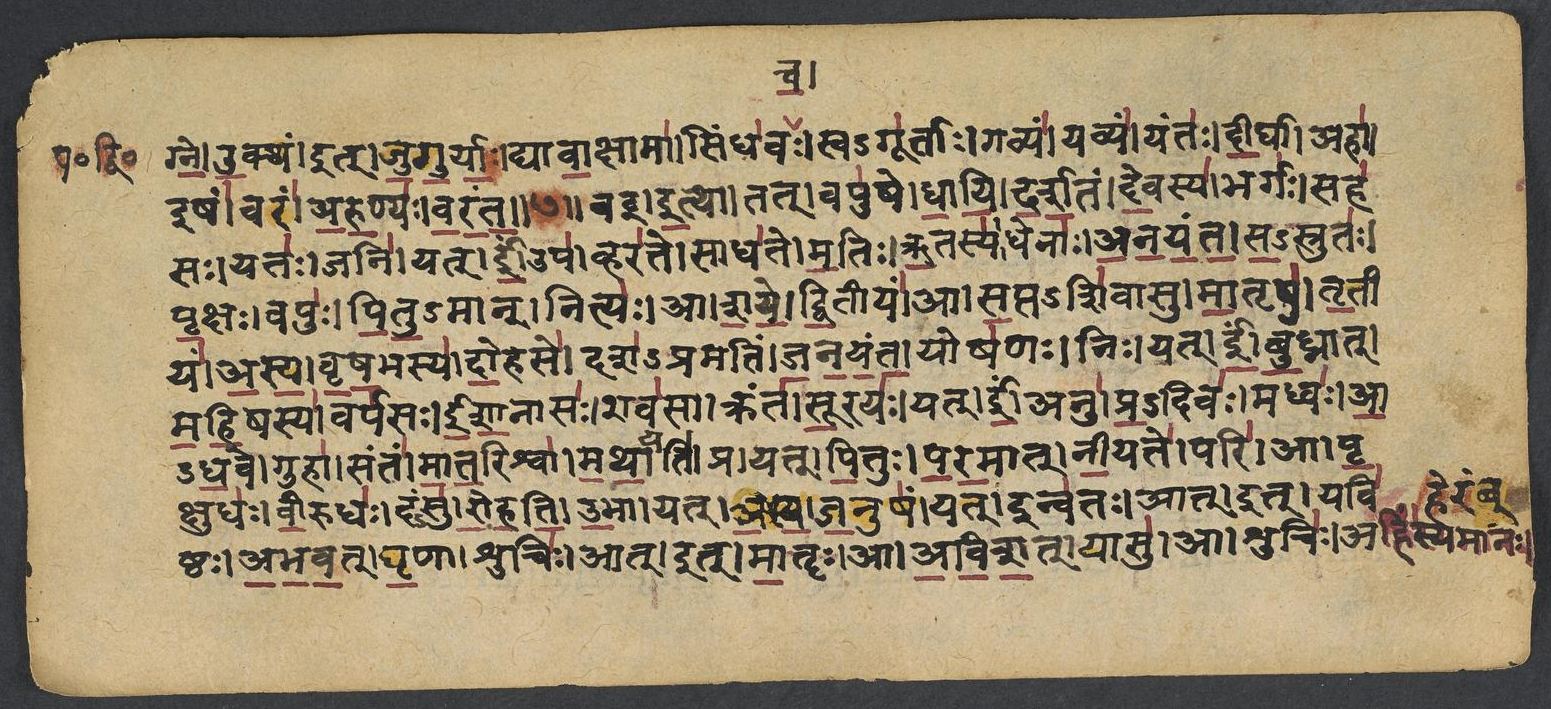
Where on the image
Penn Ms. Coll. 390 Item 41, fol. 110v (numbered 4v by the scribe) (OPenn image 112, upper leaf). Checked on the image: the Rigveda text on this page begins in RV 1.140.13 ‹-agne uktham it juguryāḥ›. The next page with Rigveda text, fol. 111r (numbered 5r by the scribe), begins in RV 1.141.5 ‹vi vavṛdhe anu yat›. Verse 1.140.13 ends on this page; 1.140.13 begins on fol. 110r (numbered 4r by the scribe).
13a̱bhī no̍ agna u̱ktham ij ju̍guryā̱ dyāvā̱kṣāmā̱ sindha̍vaś ca̱ svagū̍rtāḥ | gavya̱ṁ yavya̱ṁ yanto̍ dī̱rghāheṣa̱ṁ vara̍m aru̱ṇyo̍ varanta ||
Compare: Padapāṭha (word-by-word text written in the manuscript; Sansknet e-text via GRETIL)
13abhi | naḥ | agne | uktham | it | juguryāḥ | dyāvākṣāmā | sindhavaḥ | ca | sva-gūrtāḥ | gavyam | yavyam | yantaḥ | dīrghā | ahā | iṣam | varam | aruṇyaḥ | varanta
13Welcome our laud with thine approval, Agni. May earth and heaven and freely flowing rivers Yield us long life and food and corn and cattle, and may the red Dawns choose for us their choicest.
Notes
- Sanskrit: Aufrecht's edition (1877) with the Vedic accents, as entered by van Nooten and Holland (GRETIL).
- English: Ralph T. H. Griffith, The Hymns of the Rigveda (1889-1892; 2nd ed. 1896-1897), from the VedaWeb digital text; OCR slips in that text were corrected against the printed 2nd edition (data/sources/rigveda/griffith_errata.json).
- Padapāṭha (edition text): Sansknet e-text via GRETIL (CC BY-NC-SA 4.0).
Cite
Sources
- Source: Penn Ms. Coll. 390 Item 41 (undated (catalogued with Penn's 18th-19th c. Vedic manuscripts)), OPenn, Public Domain Mark + Aufrecht's accented text (GRETIL) + Griffith's English (VedaWeb) (holding institution)
- Critical edition: Aufrecht (1877), accented e-text via GRETIL
← previous · → next · v cycle view · l back to library