Rigveda 1.141: To Agni
Introduction
Rigveda 1.141 is a hymn of 13 verses addressed to Agni. It stands in book (maṇḍala) 1, a collection of hymns by many families of poets. The Rigveda is the oldest collection of Sanskrit hymns, composed in the second half of the second millennium BCE and handed down orally for many centuries before it was written down.
The manuscript shown is Penn Ms. Coll. 390 Item 41 (University of Pennsylvania), an undated paper manuscript of the padapāṭha (the word-by-word recitation text, in which every word is written separately and compounds are split) of the whole Ṛgveda in Devanāgarī, 884 leaves in fascicles, 7-9 lines to the page, accents in red; this hymn stands on fol. 110v-111v. Each section below gives the verses that end on one page; the page boundaries were read on the images (the opening words of every page), not counted out. Where the manuscript is a padapāṭha (the word-by-word recitation text), the section shows Aufrecht's continuous (saṃhitā) text first and, as the edition text, the padapāṭha of the same verses, which is the form written on the page.
How was this verified? (Provenance)
Where on the image
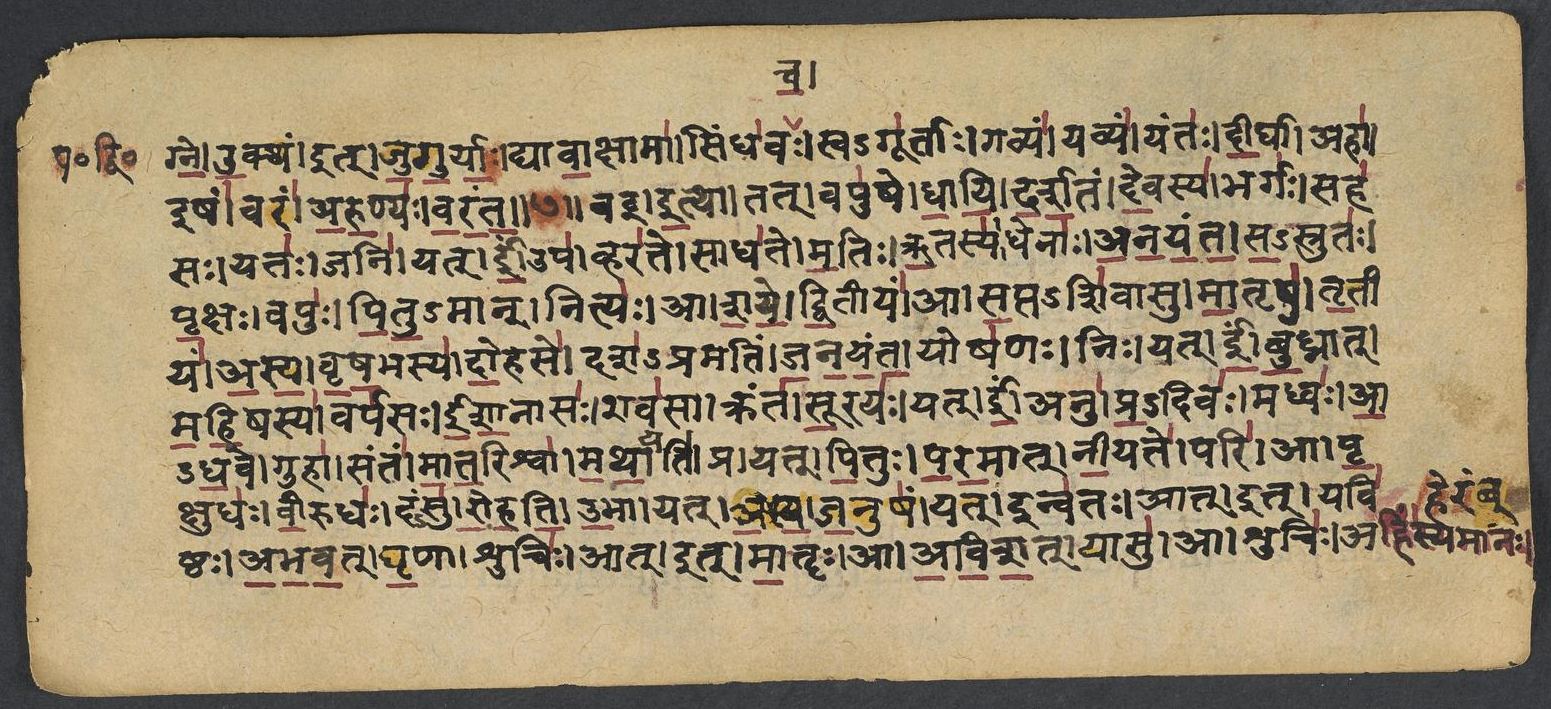
Penn Ms. Coll. 390 Item 41, fol. 110v (numbered 4v by the scribe) (OPenn image 112, upper leaf). Checked on the image: the Rigveda text on this page begins in RV 1.140.13 ‹-agne uktham it juguryāḥ›. The next page with Rigveda text, fol. 111r (numbered 5r by the scribe), begins in RV 1.141.5 ‹vi vavṛdhe anu yat›. Verses 1.141.1-4 end on this page.
1baḻ i̱tthā tad vapu̍ṣe dhāyi darśa̱taṁ de̱vasya̱ bharga̱ḥ saha̍so̱ yato̱ jani̍ | yad ī̱m upa̱ hvara̍te̱ sādha̍te ma̱tir ṛ̱tasya̱ dhenā̍ anayanta sa̱sruta̍ḥ ||
2pṛ̱kṣo vapu̍ḥ pitu̱mān nitya̱ ā śa̍ye dvi̱tīya̱m ā sa̱ptaśi̍vāsu mā̱tṛṣu̍ | tṛ̱tīya̍m asya vṛṣa̱bhasya̍ do̱hase̱ daśa̍pramatiṁ janayanta̱ yoṣa̍ṇaḥ ||
3nir yad ī̍m bu̱dhnān ma̍hi̱ṣasya̱ varpa̍sa īśā̱nāsa̱ḥ śava̍sā̱ kranta̍ sū̱raya̍ḥ | yad ī̱m anu̍ pra̱divo̱ madhva̍ ādha̱ve guhā̱ santa̍m māta̱riśvā̍ mathā̱yati̍ ||
4pra yat pi̱tuḥ pa̍ra̱mān nī̱yate̱ pary ā pṛ̱kṣudho̍ vī̱rudho̱ daṁsu̍ rohati | u̱bhā yad a̍sya ja̱nuṣa̱ṁ yad inva̍ta̱ ād id yavi̍ṣṭho abhavad ghṛ̱ṇā śuci̍ḥ ||
Compare: Padapāṭha (word-by-word text written in the manuscript; Sansknet e-text via GRETIL)
1baṭ | itthā | tat | vapuṣe | dhāyi | darśatam | devasya | bhargaḥ | sahasaḥ | yataḥ | jani | yat | īm | upa | hvarate | sādhate | matiḥ | ṛtasya | dhenāḥ | anayanta | sa-srutaḥ
2pṛkṣaḥ | vapuḥ | pitu-mān | nityaḥ | ā | śaye | dvitīyam | ā | sapta-śivāsu | mātṛṣu | tṛtīyam | asya | vṛṣabhasya | dohase | daśa-pramatim | janayanta | yoṣaṇaḥ
3niḥ | yat | īm | budhnāt | mahiṣasya | varpasaḥ | īśānāsaḥ | śavasā | kranta | sūrayaḥ | yat | īm | anu | pra-divaḥ | madhvaḥ | ādhave | guhā | santam | mātariśvā | mathāyati
4pra | yat | pituḥ | paramāt | nīyate | pari | ā | pṛkṣudhaḥ | vīrudhaḥ | dam-su | rohati | ubhā | yat | asya | januṣam | yat | invataḥ | āt | it | yaviṣṭhaḥ | abhavat | ghṛṇā | śuciḥ
1YEA, verily, the fair effulgence of the God for glory was established, since he sprang from strength. When he inclines thereto successful is the hymn: the songs of sacrifice have brought him as they flow
2Wonderful, rich in nourishment, he dwells in food; next, in the seven auspicious Mothers is his home. Thirdly, that they might drain the treasures of the Bull, the maidens brought forth him for whom the ten provide.
3What time from out the deep, from the Steer's wondrous form, the Chiefs who had the power produced him with their strength; When Mâtariṣvan rubbed forth him who lay concealed, for mixture of the sweet drink, in the days of old.
4When from the Highest Father he is brought to us, amid the plants he rises hungry, wondrously. As both together join to expedite his birth, most youthful he is born resplendent in his light.
Where on the image
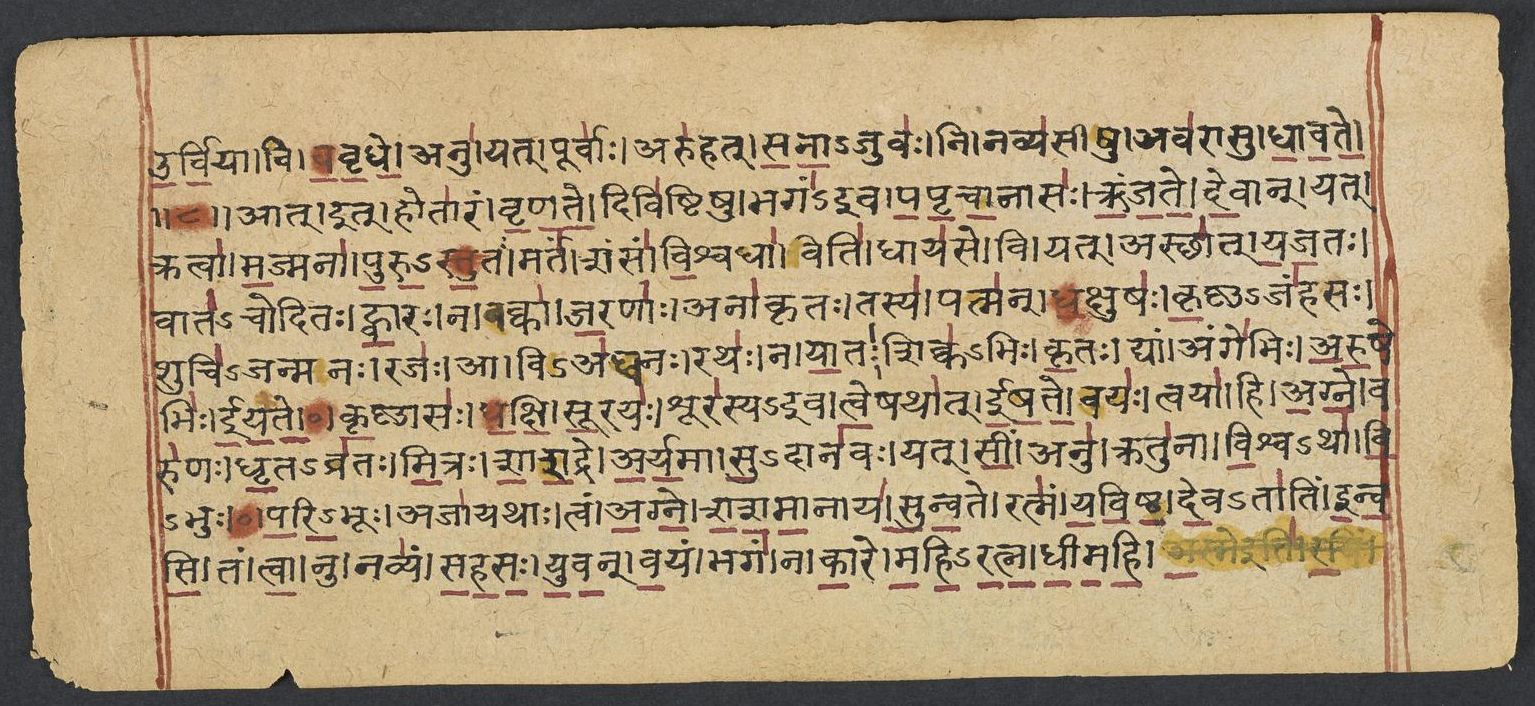
Penn Ms. Coll. 390 Item 41, fol. 111r (numbered 5r by the scribe) (OPenn image 112, lower leaf). Checked on the image: the Rigveda text on this page begins in RV 1.141.5 ‹vi vavṛdhe anu yat›. The next page with Rigveda text, fol. 111v (numbered 5v by the scribe), begins in RV 1.141.11 ‹asme iti rayim na›. Verses 1.141.5-10 end on this page; 1.141.5 begins on fol. 110v (numbered 4v by the scribe).
5ād in mā̱tṝr āvi̍śa̱d yāsv ā śuci̱r ahi̍ṁsyamāna urvi̱yā vi vā̍vṛdhe | anu̱ yat pūrvā̱ aru̍hat sanā̱juvo̱ ni navya̍sī̱ṣv ava̍rāsu dhāvate ||
6ād id dhotā̍raṁ vṛṇate̱ divi̍ṣṭiṣu̱ bhaga̍m iva papṛcā̱nāsa̍ ṛñjate | de̱vān yat kratvā̍ ma̱jmanā̍ puruṣṭu̱to marta̱ṁ śaṁsa̍ṁ vi̱śvadhā̱ veti̱ dhāya̍se ||
7vi yad asthā̍d yaja̱to vāta̍codito hvā̱ro na vakvā̍ ja̱raṇā̱ anā̍kṛtaḥ | tasya̱ patma̍n da̱kṣuṣa̍ḥ kṛ̱ṣṇaja̍ṁhasa̱ḥ śuci̍janmano̱ raja̱ ā vya̍dhvanaḥ ||
8ratho̱ na yā̱taḥ śikva̍bhiḥ kṛ̱to dyām aṅge̍bhir aru̱ṣebhi̍r īyate | ād a̍sya̱ te kṛ̱ṣṇāso̍ dakṣi sū̱raya̱ḥ śūra̍syeva tve̱ṣathā̍d īṣate̱ vaya̍ḥ ||
9tvayā̱ hy a̍gne̱ varu̍ṇo dhṛ̱tavra̍to mi̱traḥ śā̍śa̱dre a̍rya̱mā su̱dāna̍vaḥ | yat sī̱m anu̱ kratu̍nā vi̱śvathā̍ vi̱bhur a̱rān na ne̱miḥ pa̍ri̱bhūr ajā̍yathāḥ ||
10tvam a̍gne śaśamā̱nāya̍ sunva̱te ratna̍ṁ yaviṣṭha de̱vatā̍tim invasi | taṁ tvā̱ nu navya̍ṁ sahaso yuvan va̱yam bhaga̱ṁ na kā̱re ma̍hiratna dhīmahi ||
Compare: Padapāṭha (word-by-word text written in the manuscript; Sansknet e-text via GRETIL)
5āt | it | mātṝḥ | ā | aviśat | yāsu | ā | śuciḥ | ahiṃsyamānaḥ | urviyā | vi | vavṛdhe | anu | yat | pūrvā | aruhat | sanājuvaḥ | ni | navyasīṣu | avarāsu | dhāvate
6āt | it | hotāram | vṛṇate | diviṣṭiṣu | bhagam-iva | papṛcānāsaḥ | ṛñjate | devān | yat | kratvā | majmanā | puru-stutaḥ | martam | śaṃsam | viśvadhā | veti | dhāyase
7vi | yat | asthāt | yajataḥ | vāta-coditaḥ | hvāraḥ | na | vakvā | jaraṇāḥ | anākṛtaḥ | tasya | patman | dakṣuṣaḥ | kṛṣṇa-jaṃhasaḥ | śuci-janmanaḥ | rajaḥ | ā | vi-adhvanaḥ
8rathaḥ | na | yātaḥ | śikva-bhiḥ | kṛtaḥ | dyām | aṅgebhiḥ | aruṣebhiḥ | īyate | āt | asya | te | kṛṣṇāsaḥ | dhakṣi | sūrayaḥ | śūrasya-iva | tveṣathāt | īṣate | vayaḥ
9tvayā | hi | agne | varuṇaḥ | dhṛta-vrataḥ | mitraḥ | śāśadre | aryamā | su-dānavaḥ | yat | sīm | anu | kratunā | viśva-thā | vi-bhuḥ | arān | na | nemiḥ | pari-bhūḥ | ajāyathāḥ
10tvam | agne | śaśamānāya | sunvate | ratnam | yaviṣṭha | devatātim | invasi | tvam | tvā | nu | navyam | sahasaḥ | yuvan | vayam | bhagam | na | kāre | mahi-ratna | dhīmahi
5Then also entered he the Mothers, and in them pure and uninjured he increased in magnitude. As to the first he rose, the vigorous from of old, so now he runs among the younger lowest ones.
6Therefore they choose him Herald at the morning rites, pressing to him as unto Bhaga, pouring gifts, When, much-praised, by the power and will of Gods, he goes at all times to his mortal worshipper to drink.
7What time the Holy One, wind-urged, hath risen up, serpent-like winding through the dry grass unrestrained, Dust lies upon the way of him who burneth all, black-winged and pure of birth who follows sundry paths.
8Like a swift chariot made by men who know their art, he with his red limbs lifts himself aloft to heaven. Thy worshippers become by burning black of hue: their strength flies as before a hero's violence.
9By thee, O Agni, Varuṇa who guards the Law, Mitra and Aryaman, the Bounteous, are made strong; For, as the felly holds the spokes, thou with thy might pervading hast been born encompassing them round.
10Agni, to him who toils and pours libations, thou, Most Youthful! sendest wealth and all the host of Gods. Thee, therefore, even as Bhaga, will we set anew, young Child of Strength, most wealthy! in our battle-song.
Where on the image
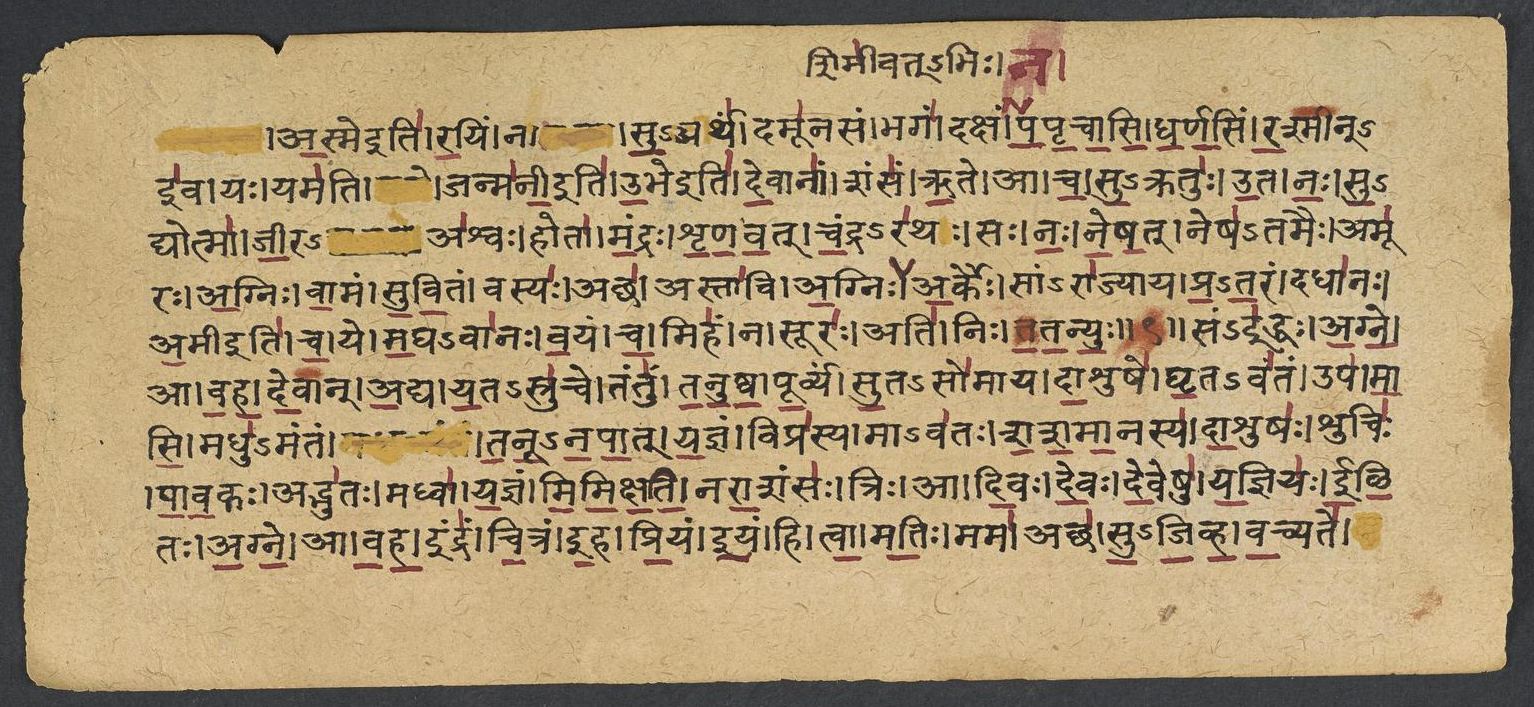
Penn Ms. Coll. 390 Item 41, fol. 111v (numbered 5v by the scribe) (OPenn image 113, upper leaf). Checked on the image: the Rigveda text on this page begins in RV 1.141.11 ‹asme iti rayim na›. The next page with Rigveda text, fol. 112r (numbered 6r by the scribe), begins in RV 1.142.5 ‹stṛṇānāsaḥ yata-srucaḥ barhiḥ yajñe›. Verses 1.141.11-13 end on this page.
11a̱sme ra̱yiṁ na svartha̱ṁ damū̍nasa̱m bhaga̱ṁ dakṣa̱ṁ na pa̍pṛcāsi dharṇa̱sim | ra̱śmīm̐r i̍va̱ yo yama̍ti̱ janma̍nī u̱bhe de̱vānā̱ṁ śaṁsa̍m ṛ̱ta ā ca̍ su̱kratu̍ḥ ||
12u̱ta na̍ḥ su̱dyotmā̍ jī̱rāśvo̱ hotā̍ ma̱ndraḥ śṛ̍ṇavac ca̱ndrara̍thaḥ | sa no̍ neṣa̱n neṣa̍tamai̱r amū̍ro̱ 'gnir vā̱maṁ su̍vi̱taṁ vasyo̱ accha̍ ||
13astā̍vy a̱gniḥ śimī̍vadbhir a̱rkaiḥ sāmrā̍jyāya prata̱raṁ dadhā̍naḥ | a̱mī ca̱ ye ma̱ghavā̍no va̱yaṁ ca̱ miha̱ṁ na sūro̱ ati̱ niṣ ṭa̍tanyuḥ ||
Compare: Padapāṭha (word-by-word text written in the manuscript; Sansknet e-text via GRETIL)
11asme iti | rayim | na | su-artham | damūnasam | bhagan | dakṣam | na | papṛcāsi | dhaṇarsim | raśmīn-iva | yaḥ | yamati | janmanī iti | ubhe iti | devānām | śaṃsam | ṛte | ā | ca | su-kratuḥ
12uta | naḥ | su-dyotmā | jīraaśvaḥ | hotā | mandraḥ | śṛṇavat | candra-rathaḥ | saḥ | naḥ | neṣat | neṣa-tamaiḥ | amūraḥ | agniḥ | vāmam | su-vitam | vasyaḥ | accha
13astāvi | agniḥ | śimīvat-bhiḥ | arkaiḥ | sāmrājyāya | pra-taram | dadhānaḥ | amī | ca | ye | maghavānaḥ | vayam | ca | miham | na | sūraḥ | ati | niḥ | tanyuḥ
11Vouchsafe us riches turned to worthy ends, good luck abiding in the house, and strong capacity, Wealth that directs both worlds as they were guiding-reins, and, very Wise, the Gods' assent in sacrifice.
12May he, the Priest resplendent, joyful, hear us, he with the radiant car and rapid horses. May Agni, ever wise, with best directions to bliss and highest happiness conduct us.
13With hymns of might hath Agni now been lauded, advanced to height of universal kingship. Now may these wealthy chiefs and we together spread forth as spreads the Sun above the rainclouds.
Notes
- Sanskrit: Aufrecht's edition (1877) with the Vedic accents, as entered by van Nooten and Holland (GRETIL).
- English: Ralph T. H. Griffith, The Hymns of the Rigveda (1889-1892; 2nd ed. 1896-1897), from the VedaWeb digital text; OCR slips in that text were corrected against the printed 2nd edition (data/sources/rigveda/griffith_errata.json).
- Padapāṭha (edition text): Sansknet e-text via GRETIL (CC BY-NC-SA 4.0).
Cite
Sources
- Source: Penn Ms. Coll. 390 Item 41 (undated (catalogued with Penn's 18th-19th c. Vedic manuscripts)), OPenn, Public Domain Mark + Aufrecht's accented text (GRETIL) + Griffith's English (VedaWeb) (holding institution)
- Critical edition: Aufrecht (1877), accented e-text via GRETIL
← previous · → next · v cycle view · l back to library