Rigveda 1.142: Apri hymn
Introduction
Rigveda 1.142 is a hymn of 13 verses addressed to Apri hymn. It stands in book (maṇḍala) 1, a collection of hymns by many families of poets. The Rigveda is the oldest collection of Sanskrit hymns, composed in the second half of the second millennium BCE and handed down orally for many centuries before it was written down.
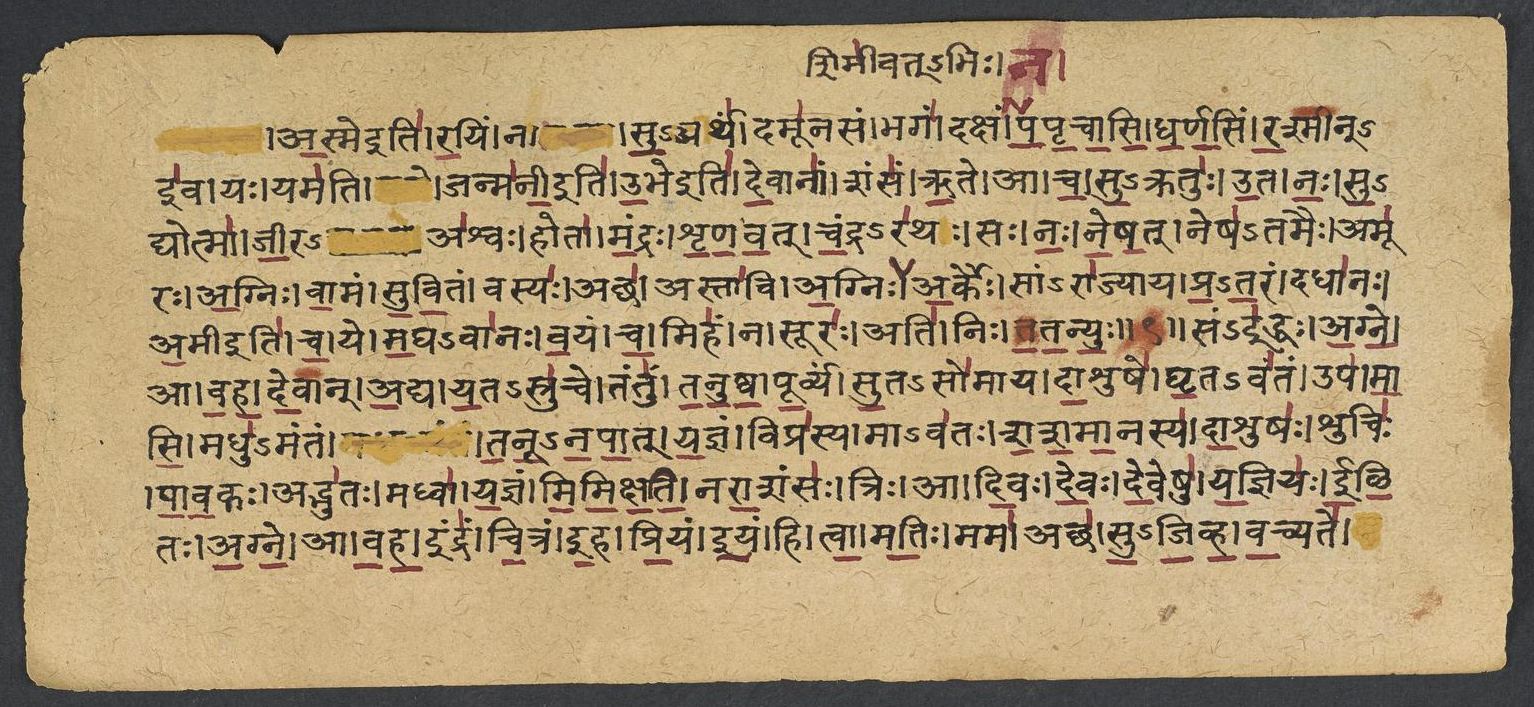
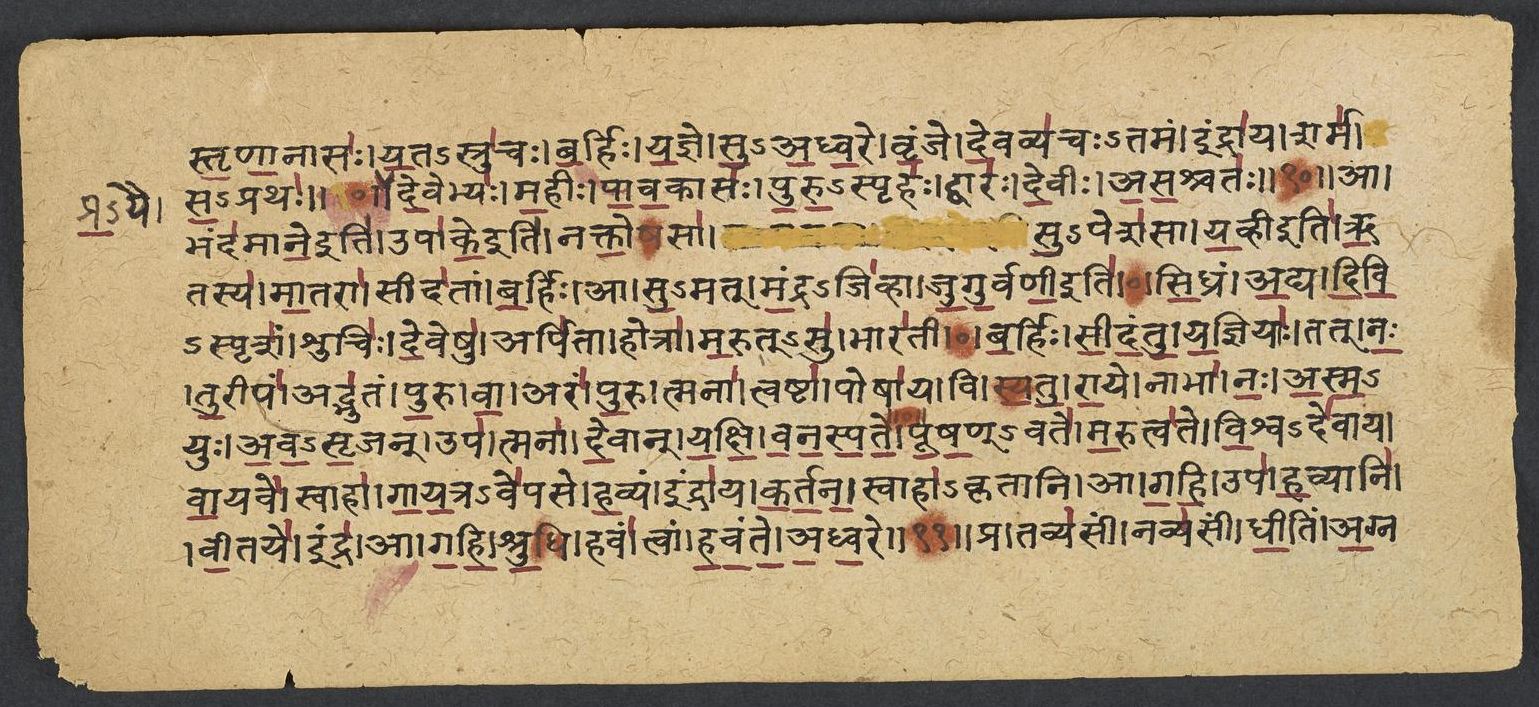
The manuscript shown is Penn Ms. Coll. 390 Item 41 (University of Pennsylvania), an undated paper manuscript of the padapāṭha (the word-by-word recitation text, in which every word is written separately and compounds are split) of the whole Ṛgveda in Devanāgarī, 884 leaves in fascicles, 7-9 lines to the page, accents in red; this hymn stands on fol. 111v-112r. Each section below gives the verses that end on one page; the page boundaries were read on the images (the opening words of every page), not counted out. Where the manuscript is a padapāṭha (the word-by-word recitation text), the section shows Aufrecht's continuous (saṃhitā) text first and, as the edition text, the padapāṭha of the same verses, which is the form written on the page.
How was this verified? (Provenance)
Where on the image
Penn Ms. Coll. 390 Item 41, fol. 111v (numbered 5v by the scribe) (OPenn image 113, upper leaf). Checked on the image: the Rigveda text on this page begins in RV 1.141.11 ‹asme iti rayim na›. The next page with Rigveda text, fol. 112r (numbered 6r by the scribe), begins in RV 1.142.5 ‹stṛṇānāsaḥ yata-srucaḥ barhiḥ yajñe›. Verses 1.142.1-4 end on this page.
1sami̍ddho agna̱ ā va̍ha de̱vām̐ a̱dya ya̱tasru̍ce | tantu̍ṁ tanuṣva pū̱rvyaṁ su̱taso̍māya dā̱śuṣe̍ ||
2ghṛ̱tava̍nta̱m upa̍ māsi̱ madhu̍mantaṁ tanūnapāt | ya̱jñaṁ vipra̍sya̱ māva̍taḥ śaśamā̱nasya̍ dā̱śuṣa̍ḥ ||
3śuci̍ḥ pāva̱ko adbhu̍to̱ madhvā̍ ya̱jñam mi̍mikṣati | narā̱śaṁsa̱s trir ā di̱vo de̱vo de̱veṣu̍ ya̱jñiya̍ḥ ||
4ī̱ḻi̱to a̍gna̱ ā va̱hendra̍ṁ ci̱tram i̱ha pri̱yam | i̱yaṁ hi tvā̍ ma̱tir mamācchā̍ sujihva va̱cyate̍ ||
Compare: Padapāṭha (word-by-word text written in the manuscript; Sansknet e-text via GRETIL)
1sam-iddhaḥ | agne | ā | vaha | devān | adya | yata-sruce | tantum | tanuṣva | pūrvyam | suta-somāya | dāśuṣe
2ghṛta-vantam | upa | māsi | madhu-mantam | tanū-napāt | yajñam | viprasya | māvataḥ | śaśamānasya | dāśuṣaḥ
3śuciḥ | pāvakaḥ | adbhutaḥ | madhvā | yajñam | mimikṣati | narāsaṃsaḥ | triḥ | ā | divaḥ | devaḥ | deveṣu | yajñiyaḥ
4īḷitaḥ | agne | ā | vaha | indram | citram | iha | priyam | iyam | hi | tvā | matiḥ | mama | accha | su-jihva | vacyate
1KINDLED, bring, Agni, Gods to-day for him who lifts the ladle up. Spin out the ancient thread for him who sheds, with gifts, the Soma juice.
2Thou dealest forth, Tanûnapât, sweet sacrifice enriched with oil, Brought by a singer such as I who offers gifts and toils for thee.
3He wondrous, sanctifying, bright, sprinkles the sacrifice with mead, Thrice, Narâṣansa from the heavens, a God mid Gods adorable.
4Agni, besought, bring hitherward Indra the Friend, the Wonderful, For this my hymn of praise, O sweet of tongue, is chanted forth to thee.
Where on the image
Penn Ms. Coll. 390 Item 41, fol. 112r (numbered 6r by the scribe) (OPenn image 113, lower leaf). Checked on the image: the Rigveda text on this page begins in RV 1.142.5 ‹stṛṇānāsaḥ yata-srucaḥ barhiḥ yajñe›. The next page with Rigveda text, fol. 112v (numbered 6v by the scribe), begins in RV 1.143.1 ‹-agnaye vācaḥ matim sahasaḥ›. Verses 1.142.5-13 end on this page.
5stṛ̱ṇā̱nāso̍ ya̱tasru̍co ba̱rhir ya̱jñe sva̍dhva̱re | vṛ̱ñje de̱vavya̍castama̱m indrā̍ya̱ śarma̍ sa̱pratha̍ḥ ||
6vi śra̍yantām ṛtā̱vṛdha̍ḥ pra̱yai de̱vebhyo̍ ma̱hīḥ | pā̱va̱kāsa̍ḥ puru̱spṛho̱ dvāro̍ de̱vīr a̍sa̱ścata̍ḥ ||
7ā bhanda̍māne̱ upā̍ke̱ nakto̱ṣāsā̍ su̱peśa̍sā | ya̱hvī ṛ̱tasya̍ mā̱tarā̱ sīda̍tām ba̱rhir ā su̱mat ||
8ma̱ndraji̍hvā jugu̱rvaṇī̱ hotā̍rā̱ daivyā̍ ka̱vī | ya̱jñaṁ no̍ yakṣatām i̱maṁ si̱dhram a̱dya di̍vi̱spṛśa̍m ||
9śuci̍r de̱veṣv arpi̍tā̱ hotrā̍ ma̱rutsu̱ bhāra̍tī | iḻā̱ sara̍svatī ma̱hī ba̱rhiḥ sī̍dantu ya̱jñiyā̍ḥ ||
10tan na̍s tu̱rīpa̱m adbhu̍tam pu̱ru vāra̍m pu̱ru tmanā̍ | tvaṣṭā̱ poṣā̍ya̱ vi ṣya̍tu rā̱ye nābhā̍ no asma̱yuḥ ||
11a̱va̱sṛ̱jann upa̱ tmanā̍ de̱vān ya̍kṣi vanaspate | a̱gnir ha̱vyā su̍ṣūdati de̱vo de̱veṣu̱ medhi̍raḥ ||
12pū̱ṣa̱ṇvate̍ ma̱rutva̍te vi̱śvade̍vāya vā̱yave̍ | svāhā̍ gāya̱trave̍pase ha̱vyam indrā̍ya kartana ||
13svāhā̍kṛtā̱ny ā ga̱hy upa̍ ha̱vyāni̍ vī̱taye̍ | indrā ga̍hi śru̱dhī hava̱ṁ tvāṁ ha̍vante adhva̱re ||
Compare: Padapāṭha (word-by-word text written in the manuscript; Sansknet e-text via GRETIL)
5stṛṇānāsaḥ | yata-srucaḥ | barhiḥ | yajñe | su-adhvare | vṛñje | devavyacaḥ-tamam | indrāya | śarma | sa-prathaḥ
6vi | śrayantām | ṛta-vṛdhaḥ | pra-yai | deve--bhyaḥ | mahīḥ | pāvakāsaḥ | puru-spṛhaḥ | dvāraḥ | devīḥ | asaścataḥ
7ā | bhandamāneiti | upāke iti | naktoṣasā | su-peṣasā | yahvī iti | ṛtasya | mātarā | sīdatām | barhiḥ | ā | su-mat
8mandra-jihvā | jugurvaṇī iti | hotārā | daivyā | kavī | yajñam | naḥ | yakṣatām | imam | sidhram | adya | divi-spṛśam
9śuciḥ | deveṣu | arpitā | hotrā | marut-su | bhāratī | iḷā | sarasvatī | mahī barhiḥ | sīdantu | yajñiyāḥ
10tat | naḥ | turīpam | adbhutam | puru | vā | aram | tmanā | tvaṣṭā | poṣāya | vi | syatu | rāye | nābhā | naḥ | asma-yuḥ
11ava-sṛjan | upa | tmanā | devān | yakṣi | vanaspate | agniḥ | havyā | susūdat i | devaḥ | deveṣu | medhiraḥ
12pūṣaṇ-vate | marutvate | viśva-devāya | vāyave | svāhā | gāyatra-vepase | havyam | indrāya | kartana
13svāhākṛtāni | ā | gahi | upa | havyāni | vītaye | indra | ā | gahi | śrudhi | havam | tvām | havante | adhvare
5The ladle-holders strew trimmed grass at this well-ordered sacrifice; A home for Indra is adorned, wide, fittest to receive the Gods.
6Thrown open be the Doors Divine, unfailing, that assist the rite, High, purifying, much-desired, so that the Gods may enter in.
7May Night and Morning, hymned with lauds, united, fair to look upon, Strong Mothers of the sacrifice, seat them together on the grass.
8May the two Priests Divine, the sage, the sweet-voiced lovers of the hymn, Complete this sacrifice of ours, effectual, reaching heaven to-day.
9Let Hotrâ pure, set among Gods, amid the Maruts Bhirati, Iḷâ, Sarasvatî, Mahi, rest on the grass, adorable.
10May Tvashṭar send us genial dew abundant, wondrous, rich in gifts, For increase and for growth of wealth, Tvashṭar our kinsman and our Friend.
11Vanaspati, give forth, thyself, and call the Gods to sacrifice. May Agni, God intelligent, speed our oblation to the Gods.
12To Vâyu joined with Pûshan, with the Maruts, and the host of Gods, To Indra who inspires the hymn cry Glory! and present the gift.
13Come hither to enjoy the gifts prepared with cry of Glory! Come, O Indra, hear their calling; they invite thee to the sacrifice.
Notes
- Sanskrit: Aufrecht's edition (1877) with the Vedic accents, as entered by van Nooten and Holland (GRETIL).
- English: Ralph T. H. Griffith, The Hymns of the Rigveda (1889-1892; 2nd ed. 1896-1897), from the VedaWeb digital text; OCR slips in that text were corrected against the printed 2nd edition (data/sources/rigveda/griffith_errata.json).
- Padapāṭha (edition text): Sansknet e-text via GRETIL (CC BY-NC-SA 4.0).
Cite
Sources
- Source: Penn Ms. Coll. 390 Item 41 (undated (catalogued with Penn's 18th-19th c. Vedic manuscripts)), OPenn, Public Domain Mark + Aufrecht's accented text (GRETIL) + Griffith's English (VedaWeb) (holding institution)
- Critical edition: Aufrecht (1877), accented e-text via GRETIL
← previous · → next · v cycle view · l back to library