Rigveda 1.143: To Agni
Introduction
Rigveda 1.143 is a hymn of 8 verses addressed to Agni. It stands in book (maṇḍala) 1, a collection of hymns by many families of poets. The Rigveda is the oldest collection of Sanskrit hymns, composed in the second half of the second millennium BCE and handed down orally for many centuries before it was written down.
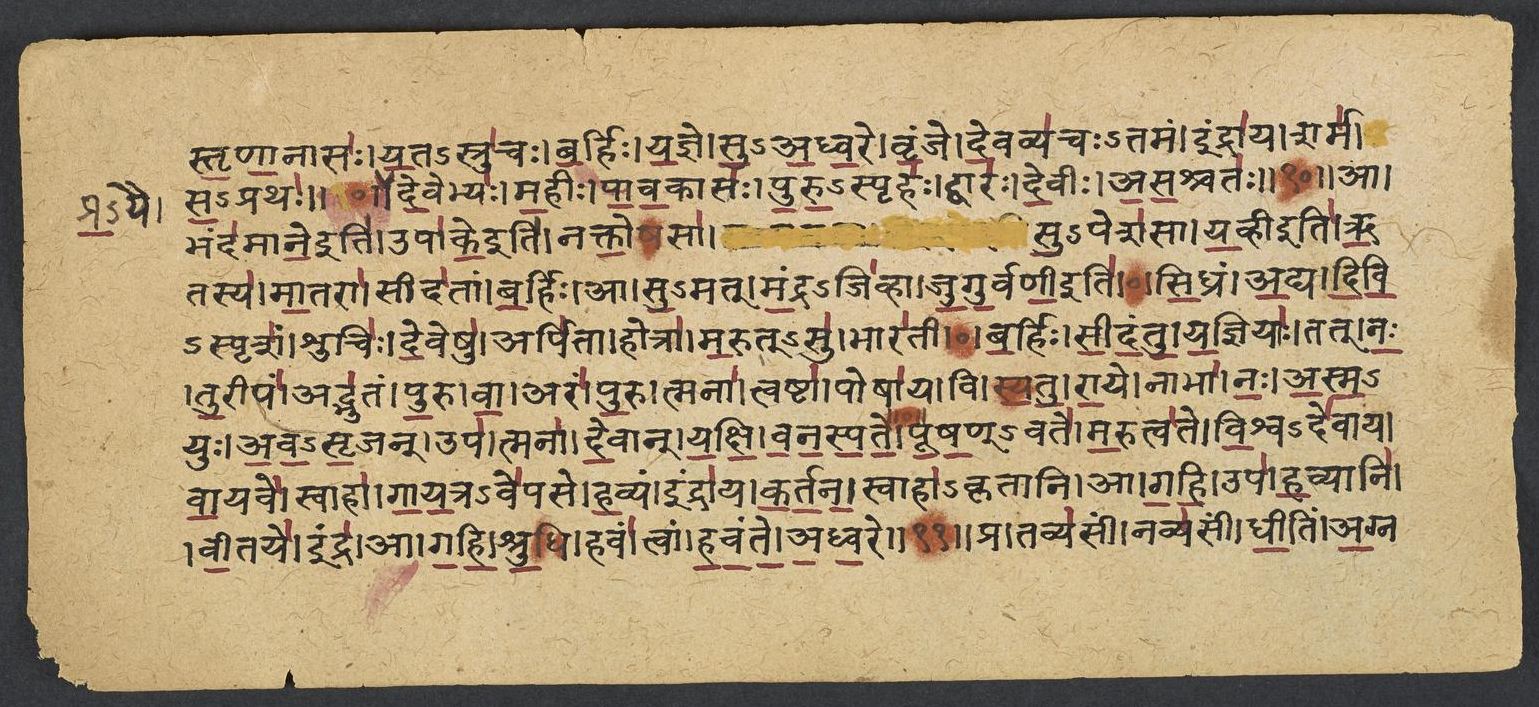
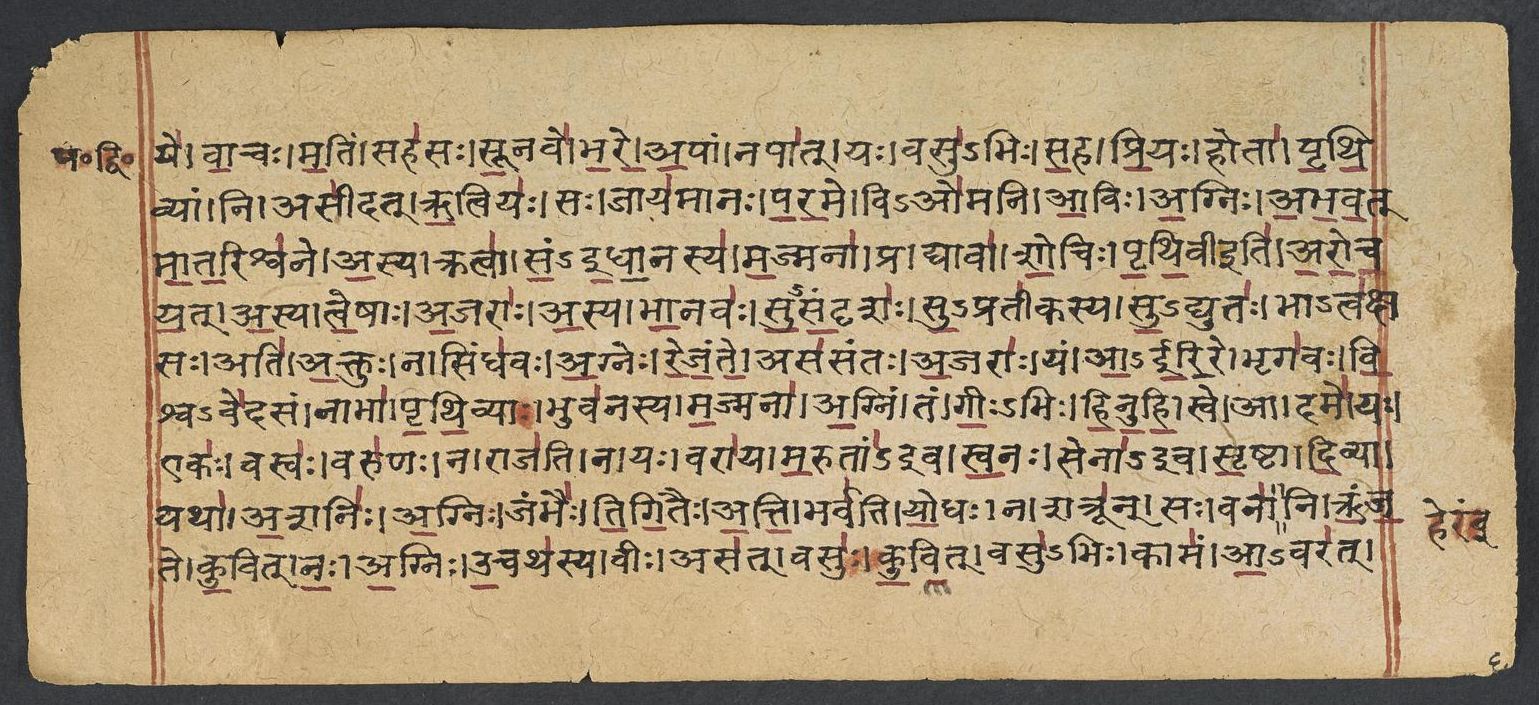
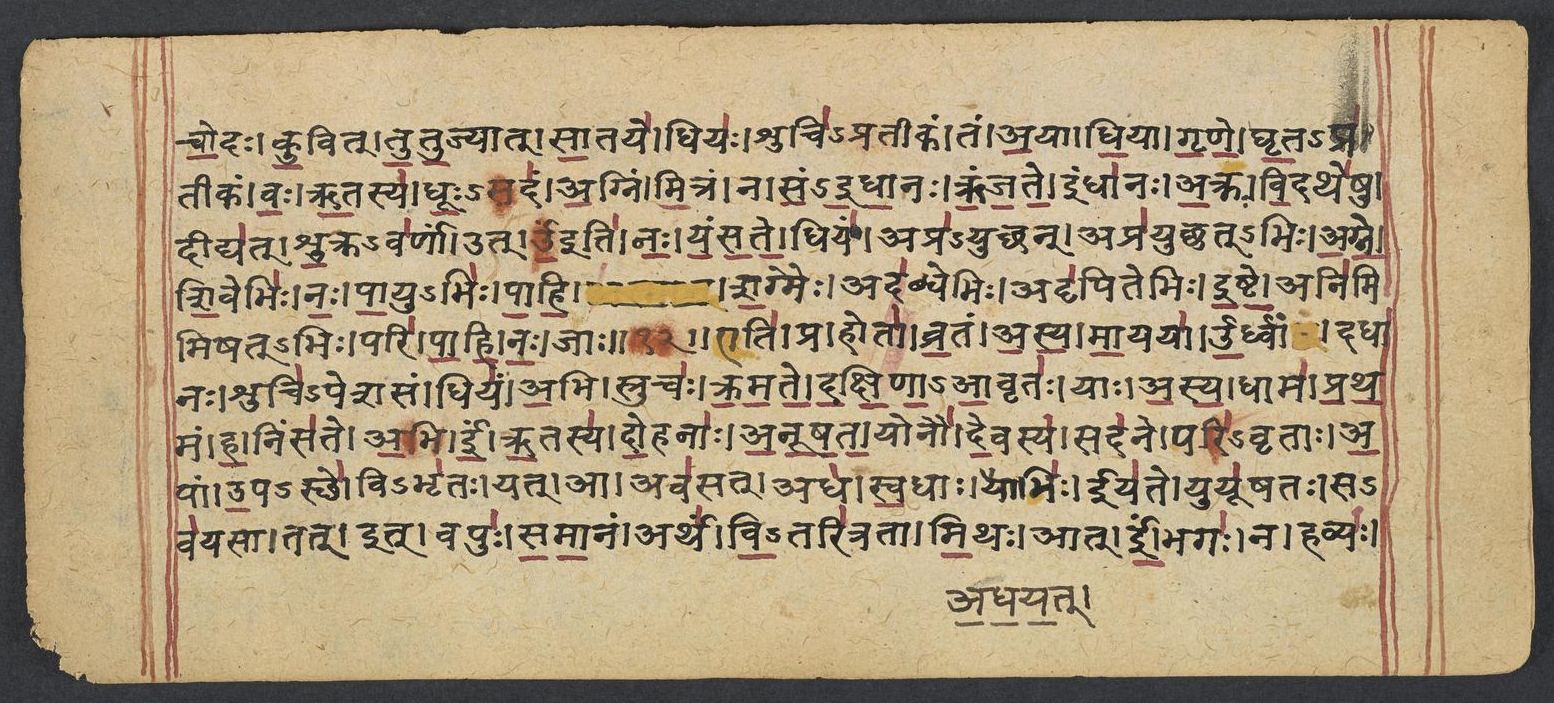
The manuscript shown is Penn Ms. Coll. 390 Item 41 (University of Pennsylvania), an undated paper manuscript of the padapāṭha (the word-by-word recitation text, in which every word is written separately and compounds are split) of the whole Ṛgveda in Devanāgarī, 884 leaves in fascicles, 7-9 lines to the page, accents in red; this hymn stands on fol. 112r-113r. Each section below gives the verses that end on one page; the page boundaries were read on the images (the opening words of every page), not counted out. Where the manuscript is a padapāṭha (the word-by-word recitation text), the section shows Aufrecht's continuous (saṃhitā) text first and, as the edition text, the padapāṭha of the same verses, which is the form written on the page.
How was this verified? (Provenance)
Where on the image
Penn Ms. Coll. 390 Item 41, fol. 112v (numbered 6v by the scribe) (OPenn image 114, upper leaf). Checked on the image: the Rigveda text on this page begins in RV 1.143.1 ‹-agnaye vācaḥ matim sahasaḥ›. The next page with Rigveda text, fol. 113r (numbered 7r by the scribe), begins in RV 1.143.6 ‹codaḥ kuvit tutujyāt sātaye›. Verses 1.143.1-5 end on this page; 1.143.1 begins on fol. 112r (numbered 6r by the scribe).
1pra tavya̍sī̱ṁ navya̍sīṁ dhī̱tim a̱gnaye̍ vā̱co ma̱tiṁ saha̍saḥ sū̱nave̍ bhare | a̱pāṁ napā̱d yo vasu̍bhiḥ sa̱ha pri̱yo hotā̍ pṛthi̱vyāṁ ny asī̍dad ṛ̱tviya̍ḥ ||
2sa jāya̍mānaḥ para̱me vyo̍many ā̱vir a̱gnir a̍bhavan māta̱riśva̍ne | a̱sya kratvā̍ samidhā̱nasya̍ ma̱jmanā̱ pra dyāvā̍ śo̱ciḥ pṛ̍thi̱vī a̍rocayat ||
3a̱sya tve̱ṣā a̱jarā̍ a̱sya bhā̱nava̍ḥ susa̱ṁdṛśa̍ḥ su̱pratī̍kasya su̱dyuta̍ḥ | bhātva̍kṣaso̱ aty a̱ktur na sindha̍vo̱ 'gne re̍jante̱ asa̍santo a̱jarā̍ḥ ||
4yam e̍ri̱re bhṛga̍vo vi̱śvave̍dasa̱ṁ nābhā̍ pṛthi̱vyā bhuva̍nasya ma̱jmanā̍ | a̱gniṁ taṁ gī̱rbhir hi̍nuhi̱ sva ā dame̱ ya eko̱ vasvo̱ varu̍ṇo̱ na rāja̍ti ||
5na yo varā̍ya ma̱rutā̍m iva sva̱naḥ sene̍va sṛ̱ṣṭā di̱vyā yathā̱śani̍ḥ | a̱gnir jambhai̍s tigi̱tair a̍tti̱ bharva̍ti yo̱dho na śatrū̱n sa vanā̱ ny ṛ̍ñjate ||
Compare: Padapāṭha (word-by-word text written in the manuscript; Sansknet e-text via GRETIL)
1pra | tavyasīm | navyasīm | dhītim | agnaye | vācaḥ | matim | sahasaḥ | sūnave | bhare | apām | napāt | yaḥ | vasu-bhiḥ | saha | priyaḥ | hotā | pṛthivyām | ni | asīdat | ṛtviyaḥ
2saḥ | jāyamānaḥ | parame | vi-omani | āviḥ | agniḥ | abhavat | mātariśvane | asya | kratvā | sam-idhānasya | majmanā | pra | dyāvā | śociḥ | pṛthivī iti | arocayat
3asya | tveṣāḥ | ajarāḥ | asya | bhānavaḥ | su-sandṛśaḥ | su-pratīkasya | su-dyutaḥ | bhātvakṣasaḥ | ati | aktuḥ | na | sindhavaḥ | agneḥ | rejante | asasantaḥ | ajarāḥ
4yam | āīrire | bhṛgavaḥ | viśva-vedasam | nābhā | pṛthivyāḥ | bhuvanasya | majmanā | agnim | tam | gīḥ-bhiḥ | hinuhi | sve | ā | dame | yaḥ | ekaḥ | vasvaḥ | varuṇaḥ | na | rājati
5na | yaḥ | varāya | marutām-iva | svanaḥ | senāiva | sṛṣṭā | divyā | yathā | aśaniḥ | agniḥ | jambhaiḥ | tigitaiḥ | atti | bharvati | na | śatrūn | saḥ | vanā | ni | ṛñjate
1To Agni I present a newer mightier hymn, I bring my words and song unto the Son of Strength, Who, Offspring of the Waters, bearing precious things sits on the earth, in season, dear Invoking Priest.
2Soon as he sprang to birth that Agni was shown forth to Mâtariṣvan in the highest firmament. When he was kindled, through his power and majesty his fiery splendour made the heavens and earth to shine.
3His flames that wax not old, beams fair to look upon of him whose face is lovely, shine with beauteous sheen. The rays of Agni, him whose active force is light, through the nights glimmer sleepless, ageless, like the floods.
4Send thou with hymns that Agni to his own abode, who rules, one Sovran Lord of wealth, like Varuṇa, Him, All-possessor, whom the Bhr̥igus with their might brought to earth's central point, the centre of the world.
5He whom no force can stay, even as the Maruts' roar, like to a dart sent forth, even as the bolt from heaven, Agni with sharpened jaws chews up and eats the trees, and conquers them as when the warrior smites his foes.
Where on the image
Penn Ms. Coll. 390 Item 41, fol. 113r (numbered 7r by the scribe) (OPenn image 114, lower leaf). Checked on the image: the Rigveda text on this page begins in RV 1.143.6 ‹codaḥ kuvit tutujyāt sātaye›. The next page with Rigveda text, fol. 113v (numbered 7v by the scribe), begins in RV 1.144.3 ‹sam asmat ā voḷhuḥ›. Verses 1.143.6-8 end on this page; 1.143.6 begins on fol. 112v (numbered 6v by the scribe).
6ku̱vin no̍ a̱gnir u̱catha̍sya̱ vīr asa̱d vasu̍ṣ ku̱vid vasu̍bhi̱ḥ kāma̍m ā̱vara̍t | co̱daḥ ku̱vit tu̍tu̱jyāt sā̱taye̱ dhiya̱ḥ śuci̍pratīka̱ṁ tam a̱yā dhi̱yā gṛ̍ṇe ||
7ghṛ̱tapra̍tīkaṁ va ṛ̱tasya̍ dhū̱rṣada̍m a̱gnim mi̱traṁ na sa̍midhā̱na ṛ̍ñjate | indhā̍no a̱kro vi̱dathe̍ṣu̱ dīdya̍c chu̱krava̍rṇā̱m ud u̍ no yaṁsate̱ dhiya̍m ||
8apra̍yuccha̱nn apra̍yucchadbhir agne śi̱vebhi̍r naḥ pā̱yubhi̍ḥ pāhi śa̱gmaiḥ | ada̍bdhebhi̱r adṛ̍pitebhir i̱ṣṭe 'ni̍miṣadbhi̱ḥ pari̍ pāhi no̱ jāḥ ||
Compare: Padapāṭha (word-by-word text written in the manuscript; Sansknet e-text via GRETIL)
6kuvit | naḥ | agniḥ | ucathasya | vīḥ | asat | vasuḥ | kuvit | vasu-bhiḥ | kāmam | āvarat | codaḥ | kuvit | tutujyāt | sātaye | dhiyaḥ | śuci-pratīkam | tam | ayā | dhiyā | gṛṇe
7ghṛta-pratīkam | vaḥ | ṛtasya | dhūḥ-sadam | agnim | mitram | na | sam-idhānaḥ | ṛñjate | indhānaḥ | akraḥ | vidatheṣu | dīdyat | śukra-varṇām | ut | oṃ iti | naḥ | yaṃsate | dhiyam
8apra-yucchan | aprayucchat-bhiḥ | agne | śivebhiḥ | naḥ | pāyu-bhiḥ | pāhi | śagmaiḥ | adabdhebhiḥ | adṛpitebhiḥ | iṣṭe | animiṣat-bhiḥ | pari | pāhi | naḥ | jāḥ
6And will not Agni find enjoyment in our praise, will not the Vasu grant our wish with gifts of wealth? Will not the Inspirer speed our prayers to gain their end? Him with the radiant glance I laud with this my song.
7The kindler of the flame wins Agni as a Friend, promoter of the Law, whose face is bright with oil. Inflamed and keen, refulgent in our gatherings, he lifts our hymn on high clad in his radiant hues.
8Keep us incessantly with guards that cease not, Agni, with guards auspicious, very mighty. With guards that never slumber, never heedless, never beguiled. O Helper, keep our children.
Notes
- Sanskrit: Aufrecht's edition (1877) with the Vedic accents, as entered by van Nooten and Holland (GRETIL).
- English: Ralph T. H. Griffith, The Hymns of the Rigveda (1889-1892; 2nd ed. 1896-1897), from the VedaWeb digital text; OCR slips in that text were corrected against the printed 2nd edition (data/sources/rigveda/griffith_errata.json).
- Padapāṭha (edition text): Sansknet e-text via GRETIL (CC BY-NC-SA 4.0).
Cite
Sources
- Source: Penn Ms. Coll. 390 Item 41 (undated (catalogued with Penn's 18th-19th c. Vedic manuscripts)), OPenn, Public Domain Mark + Aufrecht's accented text (GRETIL) + Griffith's English (VedaWeb) (holding institution)
- Critical edition: Aufrecht (1877), accented e-text via GRETIL
← previous · → next · v cycle view · l back to library