Rigveda 1.144: To Agni
Introduction
Rigveda 1.144 is a hymn of 7 verses addressed to Agni. It stands in book (maṇḍala) 1, a collection of hymns by many families of poets. The Rigveda is the oldest collection of Sanskrit hymns, composed in the second half of the second millennium BCE and handed down orally for many centuries before it was written down.
The manuscript shown is Penn Ms. Coll. 390 Item 41 (University of Pennsylvania), an undated paper manuscript of the padapāṭha (the word-by-word recitation text, in which every word is written separately and compounds are split) of the whole Ṛgveda in Devanāgarī, 884 leaves in fascicles, 7-9 lines to the page, accents in red; this hymn stands on fol. 113r-113v. Each section below gives the verses that end on one page; the page boundaries were read on the images (the opening words of every page), not counted out. Where the manuscript is a padapāṭha (the word-by-word recitation text), the section shows Aufrecht's continuous (saṃhitā) text first and, as the edition text, the padapāṭha of the same verses, which is the form written on the page.
How was this verified? (Provenance)
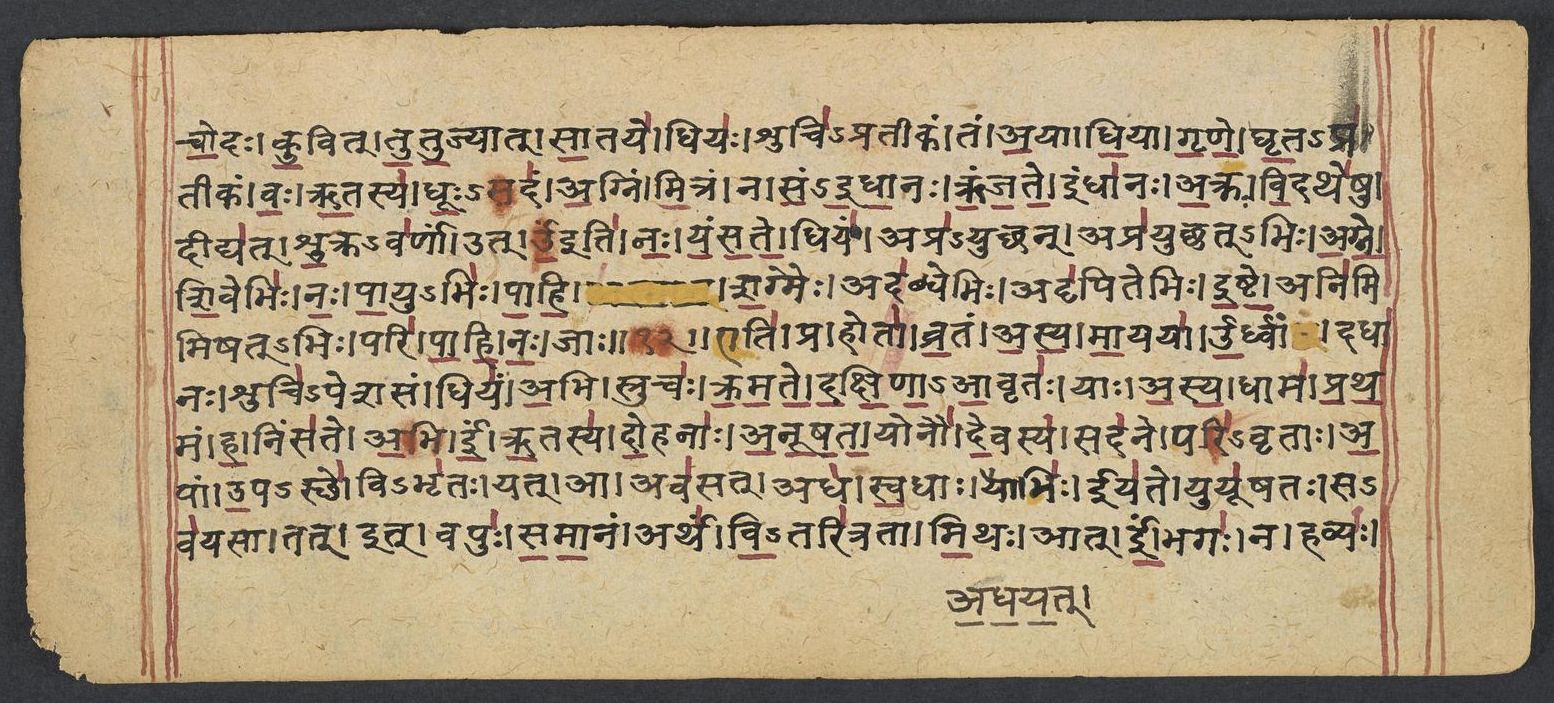
Where on the image
Penn Ms. Coll. 390 Item 41, fol. 113r (numbered 7r by the scribe) (OPenn image 114, lower leaf). Checked on the image: the Rigveda text on this page begins in RV 1.143.6 ‹codaḥ kuvit tutujyāt sātaye›. The next page with Rigveda text, fol. 113v (numbered 7v by the scribe), begins in RV 1.144.3 ‹sam asmat ā voḷhuḥ›. Verses 1.144.1-2 end on this page.
1eti̱ pra hotā̍ vra̱tam a̍sya mā̱yayo̱rdhvāṁ dadhā̍na̱ḥ śuci̍peśasa̱ṁ dhiya̍m | a̱bhi sruca̍ḥ kramate dakṣiṇā̱vṛto̱ yā a̍sya̱ dhāma̍ pratha̱maṁ ha̱ niṁsa̍te ||
2a̱bhīm ṛ̱tasya̍ do̱hanā̍ anūṣata̱ yonau̍ de̱vasya̱ sada̍ne̱ parī̍vṛtāḥ | a̱pām u̱pasthe̱ vibhṛ̍to̱ yad āva̍sa̱d adha̍ sva̱dhā a̍dhaya̱d yābhi̱r īya̍te ||
Compare: Padapāṭha (word-by-word text written in the manuscript; Sansknet e-text via GRETIL)
1eti | pra | hotā | vratam | asya | māyayā | ūrdhvām | dadhānaḥ | śuci-peśasam | dhiyam | abhi | srucaḥ | kramate | dakṣiṇāāvṛtaḥ | yāḥ | asya | dhāma | prathamam | ha | niṃsate
2abhi | īm | ṛtasya | dohanāḥ | anūṣata | yonau | devasya | sadane | pari-vṛtāḥ | apām | upa-sthe | vi-bhṛtaḥ | yat | ā | avasat | adha | svadhāḥ | adhayat | yābhiḥ | īyate
1THE Priest goes forth to sacrifice, with wondrous power sending aloft the hymn of glorious brilliancy. He moves to meet the ladles turning to the right, which are the first to kiss the place where he abides.
2To him sang forth the flowing streams of Holy Law, encompassed in the home and birth-place of the God. He, when he dwelt extended in the waters' lap, absorbed those Godlike powers for which he is adored.
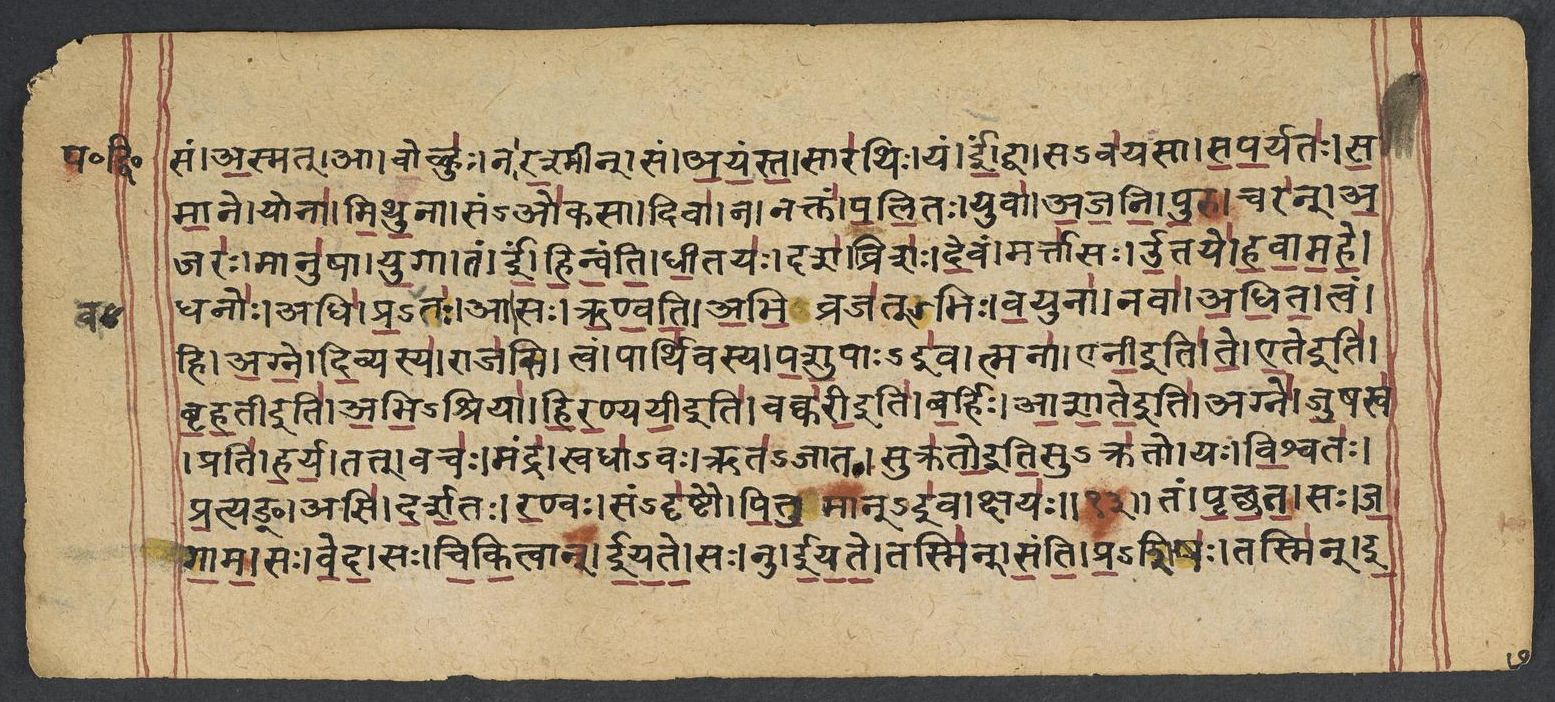
Where on the image
Penn Ms. Coll. 390 Item 41, fol. 113v (numbered 7v by the scribe) (OPenn image 115, upper leaf). Checked on the image: the Rigveda text on this page begins in RV 1.144.3 ‹sam asmat ā voḷhuḥ›. The next page with Rigveda text, fol. 114r (numbered 8r by the scribe), begins in RV 1.145.1 ‹-iṣṭayaḥ saḥ vājasya śavasaḥ›. Verses 1.144.3-7 end on this page; 1.144.3 begins on fol. 113r (numbered 7r by the scribe).
3yuyū̍ṣata̱ḥ sava̍yasā̱ tad id vapu̍ḥ samā̱nam artha̍ṁ vi̱tari̍tratā mi̱thaḥ | ād ī̱m bhago̱ na havya̱ḥ sam a̱smad ā voḻhu̱r na ra̱śmīn sam a̍yaṁsta̱ sāra̍thiḥ ||
4yam ī̱ṁ dvā sava̍yasā sapa̱ryata̍ḥ samā̱ne yonā̍ mithu̱nā samo̍kasā | divā̱ na nakta̍m pali̱to yuvā̍jani pu̱rū cara̍nn a̱jaro̱ mānu̍ṣā yu̱gā ||
5tam ī̍ṁ hinvanti dhī̱tayo̱ daśa̱ vriśo̍ de̱vam martā̍sa ū̱taye̍ havāmahe | dhano̱r adhi̍ pra̱vata̱ ā sa ṛ̍ṇvaty abhi̱vraja̍dbhir va̱yunā̱ navā̍dhita ||
6tvaṁ hy a̍gne di̱vyasya̱ rāja̍si̱ tvam pārthi̍vasya paśu̱pā i̍va̱ tmanā̍ | enī̍ ta e̱te bṛ̍ha̱tī a̍bhi̱śriyā̍ hira̱ṇyayī̱ vakva̍rī ba̱rhir ā̍śāte ||
7agne̍ ju̱ṣasva̱ prati̍ harya̱ tad vaco̱ mandra̱ svadhā̍va̱ ṛta̍jāta̱ sukra̍to | yo vi̱śvata̍ḥ pra̱tyaṅṅ asi̍ darśa̱to ra̱ṇvaḥ saṁdṛ̍ṣṭau pitu̱mām̐ i̍va̱ kṣaya̍ḥ ||
Compare: Padapāṭha (word-by-word text written in the manuscript; Sansknet e-text via GRETIL)
3yuyūṣataḥ | sa-vayasā | tat | it | vapuḥ | samānam | artham | vi-taritratā | mithaḥ | ādt | īm | bhagaḥ | na | havyaḥ | sam | asmat | ā | voḷhuḥ | na | raśmīn | sam | ayaṃsta | sārathiḥ
4yam | īm | dvā | sa-vayasā | saparyataḥ | samāne | yonā | mithunā | sam-okasā | divā | na | naktam | palitaḥ | yuvā | ajani | puru | caran | ajaraḥ | mānuṣā | yugā
5tam | īm | hinvanti | dhītayaḥ | daśa | vriśaḥ | devam | martāsaḥ | ūtaye | havāmahe | dhanoḥ | adhi | pra-vataḥ | ā | saḥ | ṛṇvati | abhivrajat-bhiḥ | vayunā | navā | adhita
6tvam | hi | agne | divyasya | rājasi | tvam | pārthivasya | paśupāḥ-iva | tmanā | enī iti | te | ete iti | bṛhatī iti | abhi-śriyā | hiraṇyayī iti | vakvarī iti | barhiḥ | āśāteiti
7agne | juṣasva | prati | harya | tat | vacaḥ | mandra | svadhāvaḥ | ṛta-jāta | sukrato itisu-krato | yaḥ | viśvataḥ | pratyaṅ | asi | darśataḥ | raṇvaḥ | sam-dṛṣṭau | pitumān-iva | kṣayaḥ
3Seeking in course altern to reach the selfsame end the two copartners strive to win this beauteous form. Like Bhaga must he be duly invoked by us, as he who drives the car holds fast the horse's reins.
4He whom the two copartners with observance tend, the pair who dwell together in the same abode, By night as in the day the grey one was born young, passing untouched by eld through many an age of man.
5Him the ten fingers, the devotions. animate: we mortals call on him a God to give us help. He speeds over the sloping surface of the land: new deeds hath he performed with those who gird him round.
6For, Agni, like a herdsman, thou by thine own might rulest o'er all that is in heaven and on the earth; And these two Mighty Ones, bright, golden closely joined, rolling them round are come unto thy sacred grass.
7Agni, accept with joy, be glad in this our prayer, joy-giver, self-sustained, strong, born of Holy Law! For fair to see art thou turning to every side, pleasant to look on as a dwelling filled with food.
Notes
- Sanskrit: Aufrecht's edition (1877) with the Vedic accents, as entered by van Nooten and Holland (GRETIL).
- English: Ralph T. H. Griffith, The Hymns of the Rigveda (1889-1892; 2nd ed. 1896-1897), from the VedaWeb digital text; OCR slips in that text were corrected against the printed 2nd edition (data/sources/rigveda/griffith_errata.json).
- Padapāṭha (edition text): Sansknet e-text via GRETIL (CC BY-NC-SA 4.0).
Cite
Sources
- Source: Penn Ms. Coll. 390 Item 41 (undated (catalogued with Penn's 18th-19th c. Vedic manuscripts)), OPenn, Public Domain Mark + Aufrecht's accented text (GRETIL) + Griffith's English (VedaWeb) (holding institution)
- Critical edition: Aufrecht (1877), accented e-text via GRETIL
← previous · → next · v cycle view · l back to library