Rigveda 1.146: To Agni
Introduction
Rigveda 1.146 is a hymn of 5 verses addressed to Agni. It stands in book (maṇḍala) 1, a collection of hymns by many families of poets. The Rigveda is the oldest collection of Sanskrit hymns, composed in the second half of the second millennium BCE and handed down orally for many centuries before it was written down.
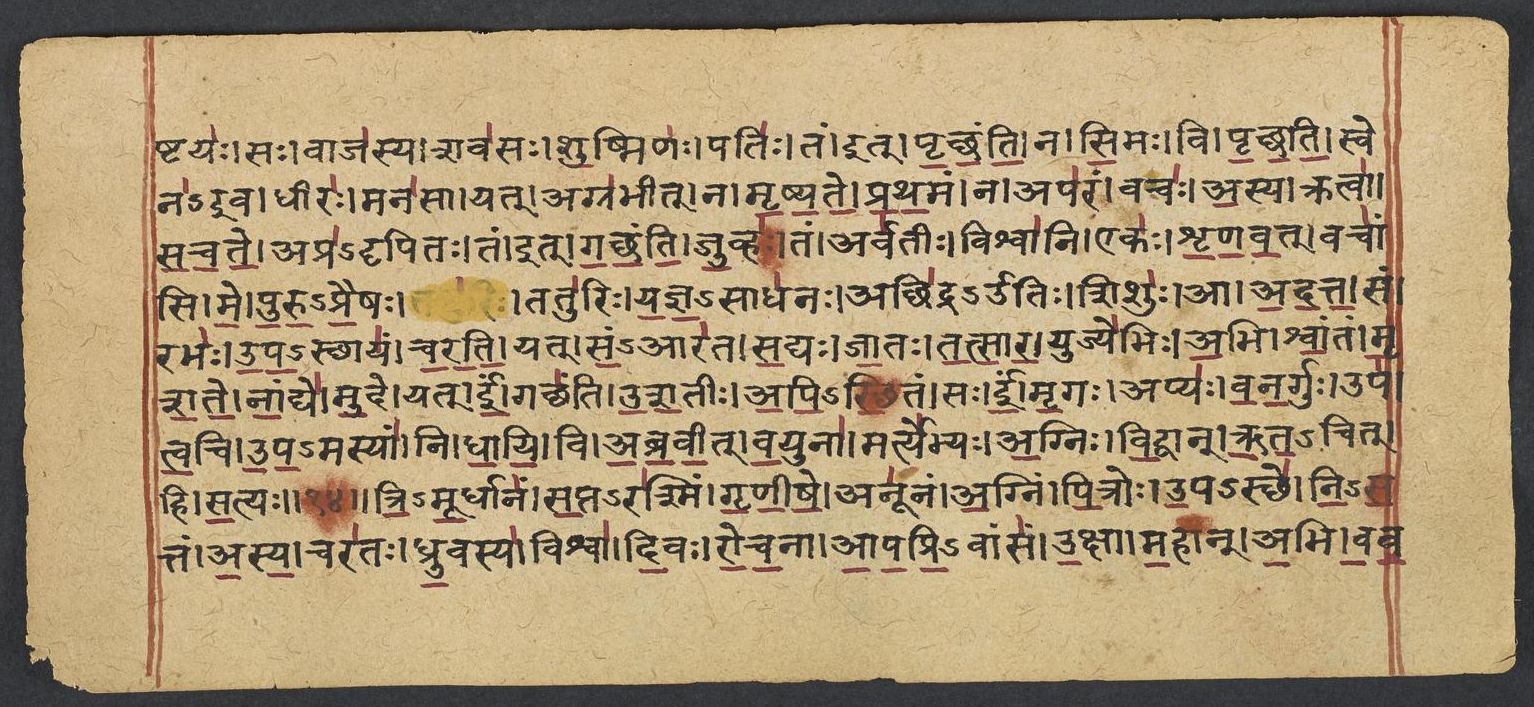
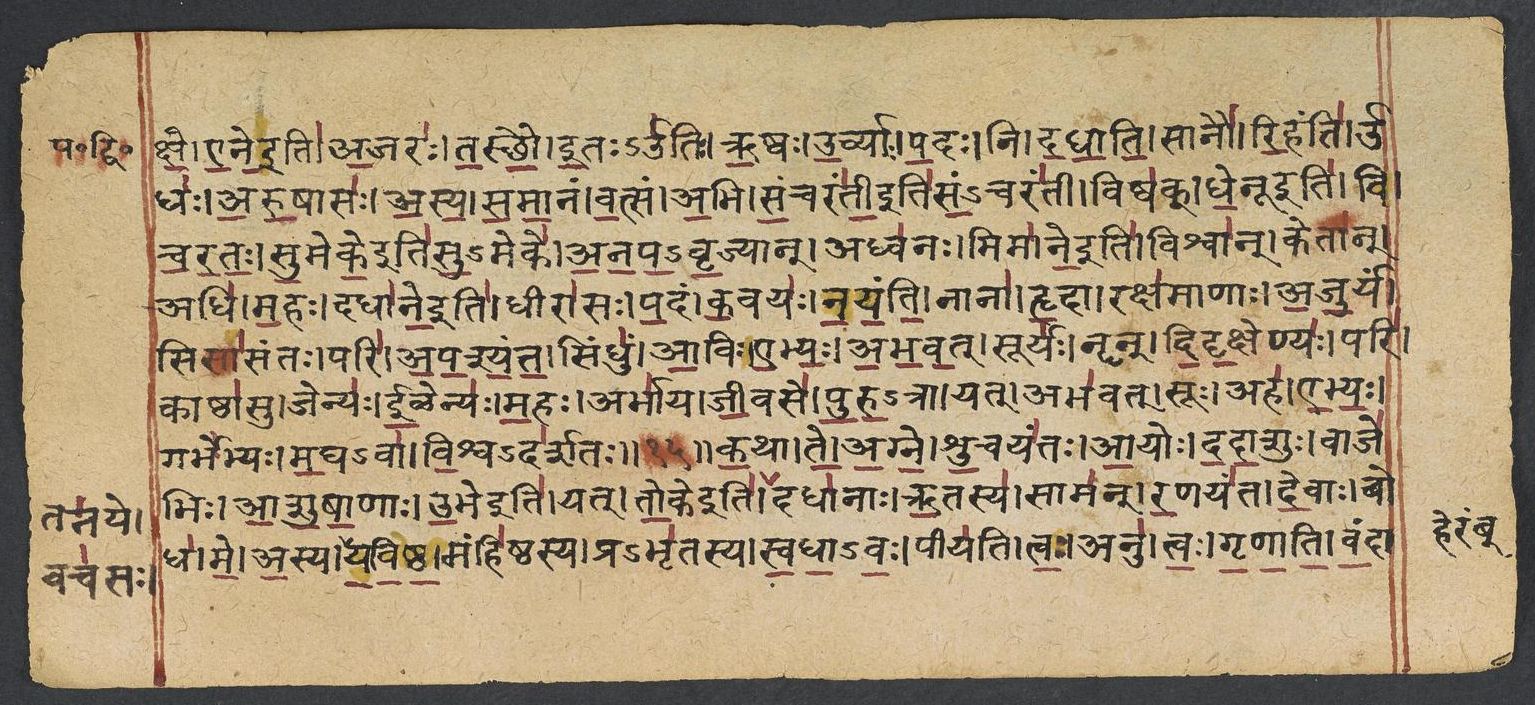
The manuscript shown is Penn Ms. Coll. 390 Item 41 (University of Pennsylvania), an undated paper manuscript of the padapāṭha (the word-by-word recitation text, in which every word is written separately and compounds are split) of the whole Ṛgveda in Devanāgarī, 884 leaves in fascicles, 7-9 lines to the page, accents in red; this hymn stands on fol. 114r-114v. Each section below gives the verses that end on one page; the page boundaries were read on the images (the opening words of every page), not counted out. Where the manuscript is a padapāṭha (the word-by-word recitation text), the section shows Aufrecht's continuous (saṃhitā) text first and, as the edition text, the padapāṭha of the same verses, which is the form written on the page.
How was this verified? (Provenance)
Where on the image
Penn Ms. Coll. 390 Item 41, fol. 114r (numbered 8r by the scribe) (OPenn image 115, lower leaf). Checked on the image: the Rigveda text on this page begins in RV 1.145.1 ‹-iṣṭayaḥ saḥ vājasya śavasaḥ›. Read on the full page image (Penn's label for this page lacks its '=' sign). The next page with Rigveda text, fol. 114v (numbered 8v by the scribe), begins in RV 1.146.2 ‹-vavakṣe eneiti ajaraḥ tasthau›. Verse 1.146.1 ends on this page.
1tri̱mū̱rdhāna̍ṁ sa̱ptara̍śmiṁ gṛṇī̱ṣe 'nū̍nam a̱gnim pi̱tror u̱pasthe̍ | ni̱ṣa̱ttam a̍sya̱ cara̍to dhru̱vasya̱ viśvā̍ di̱vo ro̍ca̱nāpa̍pri̱vāṁsa̍m ||
Compare: Padapāṭha (word-by-word text written in the manuscript; Sansknet e-text via GRETIL)
1tri-mūrdhānam | sapta-raśmim | gṛṇīṣe | anūnam | agnim | pitroḥ | upa-sthe | ni-sattam | asya | carataḥ | dhruvasya | viśvā | divaḥ | rocanā | āpapri-vāṃsam
1I LAUD the seven-rayed, the triple-headed, Agni all-perfect in his Parents' bosom, Sunk in the lap of all that moves and moves not, him who hath filled all luminous realms of heaven.
Where on the image
Penn Ms. Coll. 390 Item 41, fol. 114v (numbered 8v by the scribe) (OPenn image 116, upper leaf). Checked on the image: the Rigveda text on this page begins in RV 1.146.2 ‹-vavakṣe eneiti ajaraḥ tasthau›. The next page with Rigveda text, fol. 115r (numbered 9r by the scribe), begins in RV 1.147.2 ‹-vandāruḥ te tanvam vande›. Verses 1.146.2-5 end on this page; 1.146.2 begins on fol. 114r (numbered 8r by the scribe).
2u̱kṣā ma̱hām̐ a̱bhi va̍vakṣa ene a̱jara̍s tasthāv i̱taū̍tir ṛ̱ṣvaḥ | u̱rvyāḥ pa̱do ni da̍dhāti̱ sānau̍ ri̱hanty ūdho̍ aru̱ṣāso̍ asya ||
3sa̱mā̱naṁ va̱tsam a̱bhi sa̱ṁcara̍ntī̱ viṣva̍g dhe̱nū vi ca̍rataḥ su̱meke̍ | a̱na̱pa̱vṛ̱jyām̐ adhva̍no̱ mimā̍ne̱ viśvā̱n ketā̱m̐ adhi̍ ma̱ho dadhā̍ne ||
4dhīrā̍saḥ pa̱daṁ ka̱vayo̍ nayanti̱ nānā̍ hṛ̱dā rakṣa̍māṇā aju̱ryam | siṣā̍santa̱ḥ pary a̍paśyanta̱ sindhu̍m ā̱vir e̍bhyo abhava̱t sūryo̱ nṝn ||
5di̱dṛ̱kṣeṇya̱ḥ pari̱ kāṣṭhā̍su̱ jenya̍ ī̱ḻenyo̍ ma̱ho arbhā̍ya jī̱vase̍ | pu̱ru̱trā yad abha̍va̱t sūr ahai̍bhyo̱ garbhe̍bhyo ma̱ghavā̍ vi̱śvada̍rśataḥ ||
Compare: Padapāṭha (word-by-word text written in the manuscript; Sansknet e-text via GRETIL)
2ukṣā | mahān | abhi | vavakṣe | eneiti | ajaraḥ | tasthau | itaḥ-ūtiḥ | ṛṣvaḥ | urvyāḥ | padaḥ | ni | dadhāti | sānau | rihanti | ūdhaḥ | aruṣāsaḥ | asya
3samānam | vatsam | abhi | sañcarantī itisam-carantī | viṣvak | dhenū iti | vi | carataḥ | sumeke itisu-meke | anapa-vṛjyān | adhvanaḥ | mimāneiti | viśvān | ketān | adhi | mahaḥ | dadhāneiti
4dhīrāsaḥ | padam | kavayaḥ | nayanti | nānā | hṛdā | rakṣamāṇāḥ | ajuryam | sisāsantaḥ | pari | apaśyanta | sindhum | āviḥ | ebhyaḥ | abhavat | sūryaḥ | nṝn
5didṛkṣeṇyaḥ | pari | kāṣṭhāsu | jenyaḥ | īḷenyaḥ | mahaḥ | arbhāya | jīvase | puru-trā | yat | abhavat | sūḥ | aha | ebhyaḥ | garbhebhyaḥ | magha-vā | viśva-darśataḥ
2As a great Steer he grew to these his Parents; sublime lie stands, untouched by eld, far-reaching. He plants his footsteps on the lofty ridges of the broad earth: his red flames lick the udder.
3Coming together to their common youngling both Cows, fairshaped, spread forth in all directions, Measuring out the paths that must be travelled, entrusting all desires to him the Mighty.
4The prudent sages lead him to his dwelling, guarding with varied skill the Ever-Youthful. Longing, they turned their eyes unto the River: to these the Sun of men was manifested.
5Born noble in the regions, aim of all mens' eyes to be implored for life by great and small alike, Far as the Wealthy One hath spread himself abroad, he is the Sire all-visible of this progeny.
Notes
- Sanskrit: Aufrecht's edition (1877) with the Vedic accents, as entered by van Nooten and Holland (GRETIL).
- English: Ralph T. H. Griffith, The Hymns of the Rigveda (1889-1892; 2nd ed. 1896-1897), from the VedaWeb digital text; OCR slips in that text were corrected against the printed 2nd edition (data/sources/rigveda/griffith_errata.json).
- Padapāṭha (edition text): Sansknet e-text via GRETIL (CC BY-NC-SA 4.0).
Cite
Sources
- Source: Penn Ms. Coll. 390 Item 41 (undated (catalogued with Penn's 18th-19th c. Vedic manuscripts)), OPenn, Public Domain Mark + Aufrecht's accented text (GRETIL) + Griffith's English (VedaWeb) (holding institution)
- Critical edition: Aufrecht (1877), accented e-text via GRETIL
← previous · → next · v cycle view · l back to library