Rigveda 1.155: To Vishnu and Indra
Introduction
Rigveda 1.155 is a hymn of 6 verses addressed to Vishnu and Indra. It stands in book (maṇḍala) 1, a collection of hymns by many families of poets. The Rigveda is the oldest collection of Sanskrit hymns, composed in the second half of the second millennium BCE and handed down orally for many centuries before it was written down.
The manuscript shown is Penn Ms. Coll. 390 Item 41 (University of Pennsylvania), an undated paper manuscript of the padapāṭha (the word-by-word recitation text, in which every word is written separately and compounds are split) of the whole Ṛgveda in Devanāgarī, 884 leaves in fascicles, 7-9 lines to the page, accents in red; this hymn stands on fol. 118v-119r. Each section below gives the verses that end on one page; the page boundaries were read on the images (the opening words of every page), not counted out. Where the manuscript is a padapāṭha (the word-by-word recitation text), the section shows Aufrecht's continuous (saṃhitā) text first and, as the edition text, the padapāṭha of the same verses, which is the form written on the page.
How was this verified? (Provenance)
Where on the image
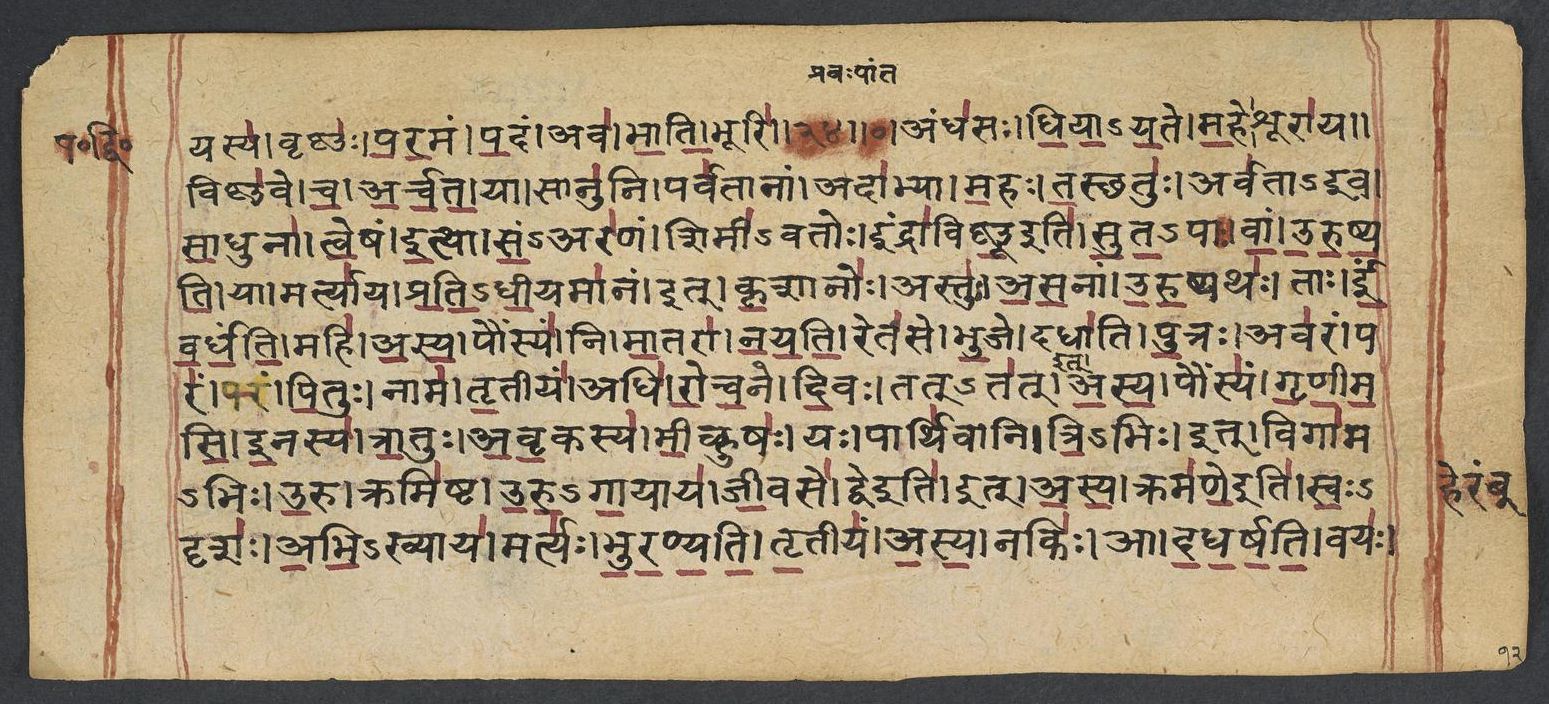
Penn Ms. Coll. 390 Item 41, fol. 118v (numbered 12v by the scribe) (OPenn image 120, upper leaf). Checked on the image: the Rigveda text on this page begins in RV 1.154.6 ‹-uru-gāyasya vṛṣṇaḥ paramam padam›. The next page with Rigveda text, fol. 119r (numbered 13r by the scribe), begins in RV 1.155.5 ‹cana patayantaḥ patatriṇaḥ›. Verses 1.155.1-4 end on this page.
1pra va̱ḥ pānta̱m andha̍so dhiyāya̱te ma̱he śūrā̍ya̱ viṣṇa̍ve cārcata | yā sānu̍ni̱ parva̍tānā̱m adā̍bhyā ma̱has ta̱sthatu̱r arva̍teva sā̱dhunā̍ ||
2tve̱ṣam i̱tthā sa̱mara̍ṇa̱ṁ śimī̍vato̱r indrā̍viṣṇū suta̱pā vā̍m uruṣyati | yā martyā̍ya pratidhī̱yamā̍na̱m it kṛ̱śāno̱r astu̍r asa̱nām u̍ru̱ṣyatha̍ḥ ||
3tā ī̍ṁ vardhanti̱ mahy a̍sya̱ pauṁsya̱ṁ ni mā̱tarā̍ nayati̱ reta̍se bhu̱je | dadhā̍ti pu̱tro 'va̍ra̱m para̍m pi̱tur nāma̍ tṛ̱tīya̱m adhi̍ roca̱ne di̱vaḥ ||
4tat-ta̱d id a̍sya̱ pauṁsya̍ṁ gṛṇīmasī̱nasya̍ trā̱tur a̍vṛ̱kasya̍ mī̱ḻhuṣa̍ḥ | yaḥ pārthi̍vāni tri̱bhir id vigā̍mabhir u̱ru krami̍ṣṭorugā̱yāya̍ jī̱vase̍ ||
Compare: Padapāṭha (word-by-word text written in the manuscript; Sansknet e-text via GRETIL)
1pra | vaḥ | pāntam | andhasaḥ | dhiyāyate | mahe | śūrāya | viṣṇave | ca | arcata | yā | sānuni | parvatānām | adābhyā | mahaḥ | tasthatuḥ | arvatāiva | sādhunā
2tveṣam | itthā | sam-araṇam | śimī-vatoḥ | indrāviṣṇūiti | suta-pāḥ | vām | uruṣyati | yā | martyāya | prati-dhīyamānam | it | kṛśānoḥ | astuḥ | asanām | uruṣyathaḥ
3tāḥ | īm | vardhanti | mahi | asya | paiṃsyam | ni | mātarā | nayati | retase | bhuje | dadhāti | putraḥ | avaram | param | pituḥ | nāma | tṛtīyam | adhi | rocane | divaḥ
4tat-tat | it | asya | paiṃsyam | gṛṇīmasi | inasya | trātuḥ | avṛkasya | mīḷhuṣaḥ | yaḥ | pārthivāni | tri-bhiḥ | it | vigāma-bhiḥ | uru | kramiṣṭa | uru-gāyāyajīvase
1To the great Hero, him who sets his mind thereon, and Vishṇu, praise aloud in song your draught of juice,– Gods ne'er beguiled, who borne as 'twere by noble steed, have stood upon the lofty ridges of the hills.
2Your Soma-drinker keeps afar your furious rush, Indra and Vishṇu, when ye come with all your might. That which hath been directed well at mortal man, bow-armed Kr̥iṣanu's arrow, ye turn far aside.
3These offerings increase his mighty manly strength: he brings both Parents down to share the genial flow. He lowers, though a son, the Father's highest name; the third is that which is high in the light of heaven.
4We laud this manly power of him the Mighty One, preserver, inoffensive, bounteous and benign; His who strode, widely pacing, with three steppings forth over the realms of earth for freedom and for life.
Where on the image
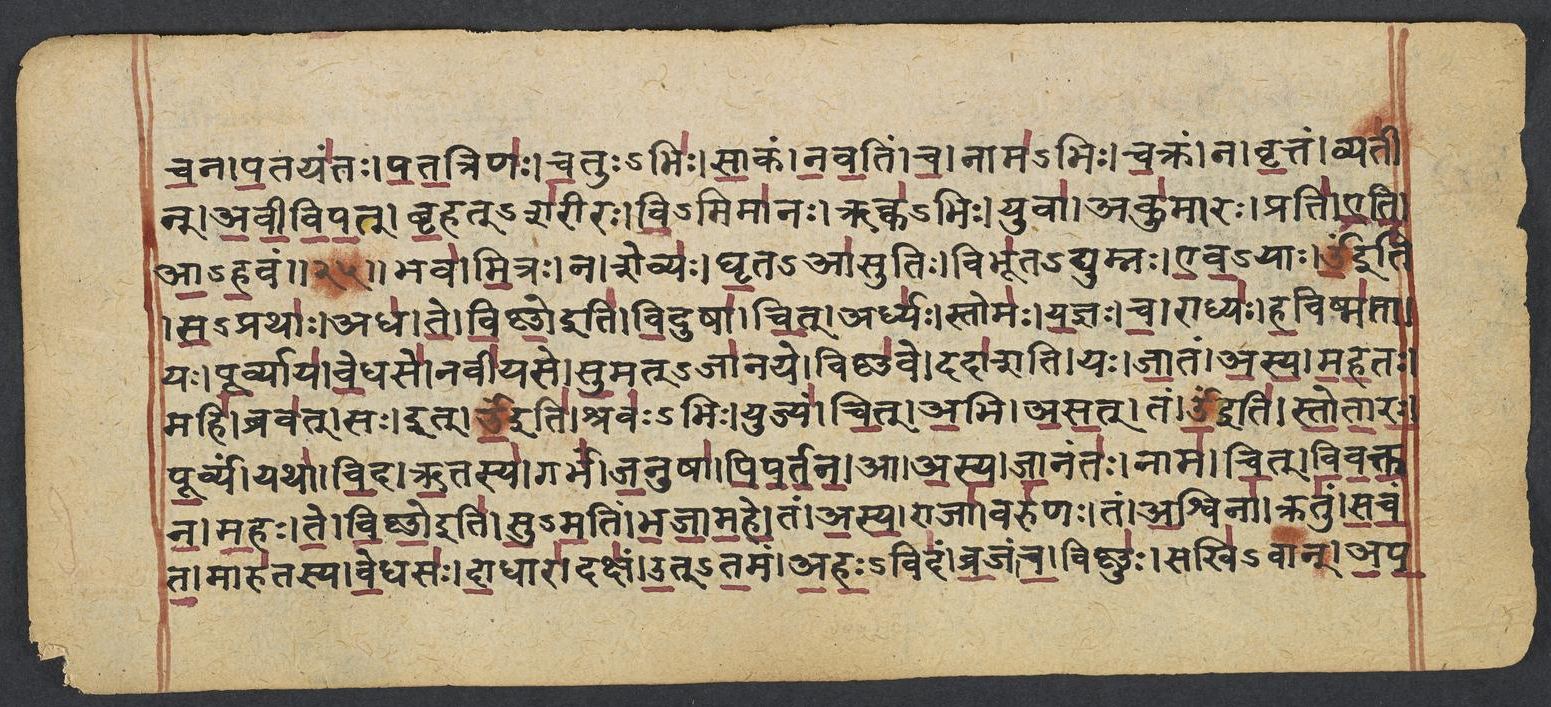
Penn Ms. Coll. 390 Item 41, fol. 119r (numbered 13r by the scribe) (OPenn image 120, lower leaf). Checked on the image: the Rigveda text on this page begins in RV 1.155.5 ‹cana patayantaḥ patatriṇaḥ›. The next page with Rigveda text, fol. 119v (numbered 13v by the scribe), begins in RV 1.156.4 ‹-apa-ūrṇute›. Verses 1.155.5-6 end on this page; 1.155.5 begins on fol. 118v (numbered 12v by the scribe).
5dve id a̍sya̱ krama̍ṇe sva̱rdṛśo̍ 'bhi̱khyāya̱ martyo̍ bhuraṇyati | tṛ̱tīya̍m asya̱ naki̱r ā da̍dharṣati̱ vaya̍ś ca̱na pa̱taya̍ntaḥ pata̱triṇa̍ḥ ||
6ca̱turbhi̍ḥ sā̱kaṁ na̍va̱tiṁ ca̱ nāma̍bhiś ca̱kraṁ na vṛ̱ttaṁ vyatī̍m̐r avīvipat | bṛ̱haccha̍rīro vi̱mimā̍na̱ ṛkva̍bhi̱r yuvāku̍māra̱ḥ praty e̍ty āha̱vam ||
Compare: Padapāṭha (word-by-word text written in the manuscript; Sansknet e-text via GRETIL)
5dve iti | it | asya | kramaṇeiti | svaḥ-dṛśaḥ | abhi-khyāya | martyaḥ | bhuraṇyati | tṛtīyam | asya | nakiḥ | ā | dadharṣati | vayaḥ | cana | patayantaḥ | patatriṇaḥ
6catuḥ-bhiḥ | sākam | navatim | ca | nāma-bhiḥ | cakram | na | vṛttam | vyatīn | avīvipat | bṛhat-śarīraḥ | vi-mimānaḥ | ṛkva-bhiḥ | yuvā | akumāraḥ | prati | et i | āhavam
5A mortal man, when he beholds two steps of him who looks upon the light, is restless with amaze. But his third step doth no one venture to approach, no, nor the feathered birds of air who fly with wings.
6He, like a rounded wheel, hath in swift motion set his ninety racing steeds together with the four. Developed, vast in form, with those who sing forth praise, a youth, no more a child, he cometh to our call.
Notes
- Sanskrit: Aufrecht's edition (1877) with the Vedic accents, as entered by van Nooten and Holland (GRETIL).
- English: Ralph T. H. Griffith, The Hymns of the Rigveda (1889-1892; 2nd ed. 1896-1897), from the VedaWeb digital text; OCR slips in that text were corrected against the printed 2nd edition (data/sources/rigveda/griffith_errata.json).
- Padapāṭha (edition text): Sansknet e-text via GRETIL (CC BY-NC-SA 4.0).
Cite
Sources
- Source: Penn Ms. Coll. 390 Item 41 (undated (catalogued with Penn's 18th-19th c. Vedic manuscripts)), OPenn, Public Domain Mark + Aufrecht's accented text (GRETIL) + Griffith's English (VedaWeb) (holding institution)
- Critical edition: Aufrecht (1877), accented e-text via GRETIL
← previous · → next · v cycle view · l back to library