Rigveda 1.156: To Vishnu
Introduction
Rigveda 1.156 is a hymn of 5 verses addressed to Vishnu. It stands in book (maṇḍala) 1, a collection of hymns by many families of poets. The Rigveda is the oldest collection of Sanskrit hymns, composed in the second half of the second millennium BCE and handed down orally for many centuries before it was written down.
The manuscript shown is Penn Ms. Coll. 390 Item 41 (University of Pennsylvania), an undated paper manuscript of the padapāṭha (the word-by-word recitation text, in which every word is written separately and compounds are split) of the whole Ṛgveda in Devanāgarī, 884 leaves in fascicles, 7-9 lines to the page, accents in red; this hymn stands on fol. 119r-119v. Each section below gives the verses that end on one page; the page boundaries were read on the images (the opening words of every page), not counted out. Where the manuscript is a padapāṭha (the word-by-word recitation text), the section shows Aufrecht's continuous (saṃhitā) text first and, as the edition text, the padapāṭha of the same verses, which is the form written on the page.
How was this verified? (Provenance)
Where on the image
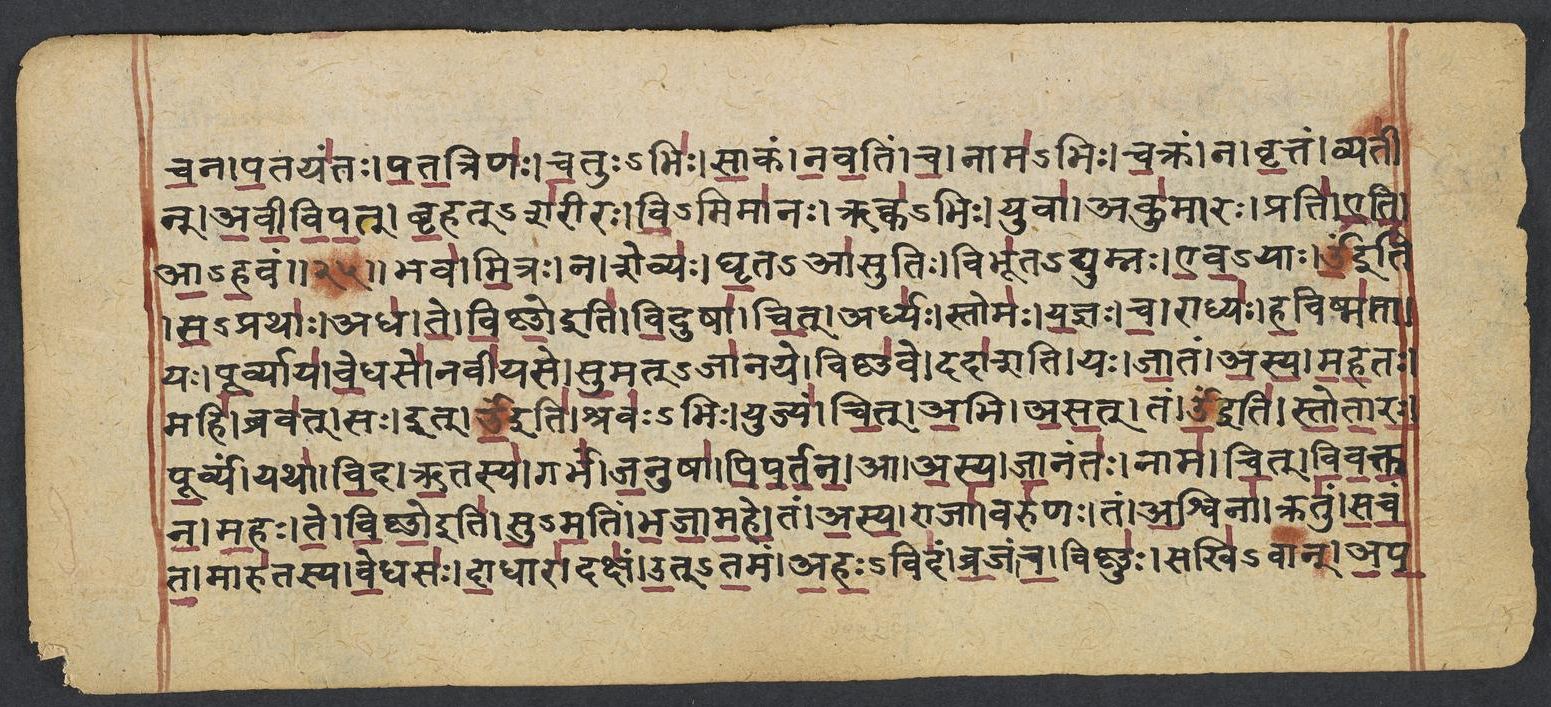
Penn Ms. Coll. 390 Item 41, fol. 119r (numbered 13r by the scribe) (OPenn image 120, lower leaf). Checked on the image: the Rigveda text on this page begins in RV 1.155.5 ‹cana patayantaḥ patatriṇaḥ›. The next page with Rigveda text, fol. 119v (numbered 13v by the scribe), begins in RV 1.156.4 ‹-apa-ūrṇute›. Verses 1.156.1-3 end on this page.
1bhavā̍ mi̱tro na śevyo̍ ghṛ̱tāsu̍ti̱r vibhū̍tadyumna eva̱yā u̍ sa̱prathā̍ḥ | adhā̍ te viṣṇo vi̱duṣā̍ ci̱d ardhya̱ḥ stomo̍ ya̱jñaś ca̱ rādhyo̍ ha̱viṣma̍tā ||
2yaḥ pū̱rvyāya̍ ve̱dhase̱ navī̍yase su̱majjā̍naye̱ viṣṇa̍ve̱ dadā̍śati | yo jā̱tam a̍sya maha̱to mahi̱ brava̱t sed u̱ śravo̍bhi̱r yujya̍ṁ cid a̱bhy a̍sat ||
3tam u̍ stotāraḥ pū̱rvyaṁ yathā̍ vi̱da ṛ̱tasya̱ garbha̍ṁ ja̱nuṣā̍ pipartana | āsya̍ jā̱nanto̱ nāma̍ cid vivaktana ma̱has te̍ viṣṇo suma̱tim bha̍jāmahe ||
Compare: Padapāṭha (word-by-word text written in the manuscript; Sansknet e-text via GRETIL)
1bhava | mitraḥ | na | śevyaḥ | ghṛta-āsutiḥ | vibhūta-dyumnaḥ | eva-yāḥ | ūām iti | sa-prathāḥ | adha | te | viṣṇo iti | viduṣā | cit | ardhyaḥ | stomaḥ | yajñaḥ | ca | rādhyaḥ | haviṣmatā
2yaḥ | pūrvyāya | vedhase | navīyase | sumat-jānaye | viṣṇave | dadāśati | yaḥ | jātam | asya | mahataḥ | mahi | bravat | saḥ | it | oṃ iti | śravaḥ-bhiḥ | yujyam | cit | abhi | asat
3tam | oṃ iti | stotāraḥ | pūrvyam | yathā | vida | ṛtasya | garbham | januṣā | pipartana | ā asya | jānantaḥ | nāma | cit | vivaktana | mahaḥ | te | viṣṇo iti | su-matim | bhajāmahe
1FAR-SHINING, widely famed, going thy wonted way, fed with the oil, be helpful. Mitra-like, to us. So, Vishṇu, e'en the wise must swell thy song of praise, and he who hath oblations pay thee solemn rites.
2He who brings gifts to him the Ancient and the Last, to Vishṇu who ordains, together with his Spouse, Who tells the lofty birth of him the Lofty One, shall verily surpass in glory e'en his peer.
3Him have ye satisfied, singers, as well as ye know, primeval germ of Order even from his birth. Ye, knowing e'en his name, have told it forth: may we, Vishṇu, enjoy the grace of thee the Mighty One.
Where on the image
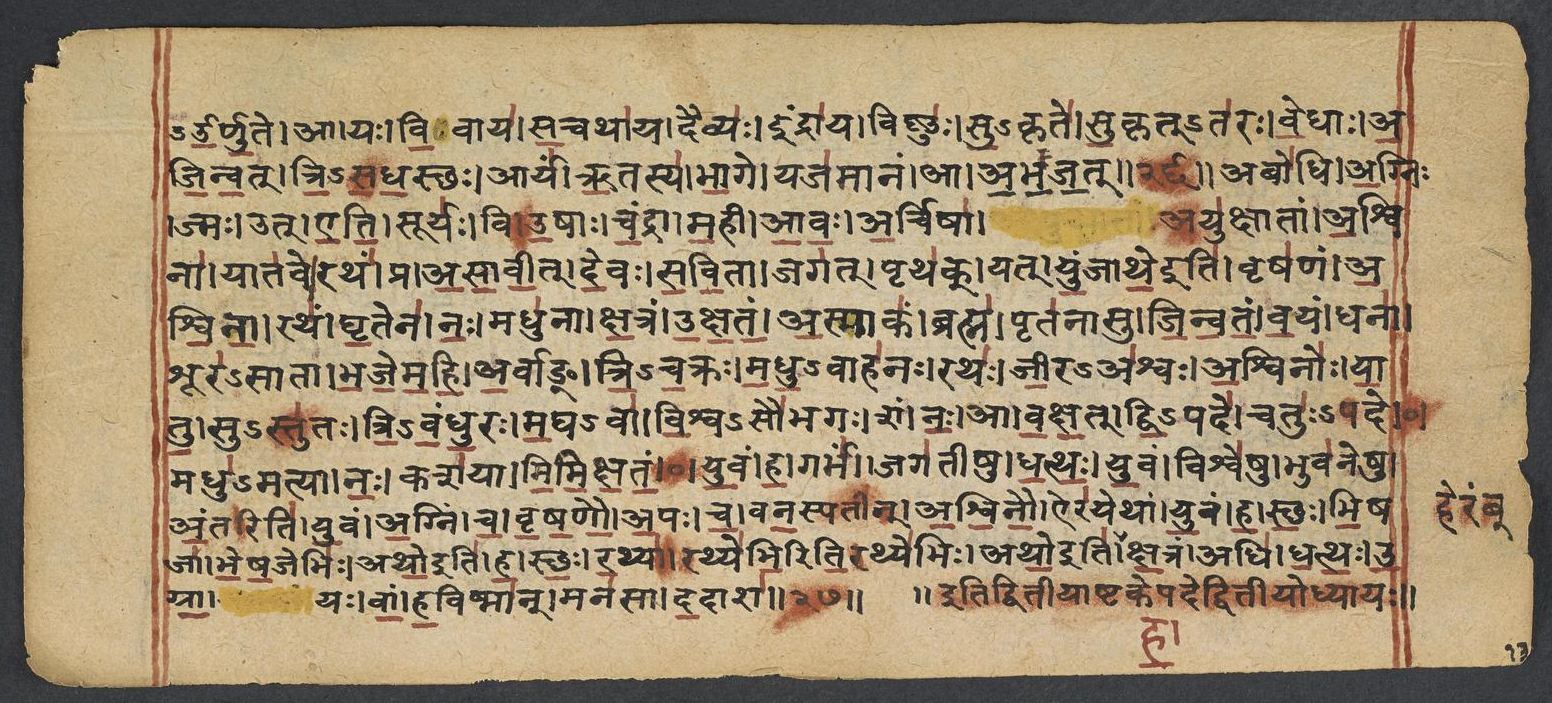
Penn Ms. Coll. 390 Item 41, fol. 119v (numbered 13v by the scribe) (OPenn image 121, upper leaf). Checked on the image: the Rigveda text on this page begins in RV 1.156.4 ‹-apa-ūrṇute›. The next page with Rigveda text, fol. 120r (numbered 1r by the scribe), begins in RV 1.158.1 ‹vasī iti rudrā purumantūitipuru-mantū›. Verses 1.156.4-5 end on this page; 1.156.4 begins on fol. 119r (numbered 13r by the scribe).
4tam a̍sya̱ rājā̱ varu̍ṇa̱s tam a̱śvinā̱ kratu̍ṁ sacanta̱ māru̍tasya ve̱dhasa̍ḥ | dā̱dhāra̱ dakṣa̍m utta̱mam a̍ha̱rvida̍ṁ vra̱jaṁ ca̱ viṣṇu̱ḥ sakhi̍vām̐ aporṇu̱te ||
5ā yo vi̱vāya̍ sa̱cathā̍ya̱ daivya̱ indrā̍ya̱ viṣṇu̍ḥ su̱kṛte̍ su̱kṛtta̍raḥ | ve̱dhā a̍jinvat triṣadha̱stha ārya̍m ṛ̱tasya̍ bhā̱ge yaja̍māna̱m ābha̍jat ||
Compare: Padapāṭha (word-by-word text written in the manuscript; Sansknet e-text via GRETIL)
4tam | asya | rājā | varuṇaḥ | tam | aśvinā | kratum | sacanta | mārutasya | vedhasaḥ | dādhāra | dakṣam | ut-tamam | ahaḥ-vidam | vrjam | ca | viṣṇuḥ | sakhi-vān | apa-ūrṇute
5ā | yaḥ | vivāya | sacathāya | daivyaḥ | indrāya | viṣṇuḥ | su-kṛte | sukṛt-taraḥ | vedhāḥ | ajinvat | tri-sadhasthaḥ | āryam | ṛtasya | bhāge | yajamānam | ā | abhajat
4The Sovran Varuṇa and both the Aṣvins wait on this the will of him who guides the Marut host. Vishṇu hath power supreme and might iliat finds the day, and with his Friend unbars the stable of the kine.
5Even he the Heavenly One who came for fellowship, Vishṇu to Indra, godly to the godlier, Who Maker, throned in three worlds, helps the Aryan man, and gives the worshipper his share of Holy Law.
Notes
- Sanskrit: Aufrecht's edition (1877) with the Vedic accents, as entered by van Nooten and Holland (GRETIL).
- English: Ralph T. H. Griffith, The Hymns of the Rigveda (1889-1892; 2nd ed. 1896-1897), from the VedaWeb digital text; OCR slips in that text were corrected against the printed 2nd edition (data/sources/rigveda/griffith_errata.json).
- Padapāṭha (edition text): Sansknet e-text via GRETIL (CC BY-NC-SA 4.0).
Cite
Sources
- Source: Penn Ms. Coll. 390 Item 41 (undated (catalogued with Penn's 18th-19th c. Vedic manuscripts)), OPenn, Public Domain Mark + Aufrecht's accented text (GRETIL) + Griffith's English (VedaWeb) (holding institution)
- Critical edition: Aufrecht (1877), accented e-text via GRETIL
← previous · → next · v cycle view · l back to library