Rigveda 1.157: To Asvins
Introduction
Rigveda 1.157 is a hymn of 6 verses addressed to Asvins. It stands in book (maṇḍala) 1, a collection of hymns by many families of poets. The Rigveda is the oldest collection of Sanskrit hymns, composed in the second half of the second millennium BCE and handed down orally for many centuries before it was written down.
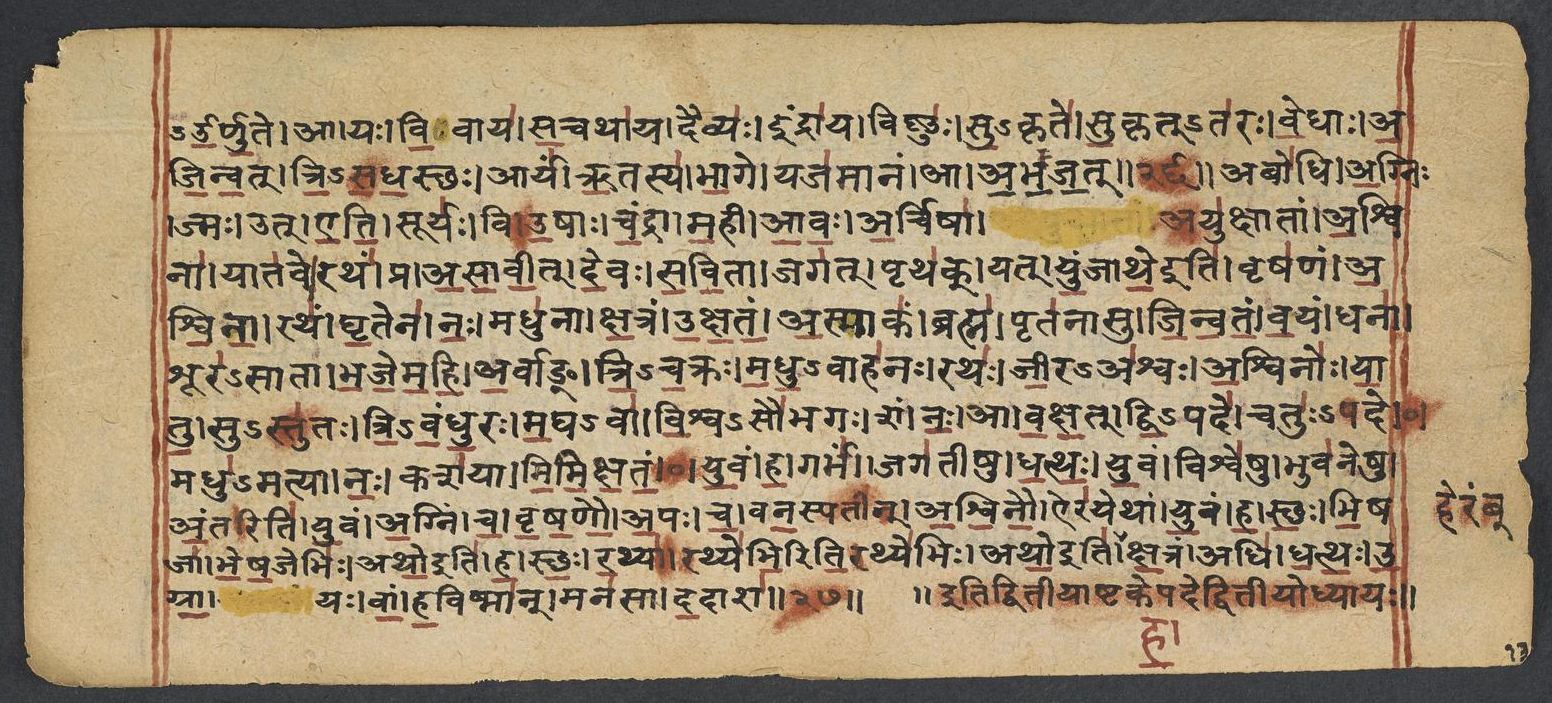
The manuscript shown is Penn Ms. Coll. 390 Item 41 (University of Pennsylvania), an undated paper manuscript of the padapāṭha (the word-by-word recitation text, in which every word is written separately and compounds are split) of the whole Ṛgveda in Devanāgarī, 884 leaves in fascicles, 7-9 lines to the page, accents in red; this hymn stands on fol. 119v. Each section below gives the verses that end on one page; the page boundaries were read on the images (the opening words of every page), not counted out. Where the manuscript is a padapāṭha (the word-by-word recitation text), the section shows Aufrecht's continuous (saṃhitā) text first and, as the edition text, the padapāṭha of the same verses, which is the form written on the page.
How was this verified? (Provenance)
Where on the image
Penn Ms. Coll. 390 Item 41, fol. 119v (numbered 13v by the scribe) (OPenn image 121, upper leaf). Checked on the image: the Rigveda text on this page begins in RV 1.156.4 ‹-apa-ūrṇute›. The next page with Rigveda text, fol. 120r (numbered 1r by the scribe), begins in RV 1.158.1 ‹vasī iti rudrā purumantūitipuru-mantū›. Verses 1.157.1-6 end on this page.
1abo̍dhy a̱gnir jma ud e̍ti̱ sūryo̱ vy u1̱̍ṣāś ca̱ndrā ma̱hy ā̍vo a̱rciṣā̍ | āyu̍kṣātām a̱śvinā̱ yāta̍ve̱ ratha̱m prāsā̍vīd de̱vaḥ sa̍vi̱tā jaga̱t pṛtha̍k ||
2yad yu̱ñjāthe̱ vṛṣa̍ṇam aśvinā̱ ratha̍ṁ ghṛ̱tena̍ no̱ madhu̍nā kṣa̱tram u̍kṣatam | a̱smāka̱m brahma̱ pṛta̍nāsu jinvataṁ va̱yaṁ dhanā̱ śūra̍sātā bhajemahi ||
3a̱rvāṅ tri̍ca̱kro ma̍dhu̱vāha̍no̱ ratho̍ jī̱rāśvo̍ a̱śvino̍r yātu̱ suṣṭu̍taḥ | tri̱va̱ndhu̱ro ma̱ghavā̍ vi̱śvasau̍bhaga̱ḥ śaṁ na̱ ā va̍kṣad dvi̱pade̱ catu̍ṣpade ||
4ā na̱ ūrja̍ṁ vahatam aśvinā yu̱vam madhu̍matyā na̱ḥ kaśa̍yā mimikṣatam | prāyu̱s tāri̍ṣṭa̱ṁ nī rapā̍ṁsi mṛkṣata̱ṁ sedha̍ta̱ṁ dveṣo̱ bhava̍taṁ sacā̱bhuvā̍ ||
5yu̱vaṁ ha̱ garbha̱ṁ jaga̍tīṣu dhattho yu̱vaṁ viśve̍ṣu̱ bhuva̍neṣv a̱ntaḥ | yu̱vam a̱gniṁ ca̍ vṛṣaṇāv a̱paś ca̱ vana̱spatī̍m̐r aśvinā̱v aira̍yethām ||
6yu̱vaṁ ha̍ stho bhi̱ṣajā̍ bheṣa̱jebhi̱r atho̍ ha stho ra̱thyā̱3̱̍ rāthye̍bhiḥ | atho̍ ha kṣa̱tram adhi̍ dhattha ugrā̱ yo vā̍ṁ ha̱viṣmā̱n mana̍sā da̱dāśa̍ ||
Compare: Padapāṭha (word-by-word text written in the manuscript; Sansknet e-text via GRETIL)
1abodhi | agniḥ | jmaḥ | ut | eti | sūryaḥ | vi | uṣāḥ | candrā | mahī | āvaḥ | arciṣā | ayukṣātām | aśvinā | yātave | ratham | pra | asāvīt | devaḥ | savitā | jagat | pṛthak
2yat | yuñjātheiti | vṛṣaṇam | aśvinā | ratham | ghṛtena | naḥ | madhunā | kṣatram | ukṣatam | asmākam | brahma | pṛtanāsu | jinvatam | vayam | dhanā | śūra-sātā | bhajemahi
3arvāṅ | tri-cakraḥ | madhu-vāhanaḥ | rathaḥ | jīra-aśvaḥ | aśvinoḥ | yātu | su-stutaḥ | tri-vandhuraḥ | magha-vā | viśva-saubhagaḥ | śam | naḥ | ā | vakṣat | dvi-pade | catuḥ-pade
4ā | naḥ | ūrjam | vahatam | aśvinā | yuvam | madhu-matyā | naḥ | kaśayā | mimikṣatam | pra | āyuḥ | tāriṣṭam | niḥ | rapāṃsi | mṛkṣatam | sedhatam | dveṣaḥ | bhavatam | sacābhuvā
5yuvam | ha | garbham | jagatīṣu | dhatthaḥ | yuvam | viśveṣu | bhuvaneṣu | antariti | yuvam | agnim | ca | vṛṣaṇau | apaḥ | ca | vanaspatīn | aśvinau | airayethām
6yuvam | ha | sthaḥ | bhiṣajā | bheṣajebhiḥ | atho iti | ha | sthaḥ | rathyā | rathyebhiritirathyebhiḥ | atho iti | ha | kṣatram | adhi | dhattha | ugrā | yaḥ | vām | haviṣmān | manasā | dadāśa
1AGNI is wakened: Sûrya riseth from the earth. Mighty, refulgent Dawn hath shone with all her light. The Aṣvins have equipped their chariot for the course. God Savitar hath moved the folk in sundry ways.
2When, Aṣvins, ye equip your very mighty car, bedew, ye Twain, our power with honey and with oil. To our devotion give victorious strength in war: may we win riches in the heroes' strife for spoil.
3Nigh to us come the Aṣvins' lauded three-wheeled car, the car laden with meath and drawn by fleet-foot steeds, Three-seated, opulent, bestowing all delight. may it bring weal to us, to cattle and to men.
4Bring hither nourishment for us, ye Aṣvins Twain; sprinkle us with your whip that drops with honey-dew. Prolong our days of life, wipe out our trespasses; destroy our foes, be our companions and our Friends.
5Ye store the germ of life in female creatures, ye lay it up within all living beings. Ye have sent forth, O Aṣvins passing mighty, the fire, the sovrans of the wood, the waters,
6Leeches are ye with medicines to heal us, and charioteers are ye with skill in driving. Ye Strong, give sway to him who brings oblation and with his heart pours out his gift before you.
Notes
- Sanskrit: Aufrecht's edition (1877) with the Vedic accents, as entered by van Nooten and Holland (GRETIL).
- English: Ralph T. H. Griffith, The Hymns of the Rigveda (1889-1892; 2nd ed. 1896-1897), from the VedaWeb digital text; OCR slips in that text were corrected against the printed 2nd edition (data/sources/rigveda/griffith_errata.json).
- Padapāṭha (edition text): Sansknet e-text via GRETIL (CC BY-NC-SA 4.0).
Cite
Sources
- Source: Penn Ms. Coll. 390 Item 41 (undated (catalogued with Penn's 18th-19th c. Vedic manuscripts)), OPenn, Public Domain Mark + Aufrecht's accented text (GRETIL) + Griffith's English (VedaWeb) (holding institution)
- Critical edition: Aufrecht (1877), accented e-text via GRETIL
← previous · → next · v cycle view · l back to library