Rigveda 1.158: To Asvins
Introduction
Rigveda 1.158 is a hymn of 6 verses addressed to Asvins. It stands in book (maṇḍala) 1, a collection of hymns by many families of poets. The Rigveda is the oldest collection of Sanskrit hymns, composed in the second half of the second millennium BCE and handed down orally for many centuries before it was written down.
The manuscript shown is Penn Ms. Coll. 390 Item 41 (University of Pennsylvania), an undated paper manuscript of the padapāṭha (the word-by-word recitation text, in which every word is written separately and compounds are split) of the whole Ṛgveda in Devanāgarī, 884 leaves in fascicles, 7-9 lines to the page, accents in red; this hymn stands on fol. 120r-120v. Each section below gives the verses that end on one page; the page boundaries were read on the images (the opening words of every page), not counted out. Where the manuscript is a padapāṭha (the word-by-word recitation text), the section shows Aufrecht's continuous (saṃhitā) text first and, as the edition text, the padapāṭha of the same verses, which is the form written on the page.
How was this verified? (Provenance)
Where on the image
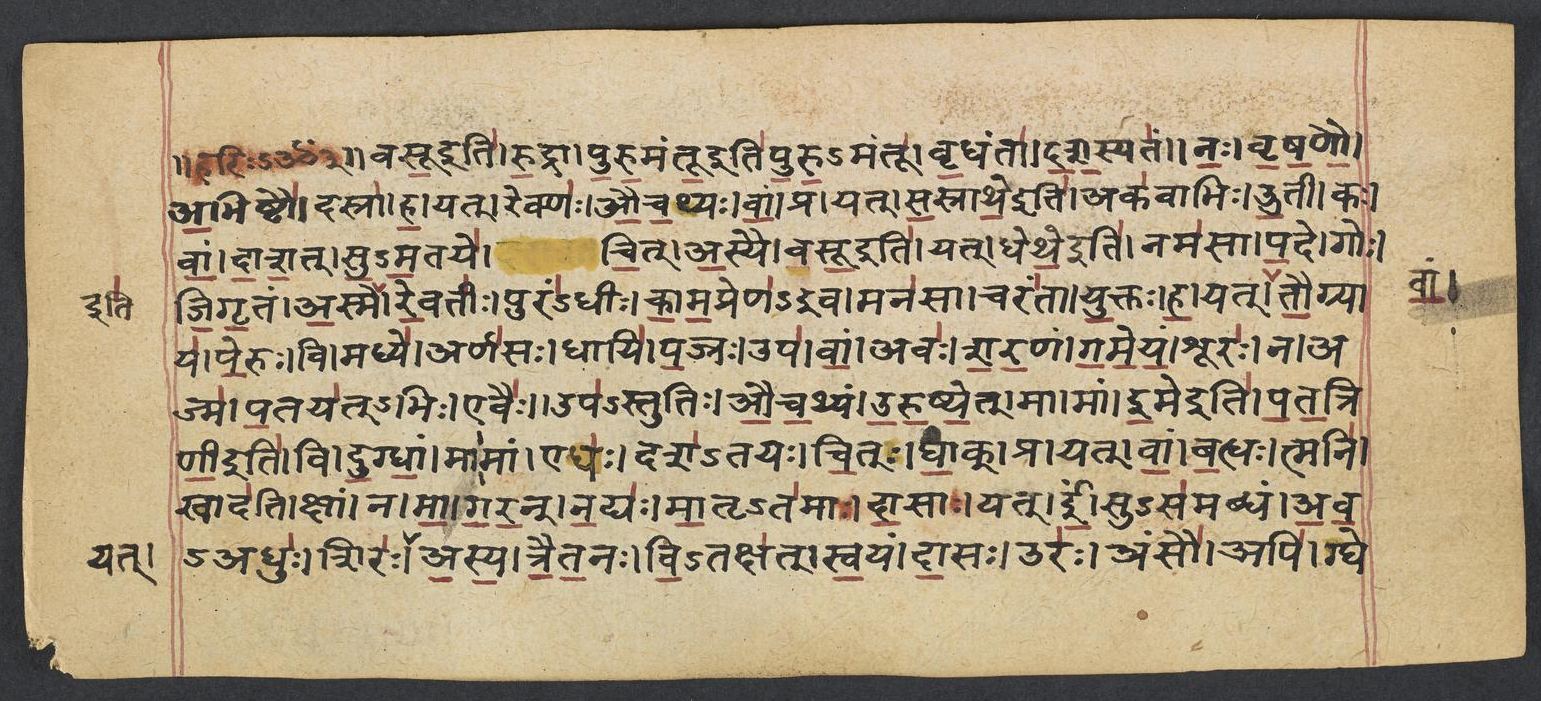
Penn Ms. Coll. 390 Item 41, fol. 120r (numbered 1r by the scribe) (OPenn image 121, lower leaf). Checked on the image: the Rigveda text on this page begins in RV 1.158.1 ‹vasī iti rudrā purumantūitipuru-mantū›. Line 1 opens with hariḥ oṃ, then 1.158.1 (vasū iti rudrā purumantū iti). The next page with Rigveda text, fol. 120v (numbered 1v by the scribe), begins in RV 1.158.6 ‹māmateyaḥ jujurvān daśame yuge›. Verses 1.158.1-5 end on this page.
1vasū̍ ru̱drā pu̍ru̱mantū̍ vṛ̱dhantā̍ daśa̱syata̍ṁ no vṛṣaṇāv a̱bhiṣṭau̍ | dasrā̍ ha̱ yad rekṇa̍ auca̱thyo vā̱m pra yat sa̱srāthe̱ aka̍vābhir ū̱tī ||
2ko vā̍ṁ dāśat suma̱taye̍ cid a̱syai vasū̱ yad dhethe̱ nama̍sā pa̱de goḥ | ji̱gṛ̱tam a̱sme re̱vatī̱ḥ pura̍ṁdhīḥ kāma̱preṇe̍va̱ mana̍sā̱ cara̍ntā ||
3yu̱kto ha̱ yad vā̍ṁ tau̱gryāya̍ pe̱rur vi madhye̱ arṇa̍so̱ dhāyi̍ pa̱jraḥ | upa̍ vā̱m ava̍ḥ śara̱ṇaṁ ga̍meya̱ṁ śūro̱ nājma̍ pa̱taya̍dbhi̱r evai̍ḥ ||
4upa̍stutir auca̱thyam u̍ruṣye̱n mā mām i̱me pa̍ta̱triṇī̱ vi du̍gdhām | mā mām edho̱ daśa̍tayaś ci̱to dhā̱k pra yad vā̍m ba̱ddhas tmani̱ khāda̍ti̱ kṣām ||
5na mā̍ garan na̱dyo̍ mā̱tṛta̍mā dā̱sā yad ī̱ṁ susa̍mubdham a̱vādhu̍ḥ | śiro̱ yad a̍sya traita̱no vi̱takṣa̍t sva̱yaṁ dā̱sa uro̱ aṁsā̱v api̍ gdha ||
Compare: Padapāṭha (word-by-word text written in the manuscript; Sansknet e-text via GRETIL)
1vasī iti | rudrā | purumantūitipuru-mantū | vṛdhantā | daśasyatam | naḥ | vṛṣaṇau | abhi ṣṭau | dasrā | ha | yat | rekṇaḥ | aucathyaḥ | vām | pra | yat | sasrātheiti | akavābhiḥ | ūtī
2kaḥ | vām | dāśat | su-mataye | cit | asyai | vasūiti | yat | dhetheiti | namasā | pade | goḥ | jigṛtam | asme iti | revatīḥ | puram-dhīḥ | kāma-preṇa-iva | manasā | carantā
3yuktaḥ | ha | yat | vām | taugryāya | peruḥ | vi | madhye | arṇasaḥ | dhāyi | pajraḥ | upa | vām | avaḥ | śaraṇam | gameyam | śūraḥ | na | ajma | patayat-bhiḥ | evaiḥ
4upa-stutiḥ | aucathyam | uruṣyet | mā | mām | ime iti | patatriṇī iti | vi | dugdhām | mā | mām | edhaḥ | daśa-tayaḥ | citaḥ | dhāk | pra | yat | vām | baddhaḥ | tmani | khādati | kṣām
5na | mā | garan | nadyaḥ | mātṛ-tamāḥ | dāsāḥ | yat | īm | su-samubdham | ava-adhuḥ | śiraḥ | yat | asya | traitanaḥ | vi-takṣat | svayam | dāsaḥ | uraḥ | aṃsau | api | gdhetigdha
1YE Vasus Twain, ye Rudras full of counsel, grant us, Strong Strengtheners, when ye stand beside us, What wealth Aucathya craves of you, great Helpers when ye come forward with no niggard succour.
2Who may give you aught, Vasus, for your favour, for what, at the Cow's place, ye grant through worship? Wake for us understanding full of riches, come with a heart that will fulfil our longing.
3As erst for Tugra's son your car, sea-crossing, strong, was equipped and set amid the waters, So may I gain your shelter and protection as with winged course a hero seeks his army.
4May this my praise preserve Ucathya's offspring: let not these Twain who fly with wings exhaust me. Let not the wood ten times up-piled consume me, when fixed for you it bites the ground it stands on.
5The most maternal streams, wherein the Dâsas cast me securely bound, have not devoured me. When Traitana would cleave my head asunder, the Dâsa wounded his own breast and shoulders.
Where on the image
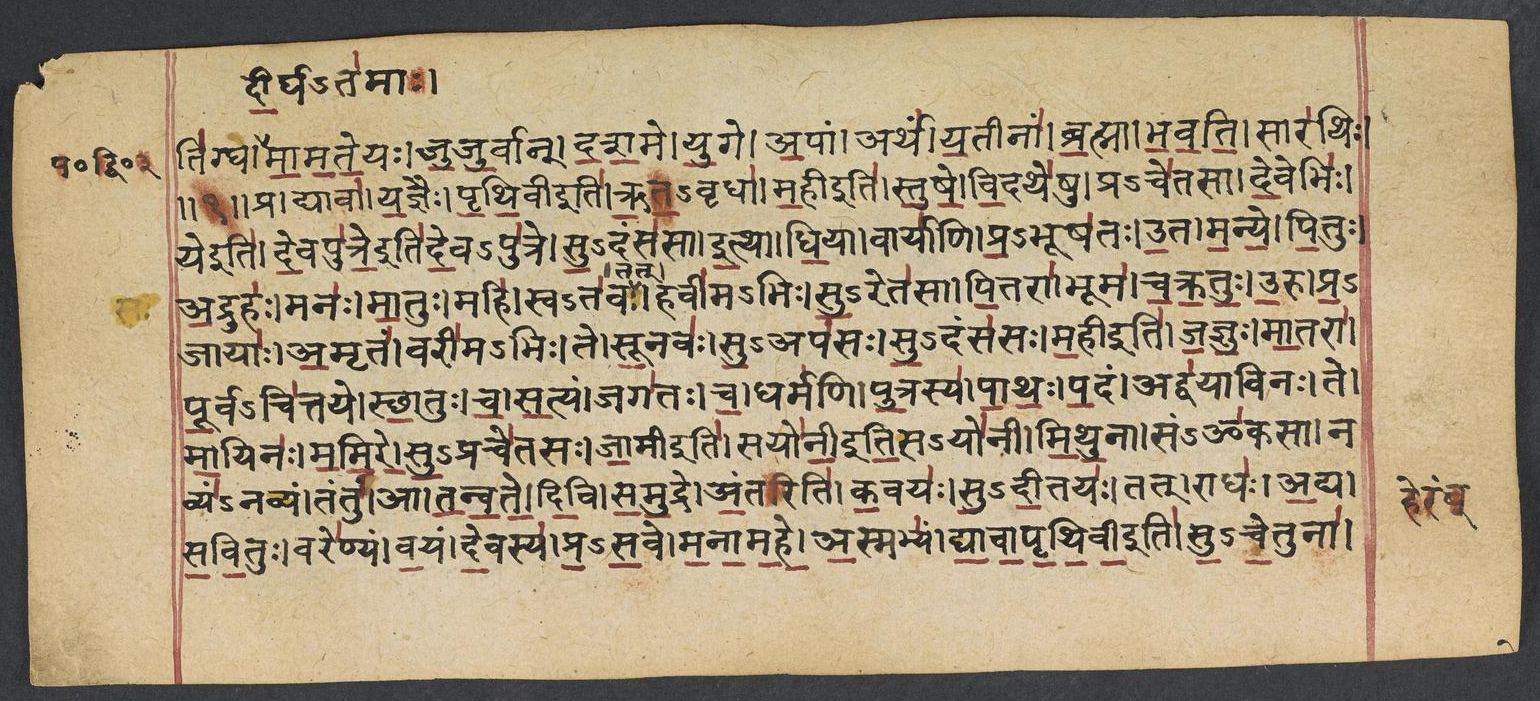
Penn Ms. Coll. 390 Item 41, fol. 120v (numbered 1v by the scribe) (OPenn image 122, upper leaf). Checked on the image: the Rigveda text on this page begins in RV 1.158.6 ‹māmateyaḥ jujurvān daśame yuge›. The next page with Rigveda text, fol. 121r (numbered 2r by the scribe), begins in RV 1.159.5 ‹rayim dhattam vasu-mantam śata-gvinam›. Verse 1.158.6 ends on this page; 1.158.6 begins on fol. 120r (numbered 1r by the scribe).
6dī̱rghata̍mā māmate̱yo ju̍ju̱rvān da̍śa̱me yu̱ge | a̱pām artha̍ṁ ya̱tīnā̍m bra̱hmā bha̍vati̱ sāra̍thiḥ ||
Compare: Padapāṭha (word-by-word text written in the manuscript; Sansknet e-text via GRETIL)
6dīrgha-tamāḥ | māmateyaḥ | jujurvān | daśame | yuge | apām | artham | yatīnām | brahmā | bhavati | sārathiḥ
6Dîrghatamas the son of Mamatâ hath come to length of days in the tenth age of human kind. He is the Brahman of the waters as they strive to reach their end and aim: their charioteer is he.
Notes
- Sanskrit: Aufrecht's edition (1877) with the Vedic accents, as entered by van Nooten and Holland (GRETIL).
- English: Ralph T. H. Griffith, The Hymns of the Rigveda (1889-1892; 2nd ed. 1896-1897), from the VedaWeb digital text; OCR slips in that text were corrected against the printed 2nd edition (data/sources/rigveda/griffith_errata.json).
- Padapāṭha (edition text): Sansknet e-text via GRETIL (CC BY-NC-SA 4.0).
Cite
Sources
- Source: Penn Ms. Coll. 390 Item 41 (undated (catalogued with Penn's 18th-19th c. Vedic manuscripts)), OPenn, Public Domain Mark + Aufrecht's accented text (GRETIL) + Griffith's English (VedaWeb) (holding institution)
- Critical edition: Aufrecht (1877), accented e-text via GRETIL
← previous · → next · v cycle view · l back to library