Rigveda 1.159: To Heaven and earth
Introduction
Rigveda 1.159 is a hymn of 5 verses addressed to Heaven and earth. It stands in book (maṇḍala) 1, a collection of hymns by many families of poets. The Rigveda is the oldest collection of Sanskrit hymns, composed in the second half of the second millennium BCE and handed down orally for many centuries before it was written down.
The manuscript shown is Penn Ms. Coll. 390 Item 41 (University of Pennsylvania), an undated paper manuscript of the padapāṭha (the word-by-word recitation text, in which every word is written separately and compounds are split) of the whole Ṛgveda in Devanāgarī, 884 leaves in fascicles, 7-9 lines to the page, accents in red; this hymn stands on fol. 120v-121r. Each section below gives the verses that end on one page; the page boundaries were read on the images (the opening words of every page), not counted out. Where the manuscript is a padapāṭha (the word-by-word recitation text), the section shows Aufrecht's continuous (saṃhitā) text first and, as the edition text, the padapāṭha of the same verses, which is the form written on the page.
How was this verified? (Provenance)
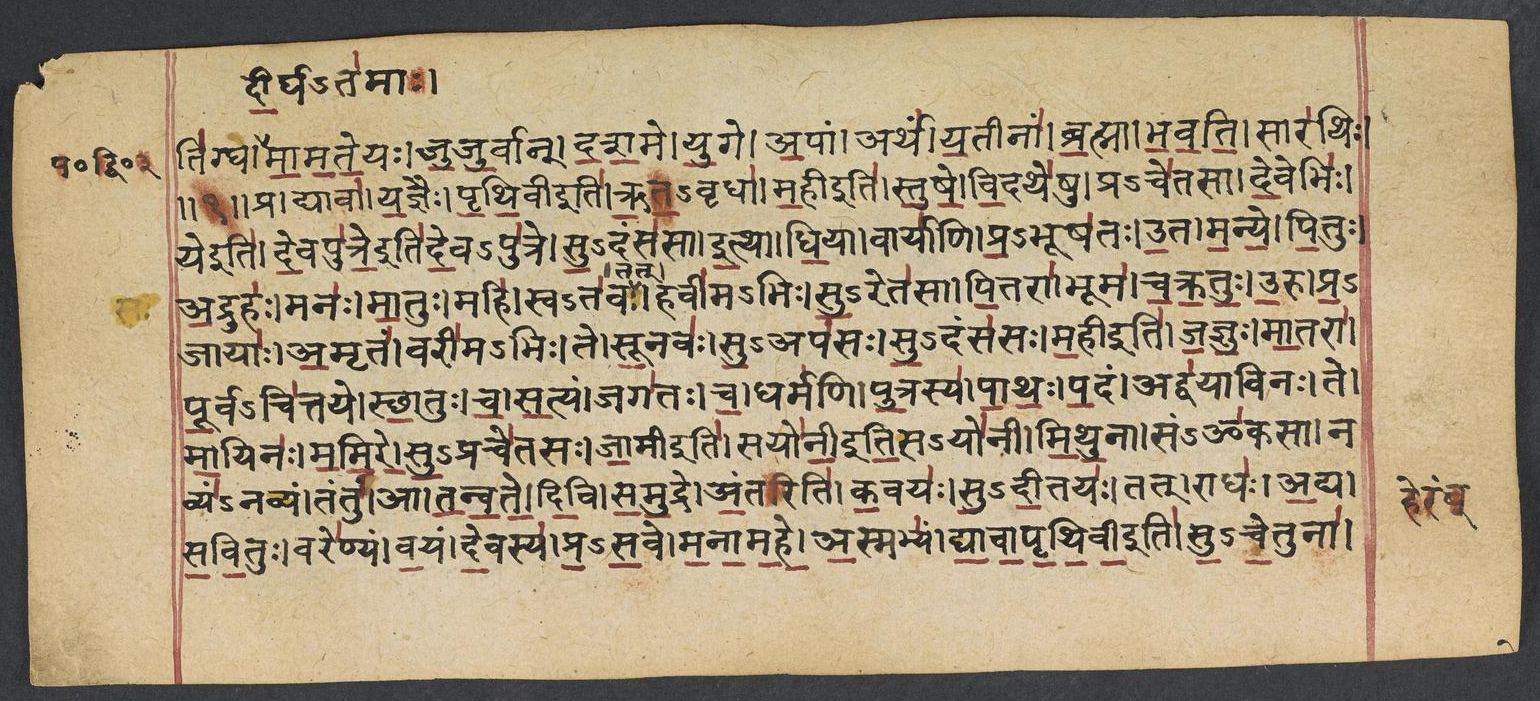
Where on the image
Penn Ms. Coll. 390 Item 41, fol. 120v (numbered 1v by the scribe) (OPenn image 122, upper leaf). Checked on the image: the Rigveda text on this page begins in RV 1.158.6 ‹māmateyaḥ jujurvān daśame yuge›. The next page with Rigveda text, fol. 121r (numbered 2r by the scribe), begins in RV 1.159.5 ‹rayim dhattam vasu-mantam śata-gvinam›. Verses 1.159.1-4 end on this page.
1pra dyāvā̍ ya̱jñaiḥ pṛ̍thi̱vī ṛ̍tā̱vṛdhā̍ ma̱hī stu̍ṣe vi̱dathe̍ṣu̱ prace̍tasā | de̱vebhi̱r ye de̱vapu̍tre su̱daṁsa̍se̱tthā dhi̱yā vāryā̍ṇi pra̱bhūṣa̍taḥ ||
2u̱ta ma̍nye pi̱tur a̱druho̱ mano̍ mā̱tur mahi̱ svata̍va̱s tad dhavī̍mabhiḥ | su̱reta̍sā pi̱tarā̱ bhūma̍ cakratur u̱ru pra̱jāyā̍ a̱mṛta̱ṁ varī̍mabhiḥ ||
3te sū̱nava̱ḥ svapa̍saḥ su̱daṁsa̍so ma̱hī ja̍jñur mā̱tarā̍ pū̱rvaci̍ttaye | sthā̱tuś ca̍ sa̱tyaṁ jaga̍taś ca̱ dharma̍ṇi pu̱trasya̍ pāthaḥ pa̱dam adva̍yāvinaḥ ||
4te mā̱yino̍ mamire su̱prace̍taso jā̱mī sayo̍nī mithu̱nā samo̍kasā | navya̍ṁ-navya̱ṁ tantu̱m ā ta̍nvate di̱vi sa̍mu̱dre a̱ntaḥ ka̱vaya̍ḥ sudī̱taya̍ḥ ||
Compare: Padapāṭha (word-by-word text written in the manuscript; Sansknet e-text via GRETIL)
1pra | dyāvā | yajñaiḥ | pṛthivī iti | ṛta-vṛdhā | mahī iti | stuṣe | vidatheṣu | pra-cetasā | devebhiḥ | ye iti | deva-putreitideva-putre | su-daṃsasā | itthā | dhiyā | vāryāṇi | pra-bhūṣataḥ
2uta | manye | pituḥ | adruhaḥ | manaḥ | mātuḥ | mahi | sva-tavaḥ | tat | havīma-bhiḥ | su-retasā | pitarā | bhūma | cakratuḥ | uru | pra-jāyāḥ | amṛtam | varīma-bhiḥ
3te | sūnavaḥ | su-apasaḥ | su-daṃsasaḥ | mahī iti | jajñuḥ | mātarā | pūrva-cittaye | sthātuḥ | ca | satyam | jagataḥ | ca | dharmaṇ i | putrasya | pāthaḥ | padam | advayāvinaḥ
4te | māyinaḥ | mamire | su-pracetasaḥ | jāmī iti | sayonī itisa-yonī | mithunā | sam-okasā | navyam-navyam | tantum | ā | tanvate | divi | samudre | antariti | kavayaḥ | su-dītayaḥ
1I PRAISE with sacrifices mighty Heaven and Earth at festivals, the wise, the Strengtheners of Law. Who, having Gods for progeny, conjoined with Gods, through wonder-working wisdom bring forth choicest boons.
2With invocations, on the gracious Father's mind, and on the Mother's great inherent power I muse. Prolific Parents, they have made the world of life, and for their brood all round wide immortality.
3These Sons of yours well skilled in work, of wondrous power, brought forth to life the two great Mothers first of all. To keep the truth of all that stands and all that moves, ye guard the station of your Son who knows no guile.
4They with surpassing skill, most wise, have measured out the Twins united in their birth and in their home. They, the refulgent Sages, weave within the sky, yea, in the depths of sea, a web for ever new.
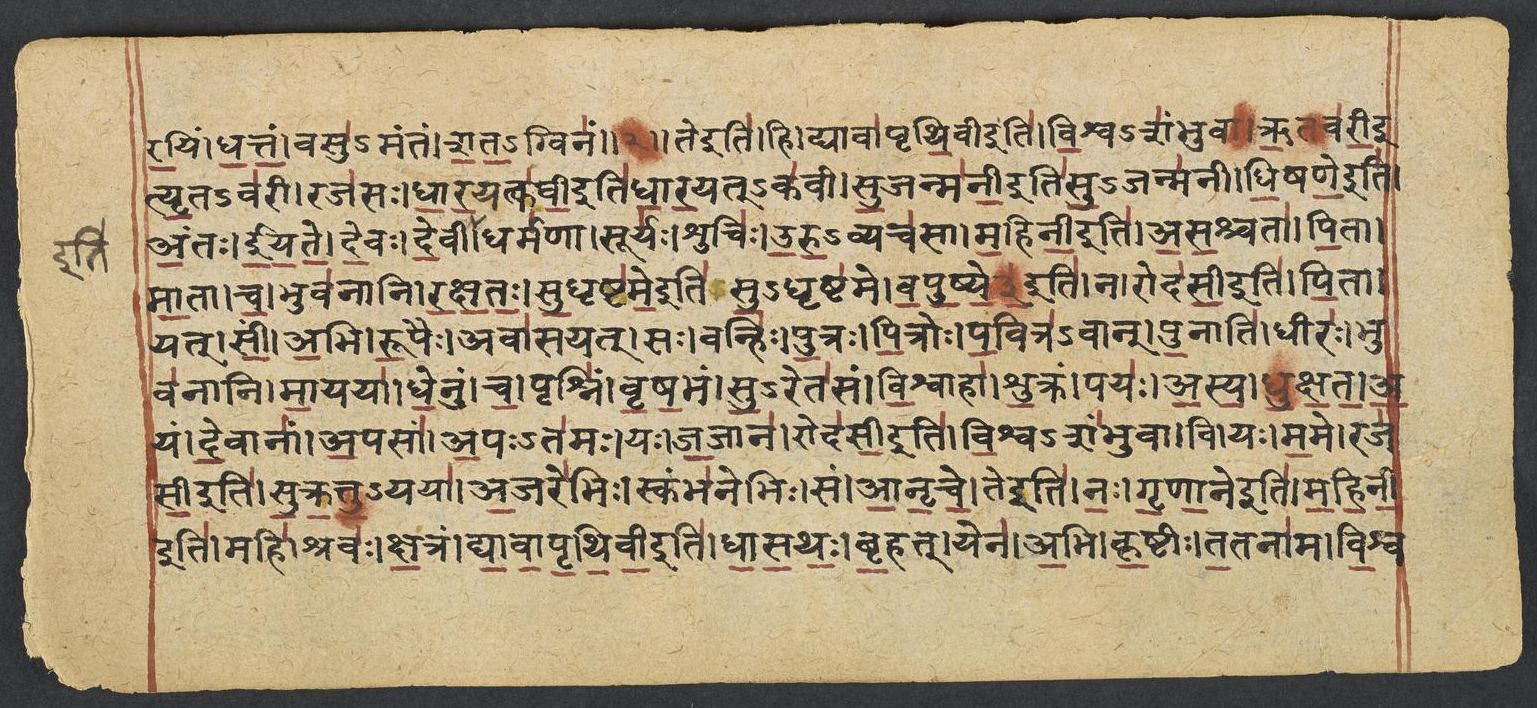
Where on the image
Penn Ms. Coll. 390 Item 41, fol. 121r (numbered 2r by the scribe) (OPenn image 122, lower leaf). Checked on the image: the Rigveda text on this page begins in RV 1.159.5 ‹rayim dhattam vasu-mantam śata-gvinam›. The next page with Rigveda text, fol. 121v (numbered 2v by the scribe), begins in RV 1.160.5 ‹ojaḥ asme iti sam›. Verse 1.159.5 ends on this page; 1.159.5 begins on fol. 120v (numbered 1v by the scribe).
5tad rādho̍ a̱dya sa̍vi̱tur vare̍ṇyaṁ va̱yaṁ de̱vasya̍ prasa̱ve ma̍nāmahe | a̱smabhya̍ṁ dyāvāpṛthivī suce̱tunā̍ ra̱yiṁ dha̍tta̱ṁ vasu̍mantaṁ śata̱gvina̍m ||
Compare: Padapāṭha (word-by-word text written in the manuscript; Sansknet e-text via GRETIL)
5tat | rādhaḥ | adya | savituḥ | vareṇyam | vayam | devasya | pra-save | manāmahe | asmabhyam | dyāvāpṛthivī iti | su-cetunā | rayim | dhattam | vasu-mantam | śata-gvinam
5This is to-day the goodliest gift of Savitar: this thought we have when now the God is furthering us. On us with loving-kindness Heaven and Earth bestow riches and various wealth and treasure hundredfold!
Notes
- Sanskrit: Aufrecht's edition (1877) with the Vedic accents, as entered by van Nooten and Holland (GRETIL).
- English: Ralph T. H. Griffith, The Hymns of the Rigveda (1889-1892; 2nd ed. 1896-1897), from the VedaWeb digital text; OCR slips in that text were corrected against the printed 2nd edition (data/sources/rigveda/griffith_errata.json).
- Padapāṭha (edition text): Sansknet e-text via GRETIL (CC BY-NC-SA 4.0).
Cite
Sources
- Source: Penn Ms. Coll. 390 Item 41 (undated (catalogued with Penn's 18th-19th c. Vedic manuscripts)), OPenn, Public Domain Mark + Aufrecht's accented text (GRETIL) + Griffith's English (VedaWeb) (holding institution)
- Critical edition: Aufrecht (1877), accented e-text via GRETIL
← previous · → next · v cycle view · l back to library