Rigveda 1.160: To Heaven and earth
Introduction
Rigveda 1.160 is a hymn of 5 verses addressed to Heaven and earth. It stands in book (maṇḍala) 1, a collection of hymns by many families of poets. The Rigveda is the oldest collection of Sanskrit hymns, composed in the second half of the second millennium BCE and handed down orally for many centuries before it was written down.
The manuscript shown is Penn Ms. Coll. 390 Item 41 (University of Pennsylvania), an undated paper manuscript of the padapāṭha (the word-by-word recitation text, in which every word is written separately and compounds are split) of the whole Ṛgveda in Devanāgarī, 884 leaves in fascicles, 7-9 lines to the page, accents in red; this hymn stands on fol. 121r-121v. Each section below gives the verses that end on one page; the page boundaries were read on the images (the opening words of every page), not counted out. Where the manuscript is a padapāṭha (the word-by-word recitation text), the section shows Aufrecht's continuous (saṃhitā) text first and, as the edition text, the padapāṭha of the same verses, which is the form written on the page.
How was this verified? (Provenance)
Where on the image
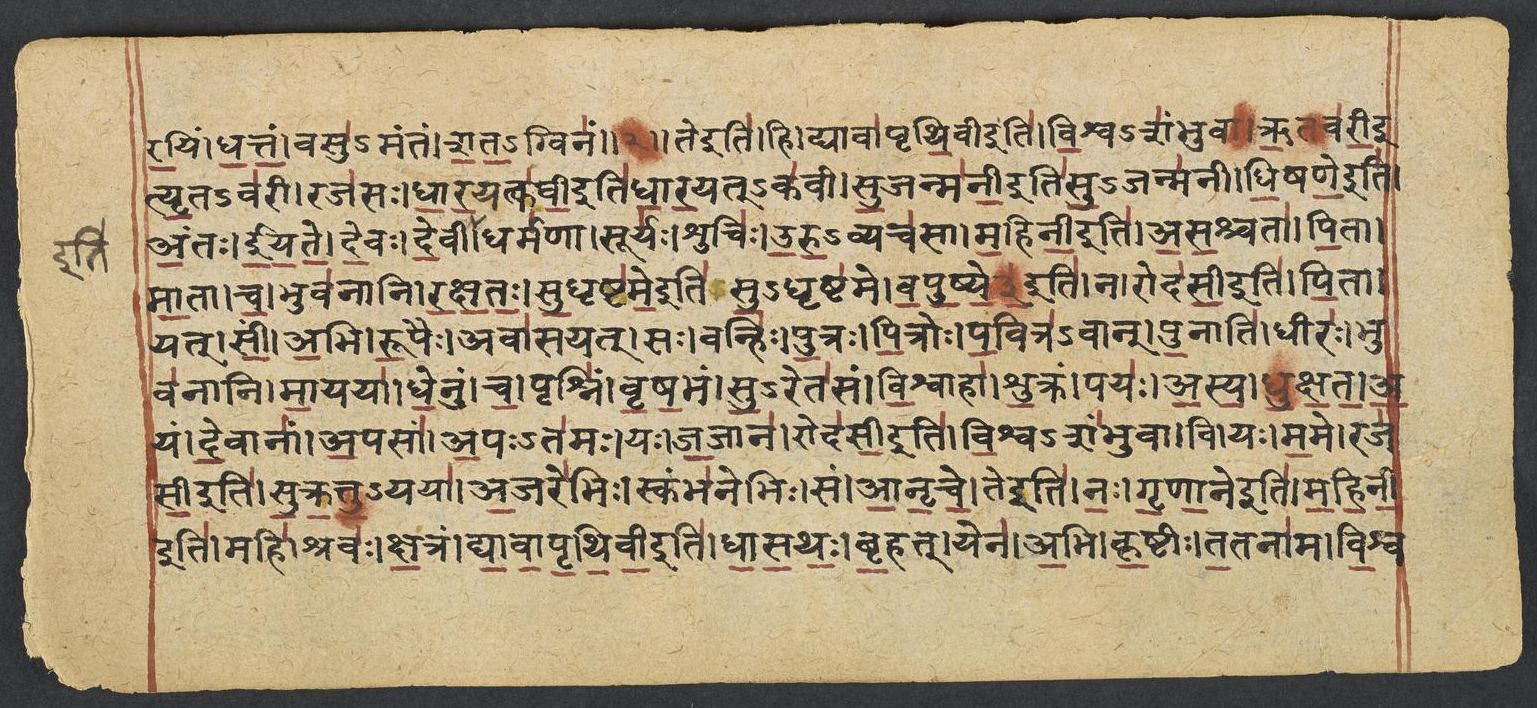
Penn Ms. Coll. 390 Item 41, fol. 121r (numbered 2r by the scribe) (OPenn image 122, lower leaf). Checked on the image: the Rigveda text on this page begins in RV 1.159.5 ‹rayim dhattam vasu-mantam śata-gvinam›. The next page with Rigveda text, fol. 121v (numbered 2v by the scribe), begins in RV 1.160.5 ‹ojaḥ asme iti sam›. Verses 1.160.1-4 end on this page.
1te hi dyāvā̍pṛthi̱vī vi̱śvaśa̍mbhuva ṛ̱tāva̍rī̱ raja̍so dhāra̱yatka̍vī | su̱janma̍nī dhi̱ṣaṇe̍ a̱ntar ī̍yate de̱vo de̱vī dharma̍ṇā̱ sūrya̱ḥ śuci̍ḥ ||
2u̱ru̱vyaca̍sā ma̱hinī̍ asa̱ścatā̍ pi̱tā mā̱tā ca̱ bhuva̍nāni rakṣataḥ | su̱dhṛṣṭa̍me vapu̱ṣye̱3̱̍ na roda̍sī pi̱tā yat sī̍m a̱bhi rū̱pair avā̍sayat ||
3sa vahni̍ḥ pu̱traḥ pi̱troḥ pa̱vitra̍vān pu̱nāti̱ dhīro̱ bhuva̍nāni mā̱yayā̍ | dhe̱nuṁ ca̱ pṛśni̍ṁ vṛṣa̱bhaṁ su̱reta̍saṁ vi̱śvāhā̍ śu̱kram payo̍ asya dukṣata ||
4a̱yaṁ de̱vānā̍m a̱pasā̍m a̱pasta̍mo̱ yo ja̱jāna̱ roda̍sī vi̱śvaśa̍mbhuvā | vi yo ma̱me raja̍sī sukratū̱yayā̱jare̍bhi̱ḥ skambha̍nebhi̱ḥ sam ā̍nṛce ||
Compare: Padapāṭha (word-by-word text written in the manuscript; Sansknet e-text via GRETIL)
1te iti | hi | dyāvāpṛthivī iti | viśva-śambhuvā | ṛta-varī ity ṛta-varī | rajasaḥ | dhārayatkavī itidhārayat-kavī | sujanmanī itisu-janmanī | dhiṣaṇeiti | antaḥ | īyate | devaḥ | devī iti | dharmaṇā | sūryaḥ | śuciḥ
2uru-vyacasā | mahinī iti | asaścatā | pitā | mātā | ca | bhuvanāni | rakṣataḥ | sudhṛṣṭameitisu-dhṛṣṭame | vapuṣye iti | na | rodasī iti | pitā | yat | sīm | abhi | rūpaiḥ | avāsayat
3saḥ | vahniḥ | putraḥ | pitroḥ | pavitra-vān | punāti | dhīraḥ | bhuvanāni | māyayā | dhenum | ca | pṛśnim | vṛṣabham | su-retasam | viśvāhā | śukram | payaḥ | asya | dhukṣata
4ayam | devānām | apasām | apaḥ-tamaḥ | yaḥ | jajāna | rodasī iti | viśva-śambhuvā | vi | yaḥ | mame | rajasī iti | sukratu-yayā | ajarebhiḥ | skambhanebhiḥ | sam | ānṛce
1THESE, Heaven and Earth, bestow prosperity on all, sustainers of the region, Holy Ones and wise, Two Bowls of noble kind: between these Goddesses the God, the fulgent Sun, travels by fixed decree.
2Widely-capacious Pair, mighty, that never fail, the Father and the Mother keep all creatures safe: The two world-halves, the spirited, the beautiful, because the Father hath clothed them in goodly forms.
3Son of these Parents, he the Priest with power to cleanse, Sage, sanctifies the worlds with his surpassing power. Thereto for his bright milk he milked through all the days the party-coloured Cow and the prolific Bull.
4Among the skilful Gods most skilled is he, who made the two world-halves which bring prosperity to all; Who with great wisdom measured both the regions out, and stablished them with pillars that shall ne'er decay.
Where on the image
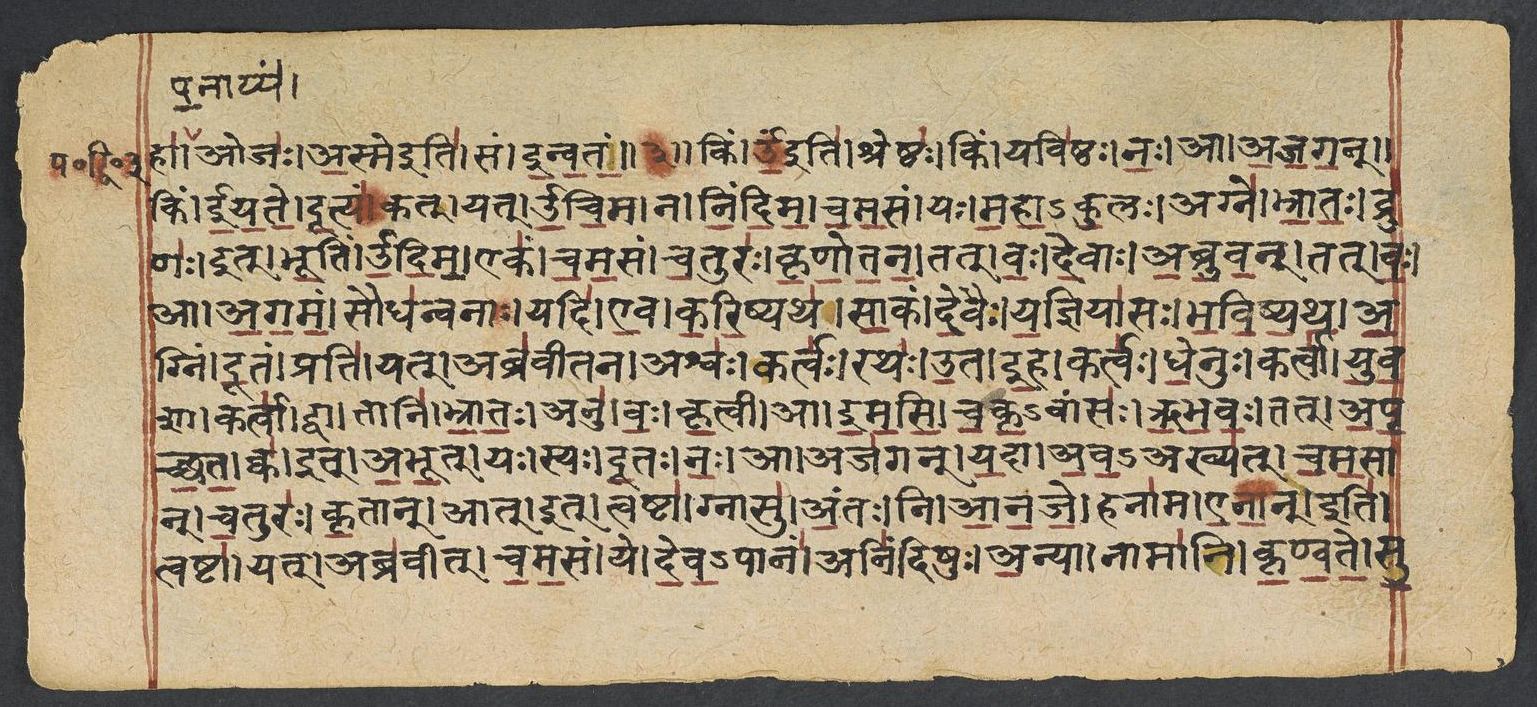
Penn Ms. Coll. 390 Item 41, fol. 121v (numbered 2v by the scribe) (OPenn image 123, upper leaf). Checked on the image: the Rigveda text on this page begins in RV 1.160.5 ‹ojaḥ asme iti sam›. The next page with Rigveda text, fol. 122r (numbered 3r by the scribe), begins in RV 1.161.5 ‹-sute sacā anyaiḥ enān›. Verse 1.160.5 ends on this page; 1.160.5 begins on fol. 121r (numbered 2r by the scribe).
5te no̍ gṛṇā̱ne ma̍hinī̱ mahi̱ śrava̍ḥ kṣa̱traṁ dyā̍vāpṛthivī dhāsatho bṛ̱hat | yenā̱bhi kṛ̱ṣṭīs ta̱tanā̍ma vi̱śvahā̍ pa̱nāyya̱m ojo̍ a̱sme sam i̍nvatam ||
Compare: Padapāṭha (word-by-word text written in the manuscript; Sansknet e-text via GRETIL)
5te | naḥ | gṛṇāne iti | mahinī iti | mahi | śravaḥ | kṣatram | dyāvāpṛthivī iti | dhāsathaḥ | bṛhat | yena | abhi | kṛṣṭīḥ | tatanāma | viśvahā | panāyyam | ojaḥ | asme iti | sam | invatam
5Extolled in song, O Heaven and Earth, bestow on us, ye mighty Pair, great glory and high lordly sway, Whereby we may extend ourselves ever over the folk; and send us strength that shall deserve the praise of men.
Notes
- Sanskrit: Aufrecht's edition (1877) with the Vedic accents, as entered by van Nooten and Holland (GRETIL).
- English: Ralph T. H. Griffith, The Hymns of the Rigveda (1889-1892; 2nd ed. 1896-1897), from the VedaWeb digital text; OCR slips in that text were corrected against the printed 2nd edition (data/sources/rigveda/griffith_errata.json).
- Padapāṭha (edition text): Sansknet e-text via GRETIL (CC BY-NC-SA 4.0).
Cite
Sources
- Source: Penn Ms. Coll. 390 Item 41 (undated (catalogued with Penn's 18th-19th c. Vedic manuscripts)), OPenn, Public Domain Mark + Aufrecht's accented text (GRETIL) + Griffith's English (VedaWeb) (holding institution)
- Critical edition: Aufrecht (1877), accented e-text via GRETIL
← previous · → next · v cycle view · l back to library