Rigveda 1.161: To the Ribhus
Introduction
Rigveda 1.161 is a hymn of 14 verses addressed to the Ribhus. It stands in book (maṇḍala) 1, a collection of hymns by many families of poets. The Rigveda is the oldest collection of Sanskrit hymns, composed in the second half of the second millennium BCE and handed down orally for many centuries before it was written down.
The manuscript shown is Penn Ms. Coll. 390 Item 41 (University of Pennsylvania), an undated paper manuscript of the padapāṭha (the word-by-word recitation text, in which every word is written separately and compounds are split) of the whole Ṛgveda in Devanāgarī, 884 leaves in fascicles, 7-9 lines to the page, accents in red; this hymn stands on fol. 121v-122v. Each section below gives the verses that end on one page; the page boundaries were read on the images (the opening words of every page), not counted out. Where the manuscript is a padapāṭha (the word-by-word recitation text), the section shows Aufrecht's continuous (saṃhitā) text first and, as the edition text, the padapāṭha of the same verses, which is the form written on the page.
How was this verified? (Provenance)
Where on the image
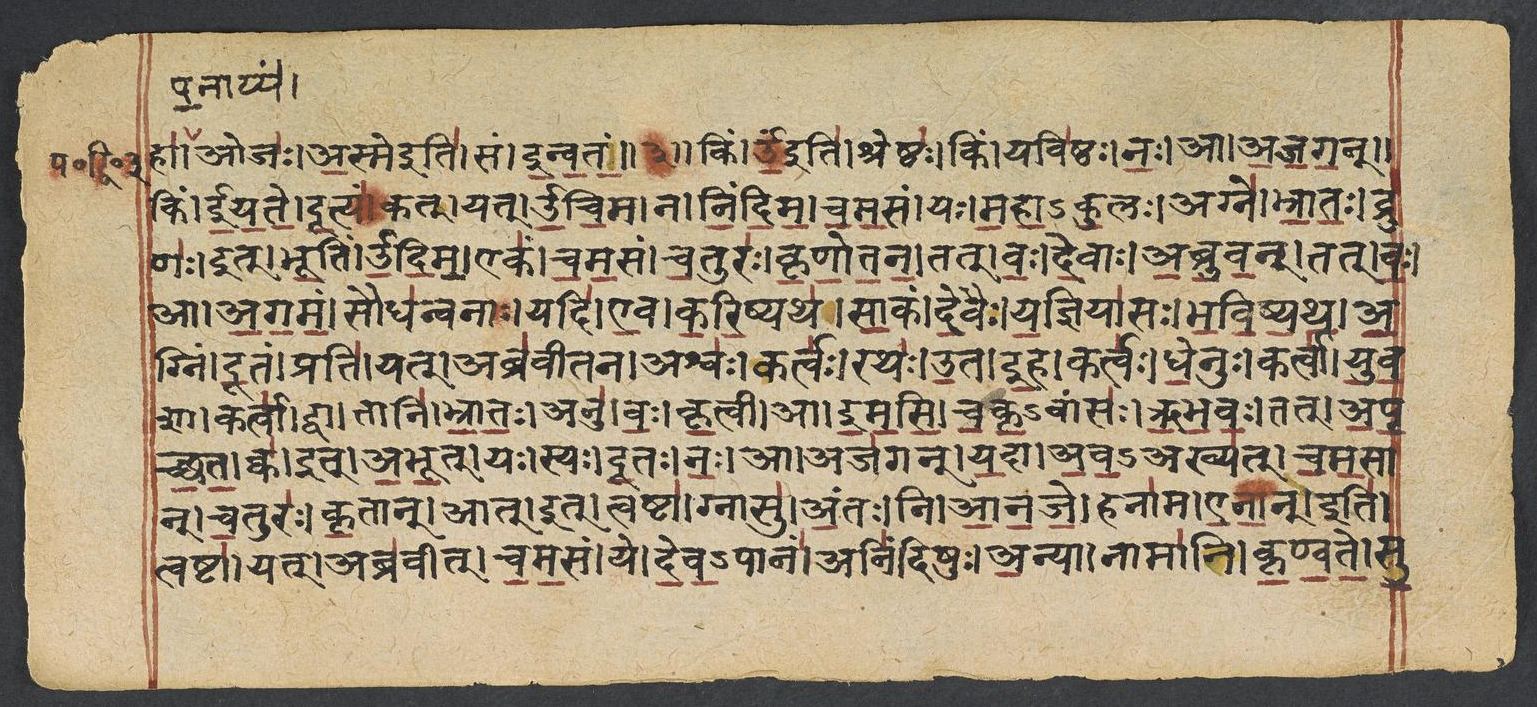
Penn Ms. Coll. 390 Item 41, fol. 121v (numbered 2v by the scribe) (OPenn image 123, upper leaf). Checked on the image: the Rigveda text on this page begins in RV 1.160.5 ‹ojaḥ asme iti sam›. The next page with Rigveda text, fol. 122r (numbered 3r by the scribe), begins in RV 1.161.5 ‹-sute sacā anyaiḥ enān›. Verses 1.161.1-4 end on this page.
1kim u̱ śreṣṭha̱ḥ kiṁ yavi̍ṣṭho na̱ āja̍ga̱n kim ī̍yate dū̱tya1̱̍ṁ kad yad ū̍ci̱ma | na ni̍ndima cama̱saṁ yo ma̍hāku̱lo 'gne̍ bhrāta̱r druṇa̱ id bhū̱tim ū̍dima ||
2eka̍ṁ cama̱saṁ ca̱tura̍ḥ kṛṇotana̱ tad vo̍ de̱vā a̍bruva̱n tad va̱ āga̍mam | saudha̍nvanā̱ yady e̱vā ka̍ri̱ṣyatha̍ sā̱kaṁ de̱vair ya̱jñiyā̍so bhaviṣyatha ||
3a̱gniṁ dū̱tam prati̱ yad abra̍vīta̱nāśva̱ḥ kartvo̱ ratha̍ u̱teha kartva̍ḥ | dhe̱nuḥ kartvā̍ yuva̱śā kartvā̱ dvā tāni̍ bhrāta̱r anu̍ vaḥ kṛ̱tvy ema̍si ||
4ca̱kṛ̱vāṁsa̍ ṛbhava̱s tad a̍pṛcchata̱ kved a̍bhū̱d yaḥ sya dū̱to na̱ āja̍gan | ya̱dāvākhya̍c cama̱sāñ ca̱tura̍ḥ kṛ̱tān ād it tvaṣṭā̱ gnāsv a̱ntar ny ā̍naje ||
Compare: Padapāṭha (word-by-word text written in the manuscript; Sansknet e-text via GRETIL)
1kim | ūām iti | śreṣṭhaḥ | kim | yaviṣṭhaḥ | naḥ | ā | ajagan | kim | īyate | dūtyam | kat | yat | ūc ima | na | nindima | camasam | yaḥ | mahākulaḥ | agne | bhrātaḥ | druṇaḥ | it | bhūtim | ūdima
2ekam | camasam | caturaḥ | kṛṇotana | tat | vaḥ | devāḥ | abruvan | tat | vaḥ | ā | agamam | saudhanvanāḥ | yadi | eva | kariṣyatha | sākam | devaiḥ | yajñiyāsaḥ | bhavi ṣyatha
3agnim | dūtam | prati | yat | abravītana | aśvaḥ | kartvaḥ | rathaḥ | uta | iha | kartvaḥ | dhenuḥ | kartvā | yuvaśā | kartvā | dvā | tāni | bhrātaḥ | anu | vaḥ | kṛtvī | ā | imasi
4cakṛ-vāṃsaḥ | ṛbhavaḥ | tat | apṛcchata | kva | it | abhūt | yaḥ | syaḥ | dūtaḥ | naḥ | ā | ajagan | yadā | ava-akhyat | camasān | caturaḥ | kṛtān | āt | it | tvaṣṭā | gnāsu | antaḥ | ni | ānaje
1WHY hath the Best, why hath the Youngest come to us? Upon what embassy comes he? What have we said? We have not blamed the chalice of illustrious birth. We, Brother Agni, praised the goodness of the wood.
2The chalice that is single make ye into four: thus have the Gods commanded; therefore am I come. If, O Sudhanvan's Children, ye will do this thing ye shall participate in sacrifice with Gods.
3What to the envoy Agni in reply ye spake, A courser must be made, a chariot fashioned here, A cow must be created, and the Twain made young. When we have done these things, Brother, we turn to you.
4When thus, O R̥ibhus, ye had done ye questioned thus, Whither went he who came to us a messenger? Then Tvashṭar, when he viewed the four wrought chalices, concealed himself among the Consorts of the Gods.
Where on the image
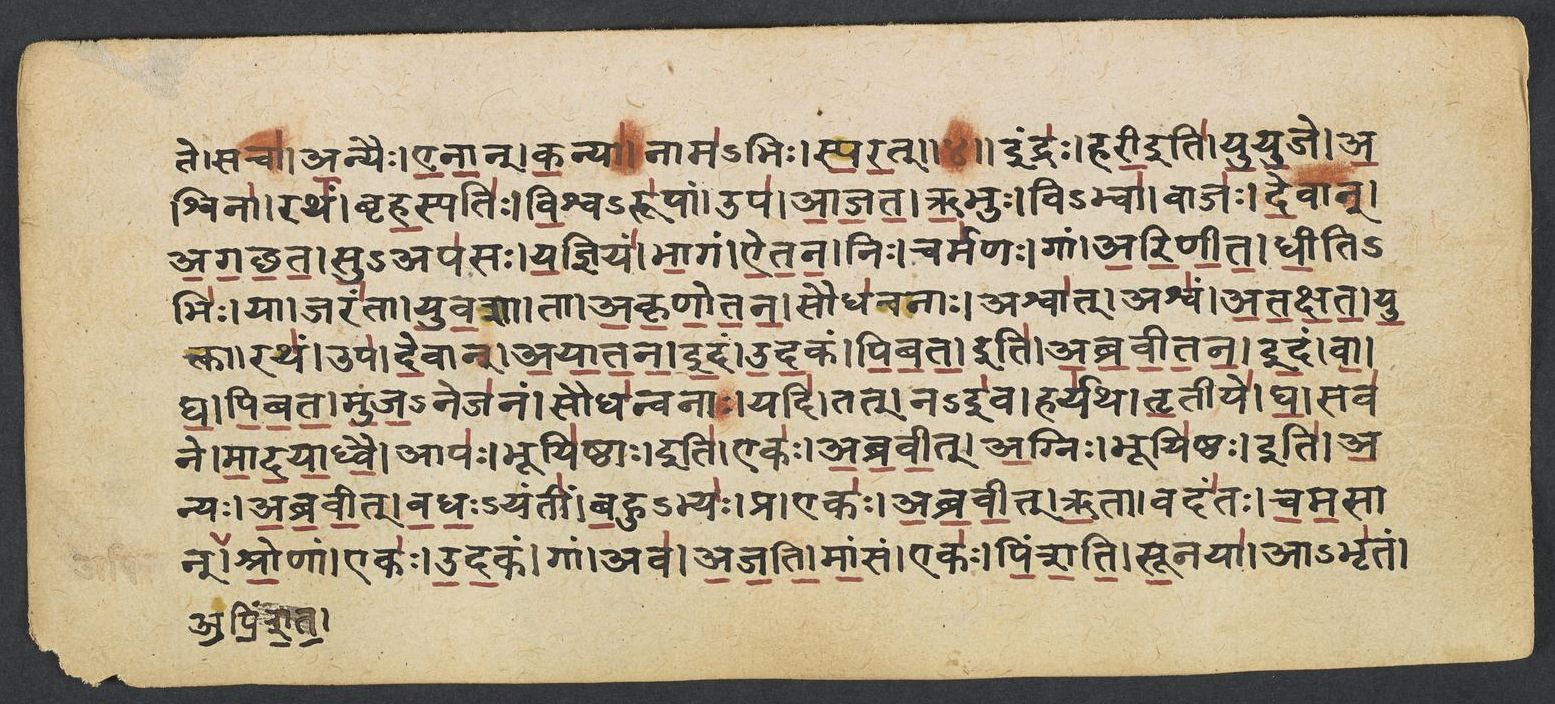
Penn Ms. Coll. 390 Item 41, fol. 122r (numbered 3r by the scribe) (OPenn image 123, lower leaf). Checked on the image: the Rigveda text on this page begins in RV 1.161.5 ‹-sute sacā anyaiḥ enān›. The next page with Rigveda text, fol. 122v (numbered 3v by the scribe), begins in RV 1.161.10 ‹ā ni-mrucaḥ śakṛt ekaḥ›. Verses 1.161.5-9 end on this page; 1.161.5 begins on fol. 121v (numbered 2v by the scribe).
5hanā̍mainā̱m̐ iti̱ tvaṣṭā̱ yad abra̍vīc cama̱saṁ ye de̍va̱pāna̱m ani̍ndiṣuḥ | a̱nyā nāmā̍ni kṛṇvate su̱te sacā̍m̐ a̱nyair e̍nān ka̱nyā̱3̱̍ nāma̍bhiḥ sparat ||
6indro̱ harī̍ yuyu̱je a̱śvinā̱ ratha̱m bṛha̱spati̍r vi̱śvarū̍pā̱m upā̍jata | ṛ̱bhur vibhvā̱ vājo̍ de̱vām̐ a̍gacchata̱ svapa̍so ya̱jñiya̍m bhā̱gam ai̍tana ||
7niś carma̍ṇo̱ gām a̍riṇīta dhī̱tibhi̱r yā jara̍ntā yuva̱śā tākṛ̍ṇotana | saudha̍nvanā̱ aśvā̱d aśva̍m atakṣata yu̱ktvā ratha̱m upa̍ de̱vām̐ a̍yātana ||
8i̱dam u̍da̱kam pi̍ba̱tety a̍bravītane̱daṁ vā̍ ghā pibatā muñja̱neja̍nam | saudha̍nvanā̱ yadi̱ tan neva̱ harya̍tha tṛ̱tīye̍ ghā̱ sava̍ne mādayādhvai ||
9āpo̱ bhūyi̍ṣṭhā̱ ity eko̍ abravīd a̱gnir bhūyi̍ṣṭha̱ ity a̱nyo a̍bravīt | va̱dha̱ryantī̍m ba̱hubhya̱ḥ praiko̍ abravīd ṛ̱tā vada̍ntaś cama̱sām̐ a̍piṁśata ||
Compare: Padapāṭha (word-by-word text written in the manuscript; Sansknet e-text via GRETIL)
5hanāma | enān | iti | tvaṣṭā | yat | abravīt | camasam | ye | deva-pānam | anindiṣuḥ | anyā | nāmāni | kṛṇvate | sute | sacā | anyaiḥ | enān | kanyā | nāma-bhiḥ | sparat
6indraḥ | harī | yuyuje | aśvinā | ratham | bṛhaspatiḥ | viśva-rūpām | upa | ājata | ṛbhuḥ | vi-bhvā | vājaḥ | devān | agacchata | su-apasaḥ | yajñiyam | bhāgam | aitana
7niḥ | carmaṇaḥ | gām | ariṇīta | dhīti-bhiḥ | yā | jarantā | yuvaśā | tā | akṛṇotana | saudhanvanāḥ | aśvāt | aśvam | atakṣata | yuktvā | ratham | upa | devān | ayātana
8idam | udakam | pibata | iti | abravītana | idam | vā | gha | pibata | muñja-nejanam | saudhanvanāḥ | yadi | tat | na-iva | haryatha | tṛtīye | gha | savane | mādayādhvai
9āpaḥ | bhūyiṣṭhāḥ | iti | ekaḥ | abravīt | agniḥ | bhūyiṣṭhaḥ | iti | anyaḥ | abravīt | vadhaḥ-yantīm | bahu-bhyaḥ | pra | ekaḥ | abravīt | ṛtā | vadantaḥ | camasān | apiṃśata
5As Tvashṭar thus had spoken, Let us slay these men who have reviled the chalice, drinking-cup of Gods, They gave themselves new names when Soma juice was shed, and under these new names the Maiden welcomed them.
6Indra hath yoked his Bays, the Aṣvins' car is horsed, Br̥ihaspati hath brought the Cow of every hue. Ye went as R̥ibhus, Vibhvan, Vâja to the Gods, and skilled in war, obtained your share in sacrifice.
7Ye by your wisdom brought a cow from out a hide; unto that ancient Pair ye gave again their youth. Out of a horse, Sudhanvan's Sons, ye formed a horse: a chariot ye equipped, and went unto the Gods.
8Drink ye this water, were the words ye spake to them; or drink ye this, the rinsing of the Munjagrass. If ye approve not even this, Sudhanvan's Sons, then at the third libation gladden ye yourselves.
9Most excellent are waters, thus said one of you; most excellent is Agni, thus another said. Another praised to many a one the lightning cloud. Then did ye shape the cups, speaking the words of truth.
Where on the image
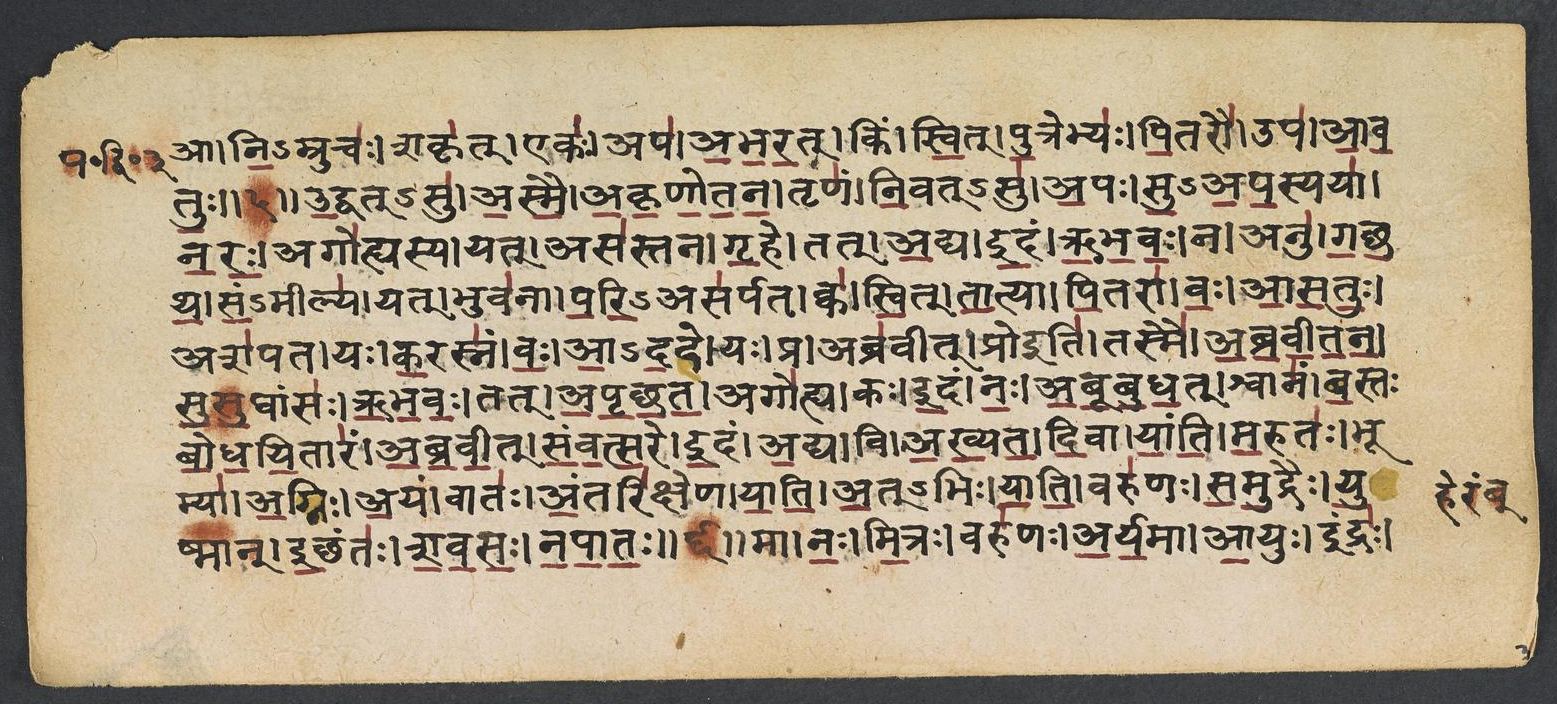
Penn Ms. Coll. 390 Item 41, fol. 122v (numbered 3v by the scribe) (OPenn image 124, upper leaf). Checked on the image: the Rigveda text on this page begins in RV 1.161.10 ‹ā ni-mrucaḥ śakṛt ekaḥ›. The next page with Rigveda text, fol. 123r (numbered 4r by the scribe), begins in RV 1.162.1 ‹ṛbhukṣāḥ marutaḥ pari khyan›. Verses 1.161.10-14 end on this page; 1.161.10 begins on fol. 122r (numbered 3r by the scribe).
10śro̱ṇām eka̍ uda̱kaṁ gām avā̍jati mā̱ṁsam eka̍ḥ piṁśati sū̱nayābhṛ̍tam | ā ni̱mruca̱ḥ śakṛ̱d eko̱ apā̍bhara̱t kiṁ svi̍t pu̱trebhya̍ḥ pi̱tarā̱ upā̍vatuḥ ||
11u̱dvatsv a̍smā akṛṇotanā̱ tṛṇa̍ṁ ni̱vatsv a̱paḥ sva̍pa̱syayā̍ naraḥ | ago̍hyasya̱ yad asa̍stanā gṛ̱he tad a̱dyedam ṛ̍bhavo̱ nānu̍ gacchatha ||
12sa̱mmīlya̱ yad bhuva̍nā pa̱ryasa̍rpata̱ kva̍ svit tā̱tyā pi̱tarā̍ va āsatuḥ | aśa̍pata̱ yaḥ ka̱rasna̍ṁ va āda̱de yaḥ prābra̍vī̱t pro tasmā̍ abravītana ||
13su̱ṣu̱pvāṁsa̍ ṛbhava̱s tad a̍pṛccha̱tāgo̍hya̱ ka i̱daṁ no̍ abūbudhat | śvāna̍m ba̱sto bo̍dhayi̱tāra̍m abravīt saṁvatsa̱ra i̱dam a̱dyā vy a̍khyata ||
14di̱vā yā̍nti ma̱ruto̱ bhūmyā̱gnir a̱yaṁ vāto̍ a̱ntari̍kṣeṇa yāti | a̱dbhir yā̍ti̱ varu̍ṇaḥ samu̱drair yu̱ṣmām̐ i̱cchanta̍ḥ śavaso napātaḥ ||
Compare: Padapāṭha (word-by-word text written in the manuscript; Sansknet e-text via GRETIL)
10śroṇām | ekaḥ | udakam | gām | ava | ajati | māṃsam | ekaḥ | piṃśati | sūnayā | ābhṛtam | ā | ni-mrucaḥ | śakṛt | ekaḥ | apa | abharat | kim | svit | putrebhyaḥ | pitarau | upa | āvatuḥ
11udvat-su | asmai | akṛṇotana | tṛṇam | nivat-su | apaḥ | su-apasyayā | naraḥ | agohyasya | yat | asastana | gṛhe | tat | adya | idam | ṛbhavaḥ | na | anu | gacchatha
12sam-mīlya | yat | bhuvanā | pari-asarpata | kva | svit | tātyā | pitarā | vaḥ | āsatuḥ | aśapata | yaḥ | karasnam | vaḥ | ādade | yaḥ | pra | abravīt | pro iti | tasmai | abravītana
13suṣupvāṃsaḥ | ṛbhavaḥ | tat | apṛcchata | agohya | kaḥ | idam | naḥ | abūbudhat | śvānam | bastaḥ | bodhayitāram | abravīt | saṃvatsare | idam | adya | vi | akhyata
14divā | yānti | marutaḥ | bhūmyā | agniḥ | ayam | vātaḥ | antarikṣeṇa | yāti | at-bhiḥ | yāti | varuṇaḥ | samudraiḥ | yuṣmān | icchantaḥ | śavasaḥ | napātaḥ
10One downward to the water drives the crippled cow, another trims the flesh brought on the carving-board. One carries off the refuse at the set of sun. How did the Parents aid their children in their task!
11On the high places ye have made the grass for man, and water in the valleys, by your skill, O Men. R̥ibhus, ye iterate not to-day that act of yours, your sleeping in the house of him whom naught can hide.
12As, compassing them round, ye glided through the worlds, where had the venerable Parents their abode? Ye laid a curse on him who raised his arm at you: to him who spake aloud to you ye spake again.
13When ye had slept your fill, ye R̥ibhus, thus ye asked, O thou whom naught may hide, who now hath wakened us? The goat declared the hound to be your wakener. That day, in a full year, ye first unclosed our eyes.
14The Maruts move in heaven, on earth this Agni; through the mid-firmament the Wind approaches. Varuṇa comes in the sea's gathered waters, O Sons of Strength, desirous of your presence.
Notes
- Sanskrit: Aufrecht's edition (1877) with the Vedic accents, as entered by van Nooten and Holland (GRETIL).
- English: Ralph T. H. Griffith, The Hymns of the Rigveda (1889-1892; 2nd ed. 1896-1897), from the VedaWeb digital text; OCR slips in that text were corrected against the printed 2nd edition (data/sources/rigveda/griffith_errata.json).
- Padapāṭha (edition text): Sansknet e-text via GRETIL (CC BY-NC-SA 4.0).
Cite
Sources
- Source: Penn Ms. Coll. 390 Item 41 (undated (catalogued with Penn's 18th-19th c. Vedic manuscripts)), OPenn, Public Domain Mark + Aufrecht's accented text (GRETIL) + Griffith's English (VedaWeb) (holding institution)
- Critical edition: Aufrecht (1877), accented e-text via GRETIL
← previous · → next · v cycle view · l back to library