Rigveda 1.162: The horse sacrifice
Introduction
Rigveda 1.162 is a hymn of 22 verses addressed to sacrificial horse. It stands in book (maṇḍala) 1, a collection of hymns by many families of poets. The Rigveda is the oldest collection of Sanskrit hymns, composed in the second half of the second millennium BCE and handed down orally for many centuries before it was written down.
The manuscript shown is Penn Ms. Coll. 390 Item 41 (University of Pennsylvania), an undated paper manuscript of the padapāṭha (the word-by-word recitation text, in which every word is written separately and compounds are split) of the whole Ṛgveda in Devanāgarī, 884 leaves in fascicles, 7-9 lines to the page, accents in red; this hymn stands on fol. 122v-124v. Each section below gives the verses that end on one page; the page boundaries were read on the images (the opening words of every page), not counted out. Where the manuscript is a padapāṭha (the word-by-word recitation text), the section shows Aufrecht's continuous (saṃhitā) text first and, as the edition text, the padapāṭha of the same verses, which is the form written on the page.
How was this verified? (Provenance)
Where on the image
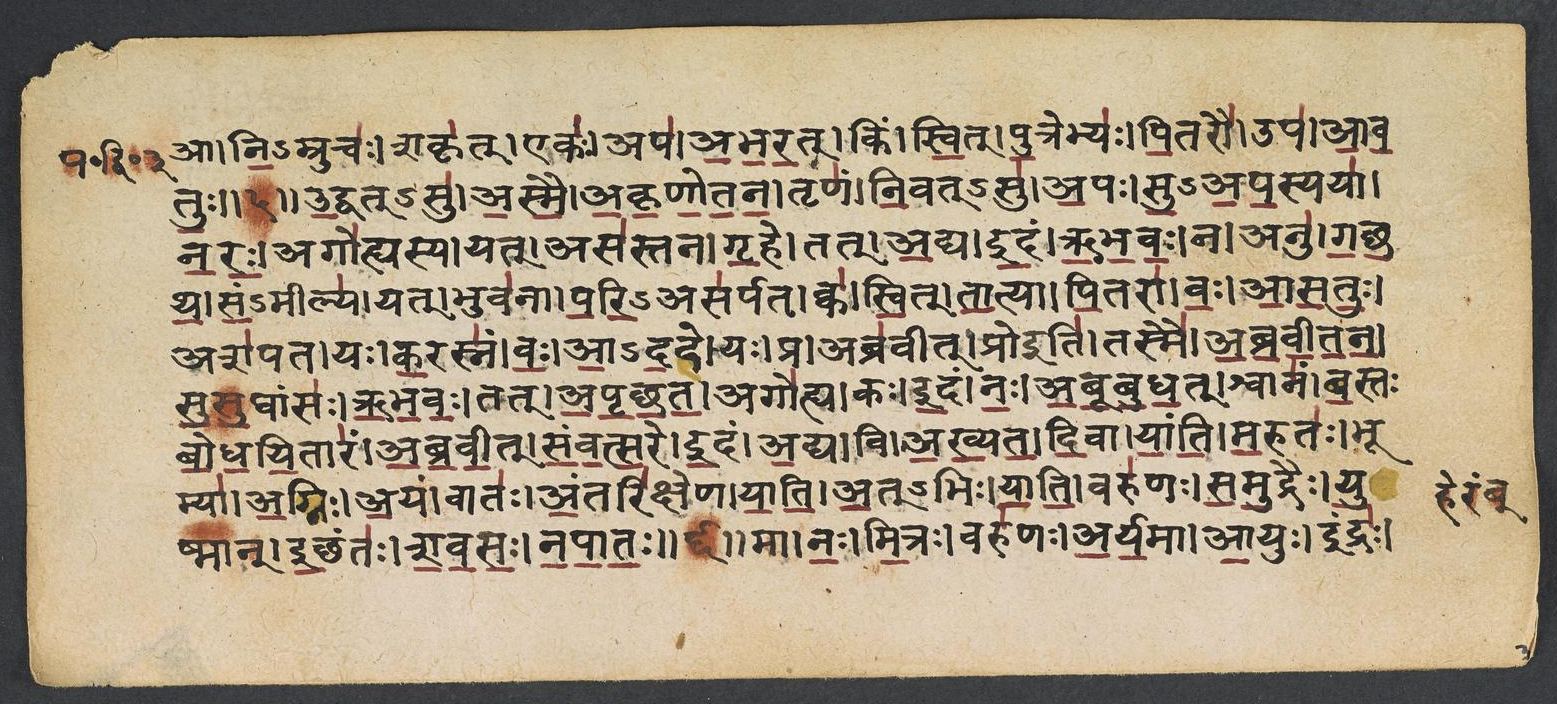
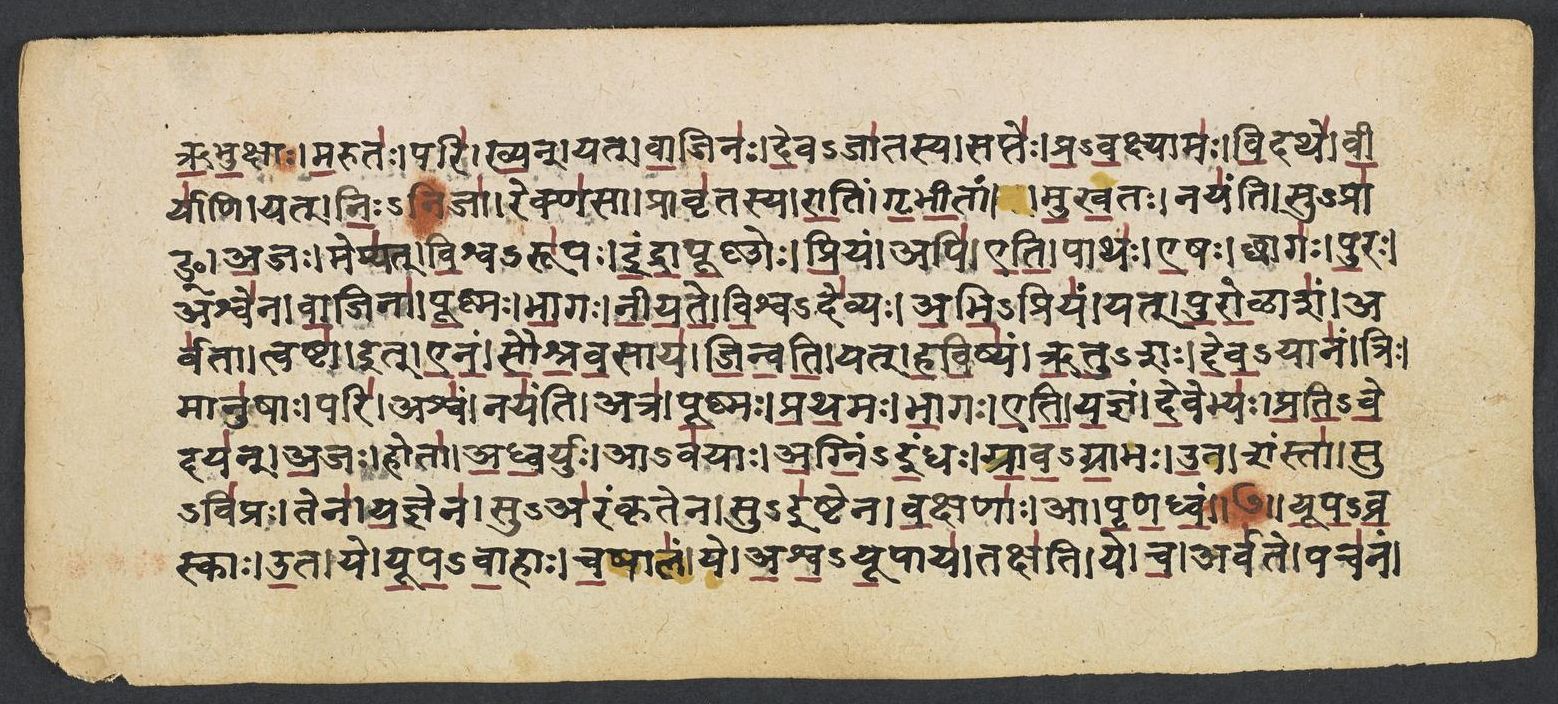
Penn Ms. Coll. 390 Item 41, fol. 123r (numbered 4r by the scribe) (OPenn image 124, lower leaf). Checked on the image: the Rigveda text on this page begins in RV 1.162.1 ‹ṛbhukṣāḥ marutaḥ pari khyan›. The next page with Rigveda text, fol. 123v (numbered 4v by the scribe), begins in RV 1.162.6 ‹sam-bharanti uto iti teṣām›. Verses 1.162.1-5 end on this page; 1.162.1 begins on fol. 122v (numbered 3v by the scribe).
1mā no̍ mi̱tro varu̍ṇo arya̱māyur indra̍ ṛbhu̱kṣā ma̱ruta̱ḥ pari̍ khyan | yad vā̱jino̍ de̱vajā̍tasya̱ sapte̍ḥ prava̱kṣyāmo̍ vi̱dathe̍ vī̱ryā̍ṇi ||
2yan ni̱rṇijā̱ rekṇa̍sā̱ prāvṛ̍tasya rā̱tiṁ gṛ̍bhī̱tām mu̍kha̱to naya̍nti | suprā̍ṅ a̱jo memya̍d vi̱śvarū̍pa indrāpū̱ṣṇoḥ pri̱yam apy e̍ti̱ pātha̍ḥ ||
3e̱ṣa cchāga̍ḥ pu̱ro aśve̍na vā̱jinā̍ pū̱ṣṇo bhā̱go nī̍yate vi̱śvade̍vyaḥ | a̱bhi̱priya̱ṁ yat pu̍ro̱ḻāśa̱m arva̍tā̱ tvaṣṭed e̍naṁ sauśrava̱sāya̍ jinvati ||
4yad dha̍vi̱ṣya̍m ṛtu̱śo de̍va̱yāna̱ṁ trir mānu̍ṣā̱ḥ pary aśva̱ṁ naya̍nti | atrā̍ pū̱ṣṇaḥ pra̍tha̱mo bhā̱ga e̍ti ya̱jñaṁ de̱vebhya̍ḥ prative̱daya̍nn a̱jaḥ ||
5hotā̍dhva̱ryur āva̍yā agnimi̱ndho grā̍vagrā̱bha u̱ta śaṁstā̱ suvi̍praḥ | tena̍ ya̱jñena̱ sva̍raṁkṛtena̱ svi̍ṣṭena va̱kṣaṇā̱ ā pṛ̍ṇadhvam ||
Compare: Padapāṭha (word-by-word text written in the manuscript; Sansknet e-text via GRETIL)
1mā | naḥ | mitraḥ | varuṇaḥ | aryamā | āyuḥ | indraḥ | ṛbhukṣāḥ | marutaḥ | pari | khyan | yat | vājinaḥ | deva-jātasya | sapteḥ | pra-vakṣyāmaḥ | vidathe | vīyārṇi
2yat | niḥ-nijā | rekṇasā | prāvṛtasya | rātim | gṛbhītām | mukhataḥ | nayanti | su-prāṅ | ajaḥ | memyat | viśva-rūpaḥ | indrāpūṣṇoḥ | priyam | api | eti | pāthaḥ
3eṣaḥ | chāgaḥ | puraḥ | aśvena | vājinā | pūṣṇaḥ | bhagaḥ | nīyate | viśva-devyaḥ | abhi-priyam | yat | puroḷāśam | arvatā | tvaṣṭā | it | enam | sauśravasāya | ji nvati
4yad | haviṣyam | ṛtu-śaḥ | deva-yānam | triḥ | mānuṣāḥ | pari | aśvam | nayant i | atra | pūṣṇaḥ | prathamaḥ | bhāgaḥ | eti | yajñam | devebhyaḥ | prati-vedayan | ajaḥ
5hotā | adhvaryuḥ | āvayāḥ | agnim-indhaḥ | grāva-grābhaḥ | uta | śaṃstā | su-vipraḥ | tena | yajñena | su-ararṅketena | su-iṣṭena | vakṣaṇāḥ | ā | pṛṇadhvam
1SLIGHT us not Varuṇa, Aryaman, or Mitra, R̥ibhukshan, Indra, Âyu, or the Maruts, When we declare amid the congregation the virtues of the strong Steed, God-descended.
2What time they bear before the Courser, covered with trappings and with wealth, the grasped oblation, The dappled goat goeth straightforward, bleating, to the place dear to Indra and to Pûshan.
3Dear. to all Gods, this goat, the share of Pûshan, is first led forward with the vigorous Courser, While Tvashṭar sends him forward with the Charger, acceptable for sacrifice, to glory.
4When thrice the men lead round the Steed, in order, who goeth to the Gods as meet oblation, The goat precedeth him, the share of Pûshan, and to the Gods the sacrifice announceth.
5Invoker, ministering priest, atoner, fire-kindler Soma-presser, sage, reciter, With this well ordered sacrifice, well finished, do ye fill full the channels of the rivers.
Where on the image
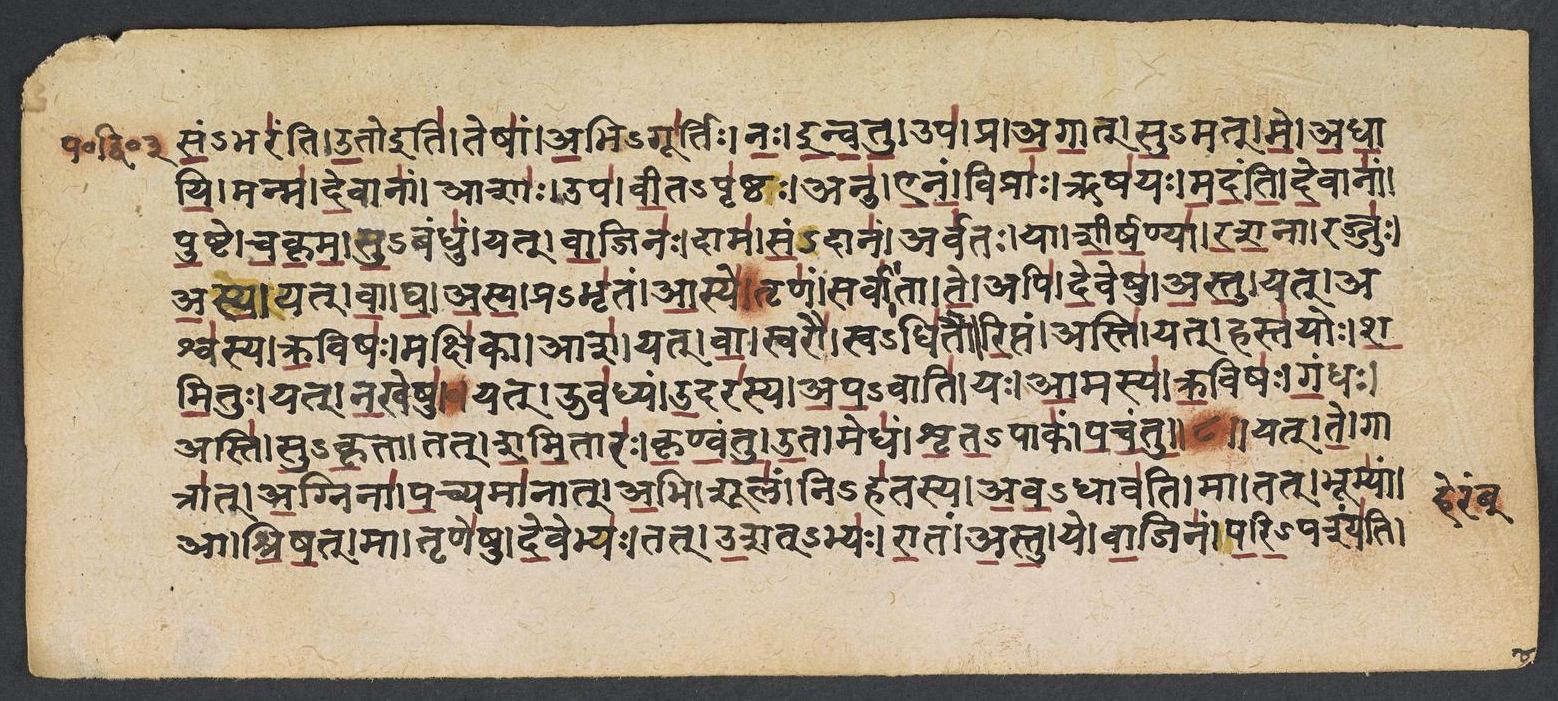
Penn Ms. Coll. 390 Item 41, fol. 123v (numbered 4v by the scribe) (OPenn image 125, upper leaf). Checked on the image: the Rigveda text on this page begins in RV 1.162.6 ‹sam-bharanti uto iti teṣām›. The next page with Rigveda text, fol. 124r (numbered 5r by the scribe), begins in RV 1.162.12 ‹pakvam ye īm āhuḥ›. Verses 1.162.6-11 end on this page; 1.162.6 begins on fol. 123r (numbered 4r by the scribe).
6yū̱pa̱vra̱skā u̱ta ye yū̍pavā̱hāś ca̱ṣāla̱ṁ ye a̍śvayū̱pāya̱ takṣa̍ti | ye cārva̍te̱ paca̍naṁ sa̱mbhara̍nty u̱to teṣā̍m a̱bhigū̍rtir na invatu ||
7upa̱ prāgā̍t su̱man me̍ 'dhāyi̱ manma̍ de̱vānā̱m āśā̱ upa̍ vī̱tapṛ̍ṣṭhaḥ | anv e̍na̱ṁ viprā̱ ṛṣa̍yo madanti de̱vānā̍m pu̱ṣṭe ca̍kṛmā su̱bandhu̍m ||
8yad vā̱jino̱ dāma̍ sa̱ṁdāna̱m arva̍to̱ yā śī̍rṣa̱ṇyā̍ raśa̱nā rajju̍r asya | yad vā̍ ghāsya̱ prabhṛ̍tam ā̱sye̱3̱̍ tṛṇa̱ṁ sarvā̱ tā te̱ api̍ de̱veṣv a̍stu ||
9yad aśva̍sya kra̱viṣo̱ makṣi̱kāśa̱ yad vā̱ svarau̱ svadhi̍tau ri̱ptam asti̍ | yad dhasta̍yoḥ śami̱tur yan na̱kheṣu̱ sarvā̱ tā te̱ api̍ de̱veṣv a̍stu ||
10yad ūva̍dhyam u̱dara̍syāpa̱vāti̱ ya ā̱masya̍ kra̱viṣo̍ ga̱ndho asti̍ | su̱kṛ̱tā tac cha̍mi̱tāra̍ḥ kṛṇvantū̱ta medha̍ṁ śṛta̱pāka̍m pacantu ||
11yat te̱ gātrā̍d a̱gninā̍ pa̱cyamā̍nād a̱bhi śūla̱ṁ niha̍tasyāva̱dhāva̍ti | mā tad bhūmyā̱m ā śri̍ṣa̱n mā tṛṇe̍ṣu de̱vebhya̱s tad u̱śadbhyo̍ rā̱tam a̍stu ||
Compare: Padapāṭha (word-by-word text written in the manuscript; Sansknet e-text via GRETIL)
6yūpa-vraskāḥ | uta | ye | yūpa-vāhāḥ | caṣālam | ye | aśva-yūpāya | takṣati | ye | ca | arvate | pacanam | sam-bharanti | uto iti | teṣām | abhi-gūrtiḥ | naḥ | invatu
7upa | pra | agāt | su-mat | me | adhāyi | manma | devānām | āśāḥ | upa | vīta-pṛṣṭhaḥ | anu | enam | viprāḥ | ṛṣayaḥ | madanti | devānām | puṣṭe | cakṛma | su-bandhum
8yat | vājinaḥ | dāma | sam-dānam | arvataḥ | yā | śīrṣaṇyā | raśanā | rajjuḥ | asya | yat | vā | gha | asya | pra-bhṛtam | āsye | tṛṇam | sarvā | tā | te | api | deveṣu | astu
9yat | aśvasya | kraviṣaḥ | makṣikā | āśa | yat | vā | svarau | sva-dhitau | riptam | asti | yat | hastayoḥ | śamituḥ | yat | nakheṣu | sarvā | tā | te | api | deveṣu | astu
10yat | ūvadhyam | udarasya | apa-vāti | yaḥ | āmasya | kraviṣaḥ | gandhaḥ | asti | su-kṛtā | tat | śamitāraḥ | kṛṇvantu | uta | medham | śṛta-pākam | pacantu
11yat | te | gātrāt | agninā | pacyamānāt | abhi | śūlam | ni-hatasya | ava-dhāvati | mā | tat | bhūmyām | ā | śriṣat | mā | tṛṇeṣu | devebhyaḥ | tat | uśat-bhyaḥ | rātam | astu
6The hewers of the post and those who carry it, and those who carve the knob to deck the Horse's stake; Those who prepare the cooking-vessels for the Steed,– may the approving help of these promote our work.
7Forth, for the regions of the Gods, the Charger with his smooth back is come my prayer attends him. In him rejoice the singers and the sages. A good friend have we won for the Gods' banquet.
8May the fleet Courser's halter and his heel-ropes, the head-stall and the girths and cords about him. And the grass put within his mouth to bait him,– among the Gods, too, let all these be with thee.
9What part of the Steed's flesh the fly hath eaten, or is left sticking to the post or hatchet, Or to the slayer's hands and nails adhereth,– among the Gods, too, may all this be with thee.
10Food undigested steaming from his belly, and any odour of raw flesh remaining, This let the immolators set in order and dress the sacrifice with perfect cooking.
11What from thy body which with fire is roasted, when thou art set upon the spit, distilleth, Let not that lie on earth or grass neglected, but to the longing Gods let all be offered.
Where on the image
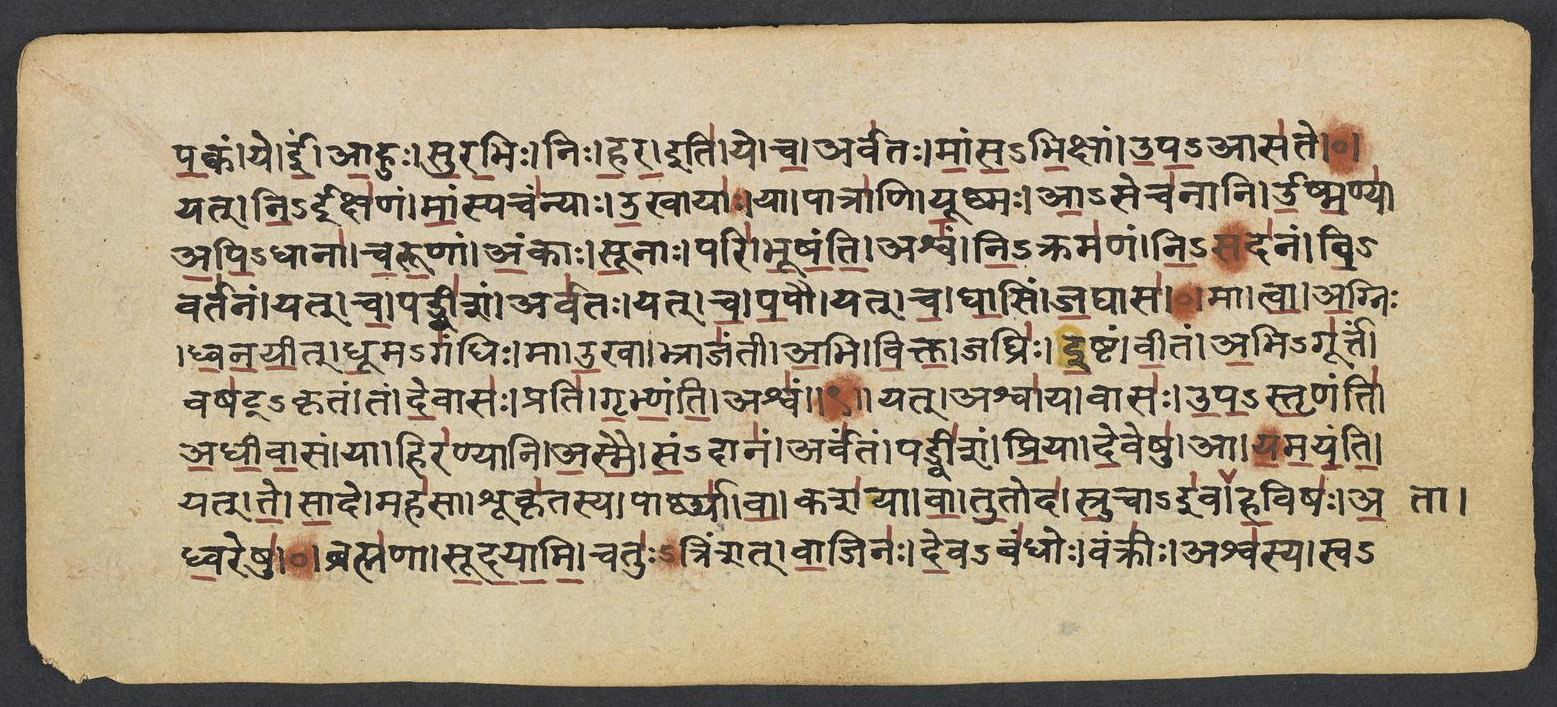
Penn Ms. Coll. 390 Item 41, fol. 124r (numbered 5r by the scribe) (OPenn image 125, lower leaf). Checked on the image: the Rigveda text on this page begins in RV 1.162.12 ‹pakvam ye īm āhuḥ›. The next page with Rigveda text, fol. 124v (numbered 5v by the scribe), begins in RV 1.162.18 ‹-sva-dhitiḥḥ sam eti acchidrā›. Verses 1.162.12-17 end on this page; 1.162.12 begins on fol. 123v (numbered 4v by the scribe).
12ye vā̱jina̍m pari̱paśya̍nti pa̱kvaṁ ya ī̍m ā̱huḥ su̍ra̱bhir nir ha̱reti̍ | ye cārva̍to māṁsabhi̱kṣām u̱pāsa̍ta u̱to teṣā̍m a̱bhigū̍rtir na invatu ||
13yan nīkṣa̍ṇam mā̱m̐spaca̍nyā u̱khāyā̱ yā pātrā̍ṇi yū̱ṣṇa ā̱seca̍nāni | ū̱ṣma̱ṇyā̍pi̱dhānā̍ carū̱ṇām a̱ṅkāḥ sū̱nāḥ pari̍ bhūṣa̱nty aśva̍m ||
14ni̱krama̍ṇaṁ ni̱ṣada̍naṁ vi̱varta̍na̱ṁ yac ca̱ paḍbī̍śa̱m arva̍taḥ | yac ca̍ pa̱pau yac ca̍ ghā̱siṁ ja̱ghāsa̱ sarvā̱ tā te̱ api̍ de̱veṣv a̍stu ||
15mā tvā̱gnir dhva̍nayīd dhū̱maga̍ndhi̱r mokhā bhrāja̍nty a̱bhi vi̍kta̱ jaghri̍ḥ | i̱ṣṭaṁ vī̱tam a̱bhigū̍rta̱ṁ vaṣa̍ṭkṛta̱ṁ taṁ de̱vāsa̱ḥ prati̍ gṛbhṇa̱nty aśva̍m ||
16yad aśvā̍ya̱ vāsa̍ upastṛ̱ṇanty a̍dhīvā̱saṁ yā hira̍ṇyāny asmai | sa̱ṁdāna̱m arva̍nta̱m paḍbī̍śam pri̱yā de̱veṣv ā yā̍mayanti ||
17yat te̍ sā̱de maha̍sā̱ śūkṛ̍tasya̱ pārṣṇyā̍ vā̱ kaśa̍yā vā tu̱toda̍ | sru̱ceva̱ tā ha̱viṣo̍ adhva̱reṣu̱ sarvā̱ tā te̱ brahma̍ṇā sūdayāmi ||
Compare: Padapāṭha (word-by-word text written in the manuscript; Sansknet e-text via GRETIL)
12ye | vājinam | pari-pasyanti | pakvam | ye | īm | āhuḥ | surabhiḥ | niḥ | hara | iti | ye | ca | arvataḥ | māṃsa-bhikṣām | upa-āsate uto iti | teṣām | abhi-gūrtiḥ | naḥ | invatu
13yat | ni-īkṣaṇam | māṃspacanyāḥ | ukhāyāḥ | yā | pātrāṇi | yūṣṇaḥ | āsecanāni | ūṣmaṇyā | api-dhānā | carūṇām | aṅkāḥ | sūnāḥ | pari | bhūṣanti | aśvam
14ni-kramaṇam | ni-sadanam | vi-vartanam | yat | ca | paḍabaḍhabadabadrahṇīśam | arvataḥ | yat | ca | papau | yat | ca | ghāsim | jaghāsa | sarvā | tā | te | api | deveṣu | astu
15mā | tvā | agniḥ | dhvanayīt | dhūma-gandhiḥ | mā | ukhā | bhrājantī | abhi | vikta | jaghriḥ | iṣṭam | vītam | abhi-gūrtam | vaṣaṭ-kṛtam | tam | devāsaḥ | prati | gṛbhṇanti | aśvam
16yat | aśvāya | vāsaḥ | upa-stṛṇanti | adhī-vāsam | yā | hiraṇyāni | asmai | sam-dānam | arvantam | paḍabaḍhabadabadrahṇīśam | priyā | deveṣu | ā | yamayanti
17yat | te | sāde | mahasā | śūkṛtasya | pārṣṇyā | vā | kaśayā | vā | tutoda | srucāiva | tā | haviṣaḥ | adhvareṣu | sarvā | tā | te | brahmaṇā | sūdayāmi
12They who observing that the Horse is ready call out and say, the smell is good; remove it; And, craving meat, await the distribution, -may their approving help promote labour.
13The trial-fork of the flesh-cooking caldron, the vessels out of which the broth is sprinkled, The warming-pots, the covers of the dishes, hooks, carving-boards,– all these attend the Charger.
14The starting-place, his place of rest and rolling, the ropes wherewith the Charger's feet were fastened, The water that he drank, the food he tasted, -among the Gods, too, may all these attend thee.
15Let not the fire, smoke-scented, make thee crackle, nor glowing caldron smell and break to pieces. Offered, beloved, approved, and consecrated,– such Charger do the Gods accept with favour.
16The robe they spread upon the Horse to clothe him, the upper covering and the golden trappings, The halters which restrain the Steed, the heel-ropes,– all these, as grateful to the Gods, they offer.
17If one, when seated, with excessive urging hath with his heel or with his whip distressed thee, All these thy woes, as with the oblations' ladle at sacrifices, with my prayer I banish.
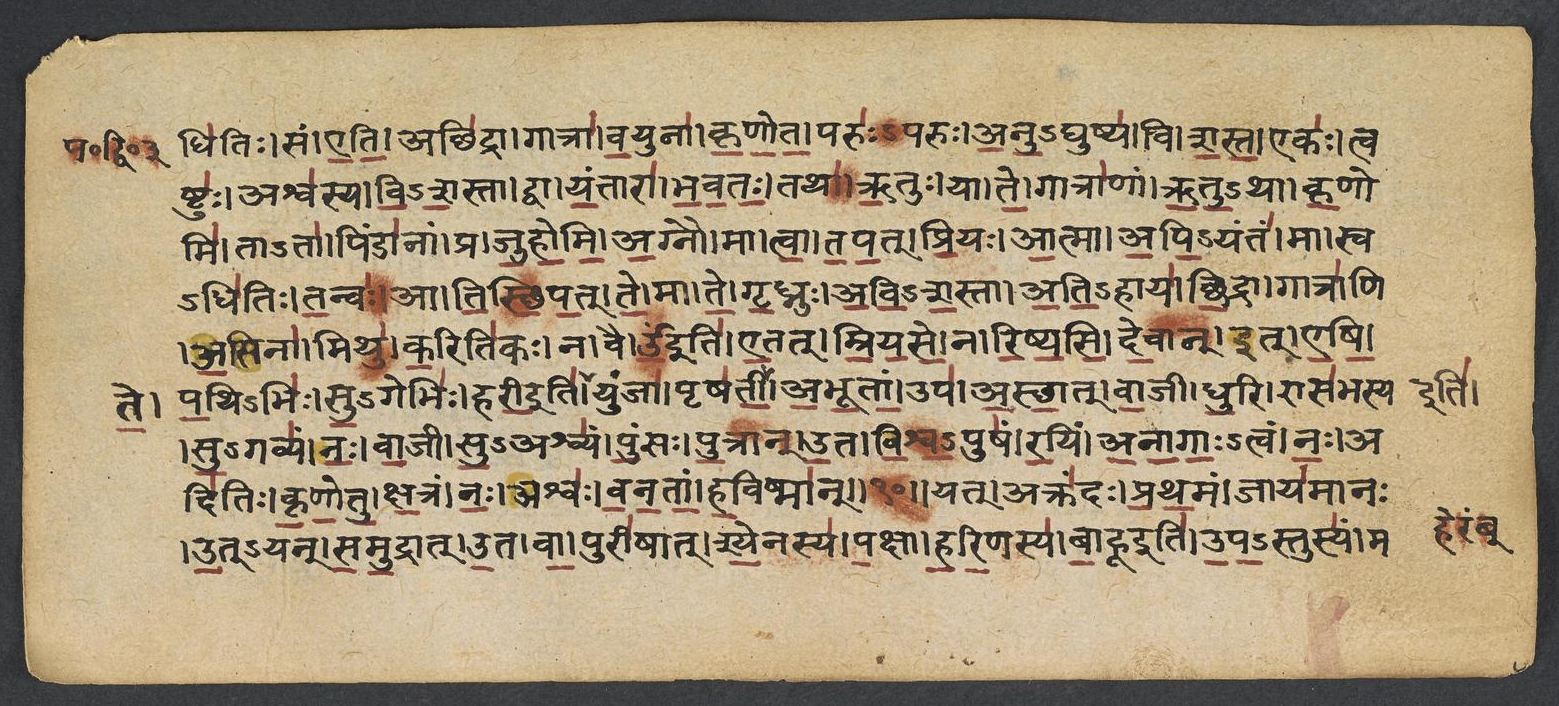
Where on the image
Penn Ms. Coll. 390 Item 41, fol. 124v (numbered 5v by the scribe) (OPenn image 126, upper leaf). Checked on the image: the Rigveda text on this page begins in RV 1.162.18 ‹-sva-dhitiḥḥ sam eti acchidrā›. The next page with Rigveda text, fol. 125r (numbered 6r by the scribe), begins in RV 1.163.1 ‹-mahi jātam te arvan›. Verses 1.162.18-22 end on this page; 1.162.18 begins on fol. 124r (numbered 5r by the scribe).
18catu̍striṁśad vā̱jino̍ de̱vaba̍ndho̱r vaṅkrī̱r aśva̍sya̱ svadhi̍ti̱ḥ sam e̍ti | acchi̍drā̱ gātrā̍ va̱yunā̍ kṛṇota̱ paru̍ṣ-parur anu̱ghuṣyā̱ vi śa̍sta ||
19eka̱s tvaṣṭu̱r aśva̍syā viśa̱stā dvā ya̱ntārā̍ bhavata̱s tatha̍ ṛ̱tuḥ | yā te̱ gātrā̍ṇām ṛtu̱thā kṛ̱ṇomi̱ tā-tā̱ piṇḍā̍nā̱m pra ju̍homy a̱gnau ||
20mā tvā̍ tapat pri̱ya ā̱tmāpi̱yanta̱m mā svadhi̍tis ta̱nva1̱̍ ā ti̍ṣṭhipat te | mā te̍ gṛ̱dhnur a̍viśa̱stāti̱hāya̍ chi̱drā gātrā̍ṇy a̱sinā̱ mithū̍ kaḥ ||
21na vā u̍ e̱tan mri̍yase̱ na ri̍ṣyasi de̱vām̐ id e̍ṣi pa̱thibhi̍ḥ su̱gebhi̍ḥ | harī̍ te̱ yuñjā̱ pṛṣa̍tī abhūtā̱m upā̍sthād vā̱jī dhu̱ri rāsa̍bhasya ||
22su̱gavya̍ṁ no vā̱jī svaśvya̍m pu̱ṁsaḥ pu̱trām̐ u̱ta vi̍śvā̱puṣa̍ṁ ra̱yim | a̱nā̱gā̱stvaṁ no̱ adi̍tiḥ kṛṇotu kṣa̱traṁ no̱ aśvo̍ vanatāṁ ha̱viṣmā̍n ||
Compare: Padapāṭha (word-by-word text written in the manuscript; Sansknet e-text via GRETIL)
18catuḥ-triṃśat | vājinaḥ | deva-bandhoḥ | vaṅkrīḥ | aśvasya | sva-dhitiḥḥ | sam | eti | acchidrā | gātrā | vayunā | kṛṇota | paruḥ-paruḥ | anu-ghuṣya | vi | śasta
19ekaḥ | tvaṣṭuḥ | aśvasya | vi-śastā | dvā | yantārā | bhavataḥ | tathā | ṛtuḥ | yā | te | gātrāṇām | ṛtu-thā | kṛṇomi | tātā | piṇḍānm | pra | juhomi | agnau
20mā | tvā | tapat | priyaḥ | ātmā | api-yantam | mā | sva-dhitiḥ | tanvaḥ | ā | tisthipat | te | mā | te | gṛdhnuḥ | avi-śastā | ati-hāya | chidrā | gātrāṇi | asinā | mithu | kariti kaḥ
21na | vai | oṃ iti | etat | mriyase | na | riṣyasi | devān | it | eṣi | pathi-bhiḥ | su-gebhiḥ | harīiti | te | yuñjā | pṛṣatī iti | abhūtām | upa | asthāt | vājī | dhuri | rāsabhasya
22su-gavyam | naḥ | vājī | su-aśvyam | puṃsaḥ | putrān | uta | viśvāpuṣam | rayim | anāgāḥ-tvam | naḥ | aditiḥ | kṛṇotu | kṣatram | naḥ | aśvaḥ | vanatām | haviṣmān
18The four-and-thirty ribs of the. Swift Charger, kin to the Gods, the slayer's hatchet pierces. Cut ye with skill, so that the parts be flawless, and piece by piece declaring them dissect them.
19Of Tvashṭar's Charger there is one dissector,– this is the custom-two there are who guide him. Such of his limbs as I divide in order, these, amid the balls, in fire I offer.
20Let not thy dear soul burn thee as thou comest, let not the hatchet linger in thy body. Let not a greedy clumsy immolator, missing the joints, mangle thy limbs unduly.
21No, here thou diest not, thou art not injured: by easy paths unto the Gods thou goest. Both Bays, both spotted mares are now thy fellows, and to the ass's pole is yoked the Charger.
22May this Steed bring us all-sustaining riches, wealth in good kine,good horses, manly offspring. Freedom from sin may Aditi vouchsafe us: the Steed with our oblations gain us lordship!
Notes
- Sanskrit: Aufrecht's edition (1877) with the Vedic accents, as entered by van Nooten and Holland (GRETIL).
- English: Ralph T. H. Griffith, The Hymns of the Rigveda (1889-1892; 2nd ed. 1896-1897), from the VedaWeb digital text; OCR slips in that text were corrected against the printed 2nd edition (data/sources/rigveda/griffith_errata.json).
- Padapāṭha (edition text): Sansknet e-text via GRETIL (CC BY-NC-SA 4.0).
Cite
Sources
- Source: Penn Ms. Coll. 390 Item 41 (undated (catalogued with Penn's 18th-19th c. Vedic manuscripts)), OPenn, Public Domain Mark + Aufrecht's accented text (GRETIL) + Griffith's English (VedaWeb) (holding institution)
- Critical edition: Aufrecht (1877), accented e-text via GRETIL
← previous · → next · v cycle view · l back to library