Rigveda 1.163: Praise of the sacrificial horse
Introduction
Rigveda 1.163 is a hymn of 13 verses addressed to praise of the horse. It stands in book (maṇḍala) 1, a collection of hymns by many families of poets. The Rigveda is the oldest collection of Sanskrit hymns, composed in the second half of the second millennium BCE and handed down orally for many centuries before it was written down.
The manuscript shown is Penn Ms. Coll. 390 Item 41 (University of Pennsylvania), an undated paper manuscript of the padapāṭha (the word-by-word recitation text, in which every word is written separately and compounds are split) of the whole Ṛgveda in Devanāgarī, 884 leaves in fascicles, 7-9 lines to the page, accents in red; this hymn stands on fol. 124v-126r. Each section below gives the verses that end on one page; the page boundaries were read on the images (the opening words of every page), not counted out. Where the manuscript is a padapāṭha (the word-by-word recitation text), the section shows Aufrecht's continuous (saṃhitā) text first and, as the edition text, the padapāṭha of the same verses, which is the form written on the page.
How was this verified? (Provenance)
Where on the image
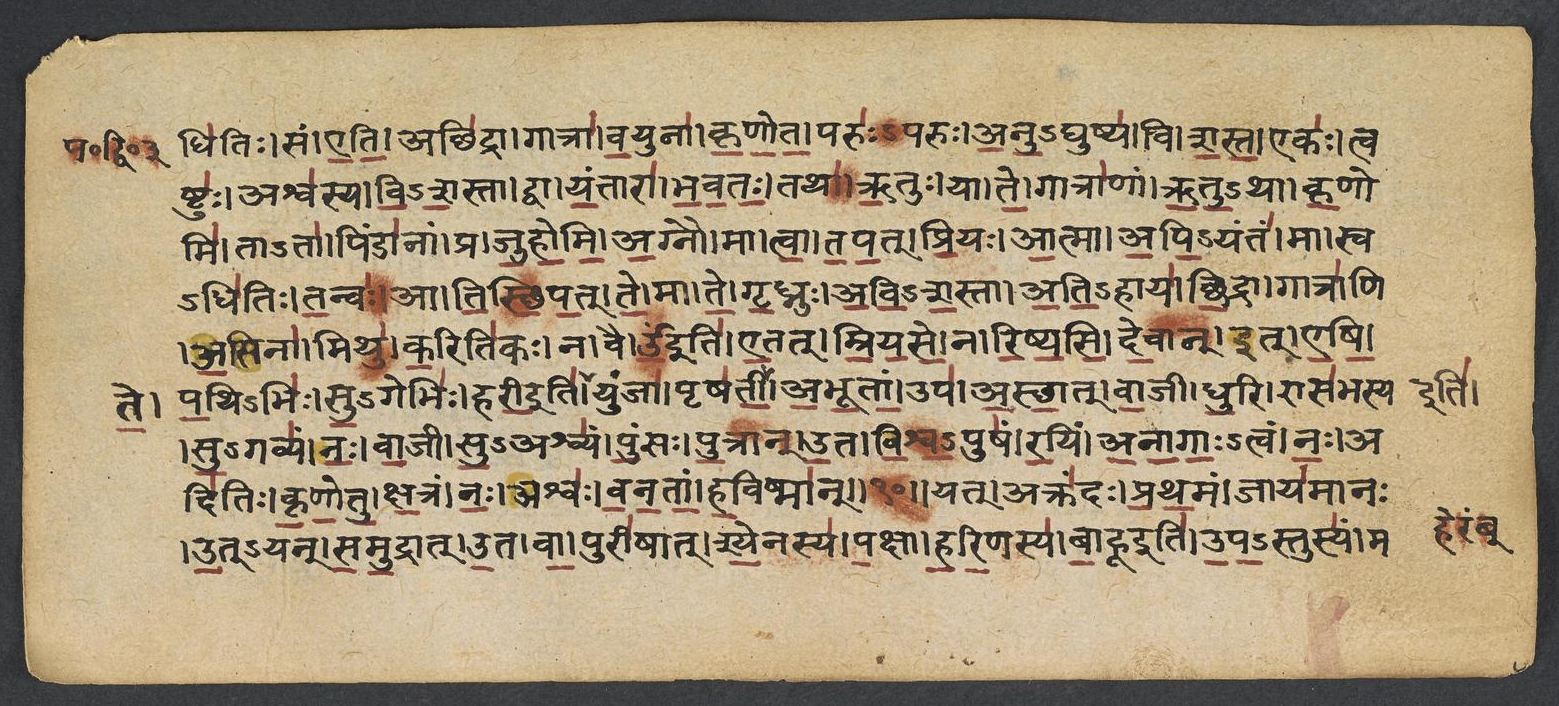
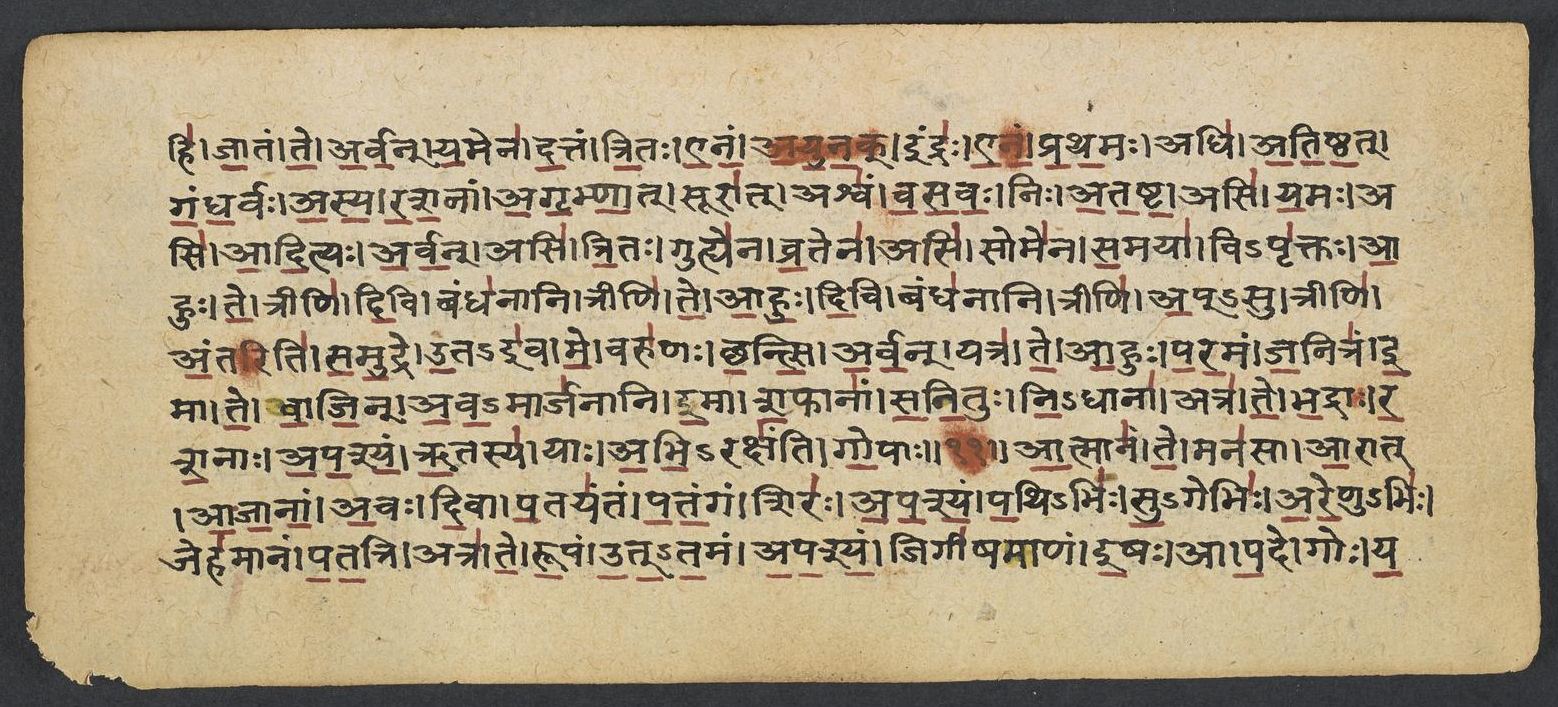
Penn Ms. Coll. 390 Item 41, fol. 125r (numbered 6r by the scribe) (OPenn image 126, lower leaf). Checked on the image: the Rigveda text on this page begins in RV 1.163.1 ‹-mahi jātam te arvan›. The next page with Rigveda text, fol. 125v (numbered 6v by the scribe), begins in RV 1.163.7 ‹-yadā te martaḥ anu›. Verses 1.163.1-6 end on this page; 1.163.1 begins on fol. 124v (numbered 5v by the scribe).
1yad akra̍ndaḥ pratha̱maṁ jāya̍māna u̱dyan sa̍mu̱drād u̱ta vā̱ purī̍ṣāt | śye̱nasya̍ pa̱kṣā ha̍ri̱ṇasya̍ bā̱hū u̍pa̱stutya̱m mahi̍ jā̱taṁ te̍ arvan ||
2ya̱mena̍ da̱ttaṁ tri̱ta e̍nam āyuna̱g indra̍ eṇam pratha̱mo adhy a̍tiṣṭhat | ga̱ndha̱rvo a̍sya raśa̱nām a̍gṛbhṇā̱t sūrā̱d aśva̍ṁ vasavo̱ nir a̍taṣṭa ||
3asi̍ ya̱mo asy ā̍di̱tyo a̍rva̱nn asi̍ tri̱to guhye̍na vra̱tena̍ | asi̱ some̍na sa̱mayā̱ vipṛ̍kta ā̱hus te̱ trīṇi̍ di̱vi bandha̍nāni ||
4trīṇi̍ ta āhur di̱vi bandha̍nāni̱ trīṇy a̱psu trīṇy a̱ntaḥ sa̍mu̱dre | u̱teva̍ me̱ varu̍ṇaś chantsy arva̱n yatrā̍ ta ā̱huḥ pa̍ra̱maṁ ja̱nitra̍m ||
5i̱mā te̍ vājinn ava̱mārja̍nānī̱mā śa̱phānā̍ṁ sani̱tur ni̱dhānā̍ | atrā̍ te bha̱drā ra̍śa̱nā a̍paśyam ṛ̱tasya̱ yā a̍bhi̱rakṣa̍nti go̱pāḥ ||
6ā̱tmāna̍ṁ te̱ mana̍sā̱rād a̍jānām a̱vo di̱vā pa̱taya̍ntam pata̱ṁgam | śiro̍ apaśyam pa̱thibhi̍ḥ su̱gebhi̍r are̱ṇubhi̱r jeha̍mānam pata̱tri ||
Compare: Padapāṭha (word-by-word text written in the manuscript; Sansknet e-text via GRETIL)
1yat | akrandaḥ | prathamam | jāyamānaḥ | ut-yan | samudrāt | uta | vā | purīṣāt | śyenasya | pakṣā | hariṇasya | bāhū iti | upa-stutyam | mahi | jātam | te | arvan
2yamena | dattam | tritaḥ | enam | ayunak | indraḥ | enam | prathamaḥ | adhi | ati ṣṭhat | gandharvaḥ | asya | raśanām | agṛbhṇāt | sūrāt | aśvam | vasavaḥ | niḥ | ataṣṭa
3asi | yamaḥ | asi | ādityaḥ | arvan | asi | tritaḥ | guhena | vratena | asi | somena | samayā | vi-pṛktaḥ | āhuḥ | te | trīṇi | divi | bandhanāni
4trīṇi | te | āhuḥ | divi | bandhanāni | trīṇi | ap-su | trīṇi | antariti | samudre | uta-iva | me | varuṇaḥ | chantsi | arvan | yatra | te | āhuḥ | paramam | janitram
5imā | te | vājin | ava-mārjanāni | imā | śaphānām | sanituḥ | ni-dhānā | atra | te | bhadrāḥ | raśanāḥ | apaśyam | ṛtasya | yāḥ | abhi-rakṣanti | gopāḥ
6ātmānam | te | manasā | ārāt | ajānām | avaḥ | divā | patayantam | pataṅgam | śiraḥ | apaśyam | pathi-bhiḥ | su-gebhiḥ | areṇu-bhiḥ | jehamānam | patatri
1WHAT time, first springing into life, thou neighedst, proceeding from the sea or upper waters, Limbs of the deer hadst thou, and eagle pinions. O Steed, thy birth is high and must be lauded.
2This Steed which Yama gave hath Trita harnessed, and him, the first of all, hath Indra mounted. His bridle the Gandharva grasped. O Vasus, from out the Sun ye fashioned forth the Courser.
3Yama art thou, O Horse; thou art Âditya; Trita art thou by secret operation. Thou art divided thoroughly from Soma. They say thou hast three bonds in heaven that hold thee.
4Three bonds, they say, thou hast in heaven that bind thee, three in the waters, three within the ocean. To me thou seemest Varuṇa , O Courser, there where they say is thy sublimest birth-place.
5Here-, Courser, are the places where they groomed thee, here are the traces of thy hoofs as winner. Here have I seen the auspicious reins that guide thee, which those who guard the holy Law keep safely.
6Thyself from far I recognized in spirit,– a Bird that from below flew through the heaven. I saw thy head still soaring, striving upward by paths unsoiled by dust, pleasant to travel.
Where on the image
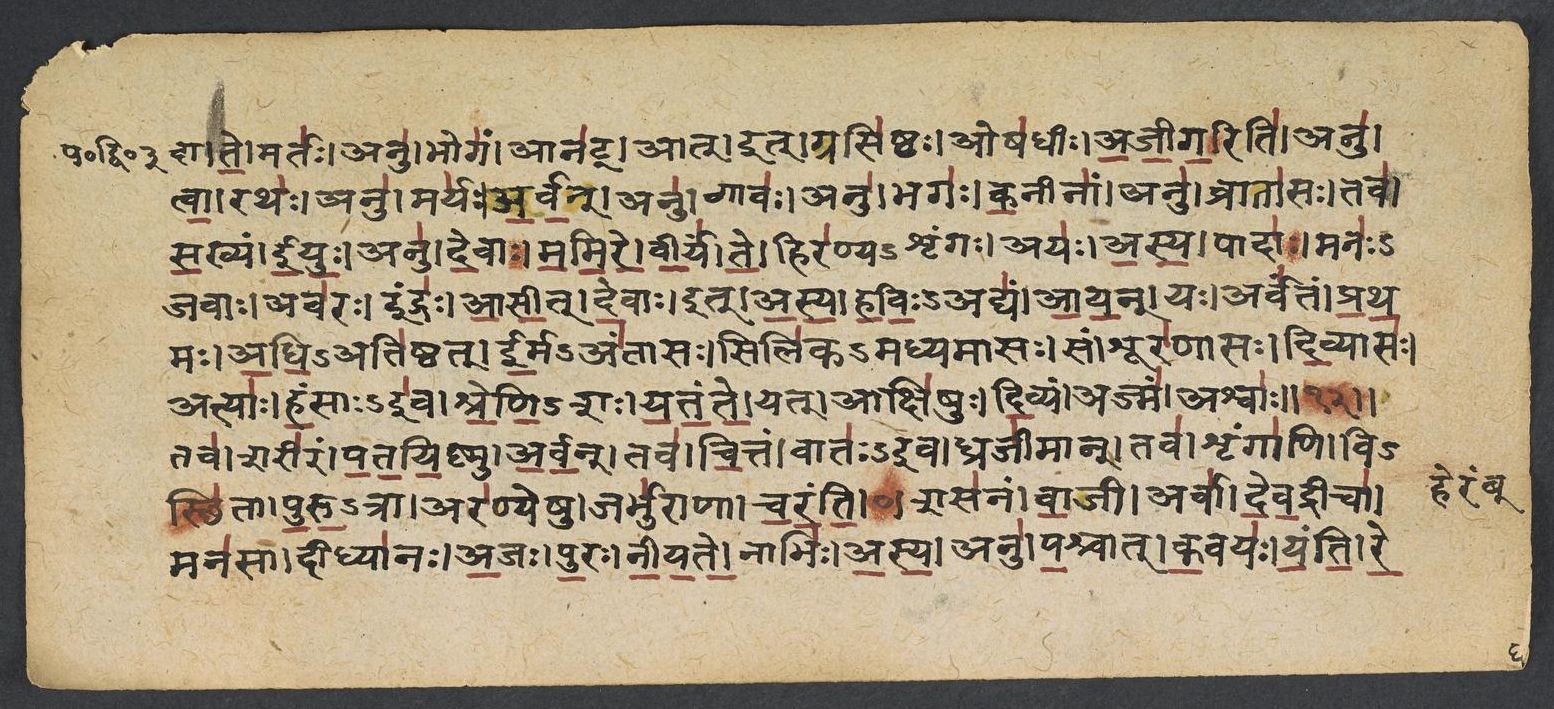
Penn Ms. Coll. 390 Item 41, fol. 125v (numbered 6v by the scribe) (OPenn image 127, upper leaf). Checked on the image: the Rigveda text on this page begins in RV 1.163.7 ‹-yadā te martaḥ anu›. The next page with Rigveda text, fol. 126r (numbered 7r by the scribe), begins in RV 1.163.12 ‹-rebhāḥ›. Verses 1.163.7-11 end on this page; 1.163.7 begins on fol. 125r (numbered 6r by the scribe).
7atrā̍ te rū̱pam u̍tta̱mam a̍paśya̱ṁ jigī̍ṣamāṇam i̱ṣa ā pa̱de goḥ | ya̱dā te̱ marto̱ anu̱ bhoga̱m āna̱ḻ ād id grasi̍ṣṭha̱ oṣa̍dhīr ajīgaḥ ||
8anu̍ tvā̱ ratho̱ anu̱ maryo̍ arva̱nn anu̱ gāvo 'nu̱ bhaga̍ḥ ka̱nīnā̍m | anu̱ vrātā̍sa̱s tava̍ sa̱khyam ī̍yu̱r anu̍ de̱vā ma̍mire vī̱rya̍ṁ te ||
9hira̍ṇyaśṛ̱ṅgo 'yo̍ asya̱ pādā̱ mano̍javā̱ ava̍ra̱ indra̍ āsīt | de̱vā id a̍sya havi̱radya̍m āya̱n yo arva̍ntam pratha̱mo a̱dhyati̍ṣṭhat ||
10ī̱rmāntā̍sa̱ḥ sili̍kamadhyamāsa̱ḥ saṁ śūra̍ṇāso di̱vyāso̱ atyā̍ḥ | ha̱ṁsā i̍va śreṇi̱śo ya̍tante̱ yad ākṣi̍ṣur di̱vyam ajma̱m aśvā̍ḥ ||
11tava̱ śarī̍ram patayi̱ṣṇv a̍rva̱n tava̍ ci̱ttaṁ vāta̍ iva̱ dhrajī̍mān | tava̱ śṛṅgā̍ṇi̱ viṣṭhi̍tā puru̱trāra̍ṇyeṣu̱ jarbhu̍rāṇā caranti ||
Compare: Padapāṭha (word-by-word text written in the manuscript; Sansknet e-text via GRETIL)
7atra | te | rūpam | ut-tamam | apaśyam | jigīṣamāṇam | iṣaḥ | ā | pade | goḥ | yadā | te | martaḥ | anu | bhogam | ānaṭ | āt | it | grasiṣṭhaḥ | oṣadhīḥ | ajīgariti
8anu | tvā | rathaḥ | anu | maryaḥ | arvan | anu | gāvaḥ | anu | bhagaḥ | kanīnām | anu | vrātāsaḥ | tava | sakhyam | īyuḥ | anu | devāḥ | mamire | vīryam | te
9hiraṇya-śṛṅgaḥ | ayaḥ | asya | pādāḥ | manaḥ-javāḥ | avaraḥ | indraḥ | āsīt | devāḥ | it | asya | haviḥ-adyam | āyan | yaḥ | arvantam | prathamaḥ | adhi-atiṣṭhat
10īrma-antāsaḥ | silika-madhyamāsaḥ | sam | śūraṇāsaḥ | divyāsaḥ | atyāḥ | haṃsāḥ-iva | śreṇi-śaḥ | yatante | yat | ākṣiṣuḥ | divyam | ajmam | aśvāḥ
11tava | śarīram | patayiṣṇu | arvan | tava | cittam | vātaḥ-iva | dhrajīmān | tava | śṛṅgāṇi | vi-ṣṭhitā | puru-trā | araṇyeṣu | jarbhurāṇā | caranti
7Here I beheld thy form, matchless in glory, eager to win thee food at the Cow's station. Whene'er a man brings thee to thine enjoyment, thou swallowest the plants most greedy eater.
8After thee, Courser, come the car, the bridegroom, the kine come after, and the charm of maidens. Full companies have followed for thy friendship: the pattern of thy vigour Gods have copied.
9Horns made of gold hath he: his feet are iron: less fleet than he, though swift as thought, is Indra. The Gods have come that they may taste the oblation of him who mounted, first of all, the Courser.
10Symmetrical in flank, with rounded haunches, mettled like heroes, the Celestial Coursers Put forth their strength, like swans in lengthened order, when they, the Steeds, have reached the heavenly causeway.
11A body formed for flight hast thou, O Charger; swift as the wind in motion is thy spirit. Thy horns are spread abroad in all directions: they move with restless beat in wildernesses.
Where on the image
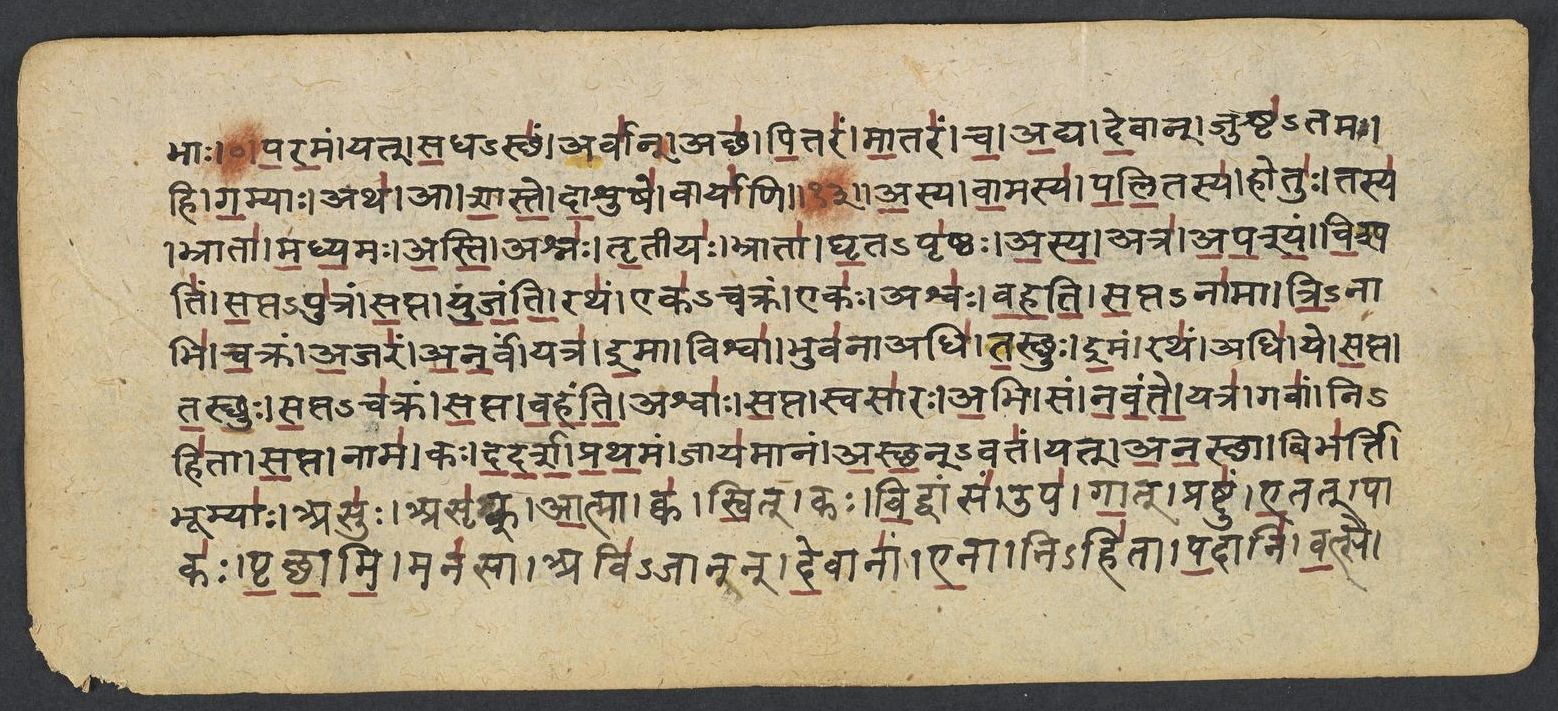
Penn Ms. Coll. 390 Item 41, fol. 126r (numbered 7r by the scribe) (OPenn image 127, lower leaf). Checked on the image: the Rigveda text on this page begins in RV 1.163.12 ‹-rebhāḥ›. 1.163.13 ends in line 2 with the varga number 13; 1.164.1 (asya vāmasya palitasya hotuḥ) begins in line 2. The next page with Rigveda text, fol. 126v (numbered 7v by the scribe), begins in RV 1.164.5 ‹baṣkaye adhi sapta tantūn›. Verses 1.163.12-13 end on this page; 1.163.12 begins on fol. 125v (numbered 6v by the scribe).
12upa̱ prāgā̱c chasa̍naṁ vā̱jy arvā̍ deva̱drīcā̱ mana̍sā̱ dīdhyā̍naḥ | a̱jaḥ pu̱ro nī̍yate̱ nābhi̍r a̱syānu̍ pa̱ścāt ka̱vayo̍ yanti re̱bhāḥ ||
13upa̱ prāgā̍t para̱maṁ yat sa̱dhastha̱m arvā̱m̐ acchā̍ pi̱tara̍m mā̱tara̍ṁ ca | a̱dyā de̱vāñ juṣṭa̍tamo̱ hi ga̱myā athā śā̍ste dā̱śuṣe̱ vāryā̍ṇi ||
Compare: Padapāṭha (word-by-word text written in the manuscript; Sansknet e-text via GRETIL)
12upa | pra | agāt | śasanam | vājī | arvā | devadrīcā | manasā | dīdhyānaḥ | ajaḥ | puraḥ | nīyate | nābhiḥ | asya | anu | paścāt | kavayaḥ | yanti | rebhāḥ
13upa | pra | agāt | paramam | yat | sadha-stham | arvān | accha | pitaram | mātaram | ca | adya | devān | juṣṭa-tamaḥ | hi | gamyāḥ | atha | ā | śāste | dāśuṣe | vāryāṇi
12The strong Steed hath come forward to the slaughter, pondering with a mind directed God-ward. The goat who is his kin is led before him the sages and the singers follow after.
13The Steed is come unto the noblest mansion, is come unto his Father and his Mother. This day shall he approach the Gods, most welcome: then he declares good gifts to him who offers.
Notes
- Sanskrit: Aufrecht's edition (1877) with the Vedic accents, as entered by van Nooten and Holland (GRETIL).
- English: Ralph T. H. Griffith, The Hymns of the Rigveda (1889-1892; 2nd ed. 1896-1897), from the VedaWeb digital text; OCR slips in that text were corrected against the printed 2nd edition (data/sources/rigveda/griffith_errata.json).
- Padapāṭha (edition text): Sansknet e-text via GRETIL (CC BY-NC-SA 4.0).
Cite
Sources
- Source: Penn Ms. Coll. 390 Item 41 (undated (catalogued with Penn's 18th-19th c. Vedic manuscripts)), OPenn, Public Domain Mark + Aufrecht's accented text (GRETIL) + Griffith's English (VedaWeb) (holding institution)
- Critical edition: Aufrecht (1877), accented e-text via GRETIL
← previous · → next · v cycle view · l back to library