Rigveda 1.169: To Indra
Introduction
Rigveda 1.169 is a hymn of 8 verses addressed to Indra. It stands in book (maṇḍala) 1, a collection of hymns by many families of poets. The Rigveda is the oldest collection of Sanskrit hymns, composed in the second half of the second millennium BCE and handed down orally for many centuries before it was written down.
The manuscript shown is Penn Ms. Coll. 390 Item 41 (University of Pennsylvania), an undated paper manuscript of the padapāṭha (the word-by-word recitation text, in which every word is written separately and compounds are split) of the whole Ṛgveda in Devanāgarī, 884 leaves in fascicles, 7-9 lines to the page, accents in red; this hymn stands on fol. 134v-135r. Each section below gives the verses that end on one page; the page boundaries were read on the images (the opening words of every page), not counted out. Where the manuscript is a padapāṭha (the word-by-word recitation text), the section shows Aufrecht's continuous (saṃhitā) text first and, as the edition text, the padapāṭha of the same verses, which is the form written on the page.
How was this verified? (Provenance)
Where on the image
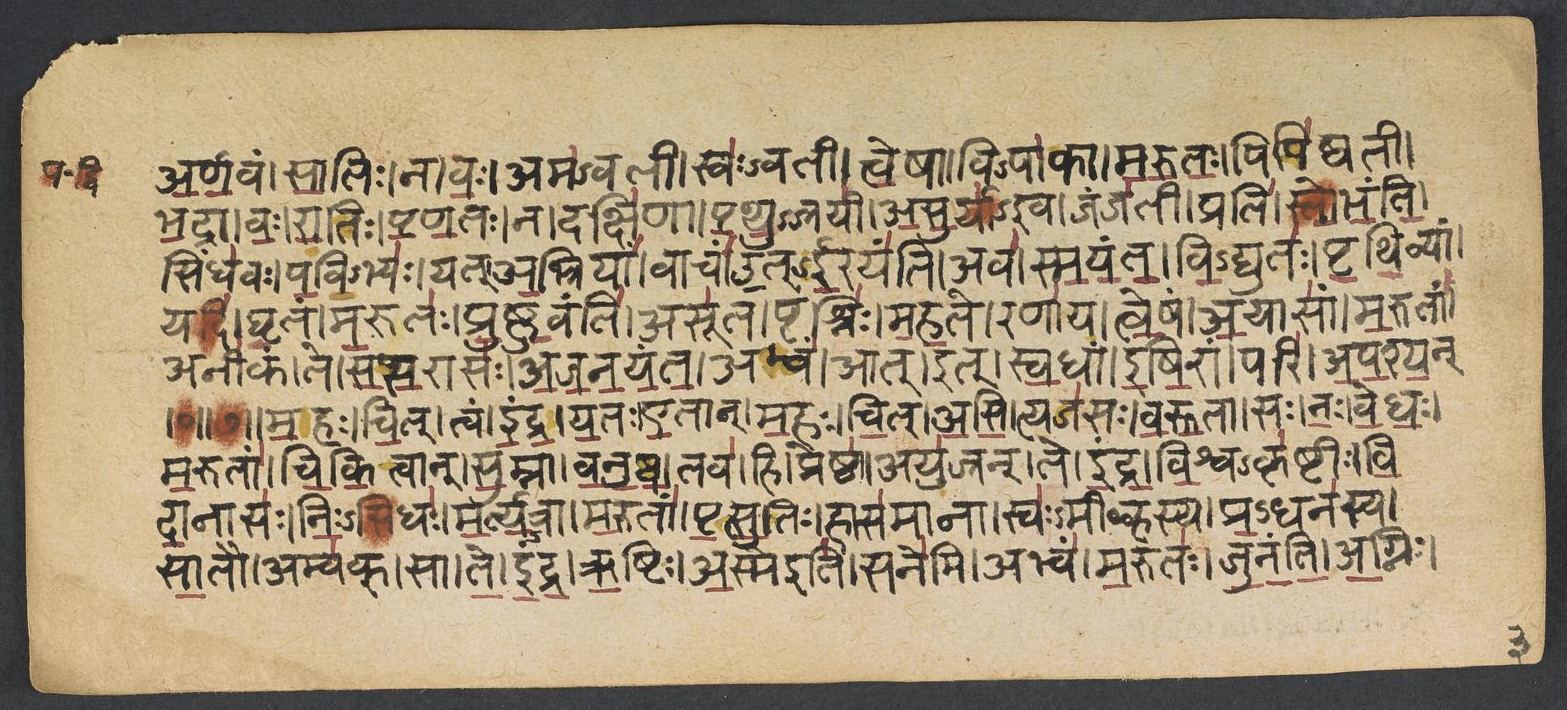
Penn Ms. Coll. 390 Item 41, fol. 134v (numbered 3v by the scribe) (OPenn image 136, upper leaf). Checked on the image: the Rigveda text on this page begins in RV 1.168.6 ‹arṇavam›. The next page with Rigveda text, fol. 135r (numbered 4r by the scribe), begins in RV 1.169.3 ‹cit hi sma atase›. Verses 1.169.1-2 end on this page.
1ma̱haś ci̱t tvam i̍ndra ya̱ta e̱tān ma̱haś ci̍d asi̱ tyaja̍so varū̱tā | sa no̍ vedho ma̱rutā̍ṁ ciki̱tvān su̱mnā va̍nuṣva̱ tava̱ hi preṣṭhā̍ ||
2ayu̍jran ta indra vi̱śvakṛ̍ṣṭīr vidā̱nāso̍ ni̱ṣṣidho̍ martya̱trā | ma̱rutā̍m pṛtsu̱tir hāsa̍mānā̱ sva̍rmīḻhasya pra̱dhana̍sya sā̱tau ||
Compare: Padapāṭha (word-by-word text written in the manuscript; Sansknet e-text via GRETIL)
1mahaḥ | cit | tvam | indra | yataḥ | etān | mahaḥ | cit | asi | tyajasaḥ | varūtā | saḥ | naḥ | vedhaḥ | marutām | cikitvān | sumnā | vanuṣva | tava | hi | preṣṭhā
2ayujran | te | indra | viśva-kṛṣṭīḥ | vidānāsaḥ | niḥ-sidhaḥ | martya-trā | marutām | pṛtsutiḥ | hāsamānā | svaḥ-mīḷhasya | pra-dhanasya | sātau
1As, Indra, from great treason thou protectest, yea, from great treachery these who approach us, So, marking well, Controller of the Maruts grant us their blessings, for they are thy dearest.
2The various doings of all mortal people by thee are ordered, in thy wisdom, Indra. The host of Maruts goeth forth exulting to win the light-bestowing spoil of battle.
Where on the image
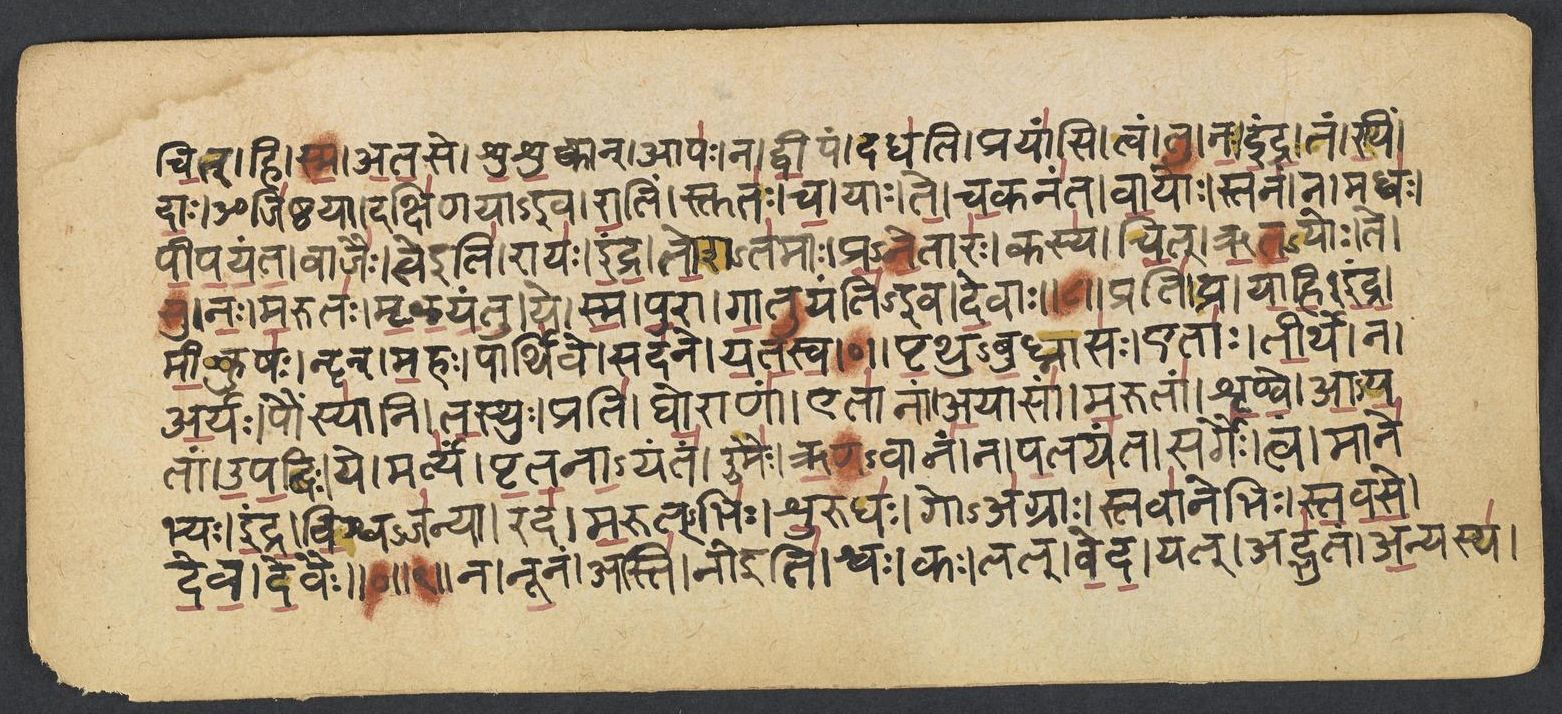
Penn Ms. Coll. 390 Item 41, fol. 135r (numbered 4r by the scribe) (OPenn image 136, lower leaf). Checked on the image: the Rigveda text on this page begins in RV 1.169.3 ‹cit hi sma atase›. The next page with Rigveda text, fol. 135v (numbered 4v by the scribe), begins in RV 1.170.1 ‹cittam abhi sam-careṇyam uta›. Verses 1.169.3-8 end on this page; 1.169.3 begins on fol. 134v (numbered 3v by the scribe).
3amya̱k sā ta̍ indra ṛ̱ṣṭir a̱sme sane̱my abhva̍m ma̱ruto̍ junanti | a̱gniś ci̱d dhi ṣmā̍ta̱se śu̍śu̱kvān āpo̱ na dvī̱paṁ dadha̍ti̱ prayā̍ṁsi ||
4tvaṁ tū na̍ indra̱ taṁ ra̱yiṁ dā̱ oji̍ṣṭhayā̱ dakṣi̍ṇayeva rā̱tim | stuta̍ś ca̱ yās te̍ ca̱kana̍nta vā̱yoḥ stana̱ṁ na madhva̍ḥ pīpayanta̱ vājai̍ḥ ||
5tve rāya̍ indra to̱śata̍māḥ praṇe̱tāra̱ḥ kasya̍ cid ṛtā̱yoḥ | te ṣu ṇo̍ ma̱ruto̍ mṛḻayantu̱ ye smā̍ pu̱rā gā̍tū̱yantī̍va de̱vāḥ ||
6prati̱ pra yā̍hīndra mī̱ḻhuṣo̱ nṝn ma̱haḥ pārthi̍ve̱ sada̍ne yatasva | adha̱ yad e̍ṣām pṛthubu̱dhnāsa̱ etā̍s tī̱rthe nāryaḥ pauṁsyā̍ni ta̱sthuḥ ||
7prati̍ gho̱rāṇā̱m etā̍nām a̱yāsā̍m ma̱rutā̍ṁ śṛṇva āya̱tām u̍pa̱bdiḥ | ye martya̍m pṛtanā̱yanta̱m ūmai̍r ṛṇā̱vāna̱ṁ na pa̱taya̍nta̱ sargai̍ḥ ||
8tvam māne̍bhya indra vi̱śvaja̍nyā̱ radā̍ ma̱rudbhi̍ḥ śu̱rudho̱ goa̍grāḥ | stavā̍nebhiḥ stavase deva de̱vair vi̱dyāme̱ṣaṁ vṛ̱jana̍ṁ jī̱radā̍num ||
Compare: Padapāṭha (word-by-word text written in the manuscript; Sansknet e-text via GRETIL)
3amyak | sā | te | indra | ṛṣṭiḥ | asme iti | sanemi | abhvam | marutaḥ | junanti | agniḥ | cit | hi | sma | atase | śuśukvān āpaḥ | na | dvīpam | dadhati | prayāṃsi
4tvam | tu | naḥ | indra | tam | rayim | dāḥ | ojiṣṭhayā | dakṣiṇayāiva | rātim | stutaḥ | ca | yāḥ | te | cakananta | vāyoḥ | stanam | na | madhvaḥ | pīpayanta | vājaiḥ
5tve iti | rāyaḥ | indra | tośa-tamāḥ | pra-netāraḥ | kasya | cit | ṛta-yoḥ | te | su | naḥ | marutaḥ | mṛḷayantu | ye | sma | purā | gātuyanti-iva | devāḥ
6prati | pra | yāhi | indra | mīḷhuṣaḥ | nṝn | mahaḥ | pārthive | sadane | yatasva | adha | yat | eṣām | pṛthu-budhnāsaḥ | etāḥ | tīrthe | na | aryaḥ | paiṃsyāni | tasthuḥ
7prati | ghorāṇām | etānām | ayāsām | marutām | śṛṇve | āyatām | upabdiḥ | ye | martyam | pṛtanāyantam | ūmaiḥ | ṛṇa-vānam | na | patayanta | sargaiḥ
8tvam | mānebhyaḥ | indra | viśva-janyā | rada | marut-bhiḥ | śurudhaḥ | go--agrāḥ | stavānebhiḥ | stavase | deva | devaiḥ | vidyāma | iṣam | vṛjanam | jīra-dānum
3That spear of thine sat firm for us, O Indra: the Maruts set their whole dread power in motion. E'en Agni shines resplendent in the brush-wood: the viands hold him as floods hold an island.
4Vouchsafe us now that opulence, O Indra, as guerdon won by mightiest donation. May hymns that please thee cause the breast of Vâyu to swell as with the mead's refreshing sweetness.
5With thee, O Indra, are most bounteous riches that further every one who lives uprightly. Now may these Maruts show us loving-kindness, Gods who of old were ever prompt to help us.
6Bring forth the Men who rain down boons, O Indra: exert thee in the great terrestrial region; For their broad-chested speckled deer are standing like a King's armies on the field of battle.
7Heard is the roar of the advancing Maruts, terrific, glittering, and swiftly moving, Who with their rush o'erthrow as 'twere a sinner the mortal who would fight with those who love him
8Give to the Mânas, Indra with Maruts, gifts universal, gifts of cattle foremost. Thou, God, art praised with Gods who must be lauded. May we find strengthening food in full abundance.
Notes
- Sanskrit: Aufrecht's edition (1877) with the Vedic accents, as entered by van Nooten and Holland (GRETIL).
- English: Ralph T. H. Griffith, The Hymns of the Rigveda (1889-1892; 2nd ed. 1896-1897), from the VedaWeb digital text; OCR slips in that text were corrected against the printed 2nd edition (data/sources/rigveda/griffith_errata.json).
- Padapāṭha (edition text): Sansknet e-text via GRETIL (CC BY-NC-SA 4.0).
Cite
Sources
- Source: Penn Ms. Coll. 390 Item 41 (undated (catalogued with Penn's 18th-19th c. Vedic manuscripts)), OPenn, Public Domain Mark + Aufrecht's accented text (GRETIL) + Griffith's English (VedaWeb) (holding institution)
- Critical edition: Aufrecht (1877), accented e-text via GRETIL
← previous · → next · v cycle view · l back to library