Rigveda 1.176: To Indra
Introduction
Rigveda 1.176 is a hymn of 6 verses addressed to Indra. It stands in book (maṇḍala) 1, a collection of hymns by many families of poets. The Rigveda is the oldest collection of Sanskrit hymns, composed in the second half of the second millennium BCE and handed down orally for many centuries before it was written down.
The manuscript shown is Penn Ms. Coll. 390 Item 41 (University of Pennsylvania), an undated paper manuscript of the padapāṭha (the word-by-word recitation text, in which every word is written separately and compounds are split) of the whole Ṛgveda in Devanāgarī, 884 leaves in fascicles, 7-9 lines to the page, accents in red; this hymn stands on fol. 138v-139r. Each section below gives the verses that end on one page; the page boundaries were read on the images (the opening words of every page), not counted out. Where the manuscript is a padapāṭha (the word-by-word recitation text), the section shows Aufrecht's continuous (saṃhitā) text first and, as the edition text, the padapāṭha of the same verses, which is the form written on the page.
How was this verified? (Provenance)
Where on the image
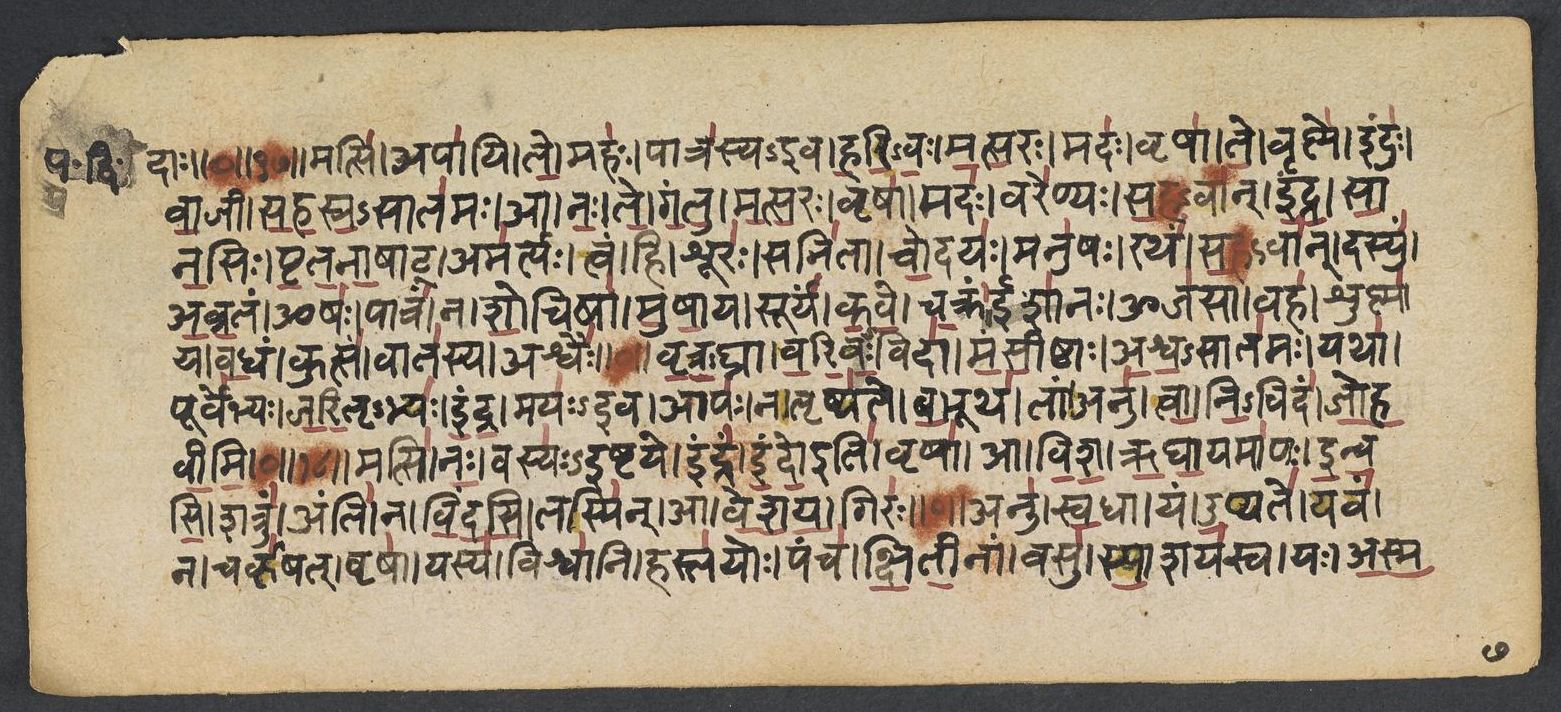
Penn Ms. Coll. 390 Item 41, fol. 138v (numbered 7v by the scribe) (OPenn image 140, upper leaf). Checked on the image: the Rigveda text on this page begins in RV 1.174.10 ‹-jīra-dānum›. The next page with Rigveda text, fol. 139r (numbered 8r by the scribe), begins in RV 1.176.3 ‹-asma-dhruk divyāiva aśaniḥ jahi›. Verses 1.176.1-2 end on this page.
1matsi̍ no̱ vasya̍ïṣṭaya̱ indra̍m indo̱ vṛṣā vi̍śa | ṛ̱ghā̱yamā̍ṇa invasi̱ śatru̱m anti̱ na vi̍ndasi ||
2tasmi̱nn ā ve̍śayā̱ giro̱ ya eka̍ś carṣaṇī̱nām | anu̍ sva̱dhā yam u̱pyate̱ yava̱ṁ na carkṛ̍ṣa̱d vṛṣā̍ ||
Compare: Padapāṭha (word-by-word text written in the manuscript; Sansknet e-text via GRETIL)
1matsi | naḥ | vasyaḥ-iṣṭaye | indram | indo iti | vṛṣā | ā | viśa | ṛghāyamāṇaḥ | invasi | śatrum | anti | na | vindasi
2tasmin | ā | veśaya | giraḥ | yaḥ | ekaḥ | carṣaṇīnām | anu | svadhā | yam | upyate | yavam | na | carkṛṣat | vṛṣā
1CHEER thee with draughts to win us bliss: Soma, pierce Indra in thy strength. Thou stormest trembling in thy rage, and findest not a foeman nigh.
2Make our songs penetrate to him who is the Only One of men; For whom the sacred food is spread, as the steer ploughs the barley in.
Where on the image
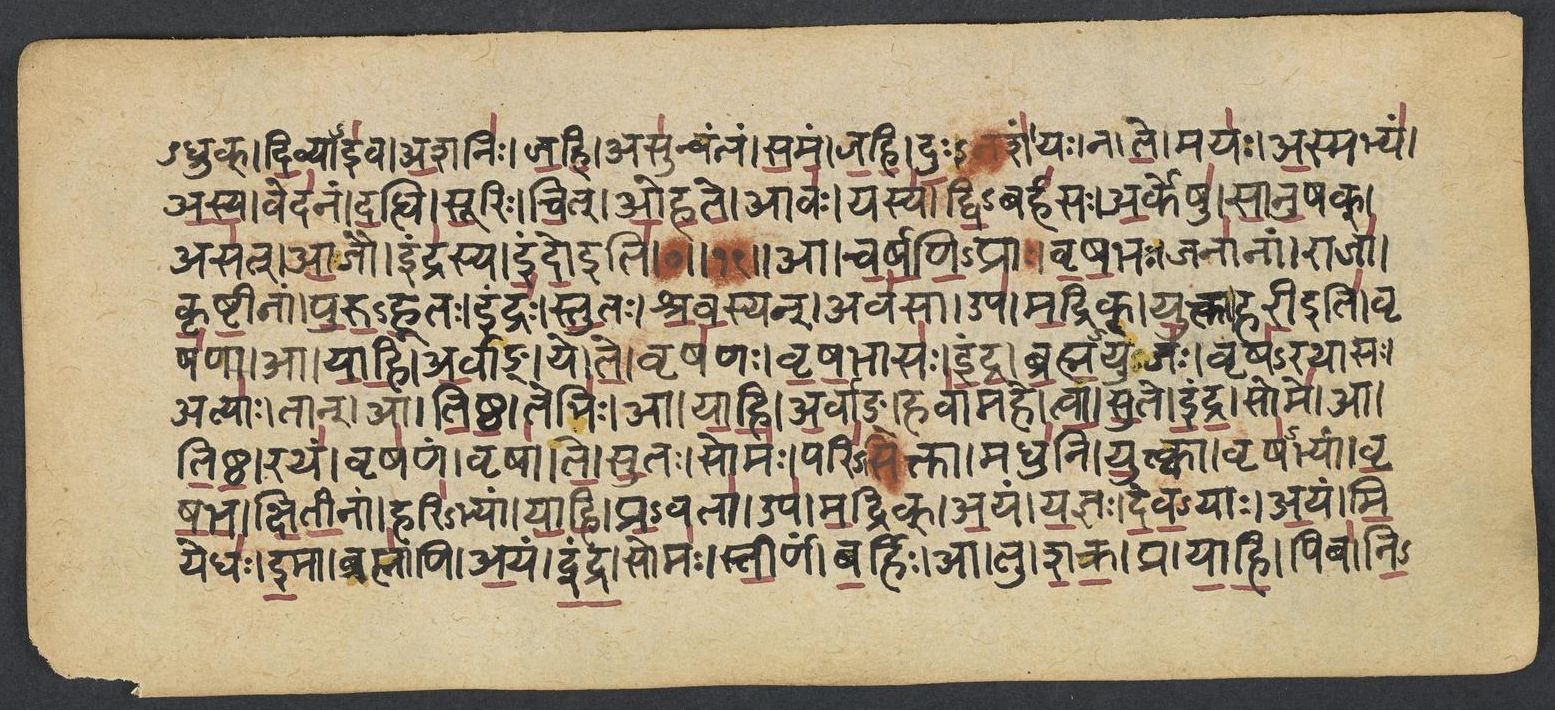
Penn Ms. Coll. 390 Item 41, fol. 139r (numbered 8r by the scribe) (OPenn image 140, lower leaf). Checked on the image: the Rigveda text on this page begins in RV 1.176.3 ‹-asma-dhruk divyāiva aśaniḥ jahi›. The next page with Rigveda text, fol. 139v (numbered 8v by the scribe), begins in RV 1.177.4 ‹vi muca harī iti›. Verses 1.176.3-6 end on this page; 1.176.3 begins on fol. 138v (numbered 7v by the scribe).
3yasya̱ viśvā̍ni̱ hasta̍yo̱ḥ pañca̍ kṣitī̱nāṁ vasu̍ | spā̱śaya̍sva̱ yo a̍sma̱dhrug di̱vyevā̱śani̍r jahi ||
4asu̍nvantaṁ samaṁ jahi dū̱ṇāśa̱ṁ yo na te̱ maya̍ḥ | a̱smabhya̍m asya̱ veda̍naṁ da̱ddhi sū̱riś ci̍d ohate ||
5āvo̱ yasya̍ dvi̱barha̍so̱ 'rkeṣu̍ sānu̱ṣag asa̍t | ā̱jāv indra̍syendo̱ prāvo̱ vāje̍ṣu vā̱jina̍m ||
6yathā̱ pūrve̍bhyo jari̱tṛbhya̍ indra̱ maya̍ i̱vāpo̱ na tṛṣya̍te ba̱bhūtha̍ | tām anu̍ tvā ni̱vida̍ṁ johavīmi vi̱dyāme̱ṣaṁ vṛ̱jana̍ṁ jī̱radā̍num ||
Compare: Padapāṭha (word-by-word text written in the manuscript; Sansknet e-text via GRETIL)
3yasya | viśvāni | hastayoḥ | pañca | kṣitīnām | vasu | spāśayasva | yaḥ | asma-dhruk | divyāiva | aśaniḥ | jahi
4asunvantam | samam | jahi | duḥ-nasam | yaḥ | na | te | mayaḥ | asmabhyam | asya | vedanam | daddhi | sūriḥ | cit | ohate
5āvaḥ | yasya | dvi-barhasaḥ | arkeṣu | sānuṣak | asat | ājau | indrasya | indo iti | pra | āvaḥ | vājeṣu | vājinam
6yathā | pūrvebhyaḥ | jaritṛ-bhyaḥ | indra | mayaḥ-iva | āpaḥ | na | tṛṣyate | babhūtha | tām | anu | tvā | ni-vidam | johavīmi | vidyāma | iṣam | vṛjanam | jīra-dānum
3Within whose hands deposited all the Five Peoples' treasures rest. Mark thou the man who injures us and kill him like the heavenly bolt.
4Slay everyone who pours no gift, who, hard to reach, delights thee not. Bestow on us what wealth he hath: this even the worshipper awaits.
5Thou helpest him the doubly strong whose hymns were sung unceasingly. When Indra fought, O Soma, thou helpest the mighty in the fray.
6As thou, O Indra, to the ancient singers wast ever joy, like water to the thirsty, So unto thee I sing this invocation. May we find strengthenifig food in full abundance.
Notes
- Sanskrit: Aufrecht's edition (1877) with the Vedic accents, as entered by van Nooten and Holland (GRETIL).
- English: Ralph T. H. Griffith, The Hymns of the Rigveda (1889-1892; 2nd ed. 1896-1897), from the VedaWeb digital text; OCR slips in that text were corrected against the printed 2nd edition (data/sources/rigveda/griffith_errata.json).
- Padapāṭha (edition text): Sansknet e-text via GRETIL (CC BY-NC-SA 4.0).
Cite
Sources
- Source: Penn Ms. Coll. 390 Item 41 (undated (catalogued with Penn's 18th-19th c. Vedic manuscripts)), OPenn, Public Domain Mark + Aufrecht's accented text (GRETIL) + Griffith's English (VedaWeb) (holding institution)
- Critical edition: Aufrecht (1877), accented e-text via GRETIL
← previous · → next · v cycle view · l back to library