Rigveda 1.182: To Asvins
Introduction
Rigveda 1.182 is a hymn of 8 verses addressed to Asvins. It stands in book (maṇḍala) 1, a collection of hymns by many families of poets. The Rigveda is the oldest collection of Sanskrit hymns, composed in the second half of the second millennium BCE and handed down orally for many centuries before it was written down.
The manuscript shown is Penn Ms. Coll. 390 Item 41 (University of Pennsylvania), an undated paper manuscript of the padapāṭha (the word-by-word recitation text, in which every word is written separately and compounds are split) of the whole Ṛgveda in Devanāgarī, 884 leaves in fascicles, 7-9 lines to the page, accents in red; this hymn stands on fol. 142r-142v. Each section below gives the verses that end on one page; the page boundaries were read on the images (the opening words of every page), not counted out. Where the manuscript is a padapāṭha (the word-by-word recitation text), the section shows Aufrecht's continuous (saṃhitā) text first and, as the edition text, the padapāṭha of the same verses, which is the form written on the page.
How was this verified? (Provenance)
Where on the image
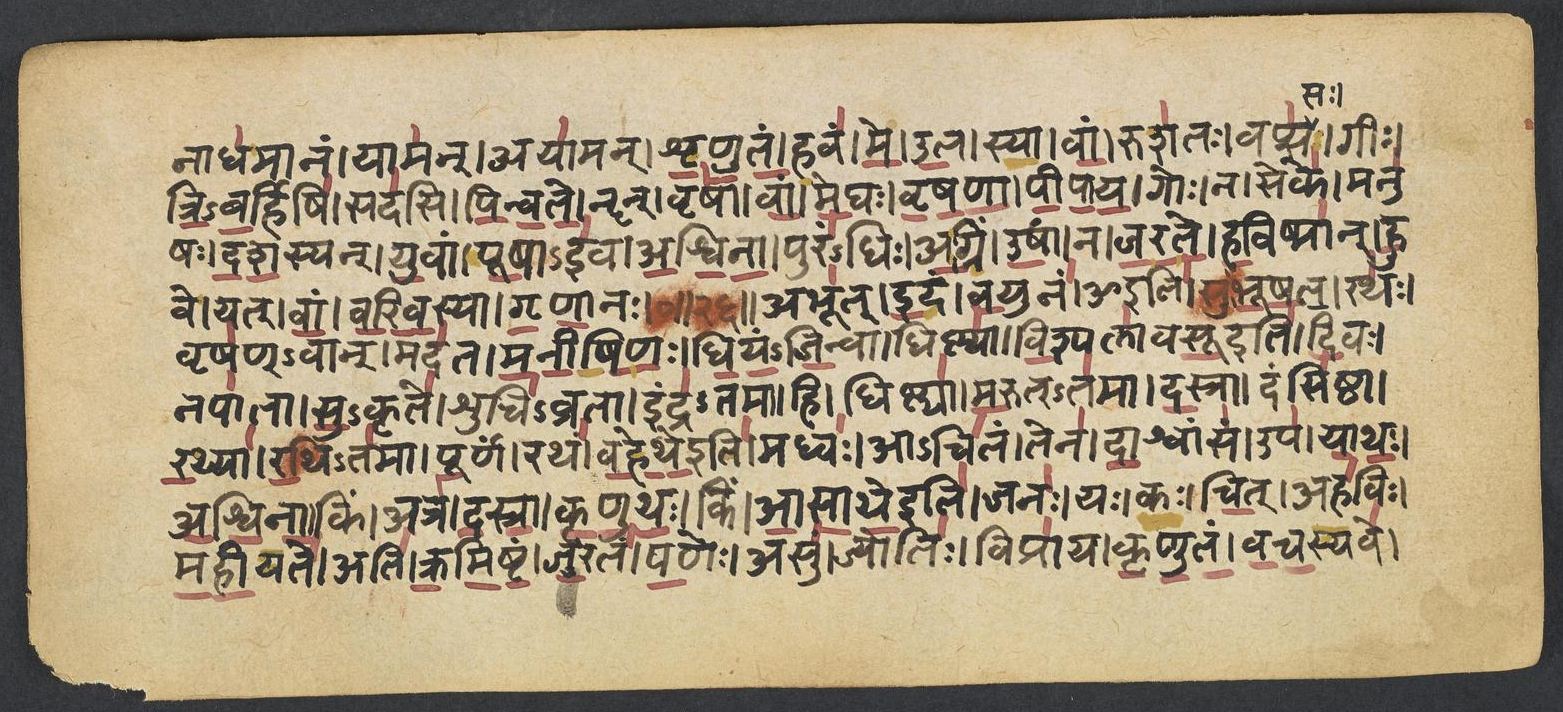
Penn Ms. Coll. 390 Item 41, fol. 142r (numbered 11r by the scribe) (OPenn image 143, lower leaf). Checked on the image: the Rigveda text on this page begins in RV 1.181.7 ‹nādhamānam yāman ayāman śṛṇutam›. The next page with Rigveda text, fol. 142v (numbered 11v by the scribe), begins in RV 1.182.4 ‹jambhayatam abhitaḥ rāyataḥ śunaḥ›. Verses 1.182.1-3 end on this page.
1abhū̍d i̱daṁ va̱yuna̱m o ṣu bhū̍ṣatā̱ ratho̱ vṛṣa̍ṇvā̱n mada̍tā manīṣiṇaḥ | dhi̱ya̱ṁji̱nvā dhiṣṇyā̍ vi̱śpalā̍vasū di̱vo napā̍tā su̱kṛte̱ śuci̍vratā ||
2indra̍tamā̱ hi dhiṣṇyā̍ ma̱rutta̍mā da̱srā daṁsi̍ṣṭhā ra̱thyā̍ ra̱thīta̍mā | pū̱rṇaṁ ratha̍ṁ vahethe̱ madhva̱ āci̍ta̱ṁ tena̍ dā̱śvāṁsa̱m upa̍ yātho aśvinā ||
3kim atra̍ dasrā kṛṇutha̱ḥ kim ā̍sāthe̱ jano̱ yaḥ kaś ci̱d aha̍vir mahī̱yate̍ | ati̍ kramiṣṭaṁ ju̱rata̍m pa̱ṇer asu̱ṁ jyoti̱r viprā̍ya kṛṇutaṁ vaca̱syave̍ ||
Compare: Padapāṭha (word-by-word text written in the manuscript; Sansknet e-text via GRETIL)
1abhāūt | idam | vayunam | o iti | su | bhūṣata | rathaḥ | vṛṣaṇ-vān | madata | manīṣiṇaḥ | dhiyam-jinvā | dhiṣṇyā | viśpalāvasūiti | divaḥ | napātā | su-kṛte | śuci-vratā
2indra-tamā | hi | dhiṣṇyā | marut-tamā | dasrā | daṃsiṣṭhā | rathyā | rathi-tamā | pūṇarm | ratham | vahetheiti | madhvaḥ | ācitam | tena | dāśvāṃsam | upa | yāthaḥ | aśvinā
3kim | atra | dasrā | kṛṇuthaḥ | kim | āsāthe | janaḥ | yaḥ | kaḥ | cit | ahaviḥ | mahīyate | ati | kramiṣṭam | juratam | paṇeḥ | asum | jyotiḥ | viprāya | kṛṇutam | vacasyave
1THIS was the task. Appear promptly, ye prudent Ones. Here is the chariot drawn by strong steeds: be ye glad. Heart-stirring, longed for, succourers of Vispala, here are Heaven's Sons whose sway blesses the pious man.
2Longed for, most Indra-like, mighty, most Marut-like, most wonderful in deed, car-borne, best charioteers, Bring your full chariot hither heaped with liquid sweet: thereon, ye Aṣvins, come to him who offers gifts.
3What make ye there, ye Mighty? Wherefore linger ye with folk who, offering not, are held in high esteem? Pass over them; make ye the niggard's life decay: give light unto the singer eloquent in praise.
Where on the image
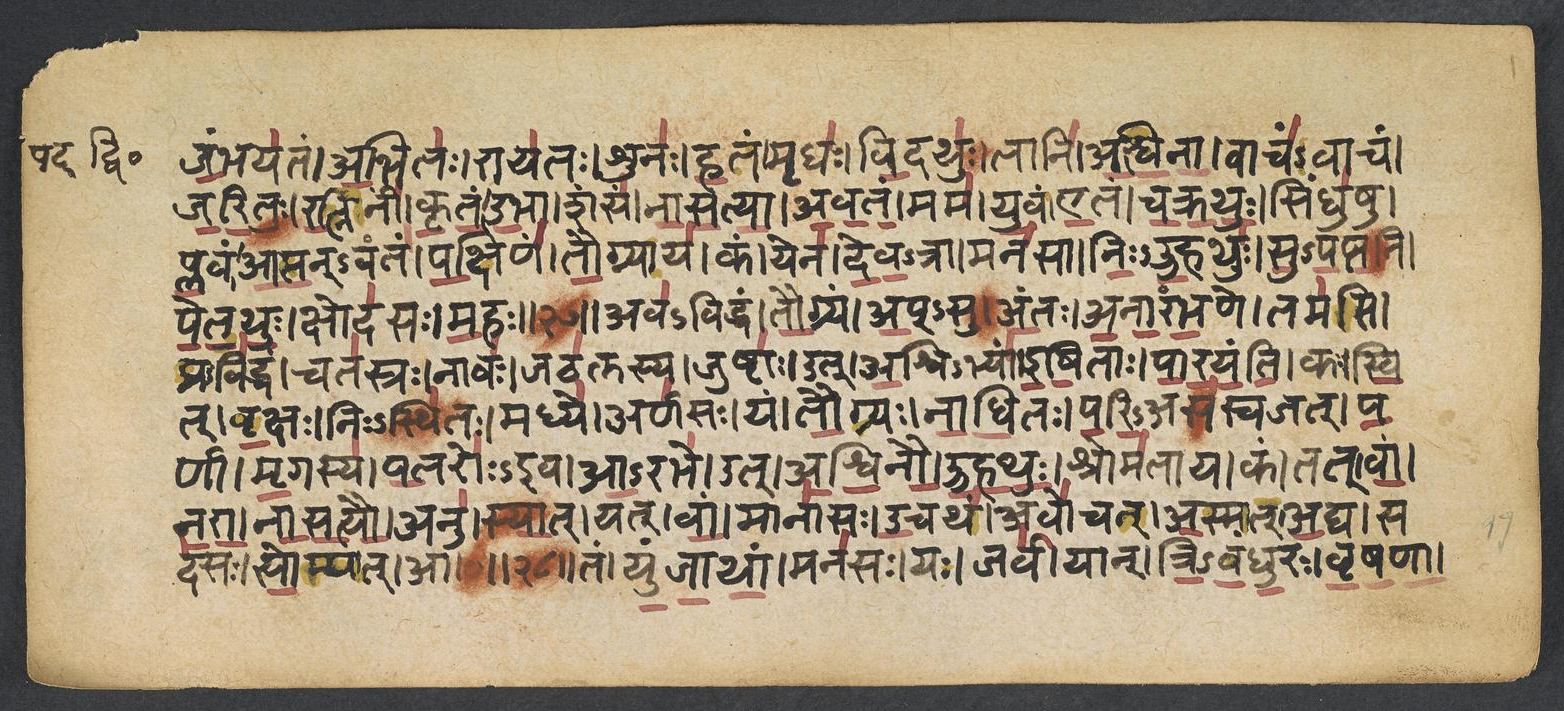
Penn Ms. Coll. 390 Item 41, fol. 142v (numbered 11v by the scribe) (OPenn image 144, upper leaf). Checked on the image: the Rigveda text on this page begins in RV 1.182.4 ‹jambhayatam abhitaḥ rāyataḥ śunaḥ›. The next page with Rigveda text, fol. 143r (numbered 1r by the scribe), begins in RV 1.183.1 ‹yaḥ tri-cakraḥ yena upa-yāthaḥ›. Verses 1.182.4-8 end on this page.
4ja̱mbhaya̍tam a̱bhito̱ rāya̍ta̱ḥ śuno̍ ha̱tam mṛdho̍ vi̱dathu̱s tāny a̍śvinā | vāca̍ṁ-vācaṁ jari̱tū ra̱tninī̍ṁ kṛtam u̱bhā śaṁsa̍ṁ nāsatyāvata̱m mama̍ ||
5yu̱vam e̱taṁ ca̍krathu̱ḥ sindhu̍ṣu pla̱vam ā̍tma̱nvanta̍m pa̱kṣiṇa̍ṁ tau̱gryāya̱ kam | yena̍ deva̱trā mana̍sā nirū̱hathu̍ḥ supapta̱nī pe̍tathu̱ḥ kṣoda̍so ma̱haḥ ||
6ava̍viddhaṁ tau̱gryam a̱psv a1̱̍ntar a̍nārambha̱ṇe tama̍si̱ pravi̍ddham | cata̍sro̱ nāvo̱ jaṭha̍lasya̱ juṣṭā̱ ud a̱śvibhyā̍m iṣi̱tāḥ pā̍rayanti ||
7kaḥ svi̍d vṛ̱kṣo niṣṭhi̍to̱ madhye̱ arṇa̍so̱ yaṁ tau̱gryo nā̍dhi̱taḥ pa̱ryaṣa̍svajat | pa̱rṇā mṛ̱gasya̍ pa̱taro̍r ivā̱rabha̱ ud a̍śvinā ūhathu̱ḥ śroma̍tāya̱ kam ||
8tad vā̍ṁ narā nāsatyā̱v anu̍ ṣyā̱d yad vā̱m mānā̍sa u̱catha̱m avo̍can | a̱smād a̱dya sada̍saḥ so̱myād ā vi̱dyāme̱ṣaṁ vṛ̱jana̍ṁ jī̱radā̍num ||
Compare: Padapāṭha (word-by-word text written in the manuscript; Sansknet e-text via GRETIL)
4jambhayatam | abhitaḥ | rāyataḥ | śunaḥ | hatam | mṛdhaḥ | vidathuḥ | tāni | aśvinā | vācam-vācam | jarituḥ | ratninīm | kṛtam | ubhā | saṃsam | nāsatyā | avatam | mama
5yuvam | etam | cakratuḥ | sindhuṣu | plavam | ātman-vantam | pakṣiṇam | taugryāya | kam | yena | deva-trā | manasā | niḥ-ūhathuḥ | su-paptani | petathuḥ | kṣodasaḥ | mahaḥ
6ava-viddham | taugryam | ap-su | antaḥ | anārambhaṇe | tamasi | pra-viddham | catasraḥ | nāvaḥ | jaṭhalasya | juṣṭāḥ | ut | aśvi-bhyām | iṣitāḥ | pārayanti
7kaḥ | svit | vṛkṣaḥ | niḥ-sthitaḥ | madhye | arṇasaḥ | yam | taugryaḥ | nādhitaḥ | pari-aṣasvajat | parṇā | mṛgasya | pataroḥ-iva | ārabhe | ut | aśvinā | ūhathuḥ | śromatāya | kam
8tat | vām | narā | nāsatyau | anu | syāt | yat | vām | mānāsaḥ | ucatham | avocan | asmāt | adya | sadasaḥ | somyāt | ā | vidyāma | iṣam | vṛjanam | jīra-dānum
4Crunch up on. every side the dogs who bark at us: slay ye our foes, O Aṣvins this ye understand. Make wealthy every word of him who praises you: accept with favour, both Nâsatyas, this my laud.
5Ye made for Tugra's son amid the water-floods that animated ship with wings to fly withal, Whereon with God-devoted mind ye brought him forth, and fled with easy flight from out the mighty surge.
6Four ships most welcome in the midst of ocean, urged by the Aṣvins, save the son of Tugra, Him who was cast down headlong in the waters, plunged in the thick inevitable darkness.
7What tree was that which stood fixed in surrounding sea to which the son of Tugra supplicating clung? Like twigs, of which some winged creature may take hold, ye, Aṣvins, bore him off safely to your renown.
8Welcome to you be this the hymn of praises uttered by Mânas, O Nâsatyas, Heroes, From this our gathering where we offer Soma. May we find strengthening food in full abundance.
Notes
- Sanskrit: Aufrecht's edition (1877) with the Vedic accents, as entered by van Nooten and Holland (GRETIL).
- English: Ralph T. H. Griffith, The Hymns of the Rigveda (1889-1892; 2nd ed. 1896-1897), from the VedaWeb digital text; OCR slips in that text were corrected against the printed 2nd edition (data/sources/rigveda/griffith_errata.json).
- Padapāṭha (edition text): Sansknet e-text via GRETIL (CC BY-NC-SA 4.0).
Cite
Sources
- Source: Penn Ms. Coll. 390 Item 41 (undated (catalogued with Penn's 18th-19th c. Vedic manuscripts)), OPenn, Public Domain Mark + Aufrecht's accented text (GRETIL) + Griffith's English (VedaWeb) (holding institution)
- Critical edition: Aufrecht (1877), accented e-text via GRETIL
← previous · → next · v cycle view · l back to library