Rigveda 1.183: To Asvins
Introduction
Rigveda 1.183 is a hymn of 6 verses addressed to Asvins. It stands in book (maṇḍala) 1, a collection of hymns by many families of poets. The Rigveda is the oldest collection of Sanskrit hymns, composed in the second half of the second millennium BCE and handed down orally for many centuries before it was written down.
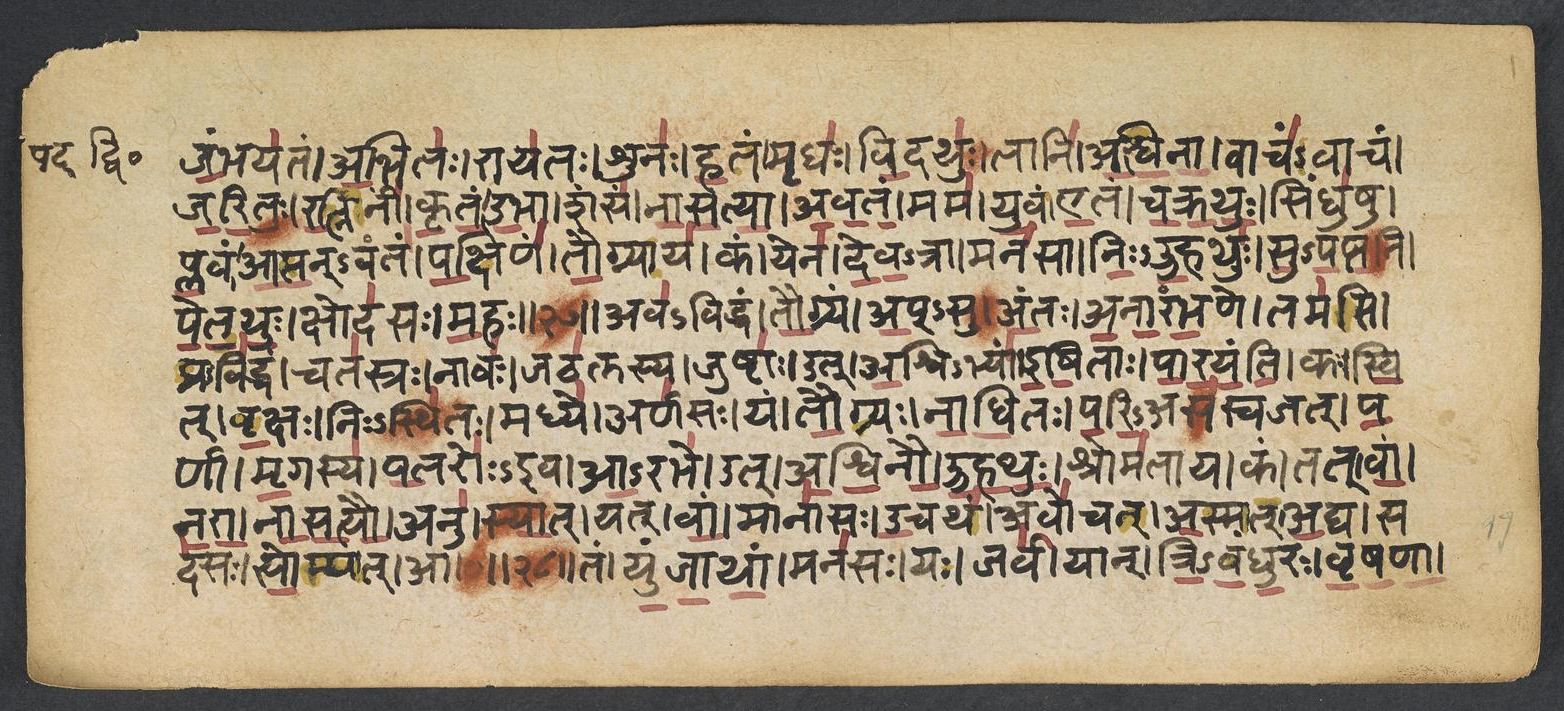
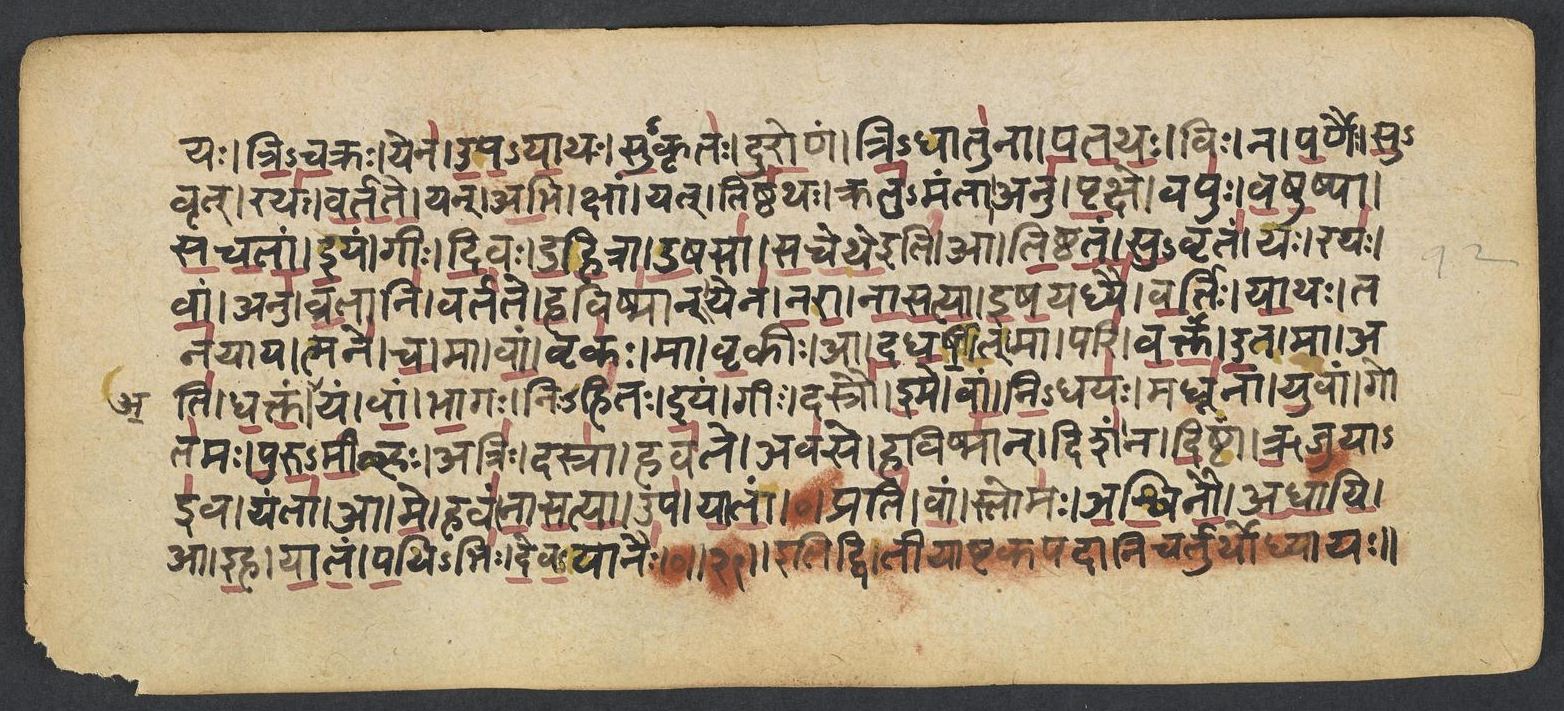
The manuscript shown is Penn Ms. Coll. 390 Item 41 (University of Pennsylvania), an undated paper manuscript of the padapāṭha (the word-by-word recitation text, in which every word is written separately and compounds are split) of the whole Ṛgveda in Devanāgarī, 884 leaves in fascicles, 7-9 lines to the page, accents in red; this hymn stands on fol. 142v-143r. Each section below gives the verses that end on one page; the page boundaries were read on the images (the opening words of every page), not counted out. Where the manuscript is a padapāṭha (the word-by-word recitation text), the section shows Aufrecht's continuous (saṃhitā) text first and, as the edition text, the padapāṭha of the same verses, which is the form written on the page.
How was this verified? (Provenance)
Where on the image
Penn Ms. Coll. 390 Item 41, fol. 143r (numbered 1r by the scribe) (OPenn image 144, lower leaf). Checked on the image: the Rigveda text on this page begins in RV 1.183.1 ‹yaḥ tri-cakraḥ yena upa-yāthaḥ›. The next page with Rigveda text, fol. 143v (numbered 1v by the scribe), begins in RV 1.184.1 ‹tā vām adya tau›. Verses 1.183.1-6 end on this page; 1.183.1 begins on fol. 142v (numbered 11v by the scribe).
1taṁ yu̍ñjāthā̱m mana̍so̱ yo javī̍yān trivandhu̱ro vṛ̍ṣaṇā̱ yas tri̍ca̱kraḥ | yeno̍payā̱thaḥ su̱kṛto̍ duro̱ṇaṁ tri̱dhātu̍nā patatho̱ vir na pa̱rṇaiḥ ||
2su̱vṛd ratho̍ vartate̱ yann a̱bhi kṣāṁ yat tiṣṭha̍tha̱ḥ kratu̍ma̱ntānu̍ pṛ̱kṣe | vapu̍r vapu̱ṣyā sa̍catām i̱yaṁ gīr di̱vo du̍hi̱troṣasā̍ sacethe ||
3ā ti̍ṣṭhataṁ su̱vṛta̱ṁ yo ratho̍ vā̱m anu̍ vra̱tāni̱ varta̍te ha̱viṣmā̍n | yena̍ narā nāsatyeṣa̱yadhyai̍ va̱rtir yā̱thas tana̍yāya̱ tmane̍ ca ||
4mā vā̱ṁ vṛko̱ mā vṛ̱kīr ā da̍dharṣī̱n mā pari̍ varktam u̱ta māti̍ dhaktam | a̱yaṁ vā̍m bhā̱go nihi̍ta i̱yaṁ gīr dasrā̍v i̱me vā̍ṁ ni̱dhayo̱ madhū̍nām ||
5yu̱vāṁ gota̍maḥ purumī̱ḻho atri̱r dasrā̱ hava̱te 'va̍se ha̱viṣmā̍n | diśa̱ṁ na di̱ṣṭām ṛ̍jū̱yeva̱ yantā me̱ hava̍ṁ nāsa̱tyopa̍ yātam ||
6atā̍riṣma̱ tama̍sas pā̱ram a̱sya prati̍ vā̱ṁ stomo̍ aśvināv adhāyi | eha yā̍tam pa̱thibhi̍r deva̱yānai̍r vi̱dyāme̱ṣaṁ vṛ̱jana̍ṁ jī̱radā̍num ||
Compare: Padapāṭha (word-by-word text written in the manuscript; Sansknet e-text via GRETIL)
1tam | yuñjāthām | manasaḥ | yaḥ | javīyān | tri-vandhuraḥ | vṛṣaṇā | yaḥ | tri-cakraḥ | yena | upa-yāthaḥ | su-kṛtaḥ | duroṇam | tri-dhātunā | patathaḥ | viḥ | na | parṇaiḥ
2su-vṛt | rathaḥ | vartate | yan | abhi | kṣām | yat | tiṣṭhathaḥ | kratu-mantā | anu | pṛkṣe | vapuḥ | vapuṣyā | sacatām | iyam | gīḥ | divaḥ | duhitrā | uṣasā | sacetheiti
3ā | tiṣṭhatam | su-vṛtam | yaḥ | rathaḥ | vām | anu | vratāni | vartate | haviṣmān | yena | narā | nāsatyā | iṣayadhyai | vartiḥ | yāthaḥ | tanayāya | tmane | ca
4mā | vām | vṛkaḥ | mā | vṛkīḥ | ā | dadharṣīt | mā | pari | varktam | uta | mā | ati | dhaktam | ayam | vām | bhāgaḥ | ni-hitaḥ | iyam | gīḥ | dasrau | ime | vām | ni-dhayaḥ | madhūnām
5yuvam | gotamaḥ | puru-mīḷhaḥ | atriḥ | dasrā | havate | avase | haviṣmān | diśam | na | diṣṭām | ṛjuyāiva | yantā | ā | me | havam | nāsatyā | upa | yātam
6atāriṣma | tamasaḥ | pāram | asya | prati | vām | stomaḥ | aśvinau | adhāyi | ā | iha | yātam | pathi-bhiḥ | deva-yānaiḥ | vidyāma | iṣam | vṛjanam | jīra-dānum
1MAKE ready that which passes thought in swiftness, that hath three wheels and triple seat, ye Mighty, Whereon ye seek the dwelling of the pious, whereon, threefold, ye fly like birds with pinions.
2Light rolls your easy chariot faring earthward, what time, for food, ye, full of wisdom, mount it. May this song, wondrous fair, attend your glory: ye, as ye travel, wait on Dawn Heaven's Daughter.
3Ascend your lightly rolling car, approaching the worshipper who turns him to his duties,– Whereon ye come unto the house to quicken man and his offspring, O Nâsatyas, Heroes.
4Let not the wolf, let not the she-wolf harm you. Forsake me not, nor pass me by or others. Here stands your share, here is your hymn, ye Mighty: yours are these vessels, full of pleasant juices.
5Gotama, Purumîḷha, Atri bringing oblations all invoke you for protection. Like one who goes strai ht to the point directed, ye Nâsatyas, to mine invocation.
6We have passed o'er the limit of this darkness: our praise hath been bestowed on you, O Aṣvins. Come hitherward by paths which Gods have travelled. May we find strengthening food in full abundance.
Notes
- Sanskrit: Aufrecht's edition (1877) with the Vedic accents, as entered by van Nooten and Holland (GRETIL).
- English: Ralph T. H. Griffith, The Hymns of the Rigveda (1889-1892; 2nd ed. 1896-1897), from the VedaWeb digital text; OCR slips in that text were corrected against the printed 2nd edition (data/sources/rigveda/griffith_errata.json).
- Padapāṭha (edition text): Sansknet e-text via GRETIL (CC BY-NC-SA 4.0).
Cite
Sources
- Source: Penn Ms. Coll. 390 Item 41 (undated (catalogued with Penn's 18th-19th c. Vedic manuscripts)), OPenn, Public Domain Mark + Aufrecht's accented text (GRETIL) + Griffith's English (VedaWeb) (holding institution)
- Critical edition: Aufrecht (1877), accented e-text via GRETIL
← previous · → next · v cycle view · l back to library