Rigveda 1.184: To Asvins
Introduction
Rigveda 1.184 is a hymn of 6 verses addressed to Asvins. It stands in book (maṇḍala) 1, a collection of hymns by many families of poets. The Rigveda is the oldest collection of Sanskrit hymns, composed in the second half of the second millennium BCE and handed down orally for many centuries before it was written down.
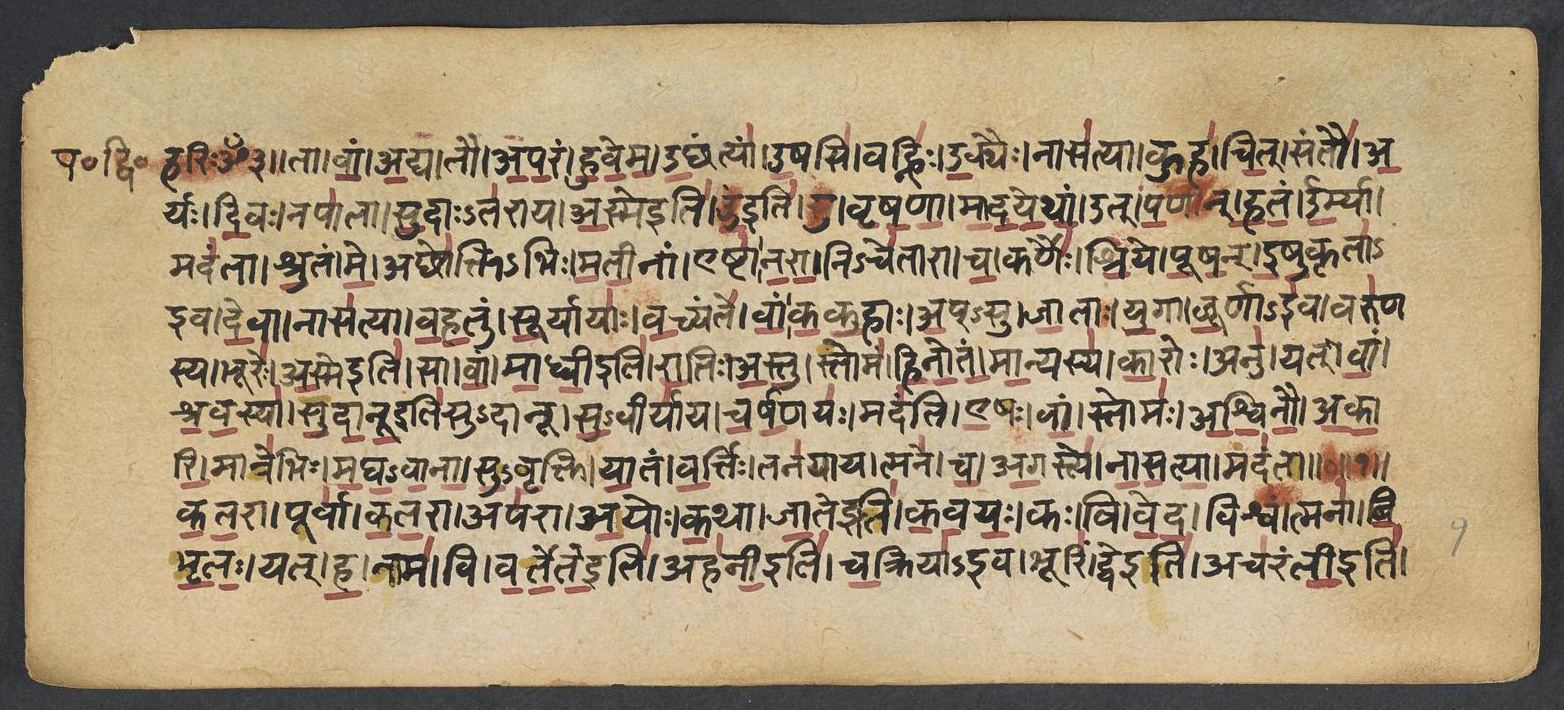
The manuscript shown is Penn Ms. Coll. 390 Item 41 (University of Pennsylvania), an undated paper manuscript of the padapāṭha (the word-by-word recitation text, in which every word is written separately and compounds are split) of the whole Ṛgveda in Devanāgarī, 884 leaves in fascicles, 7-9 lines to the page, accents in red; this hymn stands on fol. 143v. Each section below gives the verses that end on one page; the page boundaries were read on the images (the opening words of every page), not counted out. Where the manuscript is a padapāṭha (the word-by-word recitation text), the section shows Aufrecht's continuous (saṃhitā) text first and, as the edition text, the padapāṭha of the same verses, which is the form written on the page.
How was this verified? (Provenance)
Where on the image
Penn Ms. Coll. 390 Item 41, fol. 143v (numbered 1v by the scribe) (OPenn image 145, upper leaf). Checked on the image: the Rigveda text on this page begins in RV 1.184.1 ‹tā vām adya tau›. Line 1 opens with hariḥ oṃ, then 1.184.1 (tā vām adya tau aparam huvema). The next page with Rigveda text, fol. 144r (numbered 2r by the scribe), begins in RV 1.185.2 ‹carantam pat-vantam garbham apadī›. Verses 1.184.1-6 end on this page.
1tā vā̍m a̱dya tāv a̍pa̱raṁ hu̍vemo̱cchantyā̍m u̱ṣasi̱ vahni̍r u̱kthaiḥ | nāsa̍tyā̱ kuha̍ ci̱t santā̍v a̱ryo di̱vo napā̍tā su̱dāsta̍rāya ||
2a̱sme ū̱ ṣu vṛ̍ṣaṇā mādayethā̱m ut pa̱ṇīm̐r ha̍tam ū̱rmyā mada̍ntā | śru̱tam me̱ accho̍ktibhir matī̱nām eṣṭā̍ narā̱ nice̍tārā ca̱ karṇai̍ḥ ||
3śri̱ye pū̍ṣann iṣu̱kṛte̍va de̱vā nāsa̍tyā vaha̱tuṁ sū̱ryāyā̍ḥ | va̱cyante̍ vāṁ kaku̱hā a̱psu jā̱tā yu̱gā jū̱rṇeva̱ varu̍ṇasya̱ bhūre̍ḥ ||
4a̱sme sā vā̍m mādhvī rā̱tir a̍stu̱ stoma̍ṁ hinotam mā̱nyasya̍ kā̱roḥ | anu̱ yad vā̍ṁ śrava̱syā̍ sudānū su̱vīryā̍ya carṣa̱ṇayo̱ mada̍nti ||
5e̱ṣa vā̱ṁ stomo̍ aśvināv akāri̱ māne̍bhir maghavānā suvṛ̱kti | yā̱taṁ va̱rtis tana̍yāya̱ tmane̍ cā̱gastye̍ nāsatyā̱ mada̍ntā ||
6atā̍riṣma̱ tama̍sas pā̱ram a̱sya prati̍ vā̱ṁ stomo̍ aśvināv adhāyi | eha yā̍tam pa̱thibhi̍r deva̱yānai̍r vi̱dyāme̱ṣaṁ vṛ̱jana̍ṁ jī̱radā̍num ||
Compare: Padapāṭha (word-by-word text written in the manuscript; Sansknet e-text via GRETIL)
1tā | vām | adya | tau | aparam | huvema | ucchantyām | uṣasi | vahniḥ | ukthaiḥ | nāsatyā | kuha | cit | santau | aryaḥ | divaḥ | napātā | sudāḥ-tarāya
2asme iti | oṃ iti | su | vṛṣaṇā | mādayethām | ut paṇīn | hatam | ūrmyā | madantā | śrutam | me | acchokti-bhiḥ | matīnām | eṣṭā | narā | ni-cetārā | ca | karṇaiḥ
3śriye | pāūṣan | iṣukṛtāiva | devā | nāsatyā | vahatum | sūryāyāḥ | vacyante | vām | kakuhāḥ | ap-su | jātāḥ | yugā | jūrṇāiva | varuṇasya | bhūreḥ
4asme iti | sā | vām | mādhvī iti | rātiḥ | astu | stomam | hinotam | mānyasya | kāroḥ | anu | yat | vām | śravasyā | sudānūitisu-dānū | su-vīryāya | carṣaṇayaḥ | madanti
5eṣaḥ | vām | stomaḥ | aśvinau | akāri | mānebhiḥ | magha-vānā | su-vṛkti | yātam | vartiḥ | tanayāya | tmane | ca | agastye | nāsatyā | madantā
6atāriṣma | tamasaḥ | pāram | asya | prati | vām | stomaḥ | aśvinau | adhāyi | ā | iha | yātam | pathi-bhiḥ | deva-yānaiḥ | vidyāma | iṣam | vṛjanam | jīra-dānum
1LET us invoke you both this day and after the priest is here with lauds when morn is breaking: Nâsatyas, wheresoe'er ye be, Heaven's Children, for him who is more liberal than the godless.
2With us, ye Mighty, let yourselves be joyful, glad in our stream of Soma slay the niggards. Graciously hear my hymns and invitations, marking, O Heroes, with your ears my longing.
3Nâsatyas, Pûshans, ye as Gods for glory arranged and set in order Sûryâ's bridal. Your giant steeds move on, sprung from the waters, like ancient times of Varuṇa the Mighty.
4Your grace be with us, ye who love sweet juices: further the hymn sung by the poet Mâna, When men are joyful in your glorious actions, to win heroic strength, ye Bounteous Givers.
5This praise was made, O liberal Lords, O Aṣvins, for you with fair adornment by the Mânas. Come to our house for us and for our children, rejoicing, O Nâsatyas, in Agastya.
6We have passed o'er the limit of this darkness: our praise hath been'bestowed on you, O Aṣvins. Come hitherward by paths which Gods have travelled. may we find strengthening food in full abundance.
Notes
- Sanskrit: Aufrecht's edition (1877) with the Vedic accents, as entered by van Nooten and Holland (GRETIL).
- English: Ralph T. H. Griffith, The Hymns of the Rigveda (1889-1892; 2nd ed. 1896-1897), from the VedaWeb digital text; OCR slips in that text were corrected against the printed 2nd edition (data/sources/rigveda/griffith_errata.json).
- Padapāṭha (edition text): Sansknet e-text via GRETIL (CC BY-NC-SA 4.0).
Cite
Sources
- Source: Penn Ms. Coll. 390 Item 41 (undated (catalogued with Penn's 18th-19th c. Vedic manuscripts)), OPenn, Public Domain Mark + Aufrecht's accented text (GRETIL) + Griffith's English (VedaWeb) (holding institution)
- Critical edition: Aufrecht (1877), accented e-text via GRETIL
← previous · → next · v cycle view · l back to library