Rigveda 1.185: To Heaven and earth
Introduction
Rigveda 1.185 is a hymn of 11 verses addressed to Heaven and earth. It stands in book (maṇḍala) 1, a collection of hymns by many families of poets. The Rigveda is the oldest collection of Sanskrit hymns, composed in the second half of the second millennium BCE and handed down orally for many centuries before it was written down.
The manuscript shown is Penn Ms. Coll. 390 Item 41 (University of Pennsylvania), an undated paper manuscript of the padapāṭha (the word-by-word recitation text, in which every word is written separately and compounds are split) of the whole Ṛgveda in Devanāgarī, 884 leaves in fascicles, 7-9 lines to the page, accents in red; this hymn stands on fol. 143v-144v. Each section below gives the verses that end on one page; the page boundaries were read on the images (the opening words of every page), not counted out. Where the manuscript is a padapāṭha (the word-by-word recitation text), the section shows Aufrecht's continuous (saṃhitā) text first and, as the edition text, the padapāṭha of the same verses, which is the form written on the page.
How was this verified? (Provenance)
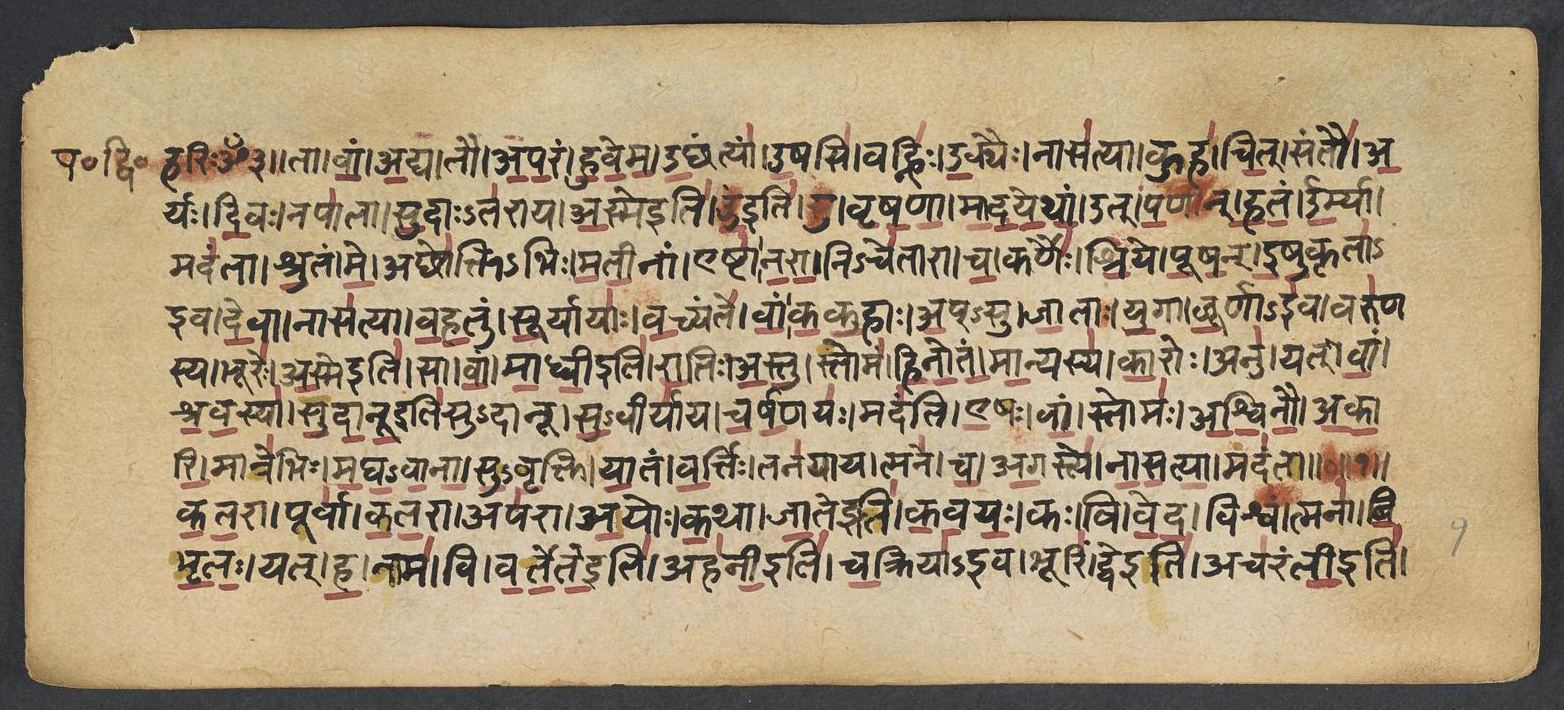
Where on the image
Penn Ms. Coll. 390 Item 41, fol. 143v (numbered 1v by the scribe) (OPenn image 145, upper leaf). Checked on the image: the Rigveda text on this page begins in RV 1.184.1 ‹tā vām adya tau›. Line 1 opens with hariḥ oṃ, then 1.184.1 (tā vām adya tau aparam huvema). The next page with Rigveda text, fol. 144r (numbered 2r by the scribe), begins in RV 1.185.2 ‹carantam pat-vantam garbham apadī›. Verse 1.185.1 ends on this page.
1ka̱ta̱rā pūrvā̍ kata̱rāpa̍rā̱yoḥ ka̱thā jā̱te ka̍vaya̱ḥ ko vi ve̍da | viśva̱ṁ tmanā̍ bibhṛto̱ yad dha̱ nāma̱ vi va̍rtete̱ aha̍nī ca̱kriye̍va ||
Compare: Padapāṭha (word-by-word text written in the manuscript; Sansknet e-text via GRETIL)
1katarā | pūrvā | katarā | aparā | ayoḥ | kathā | jāte iti | kavayaḥ | kaḥ | vi | veda | viśvam | tmanā | bibhṛtaḥ | yat | ha | nāma | vi | vartete | ahanī iti | cakriyāiva
1WHETHER of these is elder, whether later? How were they born? Who knoweth it, ye sages? These of themselves support all things existing: as on a car the Day and Night roll onward.
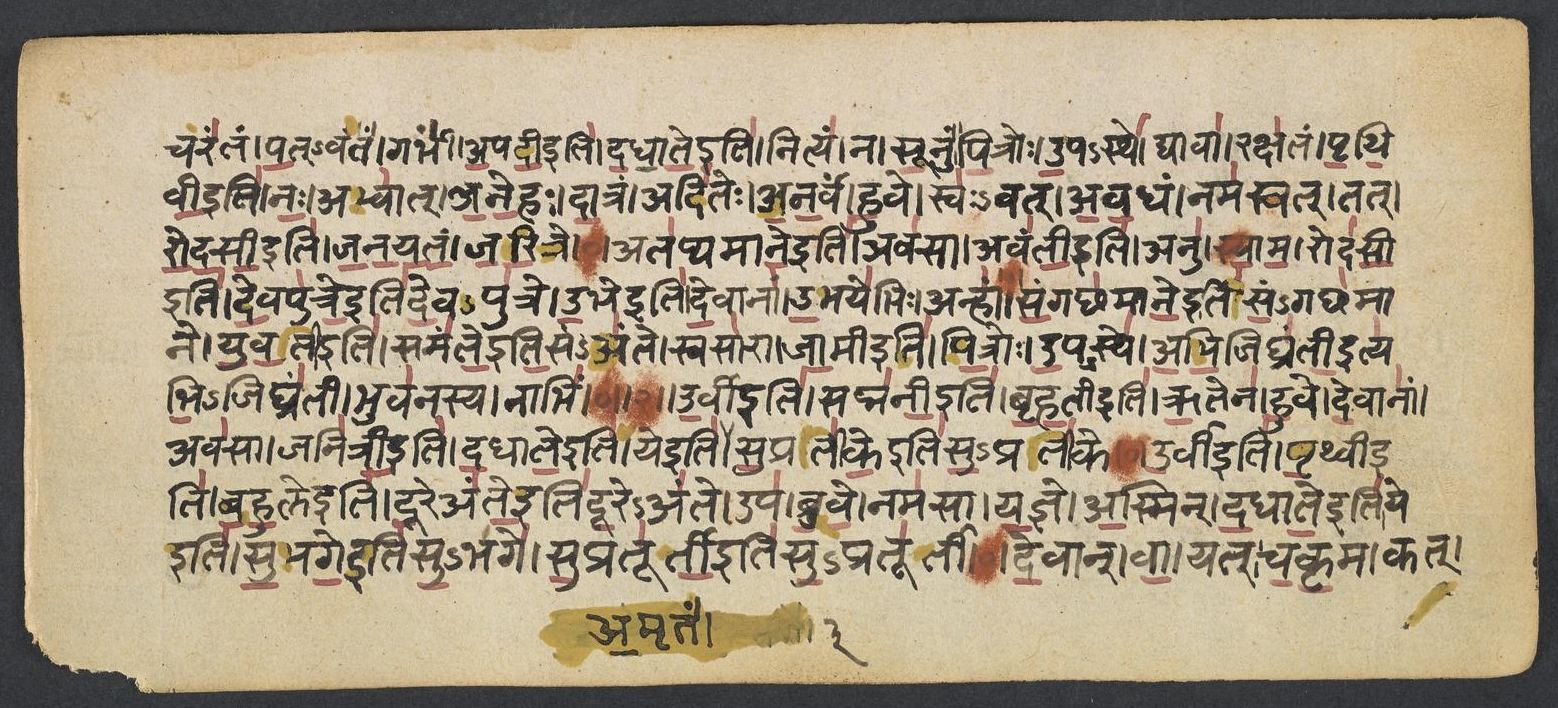
Where on the image
Penn Ms. Coll. 390 Item 41, fol. 144r (numbered 2r by the scribe) (OPenn image 145, lower leaf). Checked on the image: the Rigveda text on this page begins in RV 1.185.2 ‹carantam pat-vantam garbham apadī›. The next page with Rigveda text, fol. 144v (numbered 2v by the scribe), begins in RV 1.185.8 ‹cit āgaḥ sakhāyam vā›. Verses 1.185.2-7 end on this page; 1.185.2 begins on fol. 143v (numbered 1v by the scribe).
2bhūri̱ṁ dve aca̍rantī̱ cara̍ntam pa̱dvanta̱ṁ garbha̍m a̱padī̍ dadhāte | nitya̱ṁ na sū̱num pi̱tror u̱pasthe̱ dyāvā̱ rakṣa̍tam pṛthivī no̱ abhvā̍t ||
3a̱ne̱ho dā̱tram adi̍ter ana̱rvaṁ hu̱ve sva̍rvad ava̱dhaṁ nama̍svat | tad ro̍dasī janayataṁ jari̱tre dyāvā̱ rakṣa̍tam pṛthivī no̱ abhvā̍t ||
4ata̍pyamāne̱ ava̱sāva̍ntī̱ anu̍ ṣyāma̱ roda̍sī de̱vapu̍tre | u̱bhe de̱vānā̍m u̱bhaye̍bhi̱r ahnā̱ṁ dyāvā̱ rakṣa̍tam pṛthivī no̱ abhvā̍t ||
5sa̱ṁgaccha̍māne yuva̱tī sama̍nte̱ svasā̍rā jā̱mī pi̱tror u̱pasthe̍ | a̱bhi̱jighra̍ntī̱ bhuva̍nasya̱ nābhi̱ṁ dyāvā̱ rakṣa̍tam pṛthivī no̱ abhvā̍t ||
6u̱rvī sadma̍nī bṛha̱tī ṛ̱tena̍ hu̱ve de̱vānā̱m ava̍sā̱ jani̍trī | da̱dhāte̱ ye a̱mṛta̍ṁ su̱pratī̍ke̱ dyāvā̱ rakṣa̍tam pṛthivī no̱ abhvā̍t ||
7u̱rvī pṛ̱thvī ba̍hu̱le dū̱rea̍nte̱ upa̍ bruve̱ nama̍sā ya̱jñe a̱smin | da̱dhāte̱ ye su̱bhage̍ su̱pratū̍rtī̱ dyāvā̱ rakṣa̍tam pṛthivī no̱ abhvā̍t ||
Compare: Padapāṭha (word-by-word text written in the manuscript; Sansknet e-text via GRETIL)
2bhūri | dve iti | acarantī iti | carantam | pat-vantam | garbham | apadī iti | dadhāteiti | nityam | na | sūnum | pitroḥ | upa-sthe | dyāvā | rakṣatam | pṛthivī iti | naḥ | abhvāt
3anehaḥ | dātram | aditeḥ | anarvam | huve | svaḥ-vat | avadham | namasvat | tat | rodasī iti | janayatam | jaritre | dyāvā | rakṣatam | pṛthivī iti | naḥ | abhvāt
4atapyamāne | avasā | avantī iti | anu | syāma | rodasī iti | devaputreitideva-putre | ubhe iti | devānām | ubhayebhiḥ | ahnām | dyāvā | rakṣatam | pṛthivī iti | naḥ | abhvāt
5saṅgacchamāneitisam-gacchamāne | yuvatī iti | samanteitisam-ante | svasārā | jāmī iti | pitroḥ | upa-sthe | abhijighrantī ity abhi-jighrantī | bhuvanasya | nābhim | dyāvā | rakṣatam | pṛthivī iti | naḥ | abhvāt
6urvī iti | sadmanī iti | bṛhatī iti | ṛtena | huve | devānām | avasā | janitrī iti | dadhāte | ye | amṛtam | supratīke itisu-pratīke | dyāvā | rakṣatam | pṛthivī iti | naḥ | abhvāt
7urvī iti | pṛthvī iti | bahuleiti | dūreanteitidūre--ante | upa | bruve | namasā | yajñe | asmin | dadhāteiti | ye iti | subhageitisu-bhage | supratūrtī itisu-pratūrtī | dyāvā | rakṣatam | pṛthivī it | niḥ | abhvāt
2The Twain uphold, though motionless and footless, a widespread offspring having feet and moving. Like your own son upon his parents' bosom, protect us, Heaven and earth, from fearful danger.
3I call for Aditi's unrivalled bounty, perfect, celestial, deathless, meet for worship. Produce this, ye Twain Worlds, for him who lauds you. Protect us, Heaven and Earth, from fearful danger.
4May we be close to both the Worlds who suffer no pain, Parents of Gods, who aid with favour, Both mid the Gods, with Day and Night alternate. Protect us, Heaven and Earth, from fearful danger.
5Faring together, young, with meeting limits, Twin Sisters lying in their Parents' bosom, Kissing the centre of the world together. Protect us, Heaven and Earth, from fearful danger.
6Duly I call the two wide seats, the mighty, the general Parents, with the God's protection. Who, beautiful to look on, make the nectar. Protect us, Heaven and Earth, from fearful danger.
7Wide, vast, and manifold, whose bounds are distant,– these, reverent, I address at this our worship, The blessed Pair, victorious, all-sustaining. Protect us, Heaven and Earth, from fearful danger.
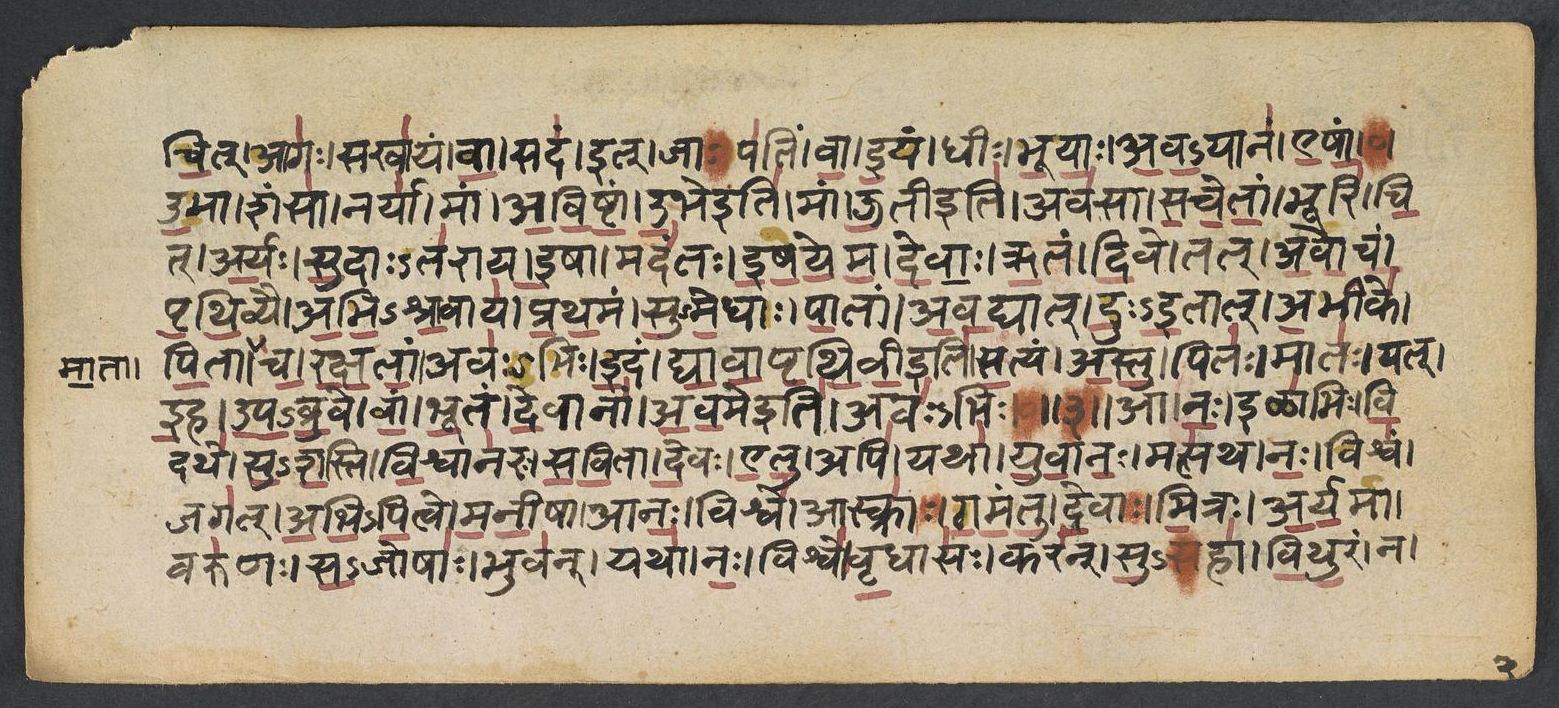
Where on the image
Penn Ms. Coll. 390 Item 41, fol. 144v (numbered 2v by the scribe) (OPenn image 146, upper leaf). Checked on the image: the Rigveda text on this page begins in RV 1.185.8 ‹cit āgaḥ sakhāyam vā›. The next page with Rigveda text, fol. 145r (numbered 3r by the scribe), begins in RV 1.186.2 ‹śavaḥ›. Verses 1.185.8-11 end on this page; 1.185.8 begins on fol. 144r (numbered 2r by the scribe).
8de̱vān vā̱ yac ca̍kṛ̱mā kac ci̱d āga̱ḥ sakhā̍yaṁ vā̱ sada̱m ij jāspa̍tiṁ vā | i̱yaṁ dhīr bhū̍yā ava̱yāna̍m eṣā̱ṁ dyāvā̱ rakṣa̍tam pṛthivī no̱ abhvā̍t ||
9u̱bhā śaṁsā̱ naryā̱ mām a̍viṣṭām u̱bhe mām ū̱tī ava̍sā sacetām | bhūri̍ cid a̱ryaḥ su̱dāsta̍rāye̱ṣā mada̍nta iṣayema devāḥ ||
10ṛ̱taṁ di̱ve tad a̍vocam pṛthi̱vyā a̍bhiśrā̱vāya̍ pratha̱maṁ su̍me̱dhāḥ | pā̱tām a̍va̱dyād du̍ri̱tād a̱bhīke̍ pi̱tā mā̱tā ca̍ rakṣatā̱m avo̍bhiḥ ||
11i̱daṁ dyā̍vāpṛthivī sa̱tyam a̍stu̱ pita̱r māta̱r yad i̱hopa̍bru̱ve vā̍m | bhū̱taṁ de̱vānā̍m ava̱me avo̍bhir vi̱dyāme̱ṣaṁ vṛ̱jana̍ṁ jī̱radā̍num ||
Compare: Padapāṭha (word-by-word text written in the manuscript; Sansknet e-text via GRETIL)
8devān | vā | yat | cakṛma | kat | cit | āgaḥ | sakhāyam | vā | sadam | it | jāḥ-patim | vā | iyam | dhīḥ | bhūyāḥ | ava-yānam | eṣām | dyāvā | rakṣatam | pṛthivī iti | naḥ | abhvāt
9ubhā | śaṃsā | naryā | mām | aviṣṭām | ubhe iti | mām | ūtī iti | avasā | sacetām | bhūri | cit | aryaḥ | sudāḥ-tarāya | iṣā | madantaḥ | iṣayema | devāḥ
10ṛtam | dive | tat | avocam | pṛthivyai | abhi-śrāvāya | prathamam | su-medhāḥ | pātām | avadyāt | duḥ-itāt | abhīke | pitā | mātā | ca | rakṣatām | avaḥ-bhiḥ
11idam | dyāvāpṛthivī iti | satyam | astu | pitaḥ | mātaḥ | yat | iha | upa-bruve | vām | bhūtam | devānām | avame iti | avaḥ-bhir | vidyāma | iṣam | vṛjanam | jīra-dānum
8What sin we have at any time committed against the Gods, our friend, our house's chieftain, Thereof may this our hymn be expiation. Protect us, Heaven and Earth, from fearful danger.
9May both these Friends of man, who bless, preserve me, may they attend me with their help and favour. Enrich the man more liberal than the godless. May we, ye Gods, be strong with food rejoicing.
10Endowed with understanding, I have uttered this truth, for all to hear, to Earth and Heaven. Be near us, keep us from reproach and trouble. Father and Mother, with your help preserve us.
11Be this my prayer fulfilled, O Earth and Heaven, wherewith, Father and Mother, I address you. Nearest of Gods be ye with your protection. May we find strengthening food in full abundance.
Notes
- Sanskrit: Aufrecht's edition (1877) with the Vedic accents, as entered by van Nooten and Holland (GRETIL).
- English: Ralph T. H. Griffith, The Hymns of the Rigveda (1889-1892; 2nd ed. 1896-1897), from the VedaWeb digital text; OCR slips in that text were corrected against the printed 2nd edition (data/sources/rigveda/griffith_errata.json).
- Padapāṭha (edition text): Sansknet e-text via GRETIL (CC BY-NC-SA 4.0).
Cite
Sources
- Source: Penn Ms. Coll. 390 Item 41 (undated (catalogued with Penn's 18th-19th c. Vedic manuscripts)), OPenn, Public Domain Mark + Aufrecht's accented text (GRETIL) + Griffith's English (VedaWeb) (holding institution)
- Critical edition: Aufrecht (1877), accented e-text via GRETIL
← previous · → next · v cycle view · l back to library