Rigveda 1.186: To all the gods
Introduction
Rigveda 1.186 is a hymn of 11 verses addressed to all the gods. It stands in book (maṇḍala) 1, a collection of hymns by many families of poets. The Rigveda is the oldest collection of Sanskrit hymns, composed in the second half of the second millennium BCE and handed down orally for many centuries before it was written down.
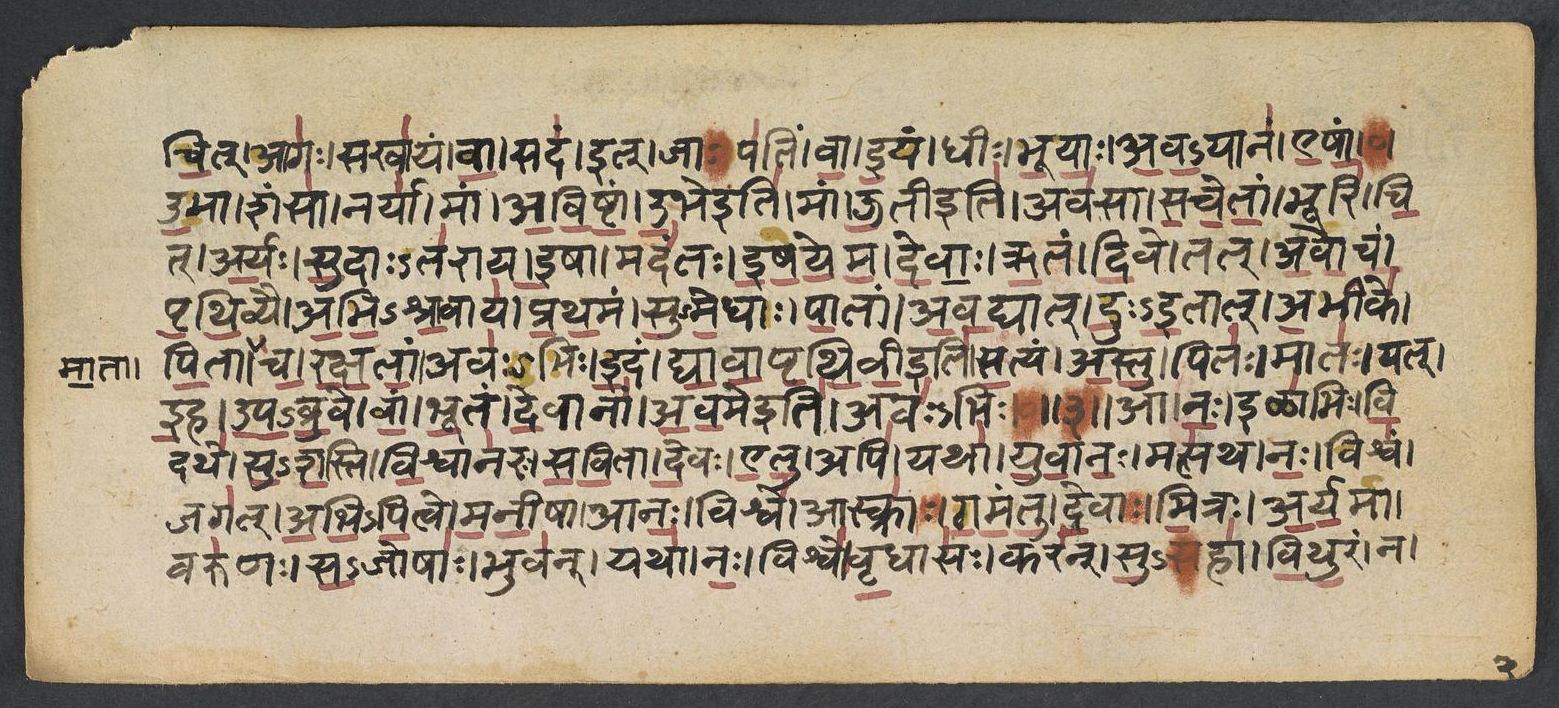
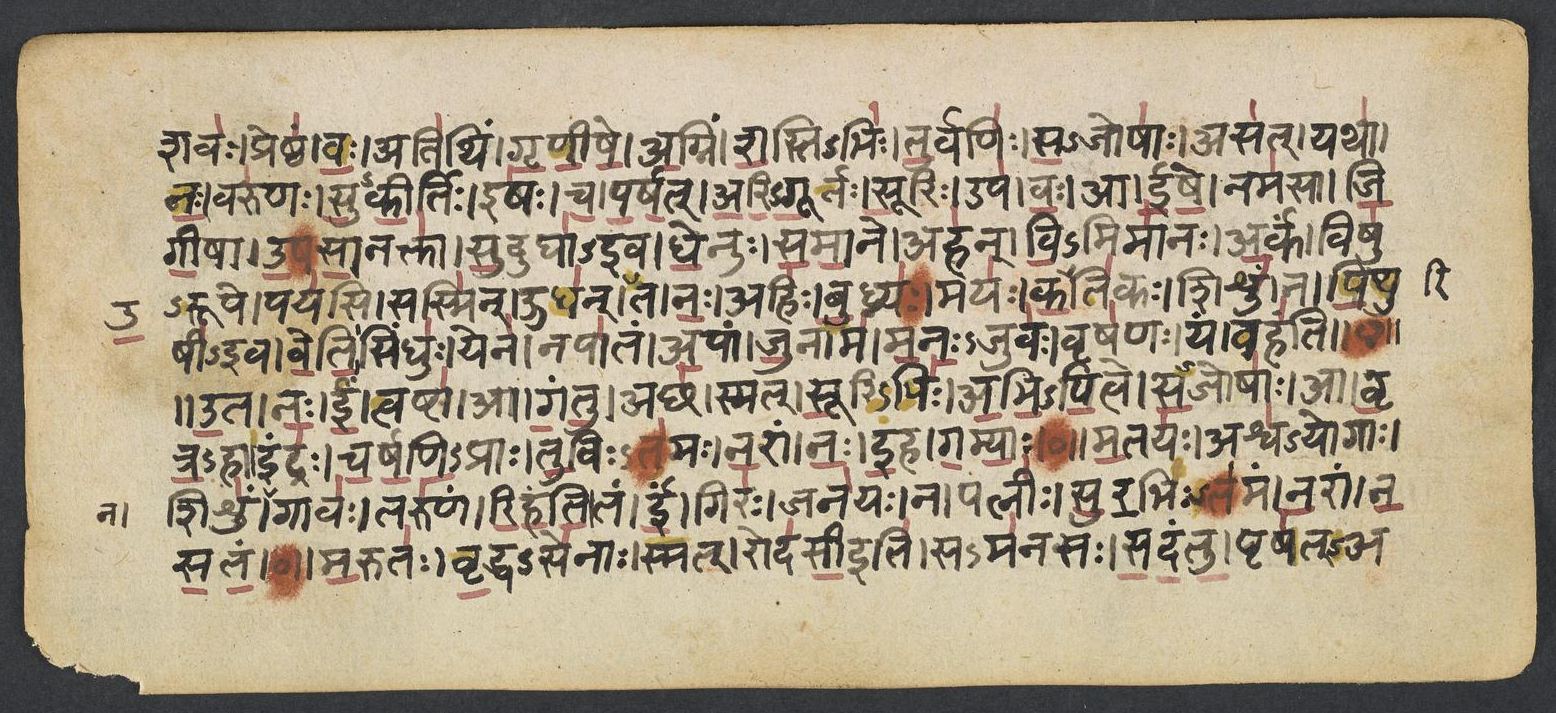
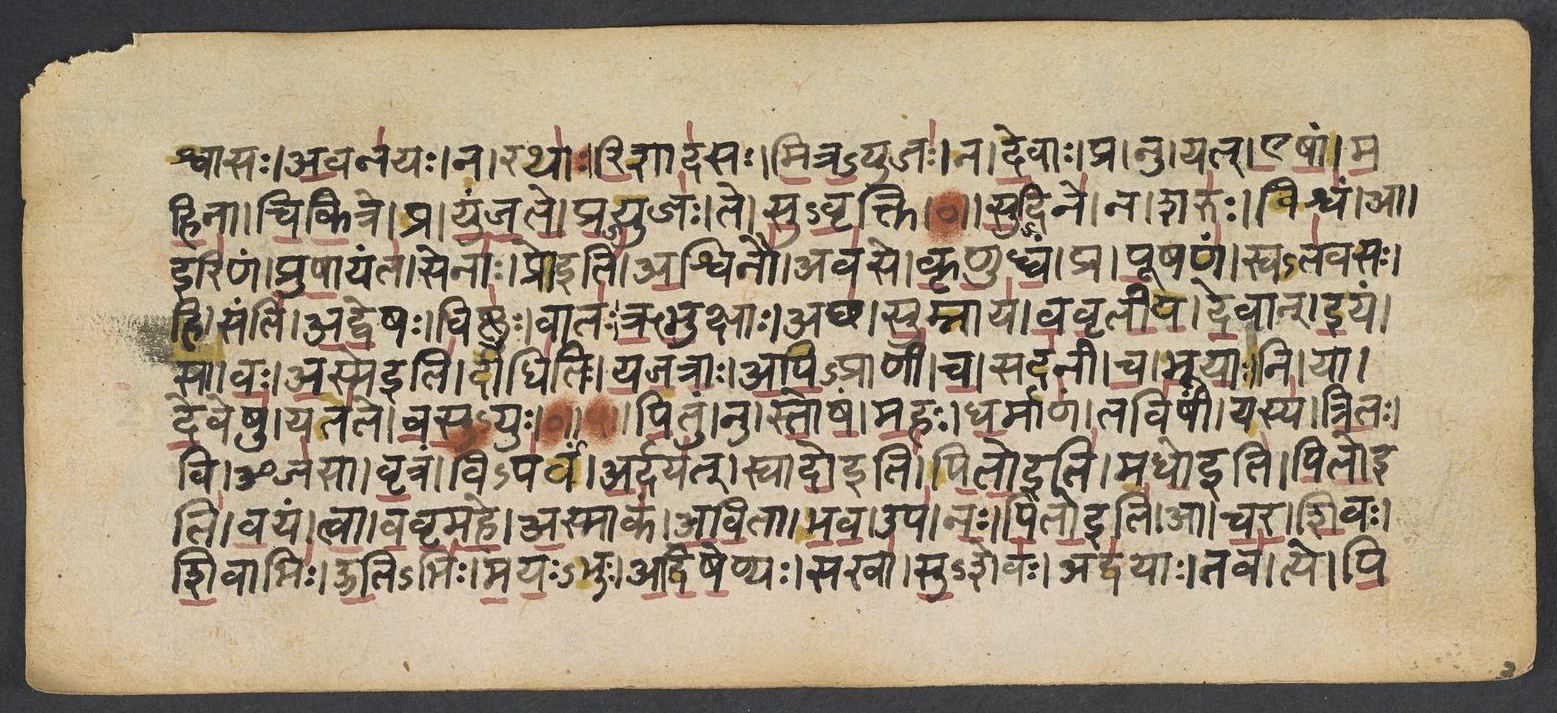
The manuscript shown is Penn Ms. Coll. 390 Item 41 (University of Pennsylvania), an undated paper manuscript of the padapāṭha (the word-by-word recitation text, in which every word is written separately and compounds are split) of the whole Ṛgveda in Devanāgarī, 884 leaves in fascicles, 7-9 lines to the page, accents in red; this hymn stands on fol. 144v-145v. Each section below gives the verses that end on one page; the page boundaries were read on the images (the opening words of every page), not counted out. Where the manuscript is a padapāṭha (the word-by-word recitation text), the section shows Aufrecht's continuous (saṃhitā) text first and, as the edition text, the padapāṭha of the same verses, which is the form written on the page.
How was this verified? (Provenance)
Where on the image
Penn Ms. Coll. 390 Item 41, fol. 144v (numbered 2v by the scribe) (OPenn image 146, upper leaf). Checked on the image: the Rigveda text on this page begins in RV 1.185.8 ‹cit āgaḥ sakhāyam vā›. The next page with Rigveda text, fol. 145r (numbered 3r by the scribe), begins in RV 1.186.2 ‹śavaḥ›. Verse 1.186.1 ends on this page.
1ā na̱ iḻā̍bhir vi̱dathe̍ suśa̱sti vi̱śvāna̍raḥ savi̱tā de̱va e̍tu | api̱ yathā̍ yuvāno̱ matsa̍thā no̱ viśva̱ṁ jaga̍d abhipi̱tve ma̍nī̱ṣā ||
Compare: Padapāṭha (word-by-word text written in the manuscript; Sansknet e-text via GRETIL)
1ā | naḥ | iḷābhiḥ | vidathe | su-śasti | viśvānaraḥ | savitā | devaḥ | etu | api | yathā | yuvānaḥ | matsatha | naḥ | viśvam | jagat | abhi-pitve | manīṣā
1LOVED of all men, may Savitar, through praises offered as sacred food, come to our synod, That you too, through-our hymn, ye ever-youthful, may gladden, at your visit, all our people.
Where on the image
Penn Ms. Coll. 390 Item 41, fol. 145r (numbered 3r by the scribe) (OPenn image 146, lower leaf). Checked on the image: the Rigveda text on this page begins in RV 1.186.2 ‹śavaḥ›. The next page with Rigveda text, fol. 145v (numbered 3v by the scribe), begins in RV 1.186.8 ‹-pṛṣat-aśvāsaḥ vanayaḥ na rathāḥ›. Verses 1.186.2-7 end on this page; 1.186.2 begins on fol. 144v (numbered 2v by the scribe).
2ā no̱ viśva̱ āskrā̍ gamantu de̱vā mi̱tro a̍rya̱mā varu̍ṇaḥ sa̱joṣā̍ḥ | bhuva̱n yathā̍ no̱ viśve̍ vṛ̱dhāsa̱ḥ kara̍n su̱ṣāhā̍ vithu̱raṁ na śava̍ḥ ||
3preṣṭha̍ṁ vo̱ ati̍thiṁ gṛṇīṣe̱ 'gniṁ śa̱stibhi̍s tu̱rvaṇi̍ḥ sa̱joṣā̍ḥ | asa̱d yathā̍ no̱ varu̍ṇaḥ sukī̱rtir iṣa̍ś ca parṣad arigū̱rtaḥ sū̱riḥ ||
4upa̍ va̱ eṣe̱ nama̍sā jigī̱ṣoṣāsā̱naktā̍ su̱dughe̍va dhe̱nuḥ | sa̱mā̱ne aha̍n vi̱mimā̍no a̱rkaṁ viṣu̍rūpe̱ paya̍si̱ sasmi̱nn ūdha̍n ||
5u̱ta no 'hi̍r bu̱dhnyo̱3̱̍ maya̍s ka̱ḥ śiśu̱ṁ na pi̱pyuṣī̍va veti̱ sindhu̍ḥ | yena̱ napā̍tam a̱pāṁ ju̱nāma̍ mano̱juvo̱ vṛṣa̍ṇo̱ yaṁ vaha̍nti ||
6u̱ta na̍ ī̱ṁ tvaṣṭā ga̱ntv acchā̱ smat sū̱ribhi̍r abhipi̱tve sa̱joṣā̍ḥ | ā vṛ̍tra̱hendra̍ś carṣaṇi̱prās tu̱viṣṭa̍mo na̱rāṁ na̍ i̱ha ga̍myāḥ ||
7u̱ta na̍ īm ma̱tayo 'śva̍yogā̱ḥ śiśu̱ṁ na gāva̱s taru̍ṇaṁ rihanti | tam ī̱ṁ giro̱ jana̍yo̱ na patnī̍ḥ sura̱bhiṣṭa̍maṁ na̱rāṁ na̍santa ||
Compare: Padapāṭha (word-by-word text written in the manuscript; Sansknet e-text via GRETIL)
2ā | naḥ | viśve | āskrāḥ | gamantu | devāḥ | mitraḥ | aryamā | varuṇaḥ | sa-joṣāḥ | bhuvan | yathā | naḥ | viśve | vṛdhāsaḥ | karan | su-sahā | vithuram | na | śavaḥ
3preṣṭham | vaḥ | atithim | gṛṇīṣe | agnim | śasti-bhiḥ | turvaṇiḥ | sa-joṣāḥ | asat | yathā | naḥ | varuṇaḥ | su-kīrtiḥ | iṣaḥ | ca | parṣat | ari-gūrtaḥ | sūriḥ
4upa | vaḥ | ā | iṣe | namasā | jigīṣā | uṣasānaktā | sudughāiva | dhenuḥ | samāne | ahan | vi-mimānaḥ | arkam | viṣu-rūpe | payasi | sasmin | ūdhan
5uta | naḥ | ahiḥ | budhnyaḥ | mayaḥ | karitikaḥ | śiśum | na | pipyuṣī-iva | vet i | sindhuḥ | yena | napātam | apām | junāma | manaḥ-juvaḥ | vṛṣaṇaḥ | yam | vahanti
6uta | naḥ | īm | tvaṣṭā | ā | gantu | accha | smat | sūri-bhiḥ | abhi-pitve | sa-joṣāḥ | ā | vṛtra-hā | indraḥ | carṣaṇi-prāḥ | tuviḥ-tamaḥ | narām | naḥ | iha | gamyāḥ
7uta | naḥ | īm | matayaḥ | aśva-yogāḥ | śiśum | na | gāvaḥ | taruṇam | rihanti | tam | īm | giraḥ | janayaḥ | na | patnīḥ | surabhiḥ-tamam | narām | nasanta
2To us may all the Gods come trooped together, Aryaman, Mitra, Varuṇa concordant, That all may be promoters of our welfare, and with great might preserve our strength from slackness.
3Agni I sing, the guest you love most dearly: the Conqueror through our lauds is friendly-minded. That he may be our Varuṇa rich in glory and send food like a prince praised by the godly.
4To you I seek with reverence, Night and Morning, like a cow good to milk, with hope to conquer, Preparing on a common day the praise. song with milk of various hues within this udder.
5May the great Dragon of the Deep rejoice us: as one who nourishes her young comes Sindhu, With whom we will incite the Child of Waters whom vigorous course swift as thought bring hither.
6Moreover Tvashṭar also shall approach us, one-minded with the princes at his visit. Hither shall come the Vr̥itra-slayer Indra, Ruler of men, as strongest of the Heroes.
7Him too our hymns delight, that yoke swift horses, like mother cows who lick their tender youngling. To him our songs shall yield themselves like spouses, to him the most delightful of the Heroes.
Where on the image
Penn Ms. Coll. 390 Item 41, fol. 145v (numbered 3v by the scribe) (OPenn image 147, upper leaf). Checked on the image: the Rigveda text on this page begins in RV 1.186.8 ‹-pṛṣat-aśvāsaḥ vanayaḥ na rathāḥ›. The next page with Rigveda text, fol. 146r (numbered 4r by the scribe), begins in RV 1.187.4 ‹-pito iti rasāḥ rajāṃsi›. Verses 1.186.8-11 end on this page; 1.186.8 begins on fol. 145r (numbered 3r by the scribe).
8u̱ta na̍ īm ma̱ruto̍ vṛ̱ddhase̍nā̱ḥ smad roda̍sī̱ sama̍nasaḥ sadantu | pṛṣa̍daśvāso̱ 'vana̍yo̱ na rathā̍ ri̱śāda̍so mitra̱yujo̱ na de̱vāḥ ||
9pra nu yad e̍ṣām mahi̱nā ci̍ki̱tre pra yu̍ñjate pra̱yuja̱s te su̍vṛ̱kti | adha̱ yad e̍ṣāṁ su̱dine̱ na śaru̱r viśva̱m eri̍ṇam pruṣā̱yanta̱ senā̍ḥ ||
10pro a̱śvinā̱v ava̍se kṛṇudhva̱m pra pū̱ṣaṇa̱ṁ svata̍vaso̱ hi santi̍ | a̱dve̱ṣo viṣṇu̱r vāta̍ ṛbhu̱kṣā acchā̍ su̱mnāya̍ vavṛtīya de̱vān ||
11i̱yaṁ sā vo̍ a̱sme dīdhi̍tir yajatrā api̱prāṇī̍ ca̱ sada̍nī ca bhūyāḥ | ni yā de̱veṣu̱ yata̍te vasū̱yur vi̱dyāme̱ṣaṁ vṛ̱jana̍ṁ jī̱radā̍num ||
Compare: Padapāṭha (word-by-word text written in the manuscript; Sansknet e-text via GRETIL)
8uta | naḥ | īm | marutaḥ | vṛddha-senāḥ | smat | rodasī iti | sa-manasaḥ | sadantu | pṛṣat-aśvāsaḥ | vanayaḥ | na | rathāḥ | riśādasaḥ | mitra-yujaḥ | na | devāḥ
9pra | nu | yat | eṣām | mahinā | cikitre | pra | yuñjate | pra-yujaḥ | te | su-vṛkti | adha | yat | eṣām | su-dine | na | śaruḥ | viśvam | ā | iriṇam | pruṣāyanta | senāḥ
10pro iti | aśvinau | avase | kṛṇudhvam | pra | pūṣaṇam | svatavasaḥ | hi | santi | adveṣaḥ | viṣṇuḥ | vātaḥ | ṛbhukṣāḥ | accha | sumnāya | vavṛtīya | devān
11iyam | sā | vaḥ | asme iti | dīdhitiḥ | yajatrāḥ | api-prāṇī | ca | sadanī | ca | bhūyāḥ | ni | yā | deveṣu | yatate | vasu-yuḥ | vidyāma | iṣam | vṛjanam | jīra-dānum
8So may the Maruts, armed with mighty weapons, rest here on heaven and earth with hearts in concord, As Gods whose cars have dappled steeds like torrents, destroyers of the foe allies of Mitra.
9They hasten on to happy termination their orders when they are made known by glory. As on a fair bright day the arrow flieth o'er all the barren soil their missiles sparkle.
10Incline the Aṣvins to show grace, and Pûshan, for power and might have they, their own possession. Friendly are Vishṇu, Vâta, and R̥ibhukshan so may I bring the Gods to make us happy.
11This is my reverent thought of you, ye Holy; may it inspire you, make you dwell among us,– Thought, toiling for the Gods and seeking treasure. May we find strengthening food in full abundance.
Notes
- Sanskrit: Aufrecht's edition (1877) with the Vedic accents, as entered by van Nooten and Holland (GRETIL).
- English: Ralph T. H. Griffith, The Hymns of the Rigveda (1889-1892; 2nd ed. 1896-1897), from the VedaWeb digital text; OCR slips in that text were corrected against the printed 2nd edition (data/sources/rigveda/griffith_errata.json).
- Padapāṭha (edition text): Sansknet e-text via GRETIL (CC BY-NC-SA 4.0).
Cite
Sources
- Source: Penn Ms. Coll. 390 Item 41 (undated (catalogued with Penn's 18th-19th c. Vedic manuscripts)), OPenn, Public Domain Mark + Aufrecht's accented text (GRETIL) + Griffith's English (VedaWeb) (holding institution)
- Critical edition: Aufrecht (1877), accented e-text via GRETIL
← previous · → next · v cycle view · l back to library